Skip to content

Munitions of the Mind Posts

British First World War Propaganda: From A to Z

Reviewed by Edward Corse


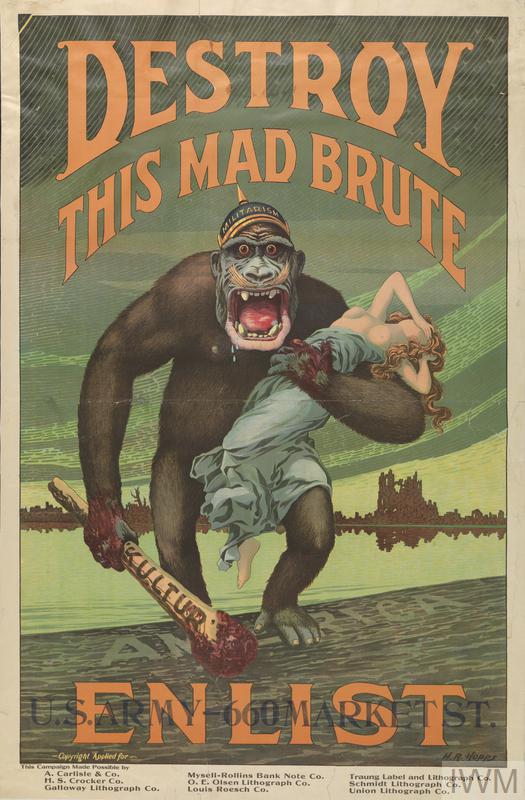
David Monger’s British First World War Propaganda: From A to Z is an interesting and innovative way of constructing an analysis of an important historical subject and demonstrates that propaganda in this period went beyond the ‘falsehood in war-time’ that sometimes shrouds study of the topic. He divides the book into 26 main chapters, one for each letter of the English alphabet, devoting each chapter to a short study guided by a word or phrase he has chosen. The benefit of such an approach is that it can draw in new readers to a topic with bite-sized summaries of a variety of different issues relating to the topic who might be attracted to this style of book compared with a lengthy academic monograph, such as Eberhard Demm’s Censorship and Propaganda in World War I: A Comprehensive History (2019). Other historians of propaganda have also navigated similar innovative approaches in recent years with David Welch completing his The Story of Propaganda in 50 images (2022) a few years ago – although Welch’s method with 50 images is naturally more flexible than an A–Z approach. Whilst Monger restricts himself to one word or phrase per chapter (with one exception), other approaches such as the Imperial War Museum’s The First World War A-Z: From Assassination to Zeppelin – Everything You Need to Know (2014), allows itself multiple entries for each letter. Monger’s book is in this sense, therefore, if not unique, certainly more restricting than other comparable titles.

Leave a Comment

The Age of the Gas Mask: How British Civilians Faced the Terrors of Total War

Reviewed by Daniel Schuster

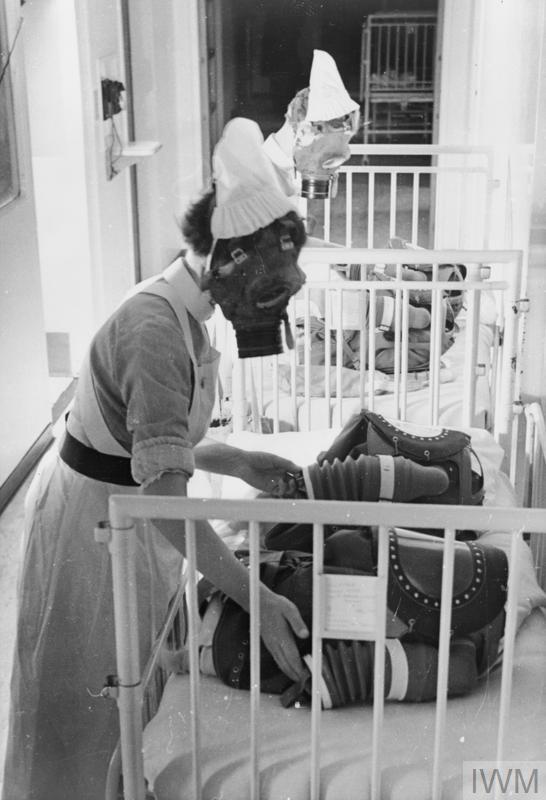
Susan R. Grayzel’s The Age of the Gas Mask offers a compelling material history of one of the twentieth century’s most unsettling objects. Tracing the civilian gas mask from the ‘weaponisation of the air’ in the First World War through to its ubiquitous presence during the Second, Grayzel demonstrates how the advent of chemical warfare fundamentally altered the relationship between civilians and the state. The book is at its strongest in showing how, during the interwar period, the expected horror of renewed use of chemical weapons permeated cultural life, with novels, political debates, and visual culture repeatedly returning to nightmarish scenes of women and children suffocating in poisoned air.

Leave a Comment

Overlooked but not Overwhelmed: Lower Middle Class Experiences and Legacies of the First World War

Written by Andrew Whittaker

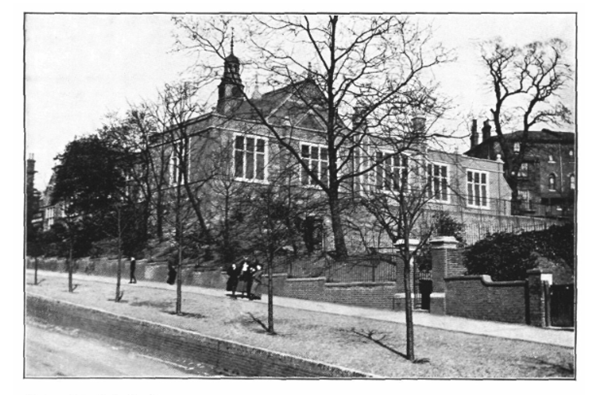
Many of the narratives surrounding British First World War experiences and legacies of service in the armed forces are derived from one of two contrasting class-based perspectives—the social élite or the working classes. The former made up an extremely small proportion of the pre-war male population, the latter a large majority. The experiences and legacies of the lower middle class (who, according to the social stratifications of the time, were situated in between) have been largely overlooked. These were the white-collar salaried employees and the shopkeepers and other small businessmen who comprised a significant one in five or so of the pre-war male population. A longitudinal study from birth to death of the 1350 largely lower middle class men eligible for service in the war who had attended Colfe’s Grammar School, Lewisham, reveals some alternative narratives.

Leave a Comment

‘Prepared To Make a Fine Fuss’: The Council for the Preservation of Rural England’s Long Second World War

Written by Gary Willis

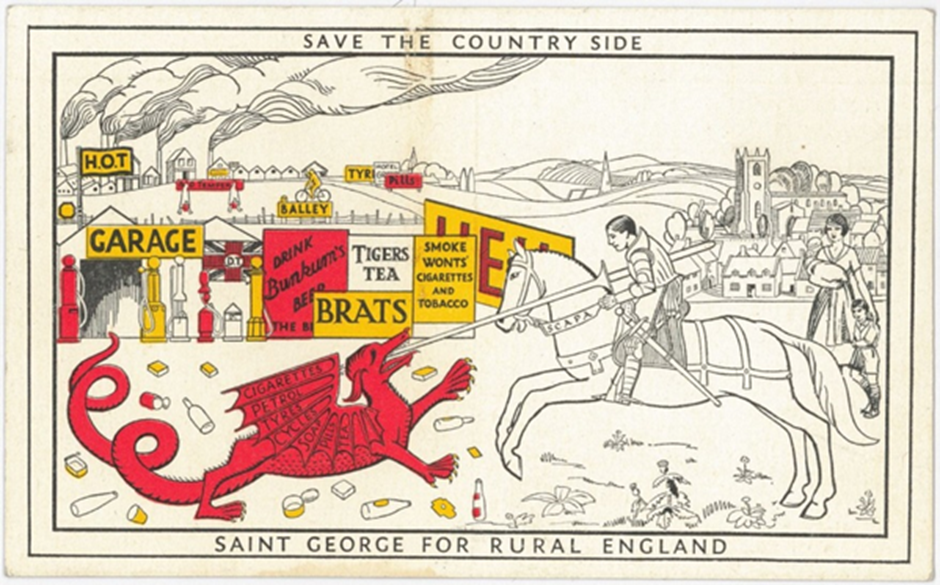
In 1928 the Council for the Preservation of Rural England (CPRE) produced a ‘Saint George for Rural England’ campaigning postcard. It depicted haphazardly located industry, petrol stations, road-side advertising and litter being slayed by CPRE in the image of St George. Soon, however, there was a growing threat from an entirely different direction – preparations for war.

Leave a Comment

The British Latin American War Effort in Chile: A Transnational Network of Collaboration during the World Wars

Written by Roberto Pérez Castro

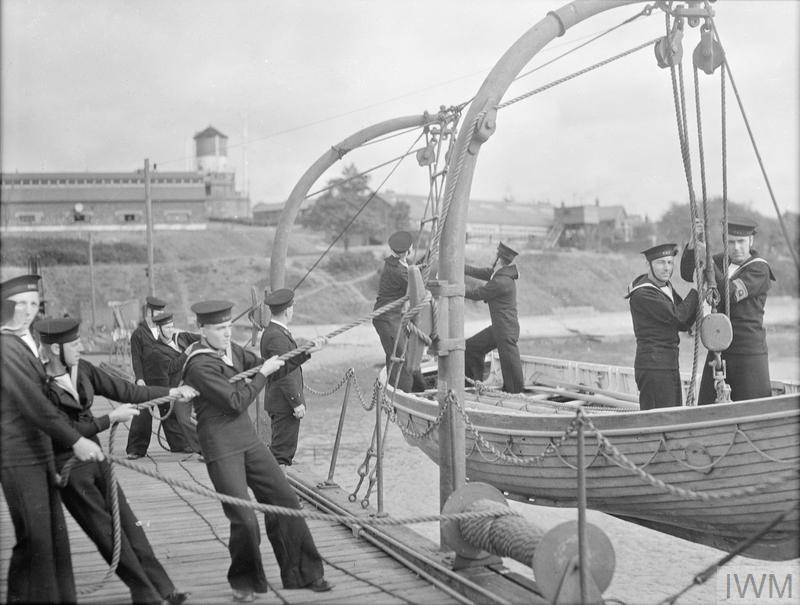
Juan Alberto (“Jack”) Adams Langley, the son of an English engineer, was born and raised in Chile. At the outbreak of the Second World War, he could have stayed comfortably in a neutral country, unbound by any recruitment or conscription by the British government. However, he travelled halfway across the world to join the Royal Air Force, where, as a Flying Officer, he was shot down in northern France in July 1944.

Leave a Comment

The German Nurse Memoirs of the Great War

Written by Jerry Palmer

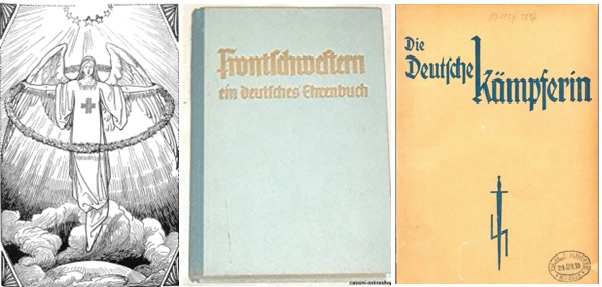
The majority of the nurse memoirs of the Great War, of all the combatant nations, focus overwhelmingly on their daily work; through this accumulation of detail, they demonstrate their dedication to the well-being of the soldiers, while by the same token their personal lives recede into the background. However, although they play down just how difficult nursing was under these circumstances, perhaps especially for the thousands who were volunteers with no previous medical experience, it is not difficult to work out just how draining it must have been. This is one example of a basic feature of memoirs: because they are inherently selective, what they don’t say is often as instructive as their contents.

Leave a Comment

Mosquito: The RAF’s Legendary Wooden Wonder and Its Most Extraordinary Mission

Reviewed by Tony Pratley.

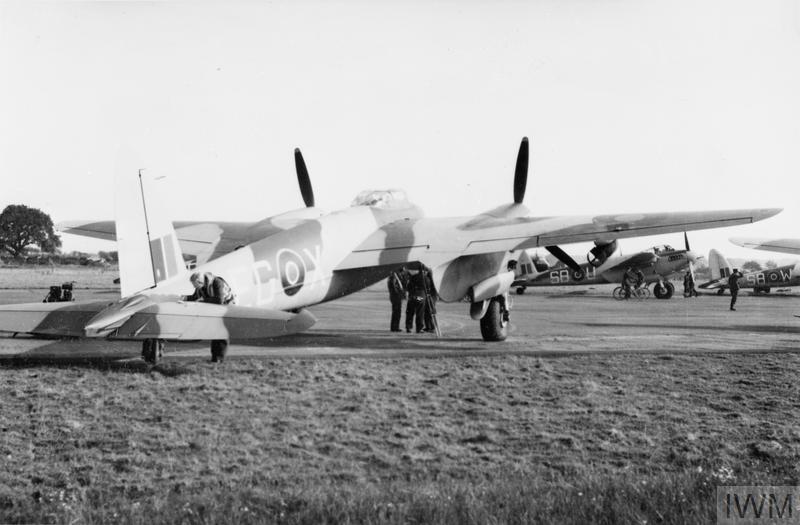
According to my well-thumbed copy of ‘Popular History for Dummies’, there are a few basic rules to follow. A potential blockbuster must be long enough for the summer holiday and short enough for the beach. Five hundred divided by 50 is a publisher’s basic rule of thumb. Five hundred pages divided into 50 easily digestible chapters. Unremitting action and a host of compelling characters, good but better bad, is also to be encouraged.  As for prose style, a breathless simplicity is best with an occasional authorial nod and a wink.  The reader ought to be left in no doubt about the happy ending.

Leave a Comment

Postcards from the Western Front: Pilgrims, Veterans, and Tourists after the Great War

Reviewed by Alison Fell

Mark Connelly’s wonderful new book would make a great companion for a tramp across the Western Front battlefields. It draws on an impressive range of primary sources: maps, letters, diaries, novels, press articles, battlefield guides and, of course, postcards, to evoke the landscapes of Northern France and Belgium that had been so devastated by the war. The landscape constitutes the point of connection between past and present, and makes you aware not only of the ghosts of soldiers who tramped the same battlefields, but of the thousands of ‘pilgrims’ – mourners, veterans and tourists – who followed in their footsteps.

Leave a Comment

Australian War Graves Workers and World War One: Devoted Labour for the Lost, the Unknown but not Forgotten Dead

Reviewed by Christopher Kreuzer

Published in 2019 by Palgrave Macmillan, Australian War Graves Workers and World War One: Devoted Labour for the Lost, the Unknown but not Forgotten Dead, is a multi-author collaborative work between two university academics (Fred Cahir and Sara Weuffen) and three other authors (Matt Smith, Peter Bakker and Jo Caminiti). As such, it spans the academic and public history fields, with well-chosen archival photographs, biographical vignettes, and moving personal accounts giving an insight into the gruesome nature and psychological impact of this post-war work.

Leave a Comment

From Famine to Genocide: The Holodomor in Ukraine

Written by Natalia Kuzovova

The famine of 1932–33 in Ukraine was a genocide of the Ukrainian people that claimed the lives of 3.9 million people. The total number of demographic losses amounted to more than 4.5 million. For a long time, archival documents about the famine were classified. But the surviving Ukrainians kept talking about the fact that ‘we are being killed by hunger’, ‘we were starved to death’. Therefore, the word ‘Holodomor’ became a signifier for this famine.

Leave a Comment