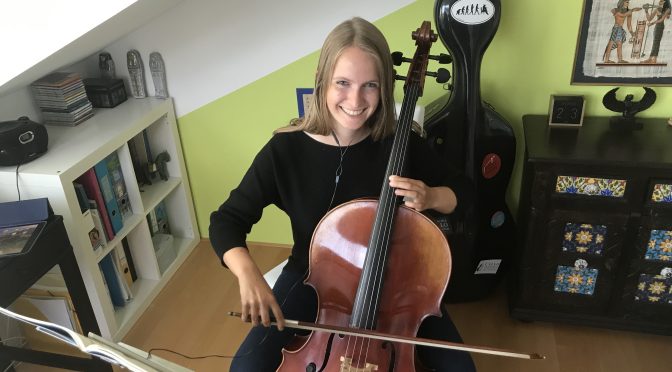
Coming home: Laura Osswald reflects on music-making and the impact of lockdown

Erasmus-student, cellist and singer, Laura Osswald, looks back on her time as part of extra-curricular music-making, and how she continues to be involved all the way from her home Germany during lockdown.


More than two months have passed since I have left the University of Kent. But the connection with the Music Department is still strong and will continue to be.
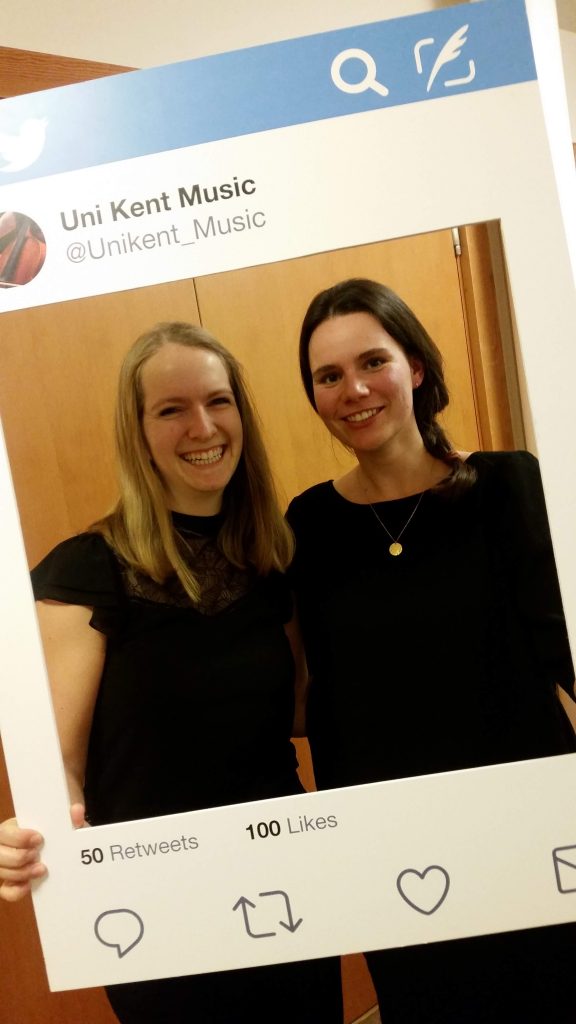
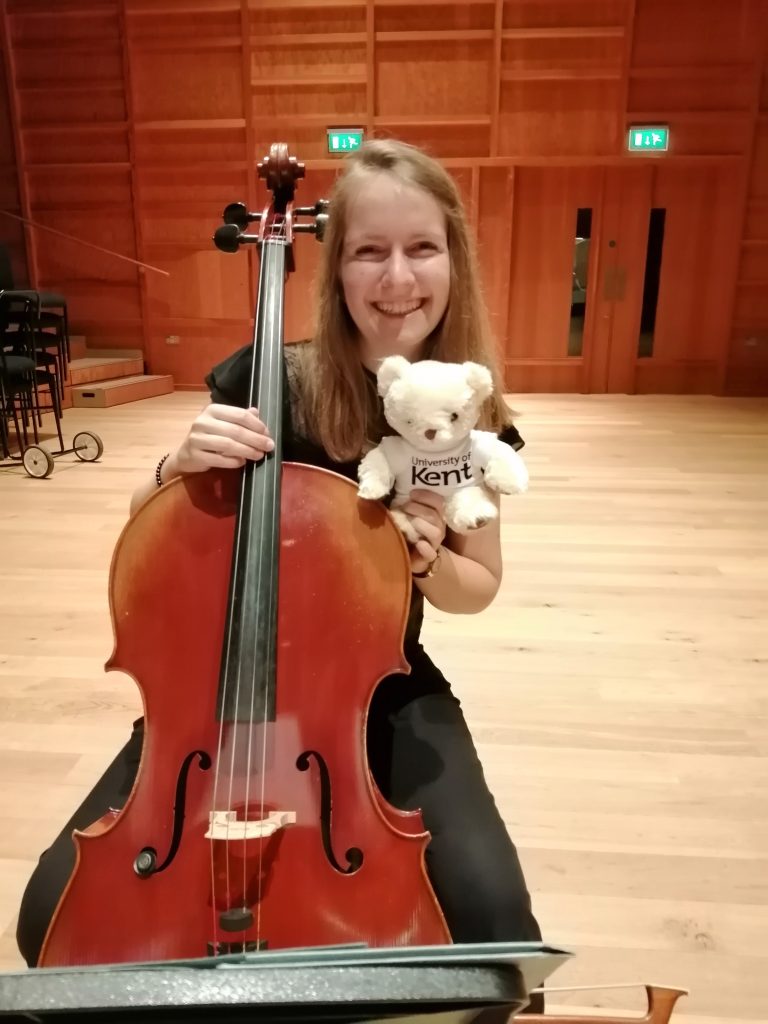
Card on the table: Laura (left) backstage in Colyer-Fergusson

Looking back on my Erasmus semester in Canterbury, music and the amazing people I got to know through it were a huge part of what turned this time into a great, enriching experience. Music allowed me to develop friendships not just based on the common fate of going to the same lecture or living in the same flat, but based on the shared passion of making music, especially making music together with others.

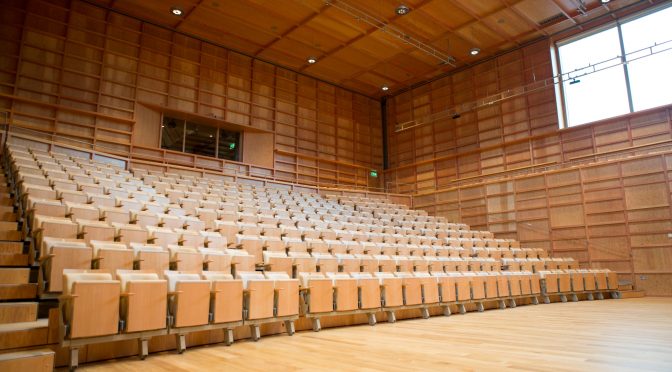
Within the music department, I never felt like a stranger – instead, going into the Colyer-Fergusson building more and more felt like coming home.

Being part of the Symphony Orchestra, the Cecilian Choir and the String Sinfonia and several small groups, I was very involved in the Music Department from the start. In my blogpost from November, I could only look back on the first concerts, but many more have followed. Christmas time had started wonderfully with the Advent Breathing Space with the Cecilian Choir in the medieval St Michael’s Church in Hernhill. My first term then ended with the fantastic concert with the Symphony Orchestra and Chorus. 2020 continued to be full of various musical activities. For Alice in Wonderland, I got the chance of not only singing in a choir, but also dancing as a playing-card which I enjoyed very much!
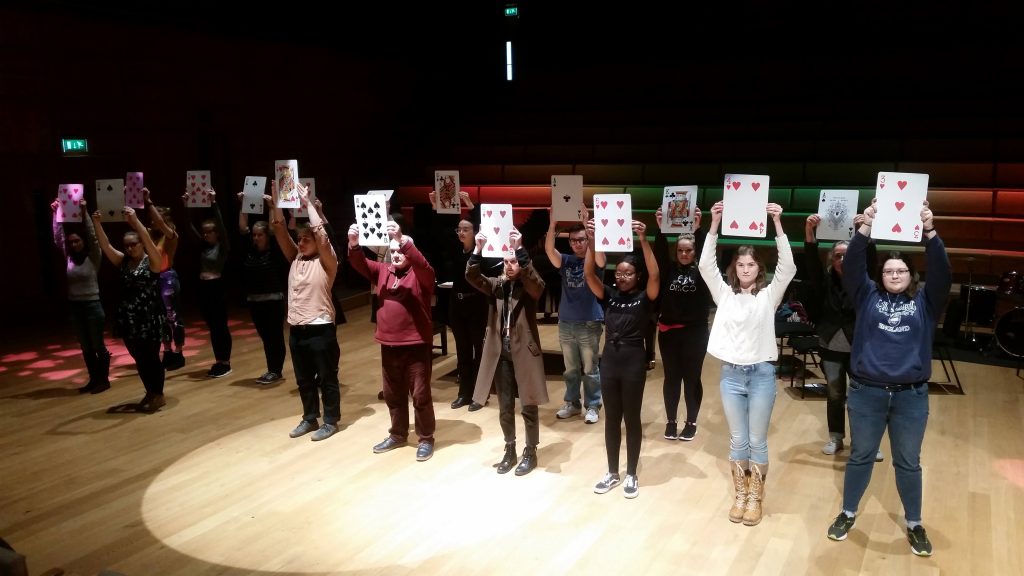
On the cards: the ‘Alice in Wonderland’ chorus in rehearsal

With the amazing University Camerata, we had a nice family concert of Peter and the Wolf where I was leading the cello section – so exciting and a great experience! I also continued to make chamber music: I joined a string quartet that performed at the Law Ball and a piano trio. With the Symphony Orchestra and String Sinfonia, we worked hard on our repertoire for the concerts in the end of March and I loved our rehearsals – but unfortunately, Covid-19 came in the way. Particularly the cancellation of the Cathedral Concert was very sad for me as it would have offered the unique opportunity to play in the impressive Canterbury Cathedral – I even would have had a small solo in Duruflé’s Requiem. It would have been a great finale for my musical time in Kent.
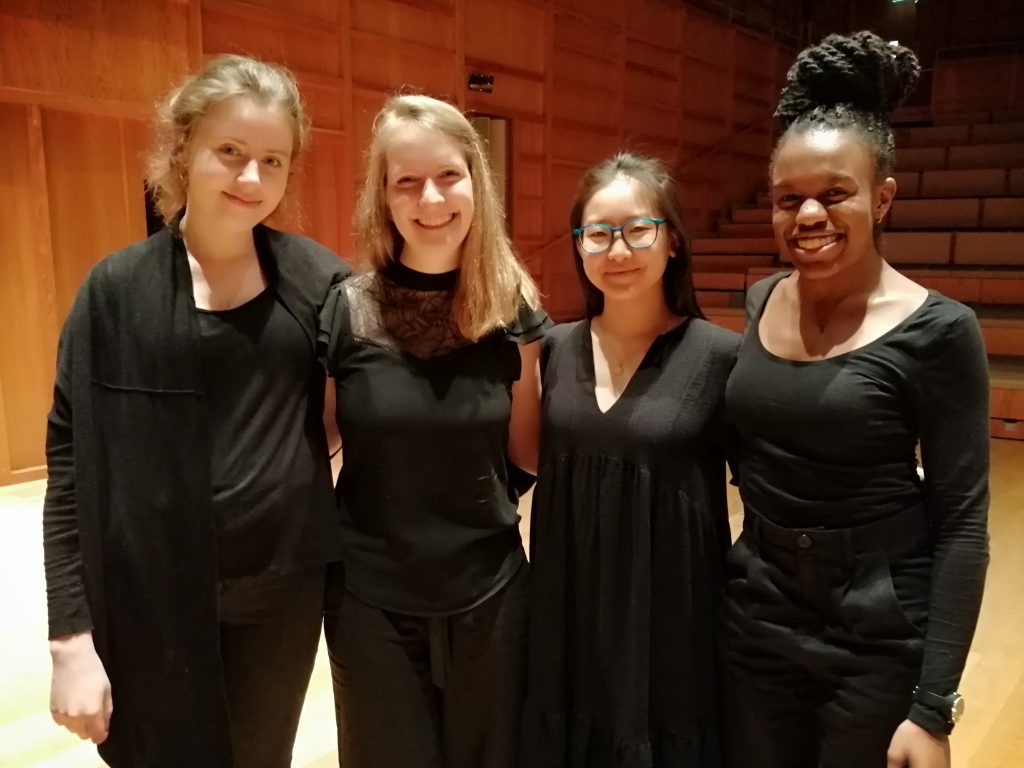
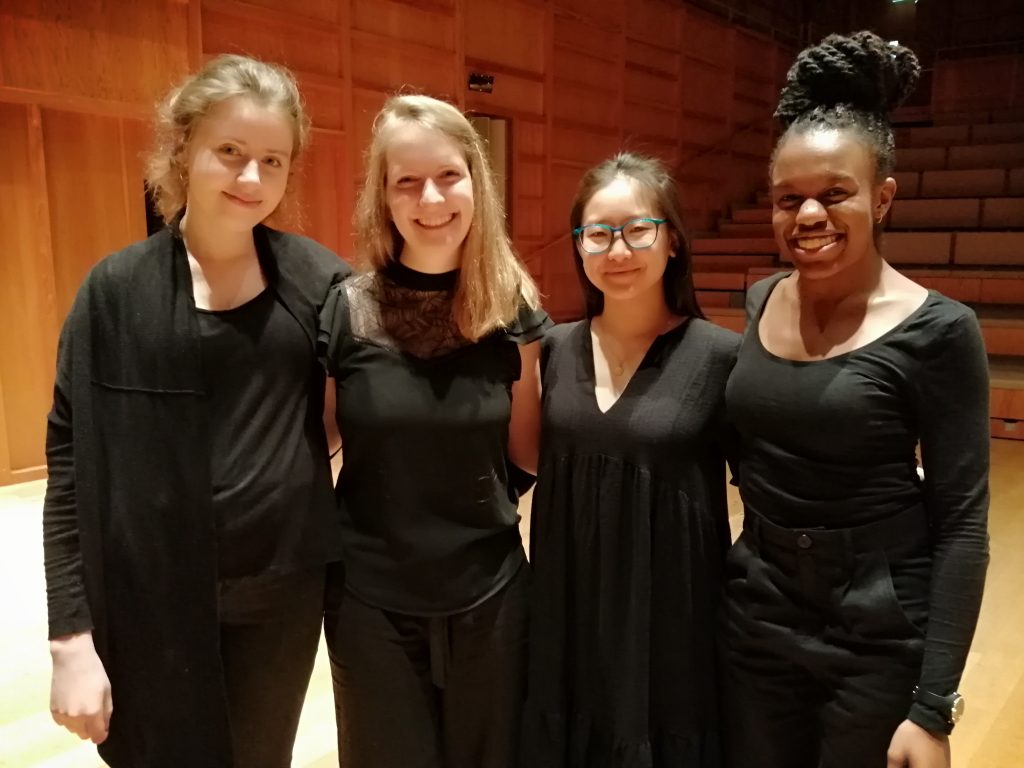
Laura (second from left) with the chamber group

But then, we found an alternative ending: a Facebook livestream concert with a piano quintet playing the beautiful music of Ólafur Arnalds. This was actually a dream of mine coming true, since I have loved his music for years and always wanted to play it myself – and now I could, together with four amazing musicians. I am very thankful that this happened, giving me a perfect ending to my Erasmus semester and bringing a bit of calm and peace into a troubled world.

When I think of all the music-making and concerts I have been part of, I am incredibly grateful that I had this opportunity and I am so happy I could experience all of this before the coronavirus started to change our lives so much. However, a positive side-effect is the emergence of the virtual music projects! Thanks to the great commitment of Dan Harding and the wonders of technology, I can continue playing with the people I love and miss. Of course, this is very different from making music together face-to-face and it can’t quite replace it, but nevertheless it is a beautiful opportunity to maintain my connection to Canterbury, the Music Department and joint music-making in general.
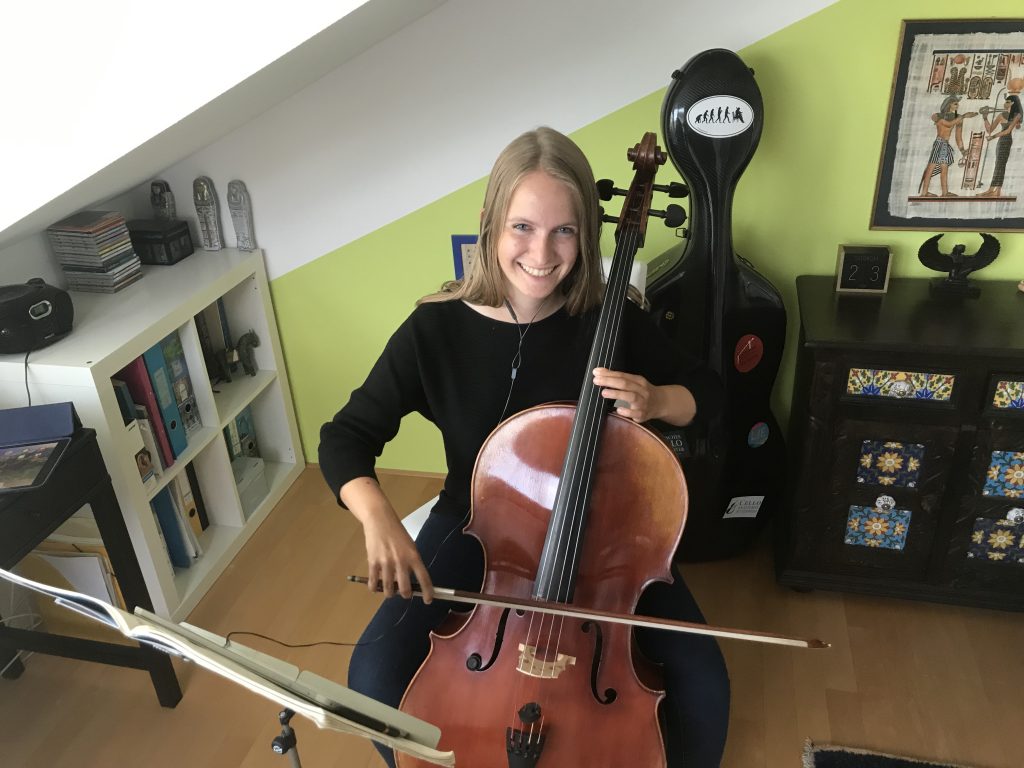
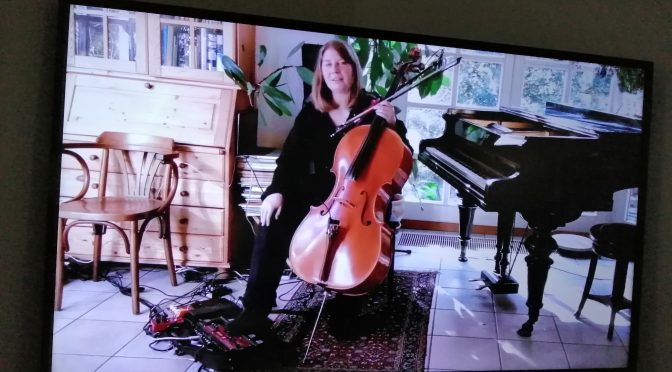
Social distant-strings; Laura recording as part of the Virtual Music Project from her home in Germany

The music, the memories and the people will stay in my heart. Thank you for welcoming me in Canterbury with open arms, I hope I can come back one day.
Show your working: now is the time to be spoiling the illusion behind creating performances

Lights, camera – action.

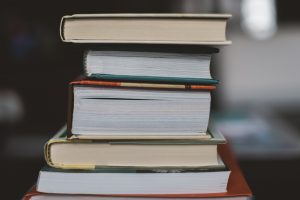
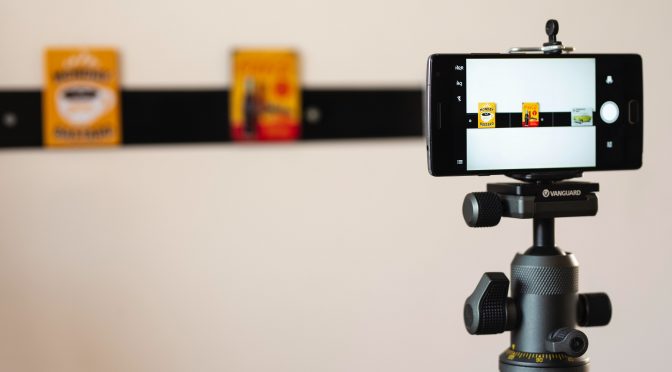
Or, currently, more likely: lighting (pulling curtain, adjusting angle-poise lamp), camera-phone (or webcam) – tripod (or dodgy pile of precariously-balanced books) – internet signal (strength variable but should suffice) – crossed fingers – Go Live / Start Stream.

Photo by Claudia Wolff on Unsplash

The lifting of the curtain, the hushed expectancy of the audience as the music begins or the first words are uttered on the stage. The first moments of what, hopefully, is a magical, captivating, challenging performance, created after hours of endless work in crafting a flawless experience that hides well the hours spent in making it. At the moment, that’s all gone.

Whilst lockdown has afforded new ways of realising creative ideas, it also underlines how hard it is to bring about a ‘traditional’ live event. Performers can’t engage with live listeners in the same way, with a packed house, an eager audience.

Continue reading Show your working: now is the time to be spoiling the illusion behind creating performances

Are the performing arts more accessible in lockdown? A reflection on accessing live music in lockdown, shielding and solitude.

As part of our occasional guest series, a reflection on the arts in lockdown by Dr Francesca Bernardi, RSA Fellow and independent researcher into children’s rights, dis/abilities and the arts.


Sometimes people like to use the phrase ‘wearing different hats’ as an expression of versatility, in different contexts or in a single space that requires one to assume different guises to get through the day (at the very least). I suppose that might be a good way to start a brief introduction of my own different hats. I would describe my self as a children’s rights and dis/ability activist, but then feel I am neglecting the very medium of such activism: the arts, visual and performing.

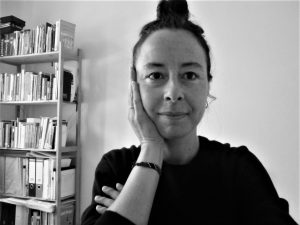
Francesca Bernardi

In this time of crisis I have worn a new guise which has been with me always (unnoticed) and has positioned me in a place of vulnerability and, consequently, I am shielding. Responding to this heightened vulnerable self, has caused me to look at personal ideas, hopes and ambitions in a very different light. I have also been hit financially by the changing shape of academia and my potential role within that space. An added sense of displacement comes from my inability to return to Italy (my home) where I would like to continue my research with communities that are seldom heard, in research, the media and their own social spheres.

Continue reading Are the performing arts more accessible in lockdown? A reflection on accessing live music in lockdown, shielding and solitude.

Rewriting the dimensions of the world: the arts in lockdown and a global audience of one

In the current climate of getting your cultural fix online – music, theatre, dance – I’ve found myself, like many, watching pre-recorded and streamed live performances of musicians and actors from around the world. I’ve written elsewhere of witnessing the courage of cellist and composer Anne Müller’s livestreamed Wohnzimmerkonzert (pictured below); I’ve also watched the troubling Frankenstein from the National Theatre, Alan Bennett’s The Madness of George III from the Nottingham Playhouse, and last night’s broadcast of Samuel Barber’s Vanessa from Glyndebourne, a compelling blend of Erwartung, Bluebeard’s Castle and the more menacing waltzes of Ravel.

Continue reading Rewriting the dimensions of the world: the arts in lockdown and a global audience of one

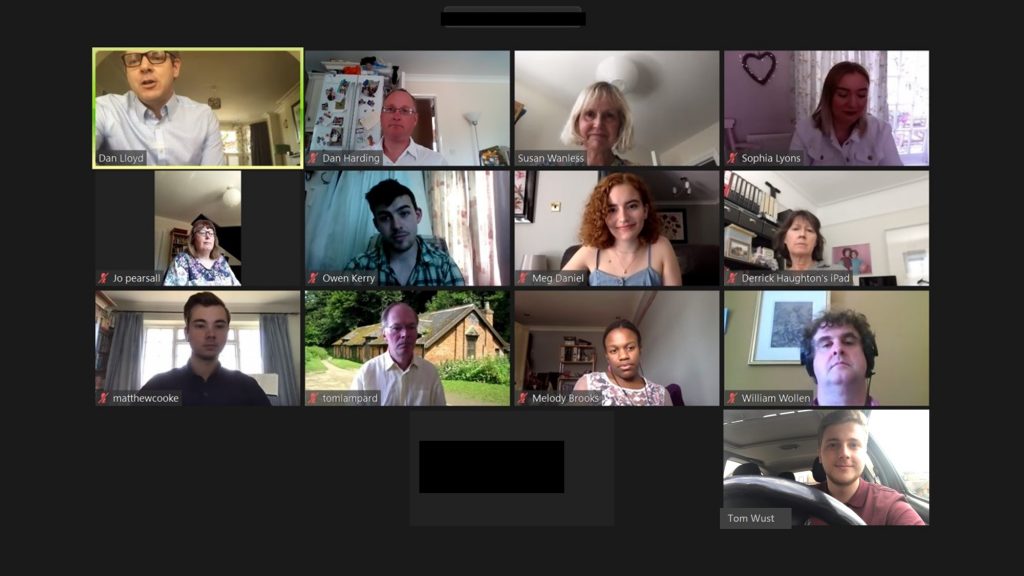
Zoom with a View: awards ceremony with a difference to recognise outstanding contributions to University music

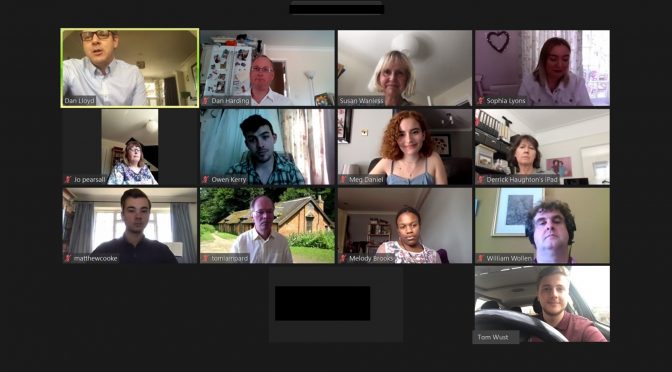
Well, we’ve never had a Music Prizes awards ceremony quite like it before – a sign of the times – but it was still lovely to be able to ‘see’ this year’s prize-winning students, and to be able to thank them for their various outstanding contributions to music-making this past, slightly shorter than normal, academic year.

Stars of the small screen…

The Music Prize Committee has the unenviable task of recognising particular students whose involvement in the extra-curricular musical life of the University, from amongst all those who give up their time in order to participate. The deliberations eventually resulted in prizes this year being awarded to:

Canterbury Festival Music Prize: awarded jointly to Sophia Lyons (Drama and Theatre Studies) and Tom Wust (Business and Management)

Colyer-Fergusson Prize: awarded to Owen Kerry (Physics)

University of Kent Music Prize: Megan Daniel (Law)

David Humphreys Prize: awarded jointly to Matthew Cooke (French and Business Administration) and Melody Brooks (Forensic Psychology)

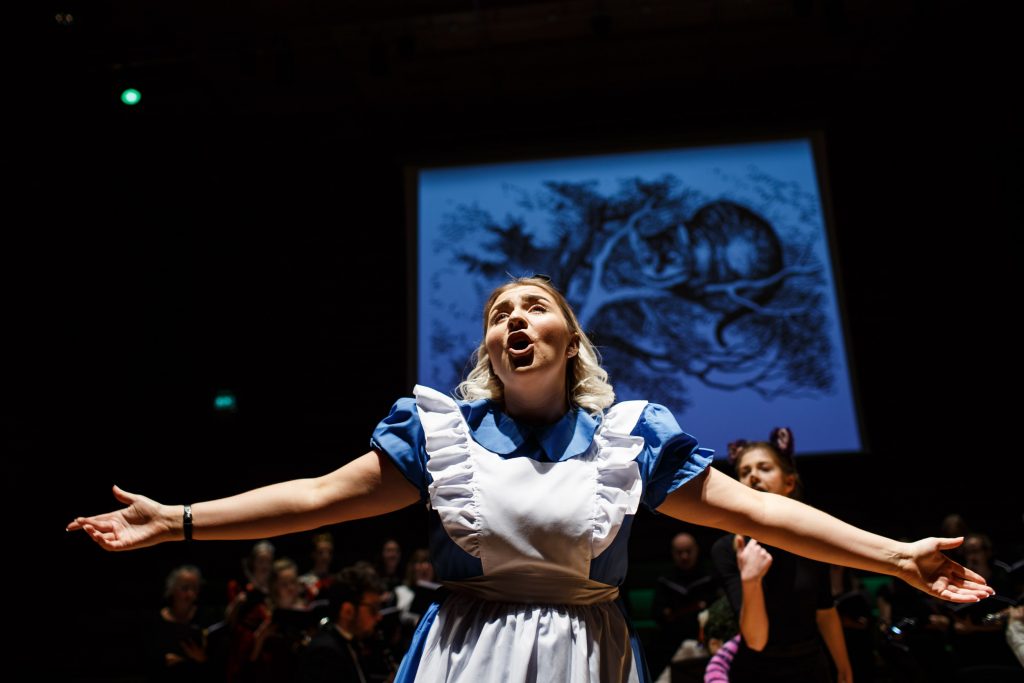
Sophia Lyons in the title role of ‘Alice in Wonderland’ performing in February
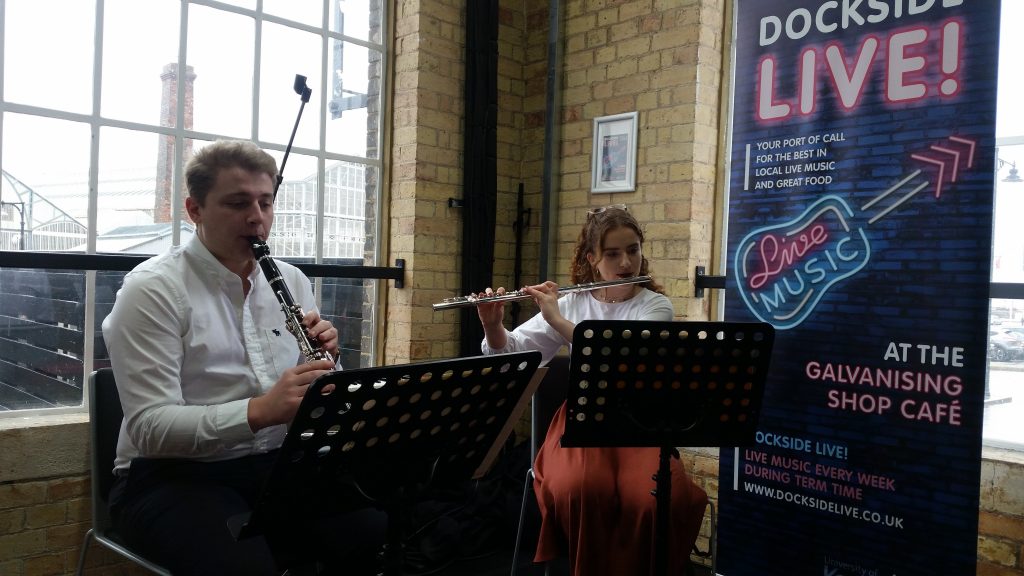
Tom Wust and Meg Daniel performing a Lunchtime Concert at the Historic Dockyard in March
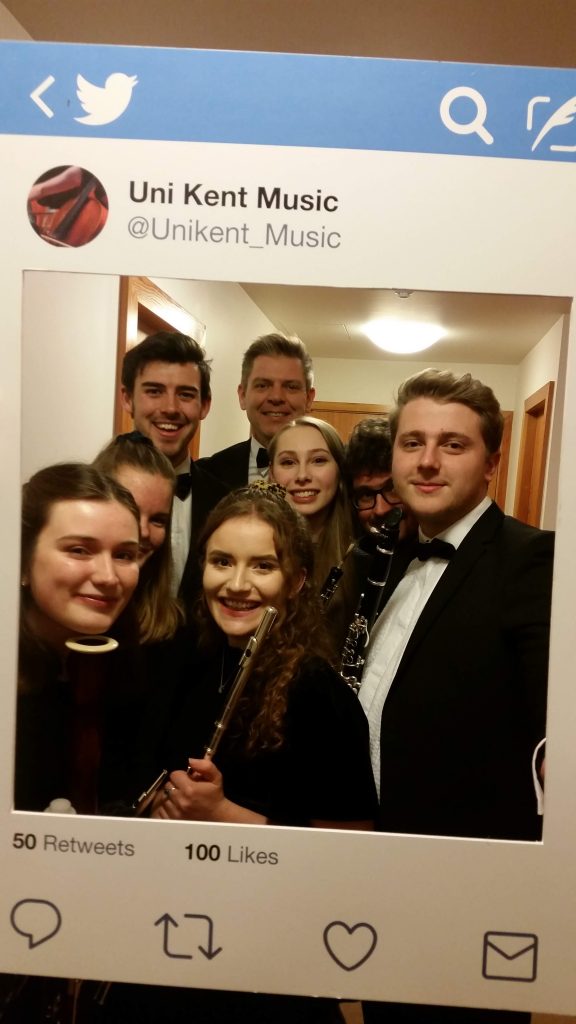
Owen Kerry (top left) among the woodwind section of the Orchestra backstage in December
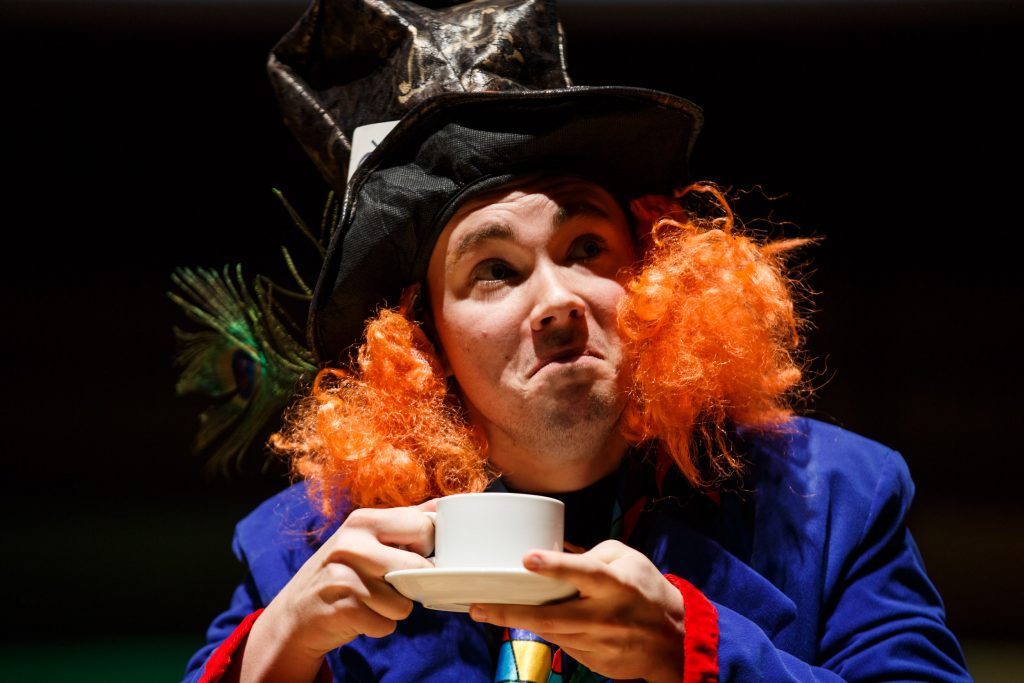
Matthew Cooke in the role of the Hatter in the production of ‘Alice in Wonderland’ back in February
Melody Brooks (right) performing as part of a chamber ensemble in March

The highly unusual award ceremony, expertly and virtually chaired by Professor Dan Lloyd, was a way both to thank them and also to acknowledge their impressive contributions to a curtailed but still nonetheless excellent period of music-making.

Now for a virtual glass of champagne…


Different risks for the New Normal: a concert by Anne Müller

In an era when musicians (and in fact artists generally) are adapting to the current climate by presenting and performing online, I had the fortune recently to watch a streamed Wohnzimmer performance by cellist, composer and music-and-electronics exponent, Anne Müller.

Continue reading Different risks for the New Normal: a concert by Anne Müller

Lockdown Lunchtime Concert with University Music Scholars

In these unusual times, we’re pleased to present a ‘virtual’ Music Scholars’ Lunchtime Concert as part of a re-imagined Summer Music Week.

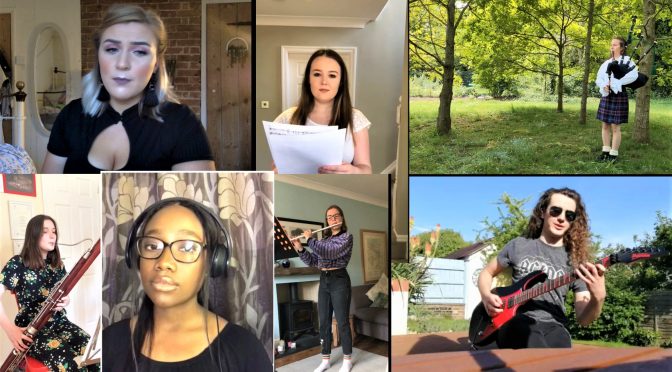
The concert featured several Music Performance Scholars and Award Holders, who had each filmed themselves performing in isolation from their homes around the country. From Scottish piping to French art-song, nimble woodwind pieces and a song from Disney’s Prince of Egypt, a novel way of highlighting just some of the musicians that take part in our extra-curricular music-making.

With thanks to all the performers (and their accompanists!) who took part.