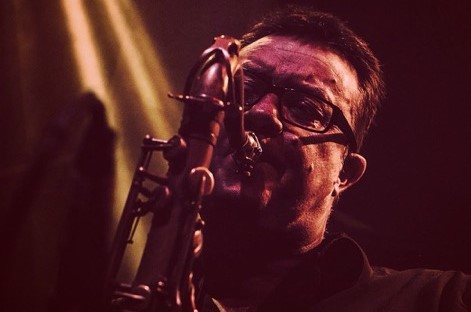
This week’s episode of our In Conversation series features saxophonist with the Jools Holland Rhythm and Blues Orchestra, Phil Veacock, in discussion with director of the University Concert and Big Bands, Ian Swatman.
From reflecting on early inspiration playing the recorder and school leading into playing the clarinet, Phil looks back on being inspired to take up the saxophone on seeing 2-Tone bands playing on Top of the Pops; playing with The Larks and turning down a recording contract; illicit vegetable snaffling in east Kent; joining the Jools Holland Rhythm and Blues Orchestra, playing on Wogan and Chris Evans’ Don’t Forget Your Toothbrush and the ‘Hootenanny’ revels; and, during COVID restrictions, finding alternative work as a delivery driver for the Charlton Bakehouse bakery.
Enjoy this lively and fascinating chat over on our YouTube channel, where the hour-long conversation is divided into chapters covering various aspects of Phil’s reflections.
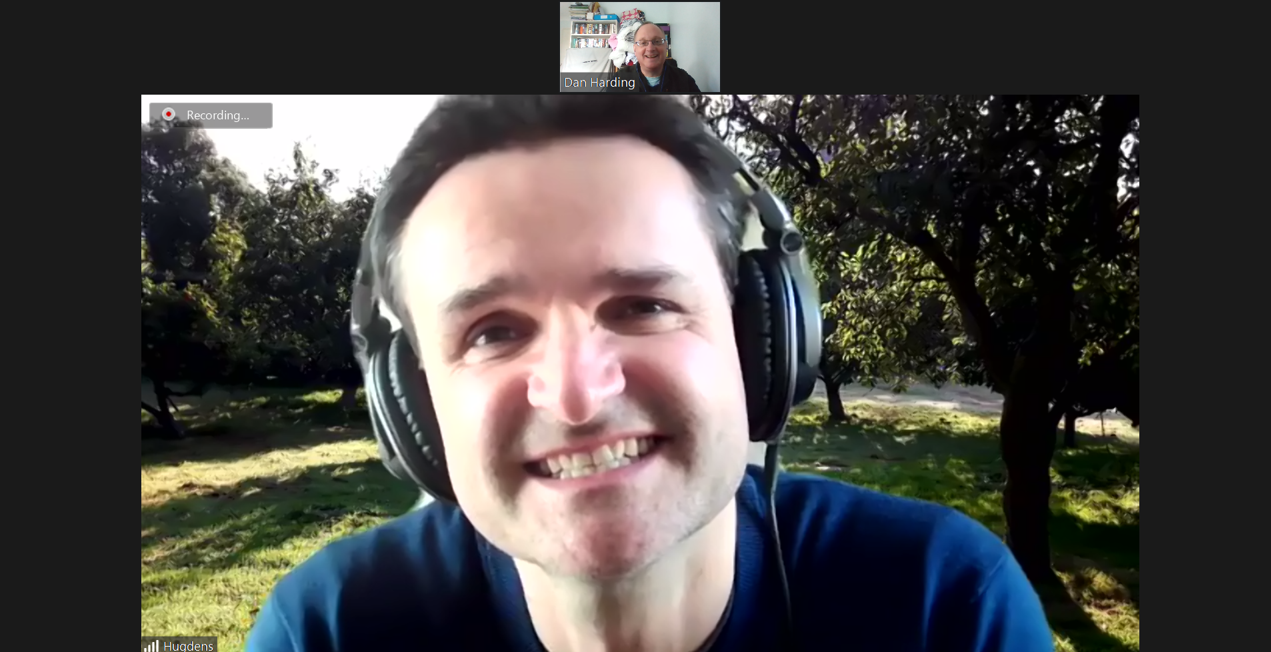
This week’s episode of our Zoom For Thought podcast is the second episode featuring an interview with Radio Lento, the weekly podcast presenting ‘sound postcards from beautiful places.’
In the second part of the interview with Hugh, he reflects on listening to the skies over his back garden over lockdown when air traffic had been suspended; the impact of drone technology on environmental sound; the importance of listening in to other worlds; and the idea of structured listening to the environment compared to listening to music.
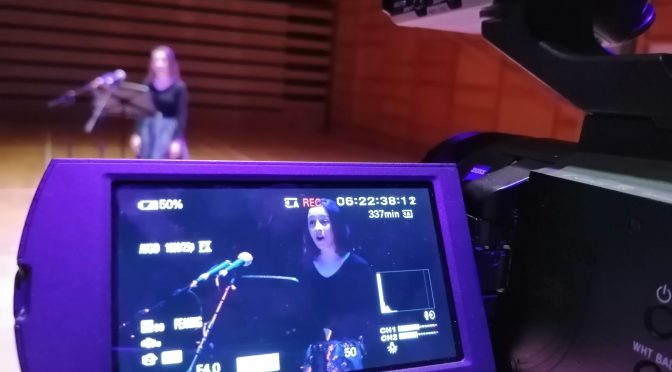
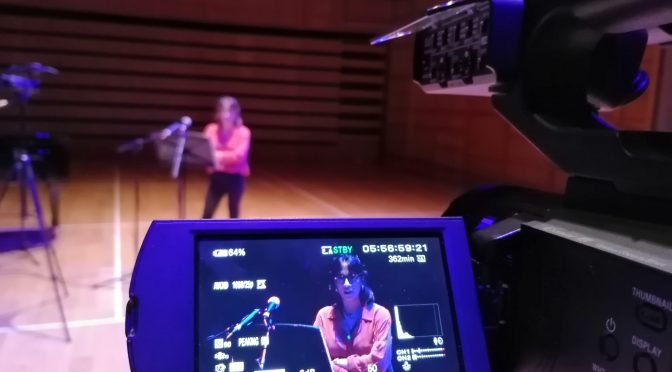
The latest in our Scholars’ Spotlight series of short filmed recitals features second-year Psychology student and soprano, Felicity Bourdillon; a Music Award Holder at the University, Felicity’s recital comprises a brace of Baroque arias – ‘Oft she visits’ from Purcell’s Dido and Aeneas, and ‘Quia respexit’ from Bach’s Magnificat,
Filmed in Colyer-Fergusson Hall and edited by Thomas Connor.
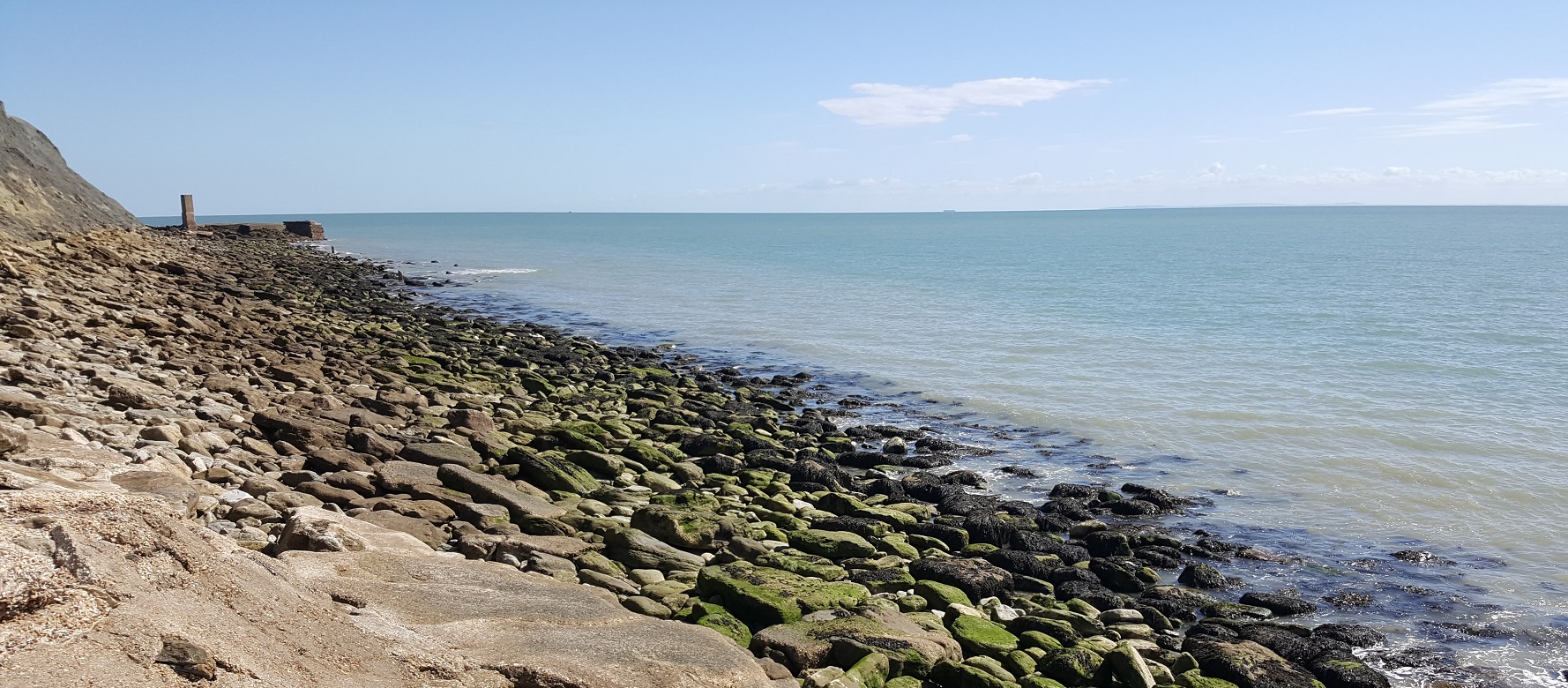
This week’s episode in our podcast series is the first of several featuring Hugh Huddy, who, with his wife Madeleine, is the creative force behind Radio Lento, a podcast series presenting wonderfully evocative soundscapes recorded in the natural environment. From dawn chorus in the Forest of Dean to shingle beaches at Folkestone, each Radio Lento episode presents an immersive listening experience, offering, in Hugh’s own words, ‘weekly sound postcards from beautiful places.’
In this first episode, Hugh reflects on the challenges of recording the natural world; the concept of authenticity and being true to the practice of capturing the environment in sound, in single, unedited takes; and similarities between listening to soundscapes and to music, and the idea of defeating time.
The Music Department is very grateful to have received part of a legacy left to the University by Barry Wright, an alumnus of the University of Kent.
Barry completed a Diploma in Christian Theology and Ministry as a mature student in the School of European and Cultural Learning, graduating in 2003. During his lifetime, he supported the University as a donor to the Kent Opportunity Fund and supported the Colyer-Fergusson Building, attending the opening event of the award-winning facility in December 2012.
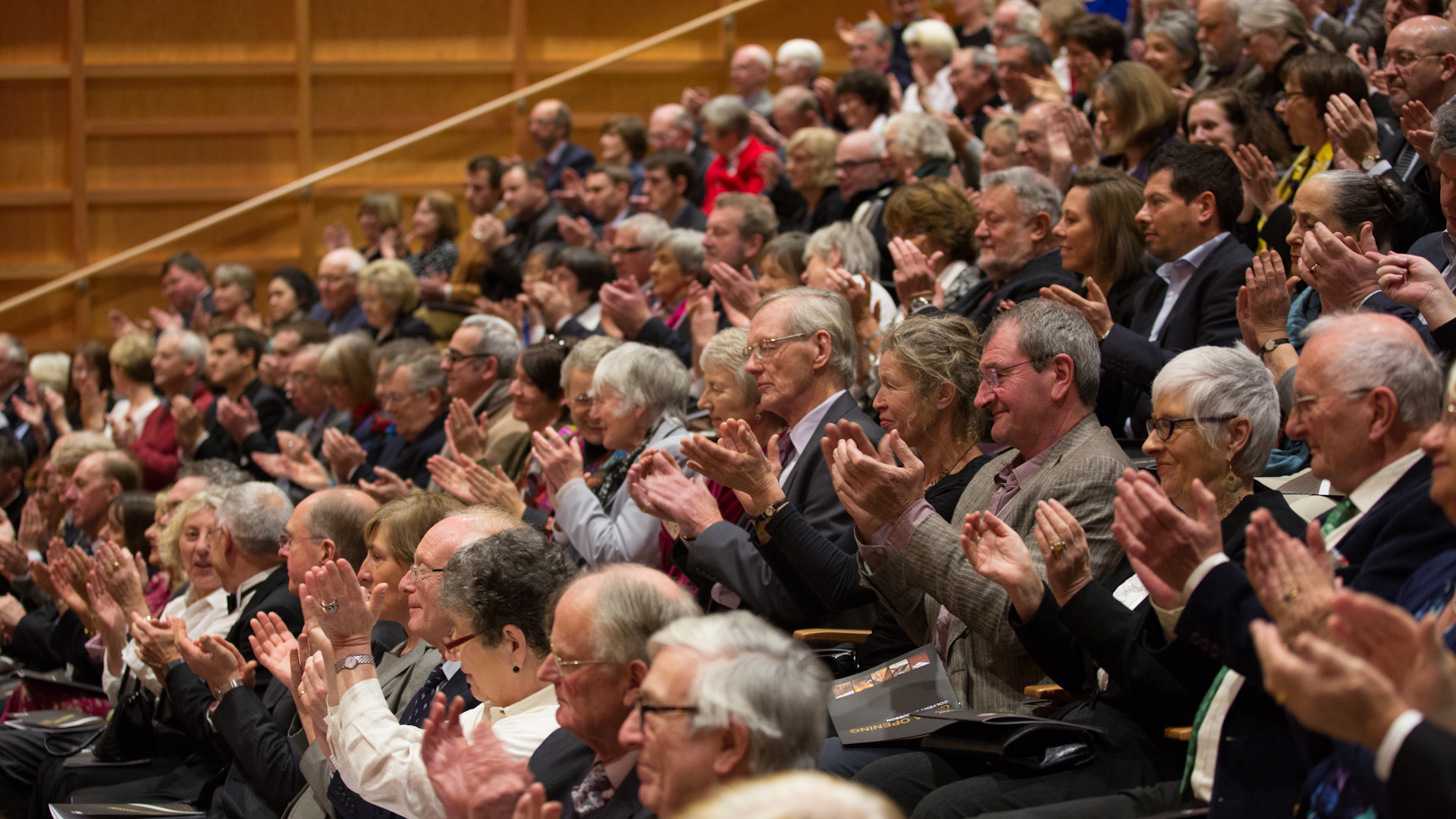
An enthusiastic audience at the Gala concert to open the Colyer-Fergusson Building in December 2012
The Music Department delivers a vibrant extra-curricular music provision as part of the experience of life at Kent, ranging from large-scale ensembles such as Chorus, Orchestra, Concert Band and Big Band to chamber ensembles, as part of a rich programme of performances and events each academic year. The end of the academic year is marked by the annual Summer Music Week, a popular series of musical events to mark the end of the University year, involving concerts both in Colyer-Fergusson Hall as well as in the Crypt of Canterbury Cathedral and the Memorial Bandstand at Deal.
“Barry’s legacy will greatly enhance the lives of the musical students who pass through the University of Kent,” said Head of Music Performance, Dan Harding “as one of the bequests that generously support the Music department’s activities each year; from concerts on campus and around the region, workshops with professional musicians, exploring new repertoire and keeping the department pianos and instruments in tip-top condition, the legacy is a wonderful gift that will allow the Music department to continue to develop and enrich the lives of students, staff and members of the local community who take part in its activities each academic year.”
The annual Summer Gala concert in Colyer-Fergusson Hall
The University remains grateful to Barry for his generosity during his lifetime and in planning his legacy to enhance the lives of future participants in Kent’s extra-curricular musical life. It’s thanks to support from all its donors that the Music Department in particular is able to continue to provide uplifting experiences to all those who pass through the doors of Colyer-Fergusson.
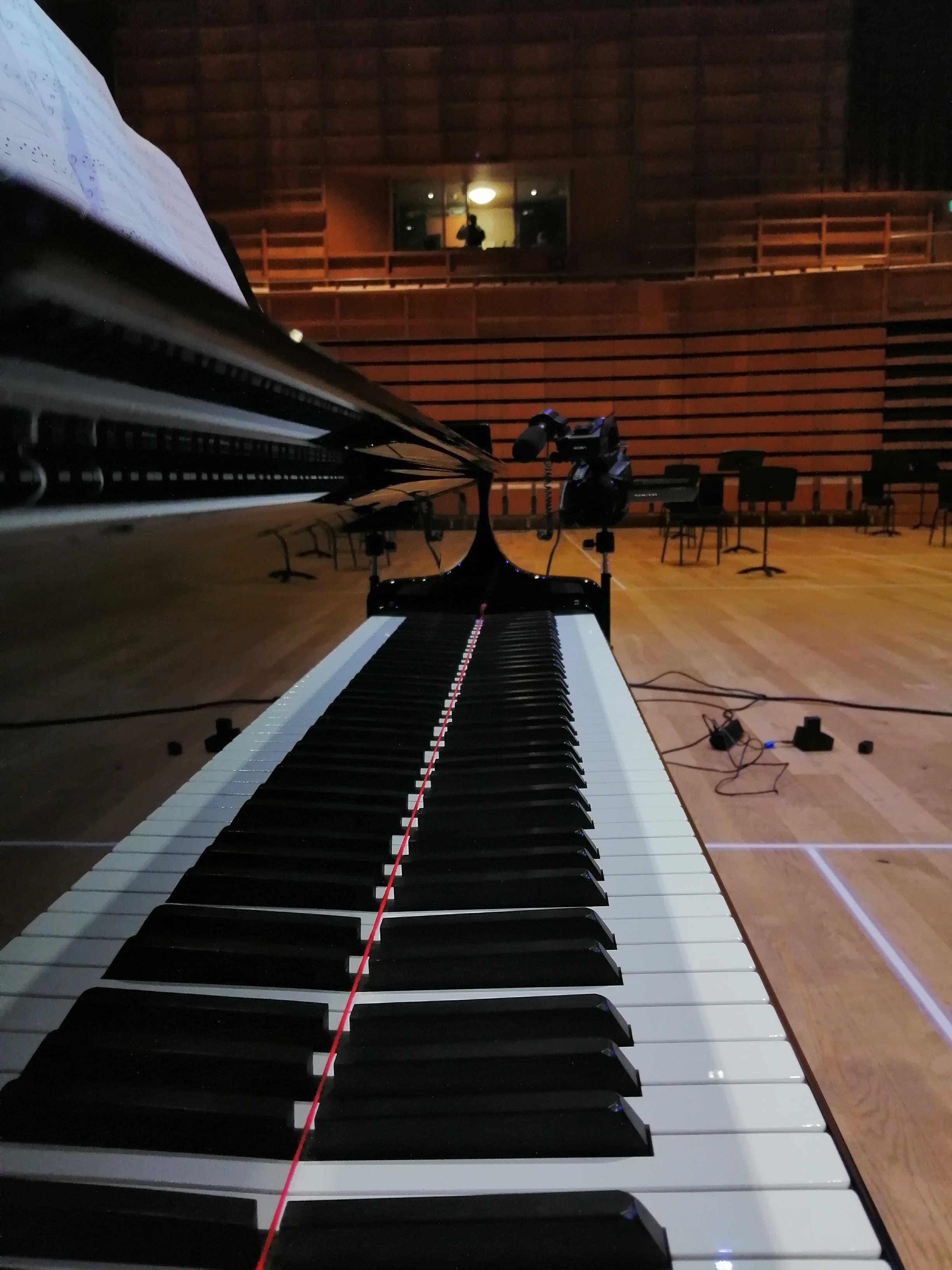
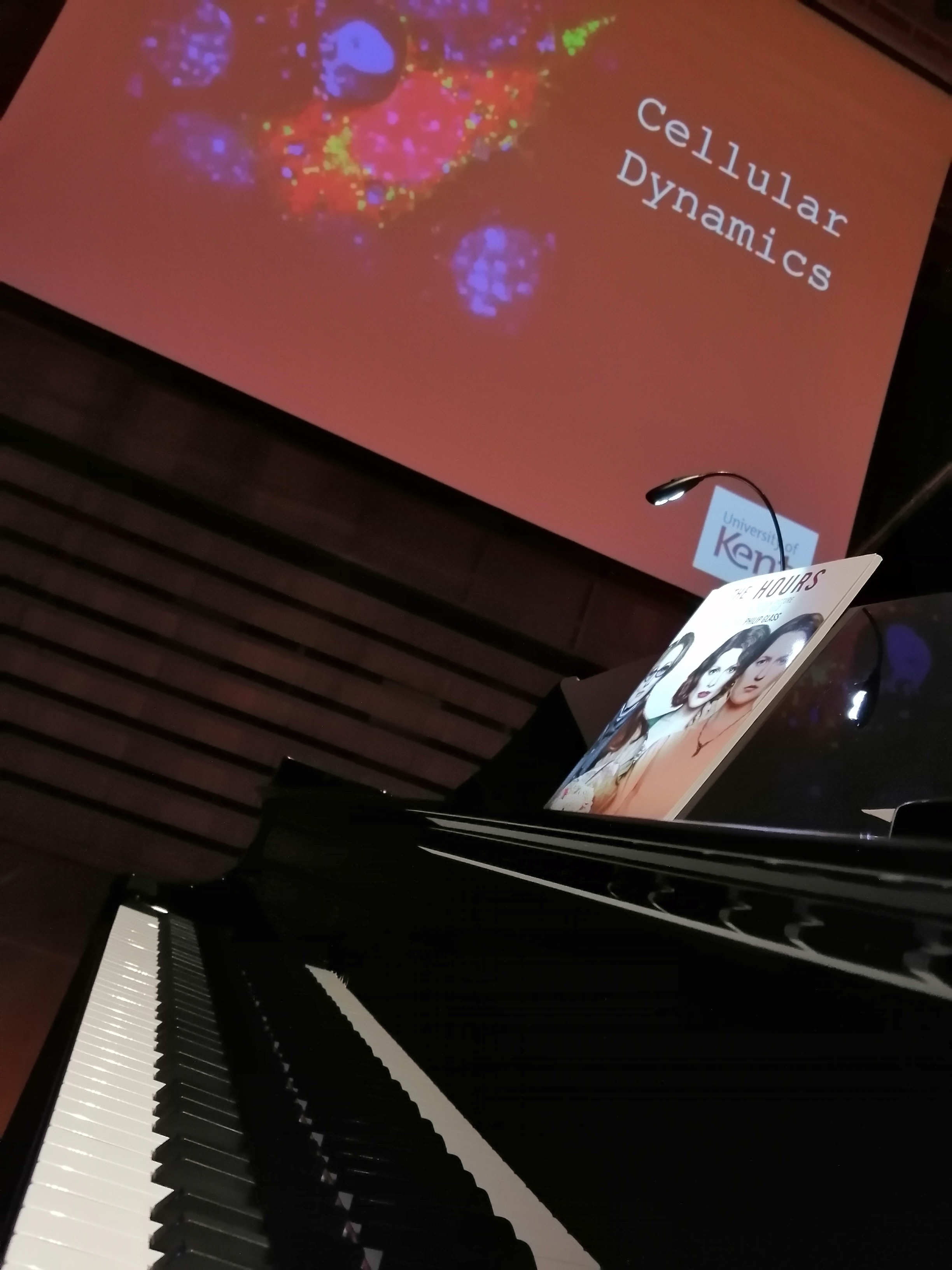
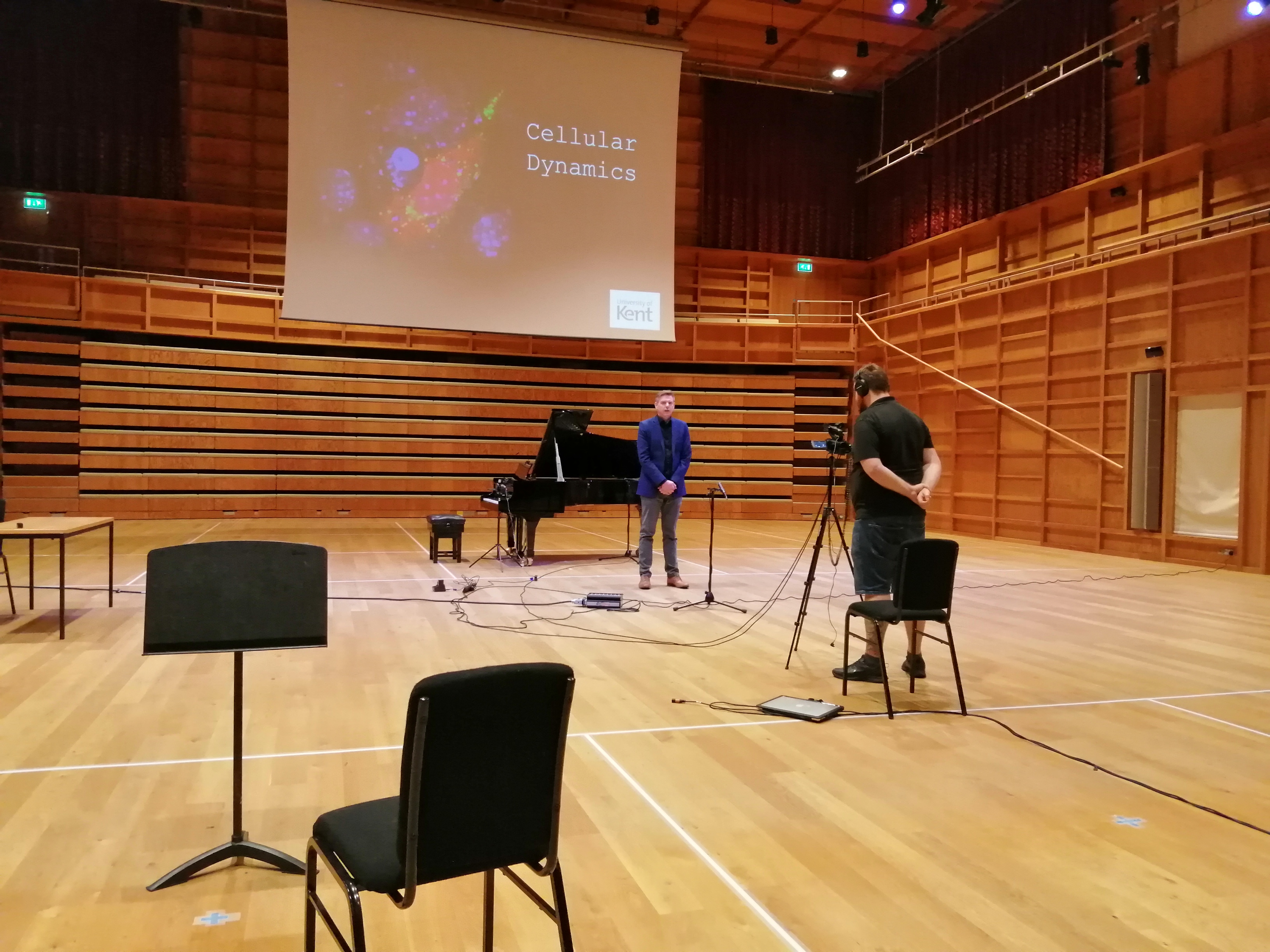
All this week, we are presenting individual chapters from the Cellular Dynamics project, exploring cutting-edge scientific research imagery and video from the School of Biosciences, in dialogue with music.
Filmed during lockdown, the unfolding series brings together image and music in a meditative presentation of both the materials and the methods involved in research, uncovering the hidden beauty in the most mundane of objects in the research laboratory and transforming the process of investigation into an artistic experience, filtered through piano music by Philip Glass, Debussy, John Cage and Tarik O’Regan.
Colyer-Fergusson Hall becomes an immersive platform for highlighting processes operating in both science and music – viral infection and the process of mutation linked to compositional processes in music, together taking the viewer on an odyssey through sub-molecular events at the cellular level.
Chapter One: Abstract
Chapter Two: Materials and Methods:
The series can be viewed as a complete set on our YouTube channel here, including an introduction from Professor Dan Lloyd in the School of Biosciences; read more about the project here.
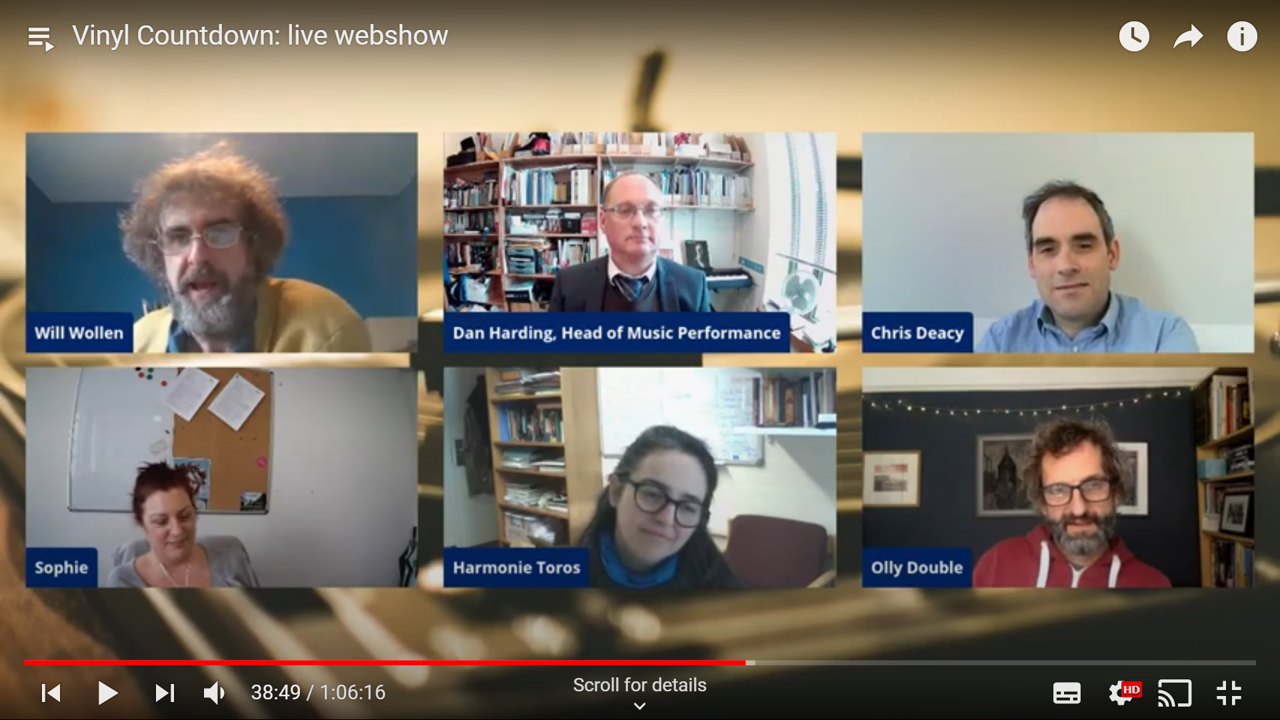
This week’s episode of our livestreamed webshow, Vinyl Countdown, featured four members of the University staff on the panel, battling live on air for viewers’ votes for their favourite album.
Competing for Album of the Week were Dr Olly Double (Reader in Drama), Dr Harmonie Toros (Reader in International Conflict Analysis), Dr Chris Deacy (Head of Religious Studies) and Will Wollen (Senior Lecturer in Drama).
The albums vying for the title were Dare (Human League), August and Everything After (Counting Crows), The White Album (The Beatles) and Germfree Adolescents (X-Ray Spex).
If you missed this riotously entertaining episode watch it here:

 In this first episode, Hugh reflects on the challenges of recording the natural world; the concept of authenticity and being true to the practice of capturing the environment in sound, in single, unedited takes; and similarities between listening to soundscapes and to music, and the idea of defeating time.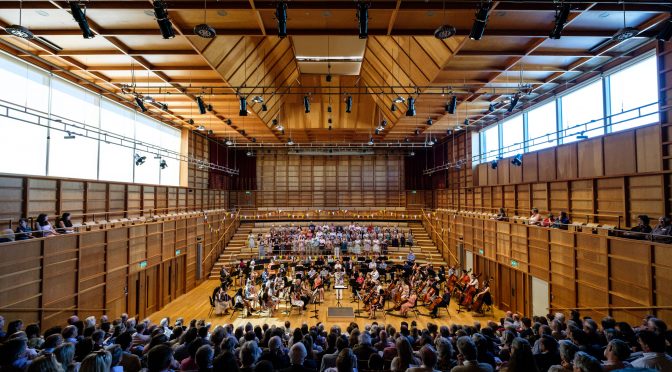
 “Barry’s legacy will greatly enhance the lives of the musical students who pass through the University of Kent,” said Head of Music Performance, Dan Harding “as one of the bequests that generously support the Music department’s activities each year; from concerts on campus and around the region, workshops with professional musicians, exploring new repertoire and keeping the department pianos and instruments in tip-top condition, the legacy is a wonderful gift that will allow the Music department to continue to develop and enrich the lives of students, staff and members of the local community who take part in its activities each academic year.”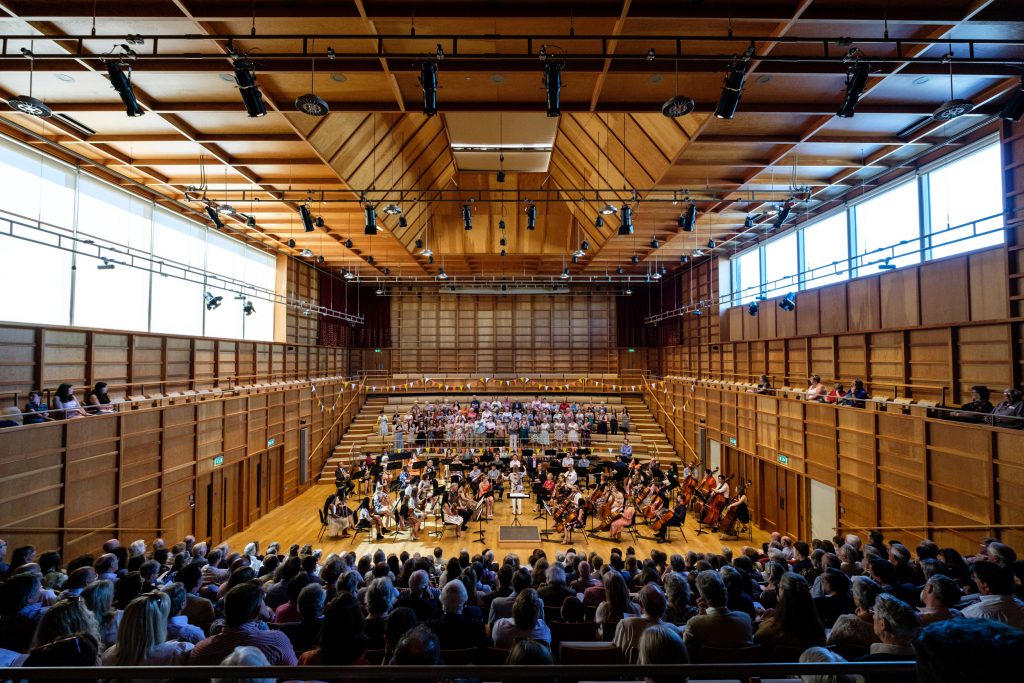
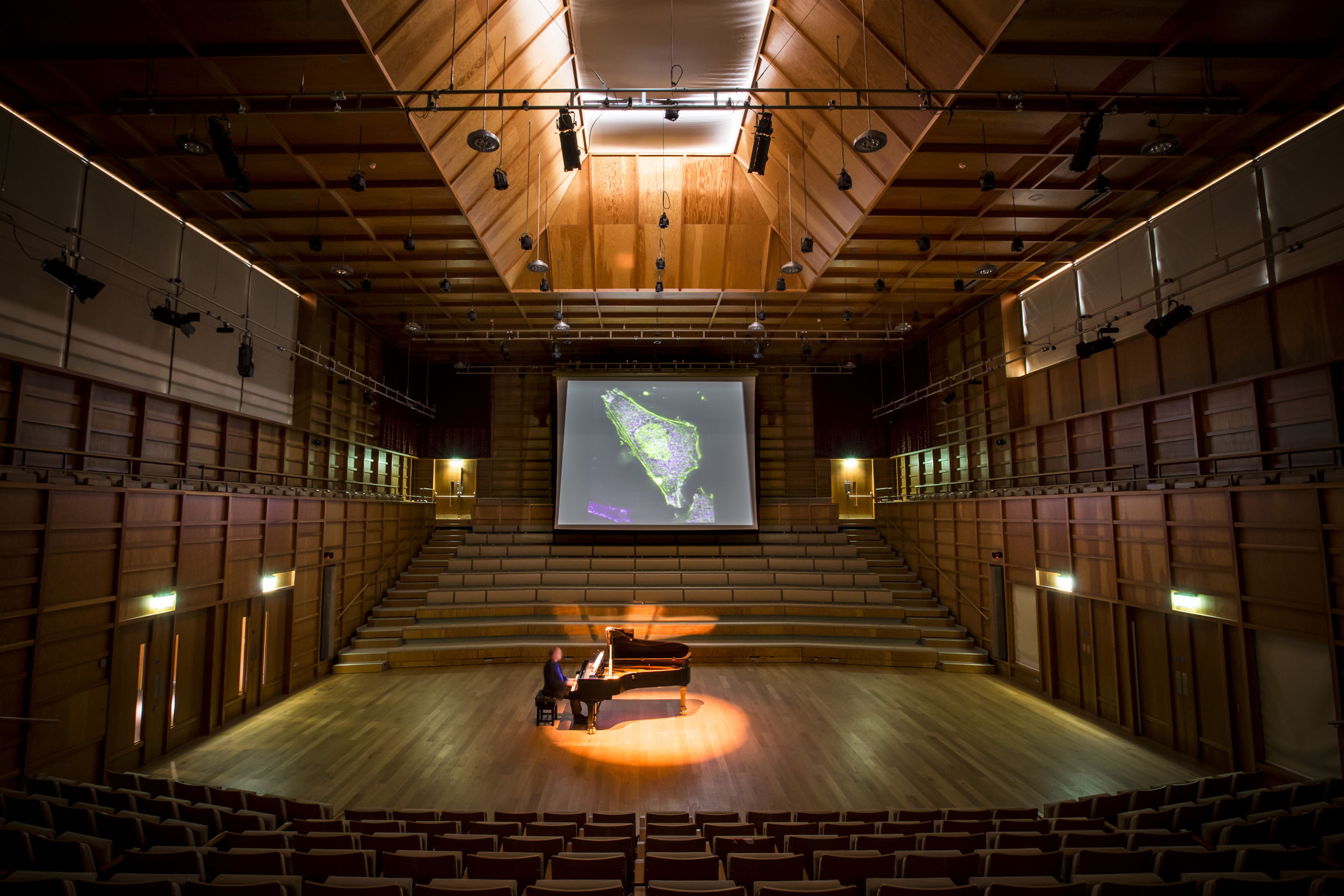
 Filmed during lockdown, the unfolding series brings together image and music in a meditative presentation of both the materials and the methods involved in research, uncovering the hidden beauty in the most mundane of objects in the research laboratory and transforming the process of investigation into an artistic experience, filtered through piano music by Philip Glass, Debussy, John Cage and Tarik O’Regan.
 Colyer-Fergusson Hall becomes an immersive platform for highlighting processes operating in both science and music – viral infection and the process of mutation linked to compositional processes in music, together taking the viewer on an odyssey through sub-molecular events at the cellular level.