
An occasional series featuring guest posts and contributions: this week, Drama student and saxophonist Will Rathbone reviews Kasai Masai’s lunchtime concert.
—-
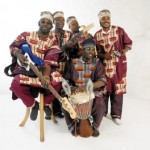 Kasai Masai are a 5-piece band based in London and led by Nickens Nkoso. Named after a region in Congo, their sound is a very authentic African one, full of infectious rhythms and driving guitar hooks.
Playing at the Gulbenkien Theatre as part of the Lunchtime Concert series last Monday, they opened their set with “Esale”, a piece with a gentle Bossa Nova feel to it, and it immediately had the audience tapping and nodding along. Throughout the set, as I looked around the auditorium, everyone was bobbing their head, caught up in the effortless groove that the band had. Nickens’ voice is a powerful one, at one point during the song he held a very long note, leaning away from the microphone so as not to deafen us; such was the power he could get from his voice.
They continued with “Omela”, a song about a boy who gets lost in the forest but meets a bear who helps him to get home. This song was more upbeat and featured a catchy chorus. Every member of the band was continually moving the beat, the bass and drums pushing, the djembe a constant pulse. It showed the life in their songs, with Kawele Mutimanwa’s beautifully clean guitar sound throwing out riff after riff while the tenor sax floated solos over it all.
With both “Jambo” and “Muana Muke”, the audience got involved. We were given a vocal line to sing and encouraged to clap along and join the music. I’m often not a fan of rhythmic clapping from an audience, as it can often drift in and out of time, however here, such was the strength of the groove, and the tightness of the band, that the claps stayed in time, and the audience sang.
“We call this music, happy music”, said Nickens. I couldn’t put it better myself. Watching him dance for the finale, everyone was grinning. A really great show.

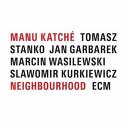 Drummer-turned-leader Manu Katché’s Neighbourhood displays a quite awe-inspiring line-up of jazz legends (a factor so significant that the album cover is simply a list of players on the recording, which shows you the stature afforded the musicians); trumpeter Tomasz Stanko, saxophonist Jan Garbarek, with pianist Marcin Wasilewski and bassist Slawomir Kurkiewicz from Stanko’s own quartet, not to mention Katché himself.