
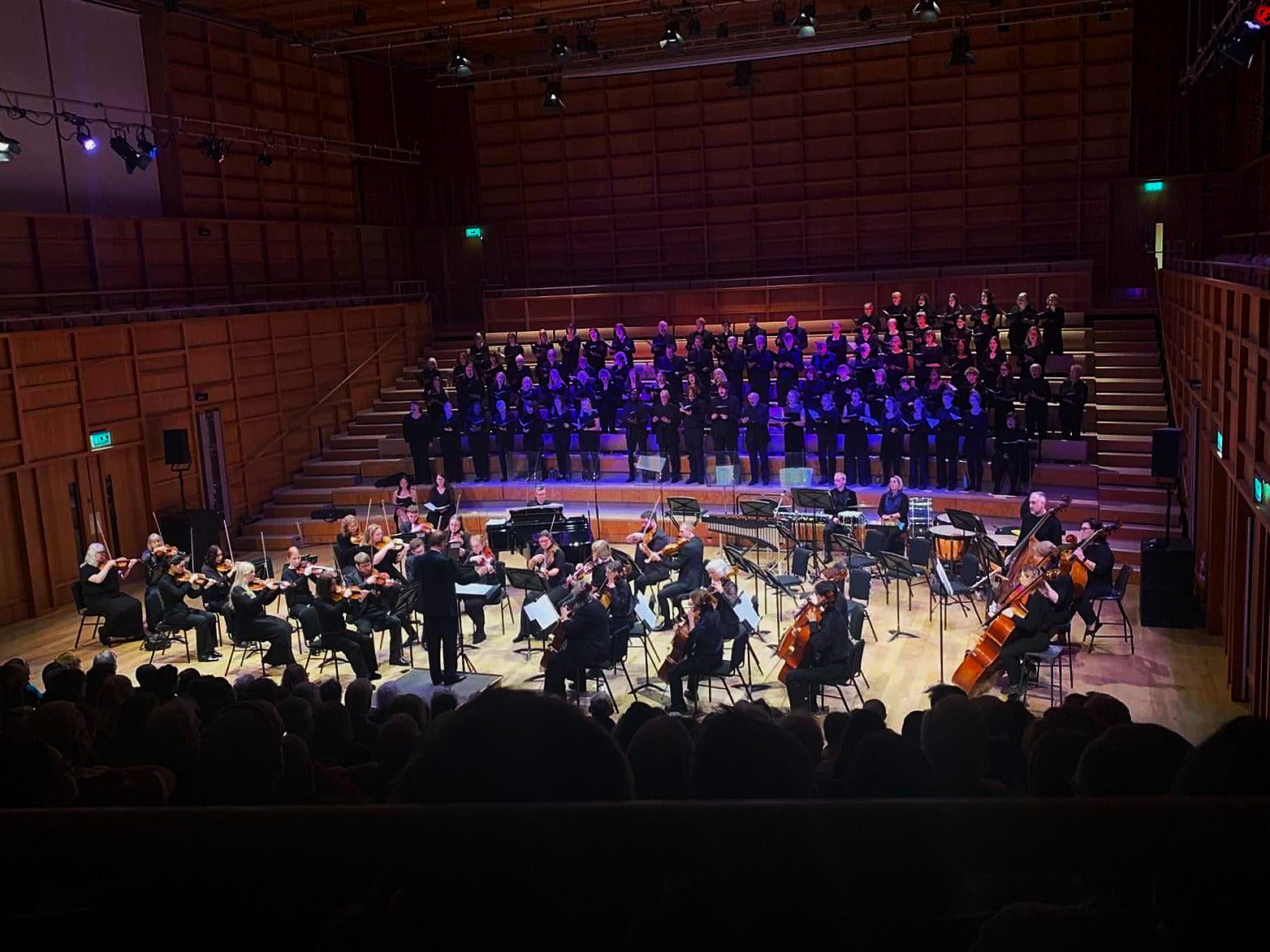
It’s always both exciting and a little bit daunting, taking on a contemporary piece of music to give the UK premiere – and even more so when the composer herself is in the audience!

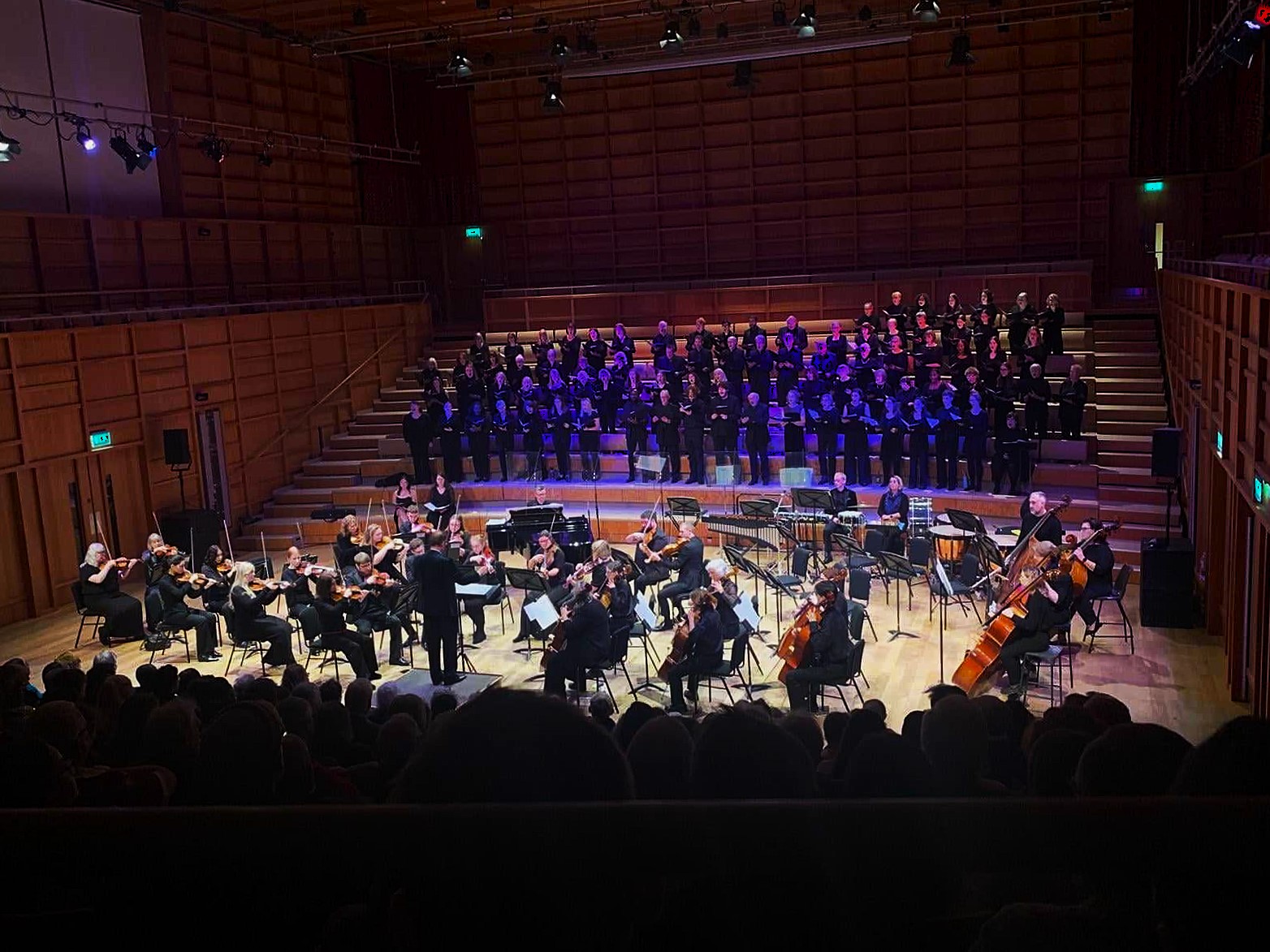
Last weekend saw the Music department’s combination of concerts, ‘Winter Journeys, Winter Nights‘ featuring the String Sinfonia, Concert Band, Chorus, Orchestra, Cecilian Choir and Flute Choir coming together over two nights to perform seasonal works, the centrepiece of which was a marvellously colourful seasonal cantata, Winter Nights, by the Canadian composer, Stephanie Martin. This five-movement work sets a variety of poems focusing on different aspects of the winter season, from the anonymous ‘Cold is the night when when stars shine bright,’ through the fierce drama of ‘Loud rings the frozen earth’ by James Thompson, to the wonder and mystery of Cori Martin’s ‘Could it be true / Old Thomas Hardy’s tale,’ all culminating in Thomas Campion’s ‘Now winter nights enlarge.’
The piece distils a variety of colours, textures and vivid images from the cast of voices, strings and percussion, reflecting the manifold aspects of the season, and the whole cantata captures the full range of the season’s contrasts – its warmth, magic, wonder, jollity, bitterness, wildness, and revelry – bringing the different scenes to vivid life with a vibrant energy.
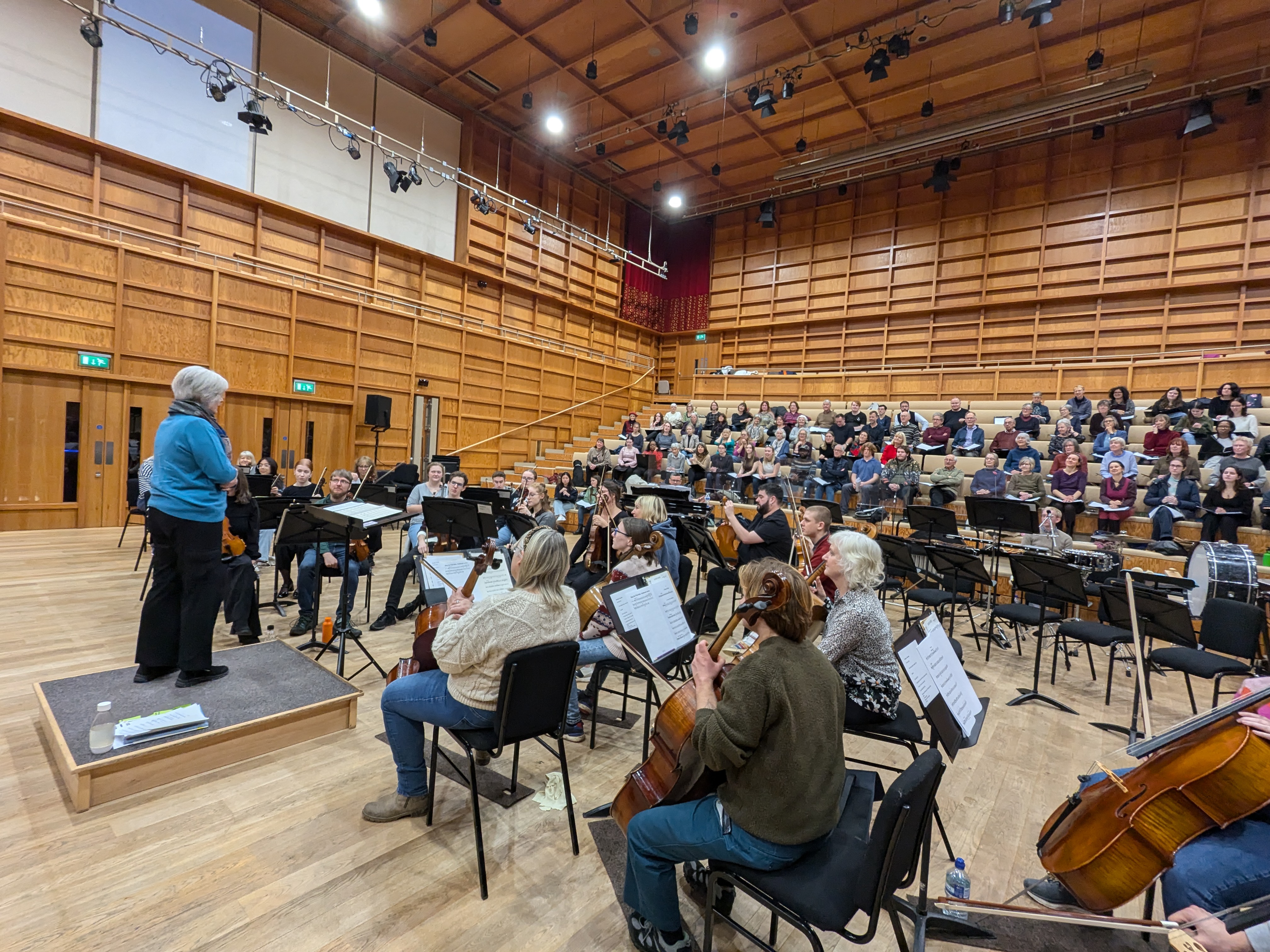
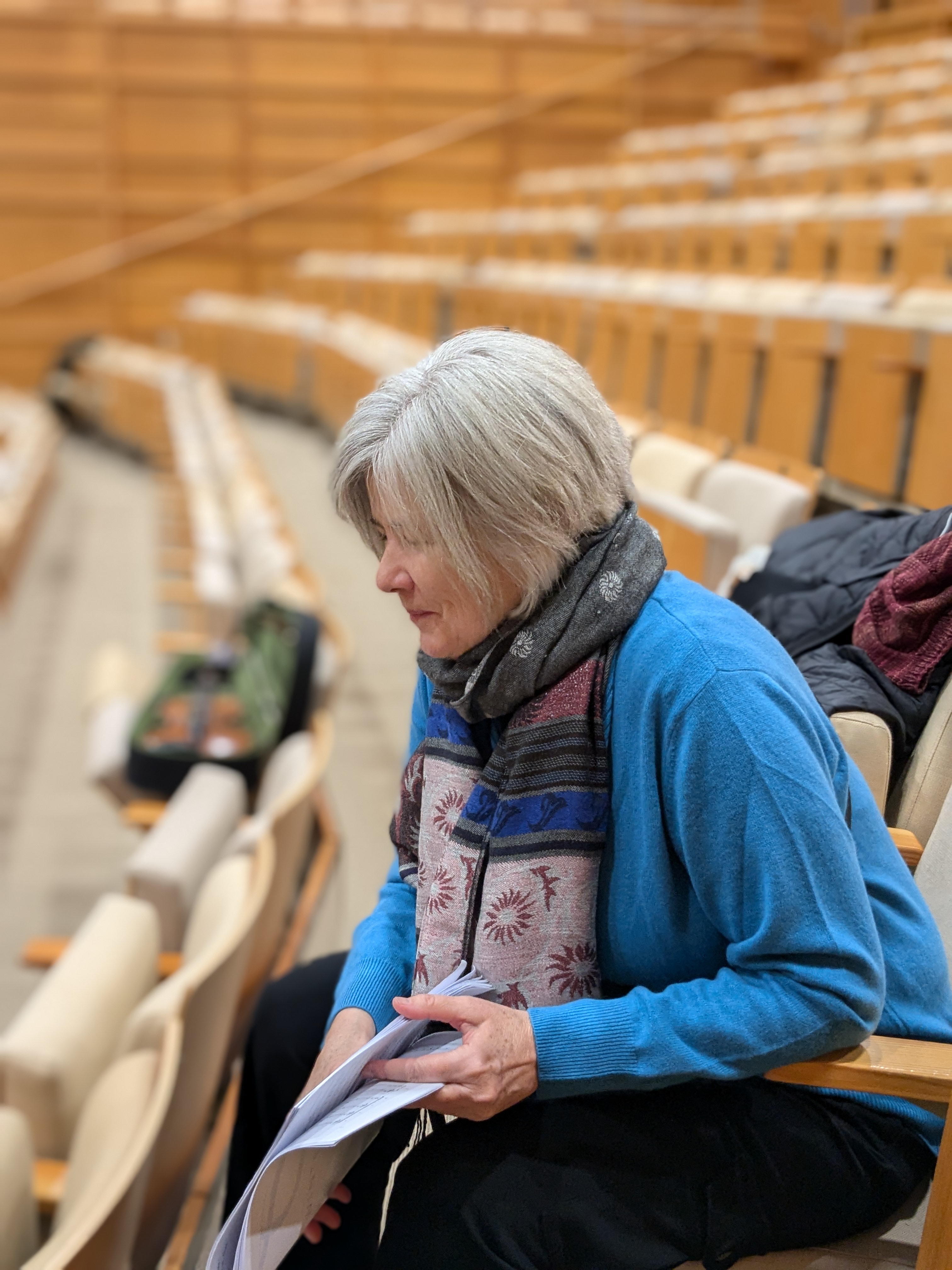
We were delighted to welcome Stephanie to the afternoon rehearsal – always a slightly scary moment, the first time performing a piece in front of the composer – and then to the evening performance. With warmth and generosity, Stephanie talked with the performers in the afternoon about the piece, including the three students singing the solo trio heralding the arrival of Winter; and she received a hugely enthusiastic round of applause following the performance later that evening.
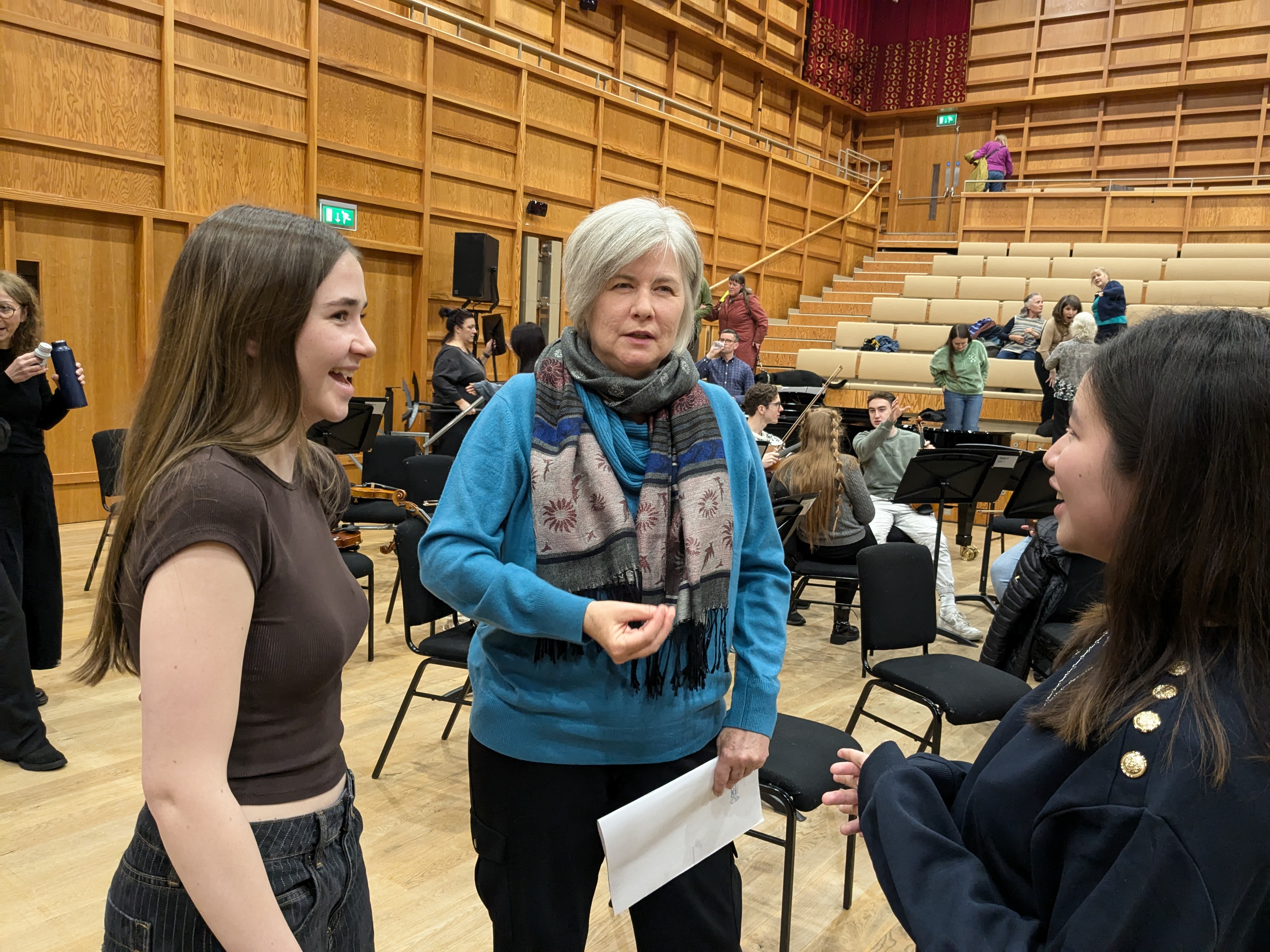
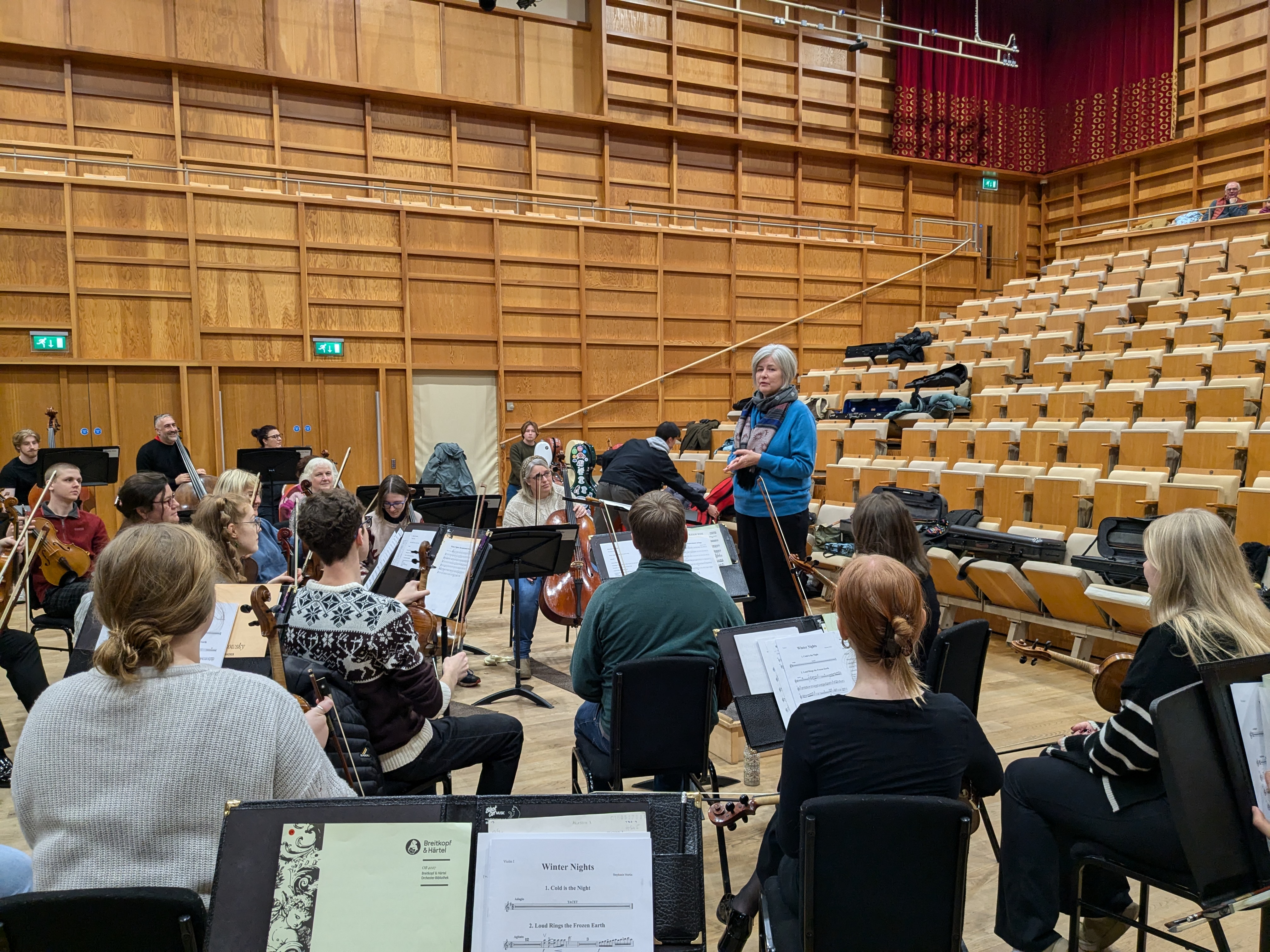 Congratulations to all the performers involved across the entire weekend, and our thanks in particular to Stephanie for taking the time to stop over in Canterbury on her flight from Europe to Canada, to come to Colyer-Fergusson and be part of the event.
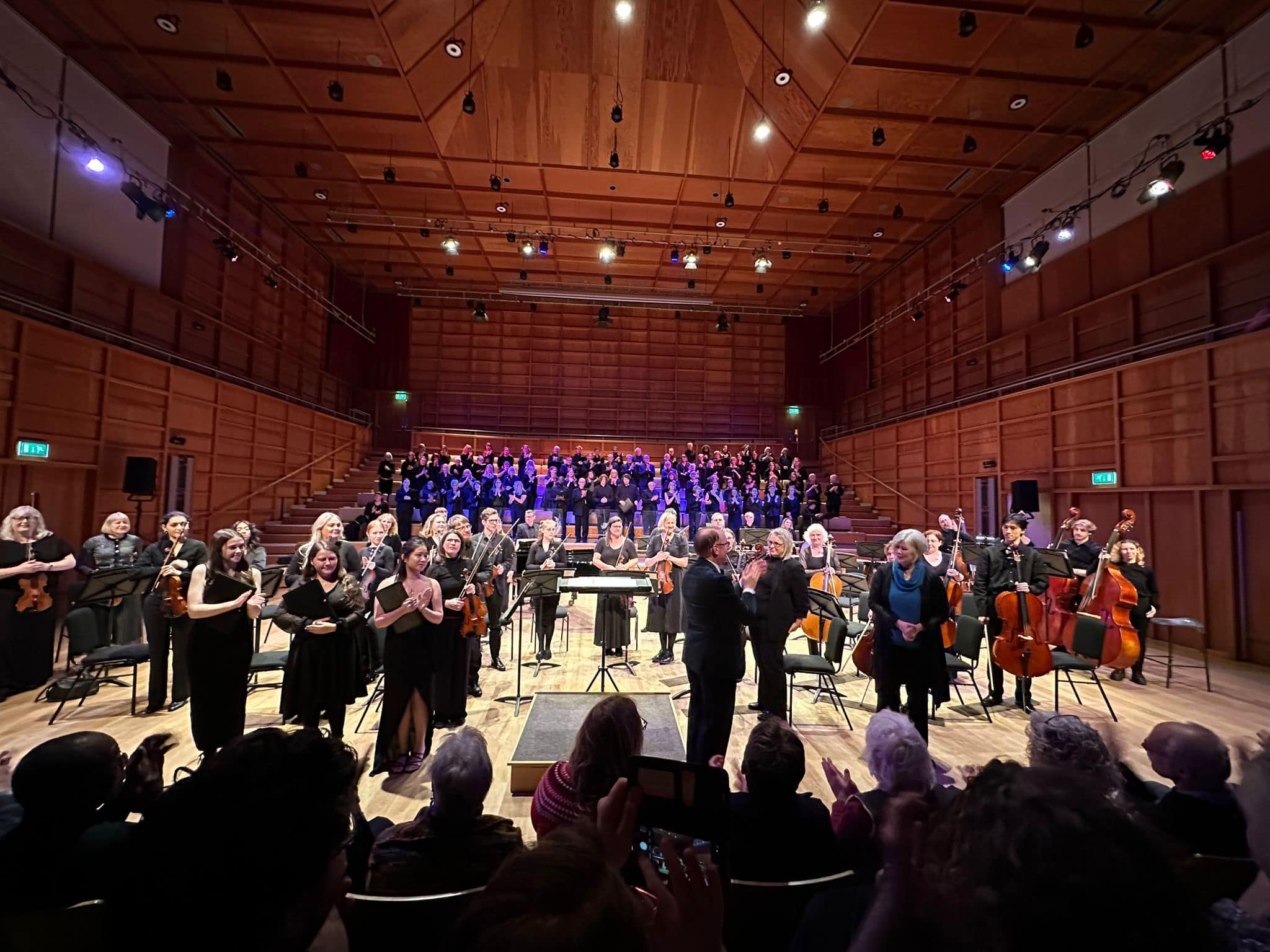
Here is the performance in full, filmed and used with kind permission from Stephanie Martin.
Read the full weekend programme here (PDF).
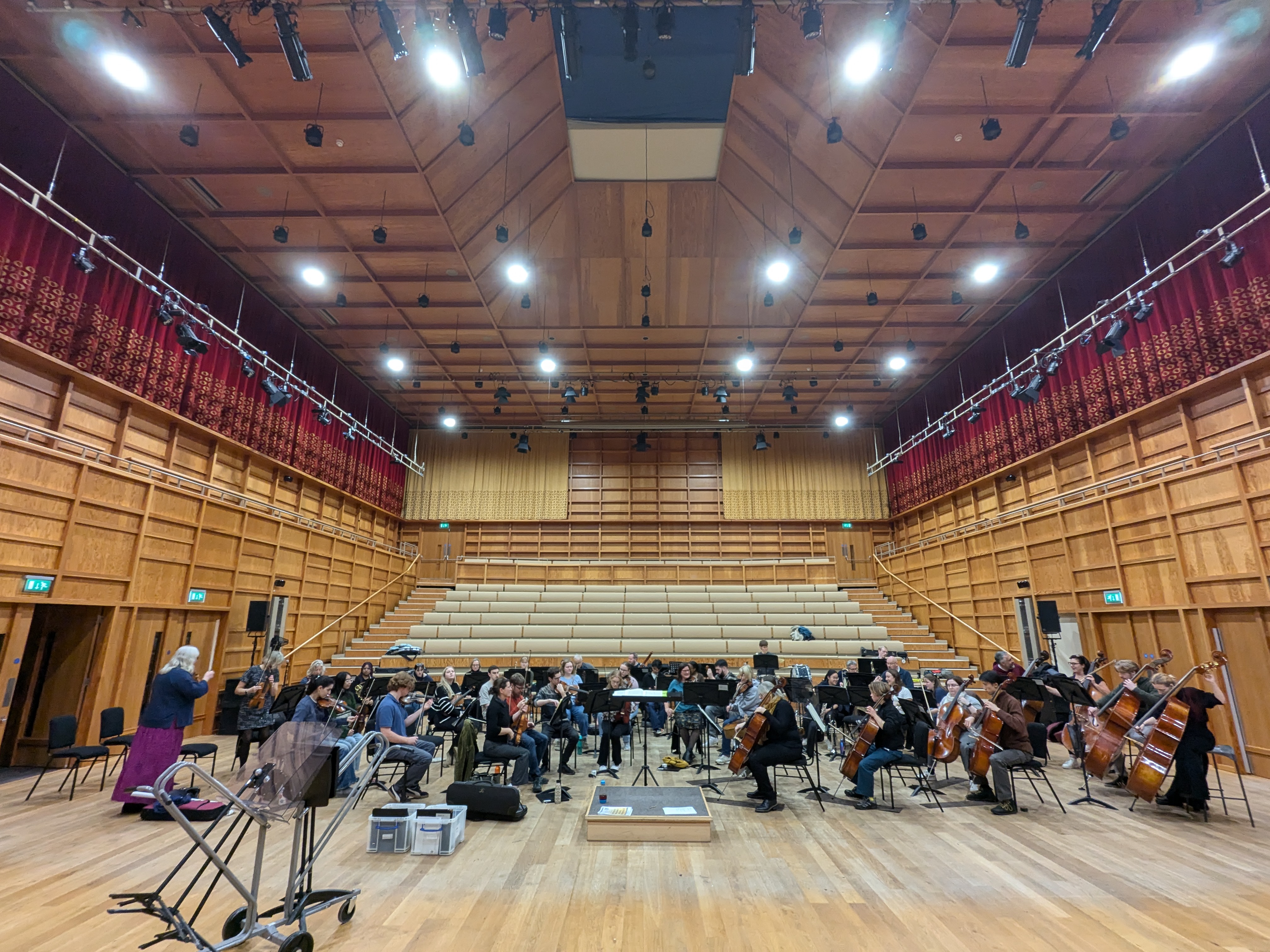
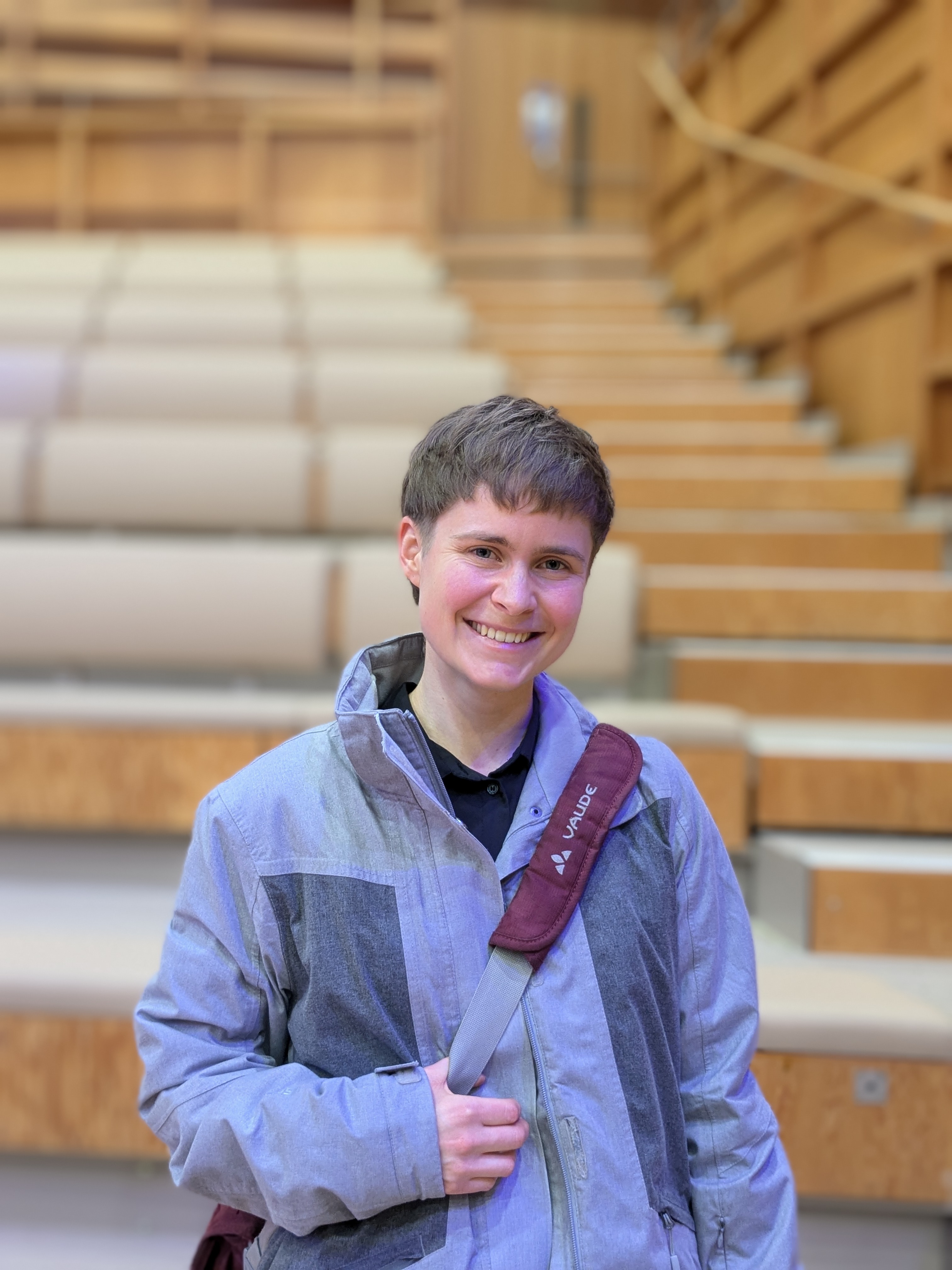 I joined the Chorus and the Symphony Orchestra – the latter rather by chance: Not expecting the orchestra to have a vacancy for a percussionist, I contacted Sophie, the Music Administrator, to ask about opportunities to practise privately on university instruments. She not only offered me access to percussion instruments, but also encouraged me to join the orchestra. A bit of encouragement was needed, as it had been several years since I had played timpani or other percussion instruments in an orchestra. But the conductor Dan, my fellow percussionists Chris and Molly, and the rest of the orchestra where most welcoming and made my experience with them a pleasant one from the beginning of the term to the concert. I am very grateful to have had the opportunity to make music with this group and to have found my way back to orchestral percussion through them.
 I had always been an enthusiastic listener of all types of music, including classical, which started when I was young when my parents would play classical music from CDs. At school I learned to play the cello and joined the school orchestra. I liked the cello because its range is so similar to that of the human voice, which makes it sound more expressive and rich.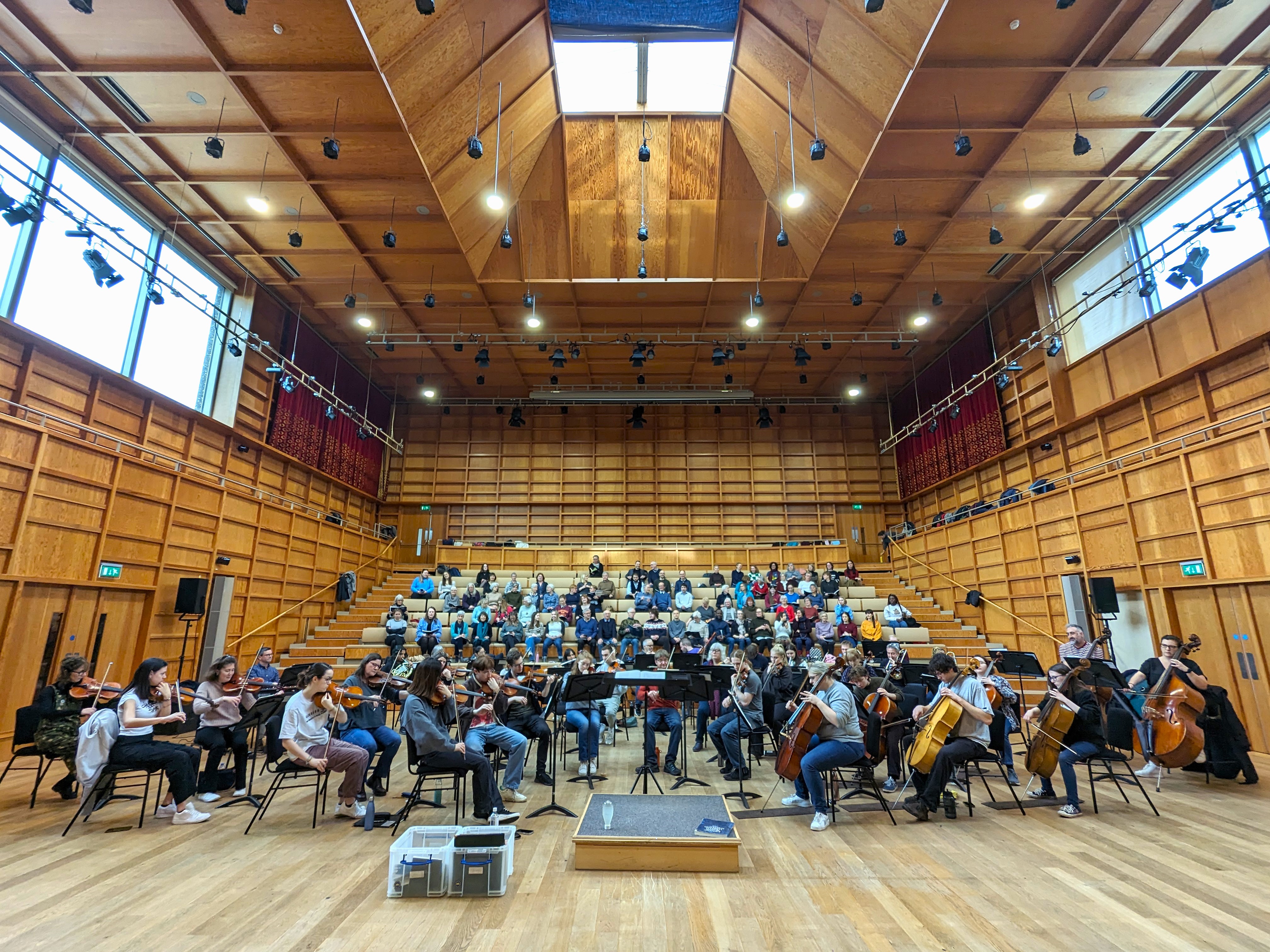
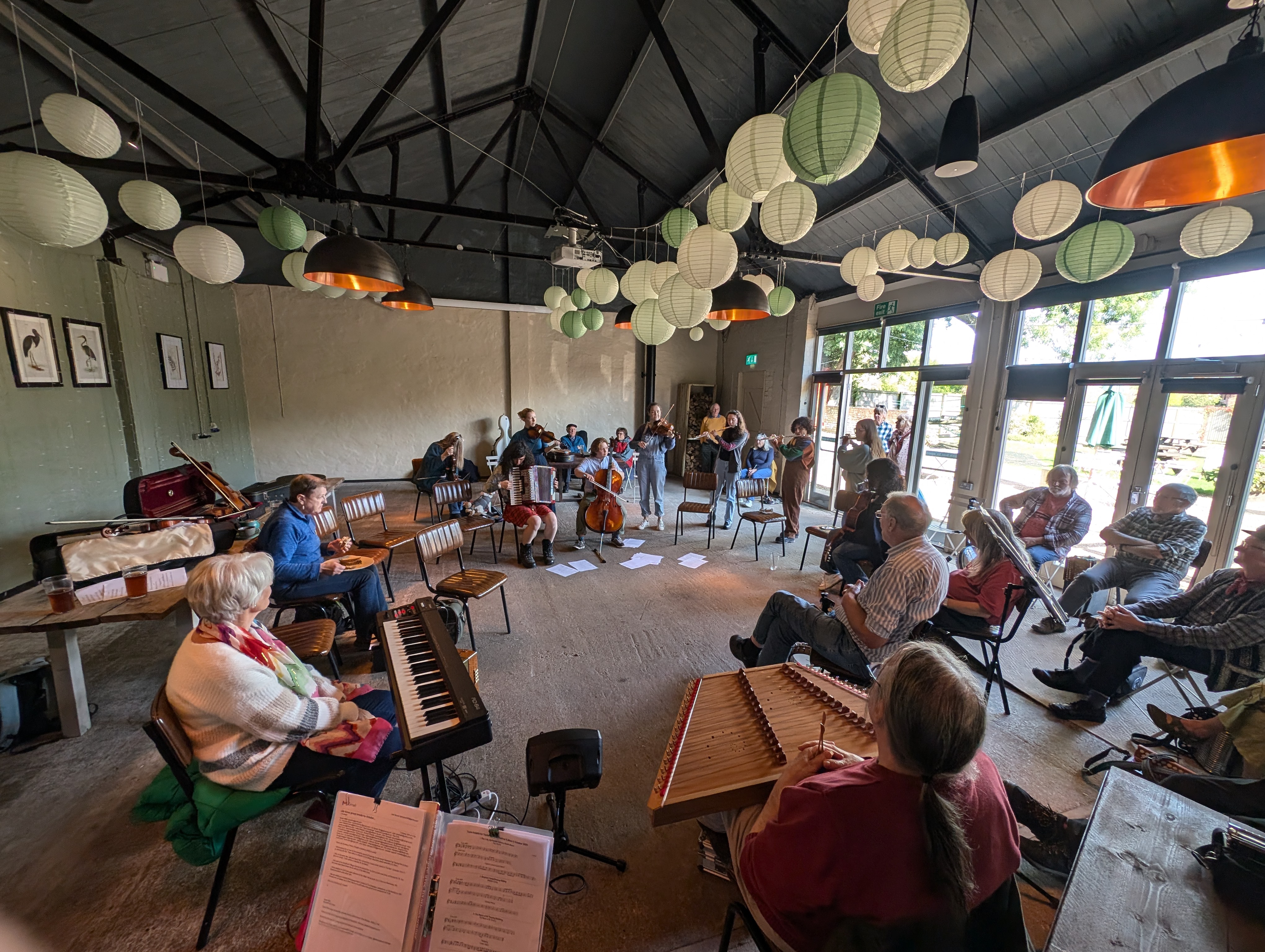
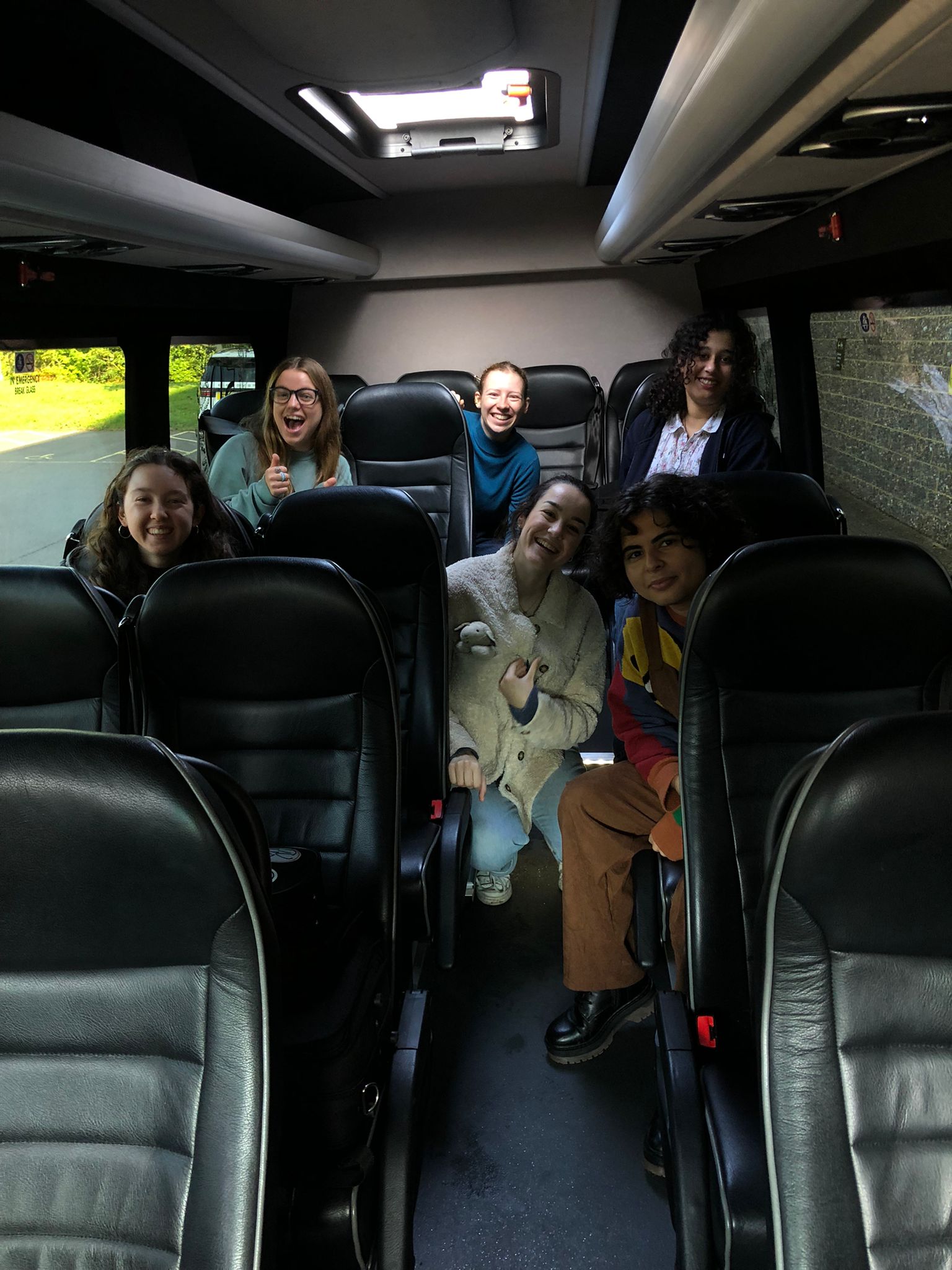 The day started bright an early when we all clambered onto the coach on our way to Tenterden. When we arrived we went and collected our Artist Wristbands from the artist reception which was a surreal moment! We then made our way to the venue, where we were greeted by Gavin and his amazing team of musicians who were here to lead the music session. More and more people started to arrive and the session was in full leaps and bounds.
 We went around the room and every person started a new tune and everyone else played along having either known the tune before or picked it up by ear. It was an amazing environment to be in and be surrounded by some amazing folk musicians.
 It then came to our turn to perform so we formed our semi- circle and performed our 15 minute set. Our set included a wide range of tunes from waltzes to reels to polkas, which followed with lots of clapping and applause.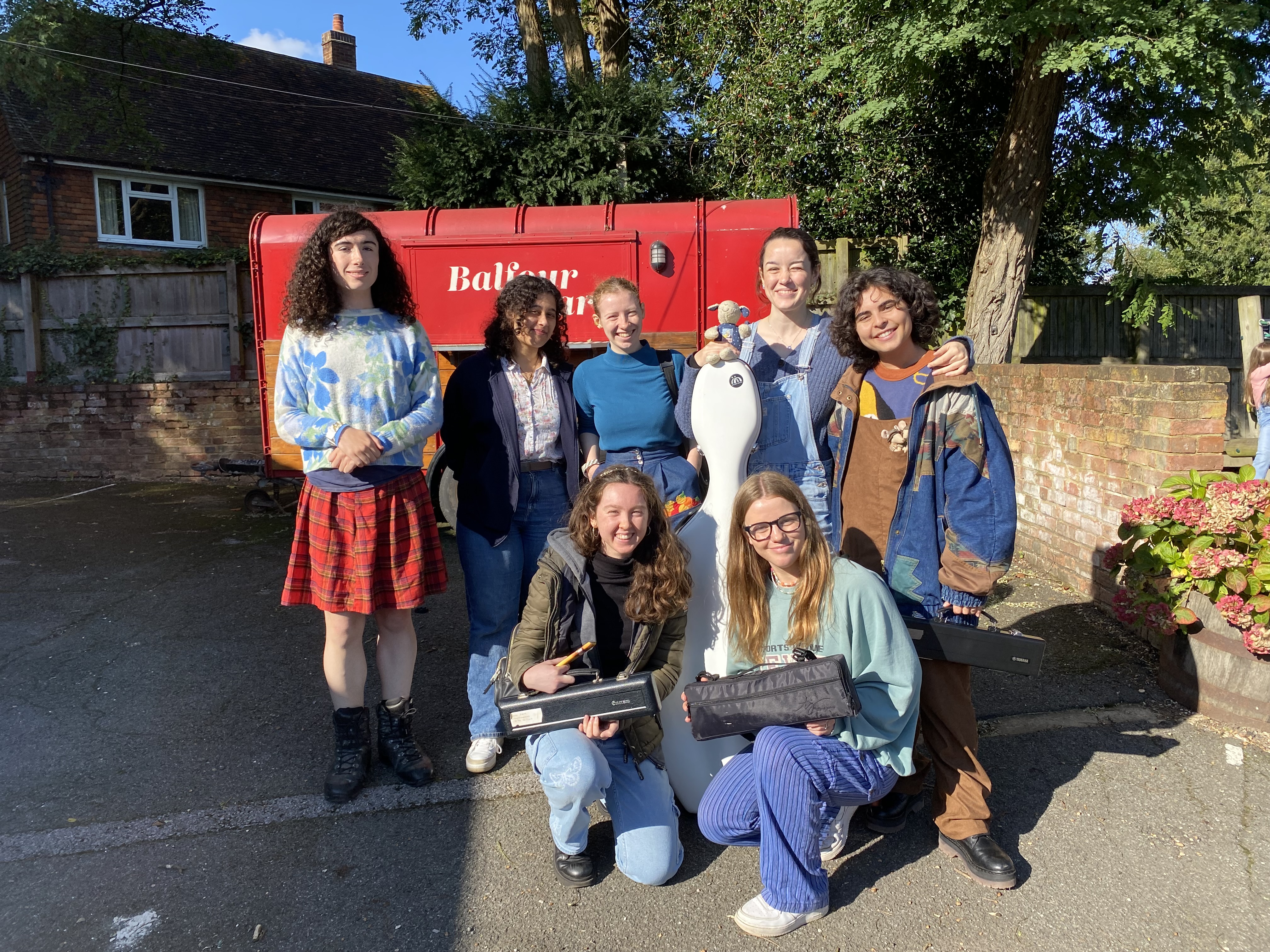
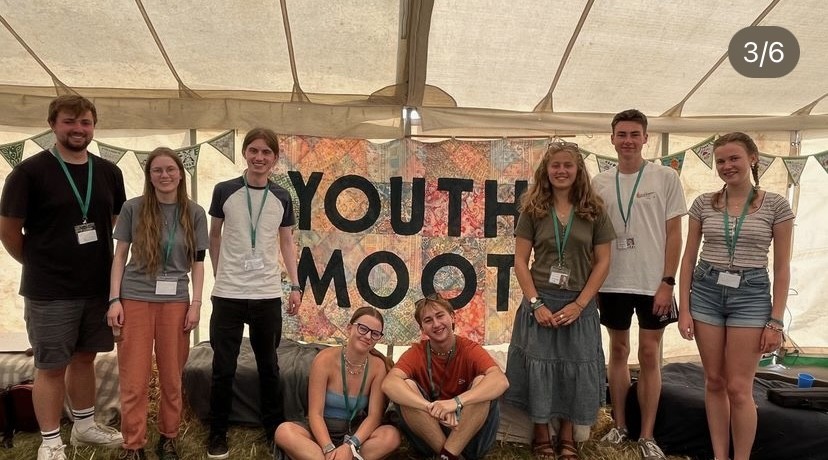
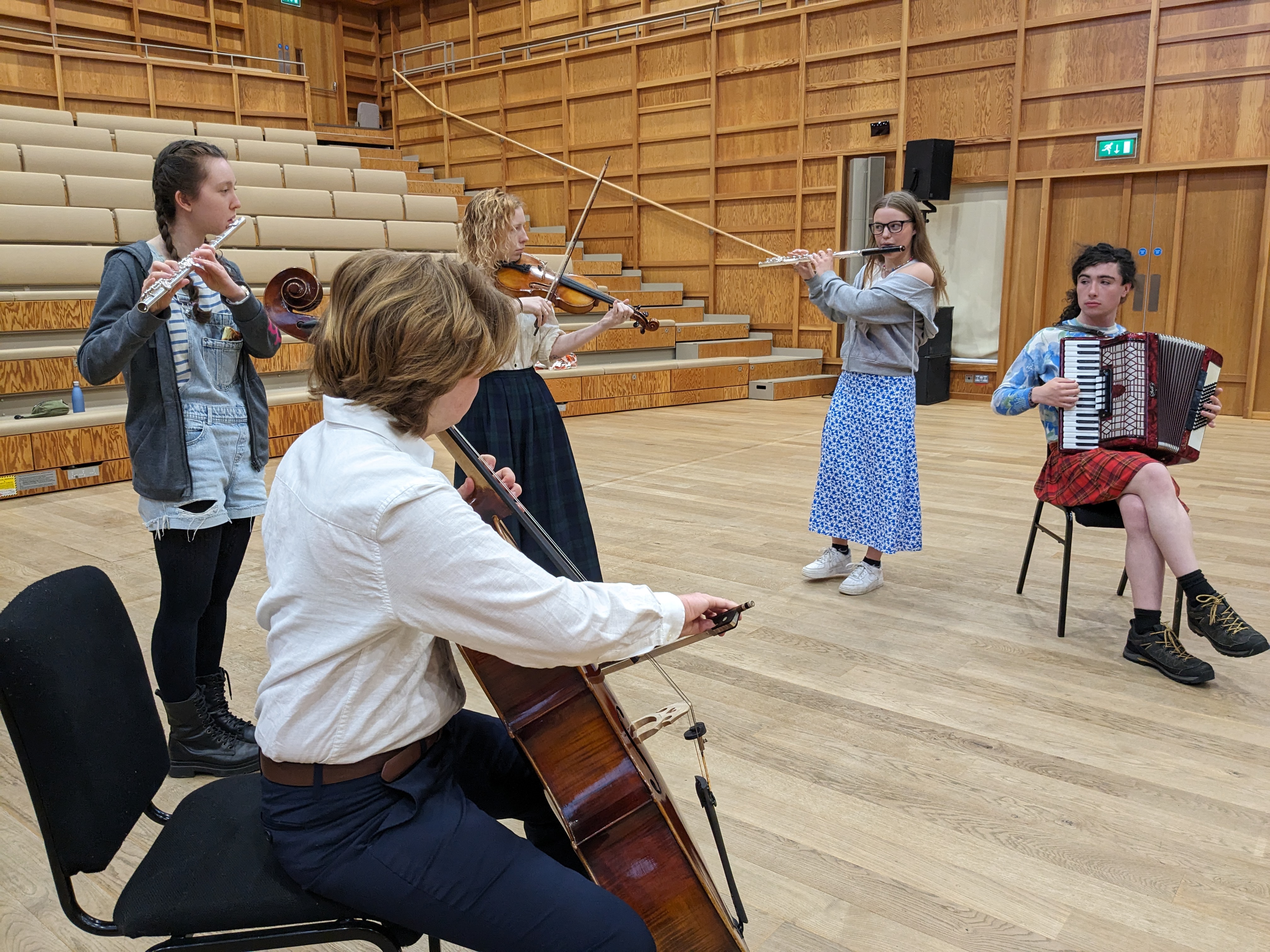
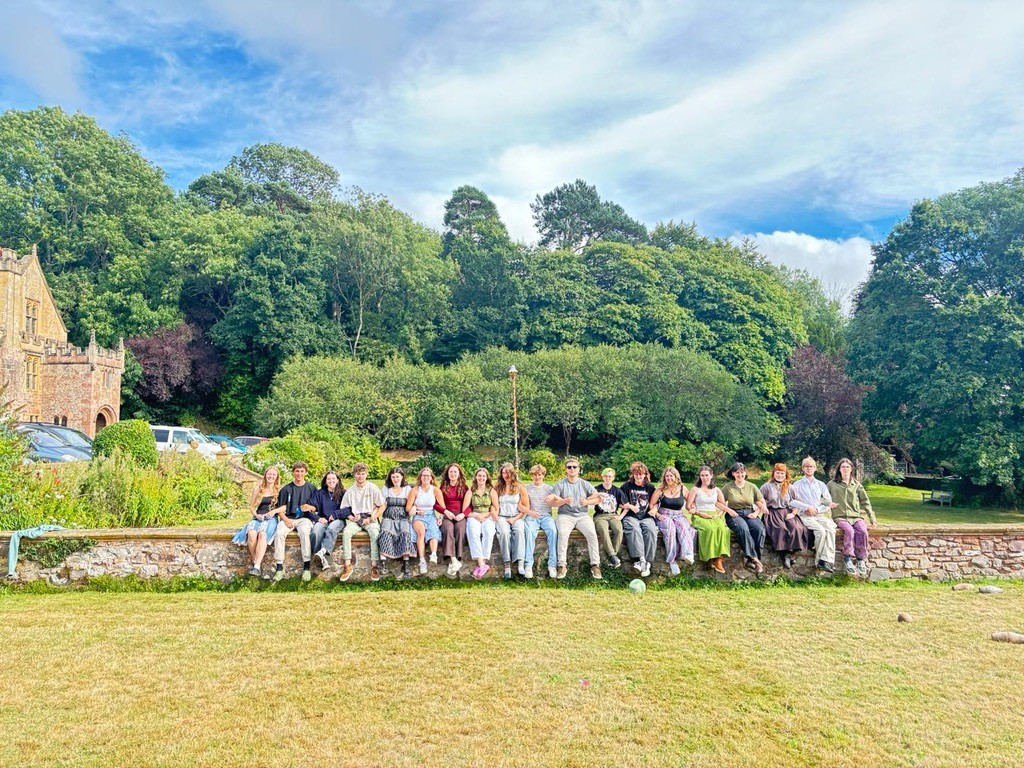 I then stewarded, working at the box office at Ely Folk festival. Sidmouth Folk Festival then followed this, at this festival I was a core Tutor running a daily music workshop for 1.5 hours with the help from some other tutors. At the end of the week-long festival we concluded with the participants performing the tunes that we had taught them on-stage at the Manor Pavilion in Sidmouth.
 This was then followed by another festival, called Folk East, where I stewarded at the Youth Tent. This involved my running a mixture of activities throughout the days and attending all the music sessions for youth people as a helper.
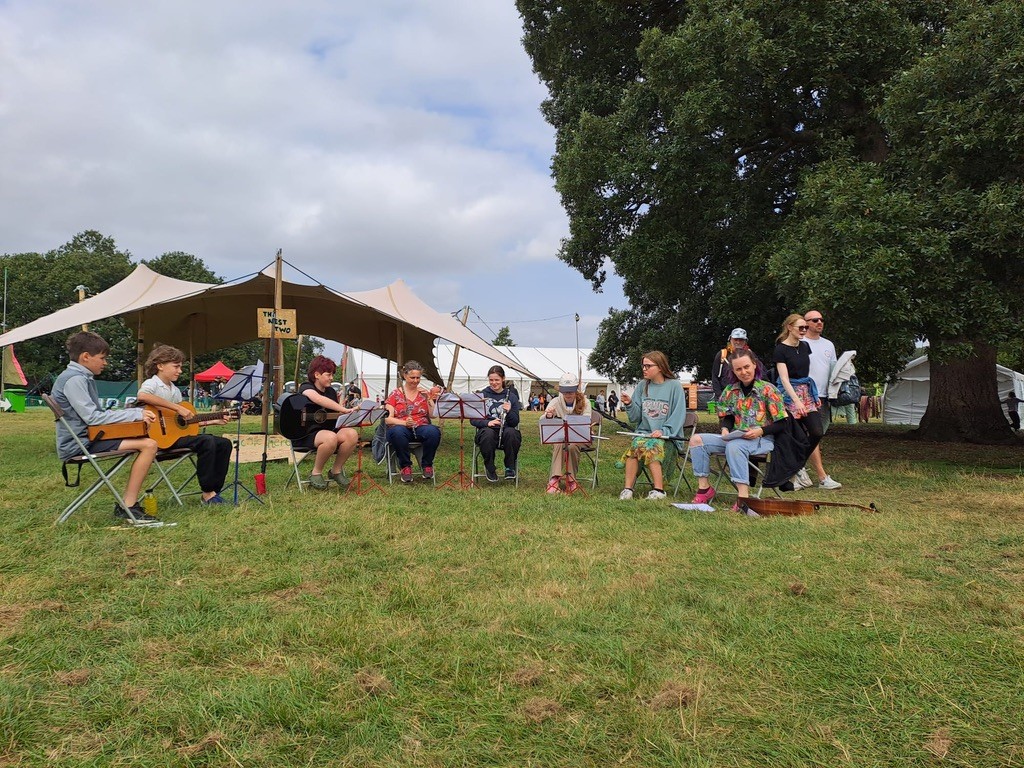 I then attended Towersey Folk Festival, where I ran my own youth workshop every day. This involved me teaching tunes and arrangements to a mixed-ability youth participant’s. This also concluded with a performance to the public.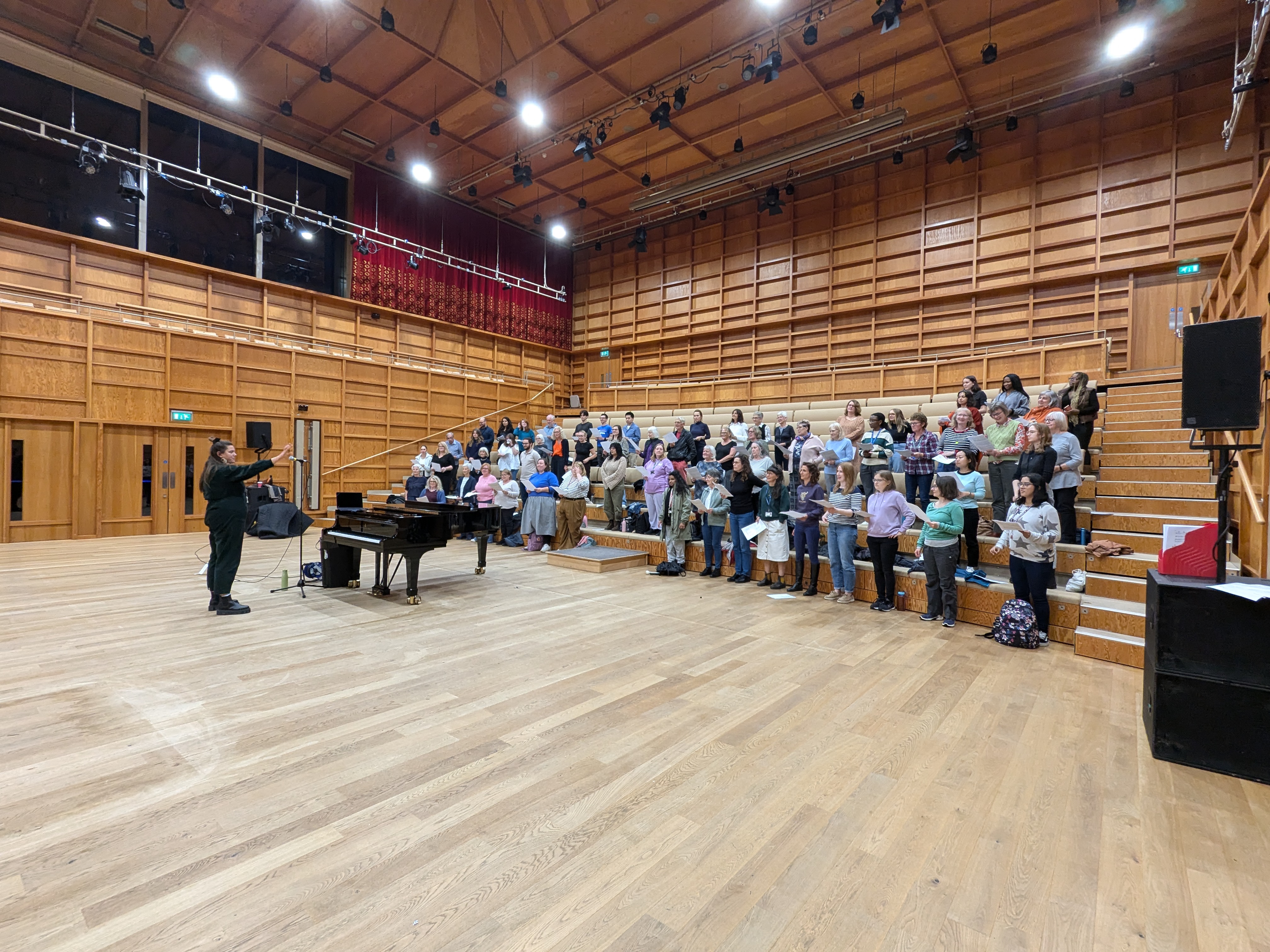
 Catering to all abilities, and welcoming students, staff, and members of the local community, over sixty people came together to explore their voices, directed by Margate-based Meg Bird.
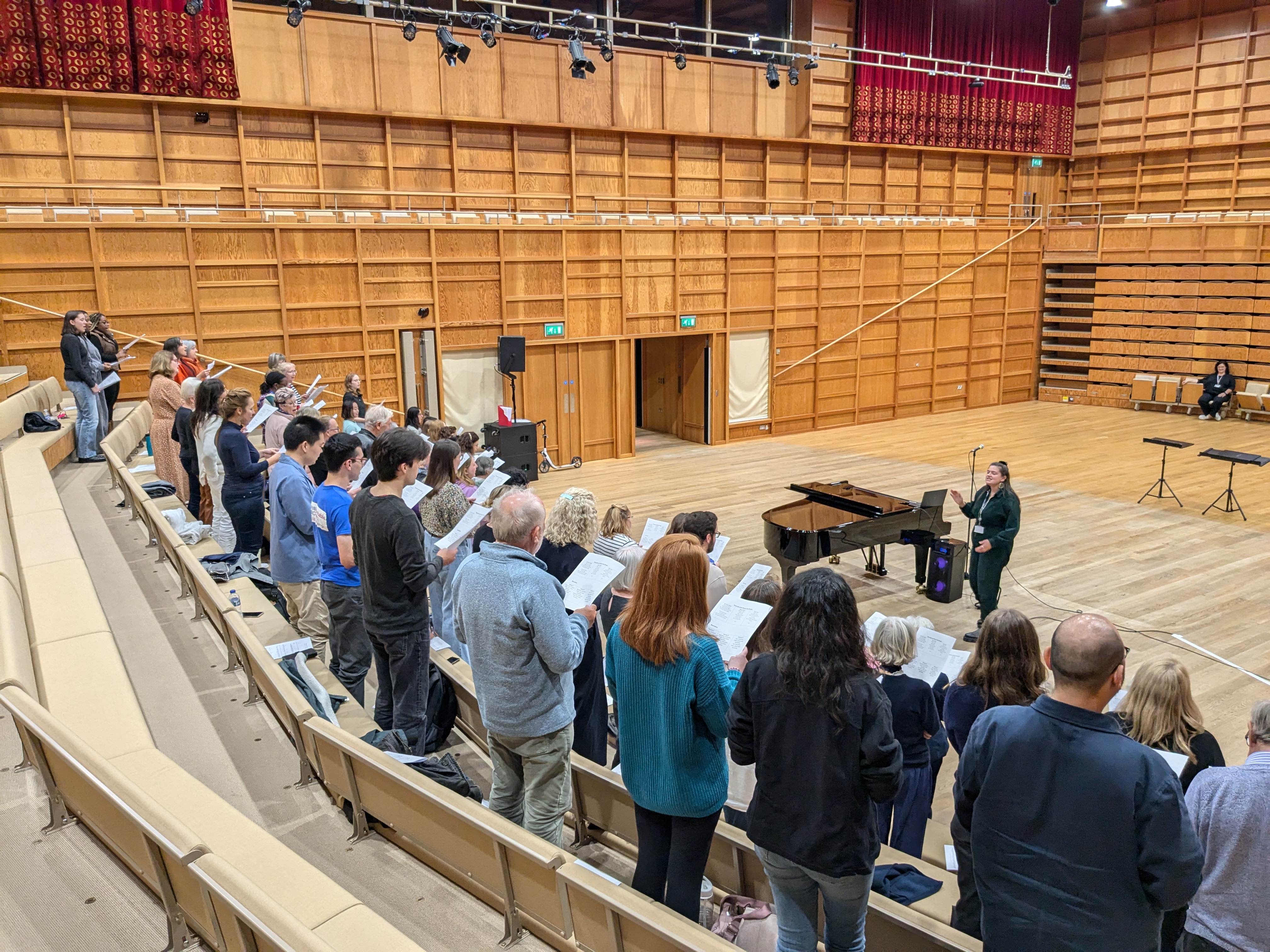 It was very exciting to see (and hear!) the new choir in action, and to welcome new people who’ve not been into Colyer-Fergusson before, as well as some familiar faces amongst the staff and student community. Singing is a vital aspect that promotes wellbeing, and there was certainly a vibrant atmosphere here on the night. We’re looking forward to what the choir has in store this year.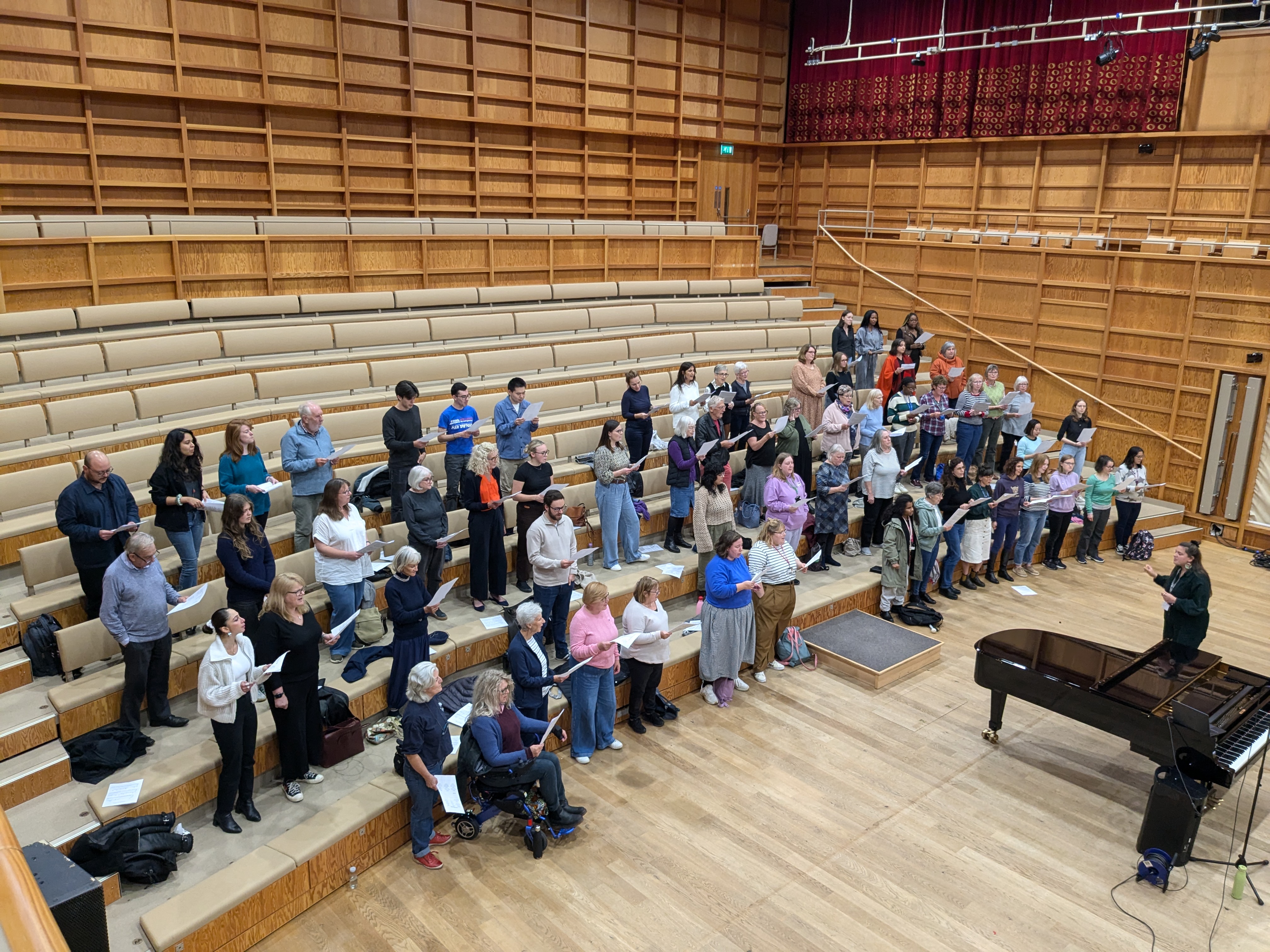
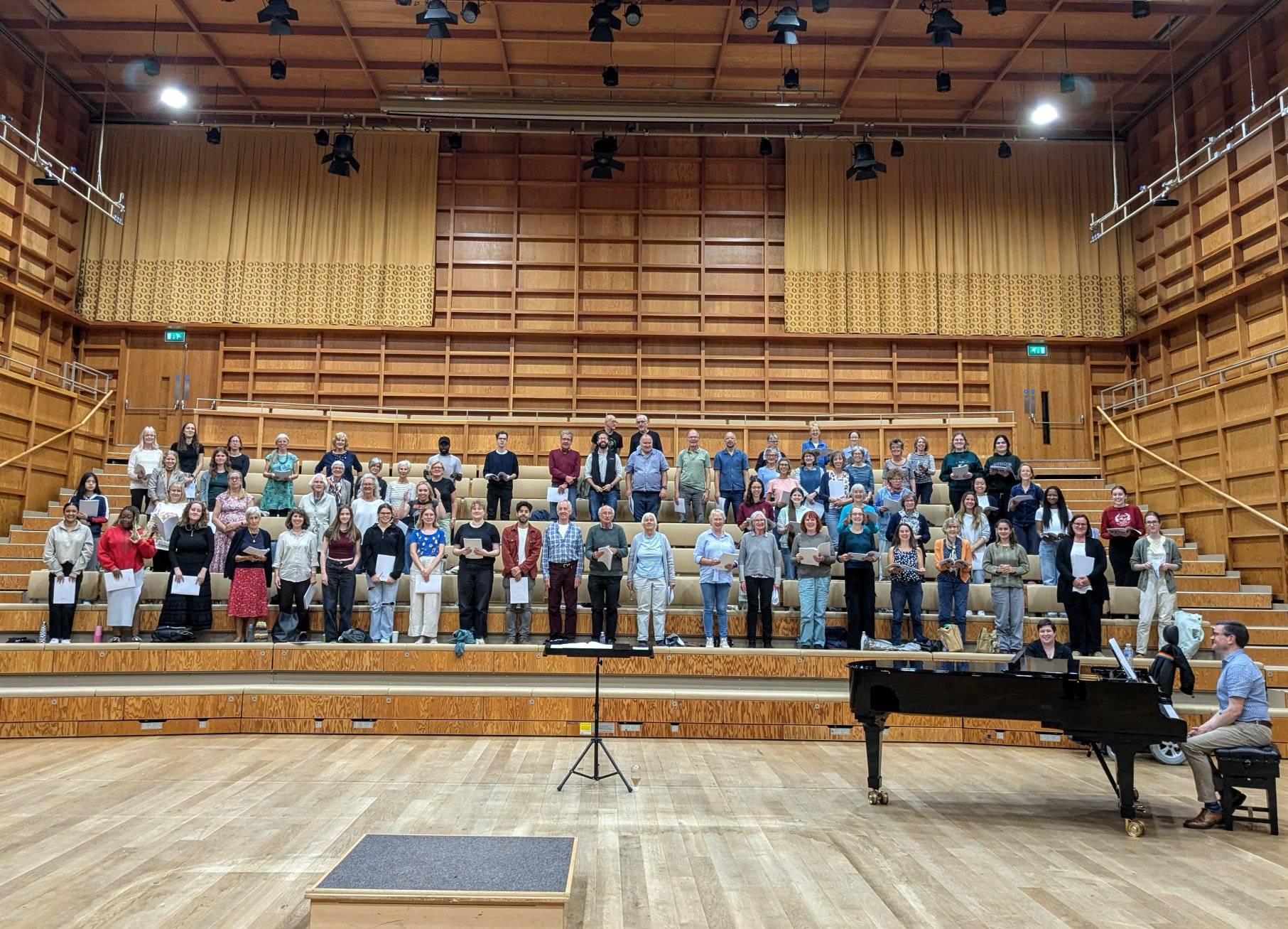
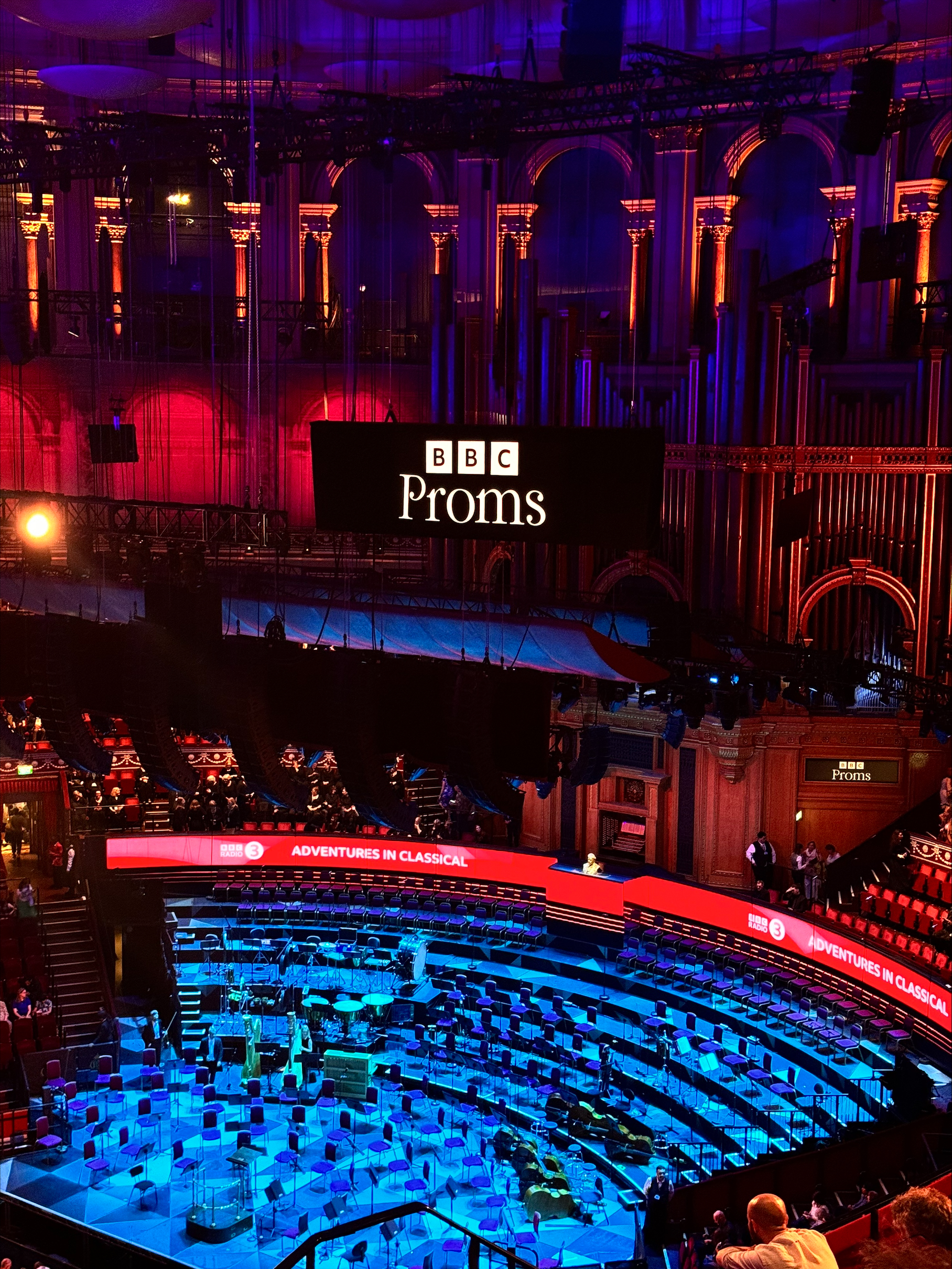

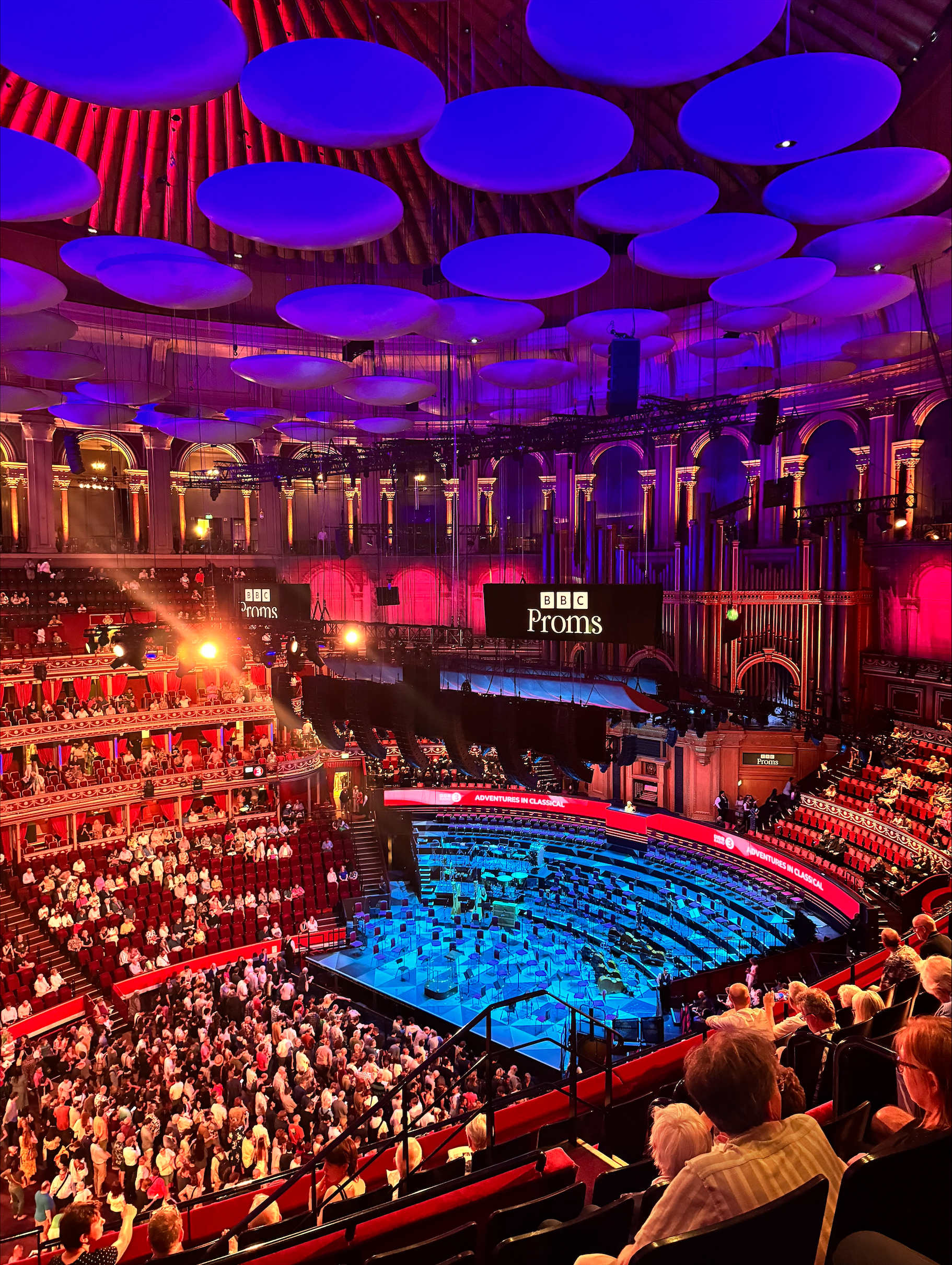 The night started off with Tranquil Abiding by Jonathan Harvey, of which I had never heard of before, but was very excited to see after hearing the Head of Music Performance, Dan Harding, express his interest in this piece! [True: I love this piece! Ed.} Harvey’s music conveys his interest in Eastern spirituality into music writing, with this piece relating to meditation where the ‘mind is not observing the rest of the universe but is at one with it’. This was a great piece to start the Proms with, as the small orchestra moved as one to create a slow, breathing rhythm, easing the audience into a state of relaxation. At first upon hearing it, both my mum and I felt it was horror movie-esque, however after reading the programme, this made sense, as it represented the thoughts diverting the mind, as the piece then stills itself creating the sense of calm. Overall, I thoroughly enjoyed listening to this piece live and seeing how the orchestra moved independently to then ending as one breathing entity. I highly recommend seeing this contemporary piece if ever given the chance!
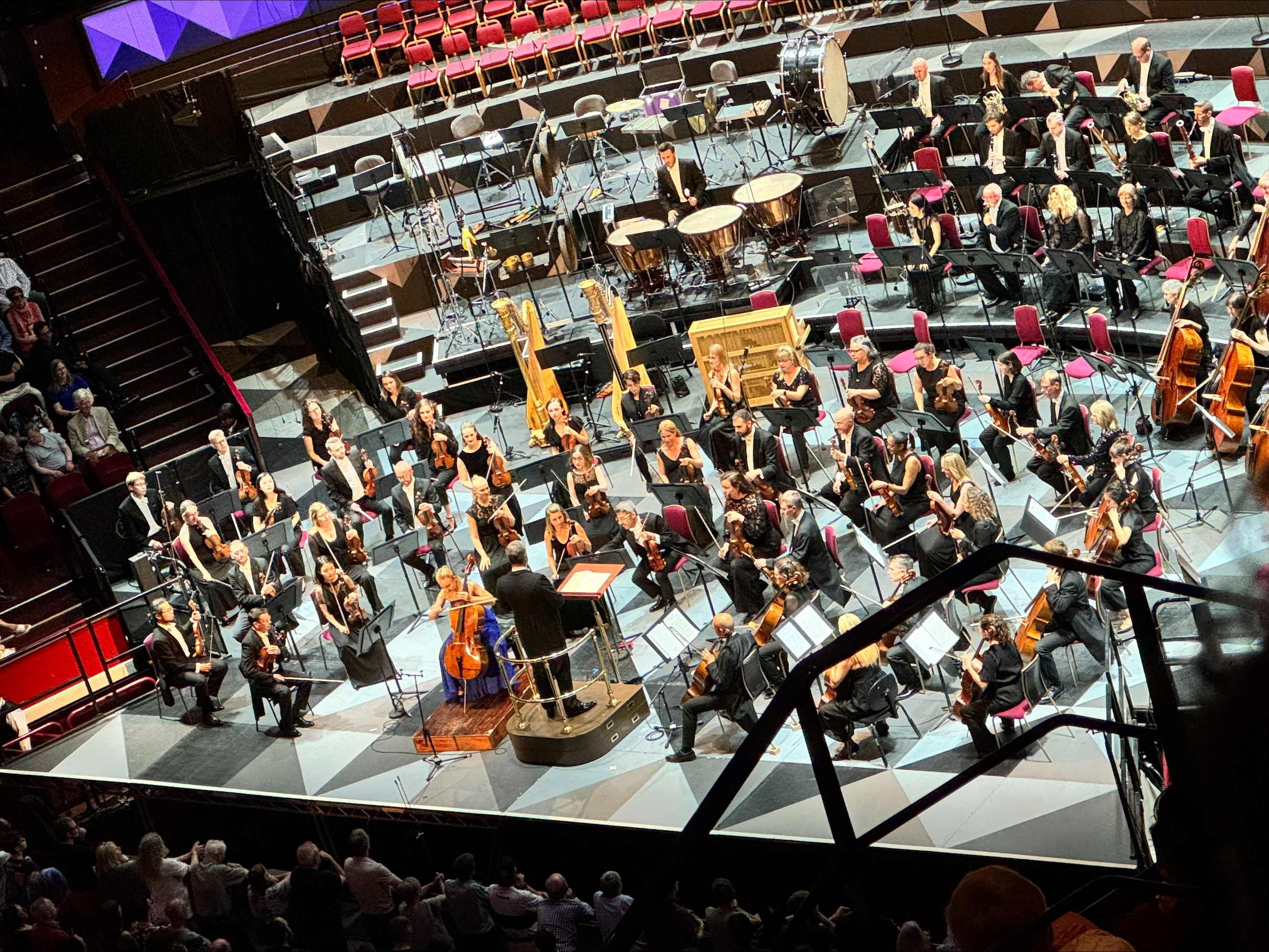 The second half was occupied by Gustav Holst’s, The Cloud Messenger, another piece I was also unaware of before. The Chorus were singing an adaptation of a 4th/5th century poem, whereby the cloud was asked to send a message to the narrator’s wife. Consisting of seven verses, it talks about the natural wonders the cloud will see on its journey and is overall a beautiful poem. A contralto solo was also performed by Jess Dandy, who had an incredible voice and added to the tenderness of the poem. This piece is rarely performed, as in its first performance (1913), apparently the chorus fell apart! I am glad to say this reputation was not followed this night, and I thoroughly enjoyed listening to it and following along with the words sung by the chorus.