
Our Autumn What’s On is now out, and is bursting with events throughout October to December here in Colyer-Fergusson.
 Our termly Lunchtime Concert series launches with percussion ensemble Kopanya in October; the acclaimed musicians of the Kentish Piano Trio bring Beethoven’s ‘Ghost’ Trio in November; and eminent sitar-player Ustad Dharambir Singh is joined by Pt Sanju Sahai on tabla for a recital in December,
The University Chorus and Symphony Orchestra will be rounding-off the Shakespeare 400 anniversary in style with a concert including the suite from Walton’s famous film score for Henry V, and the Musical Theatre Society will present their ever-popular showcase. The season ends in rousingly festive style with the Big Band’s Christmas Swing-Along.
 Whatever you do, make sure you have Friday 25 November inked firmly in your diary for what promises to be a memorable concert, as internationally-renowned bass, Sir Willard White, joins forces with the Brodsky Quartet to pay tribute to the relationship between Frank Sinatra and the Hollywood String Quartet; the evening will also include folksongs by Britten and Copland, Barber’s evocative Dover Beach, a selection from Gershwin’s Porgy and Bess, the Great American Song Book …and much more. Early booking is most definitely advisable! As ever, we also welcome the many visiting musicians to Colyer-Fergusson, including events promoted by both the Canterbury Festival and Sounds New and a birthday concert for Trevor Pinnock.

You can find out more about all these events online here, or download the new brochure here. We look forward to welcoming you to Colyer-Fergusson this season!
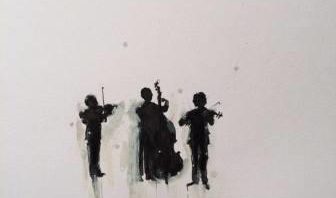
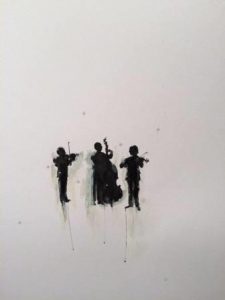 Adam’s new exhibition, created especially for Colyer-Fergusson, takes inspiration from Gavin Bryars’ piece, Sinking of the Titanic, in which the composer imagines what the music the band was playing as the ship sank might have sounded like as the band played during the sinking, and what happened to the music as it continued to reverberate in the water.
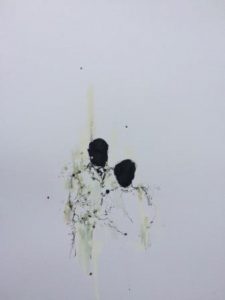 From Bach to Debussy, the prelude as a musical form has appealed to composers, both for its concision as well as for its imaginative potential; the iconic collection by Bach exploring equal temperament, or the evocative dreamscapes of Debussy’s two books of piano preludes, the prelude offers both discipline as well as imaginative possibilities; Adam’s exhibition explores both concepts, inspired by Bryars’ music. The hauntingly beautiful strains of Bryars’ moving piece find echo in Adam’s evocative images, which hover on the cusp of dissolving, disappearing.