Still young at forty: the Brodsky Quartet celebrates at the Wigmore Hall

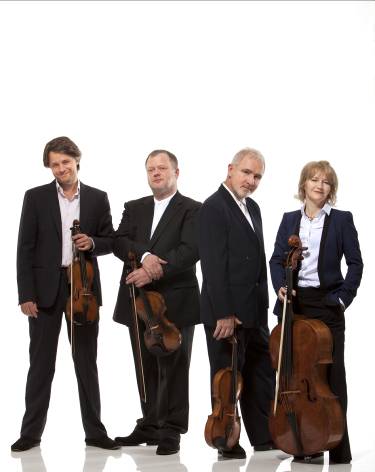
For anyone who can’t wait until March 23 to hear the Brodsky Quartet when it comes to the Gulbenkian Theatre, news just lands on my desk of their fortieth anniversary concert at the Wigmore Hall in a few weeks’ time, on Sunday 11 March.

In an intriguing programme, the Quartet will present their own arrangement of Ravel’s Blues, the third movement of a work originally falling as part of Ravel’s Sonata for Violin and Piano. Post-war American jazz was rife in Paris in the ‘twenties, and the second movement of Ravel’s chamber sonata revels in added-notes, ‘blue’ notes and jazz-inflected rhythms.

The programme also includes Schubert’s enigmatic Quartettsatz, Puccini’s Cristantemi, Wolf’s sunlit Italian Serenade, whilst the second half continues the French theme, given over to Debussy’s majestic String Quartet.

Young at forty: the Brodsky Quartet

The concert also marks the thirtieth anniversary of the Quartet’s Wigmore Hall début, and shows that, at forty years old, the Quartet retains all the vigour and dynamism of its youth and its unique approach to programming. Expect a concert delivered with verve and panache, although there’s no mention about cake and candles. As yet…

Further details and tickets online here.

(Preview excerpts via LastFM).

New music building: latest images

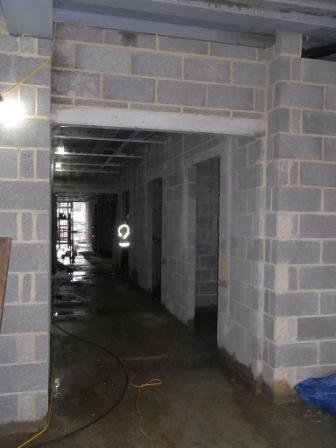
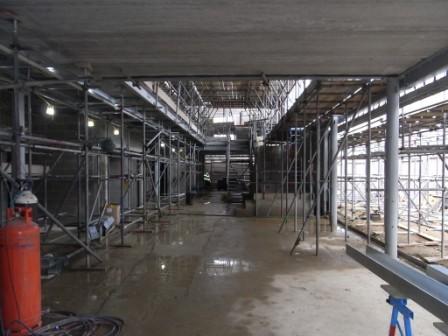
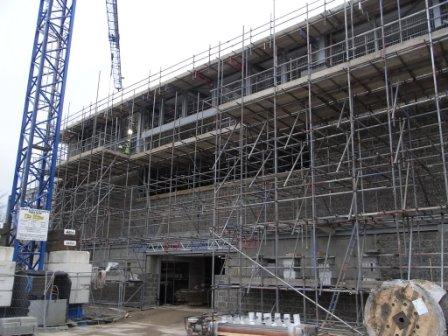
New photographs from last Friday’s site visit, where construction on our new Colyer-Fergusson music building is progressing apace.

Views now of the corridor of practice rooms on the ground floor, and the developing reception foyer and social space as visitors walk in the entrance.

Corridor of ground-floor practice rooms
Reception foyer, looking towards stairs to first floor

There’s also a photo of the new band rehearsal room: see all the new photos online by clicking the album below.

Images

Scholars Spotlight: Tim Pickering

A new feature, profiling this year’s new crop of University Music Scholars: this week, saxophonist Tim Pickering.

—-

My name is Tim Pickering and I come from Littlehampton in West Sussex, and I am studying for a BSc in Forensic Chemistry. I studied at the Littlehampton Community School, and then took A-Levels at the 6th Form there (although for some reason, not in music!) I have been playing the alto saxophone eleven years, and have recently picked up the tenor saxophone as my primary instrument. I hold ABRSM Grade 7 on Alto Sax, and I am currently working towards Grade 8 on the Tenor.

I have played with many different groups and set ups – from quintets,  pop bands and the local ‘Littlehampton Concert Band’ through to a seventeen-piece big band I assembled with the help of a few friends.

My school never really had a great music department; in fact when I joined, the ‘orchestra’ consisted of myself on alto sax, a flute and two violins! It did improve gradually, and one of the music teachers Steve Winter (a veteran himself of the UKC Big Band and Concert Band) got a small jazz group off the ground, which was great as it got some musicians in the music department some much-needed gigs! Although when the new head of music arrived in my second year, classical music lost the emphasis and steel pans became all the rage (much to the other musicians’ disgust!). Our school wasn’t involved in the county music side of things either, so this meant if I wanted playing opportunities in larger groups, I had to create them myself!

I am currently working on putting together and rehearsing a quintet here at Canterbury, with the aim of tackling styles from straight ahead jazz to rhythm and blues, and maybe even some classic rock ‘n’ roll. I’m looking forward to hopefully performing at some of the Jazz @5 sessions , and generally what music here brings for me! I am also playing first Tenor Sax in the Concert Band and Big Band. However, I still would like to play more, so if anyone is looking for a sax player for their band…

I feel I have been very privileged in being picked as a music scholar here at Canterbury, and the musical side of life is fantastic – in fact it was the music department that really swayed my decision to apply here! To go from playing in small jazz quintets and the very occasional Big-Band get together, to rehearsing solidly once a week with decent gigs booked is an exciting change for me! I really want to use my time at university to push myself to be the best sax player I can possibly be, and I hope with the scholarship and the help of my teacher Peter Cook, I hope I can continue to progress.

Exploring a single day: Chamber Choir Crypt concert next week

Still reeling from the vibrancy of last week’s Gulbenkian gig with the Concert and Big Bands, thoughts turn to a more contemplative state for the Chamber Choir concert next week.

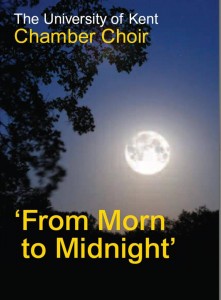
From Morn to MidnightOn Friday 24 February, the Chamber Choir will present From Morn to Midnight, an evocative programme exploring the differing colours in a single day. In a blend of sacred and secular pieces, and including works for solo piano by Chopin and Liszt, the programme moves from Eric Barnum’s Dawn to Eric Whitacre’s Sleep. There are also works by Vaughan Williams, Saint-Saëns and Brahms, Italian madrigals, Elizabethan part-songs and plainsong.
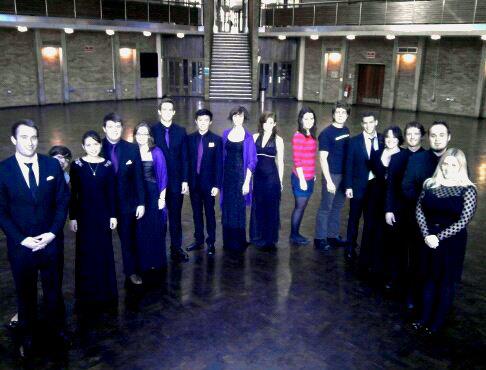
The journey from the Choir’s first rehearsal to its current final preparations for next week’s performance have been charted over on its blog, Cantus Firmus, where you can read about how the Choir has been exploring the repertoire and developing its sound, as well as important matters such as deciding what to wear and phoning out for pizza. It’s all part of the process…

In the sonorous acoustics of Canterbury Cathedral’s historic Norman Crypt, the Choir will release a multitudinous array of colours, ranging from birdsong in Monteverdi to sunlight in Barnum and the deep colours of Whitacre’s mesmerising masterpiece: it promises to be a memorable occasion.

Further details and ticket details online here.

In rehearsal last Saturday

Big Band and Concert Band will take it Nice ‘n’ Easy next Friday

There’s now just one week to go until the annual roof-raiser at the Gulbenkian with the University Concert and Big Bands, on Friday 10 February.

Kent's First Lady of Jazz: Ruby Mutlow

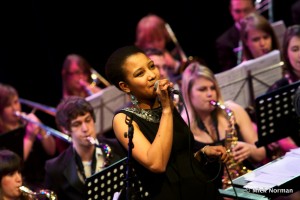
Starring in the concert will be second-year Music Scholar and jazz singer Ruby Mutlow, who’ll be familiar to those of us who went to the concert this time last year, as well as to those who chilled out at various Jazz @ 5 sessions, and the Big Band Gala in the summer term. Possessing a characterful and wonderfully graceful voice, Ruby will be joining the Big Band for a selection of vocal pieces.

In the first half, amongst other pieces, the Concert Band will explore selections from Wicked,whilst music in the second half from the Big Band will include Duke Ellington.

Conductor Ian Swatman is his usual unflappable self so close to the gig, and he’s looking forward to his usual banter with the audience, perhaps the occasional reference to a certain Northern football club whose fortunes lie close to Ian’s heart, and maybe one or two surprises as well.

The concert starts at 7.30pm, and there’ll be live music in the Gulbenkian Foyer from 6pm with a selection of a cappella vocal groups and instrumental jazz.

Details online here: tickets are disappearing fast!


Young wind quintet delivers dazzling display in lunchtime concert

The new lunchtime concert series this term got off to a vibrant start with a virtuoso performance from the St James Quintet in the Gulbenkian earlier today.

The first of Ibert’s Trois Pièces Brèves was deft and dazzling, whilst the second had some sustained and lyrical playing; the third was elegantly crafted, and demonstrated great dynamic flexibility.

Wind quintet
Virtuosic youth: the St James quintet

The polished neo-Classicism of Hindemith’s Kleine Kammermusik Op 24 no 2 had great rhythmic verve, with an especially lilting second movement; the mini-cadenzas in the tiny fourth movement saw each player showing great assurety, whilst the final movement had excellent rhythmic punch and good control of the elaborate cross-rhythms.

The programme finished with a poised and refined reading of Reicha’s Quintet no 2 in E flat, including some fearsome agility in the bassoon in the last movement; whilst often an overlooked and neglected orchestral instrument, the bassoonist showed the instrument is no less agile than some of its more melodic brethren!

The group left the stage to an enthusiastic response from an audience clearly astonished at the virtuosity of the young players; throughout the programme the instrumentalists demonstrated  controlled and accomplished playing which belies their youthful years. There’s an expressive sense of communication between the players, with some finely nuanced ensemble playing that sees them playing with great individual freedom and commitment, whilst maintaining an effortless unity as a group.

The St James Quintet will be appearing at the Dulwich Picture Gallery later in the year: keep an eye out for them, they are surely an ensemble with a promising future ahead of them.

Furley Page logo
Sponsors of the Lunchtime Concert series

H-Eddie excitement as bebop superstar comes to Canterbury

It’s not very often that a superstar of the international bebop world lands in Canterbury, but that’s what’s happening on Saturday 11 February, as Eddie Daniels plays with the David Rees-Williams Trio.

Reading Thomas Owens’ excellent Bebop: the music and its players, a survey of key figures in the bebop movement – Charlie Parker, Dizzy Gillespie to name but two – recently, the writer makes the following observation:
In recordings such as To Bird with Love, [Daniels] combines an astonishing technical command of the instrument, a beautiful, warm tone quality over the entire range of the instrument, a great sense of swing, and a rich melodic imagination. He has proven repeatedly and conclusively that bebop can fit the clarinet; the only barrier to a flood of bebop clarinetists appearing may be the challenge of meeting Daniels’s awesome standards.

Daniels has been called a ‘thoroughly well-bred demon’ by none other than Leonard Bernstein; with an equal foothold in the world of jazz and classical music (Wynton Marsalis, anyone ?), Daniels has been a colossus since his early days with the Thad Jones band back in the 60’s. There’s a profile of Daniels over on that great jazz blog, LondonJazz.

Bebop remains, for me at least, one of the critical artistic movements of the twentieth century; witnessing the development of an harmonically more adventurous, and rhythmically more exploratory style, it  represented a move away from more traditional big band swing to a tighter, more focused style emphasising a richer inventiveness. Greater technical prowess was required to execute improvisation at break-neck speed: the almost instantaneous translation from harmonic and melodic thought to the physical execution of its ideas, at such speed, leading to some of the greatest recorded solos ever made. There was no room for error: a sure-footed way of working with a linear logic through the harmonic changes required a firm grasp of the underlying chords and their extensions, to allow ideas to unfold with such rapidity and yet stilll retain a melodic integrity. In the white heat of spontaneous creativity at a live gig, you had to know exactly what you were doing.

Tickets and details about the event on the Gulbenkian Theatre’s website here: one not to be missed.

And here’s a foretaste of Daniel’s terrific dexterity allied with a dazzling gift for melodic improvisation, on scintillating form in After You’ve Gone. Thomas Owens may have a point…

Scholars Spotlight: Gemma Sapp

We’re delighted to be launching a new feature here on ‘Music Matters,’ profiling students who are part of this year’s new crop of University Music Scholars. We kick-start the series this week as we meet bassoonist Gemma Sapp.

—-

Hi, I’m Gemma. I have joined Kent to do my MA in Theatre Dramaturgy (yes this is a subject!). One of the reasons I chose to come to Kent was its wide range of musical activities and the chance to be awarded a scholarship for musical ability. Having recently completed my undergrad in classical music from the University of Liverpool, I wanted to find a university that both satisfied what I wanted from my course and that had a strong musical ethos and Kent had both of these things.

Music has always been my love in life, and from starting recorder lessons at the age of six, I haven’t put an instrument down. I specialise in woodwind, mainly bassoon and saxophone and before heading to university I was part of Somerset County Youth Concert band and had started playing for many local choral societies and operatic societies. During my time at Liverpool University, I worked my way through the ranks to become President of Liverpool University Music Society in my final year. This meant organising, running and playing in the groups and organising their finances and concerts. I was also playing in and helping to run the University Symphony Orchestra which brought together all of the universities across Liverpool together to play. While at uni I started to play professionally in pit orchestras across the North West including a two week stint at The Lowry, Salford playing for the revival of Chorus Line.

Moving down to Kent has been hard. When your contacts, pupils, mentors and friends are hundreds of miles away it can feel leave you feeling very isolated. However, there is always a band or orchestra who will let you play and I am now a member of the University Orchestra, Wind Band, Big Band and we have recently started a wind ensemble playing some finger-busting Mozart. From involving myself in these and getting to know the staff I have found work with Sandwich and District Choral Society (from which I found another contact…) and hopefully some pit work later in the year. I also have a couple of pupils again. I love teaching. Seeing someone improve, develop and enjoy music is a joy and privilege. In the last week I have also been elected to one of the positions for Post-Grad rep for the Music Society so expect to see me around a lot more.

I’m sorry this has gone on a bit but when I start talking about music I really can’t stop. The title of this blog sums it up for me, ‘Music Matters – Because it does, doesn’t it?’. Yes. Quite simply, it does.

Because it does. Doesn't it ? Blogging about extra-curricular musical life at the University of Kent.