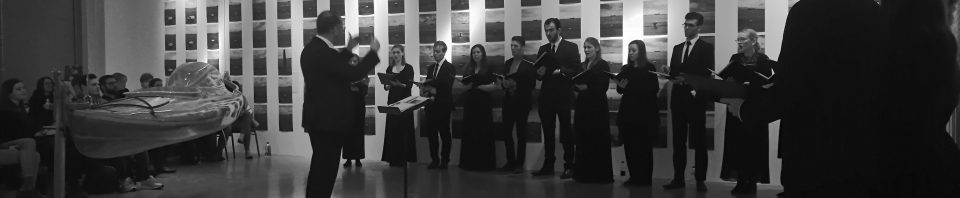
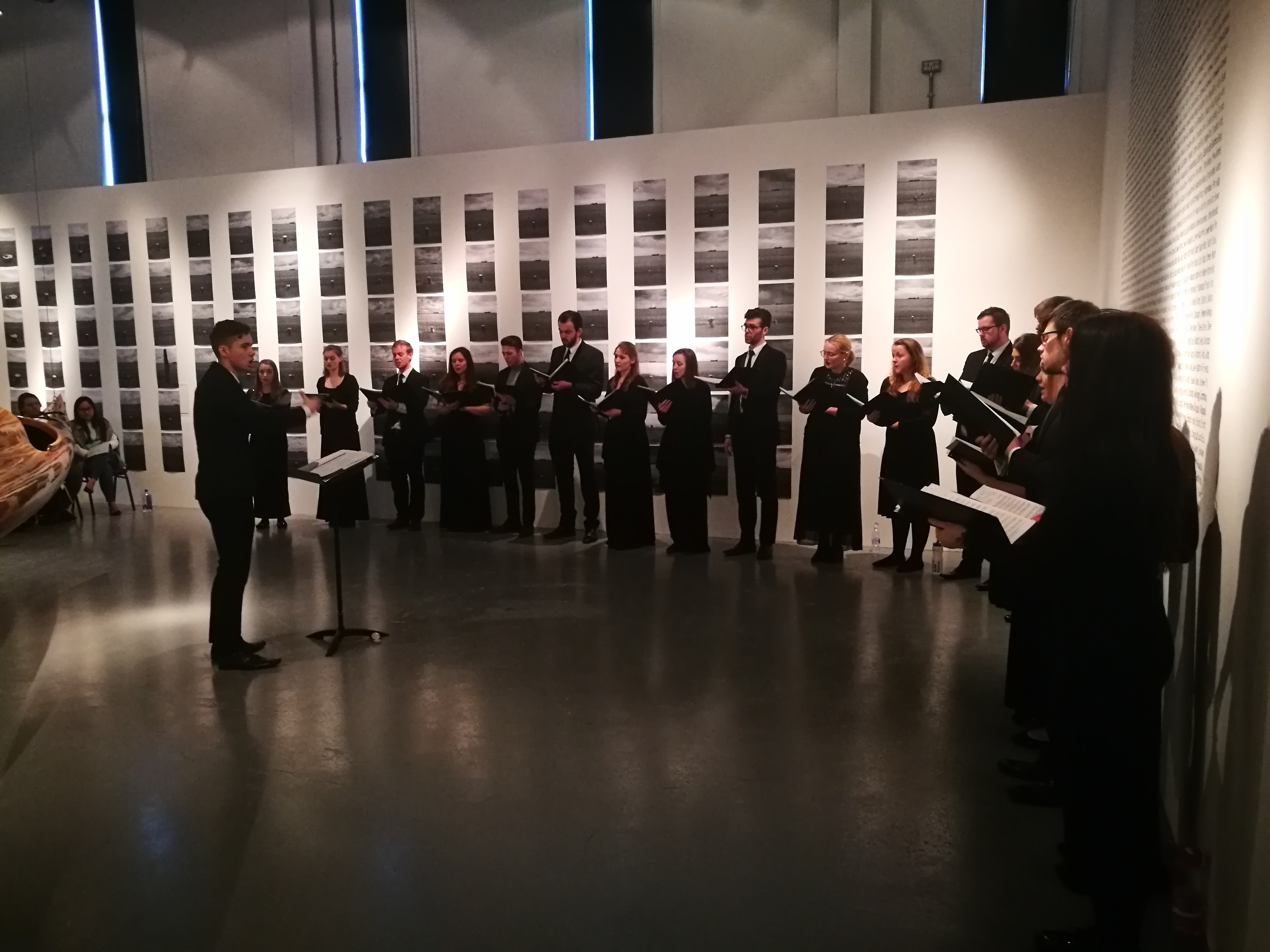
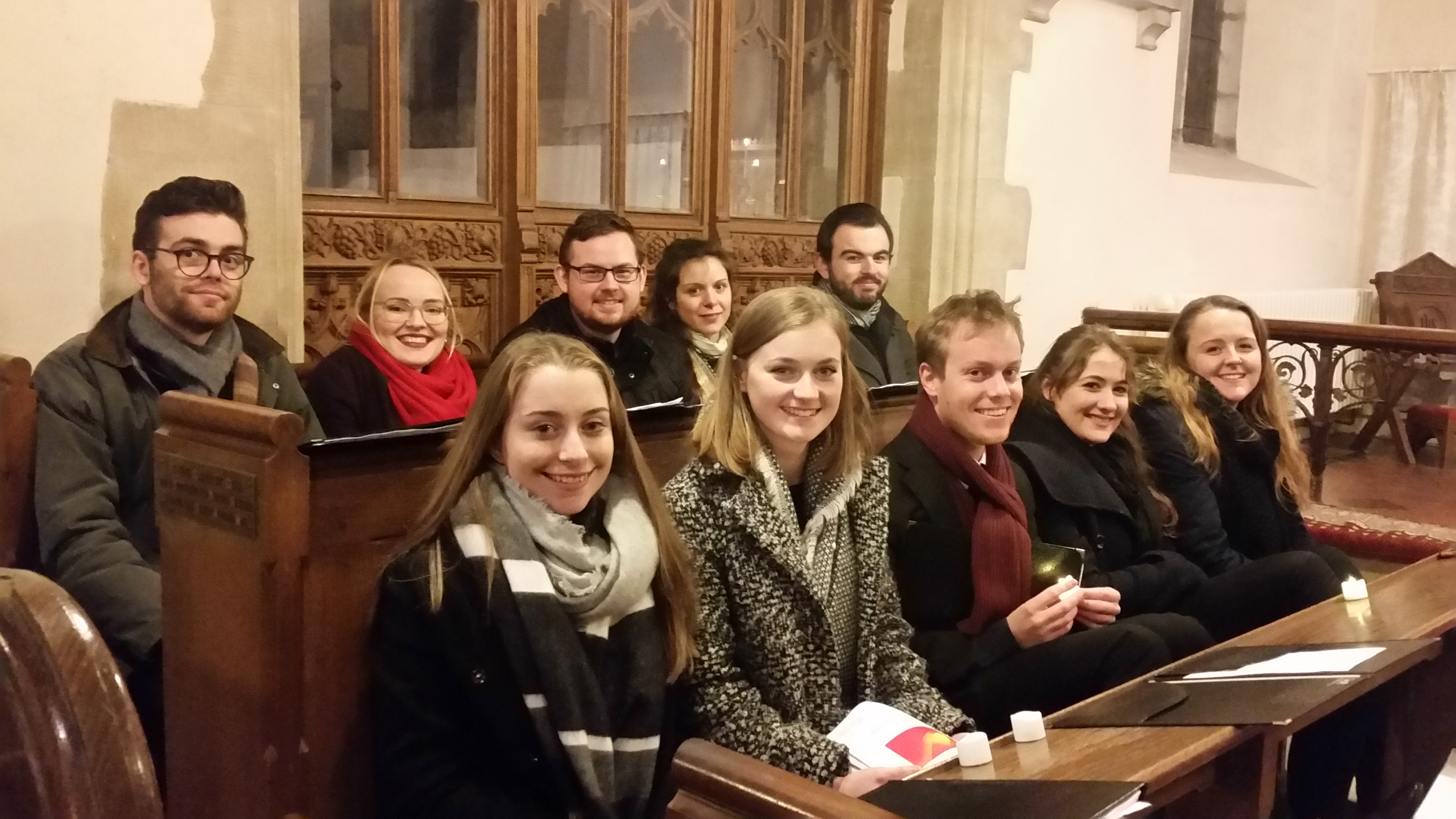
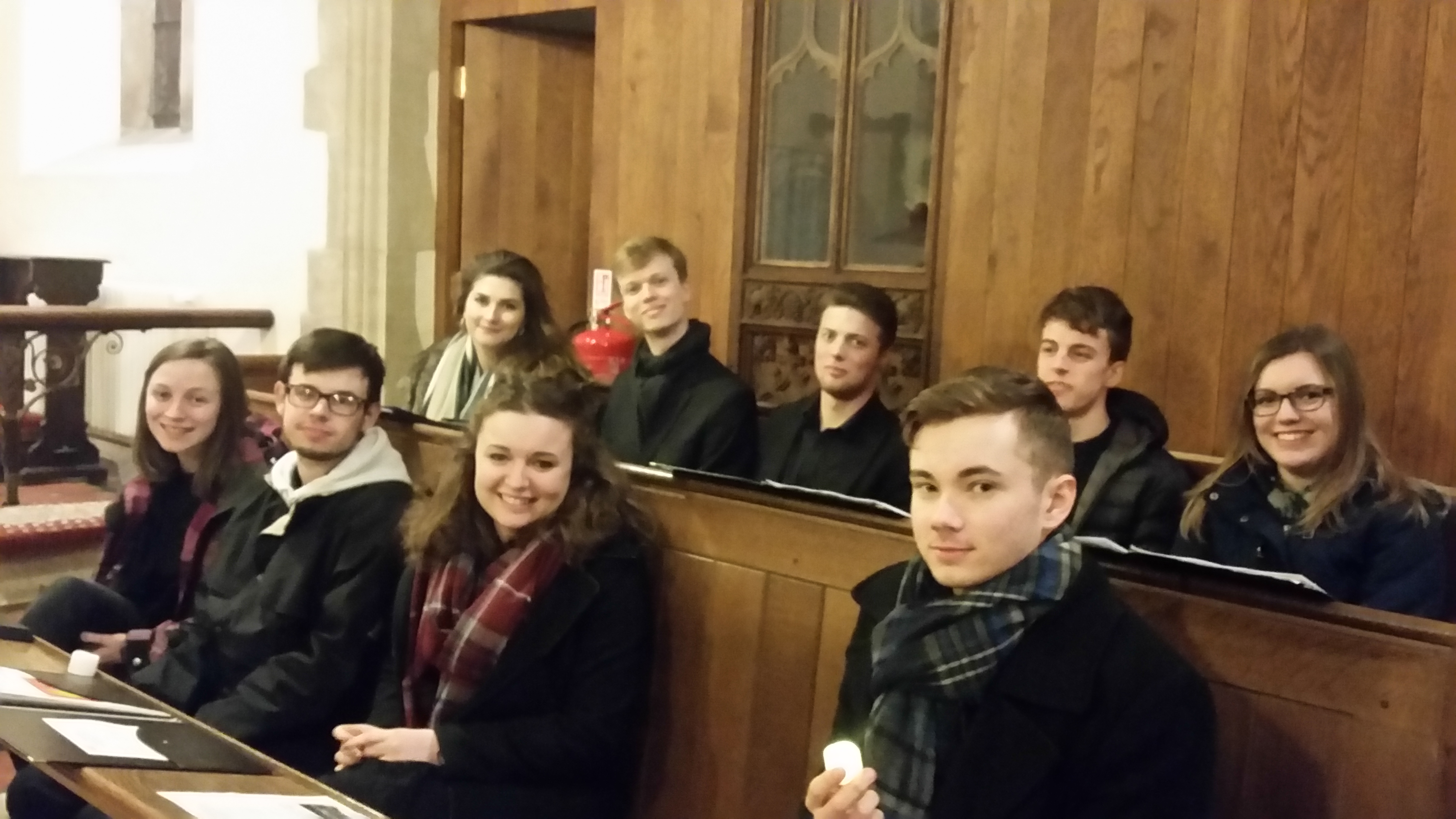
Many congratulations to the University Chamber Choir, which Friday performed at two very different events on the same day.
The lunchtime concert in Studio 3 Gallery saw the Choir fill the resonant space against the backdrop of the gallery’s latest exhibition, ‘The Ash Archive,’ to an audience that just kept on arriving – never have so many chairs been called for! Thanks to Rose Thompson, the gallery’s co-ordinator, for helping to bring the event together.
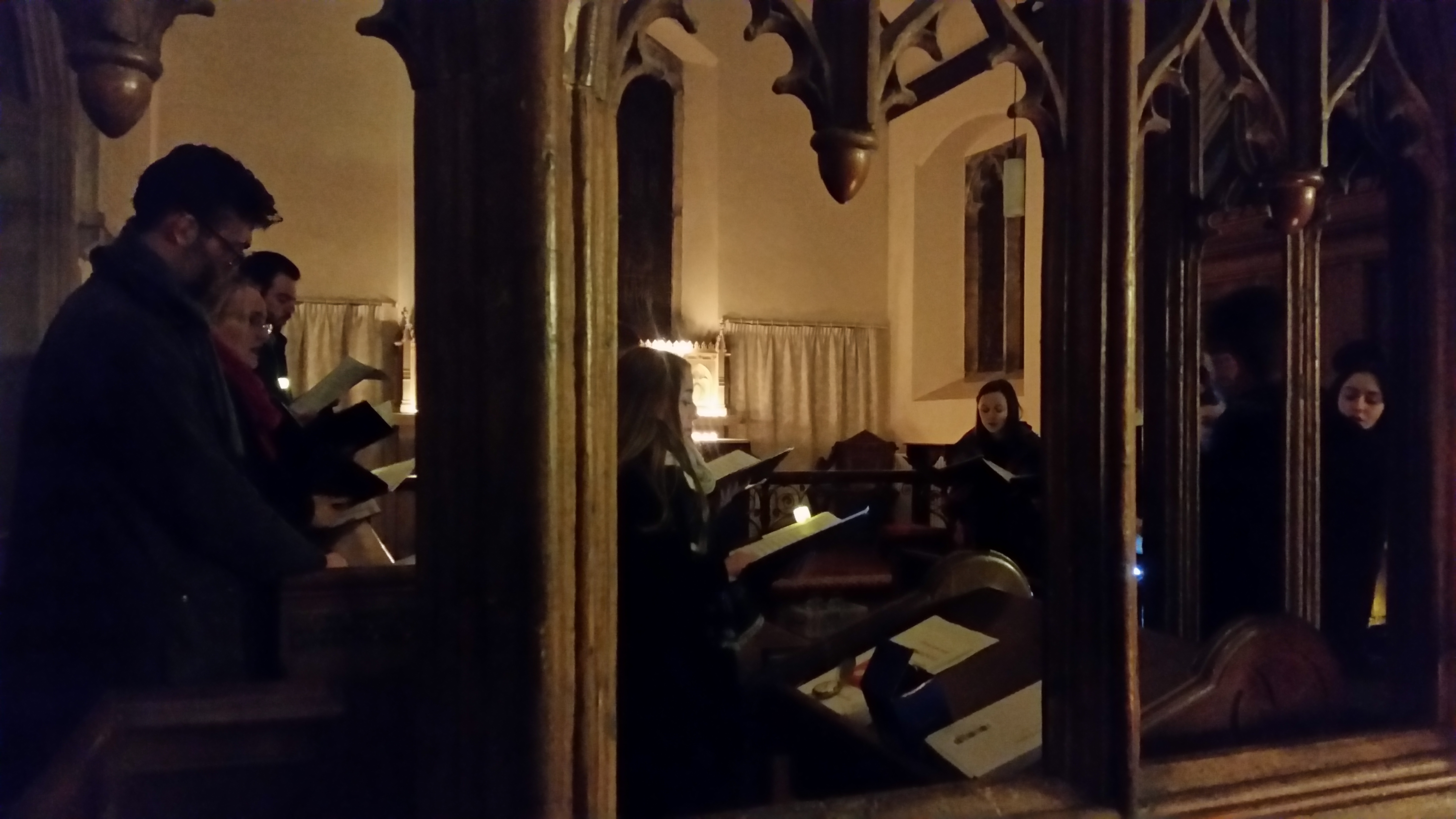
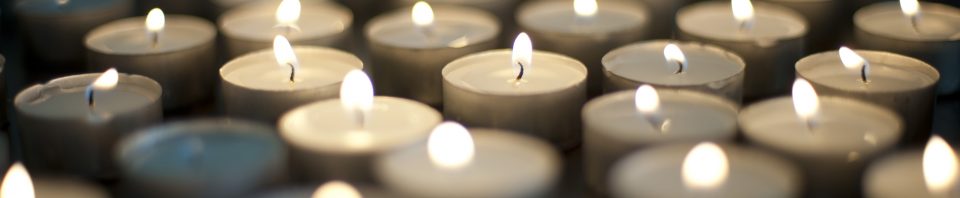
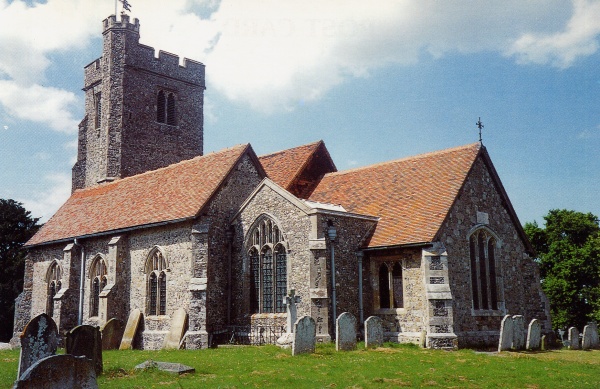
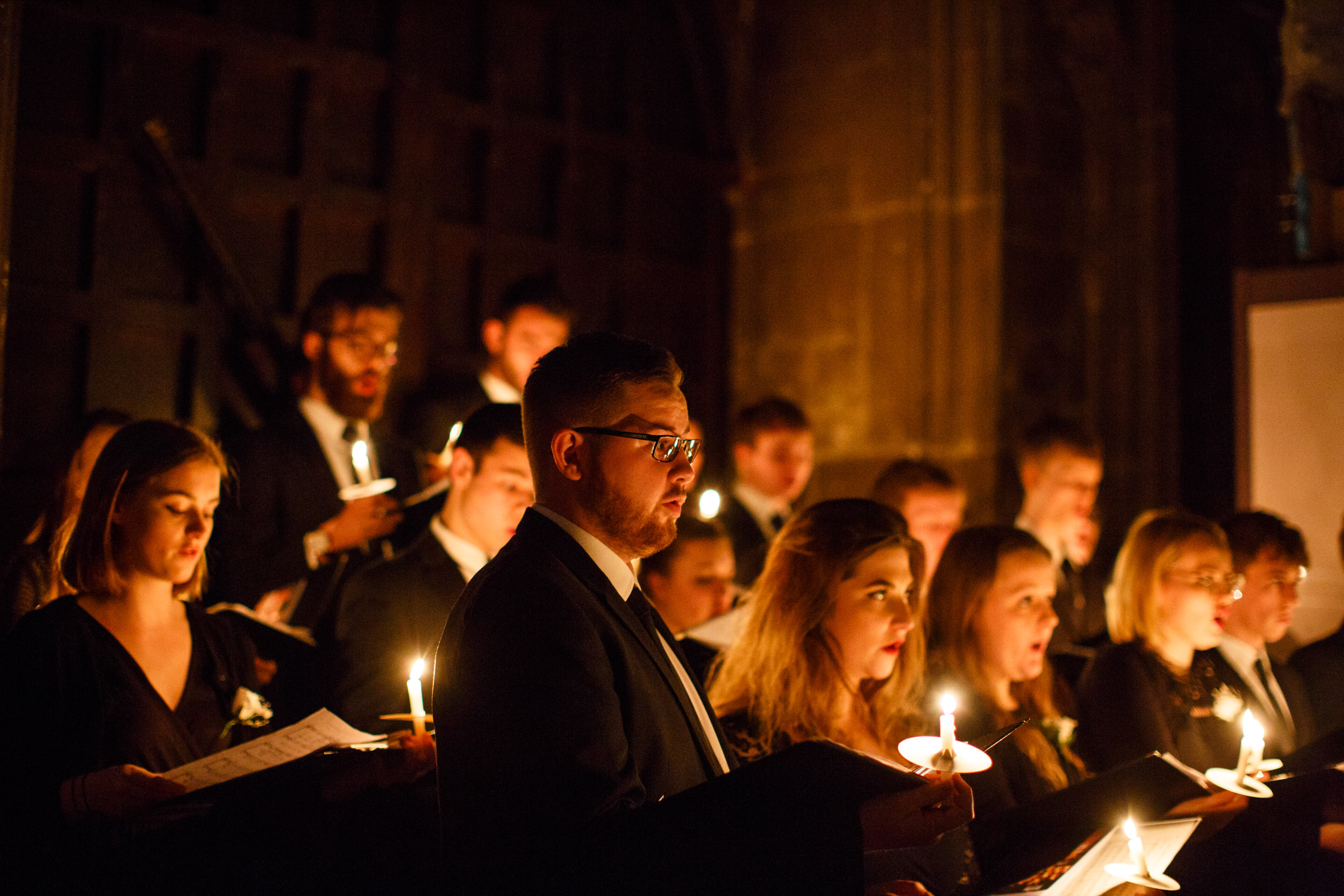
Later that evening, the Choir travelled out to the village of Hernhill, to sing at the church’s Breathing Space event, a sequence of music and silence by candlelight that afforded an hour-long period of tranquility, calm and reflection. Our thanks to Reverend Paulette Stubbings for making the Choir so welcome, we hope to return to St Michael’s in May – watch this space…
The Chamber Choir is back in action this Friday when it performs in the Eastern Crypt of Canterbury Cathedral, in a programme including Pergolesi’s vivid Stabat Mater.
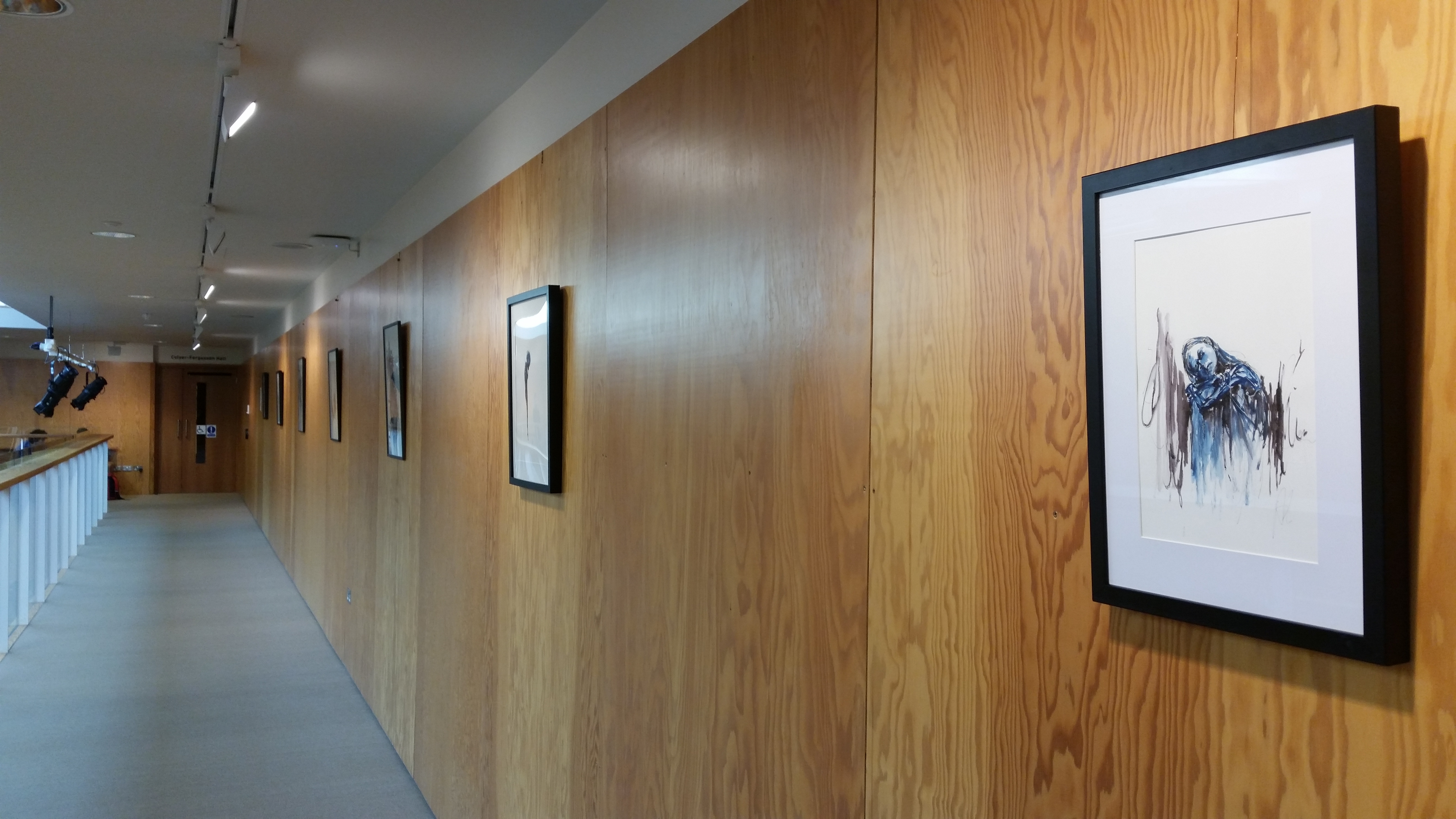
We’re delighted to announce that our new exhibition here in the Colyer-Fergusson Gallery is now open.
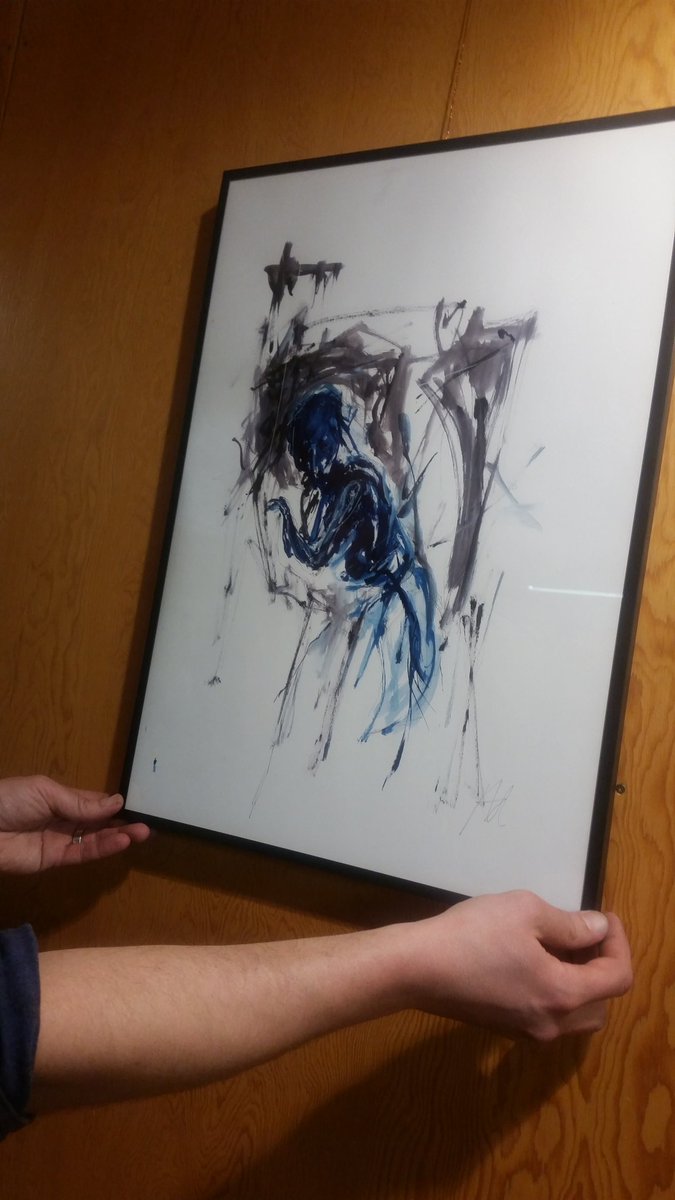
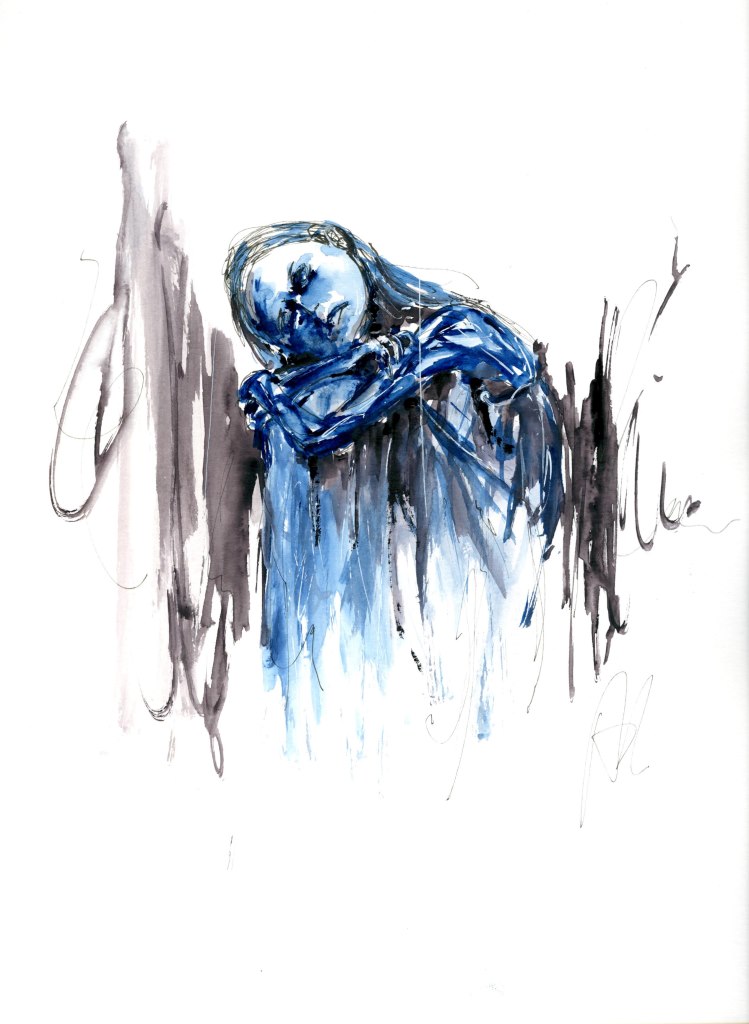
Blue, by Canterbury artist Adam De Ville, is a sequence of paintings united by colour, which explores ideas of identity, belonging, loss and technology. The title painting in the series is also linked to a performance of Pergolesi’s magnificent Stabat Mater, which the Chamber Choir performs in the Cathedral Crypt next week, for which Adam’s painting features on the programme cover. A haunting, evocative image of a lone woman, the painting seems to relate to the grief of the Virgin Mary during Christ’s crucifixion, set in dramatic fashion by Pergolesi shortly before his death.
The exhibition is open until Friday 9 March during normal working hours and at weekends; admission is free, and there is disabled access.
Read more about the insipiration behind the exhibition in a previous post here: find out more about Adam De Ville here.
There’s an opportunity to escape the hurly-burly of modern life into a sequence of music and silence on Friday 23 February, as the University Chamber Choir travels out to the village of Hernhill, near Faversham, as part of a series of Breathing Space events. Hosted by the church of St Michael’s, the hour-long event affords an opportunity to experience a rare moment of peace and tranquility in a candlelit, fifteenth-century church.
Breathing Space is a series of contemplative services during the dark hours of winter days, during which the church is mainly in darkness with some candlelight. The event at 7.30pm comprises a sequence of music, interwoven with periods of silence, performed by the Chamber Choir; there will be no words, no instructions, no expectations; attenders simply find a seat and enjoy the atmosphere and peace, and may leave whenever they wish – a short prayer is spoken at the close. It’s open to all – whether a regular churchgoer, someone who has never set foot in a church, of whatever faith (or none) as part of the church’s well-being programme.
The historic church of St Michael’s stands at the centre of the village of Hernhill; indeed, a church of some sort has stood on the site since the Saxons. The present building dates from the mid-fifteenth century, although some aspects of the church that was built in the twelfth century are still discernible. With a rood screen from the sixteen hundreds and a functioning bell-tower that still rings the changes at Sunday service, the church is a place that spans the centuries. It also has a connections to one of England’s darker moments; somewhere in the graveyard, in an unmarked grave, lie several of those who were killed in the Battle of Bossendon Wood in neighbouring Boughton, which in 1838 saw the last armed uprising on English soil…
The Chamber Choir, conducted by Your Loyal Correspondent and second-year assistant conductor, Matthew Cooke, will perform suitably meditative music by Tallis, Rachmaninov, Paul Mealor, Russell Hepplewhite, Sarah Rimkus and Will Todd. The event is free to attend; the church recommends bringing a torch in order to navigate entering the church for the event and at the close as it will be dark. Find the church online here.
Keep an eye out for future wellbeing musical events later this term, including music and birdsong in Studio 3 Gallery and a forest soundscape in the concert-hall…
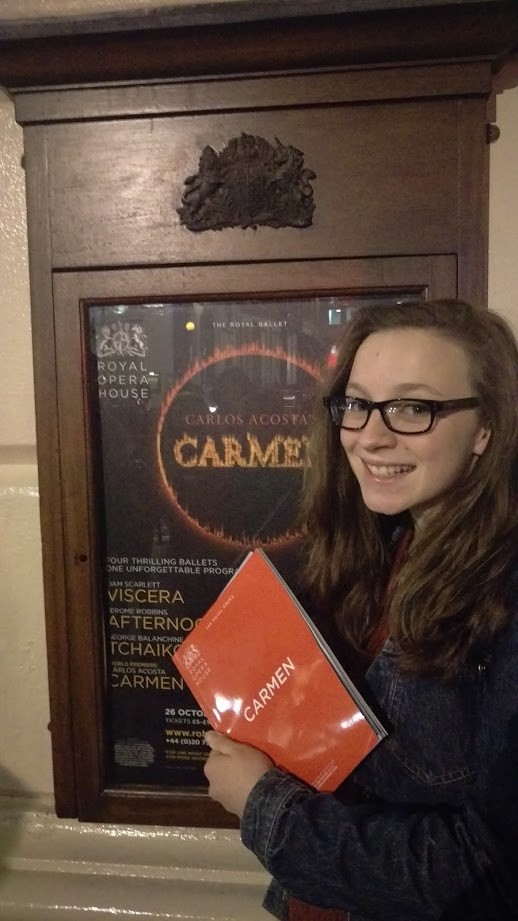
Continuing the series profiling Music Scholars at the University of Kent; this week, first-year alto reading Drama and University Music Performance Scholarship student, Carmen Mackey.
My name is Carmen Mackey and I primarily sing here at the University of Kent along with a bit of bass guitar on the side. At this point, I suppose it would make sense if I said I had a musical family who raised me surrounded by music and that I’m called Carmen after the opera. This is not the case – my parents (who are not very musical) simply liked the name!
I’ve always enjoyed performing so from a young age I attended extra-curricular stage schools. In year 7 I started classical singing lessons and since then have completed grades 2-8 in singing. I was incredibly lucky with my high school, St. Philomena’s Catholic High School For Girls and the musical opportunities it presented. With the school’s chapel choir each year we toured a different city in Europe, singing in Paris, Barcelona, Berlin, Liege and Porto. Some stand out moments from this was performing the ‘Laudamus Te’ duet from Vivaldi’s Gloria in Porto Cathedral and singing the ‘Libera Me’ from Faure’s Requiem in the Kaiser Wilhelm Church Berlin.
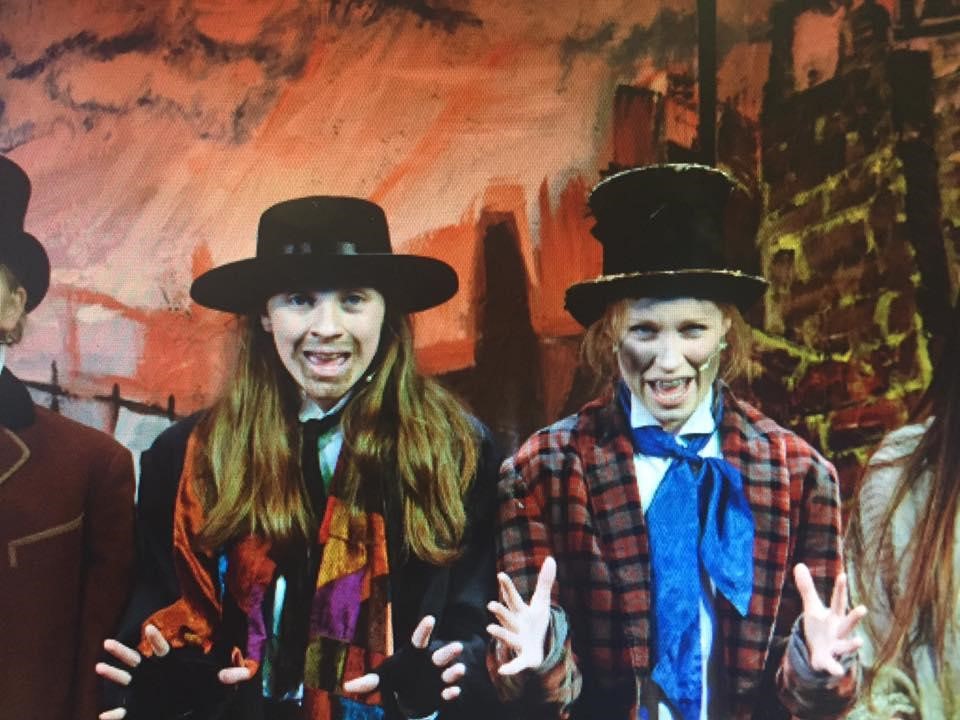
In school, I also took part in the yearly musical and got the chance to play Fagin from Oliver, The Scarecrow from The Wizard of Oz, Rooster from Annie and Nicely-Nicely Johnson from Guys and Dolls. At this stage, I will remind you that it was an all-girls school and because I can sing quite low the male roles were bestowed upon me. For my singing teacher’s opera studies degree, she wrote an opera version of the Room on the Broom book by Julia Donaldson in which I played the cat which was great fun. From year 10 – 13 I compered my school’s termly concerts at which I was grateful for the opportunity to host as well as perform. As Head Girl of my school, I set up and directed the Musical Theatre Club which I ran for 2 years. Just recently I went back to my school to see this year’s production of Sister Act at which I felt like a proud mum watching my proteges.
In Year 11 my singing teacher asked me if I would join her church choir as they were down an alto, and it was there, at St. Mary’s Church Choir Beddington, that I was really challenged and pushed as I was suddenly in a group of about 8-12 adults a mass in SATB who just picked up music and sang it, only rehearsing for about an hour before. It was here that my sight reading, blending and working within an ensemble vastly improved.
I started learning the bass guitar when I was 16 and have been involved in a jazz band in school and participated in band workshops at the Roundhouse in Camden. Last year I got a Merit in grade 4 Bass, so although it’s still relatively new compared to some other people who have been playing various instruments since they were 6, I really enjoy playing and it has been a useful challenge learning bass clef!
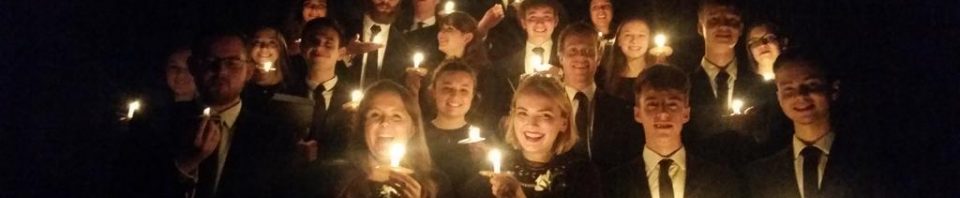
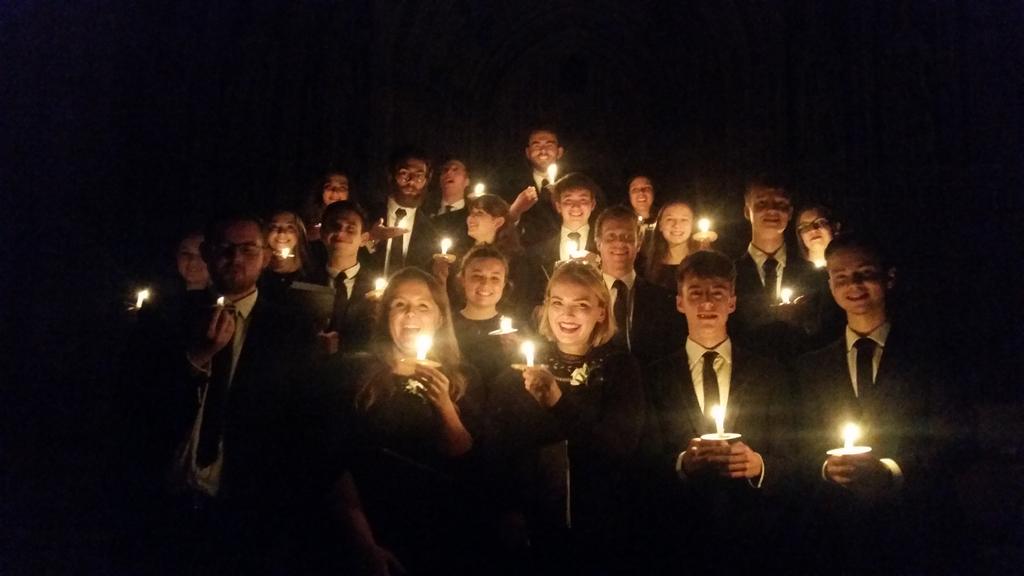
Carmen (centre row, third from right) with the University Chamber Choir in the Carol Service at Canterbury Cathedral in December
Since starting out at Kent, I have joined the University Chorus, Cecilian Choir, Chamber Choir, the Lost Consort singing plainsong, the Musical Theatre Society and just recently General Harding’s Tomfoolery. I’ve always enjoyed music as a subject in school, studying it at GCSE and A-level; part of the reason for choosing the University of Kent is the incredible extra-curricular department it offers that I am thrilled to be a part of.
You can watch a short clip of Carmen singing with the Chamber Choir live on BBC Radio 4’s Today programme, when it was broadcast from the Gulbenkian, in December here.
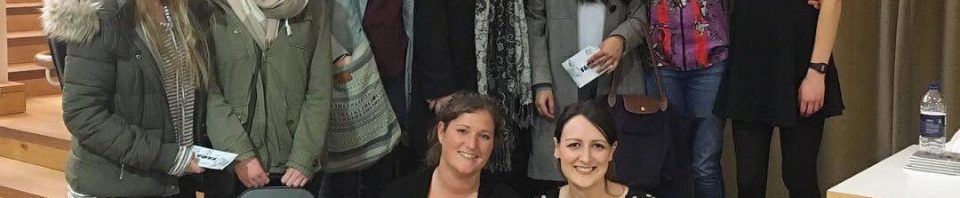
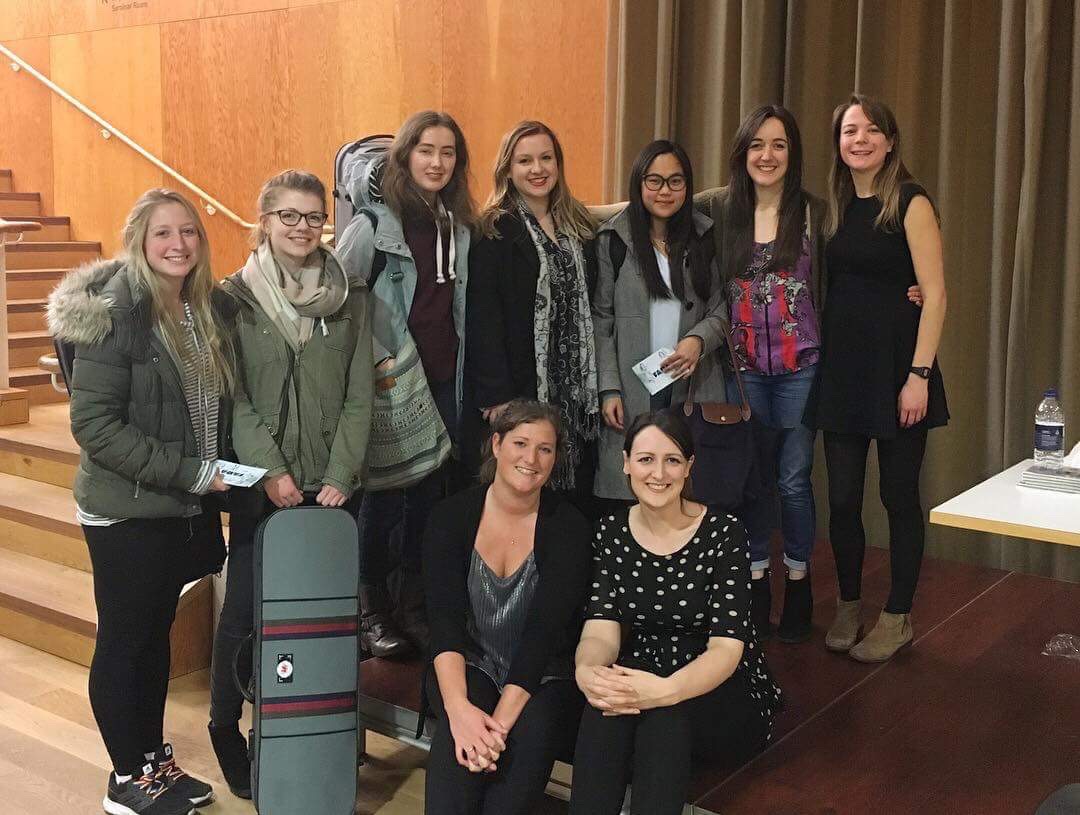
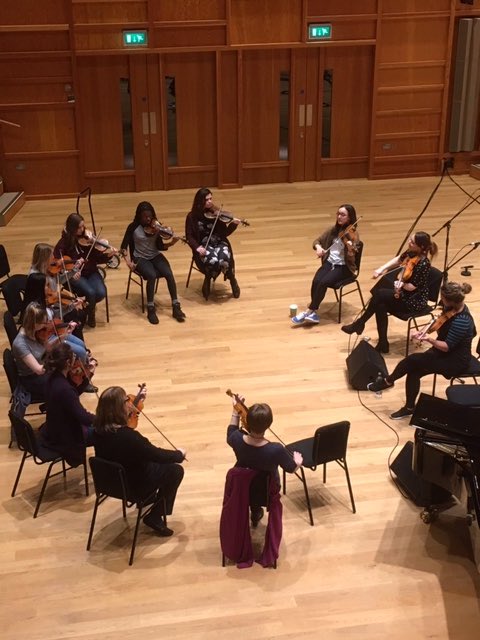
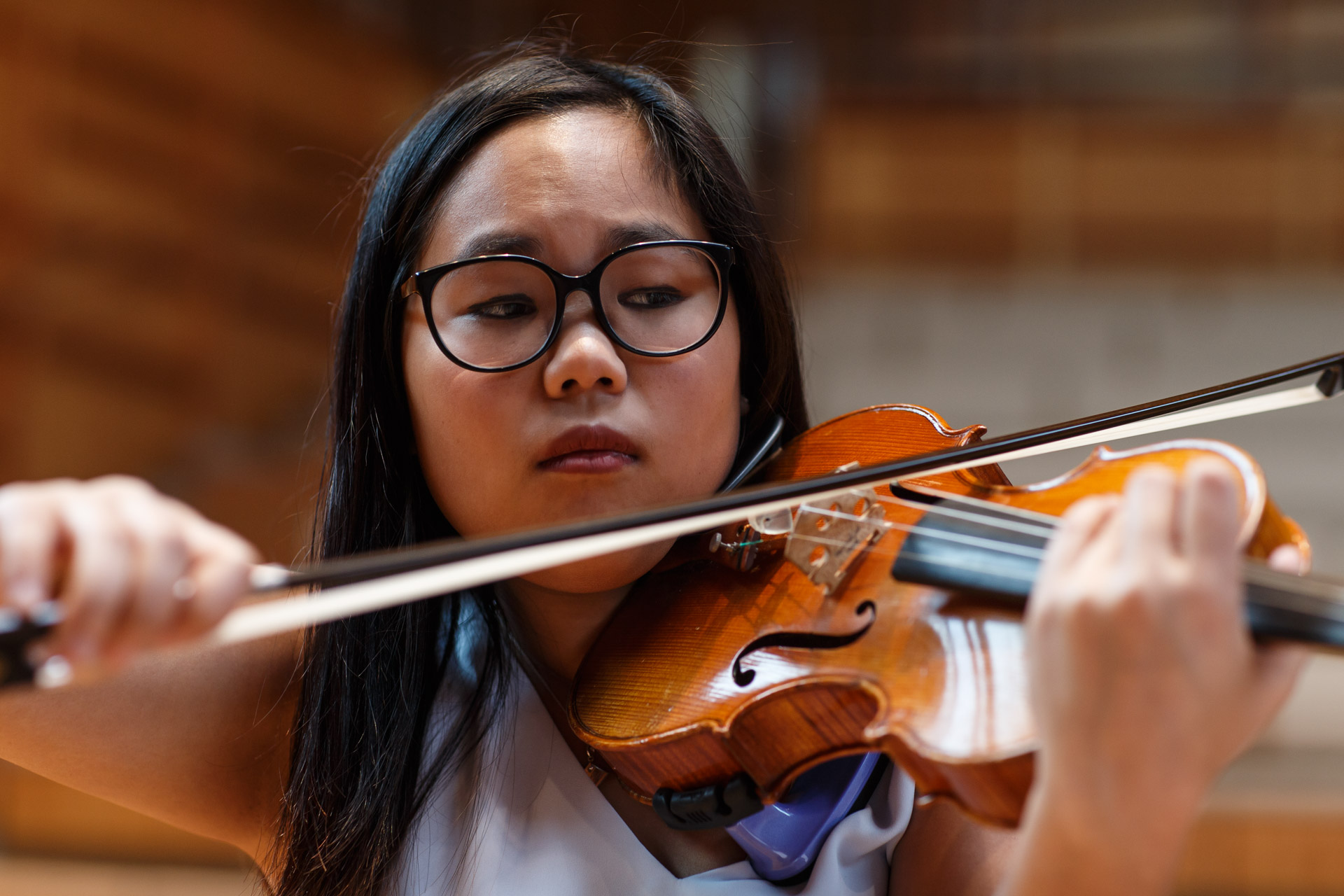
Last week, the award-winning folk group, Fara, came to perform in Colyer-Fergusson Hall; before the gig, they held a workshop which several string-playing students attended, including third-year Law student and Music Scholarship violinist, Lydia Cheng. Here, Lydia reflects on the day…
When we were first invited to participate in an Orkney folk music workshop, I think it’s safe to say we were all more than a little bit skeptical. It certainly didn’t help that when we showed up, being a group of classically-trained violinists, we were told that we wouldn’t be getting any sort of sheet music and that we would be learning it all by ear.
Once the workshop began though, I began to fully appreciate the art that is folk music. The members of Fara took us through four eight-counts of a jig and while it was no easy feat to remember it all, I’d like to think we did it at least some justice. I loved that we were able to move past the routine of reading sheet music and playing whatever was put in front of you and become more creative with our music-making, from just swinging rhythms to adding ornamentation. Never in a million years did I think something I learned in a folk workshop could be applied to classical playing. But yet I found myself making notes of how to improve my playing using folk techniques.
All too soon, the workshop was over and while we still couldn’t play with Fara up to speed, I think we all enjoyed the process immensely. Many Sinfonia members and I talked about the possibility of learning the jig and getting it concert-ready (stay tuned for that!).
We then got to enjoy (after our typical string-players evening meal, of course!) a full two-hour set from Fara. We got the full experience as they played, sang, and talked us through their own compositions as well as tunes they’d picked up over the years. I think I speak for all of us when I say that I have a newfound appreciation for Orkney folk and more than a couple of us have had Fara’s album looping on Spotify in the days since.
Sign of the times…
To be able to learn from and then enjoy a delightful concert from Fara was truly inspiring and something I would jump at the chance to do again.
Lydia Cheng
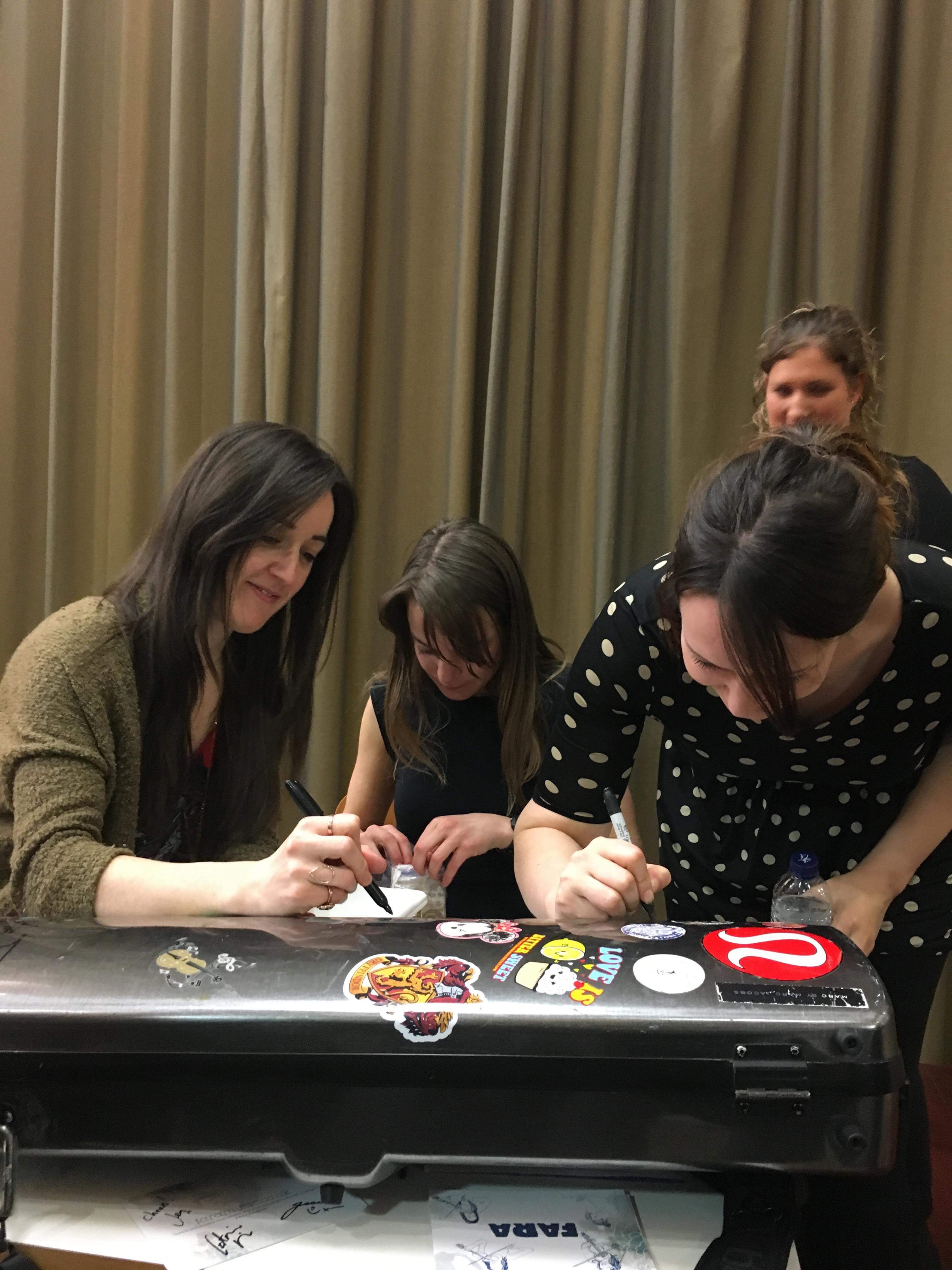
Thanks to Fara for leading the workshop with the students, and for a terrific gig afterwards! Our best wishes as you continue on your 2018 tour…
It’s amazing what strange but illuminating thought-processes occur when you’re rehearsing…
The Scholars’ Lunchtime Concert in March will be commemorating the centenary of the death of Debussy in a programme of chamber works combined with images from the Impressionist era; one of the works is ‘Serenade of the Doll,’ from Children’s Corner, a suite of piano pieces dedicated to Debussy’s then three-year-old daughter, Claude-Emma (known as Chou-Chou), in an arrangement for violin and piano.
Lydia Cheng
‘Serenade of the Doll’ is a surprisingly moving jewel-like miniature, using the pentatonic scale to evoke the porcelain doll in a sprightly triple-metre. Working in rehearsal with third-year Music Scholar and violinist, Lydia Cheng, we were looking at ways to bring the contrasts to the fore, to explore the lilting waltz-like feel and the delicate staccato passages that give the piece its character. The contrasting textures follow each other quite quickly, and we were examining how much depth of tone was suited to the central section.
At one point, we’d been talking about the way the melodic line seems to nudge itself along, followed by a rising minor third and a sudden octave leap; it’s skittish, ungainly, as though something in the child’s nursery has fallen over.’It’s like a cartoon,’ Lydia observed at one point, ‘you know, where the characters tip-toe down a staircase. It’s a bit like Tom and Jerry!’
So, with this in mind, we played through the entire piece again – and suddenly, it came to life. We realised that the music isn’t always about a rose-tinted recollection of childhood, of a panoply of perfect toys tidily on display in a nursery; sometimes, it can be about the trips and tumbles too, the knocks and tiny accidents, the cheerful blunders that are a part of finding your feet as a toddler. This is reflected both rhythmically as well as in the harmonic language, as it trips lightly from parallel ninths through chromaticism and touches of whole-tonality; it’s finding its own harmonic feet too.
Here’s Debussy himself playing on a piano-roll:
I don’t think anyone has channeled Tom and Jerry in performing Debussy before, but it certainly works. Come along to the performance on Weds 28 March to hear it for yourself…
Our new concert series launches in exactly two weeks, and we’re delighted to be welcoming back Fara, who bring part of their 2018 tour to Colyer-Fergusson Hall on Friday 9 February at 7.30pm.
Bringing together four young musicans at the leading-edge of the Scottish folk music scene, the ensemble has been a previous winner of the BBC Radio 2 Young Folk Award, and will bring its mixture of original songs and traditional Orkney tunes to the concert-hall.
Tickets and details here: prepare to be transported to the Isle of Orkney…
I’m sitting in the café late on a dark winter afternoon, to talk with creative powerhouse, artist, actor and writer Adam De Ville about his Blue series, one of which is appearing on the cover of the programme for the concert in the Cathedral Crypt by the University Chamber Choir in March, for its performance of Pergolesi’s Stabat Mater. The music is a masterpiece of the Baroque period, a dramatic and vivid setting of the thirteenth-century hymn to the Virgin Mary’s suffering during Christ’s crucifixion; Adam’s painting (itself called simply ‘Blue’) plays with ambiguity, with uncertainty, with questions of identity, the unknown figure’s possible story and the implication of her suffering.
Blue: Adam De Ville
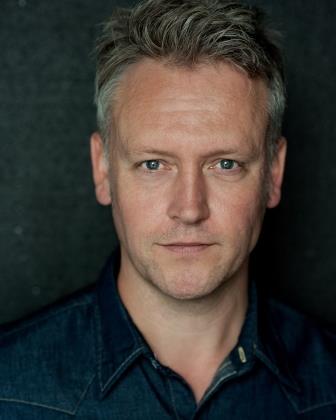
Sitting there with a shock of silvery hair giving him a distinguished aspect, his gaze direct, there’s a contradiction almost between the committed energy he has for art, his fierce creativity, and the carefully-paced, gently articulated way he talks about it; it’s as though each sentence is carefully weighed, measured for its value in articulating ideas which are important to him. No words are wasted; you are left with the sense that these things have been a long time in consideration, yet they flow readily into our free-wheeling conversation, as the sky outside darkens and the coffee sits forgotten amongst the papers.
Photographs of the Blue series are spread between us across the table-top as we talk. It was painted eighteen months ago, with two distinct aspects – one reflecting Adam’s passion for history, with two works referencing the fifteenth and seventeenth centuries, and the other his fascination with technology. ‘I love exploring technology; does it give us an identity ?’ he ponders. ‘I’m always thinking about how the elderly generation uses technology, and how young people engage with it; does it create gaps, or fill them ?’ He launches into a story about sitting in a restaurant recently, watching a young couple eating, talking with each other and at the same time conducting other conversations on their mobile phones; multi-tasking across different streams with complete ease. ‘I wonder how my own children will use technology in ten, twenty years’ time.’
‘A lot of my work is about looking back and imagining forwards, whilst also embracing the transitory nature of life. I paint to try and get home, to anchor myself in moments on paper.’ The striking sequence of images in the Blue series reflects his interest in the colours and tones buried within that single hue; it began during a three-week illness, during which he picked up a sketchbook and began to paint – but only in blue. I asked him about his focus on a single colour and what it meant. ‘I was thinking about age, about being at different stages of life; and, on some level, how we deal with ‘the blues,’ with depression.’ When painting, the images are usually done in a single sitting, although the preparation and thought-process preceding them takes considerably longer.
A recurrent theme in Adam’s work is the idea of belonging and loss. ‘I’m fascinated by the idea of coming home to a home that doesn’t really exist. Life is transitory; you set up a home, and an identity which disappears when you die.’ His paintings have titles like Memory of Bern or Plans for Birmingham, as though he’s trying to pin down on the paper something elusive, to capture that fleeting moment that exists either only in the memory or in a brief vision of what might be.
Children of Birmingham: Adam De Ville
Adam’s musical interests include the hypnotic soundscapes of Arvo Pärt and Gavin Bryars; Pärt’s Cantus in memoriam Benjamin Britten formed the sonic backdrop whilst he was painting ‘Blue,’ and Bryars’ mesmerising The Sinking of the Titanic inspired ‘Preludes (where you go I go),’ a haunting sequence of images.
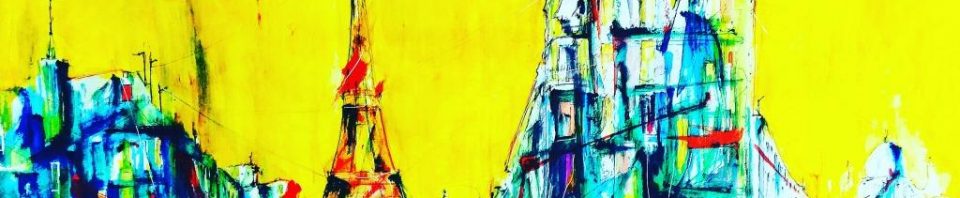
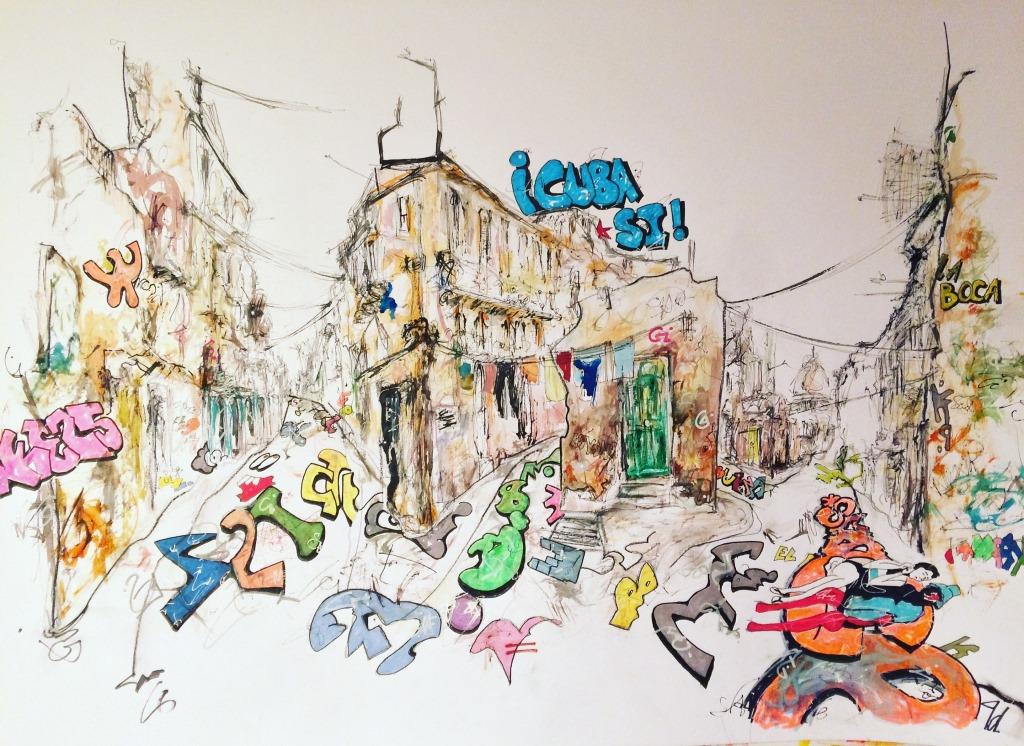
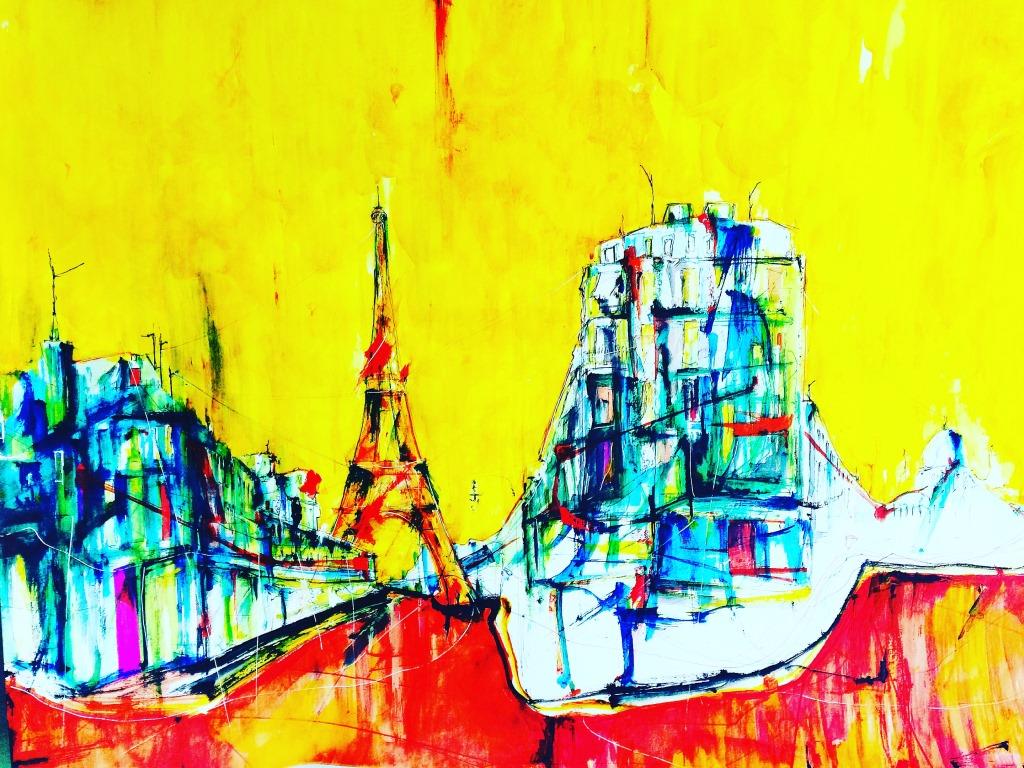
I ask him what he’s working on at the moment. ‘I’m exploding!’ he says, eyes alight with real relish; ‘long may it last!’ His newest images explore the urgent, street-art energies of graffiti; other paintings explore a more vibrant world of colours in various cityscapes – Paris, the Montmartre district, Birmingham’s brutalist architecture from the 70s; there are also paintings of Havana – all places connected with Adam’s life, fragments of his own history. Suddenly we’re transported from the darkness-bound neon glow of the café to Cuba, as he recounts a brilliant (and hilarious) story behind one of the Havana images, involving his acting in a commercial dressed as a pork-chop, a moment which sounds utterly surreal but which informs some of his most energetic painting.
Pork Chop in Havana: Adam De Ville
For all his gently-weighted manner, it’s impossible not to be invigorated by Adam’s considerable enthusiasm for his subject, his looking at things from different angles, for making connections and exploring ideas. As we leave to go, each to his own home – after our conversation about identity, about belonging, I’m no longer quite sure what that may mean – a little of the neon glare seems to fade from the café as he ventures out into the dark; but it resides, fiercely, in the images still spread on the table in front of me.
My Nuclear Paris: Adam De Ville
Adam’s work is currently in exhibitions at Store Street Gallery, London, Lilford Gallery, Canterbury and Flux 2018 at the Chelsea College of Arts, London.
Blue will be exhibited in the Colyer-Fergusson Gallery from Friday 16 February to Friday 9 March, during normal opening hours: admission is free, and there is disabled access. The individual painting, ‘Blue,’ will be shown during the Chamber Choir’s Crypt Concert performance of Pergolesi’s Stabat Mater on Friday 2 March.