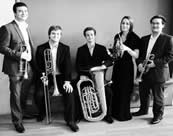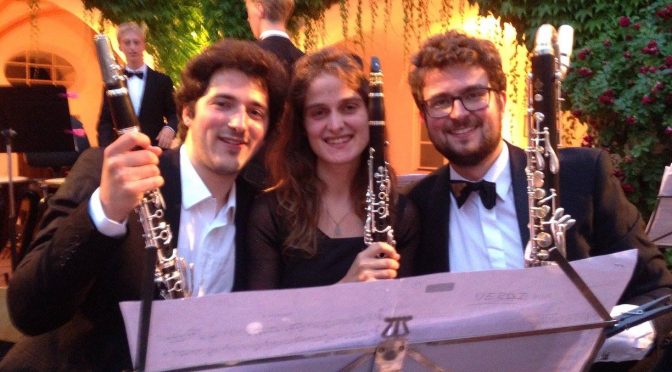
Continuing the series profiling University Music Performance Scholars and Performance Award students. This week, second-year Physics post-graduate and clarinettist, Leon Schoonderwoerd.
My name is Leon Schoonderwoerd, born and raised in the Netherlands. I am a second-year PhD student in Theoretical Physics, as well as a recipient of the University of Kent Music Performance Award.
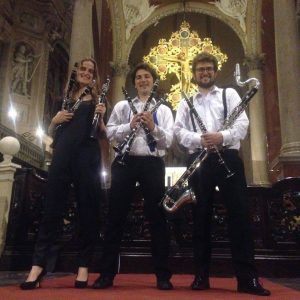 My musical journey started with clarinet lessons at age 7, which I continued all through primary and secondary school. A few years later, I joined a local wind orchestra where I worked my way from third clarinet in the youth band to first clarinet in the main orchestra in a few years time. Meanwhile, I taught myself to play drums and played in a few small bands, unfortunately none of which made it very far.
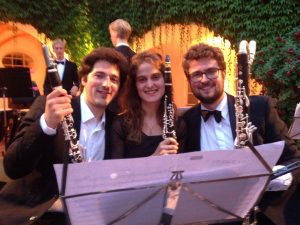 After a trial lesson at the Amsterdam conservatoire, I decided to not enrol there but instead pursue a science degree. I studied at the University of Amsterdam for six years, obtaining first a BSc in Natural and Social Sciences, then an MSc in Theoretical Physics. During this time, my music-making was mostly on hold, with the exception of a band I started with a few friends during the master’s. We played a few gigs, but when our frontman moved to Germany to pursue a PhD, we decided to quit while ahead.
After finishing my Masters, I lived and worked in Amsterdam for another year, during which I joined a student orchestra. My background in classical music combined with my experience on the drums allowed my to fill their vacancy for a percussionist. When after one programme the opportunity arose to switch over to bass clarinet, I took it. This was a truly great year for me, playing pieces such as Ravel’s Piano Concerto, Rachmaninov’s Symphonic Dances and Janáček’s Sinfonietta. The year ended with a bang when we joined forces with a student orchestra to give a series of concerts in the Netherlands (ending in a sold-out Concertgebouw in Amsterdam) as well as a three-concert tour abroad in Freising, Germany and Bologna, Italy.
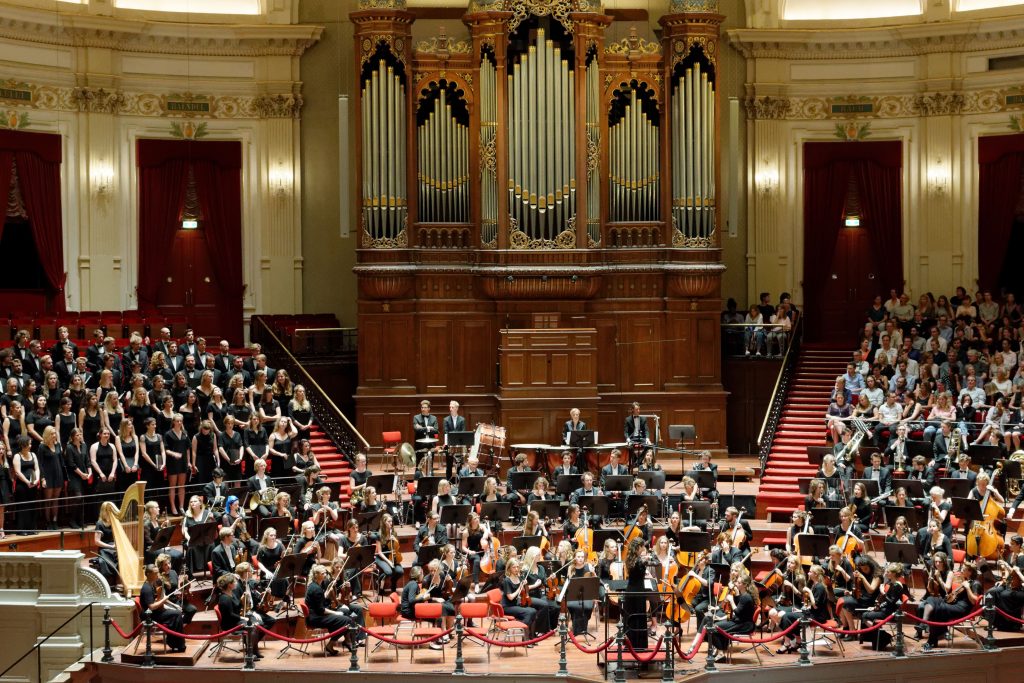
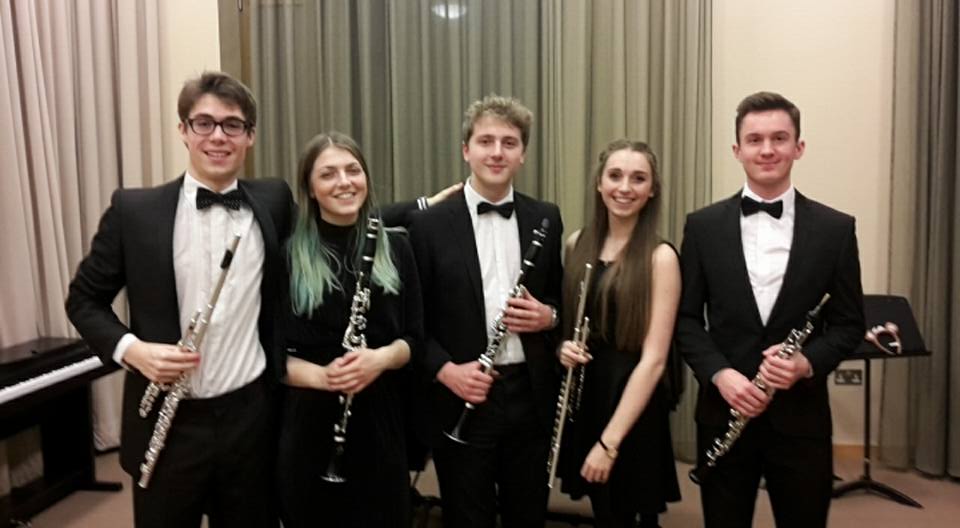
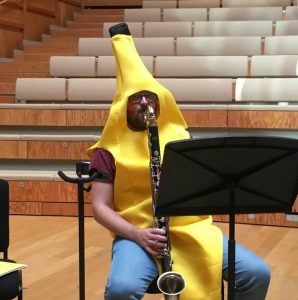 By this time, I had accepted a PhD position with Gunnar Möller at the University of Kent, so in the summer of 2017 I moved from Amsterdam to Canterbury in pursuit of science. Here, I joined the lively music programme, which awed me with its beautiful concert hall and proceeded to take over most of my free time. During my first year at Kent, I played bass clarinet and percussion in the University Symphony Orchestra and Concert Band, sang bass in the Chorus, joined the pit band for two musical theatre shows and started a woodwind quartet.
This year, I vowed to take any musical opportunity I possibly could, as a result of which I am playing clarinet in the Symphony Orchestra and Concert Band as well as in an array of chamber ensembles, bass clarinet in the Pops Orchestra, and the odd percussion part for different performances (I hear there are still some tickets for Dido and Aeneas…) [deftly plugged there, Leon: well done…ED]. Additionally, the Music Performance Award has allowed me to take lessons with the incredible Ian Swatman, also director of the University Concert and Big Bands and legendary Hull City supporter…)
Music at Kent thus provides me with ample opportunity to take my mind off physics. Many thanks to the Music Department and Music Society for making all this possible!
The Music Performance Award is open to returning students at Kent, and offers a year’s worth of instrumental / singing lessons in support of a holder’s contribution to the musical life of the University: read more here.
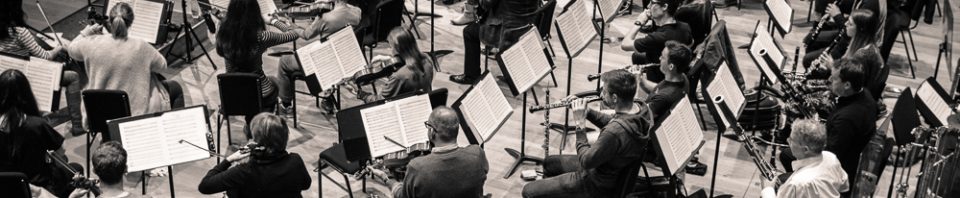
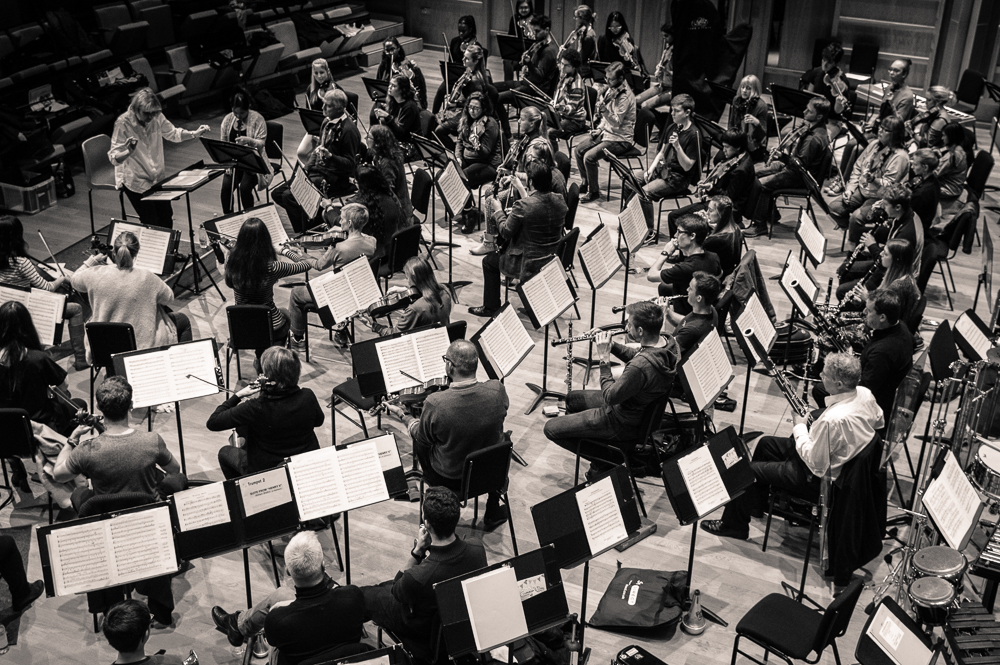 Such communal music-making offers the opportunity for students (and, it must be said, quite a few staff as well…) to escape the stress of their course commitments, and embark on a shared creative endeavour as they work towards a termly public performance. Each spring term, that performance is unveiled in the sonorous surroundings of the Nave of Canterbury Cathedral, always a highlight of the University’s performing calendar, and which regularly sees alumni making their own musical pilgrimage to the Cathedral to participate, and to relive the heady excitement of standing at the very top of the choral risers to sing, or of navigating the steps to the Crypt in the gloom clutching highly fragile musical instruments at various levels of expense.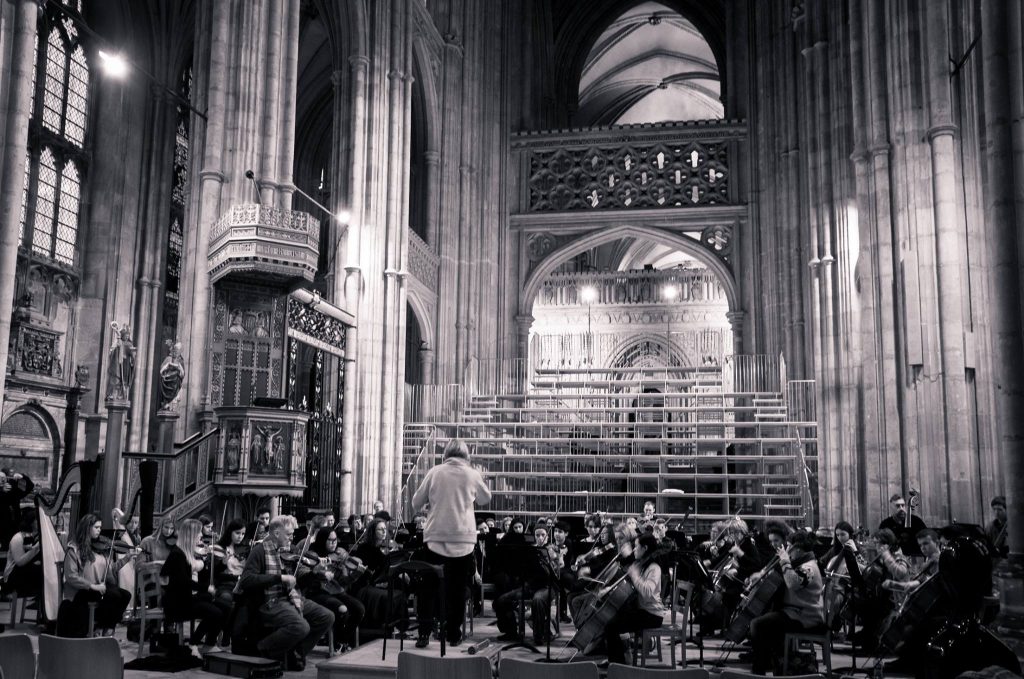
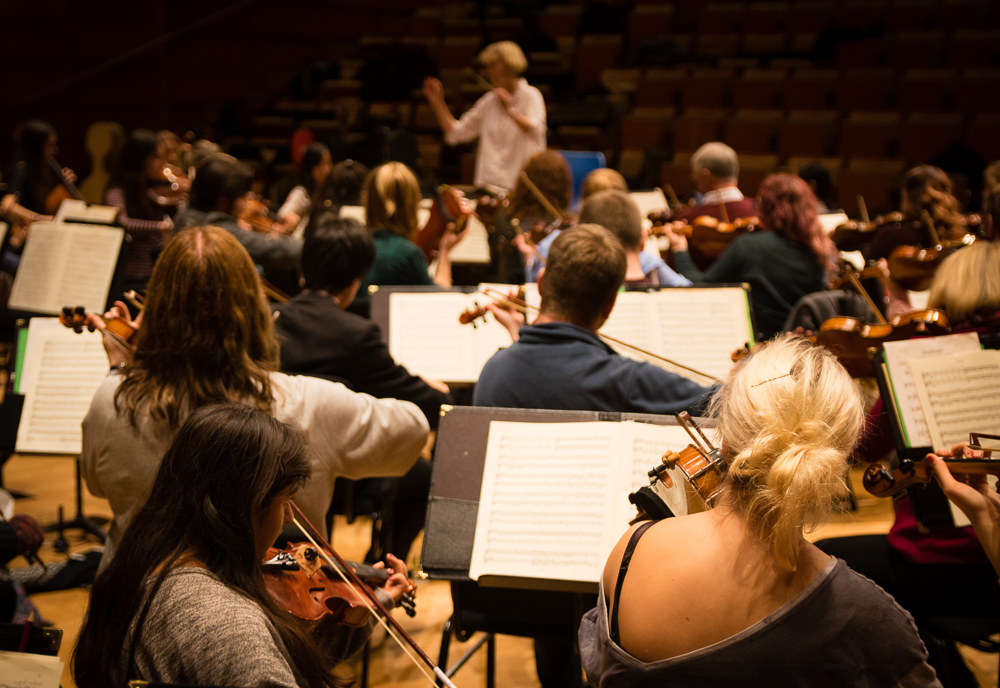 The wonder of it all is that everyone gives up their free time to attend weekly evening rehearsals, and, as concerts loom, additional rehearsals and workshops at weekends. No-one is obliged to take part – excepting the Director of Music, who arrives in the concert-hall each Thursday clutching oversize scores, a selection of conductor’s batons and the fierce determination to master that term’s repertoire – and when concerts are in the offing and more rehearsals are taking place, time-management (or, in the case of some of the players, parental child-management) skills are called in to play, as everyone makes time for them on top of their coursework or vocational commitments.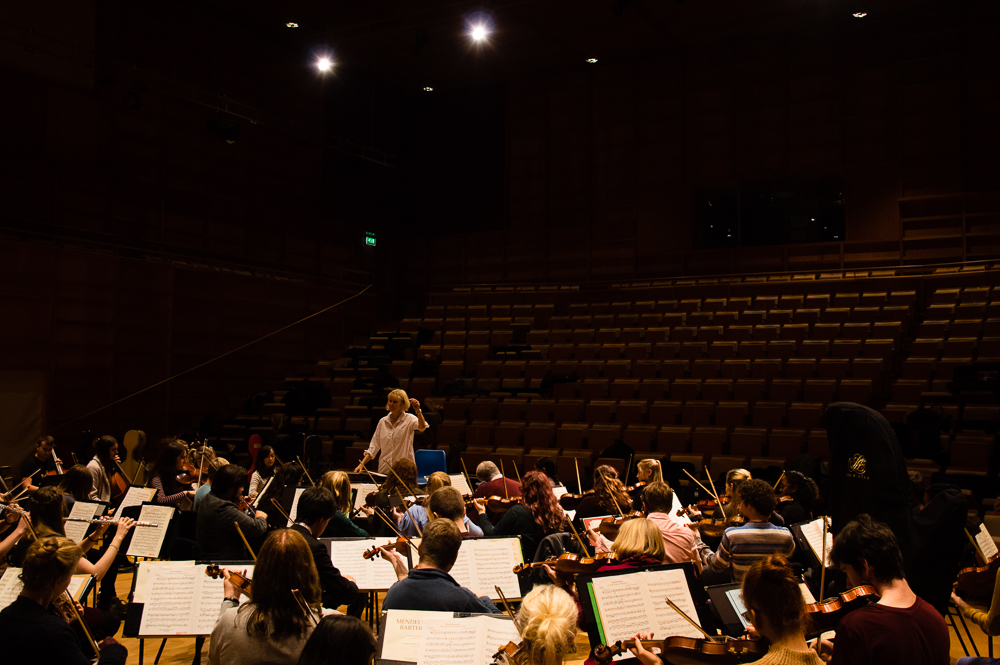
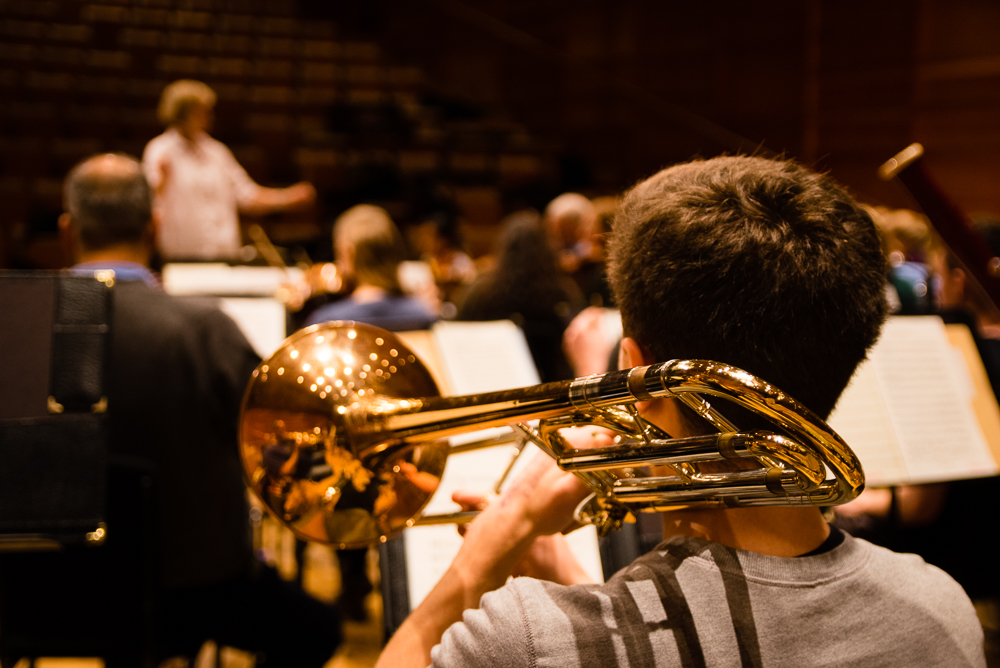 The orchestral repertoire which they have embraced over the years has ranged from epic monsters of the Romantic Period – the Berlioz in 2016 being a memorable example – to energetic orchestral showpieces including the Symphonic Suite from Bernstein’s West Side Story, or Verdi’s Requiem. It’s hard work, particularly at the end of a long working day, especially for those students who have the additional task of commuting from Medway on a Thursday evening as well, where they have been studying Fine Art or Business and Management; and yet the enthusiasm with which the players embrace the works which the Director of Music hurls at them is wondrous to behold.
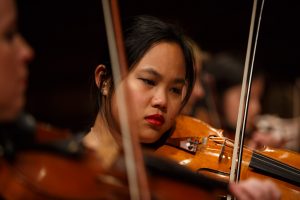 This year, the Symphony Orchestra will be led – for the first time for the entirety of the Cathedral concert – by Lydia Cheng (picture right), a second-year Music Scholarship student from Canada, who came to Kent for the strength of its Law degree as well as for the extra-curricular music-making opportunities that it offers. Elsewhere in the orchestra, a former member of the National Youth Orchestra sits amongst the woodwind, and a current member of the National Youth Jazz Orchestra lurks in the brass section. There’s an international flavour to the orchestral members, too, including players from Malaysia, America and South Africa.
 Choosing a secondary school presented some opportunities to fulfil one of my two ambitions. One of my options was Abraham Darby Academy, a performing arts and business enterprise specialist academy. Their flagship concert band, called the ‘Showband’ had recently returned from Carnegie Hall, New York, and an opportunity like that would have been too good to turn down. I started year 7 at Abraham Darby Academy and was inspired to reach the standard needed for the Showband. I began my first clarinet lessons with the head of music, Rachel Morton, and quickly progressed up through the various ensembles the academy had to offer. The Megaband was the first ensemble I was a part of, where you needed to pass your grade one to enter. Next was the Friday Band, which – you guessed it – rehearsed on a Friday after school. This was an intermediate band with students of around grade 2/3 to grade 7 standards playing. In addition to the concert bands, I was invited to pick up a tenor saxophone and play with the Junior Jazz Band. It was from there where I progressed even further, passing an audition for the Showband and the Senior Jazz Band on 3rd clarinet and baritone saxophone respectively.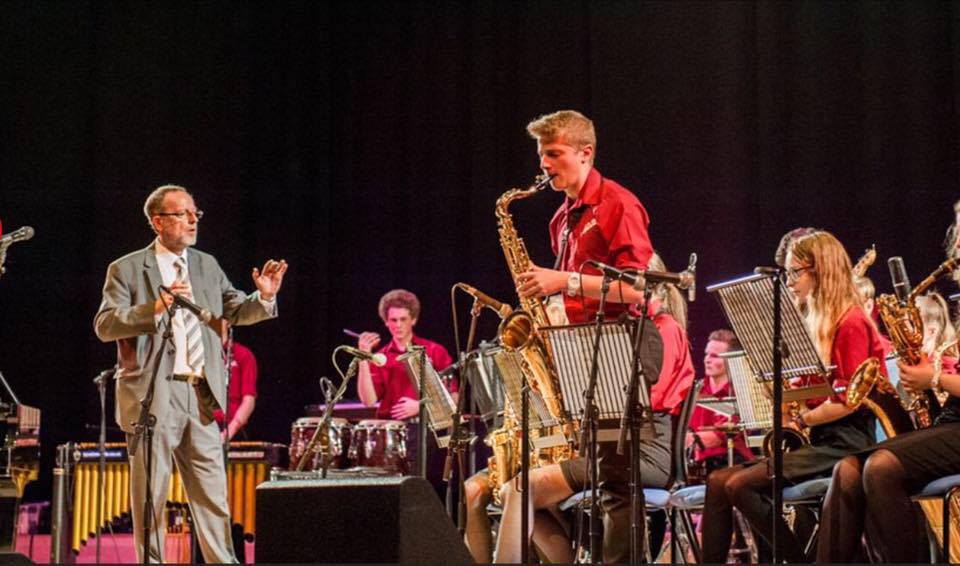
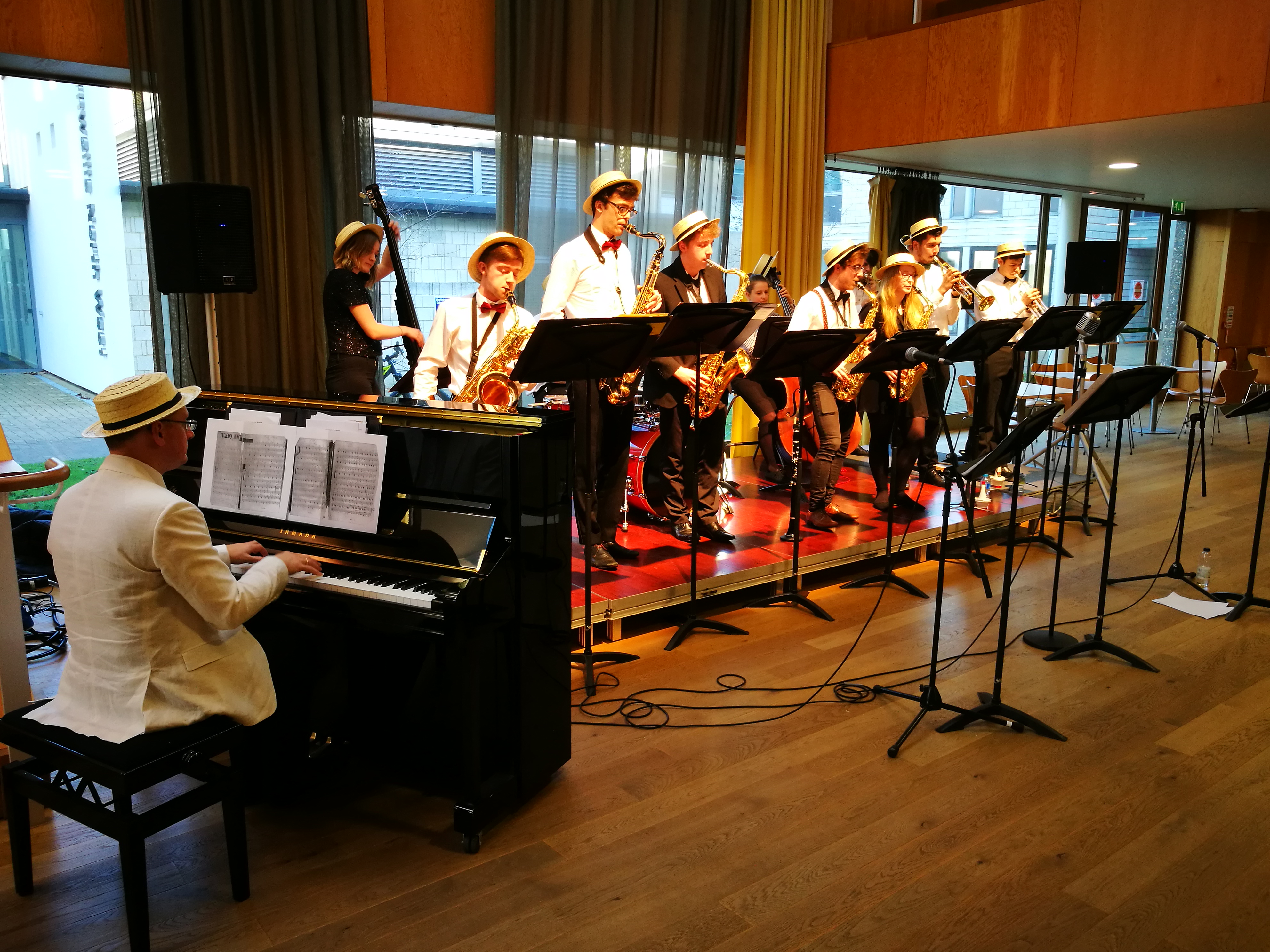
 As usual, we’ve performances in the majestic surroundings of Canterbury Cathedral with the Chorus and Symphony Orchestra in Tchaikovsky and Puccini for the annual Colyer-Fergusson concert, and the Chamber Choir and Ensemble will fill the Crypt with Fauré’s evocative Requiem in a new chamber edition. The Concert and Big Bands return in March with a dazzling evening of concert band classics and big band swing, and the Musical Theatre Society is back in action too. CantiaQuorum brings its usual eclectic and innovative approach to programming with a new series of concerts, and our popular Lunchtime Concert series ranges from the shores of Scotland to the heady sensuality of Argentinian tango.
 A new collaboration with the School of Biosciences forms the backdrop to a concert bringing together live music with beautiful images from its cutting-edge research, which will also be exhibiting in the Colyer-Fergusson gallery throughout the spring term; and there’s a look ahead to warmer weather and seaside pleasures with events to come during our annual Summer Music Week festival in June.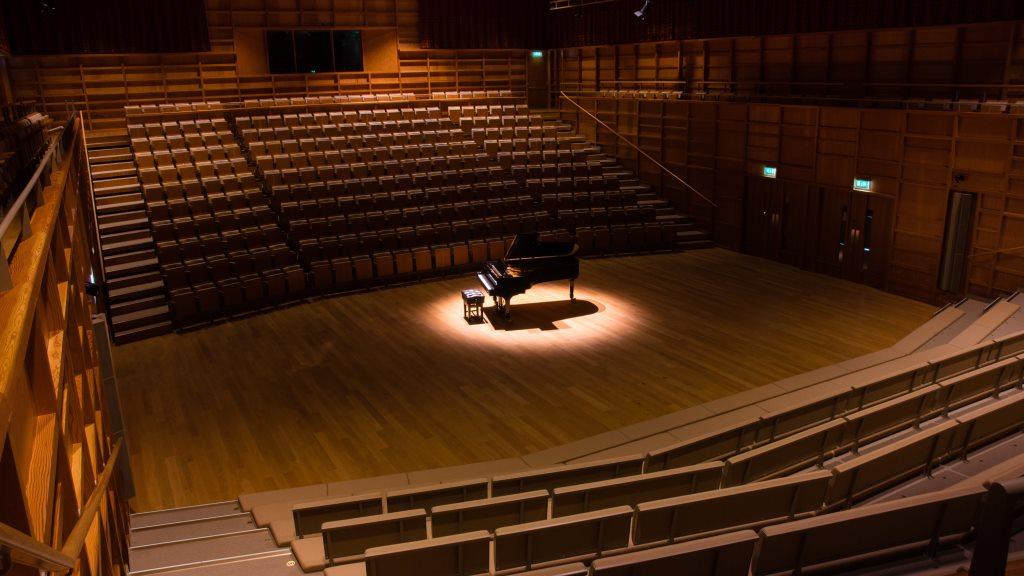

 On Sunday 3 April at 3pm, the hour-long afternoon family concert (to which children under 10 go free) will feature popular American music, with Copland’s Hoe-Down from ‘Rodeo’ and three of his folk songs, together with a medley from Bernstein’s West Side Story.
 The week-long events programme opens in rousing style with music for brass and percussion at lunchtime on Monday 3 June, and continues throughout the week with a recital from some of the Music Scholars; a day of jazz, culminating in the annual bun-fest that is the Big Band Gala with special guests; string music is the theme on Thursday, including the String Sinfonia; Friday celebrates choral music with a lunchtime of a cappella vocal music, whilst the University Chamber and Cecilian Choirs come together in the evening concert; and the whole week, nay, the whole musical year, reaches its climax on the Sunday, in a combined afternoon concert with the University Chorus, Symphony Orchestra, Concert Band and Chamber Choir.
 Find out all that’s happening that week, including many free events, on the website