As a curtain-raiser to the performance of Tokaido Road, which comes to the Gulbenkian Theatre on 23 May, the lunchtime concert the day before is an exploration of the meeting-point between poetry and music for two pianos, set against a backdrop of some of the Hiroshige prints which inspired both poetry and opera.
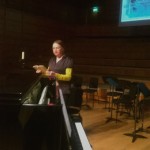
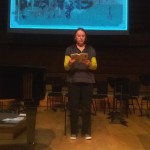
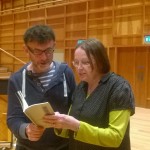
Pianists Matthew King and myself, together with poet Nancy Gaffield, part of the Creative Writing team in the School of English and author of the original Tokaido Road cycle of poems, spent yesterday exploring the programme which we have put together, which intersperses music by Debussy, Ravel and Matthew himself with poems from the cycle, which Nancy will be reading. There is some wonderful connectedness between the words and the music – a phrase in a poem is echoed by a rising melodic shape; the opening arc of a poem emerges out of a slowly-dying piano chord; a cluster-sonority echoes the tone of one of the Hiroshige prints which is projected above the performers. We spent several hours immersed in floating words and chords in the darkened concert-hall, playing with moving between music and poem.
The concert will take place on Friday 22 May at 1.10pm, admission is free, more details here: come and immerse yourself in time-out-of-place with music, poetry and print.
Contemporary opera makes the first of several appearances at the Gulbenkian next month; before Tokaido Road comes on May 23, Jonathan Dove’s Swanhunter swoops into the theatre on May 1 and 2.
An Opera North production composed to a libretto by Alasdair Middleton, the opera draws on the Finnish folkore epic, the Kalevala, in which Lemminkäinen travel to the icy north to face the Devil’s Elk and the Swan on Death’s River.
Told using puppetry in collaboration with The Wrong Crowd, the opera (written in 2009 with young audiences in mind) is billed as being ‘as much for adults as it is for children.’ Dove is the accessible end of contemporary music, as his beguiling choral anthems and rumbustious The Passing of the Year attest, and his prolific output includes music written for community music-making as much as for professionals.
”We’re really thrilled to be bringing contemporary opera for family audiences to the Gulbenkian,” enthuses the theatre’s creative producer, Mairi Coyle. ”Both Opera North and the Wrong Crowd have impressive international reputations in the fields of music theatre and the fact that they’ve come together with a top British composer to create such an inventive fusion of opera, puppetry and live action is really exciting and we’re proud to be part of it.”
Performances at the Gulbenkian are Friday 1 May at 7.00pm, and Saturday 2 May at 2pm; tickets and details here, or flick through the interactive resource pack for teachers and families here.
As part of the Tokaido Road project coming to the new Colyer-Fergusson Gallery later this month, Faversham-based photographer Hope Fitzgerald will be bringing her #walkSwaleMedway series. In advance of the show opening on Friday 17 April, I caught up with Hope and asked her about the ideas behind her various walking projects, and what to look forward to in her forthcoming exhibition.
Hope Fitzgerald
Tell us about the #walkSwaleMedway project
Walk Swale Medway began with a continuous walk of nearly three weeks through Swale and Medway starting on 22 June, 2014. Using a mobile phone, I took pictures as I walked and posted them to Instagram using #walkSwaleMedway. Links were also shared on Twitter and Facebook. As part of the original Walk Swale Medway three-week walk, I relied on the kindness and hospitality of my neighbours in Swale and Medway. I took a few photos, heard stories and shared them on Walk Swale Medway. Sometimes a friend recommended someone who could help.
The website includes a selection of writing and photographs featuring the places seen, the people met, and the stories heard along the way. Walk Swale Medway continues to be an open ended invitation to take notice of and share where we live, connect with and contribute to our community
What was it about the Tokaido Road project in particular that interested you in taking part ?
It was completely unfamiliar to me at first, so that was appealing. I was interested in the fact that a connection had been made between #walkSwaleMedway and the paintings Hiroshige made from views sketched while walking the Tokaido Road. Once I’d read up on it, I was really struck by the fact that Hiroshige’s paintings included details of date, location, and anecdotes of his fellow travellers, just like I had with WSM by adding text on my Instagram images before posting. There’s this lovely timeless parallel – of movement and looking around, and taking notice. It was also his job, really, and not that well paid, but the success of the Tokaido Road series increased awareness of his work.
#walkSwaleMedway explores similar themes of travel, landscape and people to Hiroshige’s ‘Tokaido Road:’ do you see WSM as a Kent-ish version ?
The more I look, the more parallels I see. I’m also really pleased to be on the fringe of a project that has inspired a lot of people working collaboratively to make something new – the librettist Nancy Gaffield, composer Nicola LeFanu, and musician Kate Romano, among others. Not the first time Hiroshige has inspired others, I like this about it, too.
You’ve done similar projects walking in Faversham, and to Folkestone last year for the Triennial: what is it that makes you want to explore like this ?
Walking in Faversham is where it all began, almost by accident. I gave myself a two-week target of walking every day, with a new pair of trainers as my incentive. By about day 10, I was hooked, and walking was a reward in itself. I didn’t mean to do it – it sort of just kept going! I did that every day (barring a couple of sick days) for a year before #walkSwaleMedway. WSM was much more profound an experience than I’d anticipated – I thought I’d just go for a wander, but it was challenging and exhilarating in ways I hadn’t anticipated. I heard a radio programme later about long distance walking and how intimidating it can be, but I didn’t really think it through – I just thought ‘Hey, I know, I’ll walk across Swale and Medway.’
I walked to Folkestone to take part in Alex Hartley’s brilliant work called Vigil, in which a set of mountain climbing ledges hanging off the outside of the Grand Burstin Hotel was occupied by volunteers. It seemed like as good a reason to walk somewhere as any, so I went for it. It took three days, and the countryside that way is beautiful and walking for a long time is a great way to see things. There’s a wonderful metaphor for life built into walking for me – it’s just one step at a time – sometimes they are heavy, sometimes light, but always just the one step keeps you going. I’ve been so busy lately that I have been skipping steps here and there, but I’ll find my stride again. I’m looking for an excuse to walk somewhere most of the time.
What can we expect when #WalkSwaleMedway opens in Colyer-Fergusson later this month ?
The plan is to mirror, in number at least, the 53 Stations of the Tokaido Road along the eighteen panels of the new Colyer-Fergusson gallery. The photographs are small, so on an intimate scale and framed in hand-finished black shadow boxes. They are printed on aluminium, so some are jewel-like, while others glow with the feel of watercolour. They are pictures of my home.
Hope’s #walkSwaleMedway exhibition opens in Colyer-Fergusson on Friday 17 April and runs until Friday 1 May; admission is free.
Two sonic installation projects will reinvent the tunnels at Fort Amherst in Chatham next week, as the Excavating Soundproject by students on the Music and Music Technology programmes from the School of Music and Fine Art unfolds.
For one afternoon only, If The Walls Had Ears and Sonic Memories will re-shape the historic fort, originally built in the eighteenth-century to defend Chatham Dockyard, and its network of underground caves.
The synthesis of found and archive sounds across eight speakers around the tunnels forms the basis of the first installation’s exploration of particular moments in the tunnels’ history; whilst Sonic Memories will extend to the wider context of the fort through sound and visuals.
”The idea is to reconstruct an aural history of the tunnels and the audience can wander through as though they were walking through the tunnel’s memories” reveals curator of the If Walls Had Ears project, Thomas Graves.’Working with site-specific sound is a real challenge, as the tunnels are not designed as a sonic art venue and the technical requirements are quite strenuous – we need a lot of wiring! This sort of representative work really gets my mind buzzing and hopefully the space should come alive with sound.”
Excavating Sound takes place at Fort Amherst on Wednesday 8 April from 2-5pm. Find out more about the project here, and follow @ExcavatingSound on Twitter.
There’s no let-up in the frantic pace of music-making here in Colyer-Fergusson over the next few days; tomorrow night sees our own ‘Three Choirs’ concert as Invicta Voices, the Chamber Choir and the Cecilian Choir come together for a programme celebrating the richness of choral music from Monteverdi to the present day, for which they will also be joined by the String Sinfonia; and on Sunday, there’s a bonus concert from the Symphony Orchestra featuring movements from Sibelius’s Katelia Suite and Dvorak’s New World Symphony, again featuring the String Sinfonia.
Details of both concerts can be found online here. It’s going to be fun…
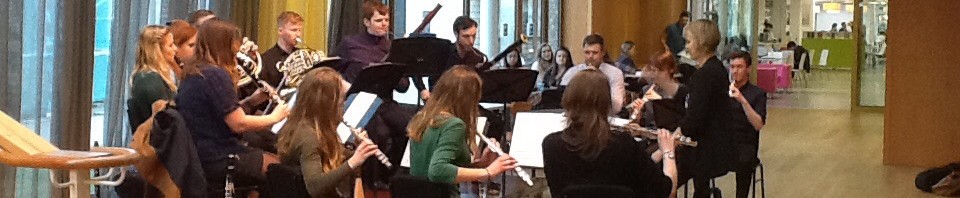
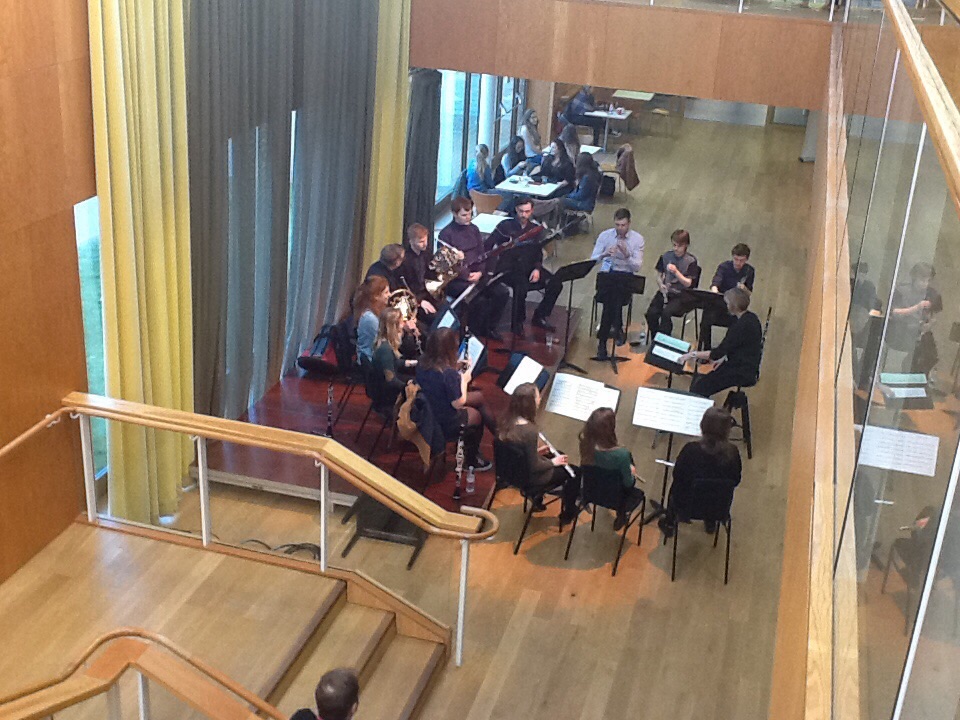
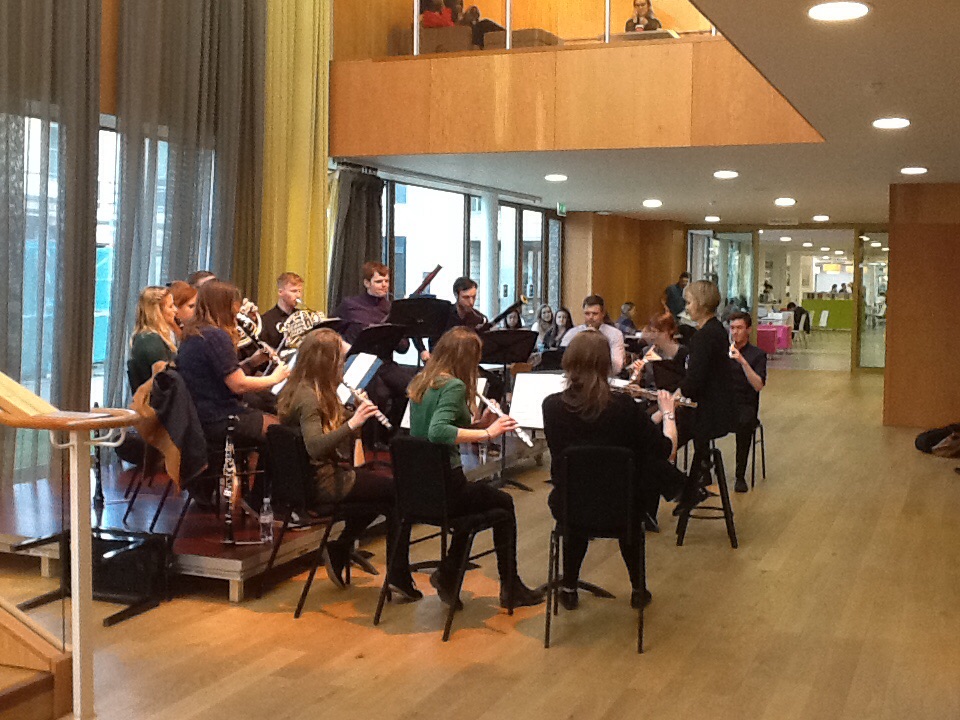
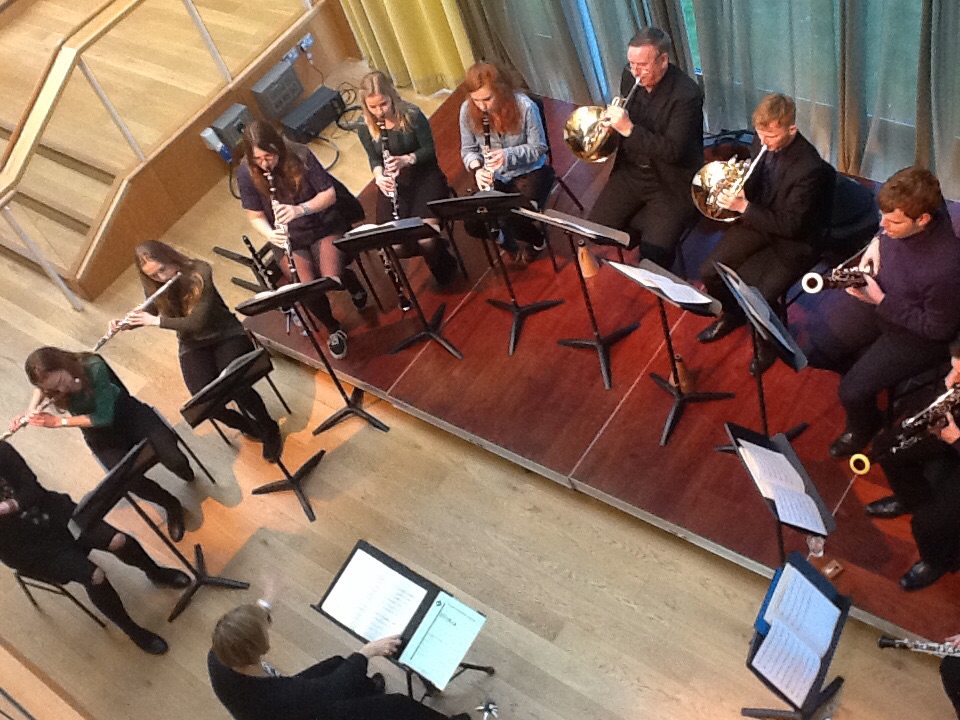
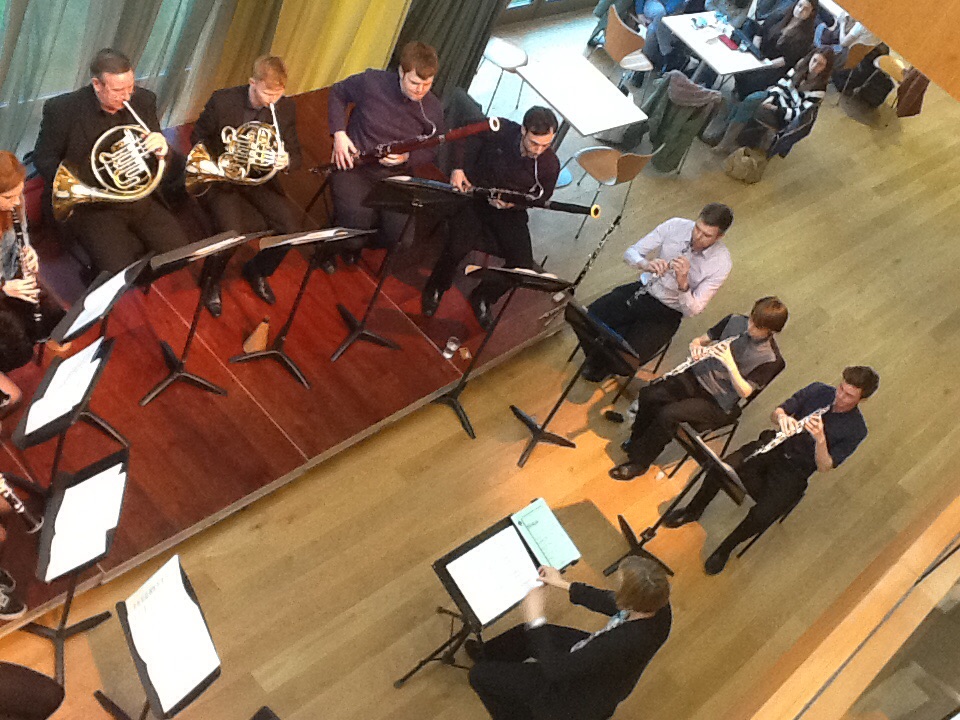
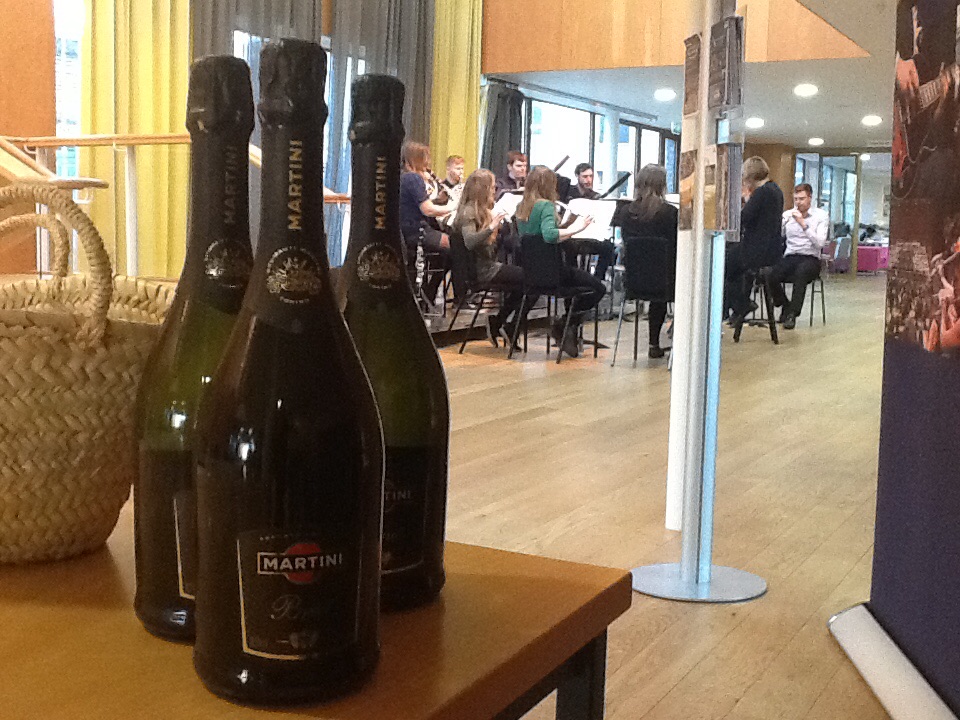
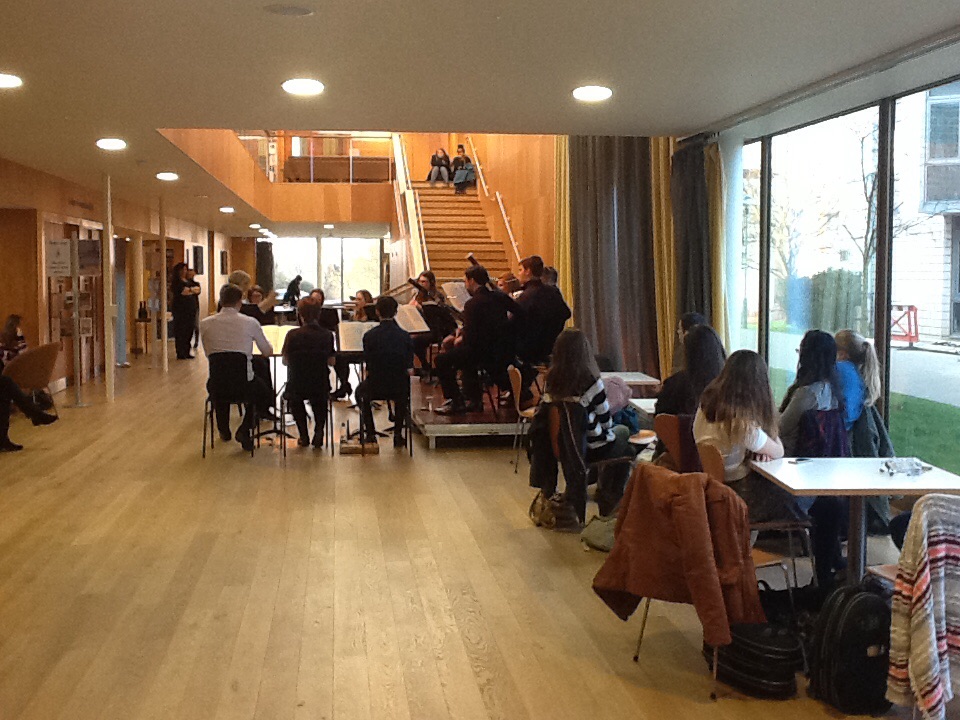
Great stuff from the Wind Ensemble, which gathered on the foyer-stage earlier this evening to play a feisty arrangement of Queen’s Bohemian Rhapsody and movements from Dvorak’s Czech Suite.
Next week’s tea-time gig features the String Sinfonia.
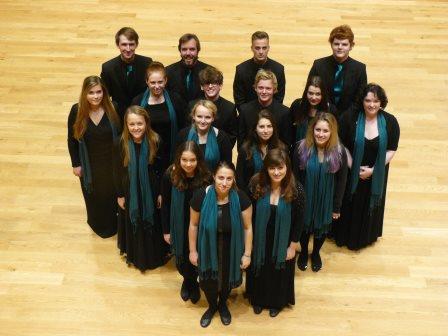
There’s no respite in the calendar of performing commitments; fresh from Saturday’s epic Colyer-Fergusson Concert, the University Chamber Choir returns to the Cathedral Crypt this coming Friday for an evocative programme, Then Comes The Day.
The title of the concert is taken from a line in the Hymn to the Virgin, ‘Darkest night / Then comes the day,’ which features in the concert, representing the triumph of optimism over despair in a programme that commemorates European countries involved in the First World War. Your Loyal Correspondent will be joined in conducting duties by fourth-year Music Scholar Emma Murton to fill the ancient and echoing spaces of the Cathedral Crypt with what promises to be a vividly expressive sequence of music.
From the Renaissance austerity of Tallis’ Nine Tunes for Archbishop Parker’s Psalter through to the contemporary colours of Jussi Chydenius, Friday’s concert travels through England, France, Germany, Italy and Finland, and will include Schutz’ glorious Jauchzet den Herren, earthy part-songs by Lassus, Stanford’s purple-hued The Blue Bird and works by Purcell, JC Bach and Elgar. Second-year Music Scholar Anne Engels will join the Choir, performing pieces for solo flute including Debussy’s lissom Syrinx.
The concert starts at 7.30pm; more details and tickets here.
To whet your appetites, here’s Stanford’s The Blue Bird, sung by the Choir of Gonville and Caius College, Cambridge.
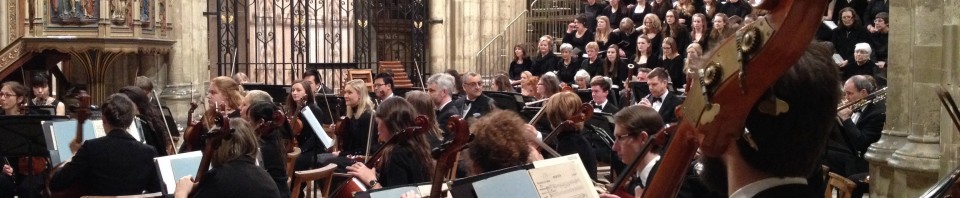
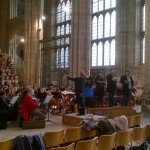
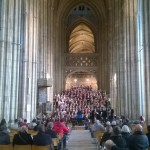
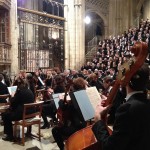
From the infinite mystery of the opening bars to the dramatically hushed close, Saturday’s performance of Verdi’s Requiem by the University Chorus and Symphony Orchestra for this year’s Colyer-Fergusson Cathedral Concert was full of high drama.
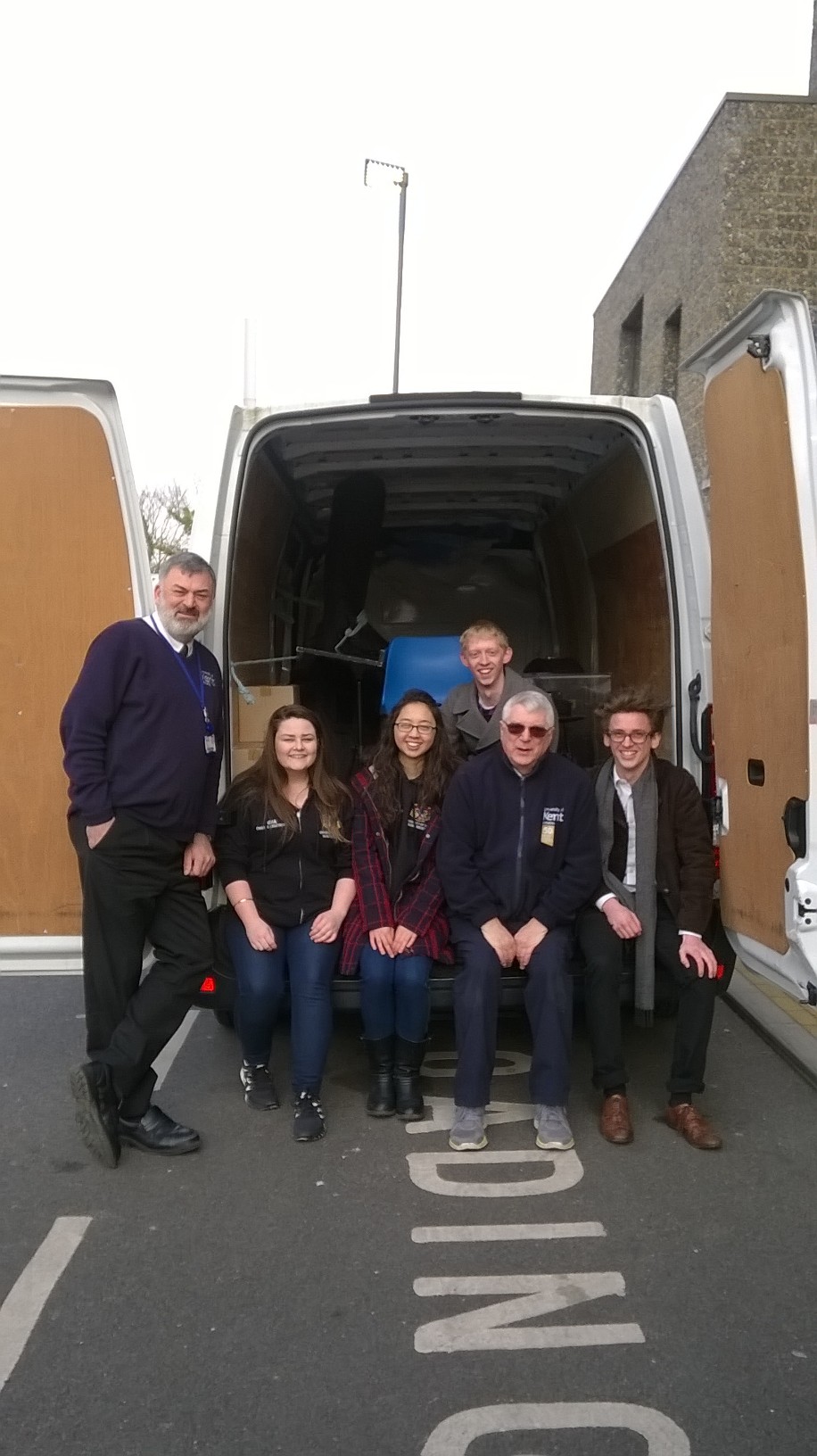
The morning shift crew
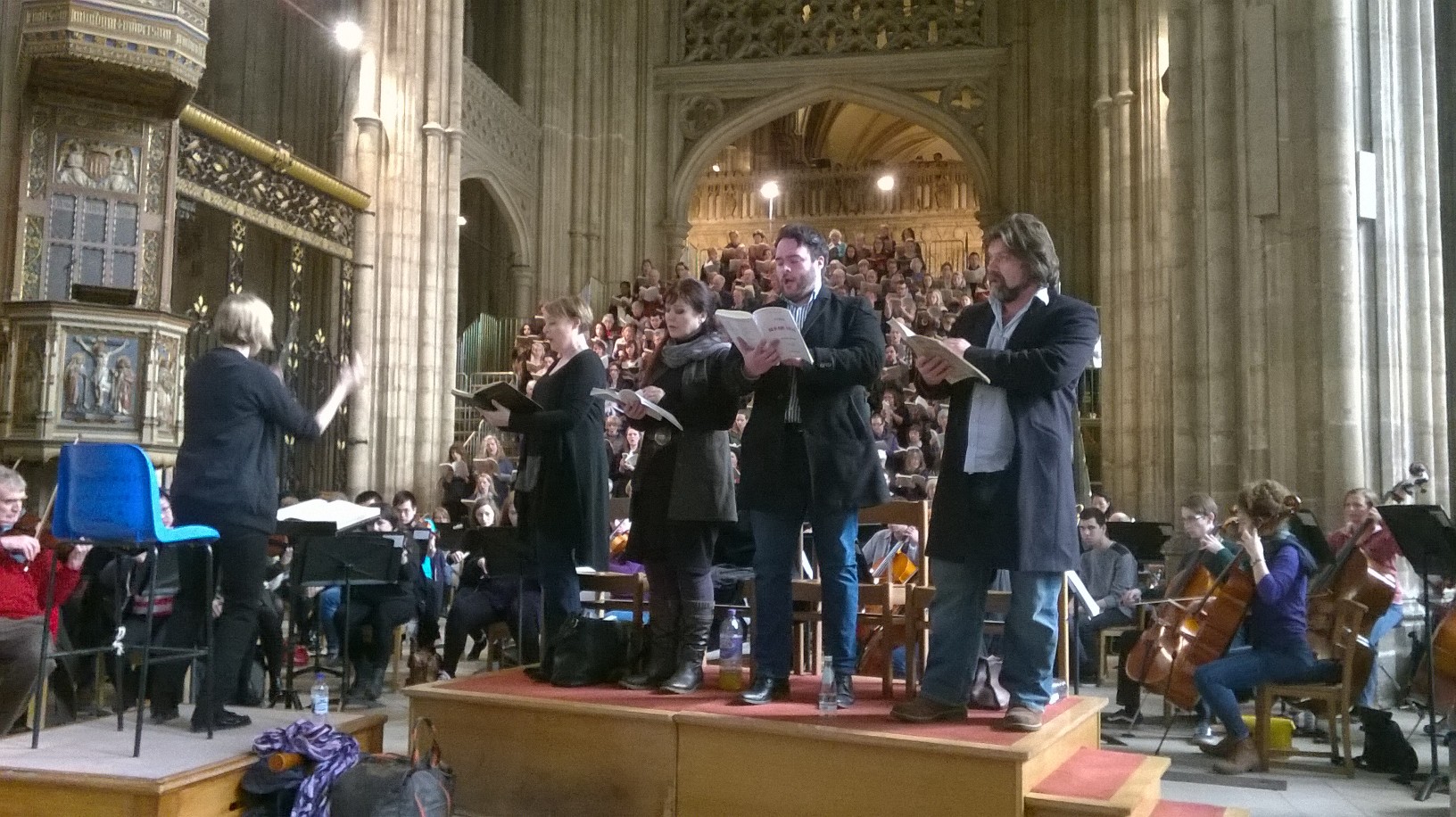
Standing in as a last-minute replacement for the billed soprano soloist, Rachel Nicholls took time out from her current ENO run of Die Meistersingers to step up alongside mezzo Carolyn Dobbins, tenor Gerard Schneider and bass Simon Thorpe, and together all four singers delivered Verdi’s demanding solo parts with consummate skill. Under the baton of Susan Wanless, the Chorus and Orchestra both rose to the occasion superbly. From the off-stage trumpets ranged high above in the organ-loft to the bass-drum positioned down the side-aisle, the combined forces filled the majestic Cathedral with Verdi’s profound meditation on death and redemption, rich in operatic detail crammed into oratorio form.
Rachel Nicholls, Carolyn Dobbins, Gerard Schneider, Simon Thorpe
It’s a long day that starts at 9am with the heroic crew who pitched up on campus to load two vans with all the equipment to take down to the Cathedral, and ends with that same equipment delivered back to campus at 10.30pm, with rehearsal and performance in between. It was lovely to see many alumni come back to sing in the Chorus, with the concert a major highlight of the University’s 50th anniversary celebrations throughout this year.
Alumnus & percussionist, Carina Evans and tuba-player Chris Gray
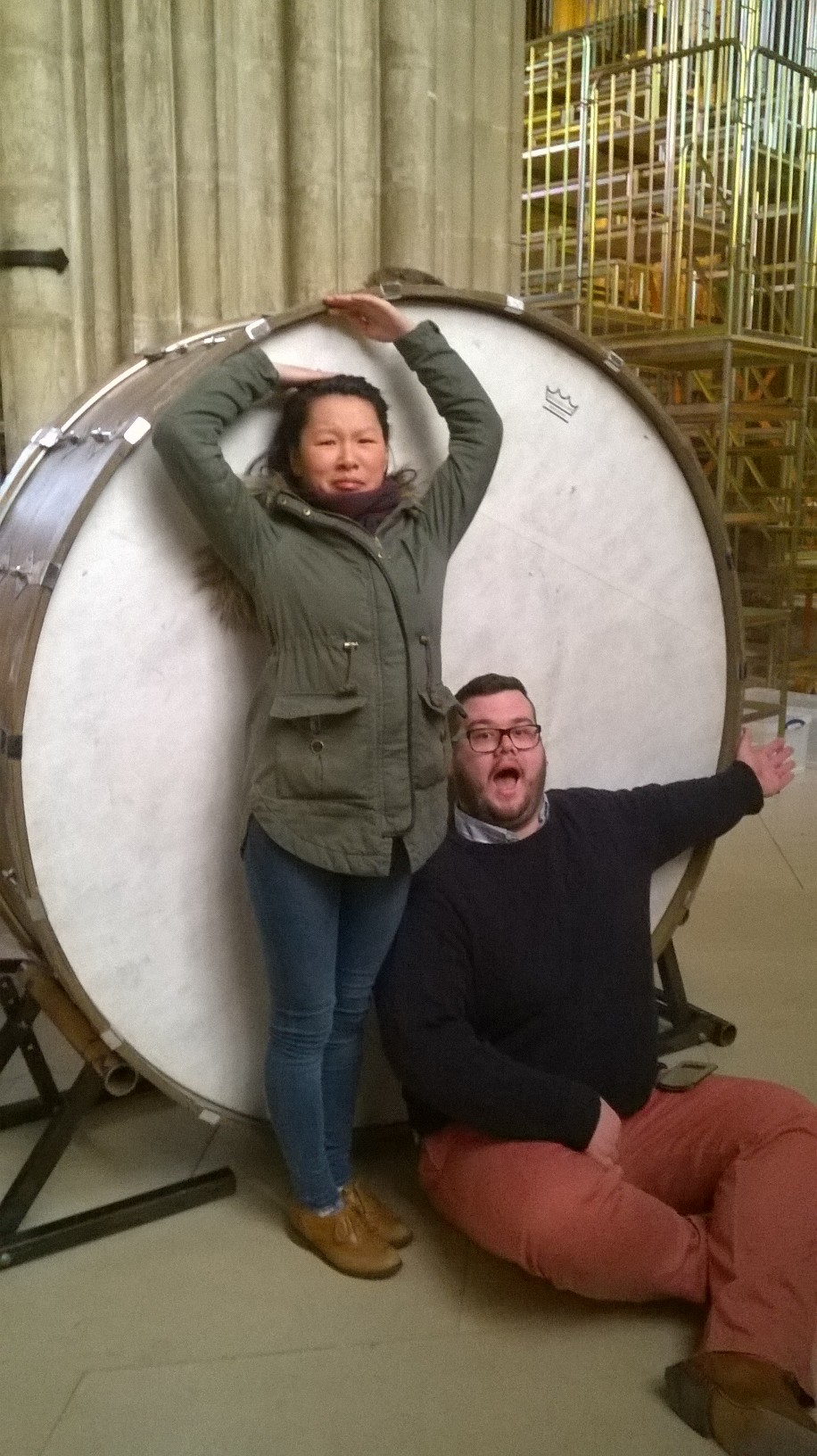
(Much excitement was caused by the arrival of the 66-inch bass drum from Bell Percussion, which was mobbed by many people eager to be photographed with the monster-drum, you’d have thought it was a Hollywood Celebrity…)
Very many thanks to everyone involved; a triumphant conclusion to all the hard work put it by students, staff, alumni and members of the local community, who came together in the splendour of Canterbury Cathedral for a memorable performance.
Because it does. Doesn't it ? Blogging about extra-curricular musical life at the University of Kent.

 An Opera North production composed to a libretto by Alasdair Middleton, the opera draws on the Finnish folkore epic, the Kalevala, in which Lemminkäinen travel to the icy north to face the Devil’s Elk and the Swan on Death’s River.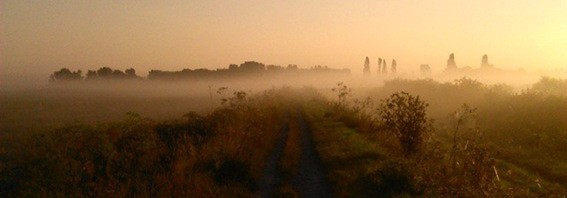


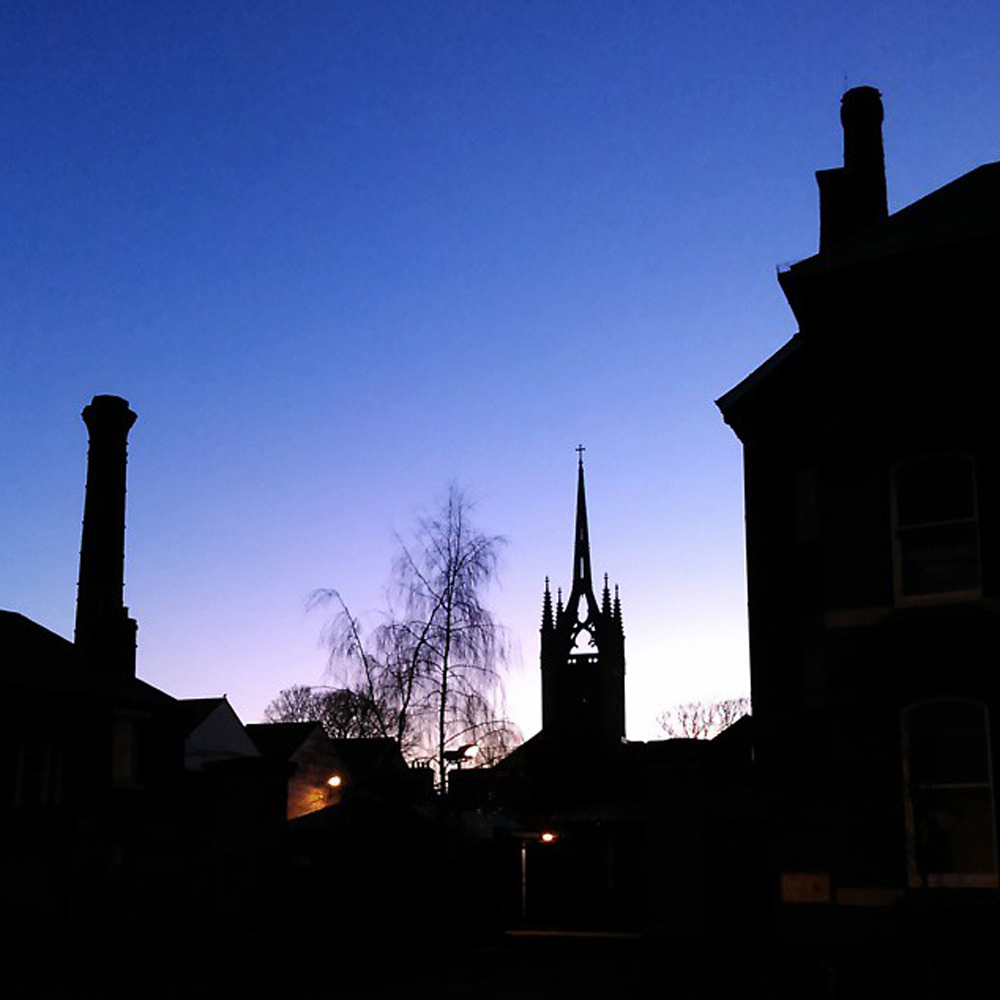
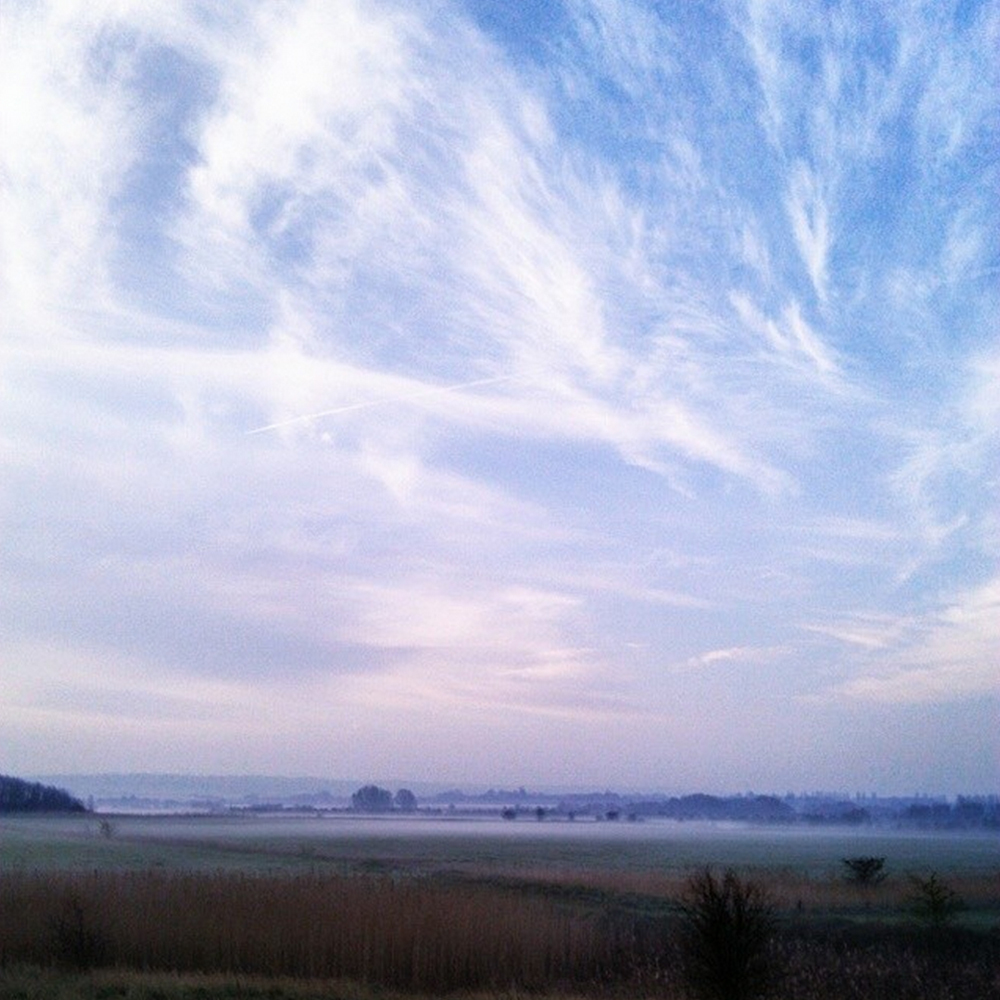
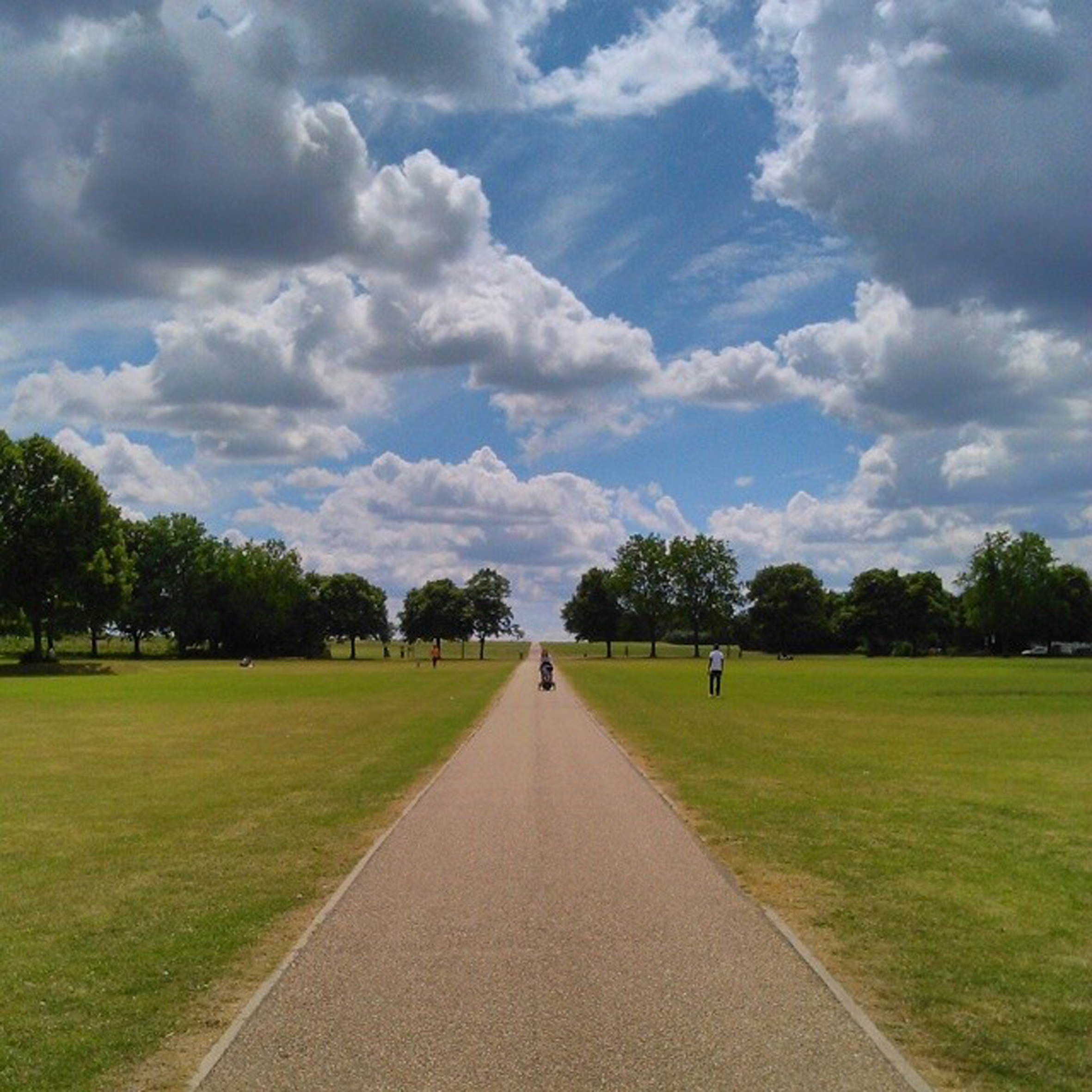

 All images: © Hope Fitzgerald. #WalkSwaleMedway is supported by Arts Council Funding through