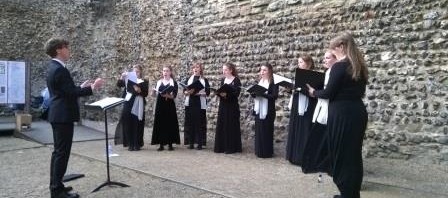
Minerva Voices and percussionist Cory Adams giving an open-air performance at Canterbury Castle yesterday evening, conducted by Dan Harding and Joe Prescott.
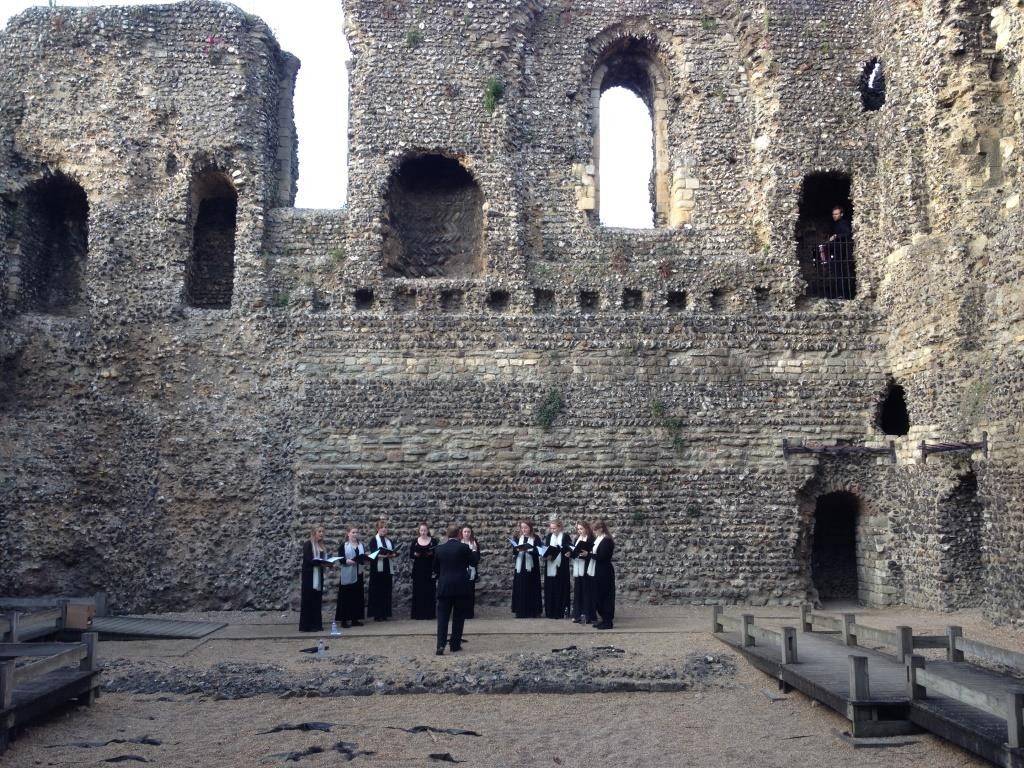
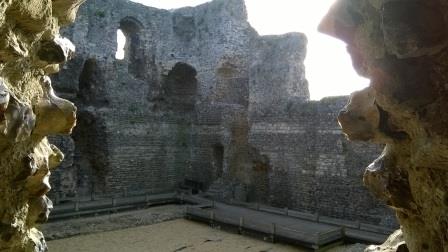
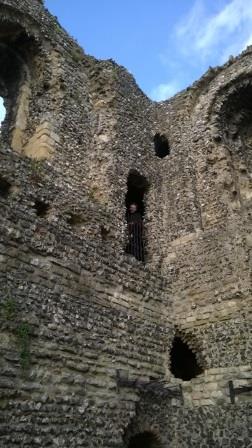
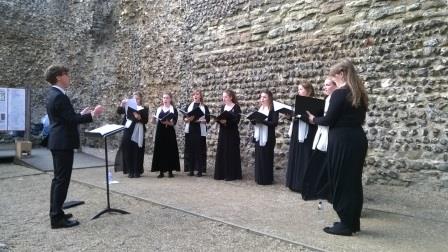
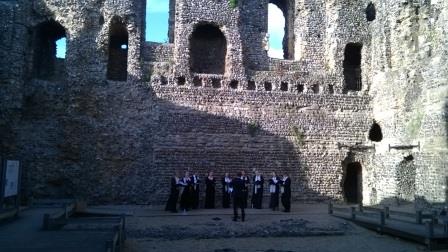
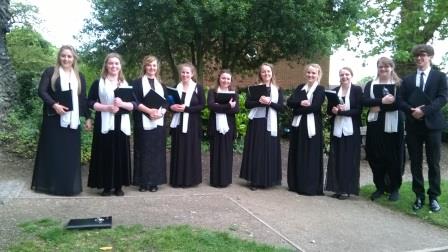
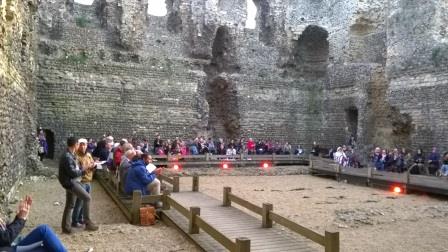

Minerva Voices and percussionist Cory Adams giving an open-air performance at Canterbury Castle yesterday evening, conducted by Dan Harding and Joe Prescott.
In the week of the composer’s ninetieth birthday, fittingly rehearsals are in progress for our production of Horrortorio, Joseph Horowitz’s mock-Baroque comic oratorio, celebrating the marriage of Dracula’s daughter to the son of Frankenstein.
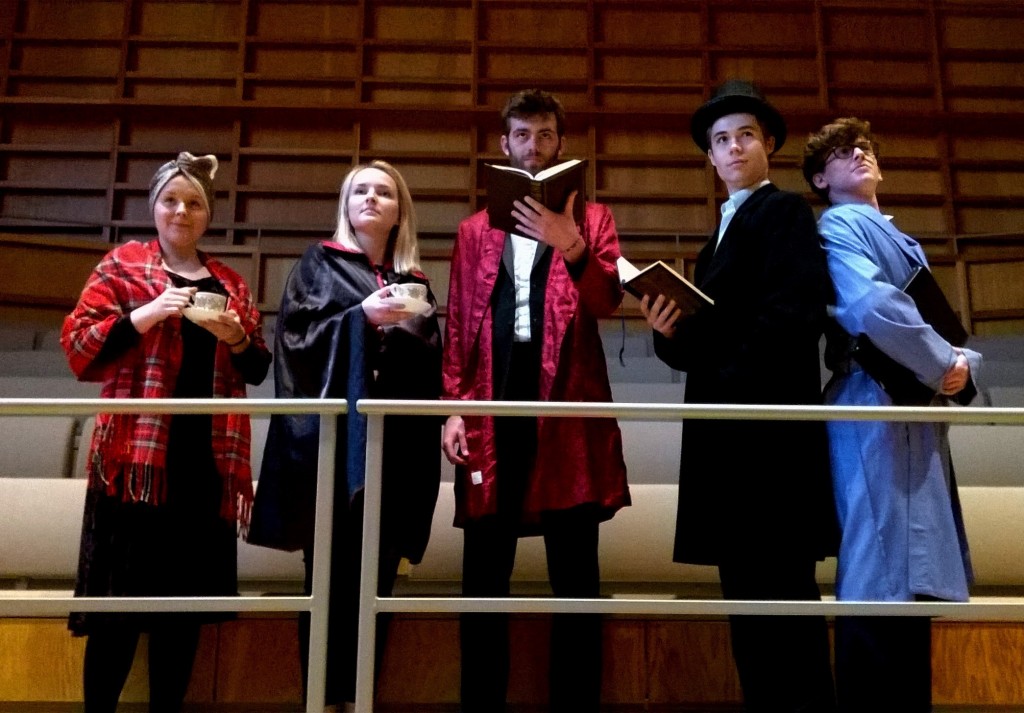
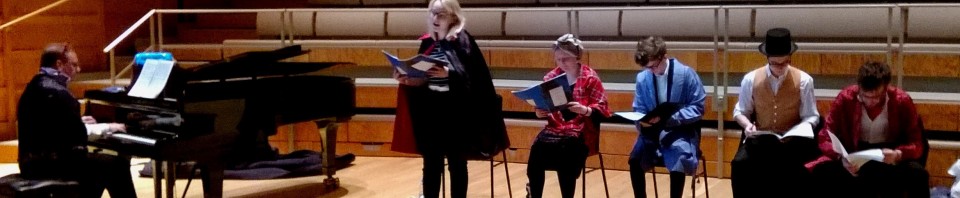
A small group of fiends, sorry, soloists will be joined by members of the Cecilian Choir for an in-the-round performance during Summer Music Week, on Monday 6 June at 5pm, complete with smoke and mirrors, as we transform the concert-hall into a ghoul-frequented wedding party.
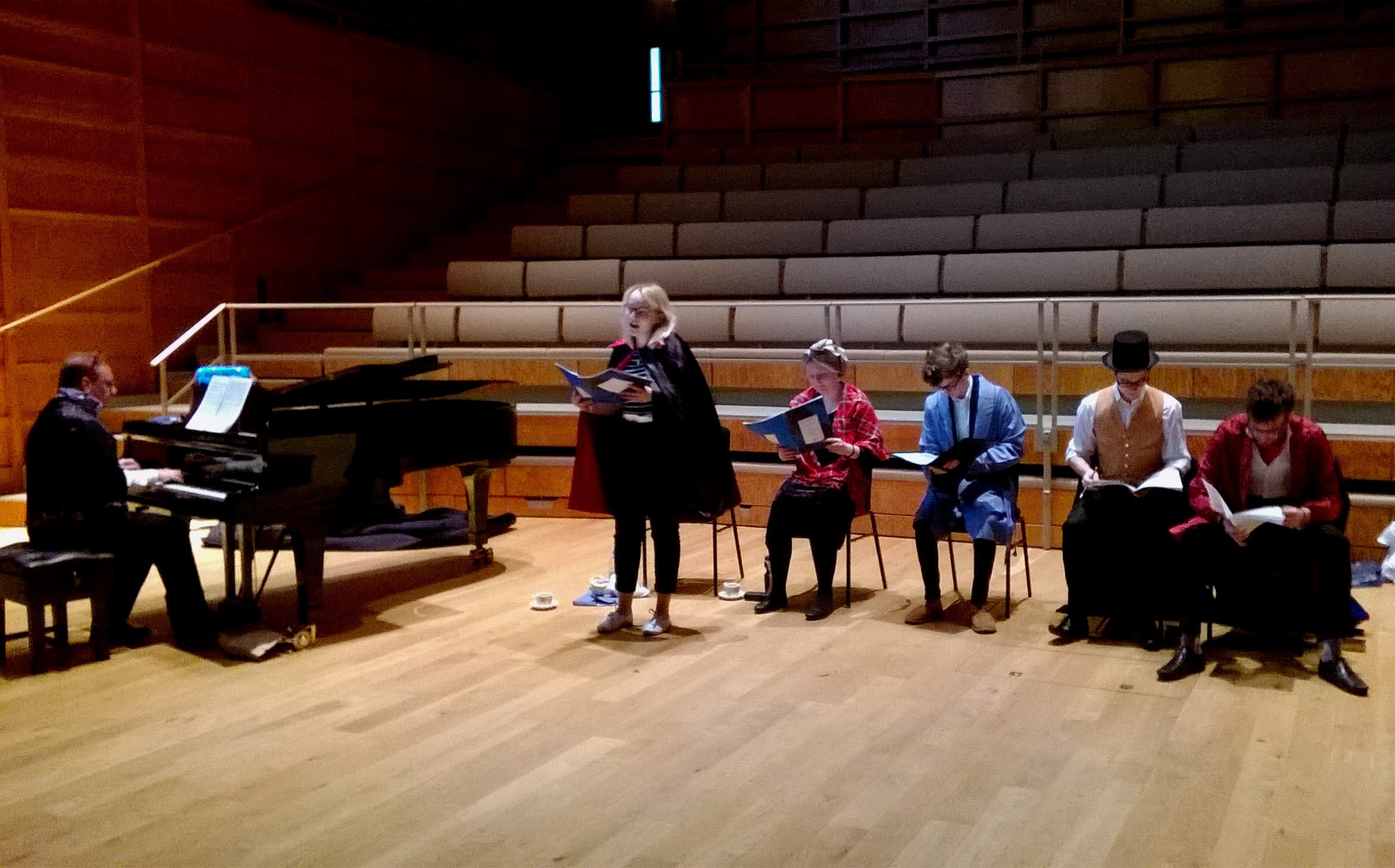
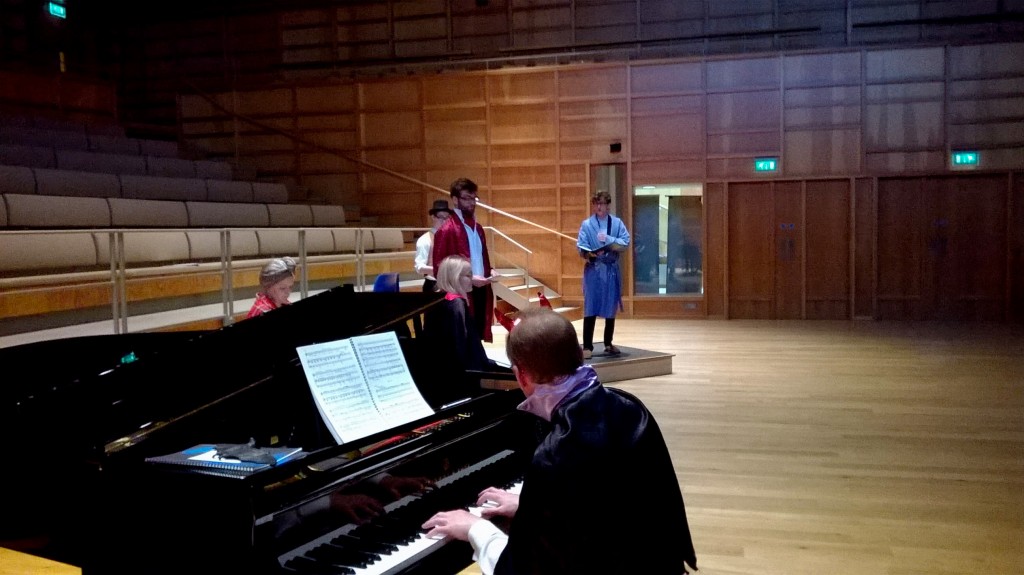
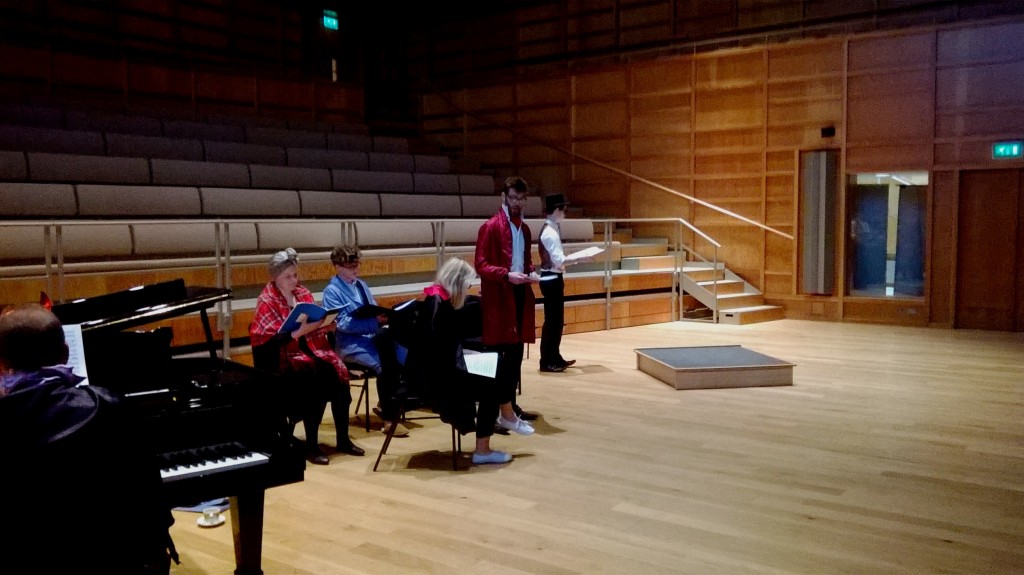
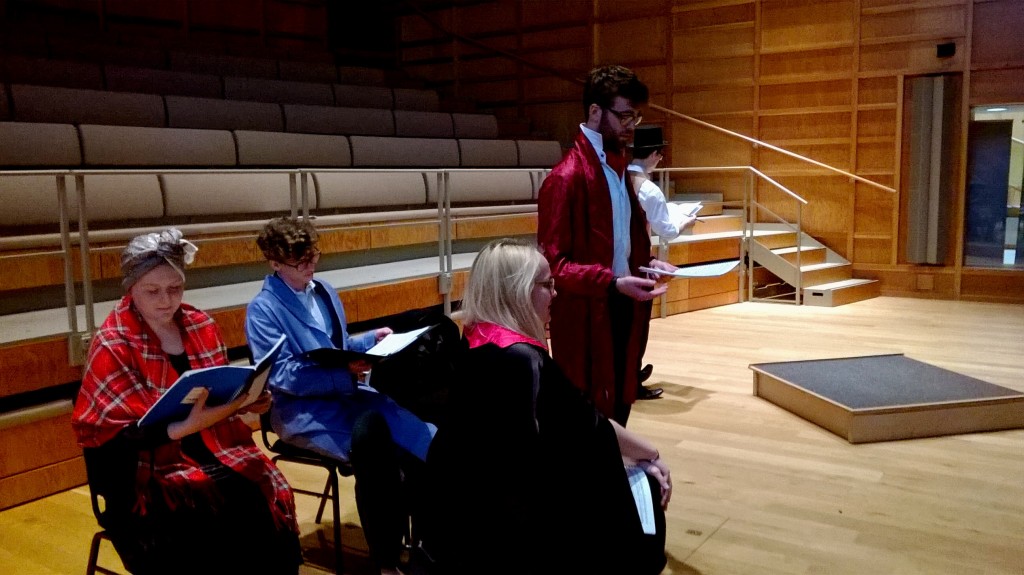
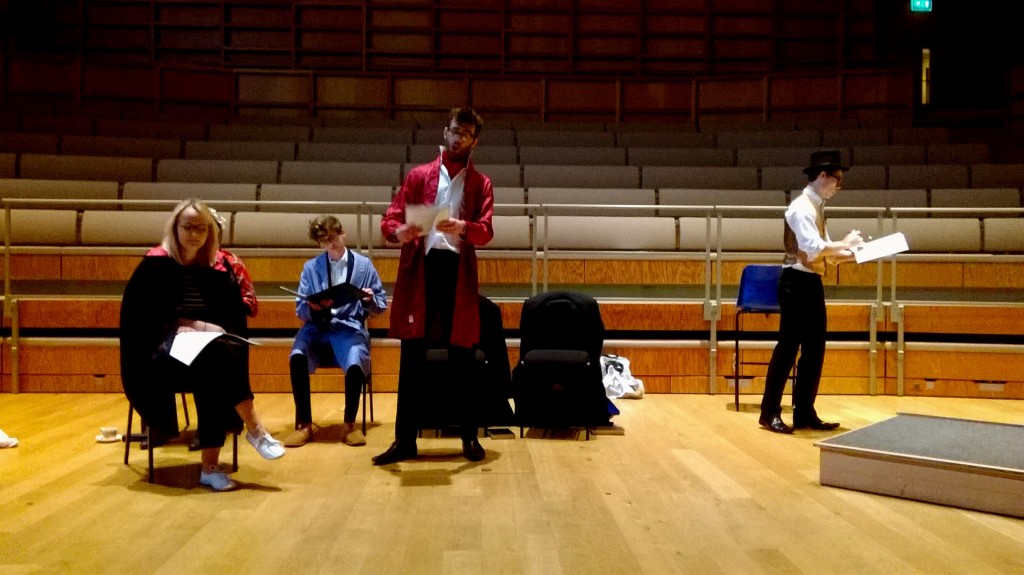
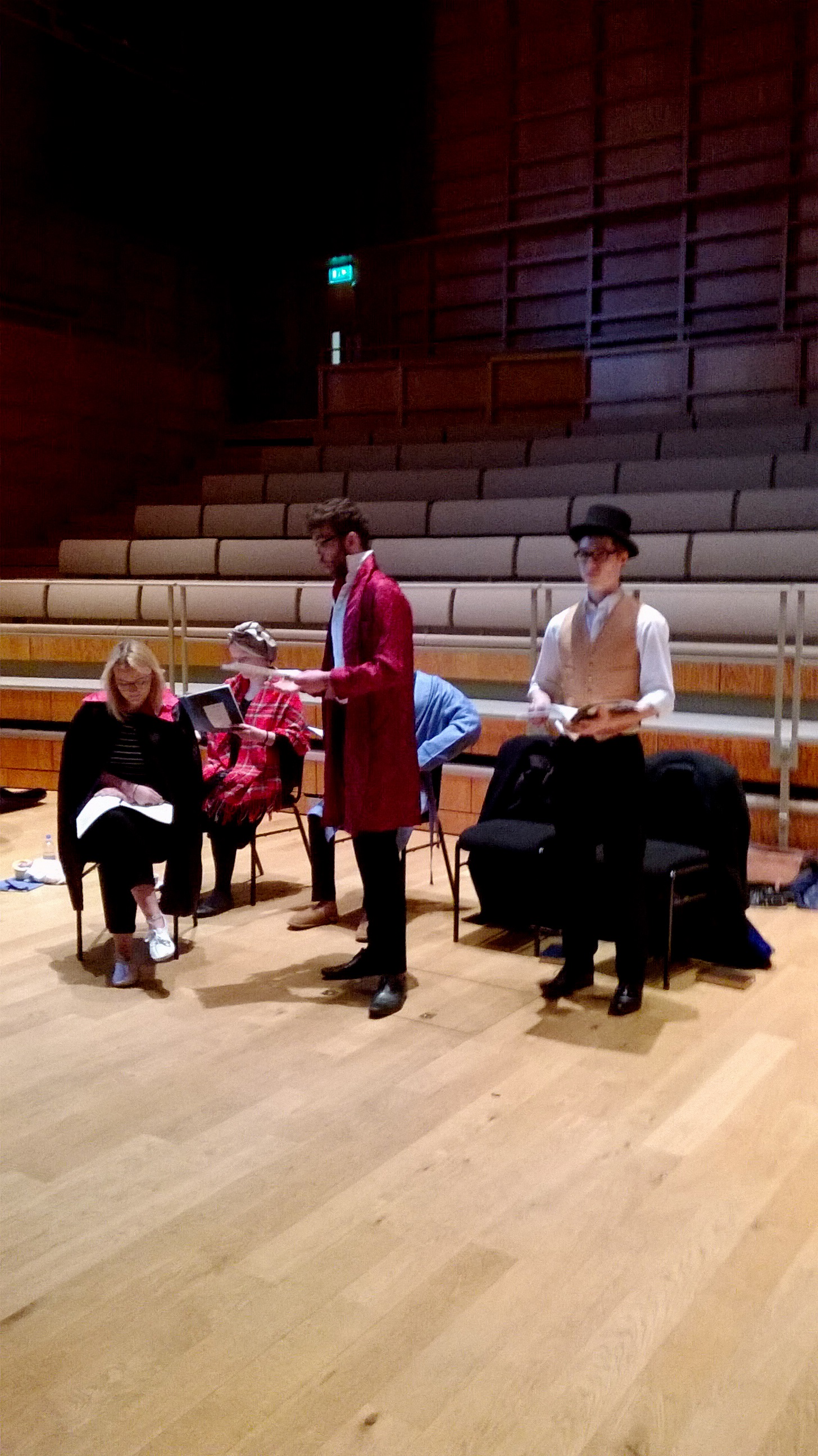
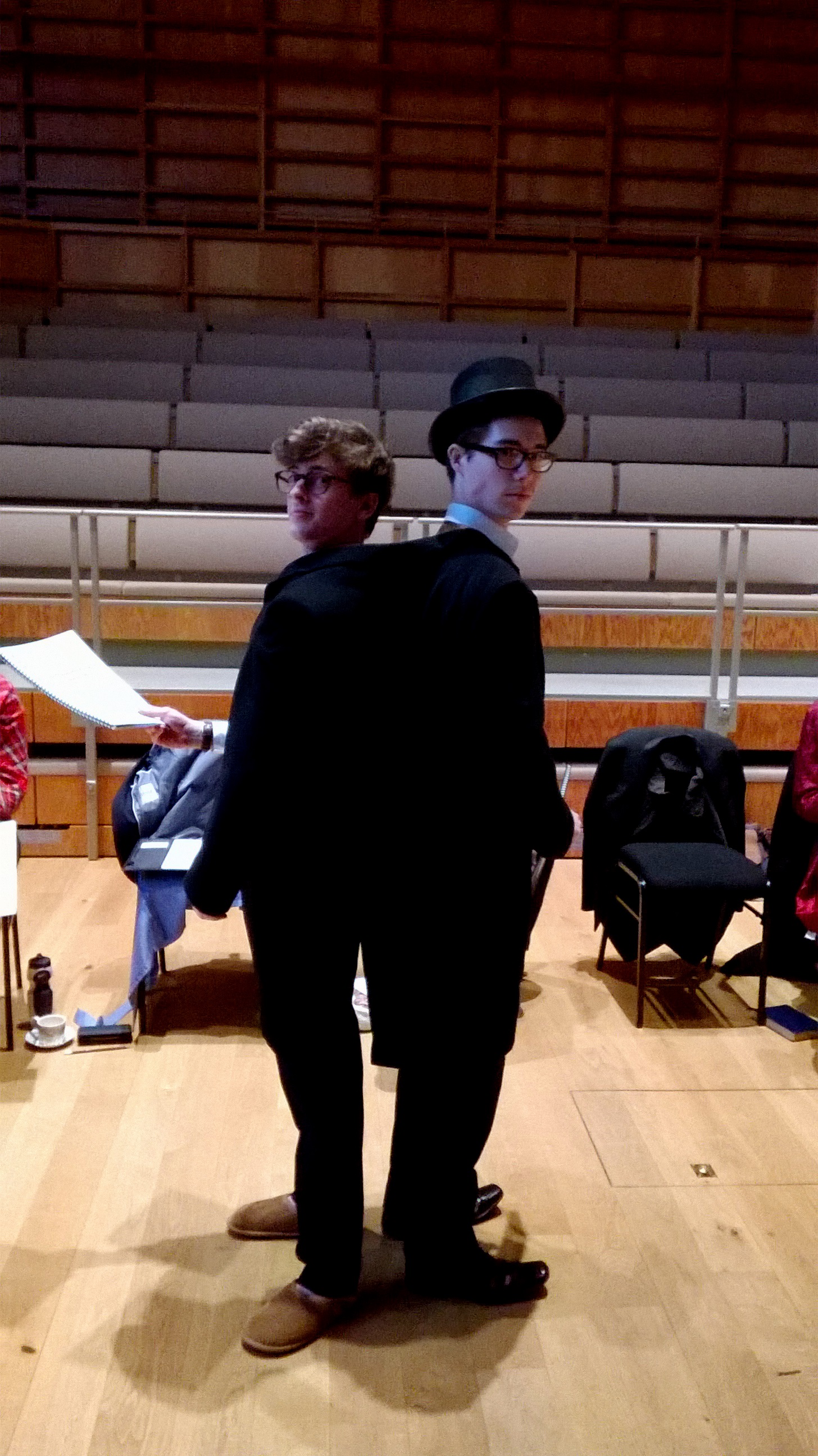
Pictures above from the recent soloist’s dress rehearsal; join us in two weeks to be transported to Dracula’s grim castle…
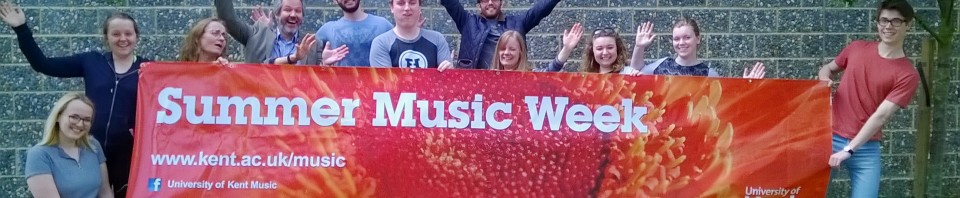
Excitement among staff and students as Summer Music Week fever hits Colyer-Fergusson… Full details online here.
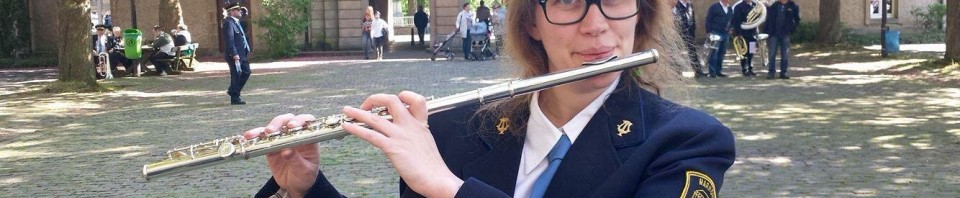
Third-year flautist and Music Scholar Anne Engels recently took part in an annual procession back home in Luxembourg with a difference; I asked her to explain what it was all about…
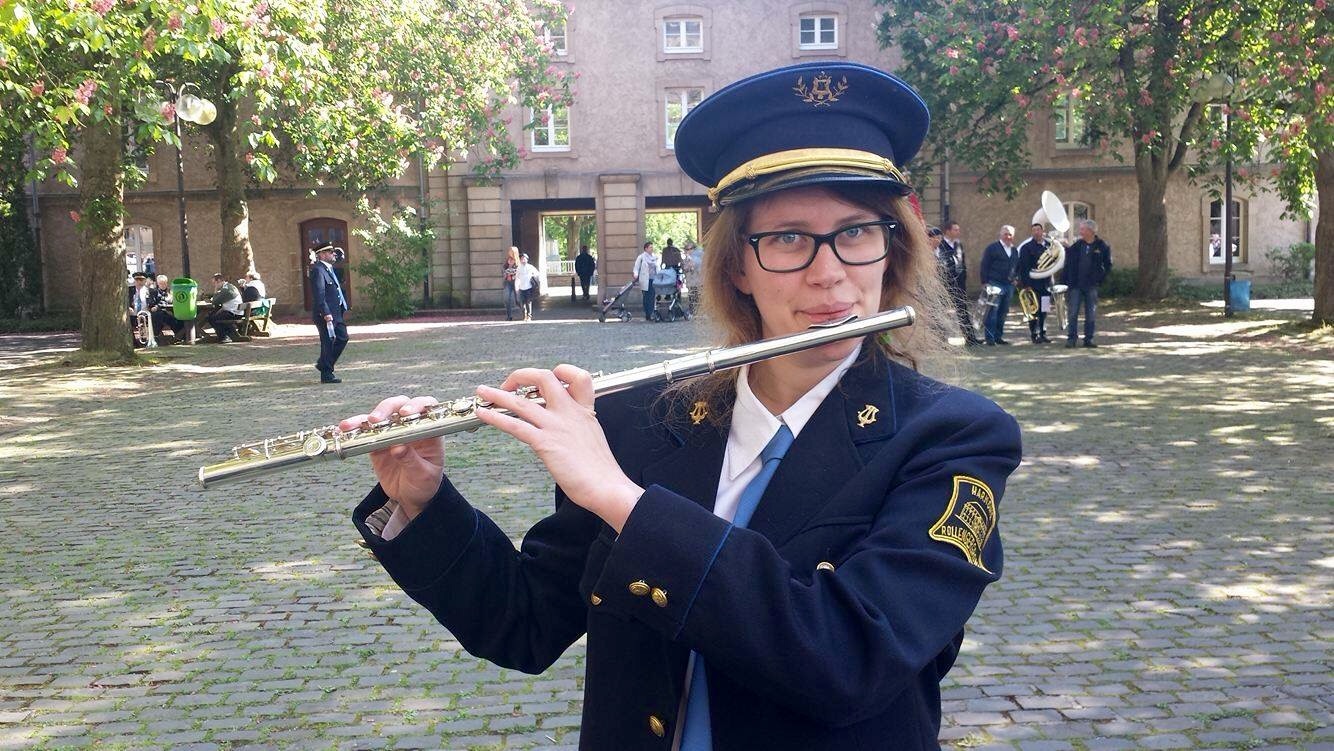 Anne: “This photo was taken at the Sprangpressessioun (dancing procession) in Echternach, in Luxembourg. There’s an entire history behind the procession. Basically, around ten thousand pilgrims come to Echternach every year on the Tuesday after Whitmonday to visit the grave of St Willibrord, a monk who originally came from Ireland and set up a monastery in Echternach. The monastery now functions as a secondary school and college.
“The procession starts in the schoolyard and goes around the entire city of Echternach. The pilgrims jump or dance to the tune of the dancing procession (a polka), which is being played by a number of different music societies from Luxembourg, Germany and the Netherlands. The procession ends in the crypt of the Basilika, where St Willibrord is buried.
“As far as I know the jumping is originally believed to be healing or protecting the pilgrims from a specific disease (but I’m not quite sure about that!). The dancing procession itself was also recognized as Intangible Heritage by UNESCO in 2010.”
You can hear Anne performing (without the dancing, unless you feel so moved) in the Music Scholars’ Lunchtime Recital on Tuesday 7 June, when she will be playing Poulenc and Messiaen; details here.
The annual musical celebration of the end of the academic year at the University of Kent, Summer Music Week, is set to burst into life next month.
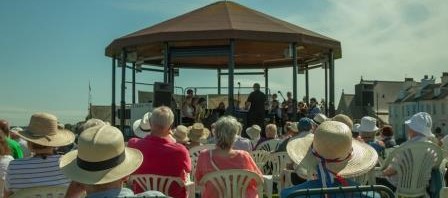
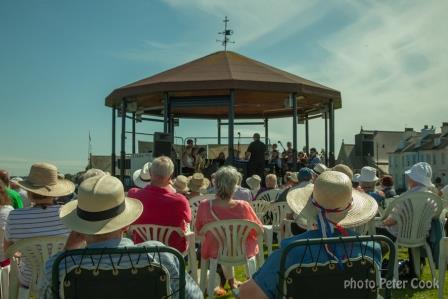 Featuring many of the University’s ensembles, the week-long festival opens at the seaside on Sunday 5 June with the University Big Band, conducted by Ian Swatman, visiting Deal Bandstand. Events throughout the week include a recital by University Music Scholars, a Wednesday evening gala concert with both the Concert and Big Bands, a feast of Baroque music with the Cecilian Choir and Sinfonia at St Michael’s Church, Harbledown,plus various other lunchtime events, all culminating in the traditional Music for a Summmer’s Day on Saturday 11 June with the Chorus, Orchestra and Minerva Voices, followed by cream teas.
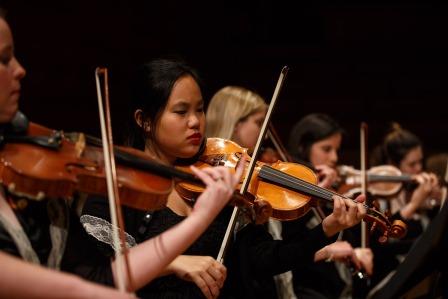 The full line-up of events is now live on our website here, and you can follow all the events on the Summer Music Week Twitter feed here: printed brochures are also available in Colyer-Fergusson and the Gulbenkian. Join us as we bid an action-packed musical adieu to another year at Kent!
The University’s Centre for Medieval and Early Modern Studies MEMS Festival takes place next month, a two-day event highlighting new research, round-table discussions, exhibitions, talks and performances celebrating developments in the field.
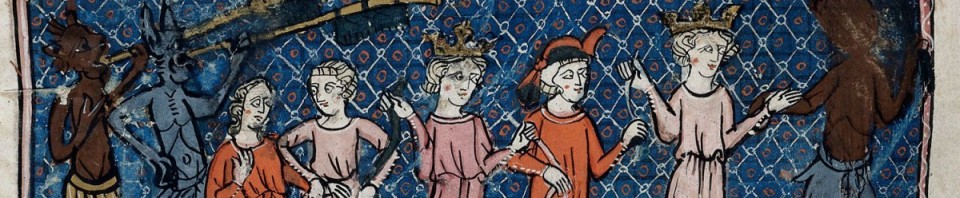
A special preview day on Thursday 16 June at Eastbridge Hospital, Illuminating the Past, will explore the making and meaning of Gothic colour, as part of which Minerva Voices will be singing in the ancient Pilgrim’s Hospital during a day of interactive workshops and talks.
Ahead of the day, Your Loyal Correspondent reflects on the idea of colour in music, and reflects on the immediacy of performing ancient music in historic spaces, where song meets stone, over on the event webpage here.
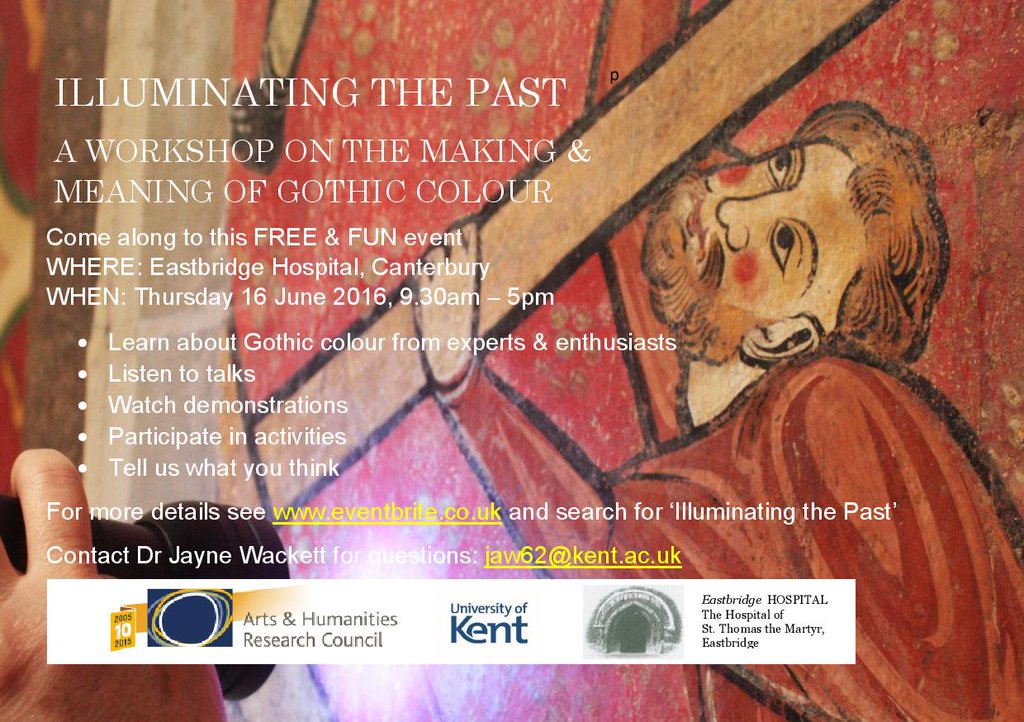
The Choir will sing music from the period, including a skirling Kyrie by Hildegard von Bingen. Find out more about the festival here.
Next week, Minerva Voices presents a summer evening performance set amidst the historic grounds of Canterbury’s eleventh-century castle, on Tuesday 24 May.
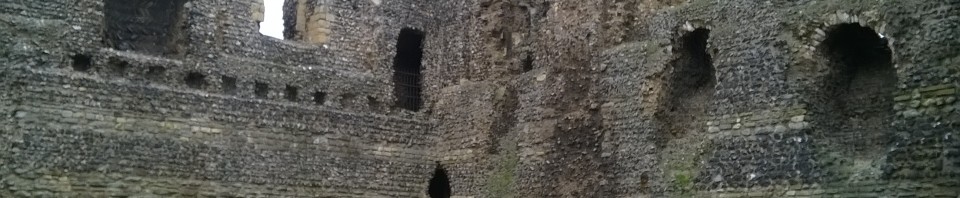
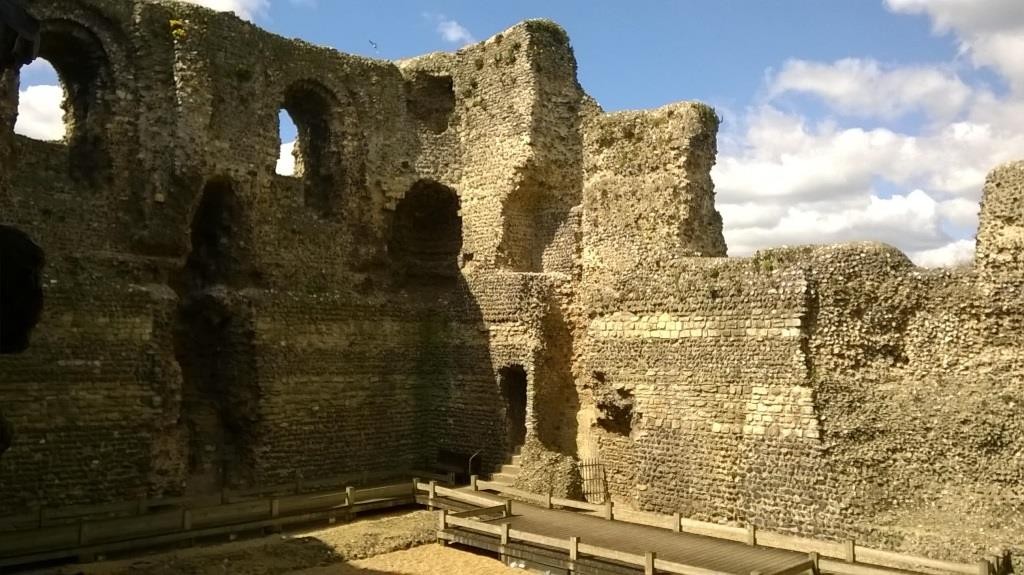 The castle is amongst Britain’s most ancient, begun around 1070 to replace a motte-and-bailey construction built as one of several fortifications protecting the Roman road from Dover to London. The keep and surrounding walls are all that remain, and the site surfaces like a blunt reminder of Canterbury’s military history.
As the sun sets, the ancient flint and sandstone walls of the surviving keep will ring to the upper-voice chamber choir’s colourful programme, which includes medieval plainsong, a contemporary Norwegian folksong, Veljo Tormis’ filigree Spring Sketches, Bob Chilcott’s scintillating Song of the Stars, and pieces by Mozart, Holst and Gounod. The concert will conclude with a dramatic Norwegian telling of the Song of Roland, for which the choir will be joined by percussionist Cory Adams.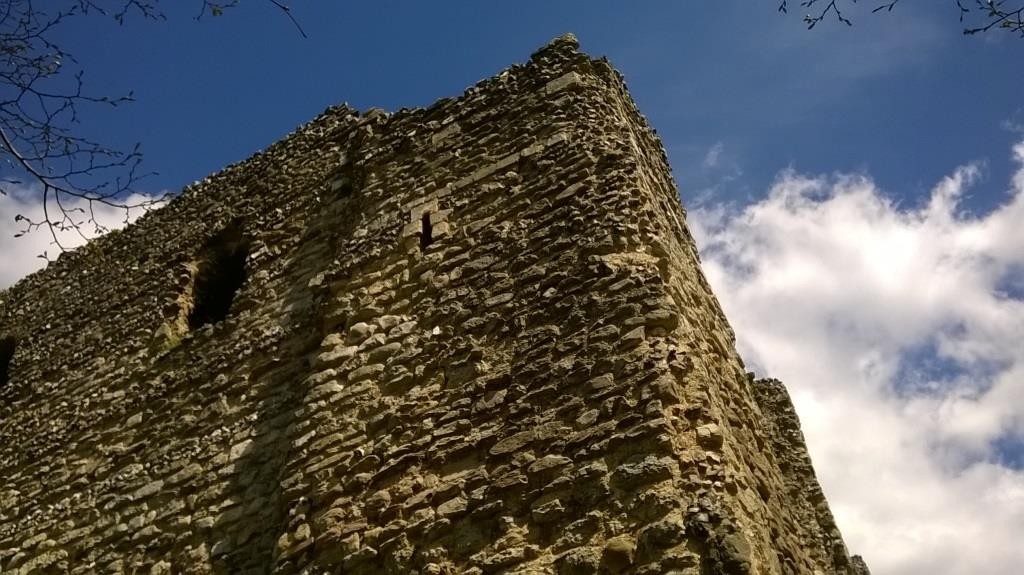
 Admission is free; the concert starts at 7.30pm, and is with the kind permission of Canterbury City Council. Please note that there is no seating at the site, so you might like to bring a blanket or folding-chair; the performance will last approximately fifty minutes. Join Minerva Voices as the sun sets over the historic site for a musical odyssey across the centuries.
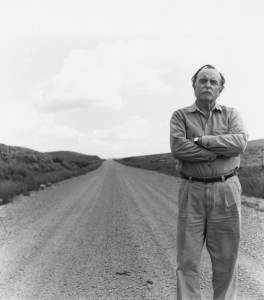
The #EarBox series in which music speaks to visual art – and vice-versa – returns next week to Studio 3 Gallery on Weds 18 May with a short musical ‘happening,’ centred on Alvin Lucier’s otherworldly Unamuno, in which four semitones are articulated in a changing sequence; this focused pitch-collection, which is presented in twenty-four different patterns, creates an intense yet beautiful soundworld, which promises to be something remarkable, with singers spaced around the gallery’s sonorous acoustic
The short programme juxtaposes ancient and modern music, opening with twelfth-century plainsong and Cornysh’s meditation on love and fidelity, Ah Robin, and finishing with a dramatic re-telling of the Song of Roland, an epic poem written sometime between 1040 and 1115, based on the Battle of Roncevaux in 778, featuring Cory Adams on percussion. Staying with the Norwegian theme, Lillebjørn Nilsen’s haunting, lilting contemporary piece, Danse, ikke gråte nå (Dance, do not cry now), has echoes of old folk-song, with drone harmonies beneath a skirling melody.
 The backdrop to the event will be a new exhibition of works by Philip Hughes devoted to the strange landscape of Dungeness, including paintings, prints and photographs, as well as a special garden installation made in collaboration with the ceramist, Psiche Hughes (more details here).
Admission to the event is free, and the performance will last twenty minutes. Join Minerva Voices to hear Lucier’s unique piece amidst the new exhibition in Studio 3 Gallery .