
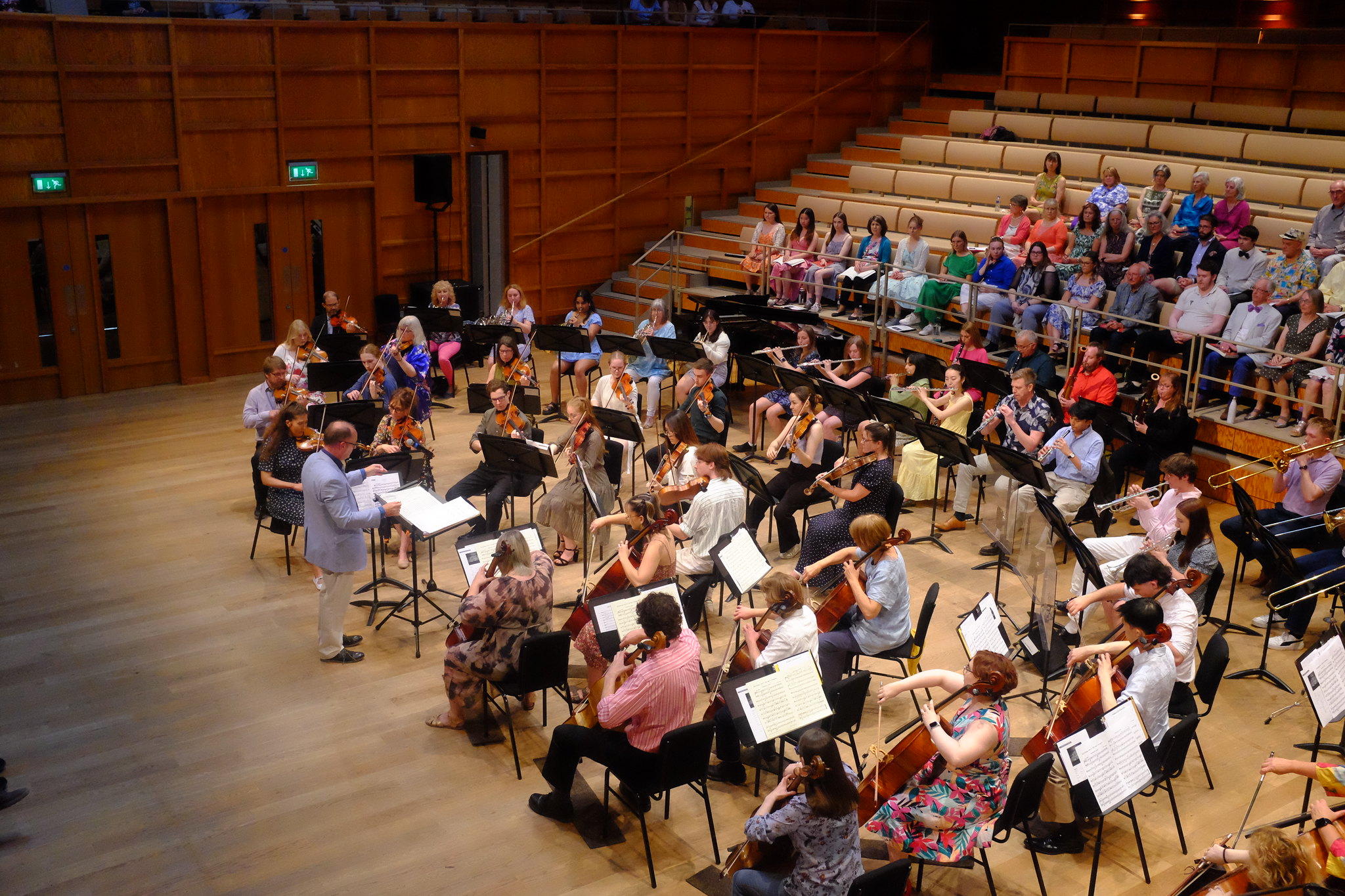
A question I’m often asked, whether from colleagues, friends, my neighbours’ endlessly curious granddaughter: What do you do, Dan ? What does the extra-curricular music department do; what’s it all about ?
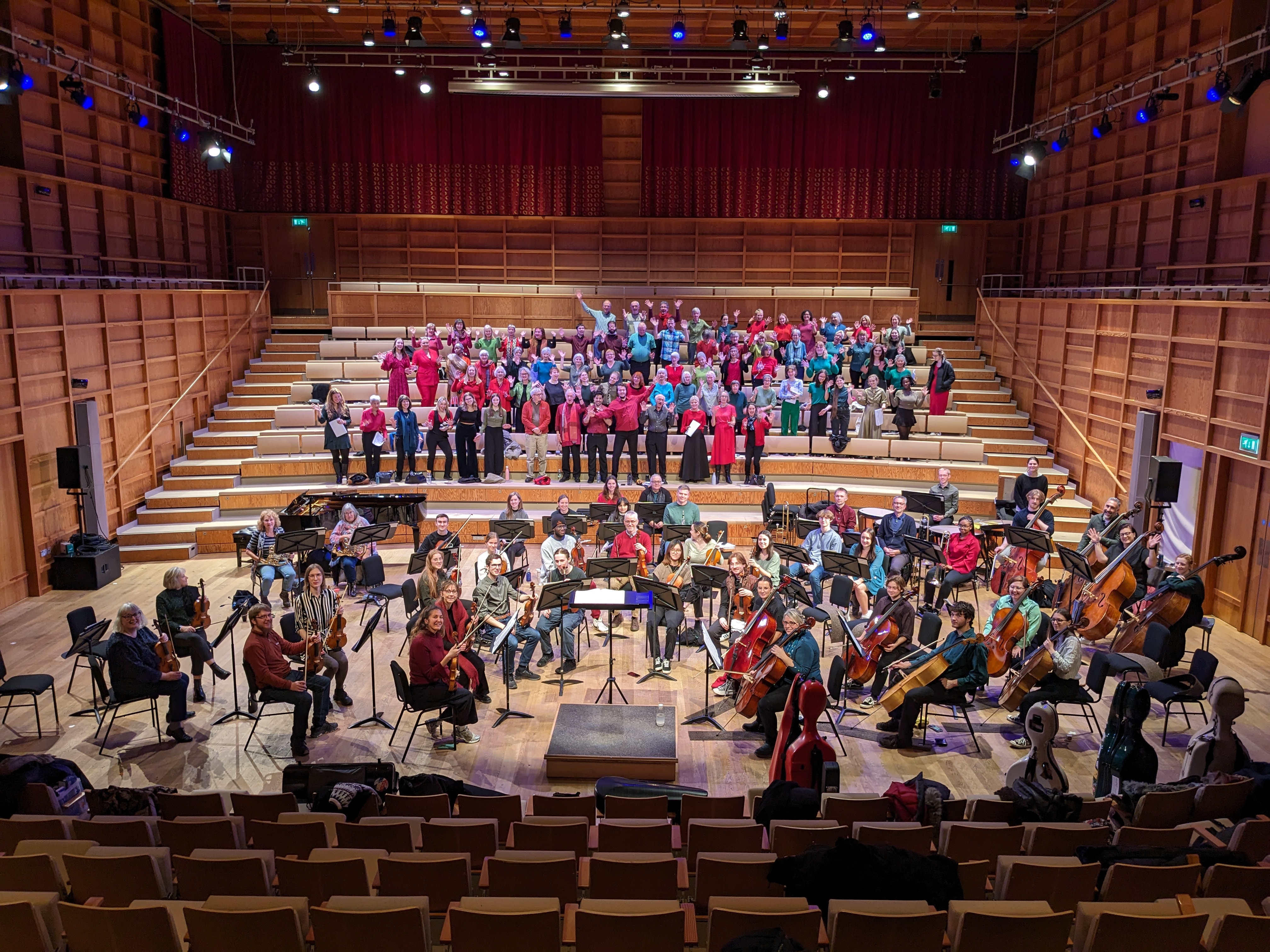
I would usually start by saying, well, we get lots of musicians together from both within the University and beyond, create ensembles, have a weekly rehearsal schedule, and give public performances each term. We have a small group of Music Scholars and Award Holders who take a prominent role amongst the ensembles, and it all comes to a glorious flourishing conclusion with our annual Summer Music Week festival, bringing many of the ensembles and performers together for a final time before the end of the year.
And that’s all true.
But it’s not quite everything.
And it’s not perhaps what’s the most important aspect of what we do.
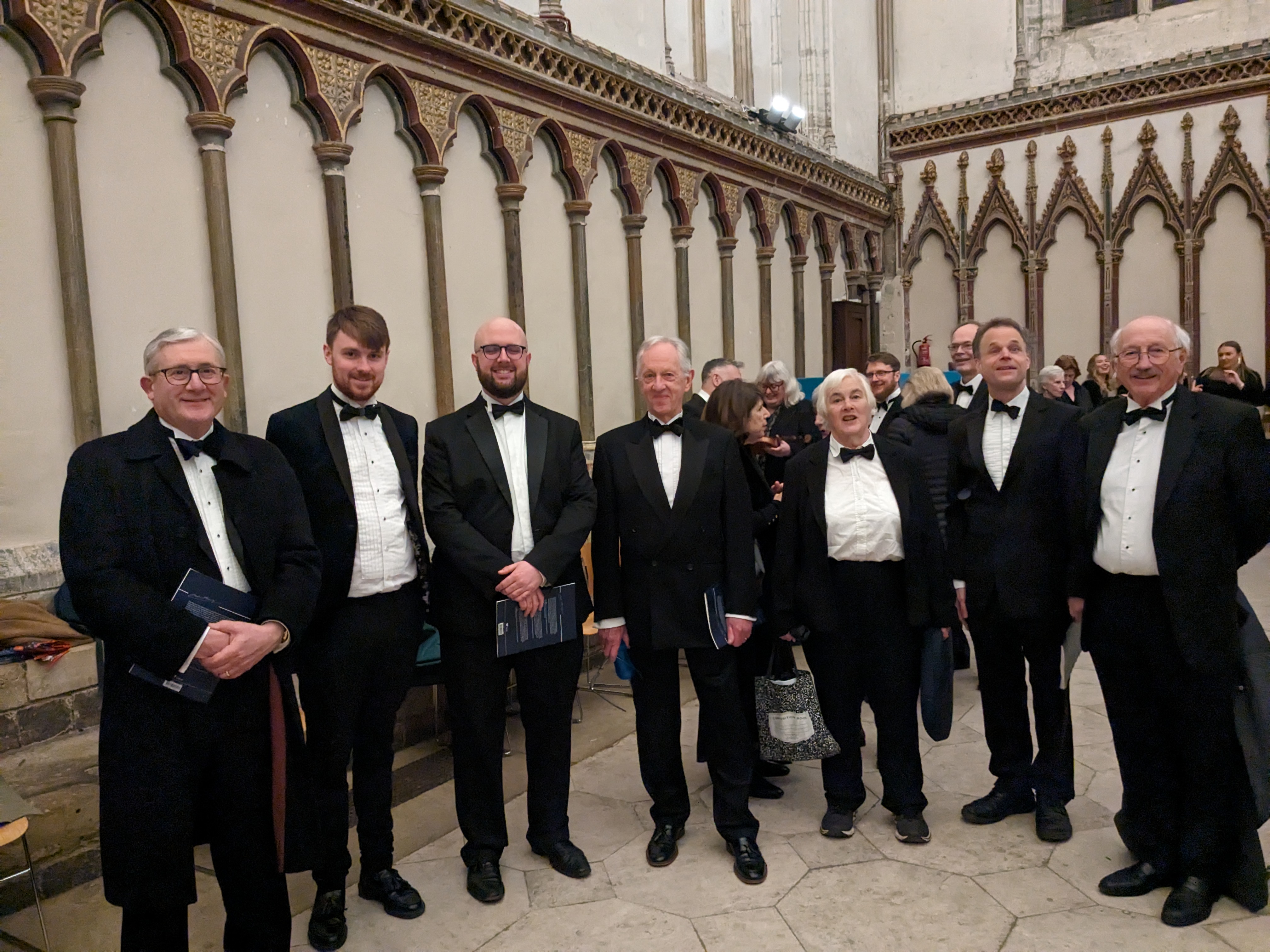
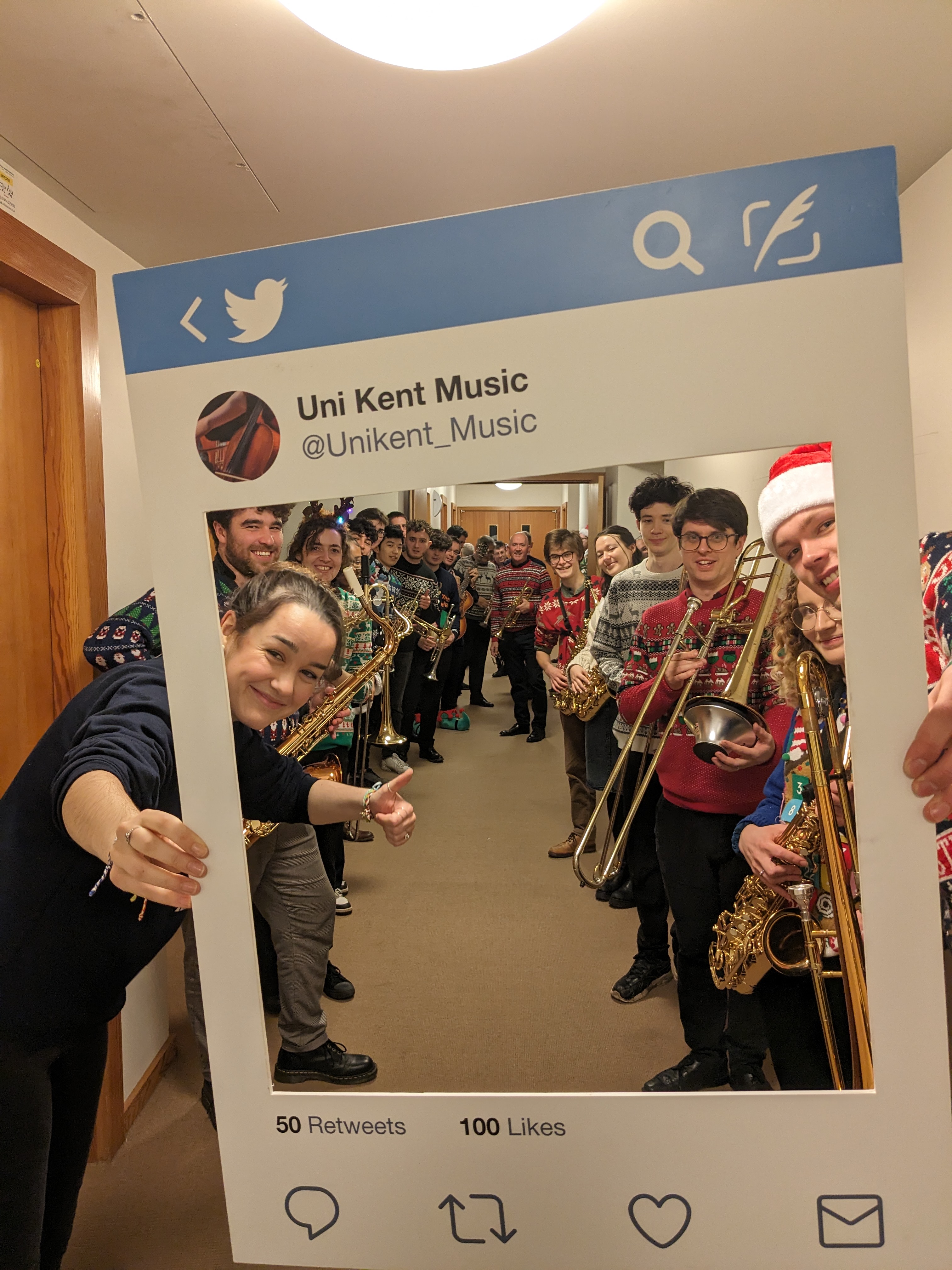
 What I’ve started saying instead, is that we build a community. Every year. From scratch. We’re an extra-curricular provision, so entirely dependent on who walks through the doors of Colyer-Fergusson each September – students and staff alike. And some of our ensembles are also open to alumni and members of the local community, too. And our job – perhaps the most vital aspect of our activity – is to bring all these musicians together and build a community to which they can belong, in which they can participate.
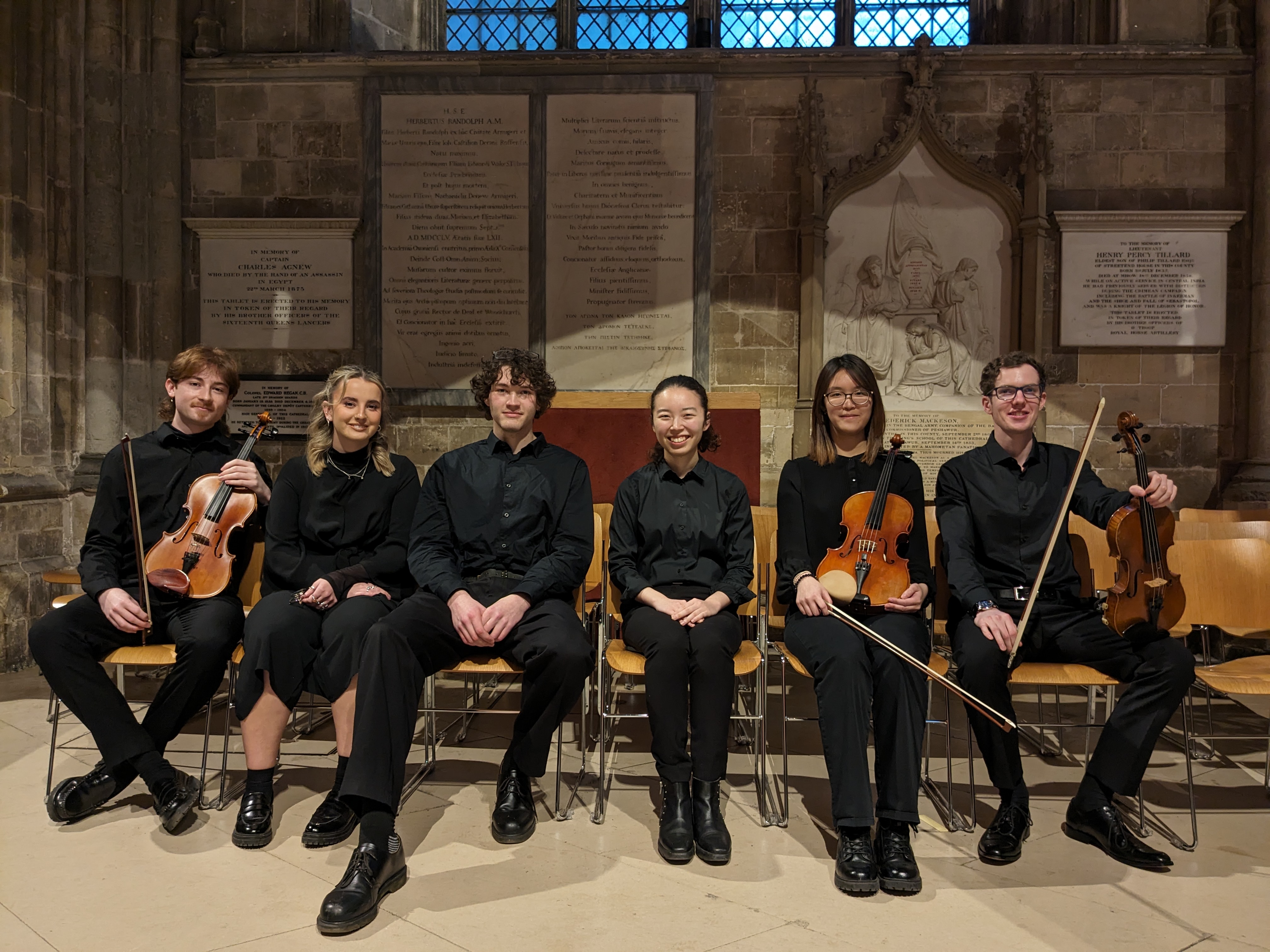 This is especially important when it comes to welcoming first-year and international students, people who might be anxious about being away from home, wondering how they will find a group of friends, how they are going to fit in – and for overseas students, even more so. For those who are worried about making social connections, about finding their feet, the music-making community here at Kent offers a ready-made opportunity to do all those things.
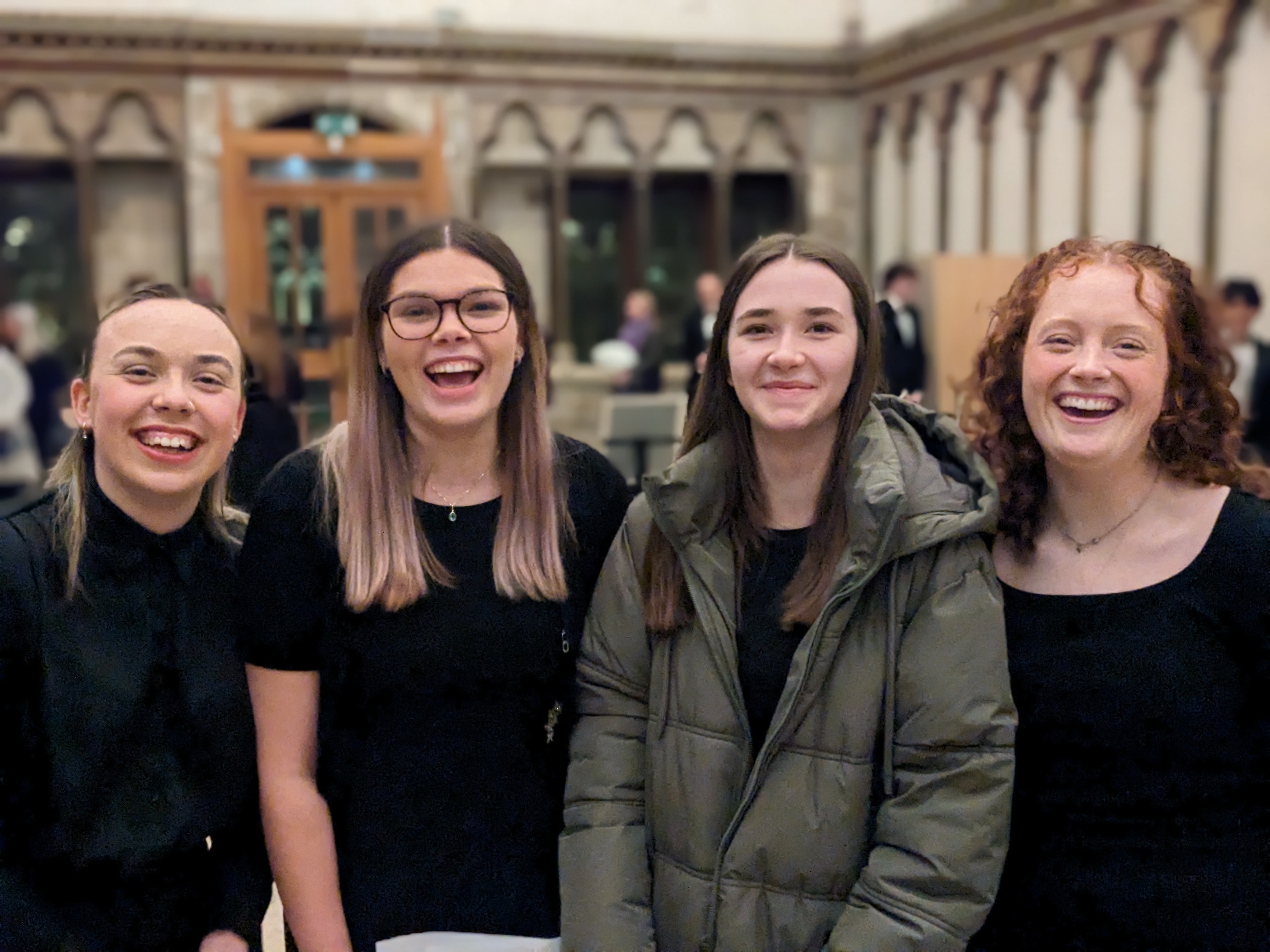 And for students returning in their second or third year, who were involved the year before, it’s a chance to get back to rehearsing and performing with the group of friends they made last year, and meet new ones. Music is open to staff, too; you’ll find members of administrative staff or heads of departments sitting alongside students amongst the strings or woodwind sections in the Orchestra, or sat alongside them on the choral-risers each Monday night when Chorus meets. Along with external members of the community, who come from Folkestone to Faversham, from Whitstable to Wye, and elsewhere, all these musicians come together in the shared endeavour of rehearsing and performing, that creative odyssey that impacts so much on people’s wellbeing.
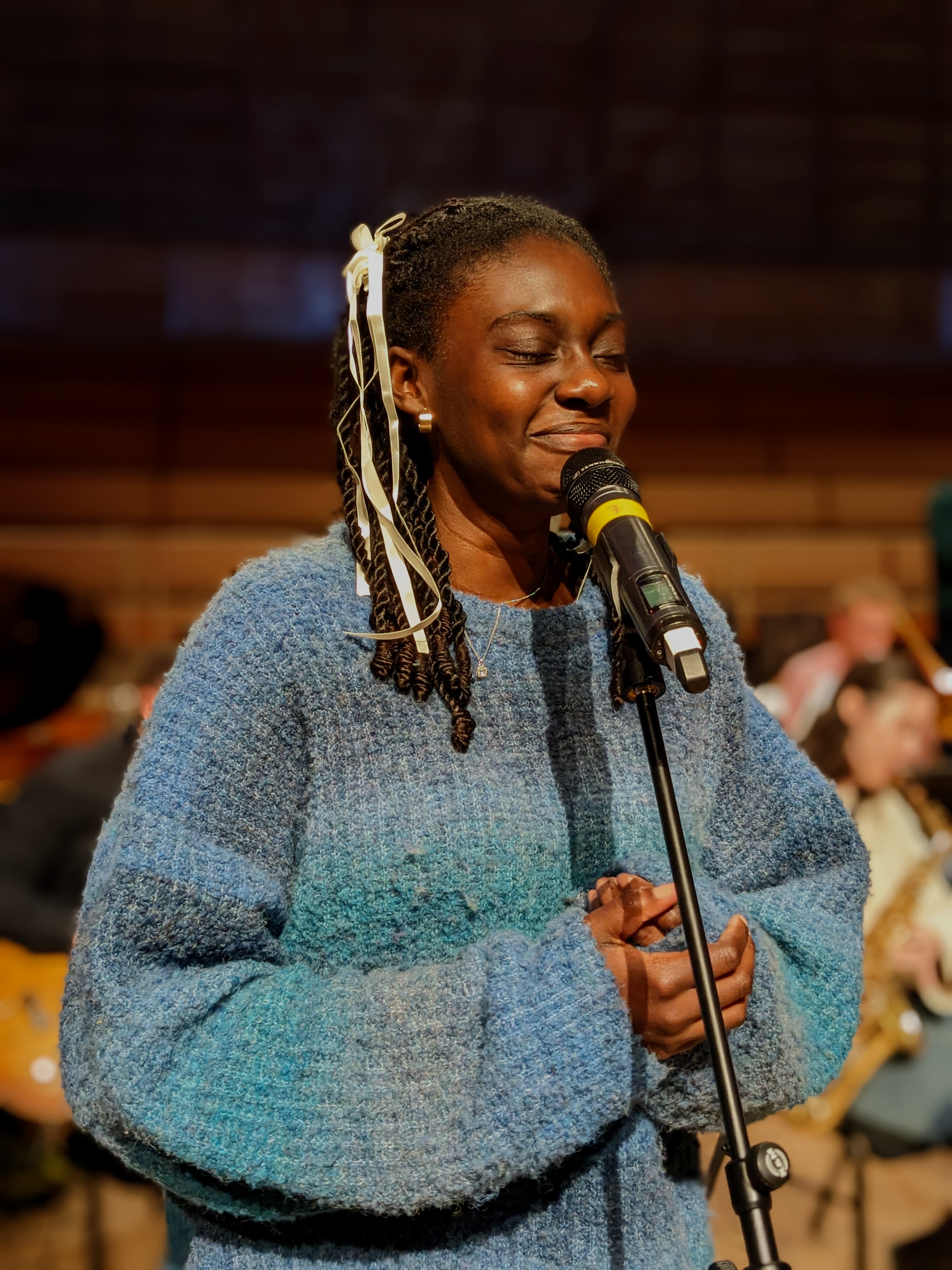 On my desk as I write, I have all the thank-you cards that we received a few weeks ago, from students who are graduating, for whom the recent Summer Music Week has been the final opportunity to be part of it all. Similar sentiments echo throughout: ‘Thank you for making me so welcome;’ ‘the experience of making music here has changed my life;’ ‘being part of the musical community has been a rewarding experience for me;’ ‘thank you for creating such a nurturing environment;’ ‘thank you for making a safe space for everyone.’ They talk of transformative experiences, opportunities that will stay with them for the rest of their lives, memories they will value, friendships formed.
So, yes; thanks to the marvellous generosity of the Music donors and benefactors, we bring musicians together to rehearse and perform; we offer a Music Scholarship programme to support and develop particularly talented students; and we have regular performances throughout the academic year, both on and off-campus. But that doesn’t reflect the true essence of community-building that lies at the centre of it all, and what is really the beating heart of the vibrant provision we create each year that energises the University community, its campus, its region, and beyond.
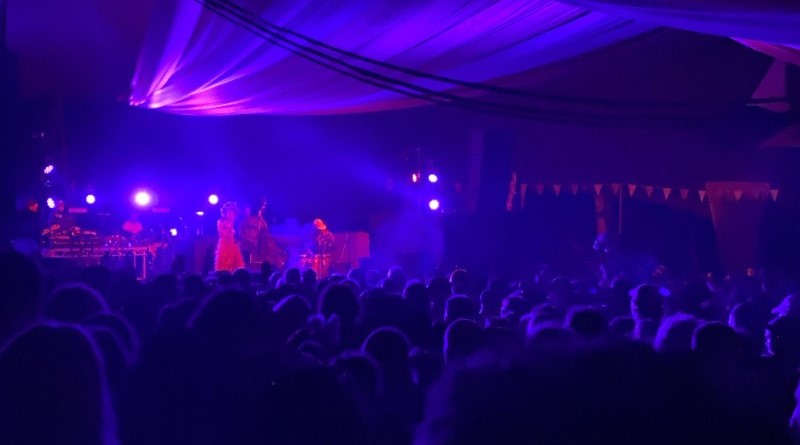
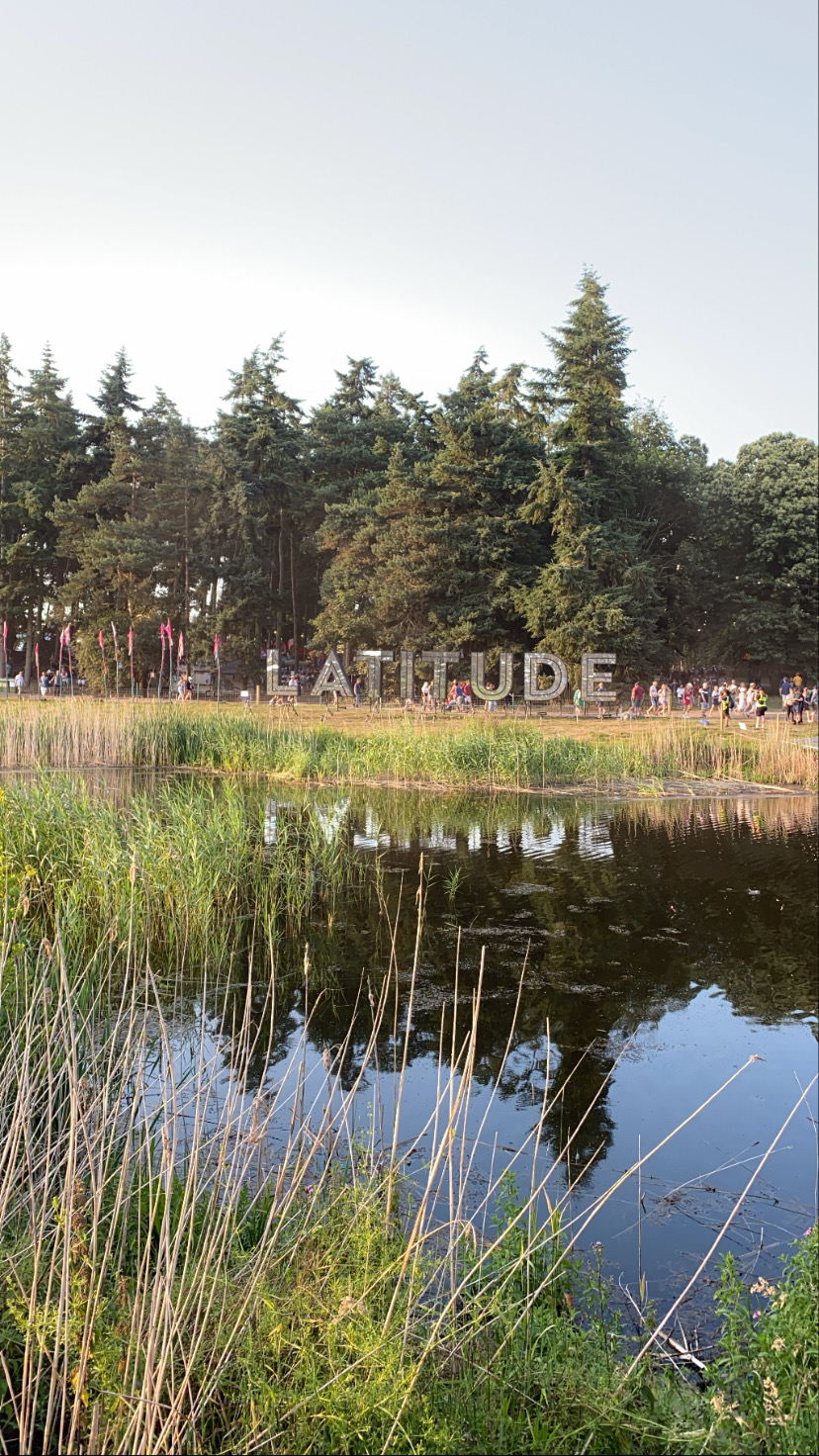 As a COVID Test Event, every attendee had to show proof of a negative test before arriving and answer a health screening questionnaire each morning. As a performer, we also had to take an additional test two days into the festival to be allowed access back onto the main site. The detailed and regular checks made the whole event feel safe and for the first time in a year and a half I didn’t wear a mask for four days in a row.
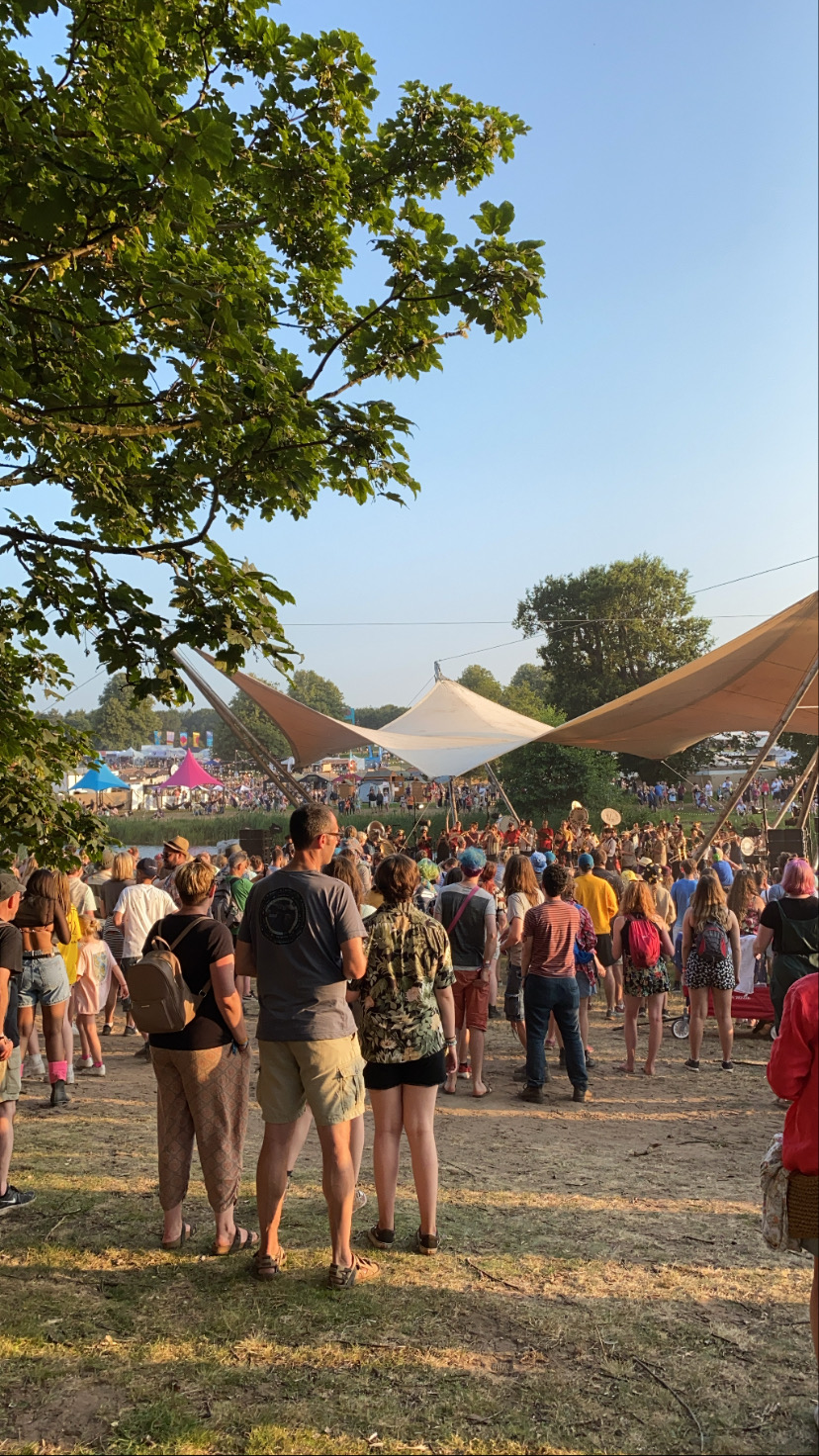 Over the weekend I saw such a range of performances that it’s hard to sum the whole festival up. The very first thing I saw was a collaboration of Brass Bands playing mostly Beyoncé and the last, a psychedelic R’n’B singer, Greentea Peng. Over the whole festival I saw pop artists like Maisie Peters and Mabel, headliners the Kaiser Chiefs, Wolf Alice and Bombay Bicycle Club and even Bill Bailey. On the final day Latitude announced a surprise performance from The Vaccines, an appropriate choice seeing as COVID jabs were being offered at the festival! The band had one of the largest audiences I saw and the crowd spilled out of the BBC Sounds Stage, groups of friends and families sat down outside just to listen to the band. The enjoyment of listening to live music and seeing people’s favourite bands was contagious. It was an incredible feeling to be in the middle of a huge crowd, singing and dancing along again.
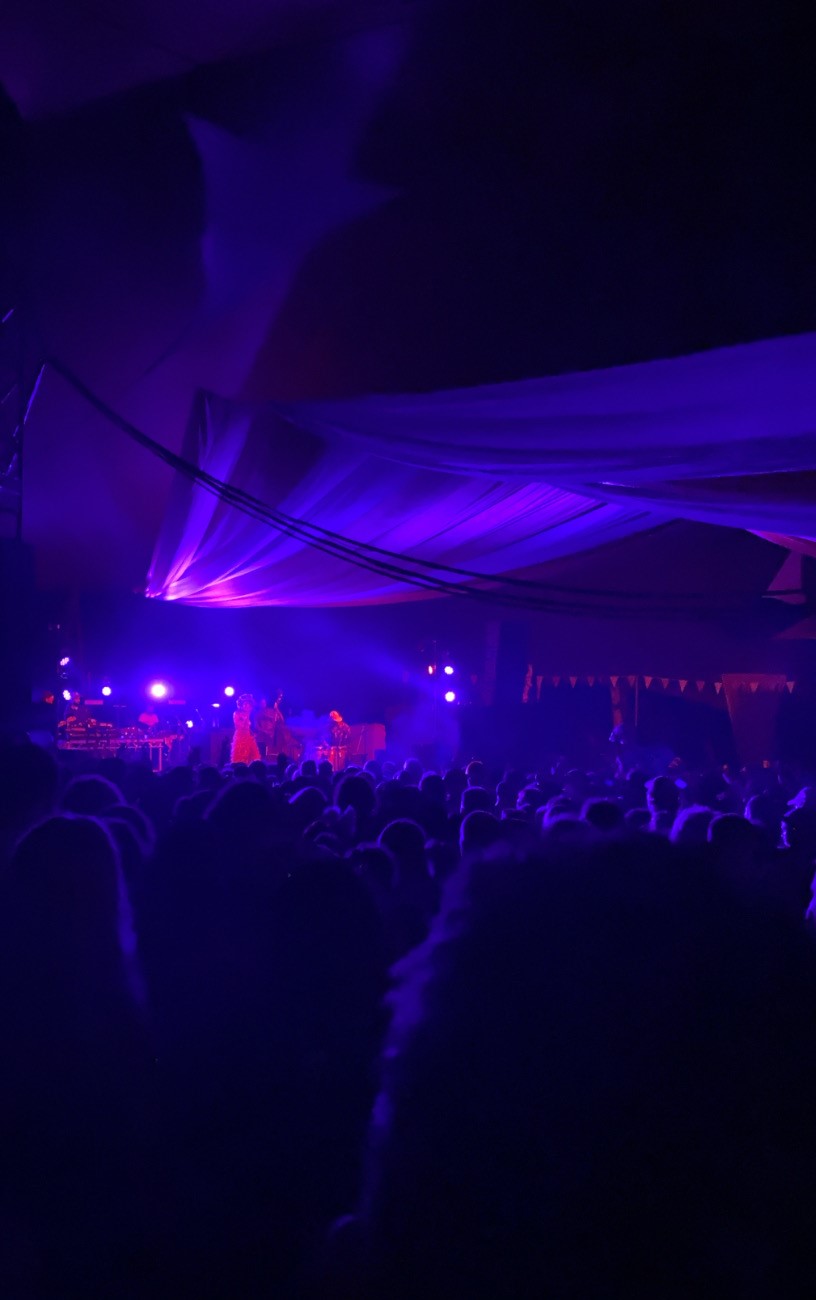 One of the main reasons I went to Latitude was to see Arlo Parks, who I’ve already talked about on an episode of Vinyl Countdown (see below). Unfortunately, she was unable to perform because she had tested positive for COVID earlier in the week. I was disappointed but there were a few music discoveries I made which made up for it. If I could recommend a few artists I found and loved it would have to be Lucia & The Best Boys, Ellie Dixon and my favourite of the entire weekend, Greentea Peng. Like most of the music I listen to, they are all pretty chilled out so if that’s your vibe, definitely check them out!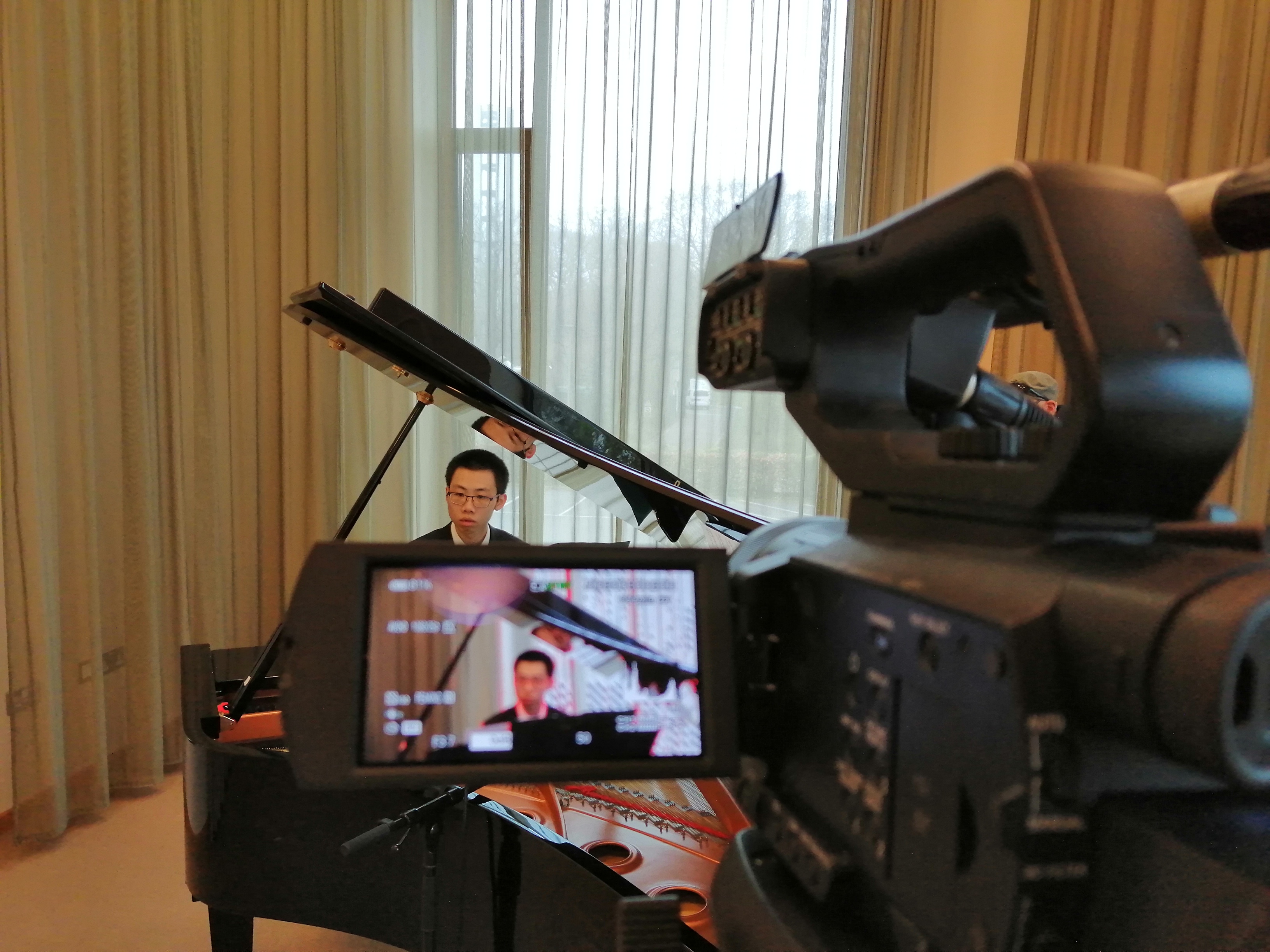
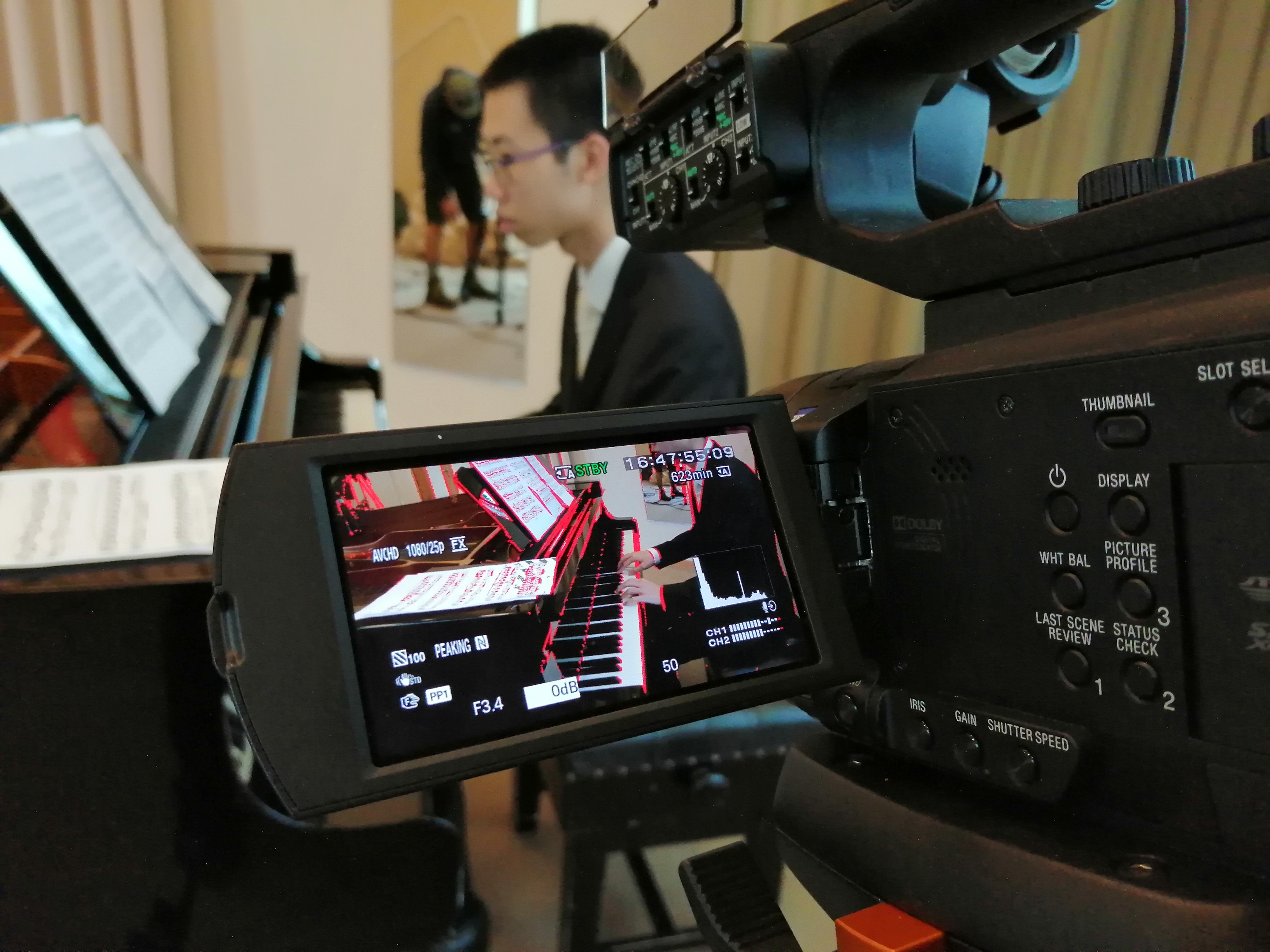
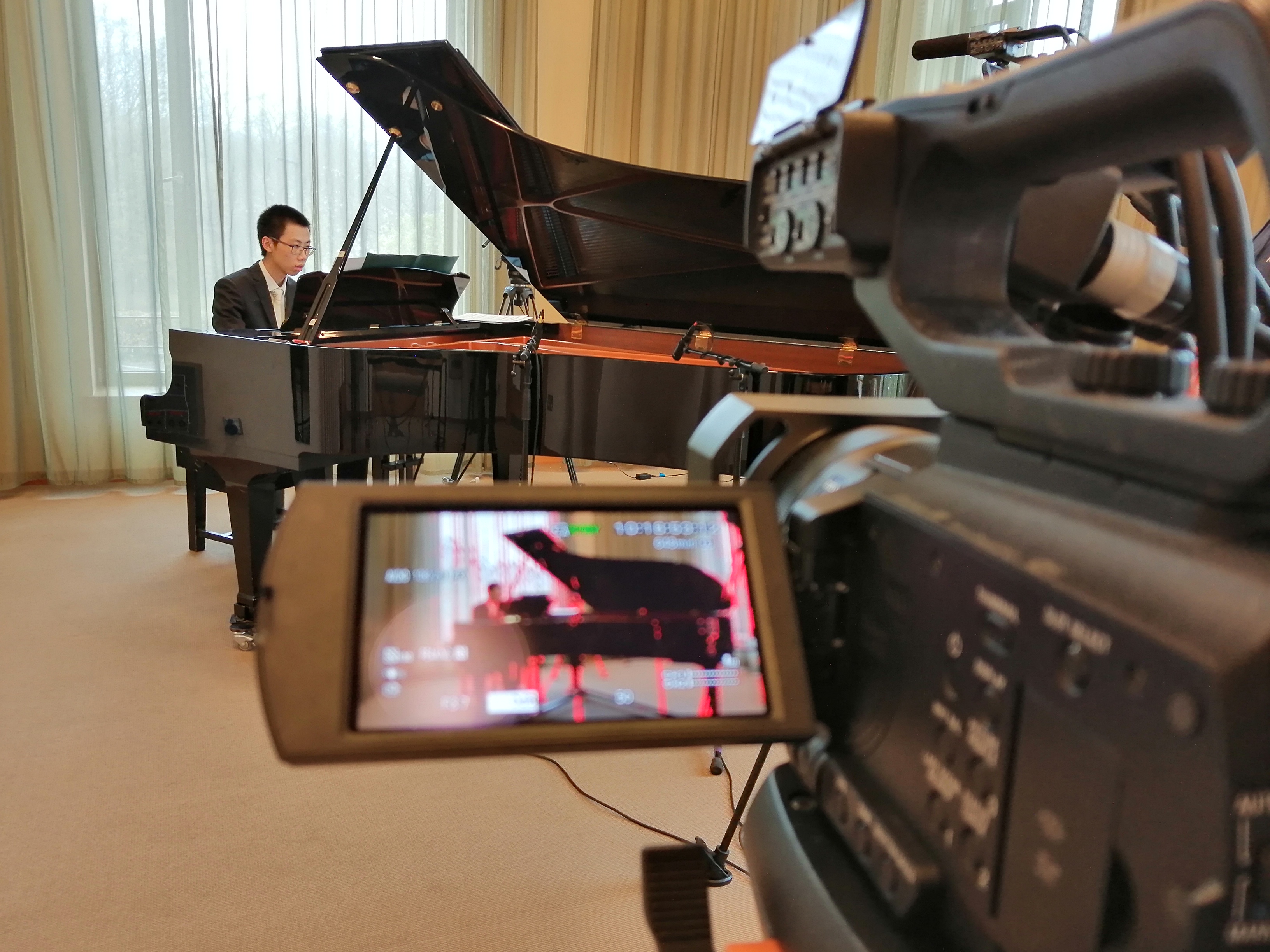
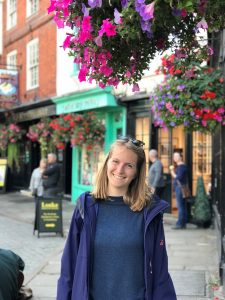 Music has always been a very important part of my life. I have been playing the recorder and the cello for 15 and 13 years respectively. In various orchestras and ensembles from Baroque to contemporary music, some of them international, I have experienced how music does not know any borders.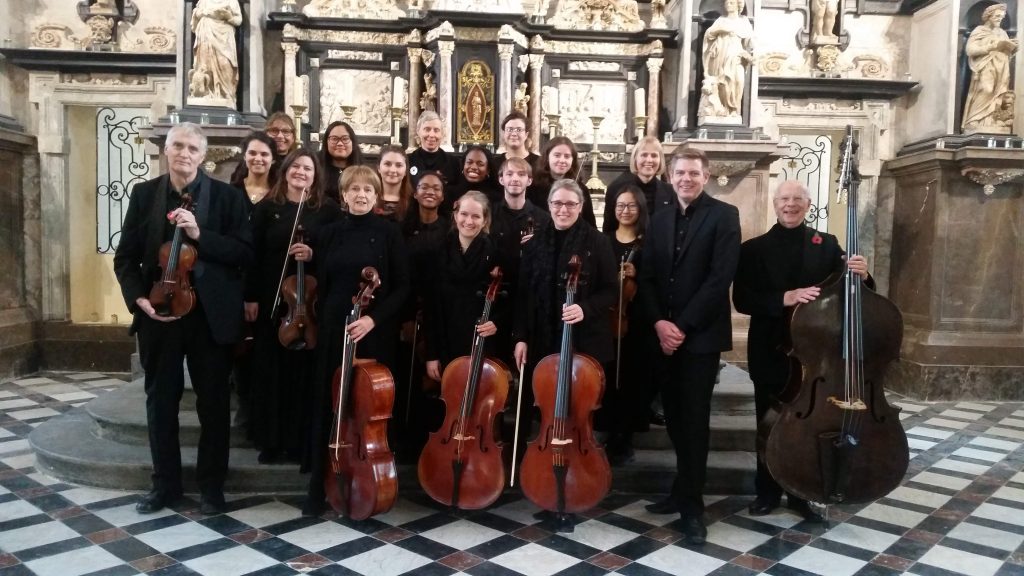
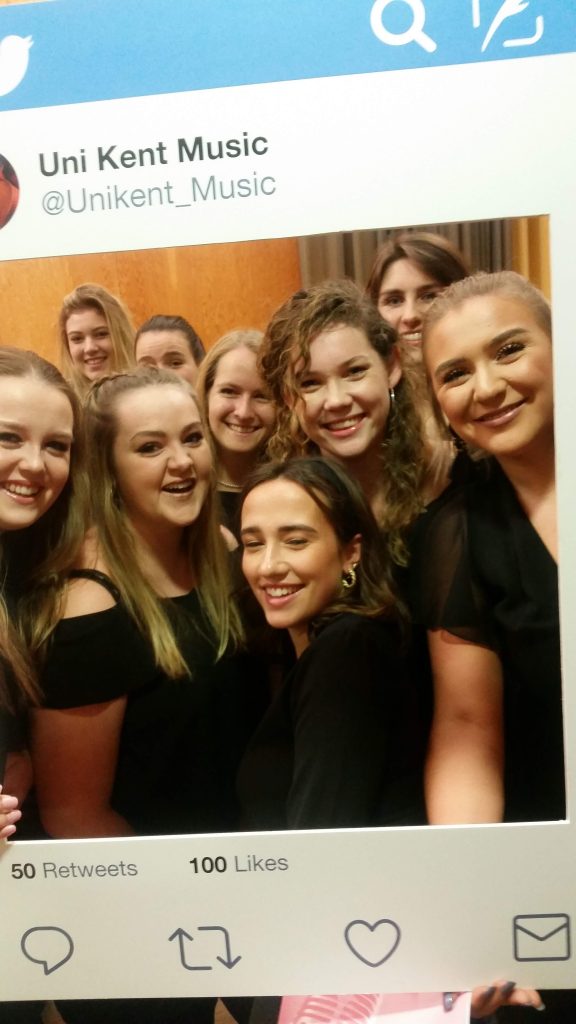 I am very excited for our next performance, the meditative Advent Breathing Space with Christmas carols and antiphons in a candlelit medieval church this Friday.
 Even though you cannot study music on the University’s Canterbury campus, the Music Department offers an amazing variety of opportunities for students who want to get involved. It feels like all the different musicians and ensembles are part of one big family. I am very grateful to be part of that family.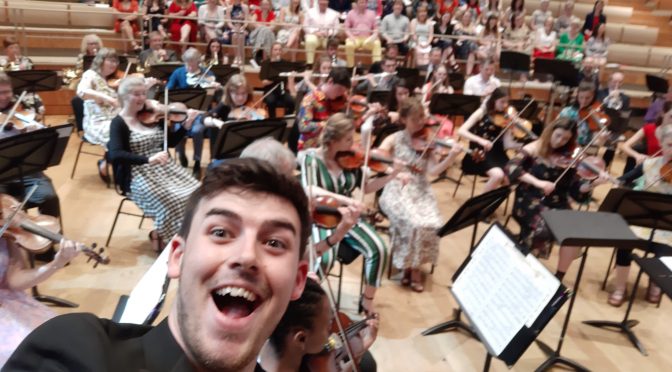
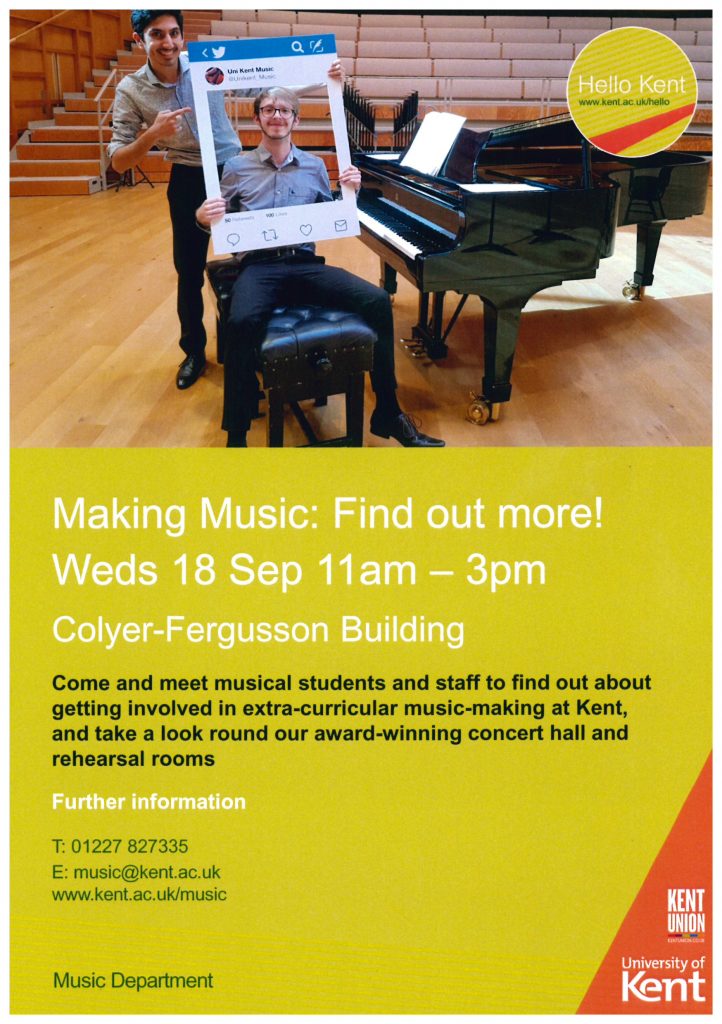
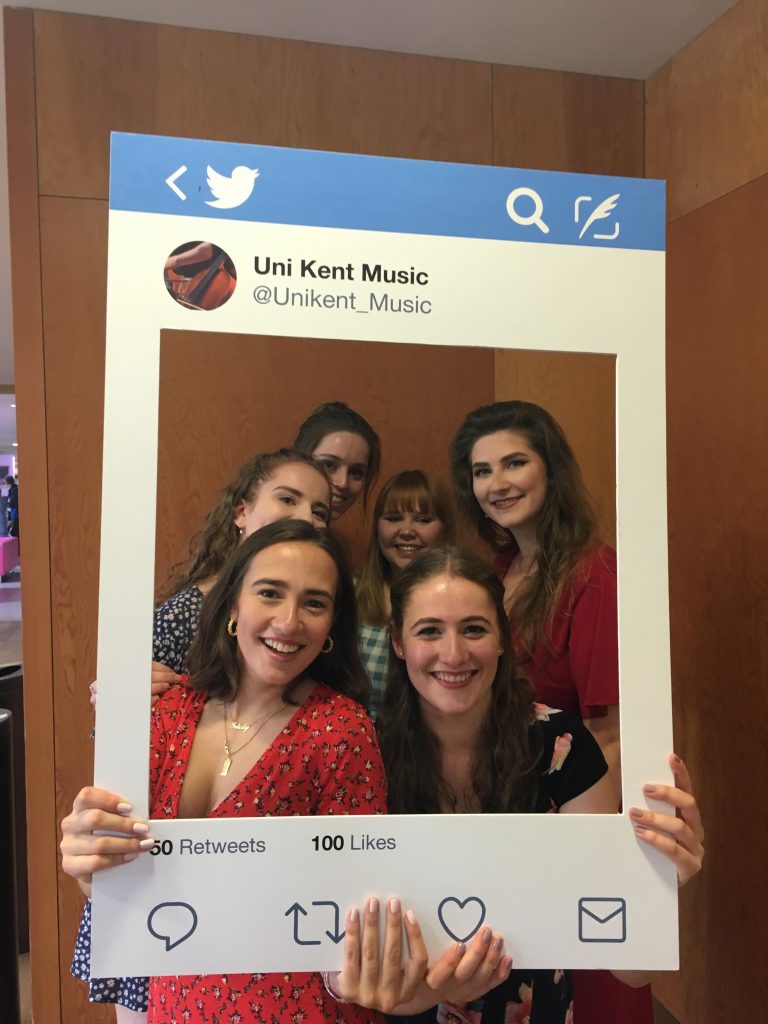 Plans for the Wednesday event include live music on the foyer-stage throughout the day, and there’s the possibility of a Scratch Orchestra play-through of popular film scores, and even choruses from Messiah.
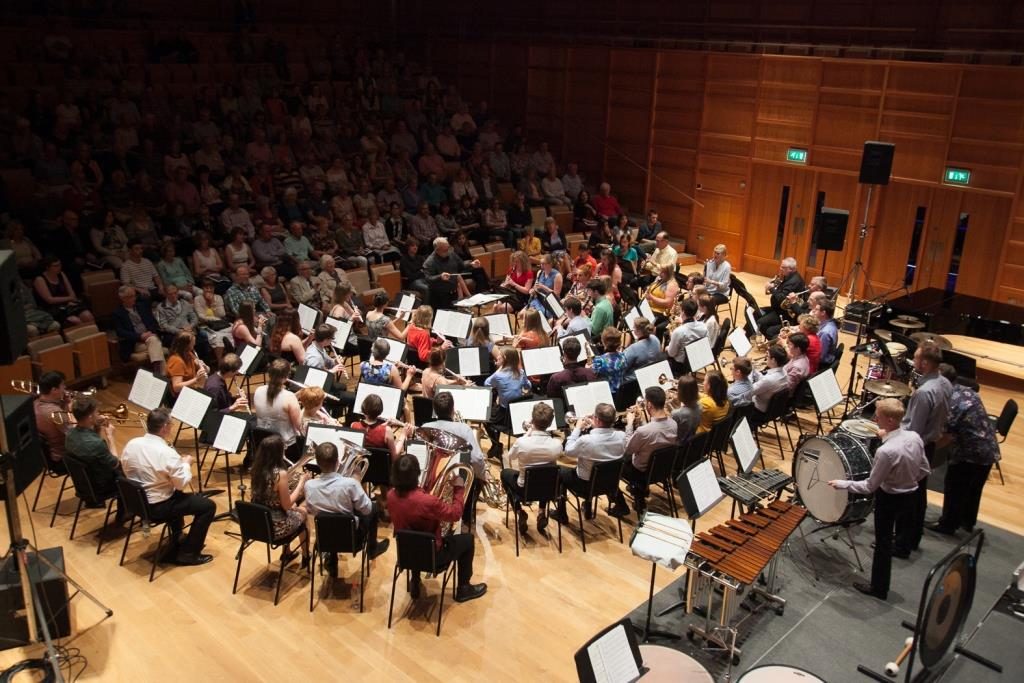 We look forward to welcoming you through the doors of Colyer-Fergusson during Welcome Week, and especially next Wednesday – come and find out how to make rehearsing and performing a part of your university experience, whatever course you may be studying!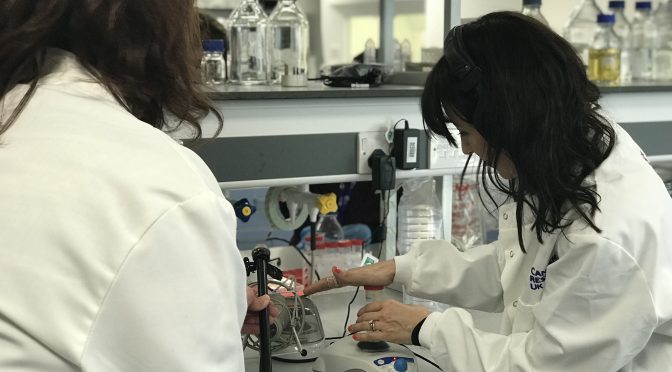
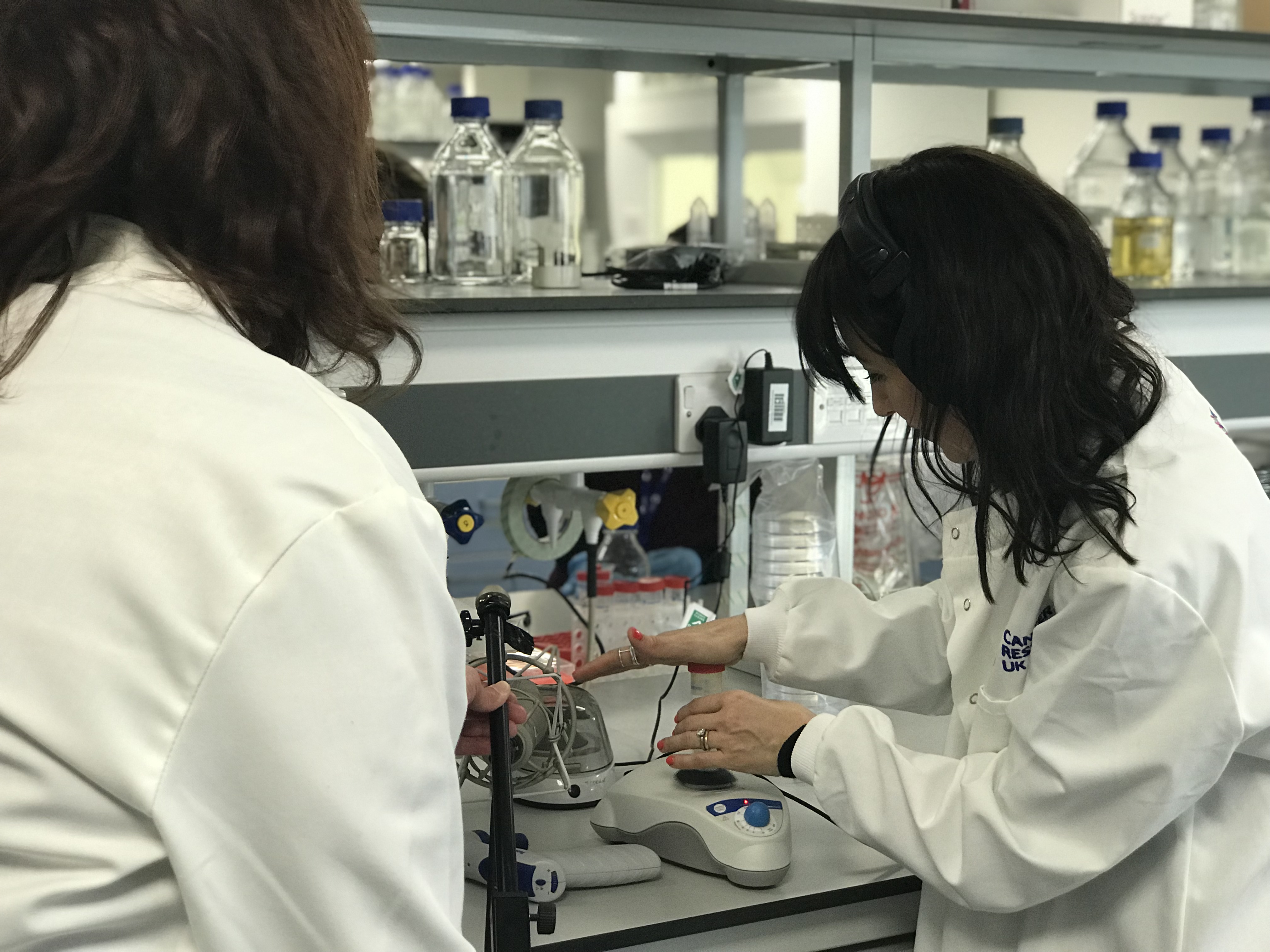 Bringing together a combination of disciplines, the mixture of live music, projections and performers forms a new, highly creative approach to engaging audiences with cutting-edge scientific research data; the project presents images and film generated by exploratory research at the sub-molecular level. Field recordings from the laboratories at the University are also incorporated into a mesmerising soundscape clothing the live musicians, forming an evocative sonic backdrop to stunning research imagery.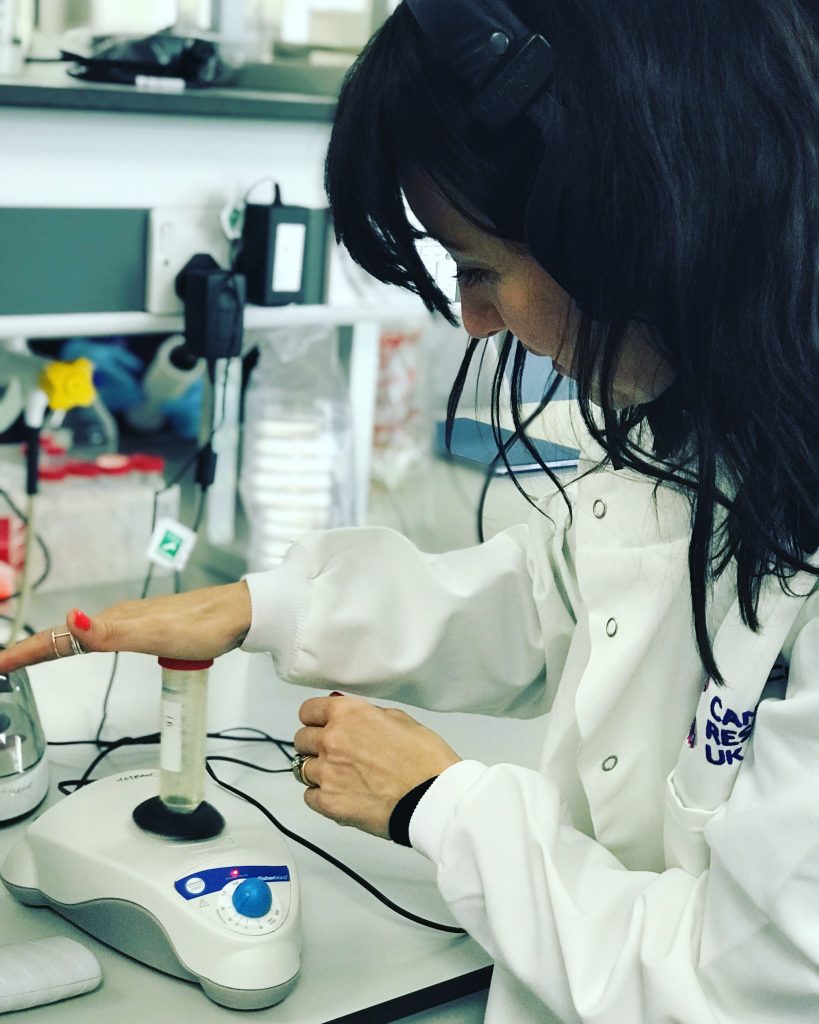
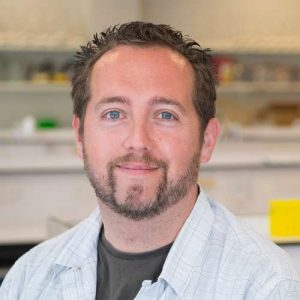 The research, led by Dr Chris Toseland, explores Gene Expression, and is used to combat diseases. Funded by Cancer Research UK, Chris’ research is the inspiration behind the 38-minute work for choir, solo violin, string ensemble, synthesiser and percussion. Chris received a BSc (Hons) in Biochemistry from the University of Wales – Aberystwyth in 2006 then commenced a PhD at the MRC National Institute for Medical Research – London. He received his PhD in 2010 from the University of London. His thesis focused upon the biochemical and biophysical characterisation of DNA helicases. At the end of his PhD, Chris was awarded an EMBO Long Term Fellowship to move to the Ludwig Maximilians Universität – Munich to work on single molecule studies with myosin motors. After 3 years he relocated to the Max Planck Institute of Biochemistry with a research focus on genome organisation. Chris joined the School of Biosciences in 2015 as a Leverhulme Early Career Fellow. In the same year he was awarded a highly prestigious MRC Career Development Award to establish his research group.
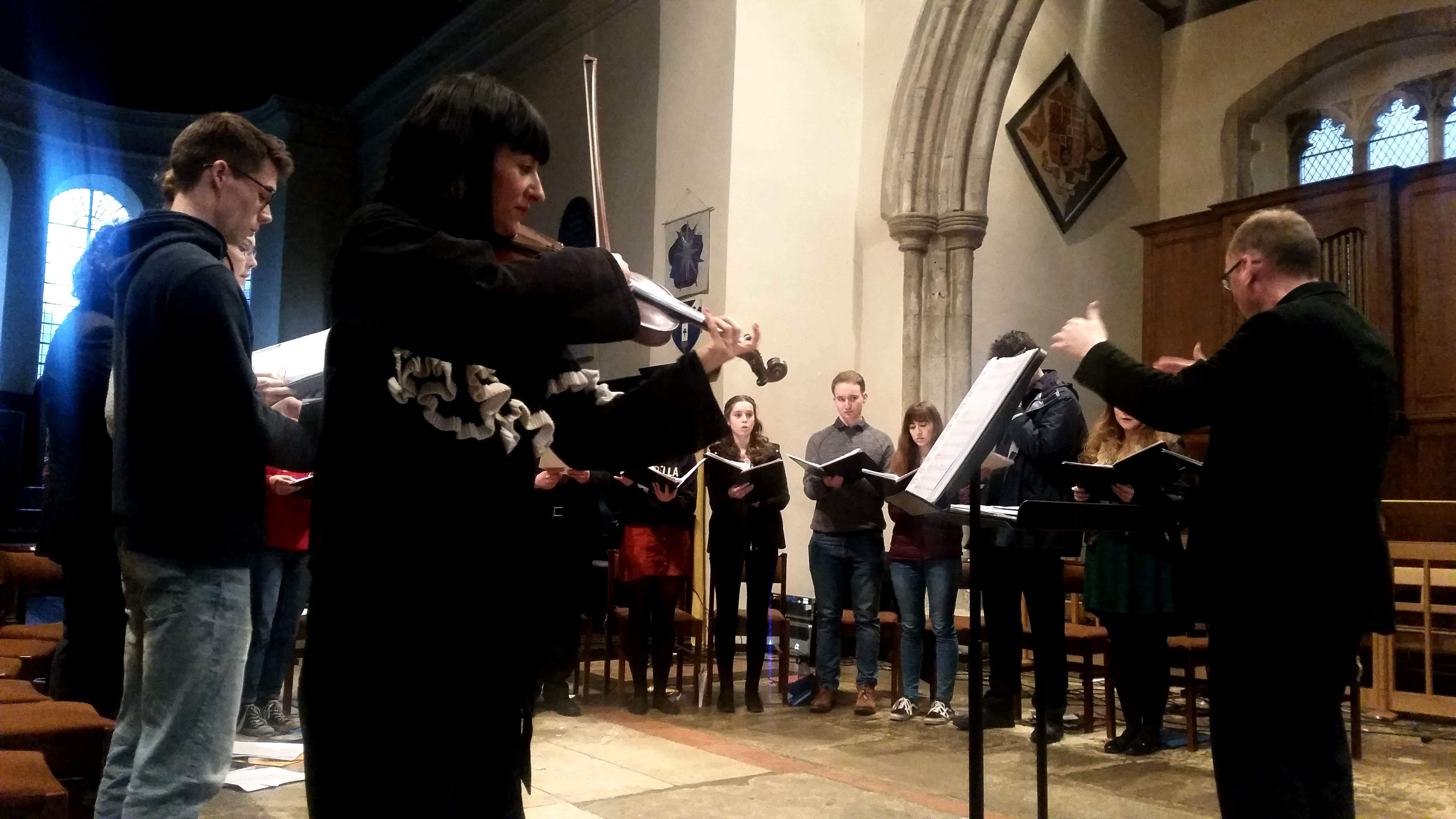 The premiere of Between Worlds in its entirety, complete with live projections and electronic soundscapes, will be given on Friday 7th June 2019, in the spectacular surrounding of the University’s Colyer-Fergusson concert-hall, conducted by Dan Harding, as part of the Music department’s annual Summer Music Week festival.
 For tickets and event details,
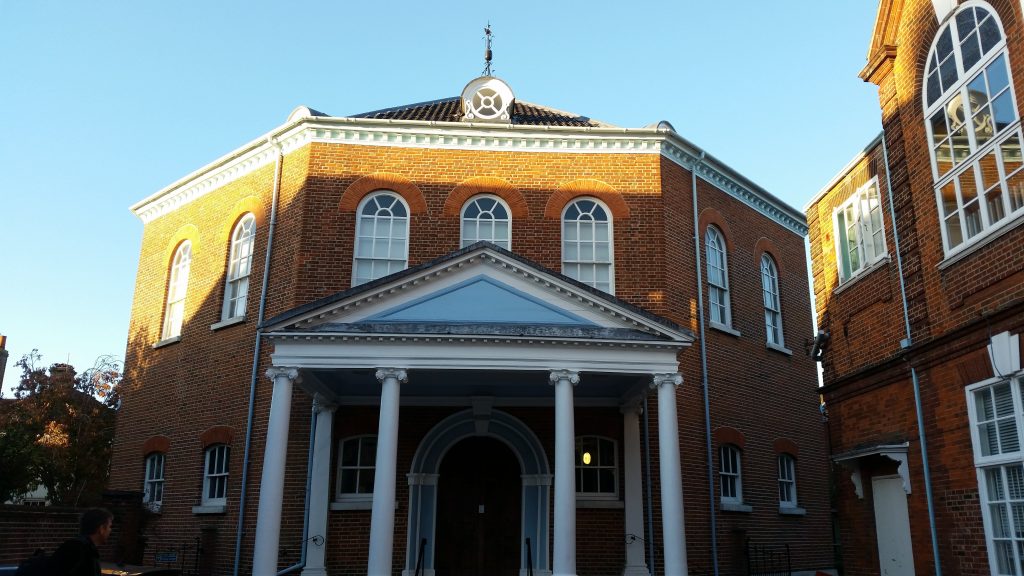
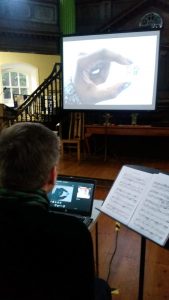 The dialogue between live music and scientific research data projections featured in the festival as one of ‘five weird and wonderful events not to be missed,’ according to the Norwich Evening News, and so it proved. Pianists Dan Harding and Matthew King performed a programme of beguiling music for two- and four-hand piano music, whilst Dan Lloyd, Deputy Head of the School of Biosciences, led a visual exploration in images and video of the School’s latest research, capturing the everyday and the sub-molecular using high-resolution spectroscopy. It’s a fascinating way of engaging audiences with both recent developments in the research community, as well as capturing lesser-seen (and often lesser-celebrated) aspects of the laboratory environment and the people who work in it.
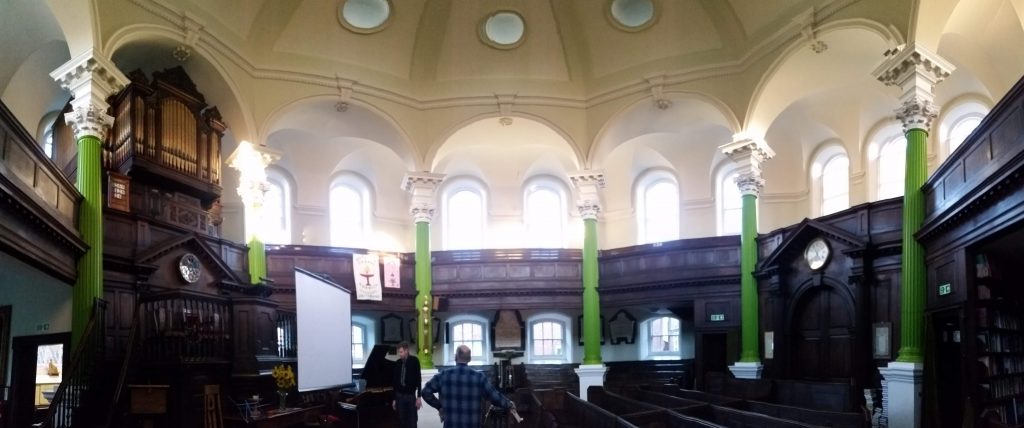 We are grateful to festival producer, Natalie Bailey, for the invitation to participate in the festival, and for looking after us and making us welcome.
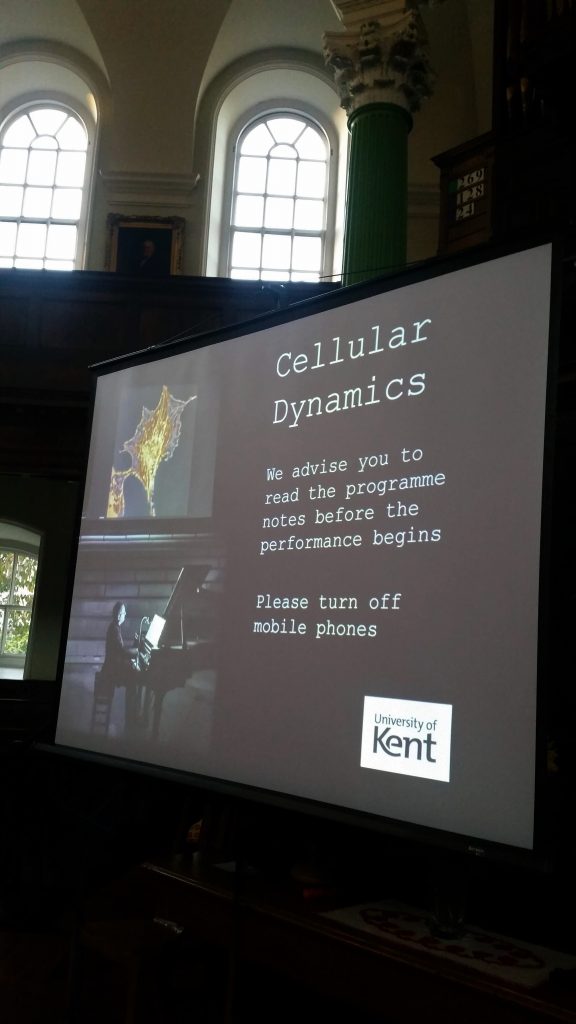 Read more about the Cellular Dynamics project