Drum-roll, please: our new events calendar for the Autumn term is now available online.
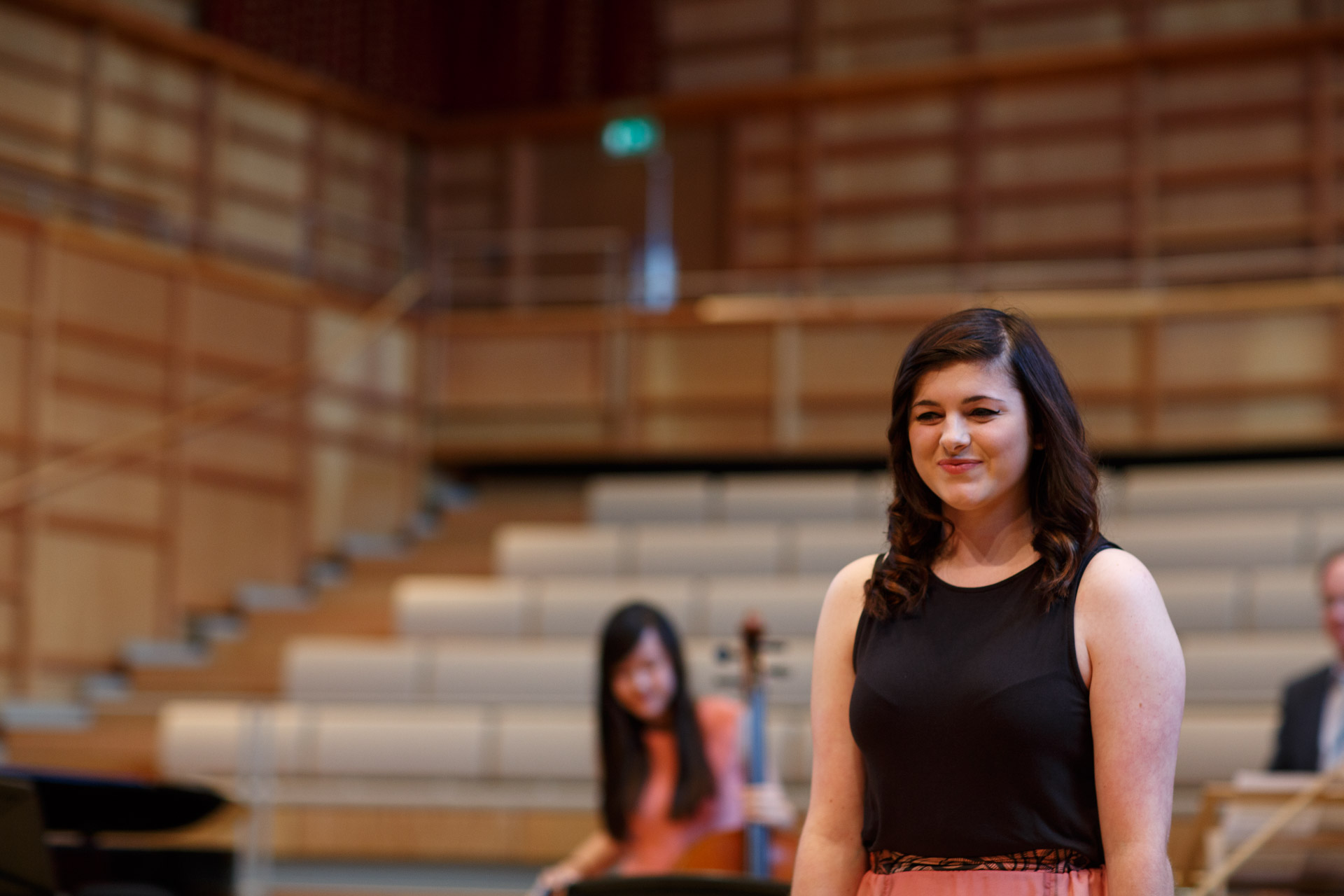
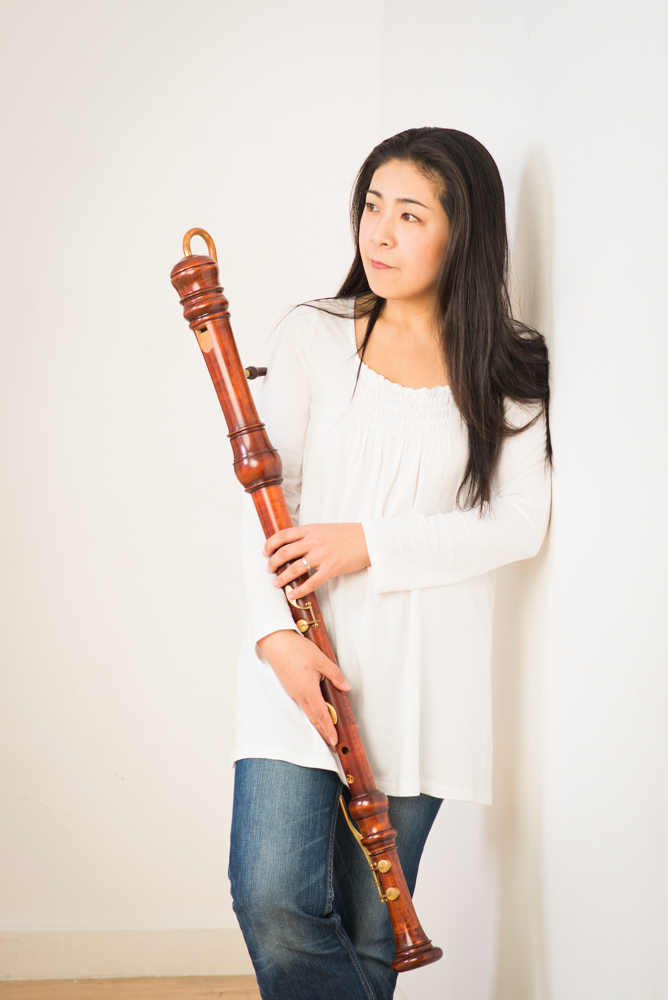
Naomi Okuda Wooderson
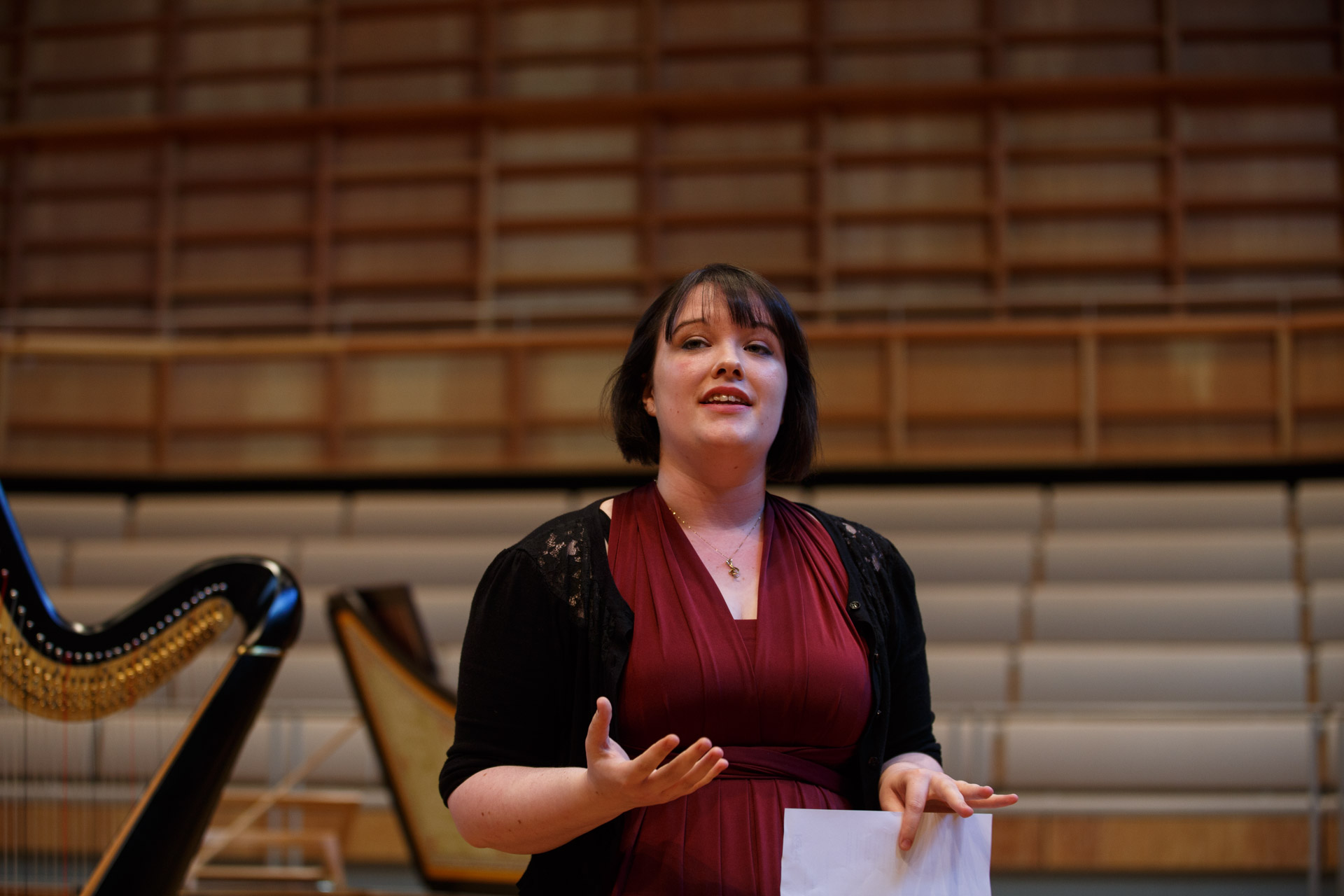
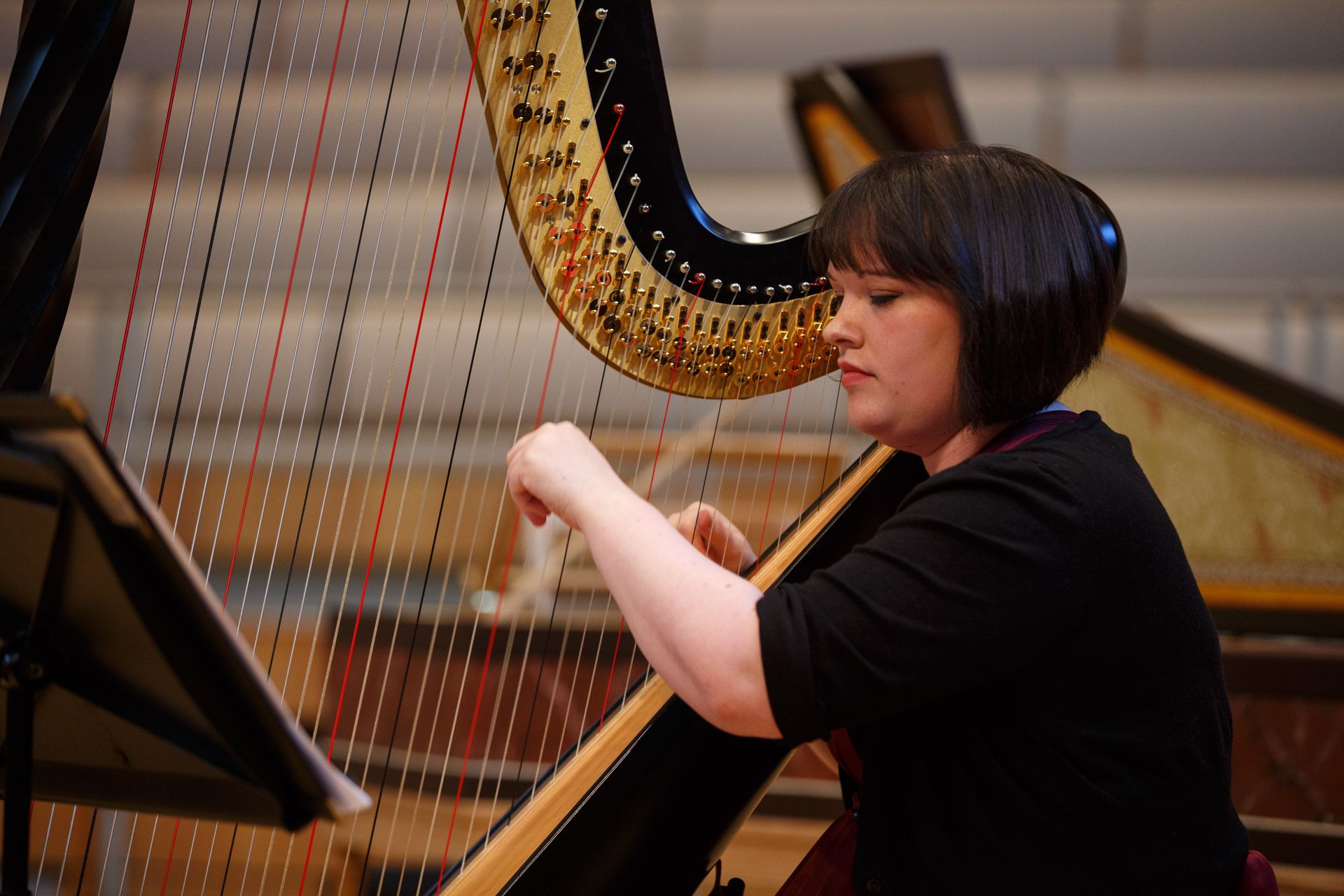
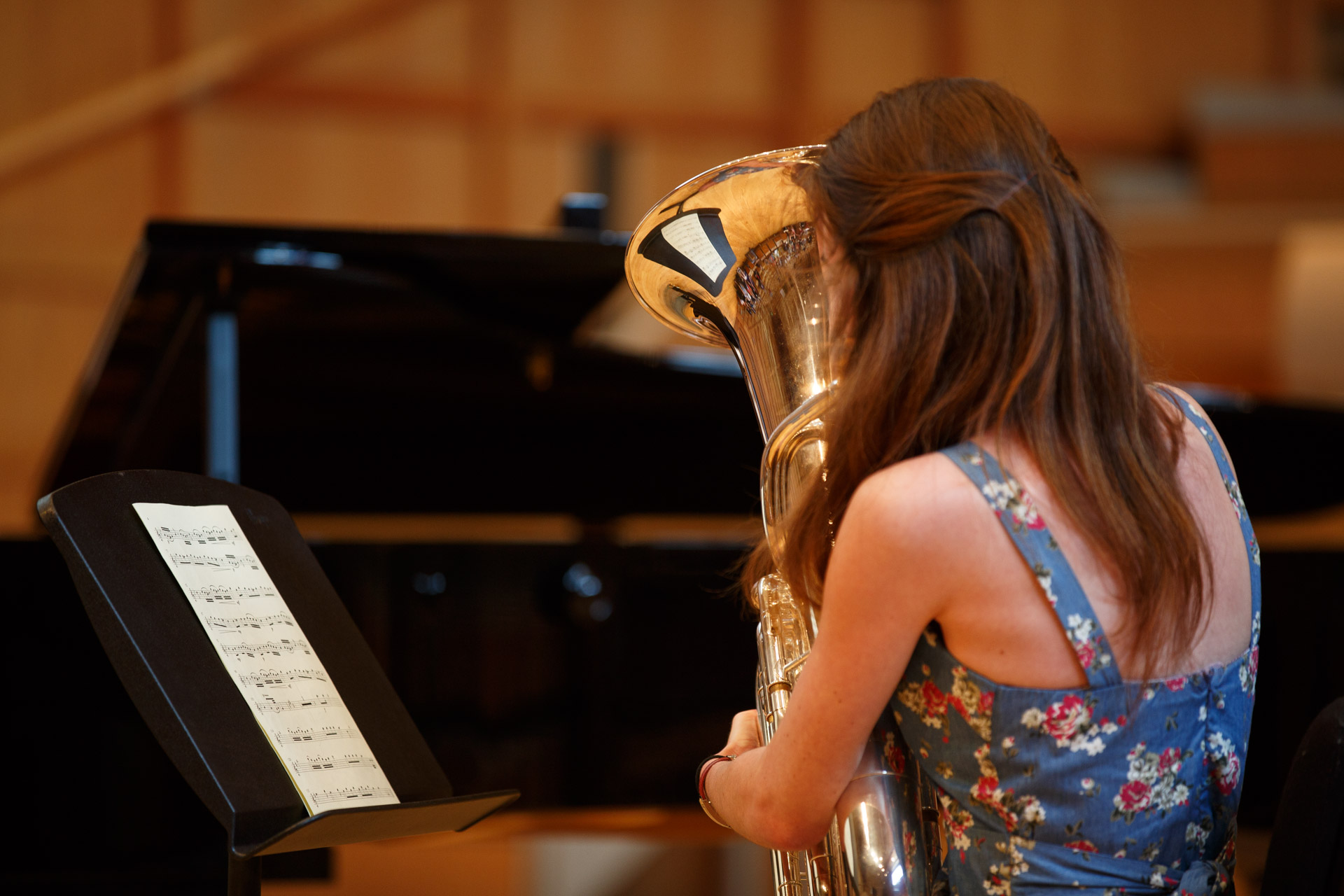
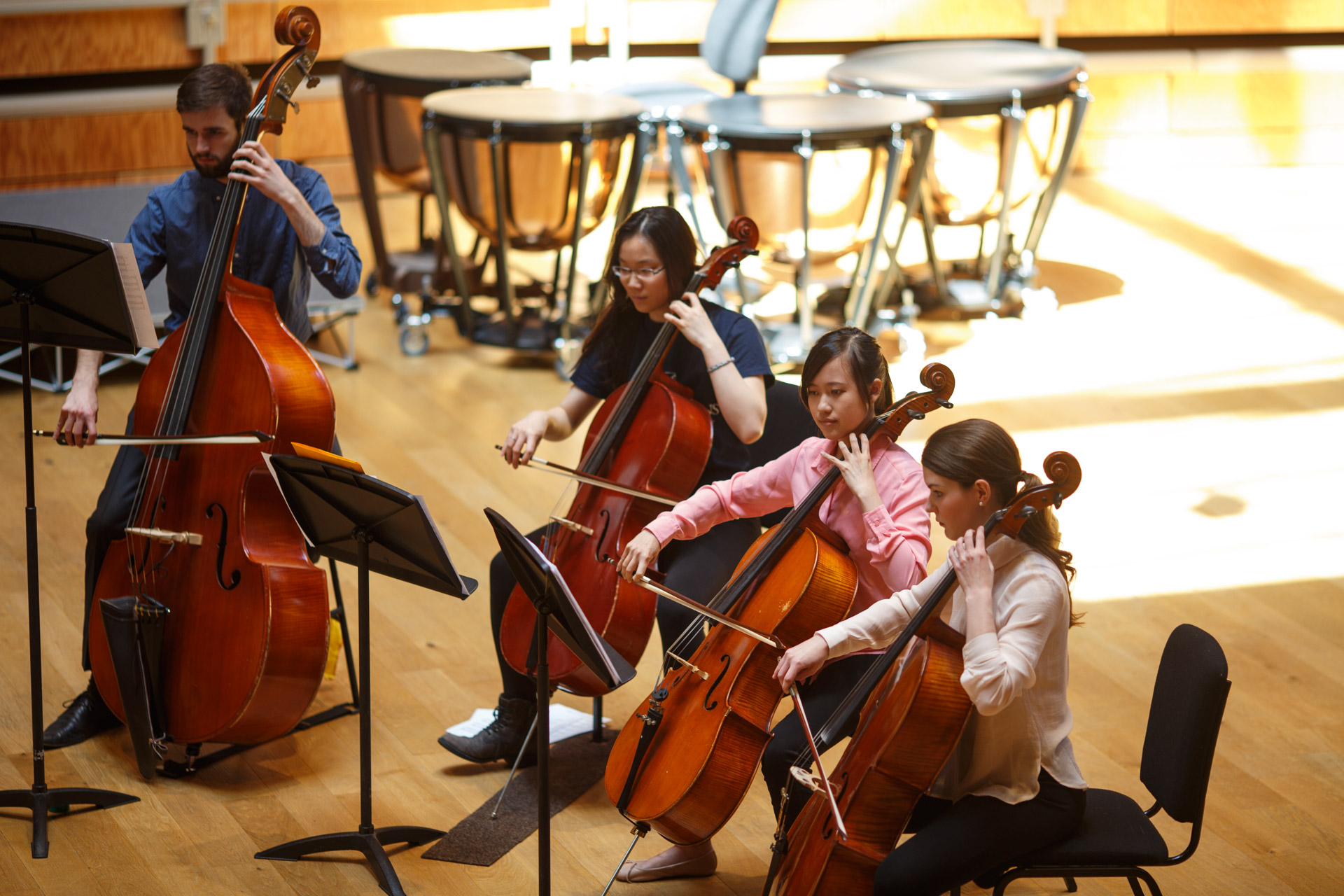
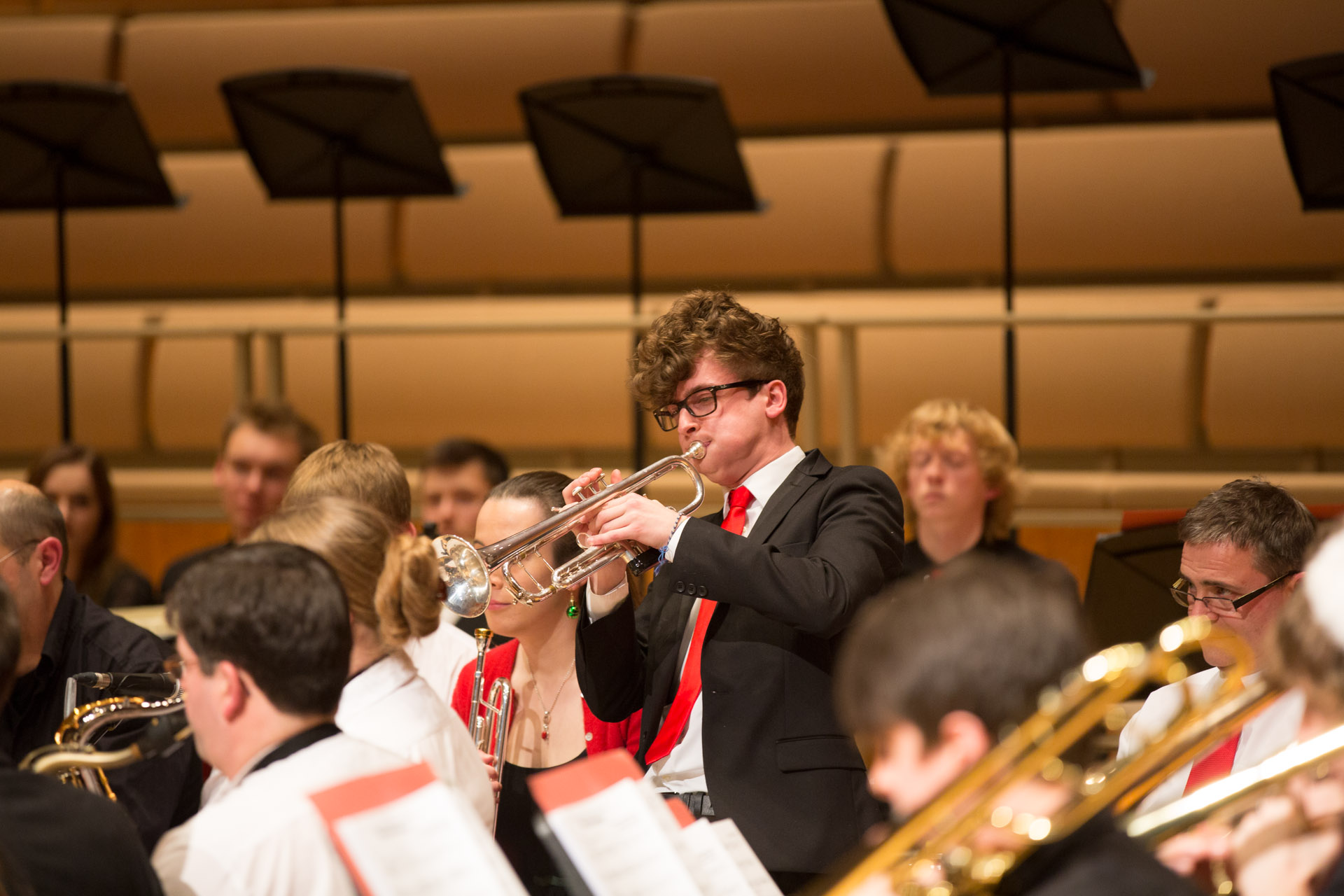
The termly Lunchtime Concert Series opens next month with a recital of Baroque recorder music by Naomi Okuda Wooderson, and a musical aperitif from our ensemble-in-residence, CantiaQuorum, of music by Saint-Saens, Stravinsky and Torelli prior to their evening concert; we launch our December seasonal music with A Baroque Christmas, including movements from Handel’s Messiah and Vivaldi’s Winter from the Cecilian Choir, String Sinfonia and soloists; the Christmas theme continues with a rare performance of Vaughan Williams’ The First Nowell by the Chorus and Orchestra, together with works by Sibelius and Shostokovich, and the term is rounded out with the now-customary Christmas Swing-along from the Big Band. There’s also an antidote to wintry blues from Kasai Masai as they bring the infectious rhythms and melodies of Congolese music for the final Lunchtime Concert, and the Musical Theatre Society will be inviting you to ‘Do a Little Duet’ with them too.
Kasai Masai
We welcome a host of visiting ensembles and musicians to Colyer-Fergusson throughout the term, including Trevor Pinnock as he brings Purcell’s Dido and Aeneas, and there are two events as part of this year’s Canterbury Festival; find out about all these and more online here– printed brochures will be arriving around the start of the term. Find out what’s in store…
Each year, we send the student Assistant Conductor of the University Chamber Choir off into the thronging embrace of the annual Association of British Choral Directors convention; this year, trumpeter, conductor, this year’s Music Society President, third-year Music Scholar Joe Prescott, headed off to Manchester; here, he reflects on time well spent…
Time flies when you are a student, particularly a student with an active Music Department, such as the one at the University of Kent. As I sat on the train heading north for ABCD Choral Directors’ Convention, it only seemed like yesterday that I was making the same journey west to Cardiff last year. Stepping out on to the platform at Manchester Piccadilly, I strode off in search of the venue this year, the prestigious Royal Northern College of Music.
Joe Prescott
Meeting old friends from all over the country was a great start to the evening, swapping musical notes and anecdotes! However, there was to be no slacking as following a brief introduction and the statutory issuing of badges , we were straight down to business.
The first sessions were warm ups, ice breakers and a bit of revision for those new to the convention. Name games, basic conducting techniques, reminders about posture and hand shaping all helped us to relax and focus, ready for sterner tests ahead in the second session.
Here we took the song, The Long Day Closes – a four part song with words by Chorley, set in four parts by Sir Arthur Sullivan – and looked at the techniques required when conducting this piece. It is a piece that we have performed in Chamber Choir so I felt confident in volunteering to conduct. It was great to have the expert tuition and the support of the others attending to bring out the soft, gentle, flowing nature of the piece. However, I could have done with longer as I had a image in my mind of how I wanted the piece to sound!
After dinner we discussed the how to develop a repertoire to suit a community and the choral highlights that you might include.
A hearty and delicious breakfast set us up well for the second day which began with some Jazz ‘warm ups’ from Will Todd. This developed amazingly into some exploration of the Dorian mode and pentatonic scale. Always being on the lookout for good warm ups, there was one percussion- based one that I am looking forward to trying out on the Chamber Choir! Creating ‘Vocal Baths was interesting as we held on 1st,3rd,5th, 7th and 10th notes in scales – another one to try out back in Kent.
Moving to more conducting, Campion’s Never weather-beaten sail was sight-conducting for many and the Elgar, As torrents in summer, proved tricky with its unusual entries.
After lunch we moved on to looking at more unusual time signatures, which will prove very useful in the coming year. Another warm up here based on nursery rhymes proved to be excellent practice for changes in tempo, speed and style. The great thing about this course is that you are learning together, there is constant discussion about conducting styles and techniques and we are always offering advice and support to each other. As last year I expect this will carry on throughout the year through social media.
The final part of Saturday was a Gala Concert given by a young all-boy’s choir (Cambiata North West) and a group from York University, The 24. Both groups performed to a very high standard but given the nature of the weekend it was very difficult to take your eyes off the conductor and to think how you might have interpreted these pieces! Finally The Academic Student Choir of the Ural Federal University (Russia) took to the stage. A choir that had incredible power but still had great prowess and technique.
Another highlight of the convention is always the chance to look at the latest choral publications and compositions. Many of these are free or sold at a much-reduced rate and I bought a number back for use this year at Kent with Sue and Dan. [Editor’s note: hurrah!]
I was very grateful to have been given the opportunity to attend the convention once again and felt honoured to represent the University in Manchester with some of the most important choral heads in the UK; can’t wait to embark on another great year of music-making at Kent.
Two days of music-making crowned the Music department’s celebrations as part of the University’s 50th anniversary weekend, and saw musical alumni returning to Kent to relive their musical experiences, this time transplanted to the sonorous surrounding of Colyer-Fergusson.
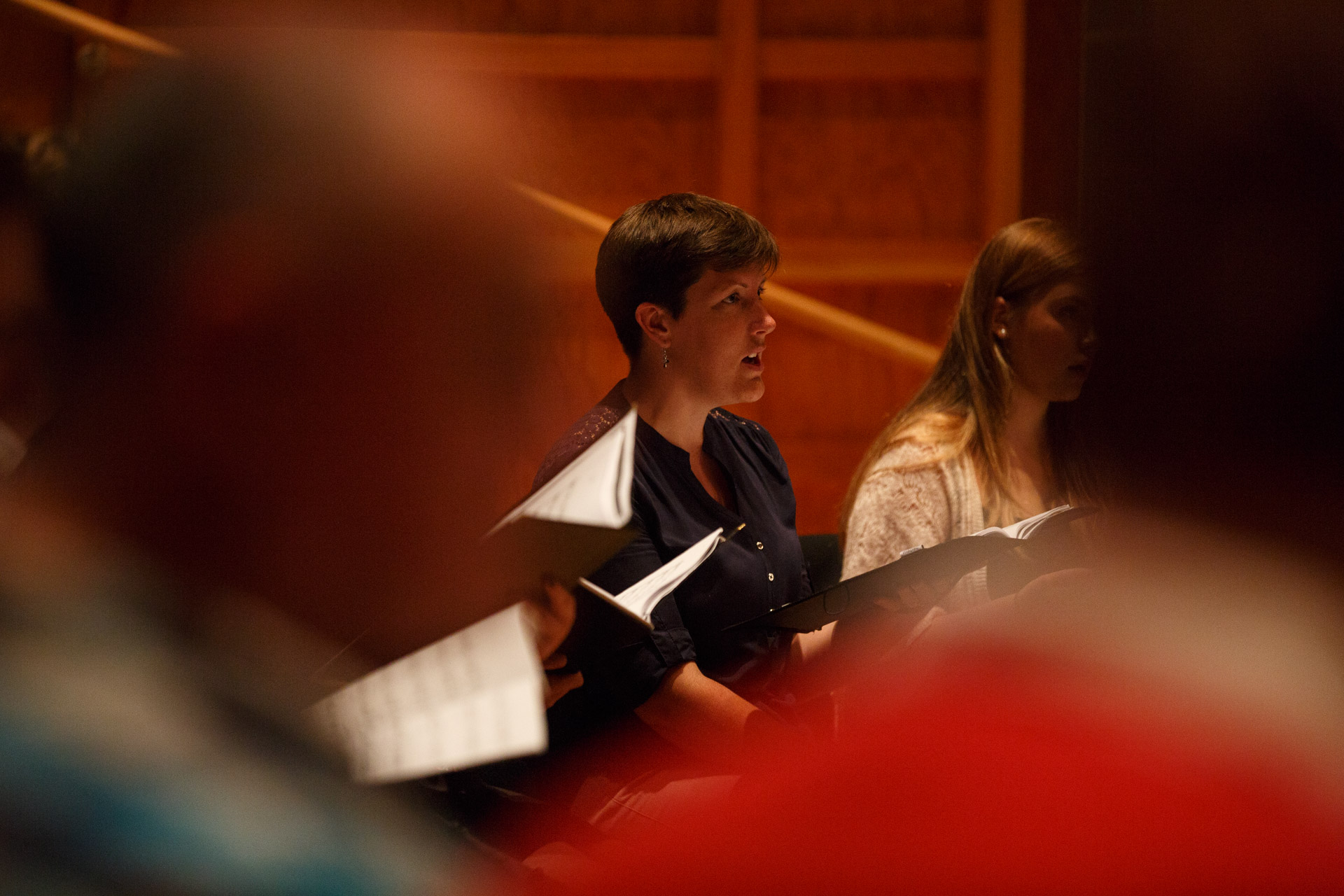
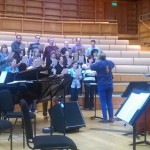
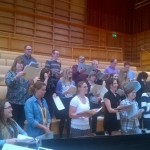
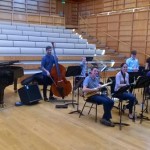
Chorus, Chamber Choir, and Concert and Big Bands were well represented, alongside smaller chamber ensembles including a woodwind trio, wind ensembles, and a cappella vocal quartet, each day meeting to rehearse but – more importantly! – to catch up over coffee, share memories and find out where Life After Kent had taken each other.
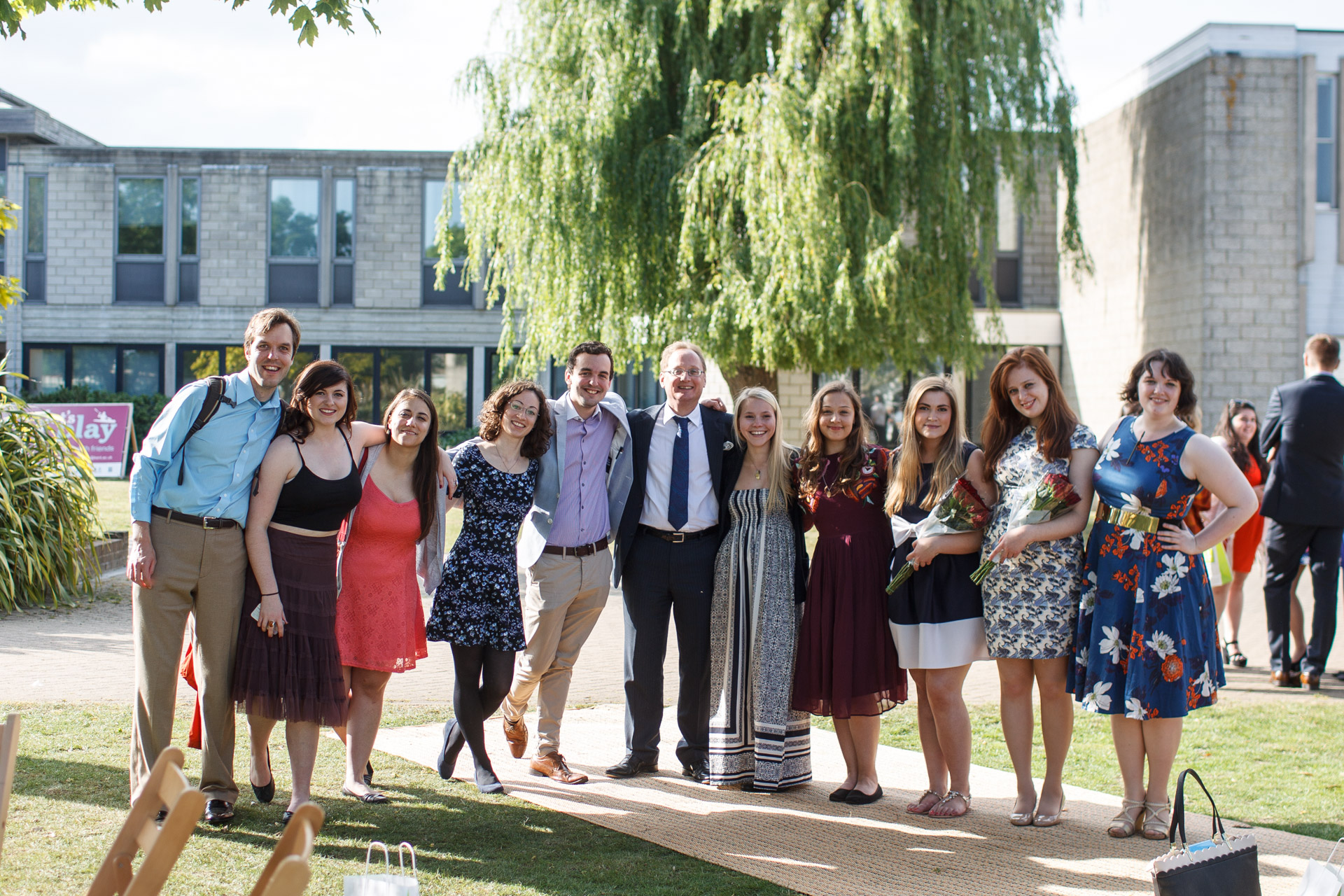
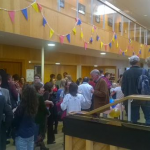
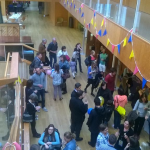
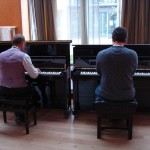
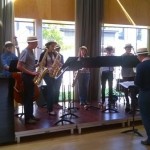
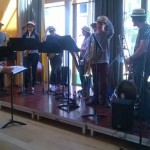
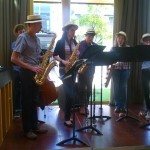
A showcase gave the opportunity for informal performances of repertoire put together over the course of the day; a drinks reception late on Saturday afternoon saw the foyer abuzz, and there was a lively air on the Sunday as an impromptu jazz gig on the foyer-stage from General Harding’s Tomfoolery brought the weekend to a festive conclusion. There was even some spontaneous two-piano jazz in the foyer to entertain visitors. We even managed to photograph some of the former Music Society Presidents from 1992 onwards (as well as the present incumbent, the irrepressible Joe Prescott), although as they weren’t all present on the same day, it took two group photos!
Music Society Presidents: Take One
Music Society Presidents: Group Two!
Faces of yesteryear
Scratch Big Band, led by Ian Swatman
Ian Swatman conducts the Scratch Concert Band
Sue Wanless conducts the scratch Chorus
General Harding’s Tomfoolery rehearsing
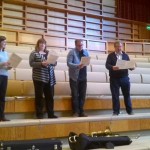
Scratch vocal quartet in Elgar
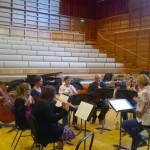
Sratch Wind Ensemble cond. Sue Wanless
General Harding’s Tomfoolery on the foyer-stage
Tomfoolery Rides Again!
Terrific to see many faces from yesteryear; there was a decisive will to make it an annual occasion – watch this space…!
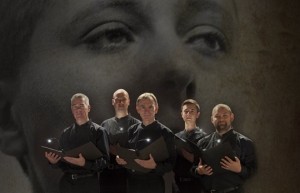
Colyer-Fergusson Hall will play host to the Orlando Consort in this year’s Canterbury Festival, in what promises to be an evocative and haunting event combining silent film with motets, plainsong and other vocal music from the medieval period.
‘Voices Appeared’ will see the acclaimed vocal consort perform a collection of music from the fifteenth century as a soundtrack to Carl Theodor Dreyer’s silent film, La Passione de Jean D’Arc, depicting the trial and execution of Joan of Arc, made in 1928 and initially banned in England. This short trailer provides a brief glimpse of the combination of music and film which looks to pack an emotional punch.
More details about the event here. ‘Voices Appeared’ comes to Colyer-Fergusson on Sunday 25 October at 7.30pm.
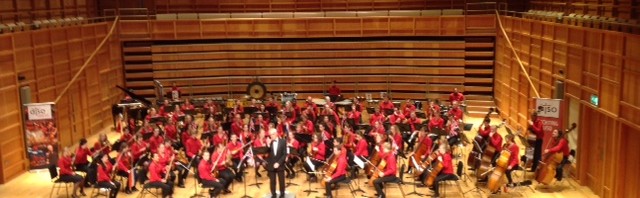
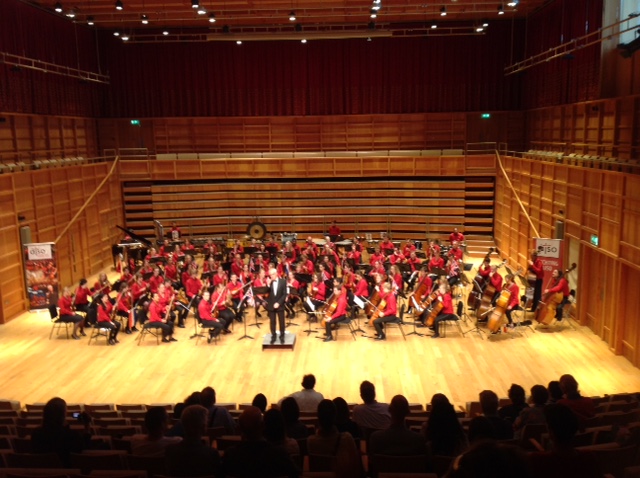
We were delighted to welcome the Almere Youth Symphony Orchestra to Colyer-Fergusson on Sunday.
Hailing from a city in the heart of the Netherlands, the age-range of the orchestral members is between 13 to 21. Under the baton of conductor Hans Welle, they demonstrated a high standard of playing, performing a range of music with the emphasis on English pieces – from music from James Bond through to a beautiful performance of Elgar’s ‘Nimrod’ and one of the fastest versions of the Pomp and Circumstance March I have ever heard!
It was a real pleasure to have them visit, and we hope they will come back again soon.
Images from some of the various events that took place from Sunday 7 to Saturday 13 June, as the Music department bid farewell to another year at the University of Kent. Photos from the Scholars’ Lunchtime Recital on Day Two; jazz on the foyer-stage on Day Three; the String Sinfonia on Day Four; the Chamber and Cecilian Choirs in rehearsal on Day 6; and the marquee reception on the final day.
Other photos from throughout the week on our Pinterest board here.
Summer Music Week came to a flourishing finale on Saturday, as the last two days of our week-long end-of-year celebration seemed to go in a flash.
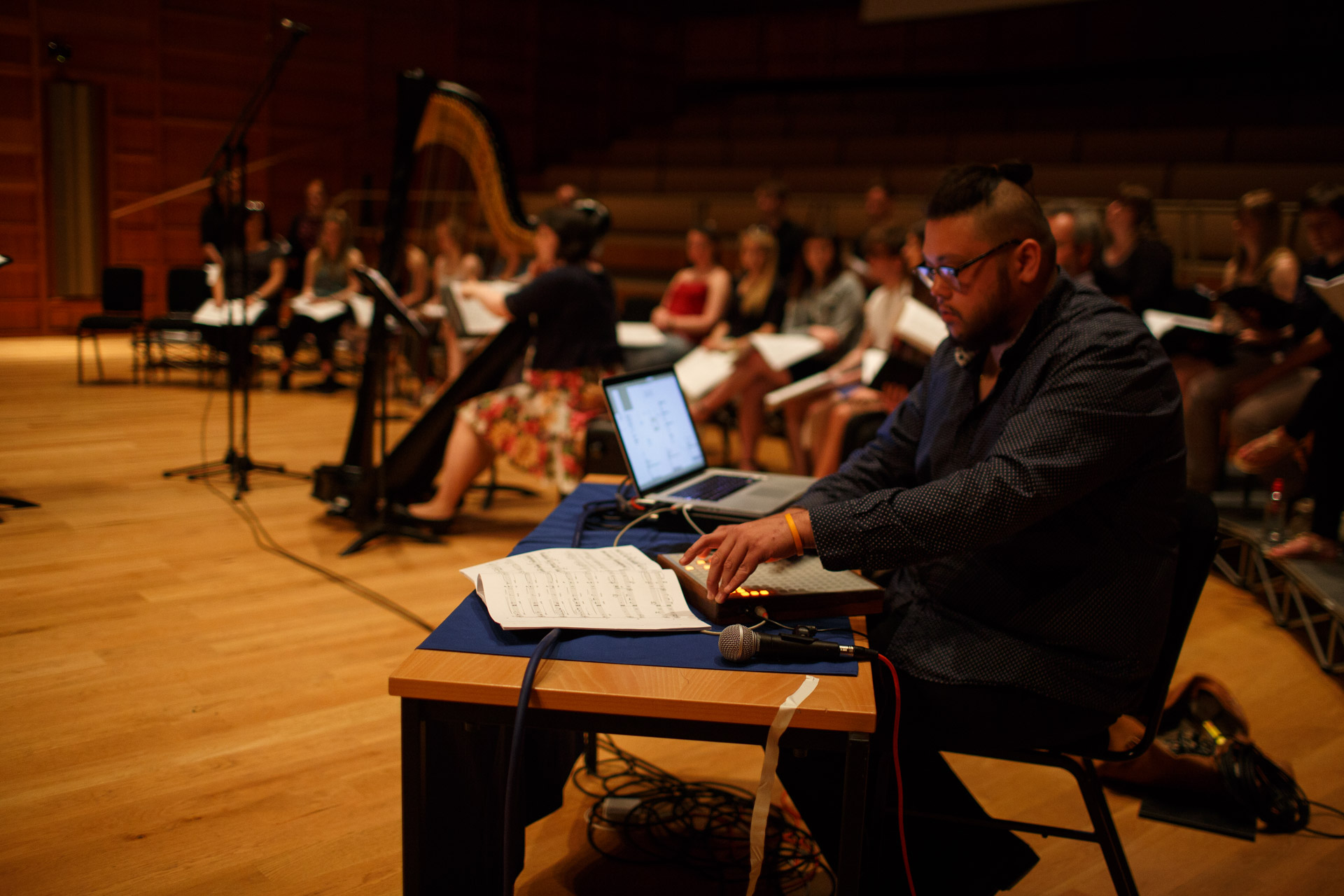
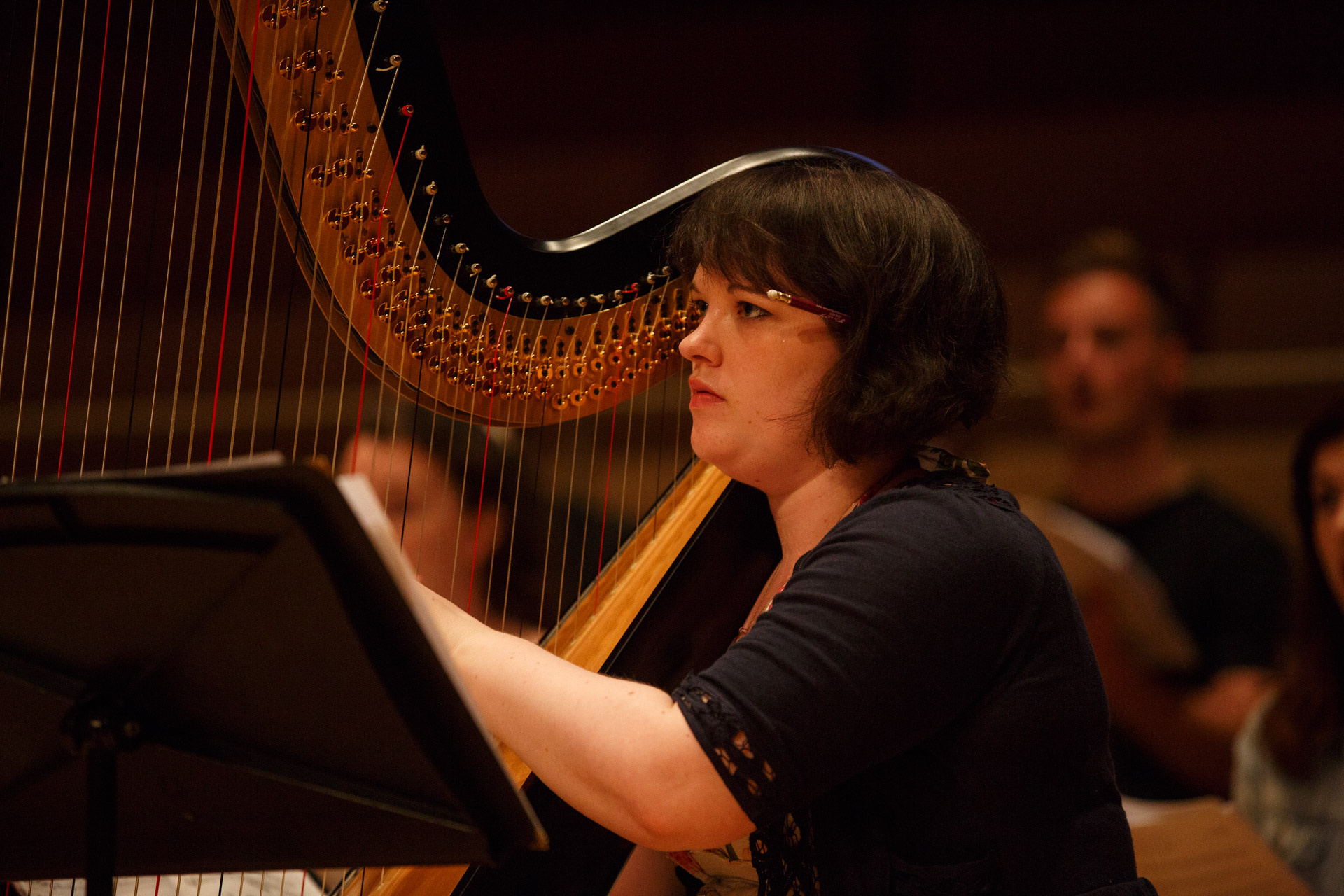
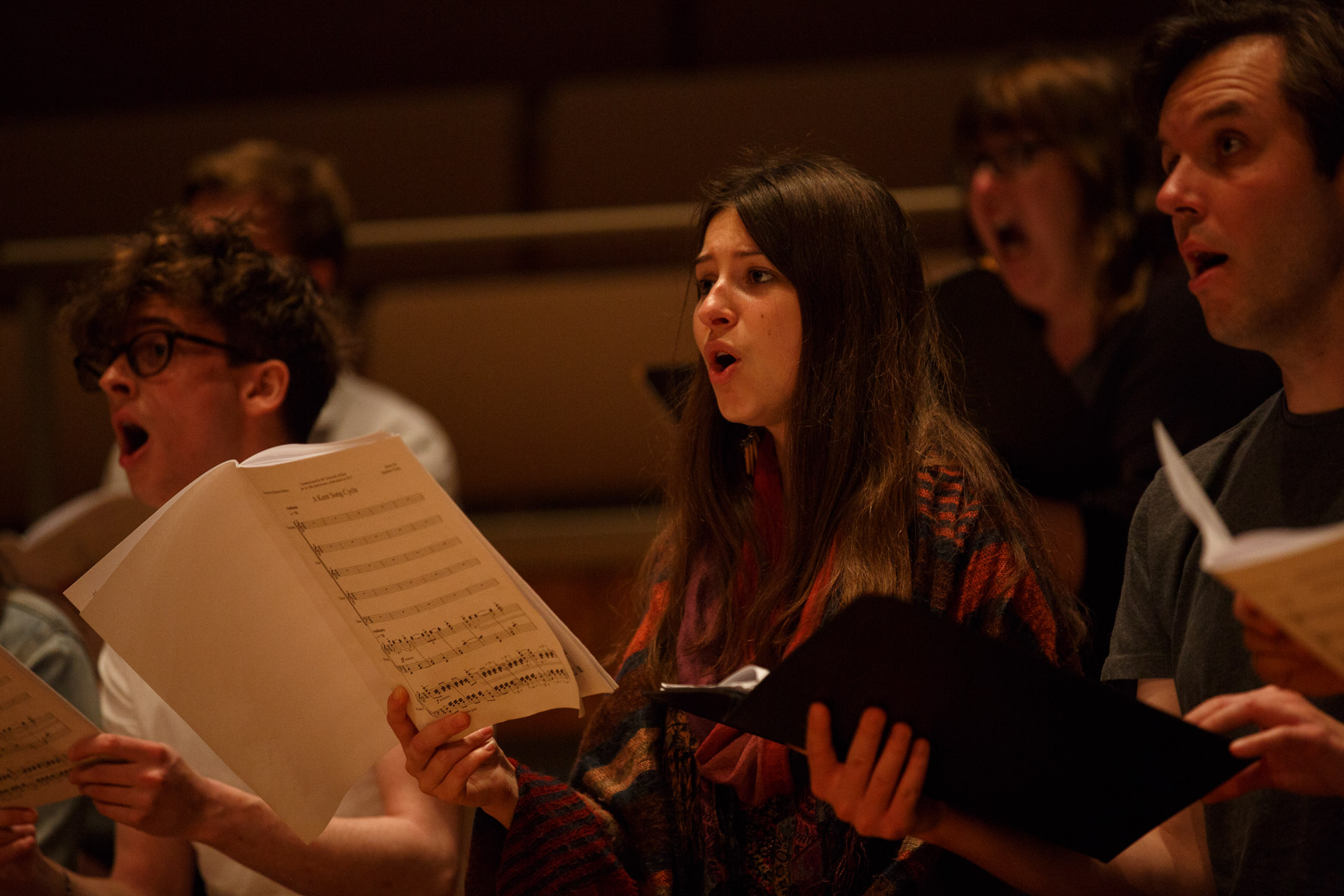
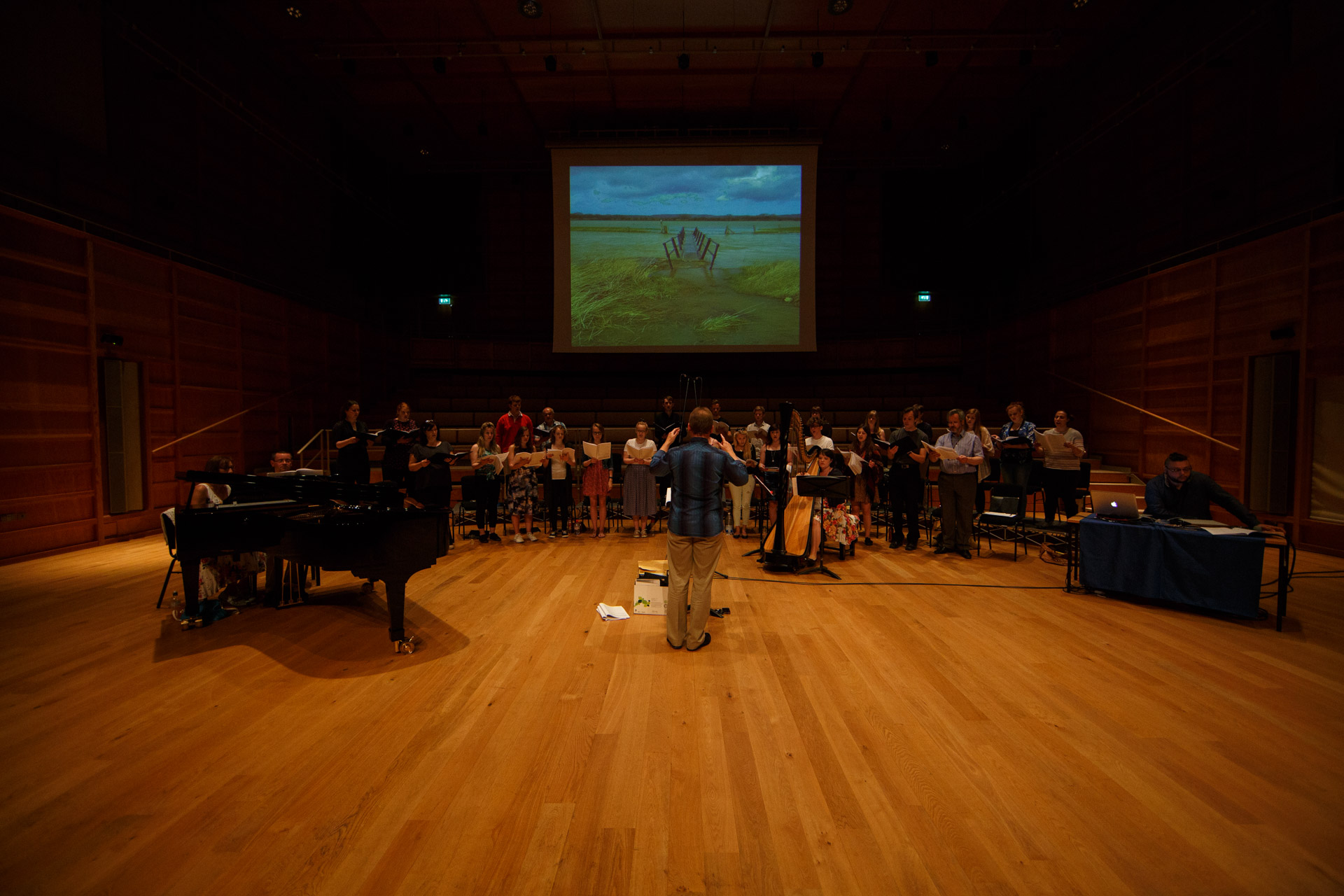
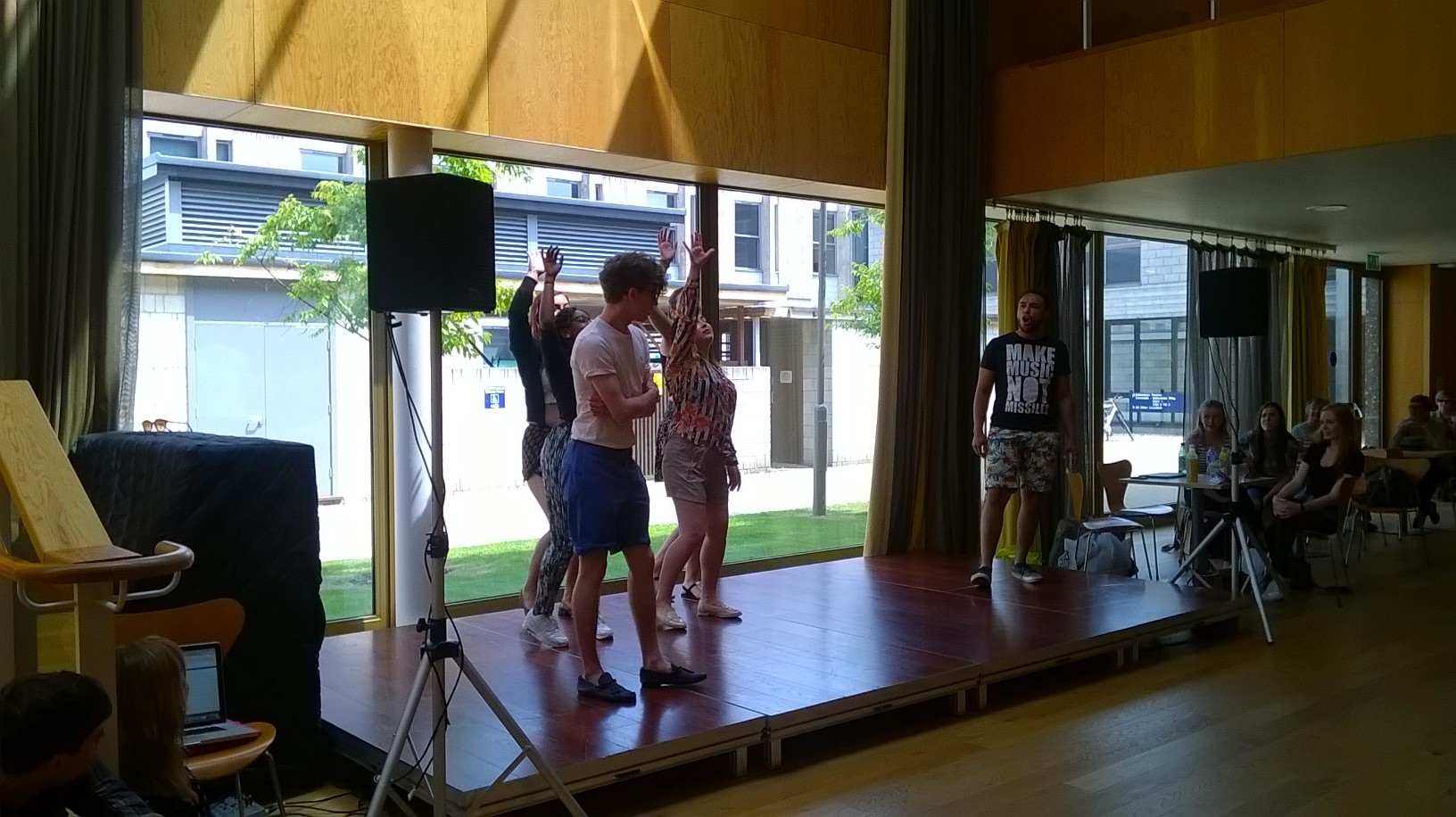
Friday afternoon saw the Music Theatre Society previewing their ‘Send in the Showtunes’ showcase on the foyer-stage at lunchtime, with some characterful renditions of parts of Little Shop of Horrors and Cabaret. The evening concert featured the Chamber and Cecilian Choirs in choral music from the Renaissance to the present-day – another opportunity to feature the new departmental harpsichord, in Monteverdi’s Beatus Vir – including the premiere of Ringing Changes by composer Matthew King, blending choral music with electronics.
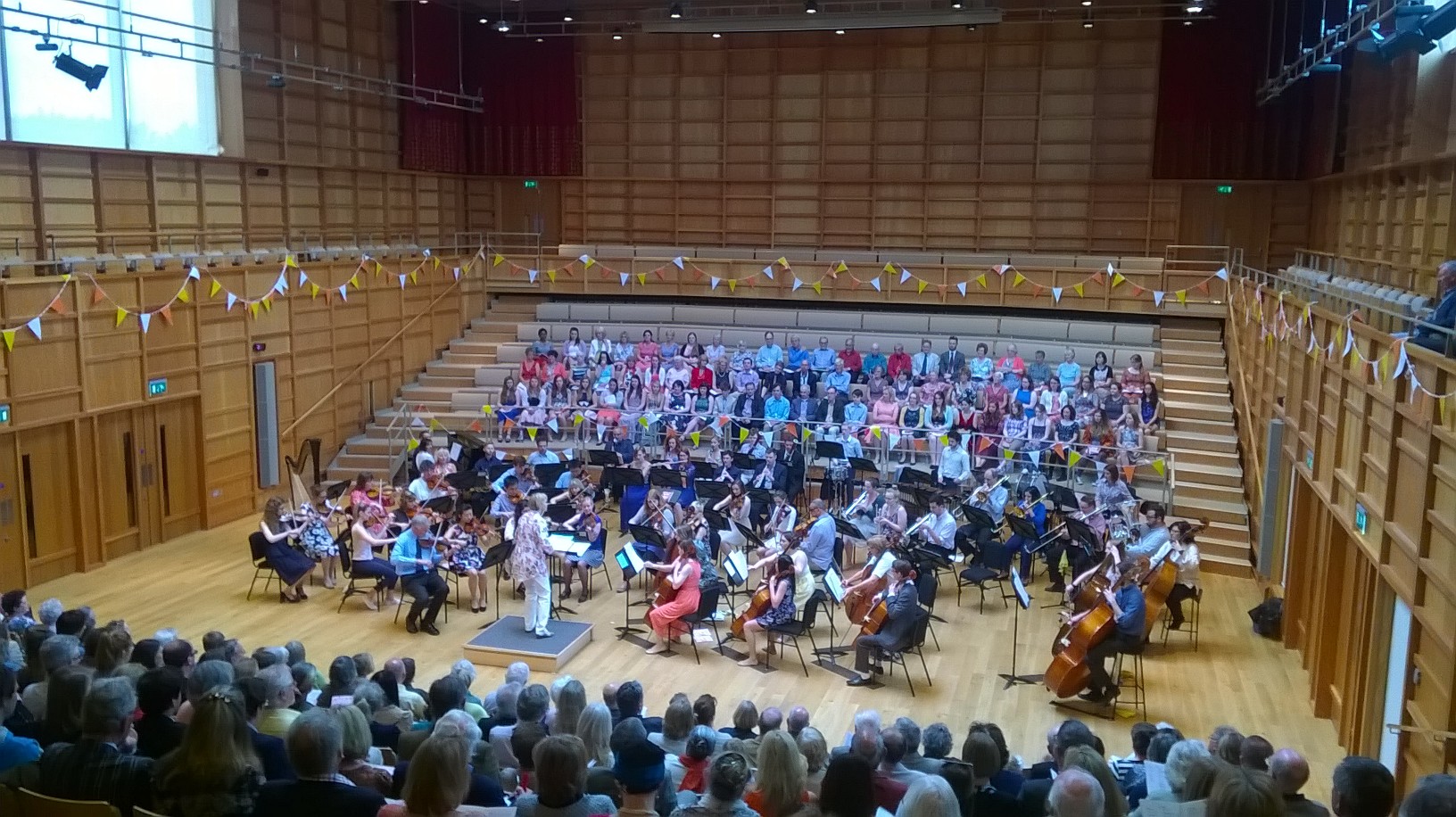
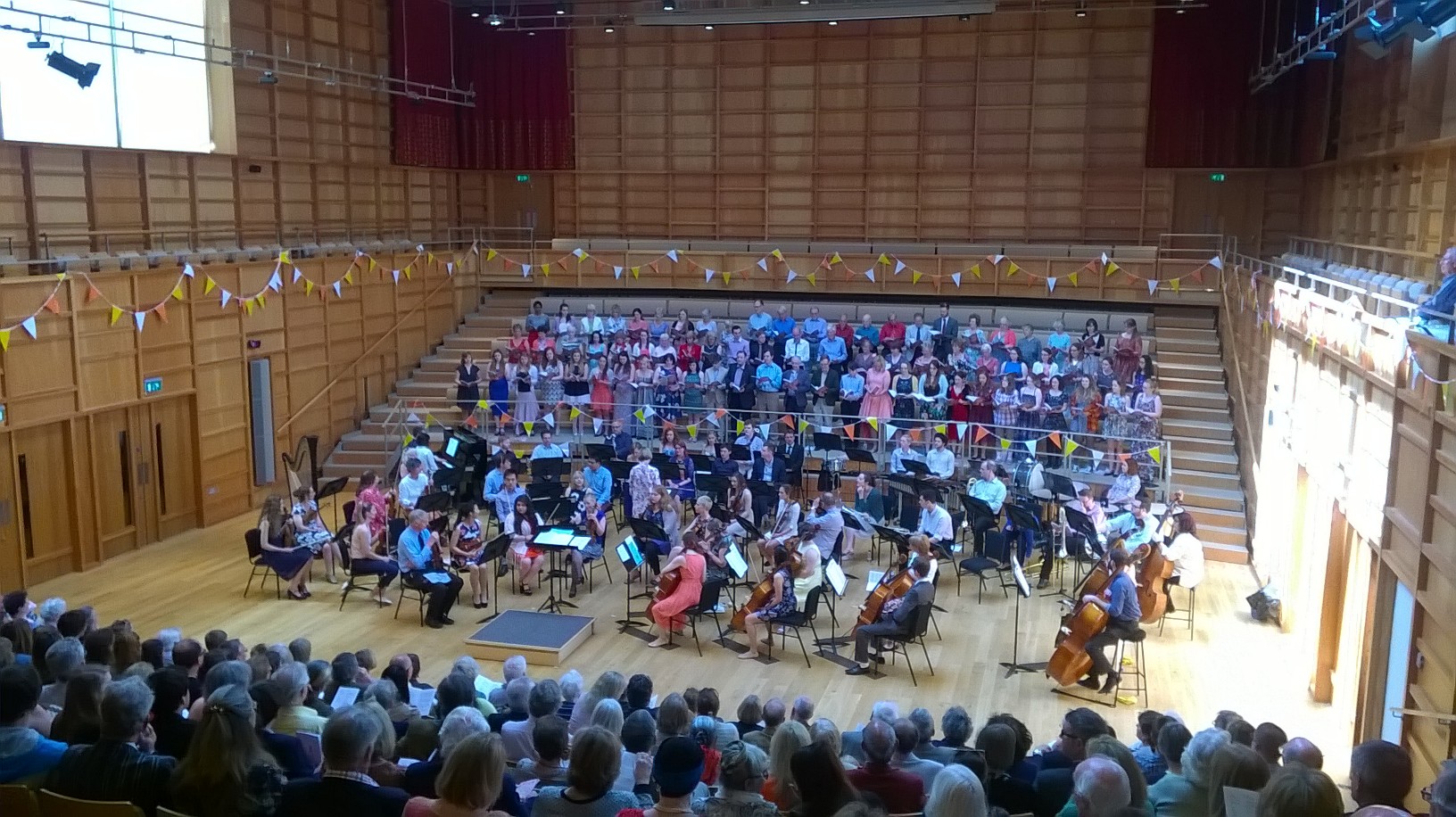
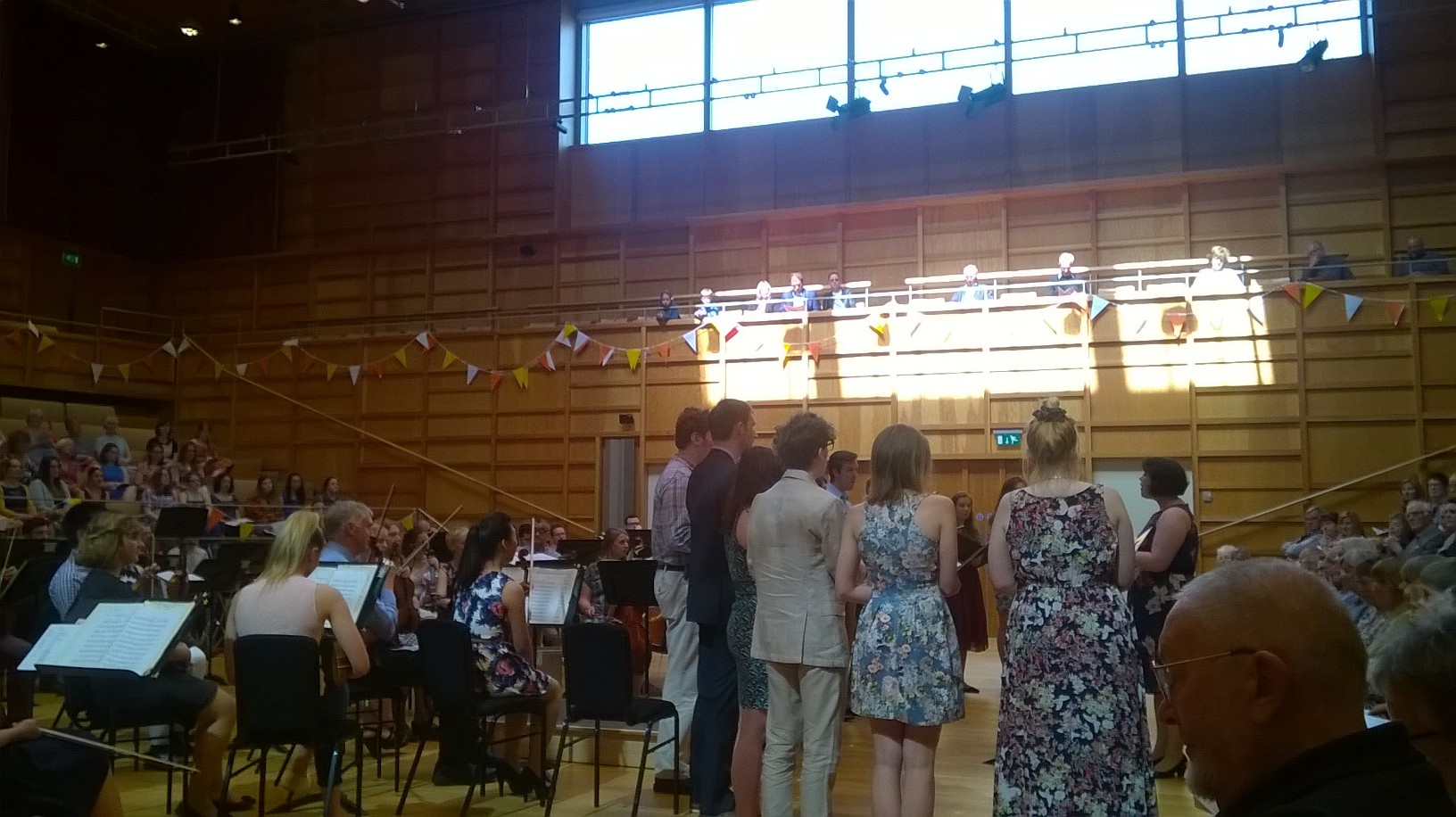
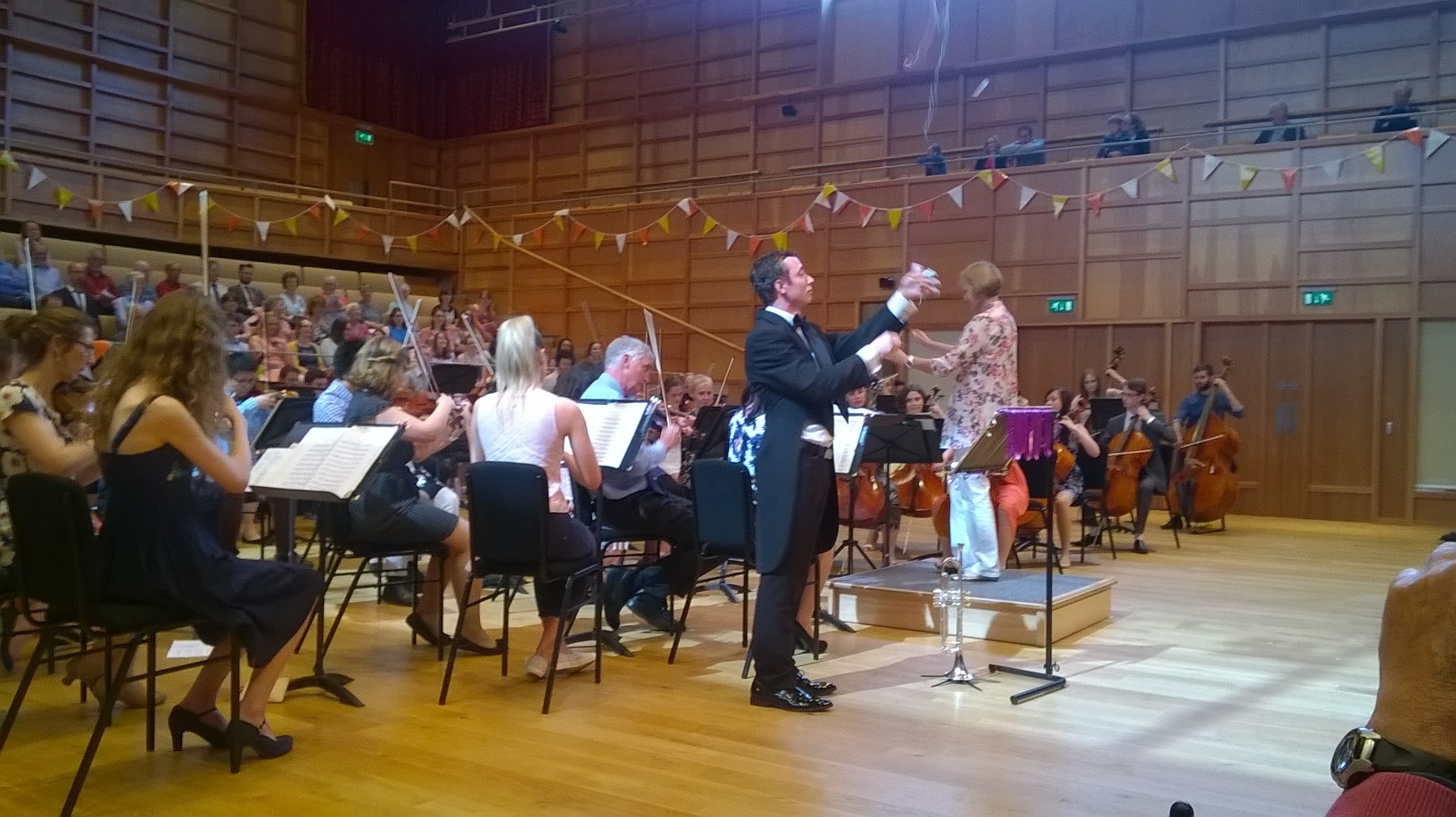
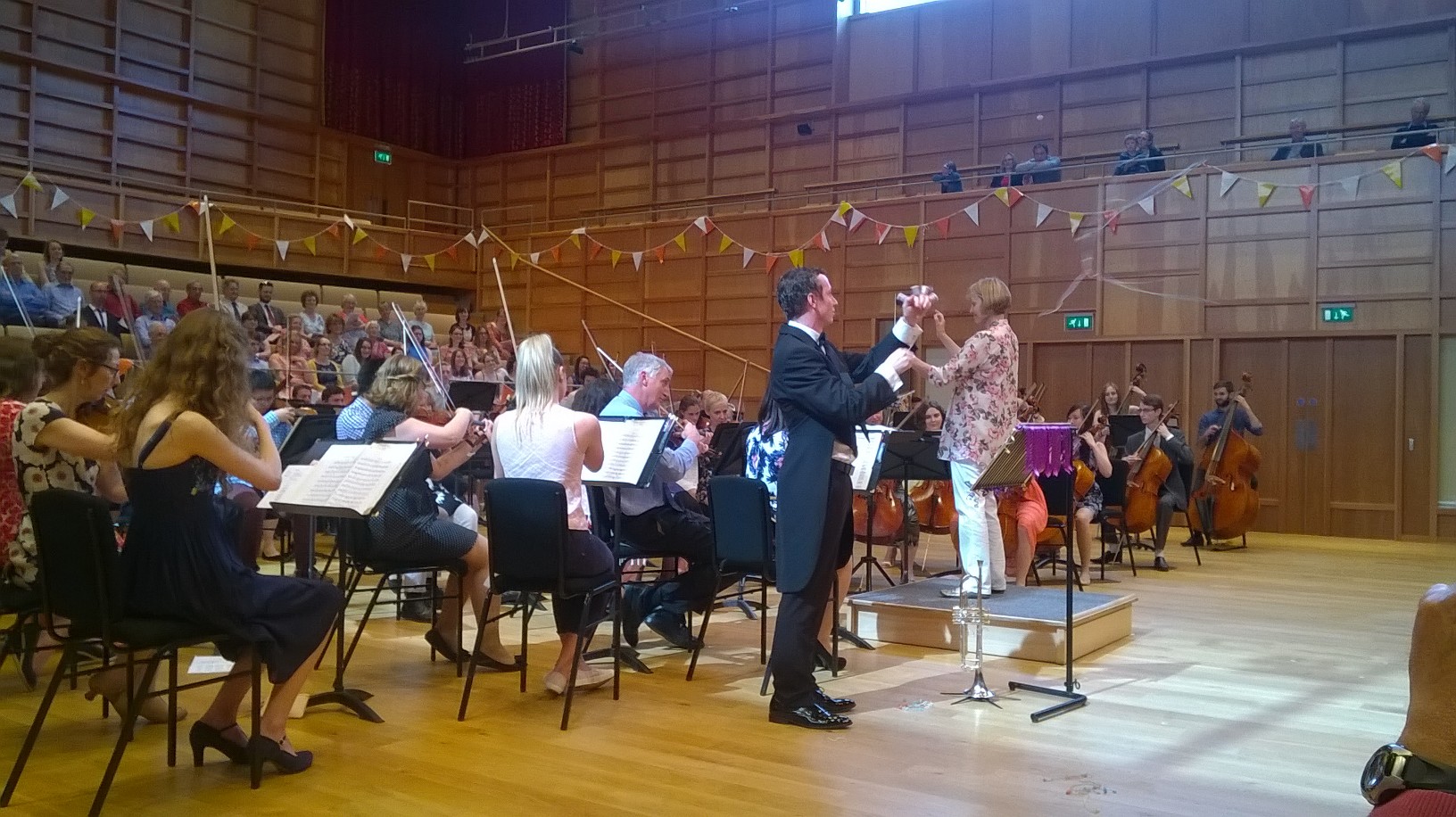
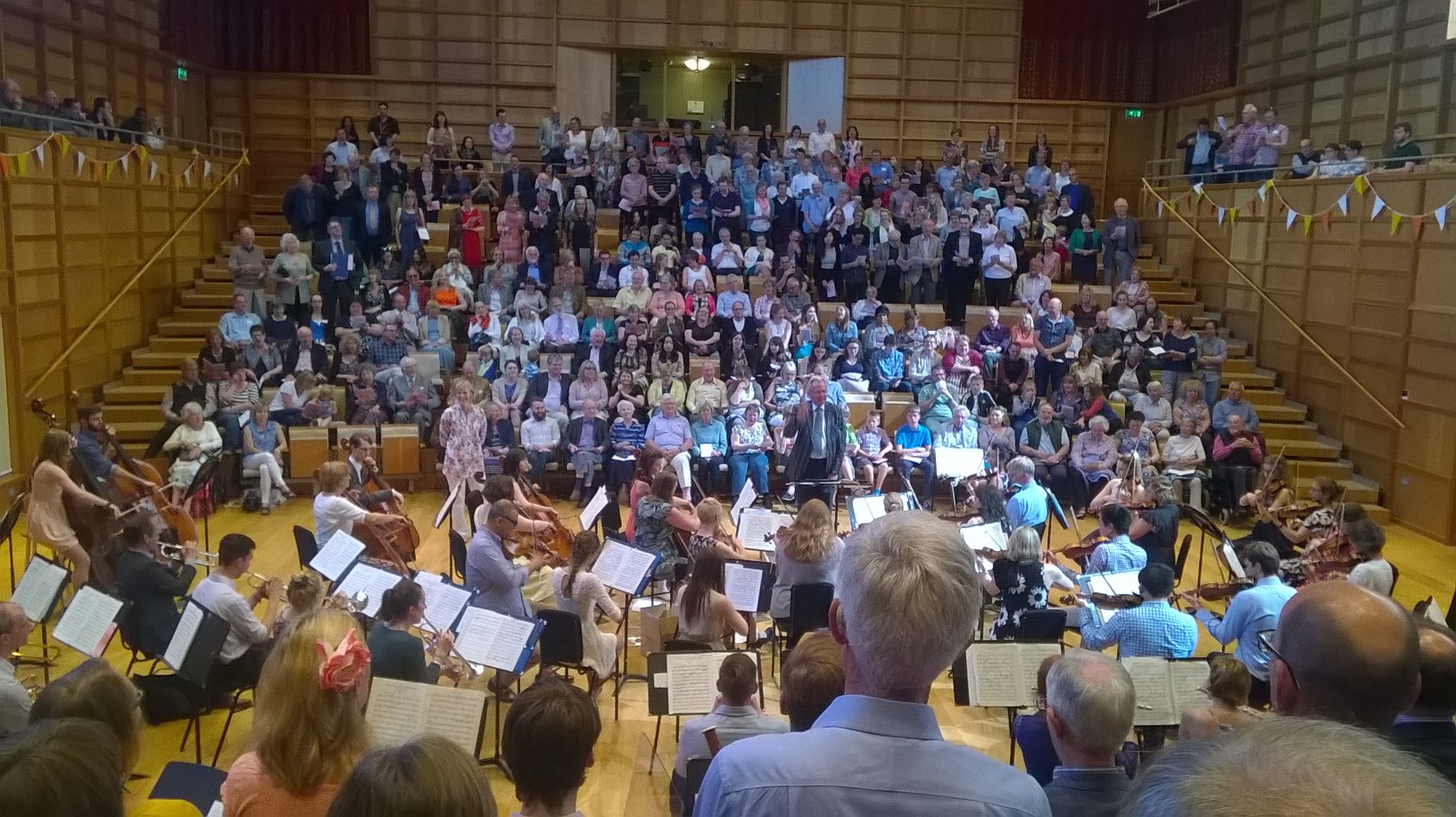
The foyer and concert-hall were in their decorative best on Saturday for Music for a Summer’s Day, the traditional finale featuring the Chorus, Orchestra and Chamber Choir bidding a final farewell to the musical year. There were tears, too, as final-year sopranos Kathryn Cox and Rowena Murrell stepped out from the Chorus’s bustling West Side Story medley to sing You’ll Never Walk Alone, and also as all those performing with the department for the final time stood for their applause. The Chamber Choir moved from the atmospheric landscape of Chydenius’ Autumn under final-year Emma Murton to lively pop and close-harmony jazz; Michael Sosinski handled his cork-popping solo in the Champagne Polka with regal dignity; and the concluding chorus of ‘Land of Hope and Glory’ was conducted with great aplomb by Pro Vice-Chancellor, Keith Mander, a terrific champion of music at the University, for whom this was the last concert.
The sunshine was also on hand as performers, parents and guests mingled on the Registry lawn for post-performance cream teas, and the opportunity to say goodbye.
In rehearsal for ‘Ringing Changes’ on Day Six
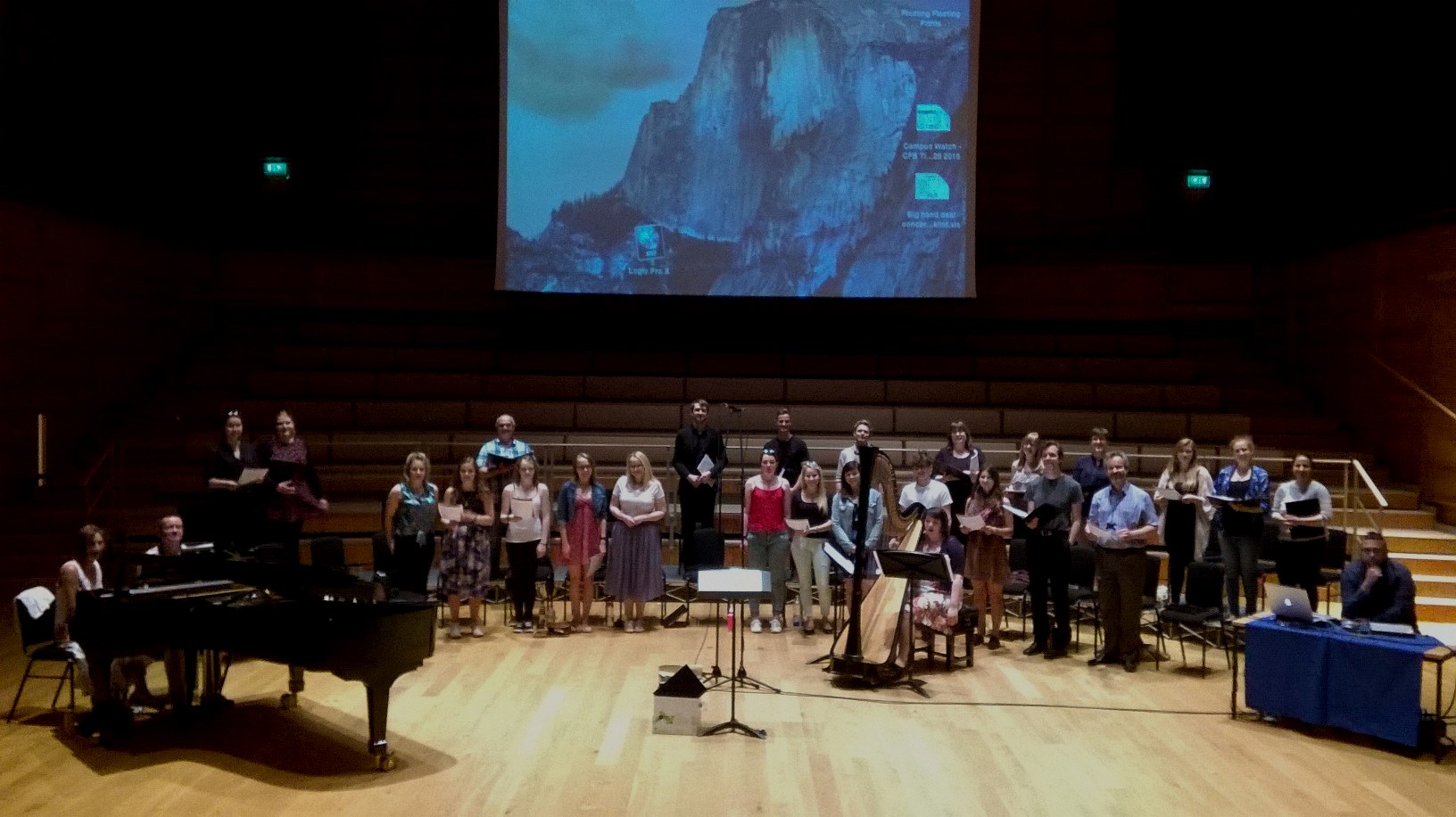
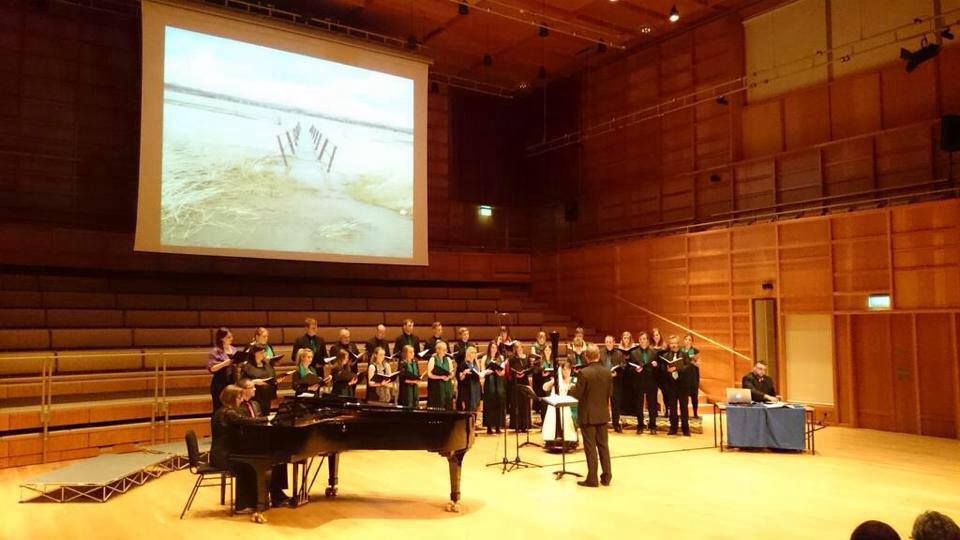
First performance of ‘Ringing Changes’ on Day Six
University Orchestra on Day Seven
University Chorus on Day Seven
Emma Murton conducts the Chamber Choir on Day Seven
Michael Sosinski as soloist in the ‘Champagne Polka’ on Day Seven
Michael Sosinski as soloist in the ‘Champagne Polka’ on Day Seven
Member of the Universty Orchestra back-stage on Day Seven
Keith Mander conducting ‘Land of Hope and Glory’ on Day Seven
You can see photos from throughout the week over on our Pinterest board. Formal photographs from the week will be appearing shortly; stay tuned…
As part of the Ringing Changes project commissioned by the Music Department for the University’s 50th anniversary celebrations – the premiere of which takes place on Friday12 June (read more here) – photographs by Phil Ward (Deputy Director of Research Services) are being exhibited in the new Colyer-Fergusson Gallery, to coincide with the performance. Several of Phil’s images will be projected above the stage during the concert, to which the text for the piece (by Patricia Debney from the School of Creative Writing) was written in response. I caught up with Phil, and asked about the inspiration for his photography, and the experience of collaborative working as part of the project.
How did your passion for photographing the landscape come about ?
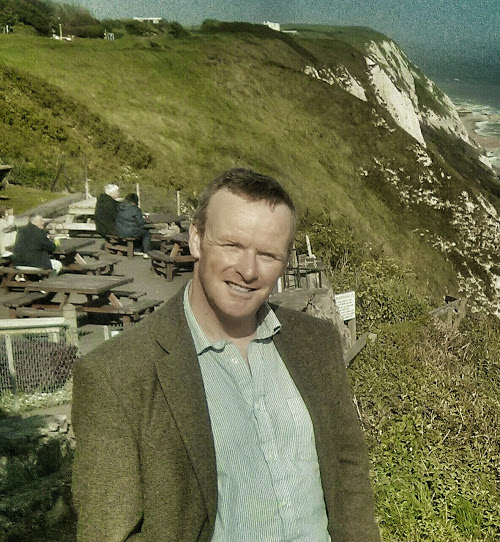
Phil Ward
When I was younger I used to take and develop my own black and white photographs. However, that fell by the wayside somewhat with moving houses, changing jobs, starting a family. Two things got me back in to it. The first was the technology. With modern smart phones the quality is so good that you essentially always have a decent camera with you. Sure, it’s not perfect, but it does mean that you don’t have to take a lot of equipment with you, so you’ll always be ready to capture that fleeting moment, the changing of the light, that sudden stillness. And the second was starting to cycling to work, and passing through such beautiful and ever changing landscapes. It was irresistible!
There must be something about the Kentish landscape in particular that attracts you; is there ? Are you a modern-day digital pilgrim ?!
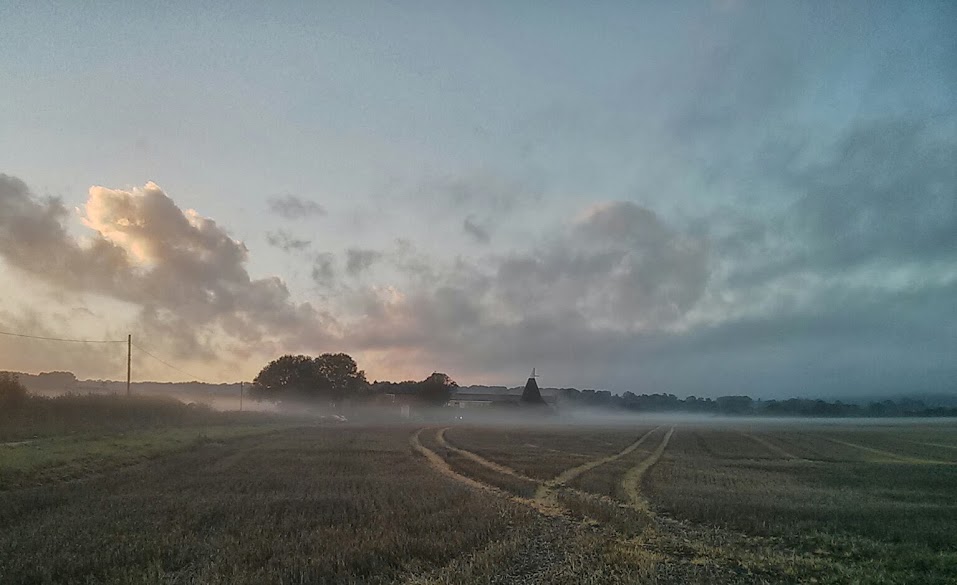
As I say, it came about when I started cycling between Wye and Canterbury to work. As part of the route follows the pilgrim trail, I guess I am a ‘modern day digital pilgrim’! We are incredibly spoilt in this part of the world, both for the myriad back roads and tracks that make cycling a joy, but also the beauty and variety of the countryside, from the bucolic, quintessentially English charm of the rolling Downs, to the flat wildness of Romney Marsh, the bleakness of Dungeness, or the dozens of varied beaches. But I also like the less picturesque, the things that others might find ugly, from corrugated iron barns, to greasy spoon cafes, to the detritus next to the Stour river.
Image: Phil Ward
Your images are used in the choral commission being performed on the 12 June; what’s it been like to collaborate with Matthew and Patricia ?
It’s been an immense honour and privilege, but it does make me feel like a fraud! For me, I had already produced the work; for them, they are having to create new pieces. I imagine being inspired and creative to order is incredibly difficult. I hope the photographs have helped them in this. Both of them have been very open to suggestion, and it has felt like an ongoing conversation as it has developed.
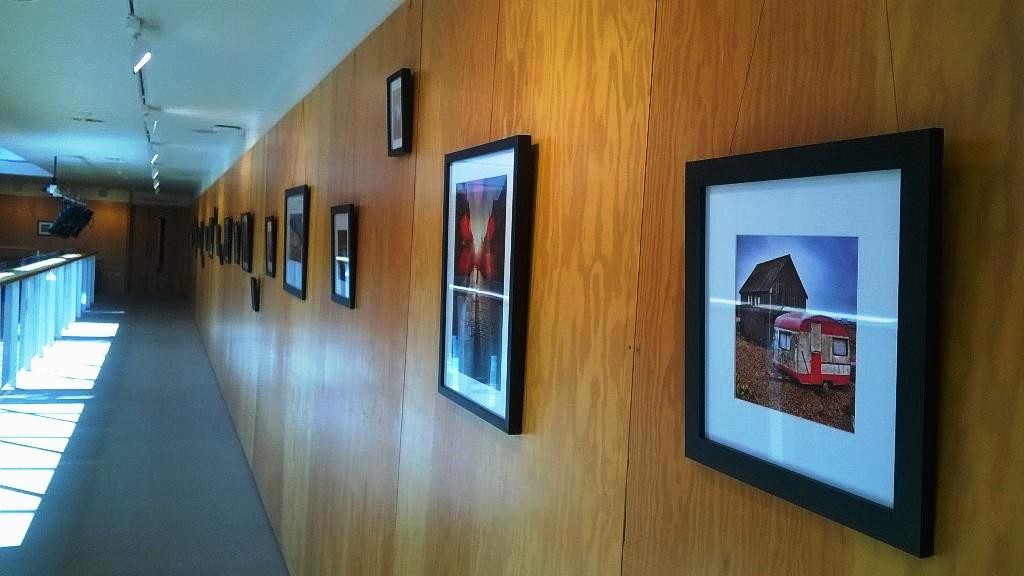
Phil’s images on display in the gallery
What can visitors to your exhibition expect ?
Given the number of images that I’ve got on my blog, it was challenging to cut them down to the selection I’m going to show. I wanted them to be somehow representative, but ultimately went with the ones that I liked best. There will be everything there, from a broken blackbird’s egg found on the Chartham cycle path, to winter mists and summer haze, from the stark beauty of Dungeness to the lush farmland of the Stour Valley. I hope they reflect my journey, my ‘digital pilgrimage’!
The exhibition of Phil’s photographs is now open at the Colyer-Fergusson Gallery, admission free, gallery open during normal working hours. Ringing Changes will be performed by the University Chamber and Cecilian Choirs on Friday 12 June as part of Summer Music Week: details here.
Because it does. Doesn't it ? Blogging about extra-curricular musical life at the University of Kent.


 After dinner we discussed the how to develop a repertoire to suit a community and the choral highlights that you might include.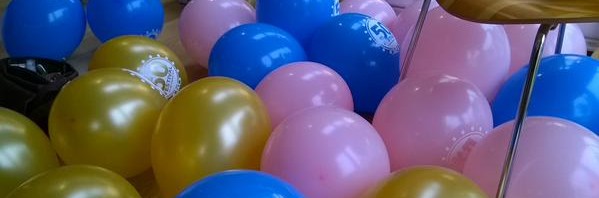
 Chorus, Chamber Choir, and Concert and Big Bands were well represented, alongside smaller chamber ensembles including a woodwind trio, wind ensembles, and a cappella vocal quartet, each day meeting to rehearse but – more importantly! – to catch up over coffee, share memories and find out where Life After Kent had taken each other.
 ‘Voices Appeared’ will see the acclaimed vocal consort perform a collection of music from the fifteenth century as a soundtrack to Carl Theodor Dreyer’s silent film, La Passione de Jean D’Arc, depicting the trial and execution of Joan of Arc, made in 1928 and initially banned in England. This short trailer provides a brief glimpse of the combination of music and film which looks to pack an emotional punch.
 It was a real pleasure to have them visit, and we hope they will come back again soon.