Category Archives: Uncategorized

ReCapture Graduate Research Photography Competition

You are invited you to attend the final showcase and awards ceremony of the ReCapture Graduate Research Photography competition, which is supported by the Graduate School Postgraduate Community Experience Award.

The event will take place on Monday 17th June in Pilkington Lecture Theatre (PK011) on the historic Medway campus. It is an excellent opportunity to learn more about the fantastic work undertaken at our University and to network with students, researchers and keen members of the public.

The event will begin with a morning exhibition, which will display the artwork of all finalists and will be open to anyone interested. This session will be followed by the awards ceremony at 14.00, which will include refreshments and will be ticketed event. If you wish to attend the awards ceremony, please complete the form available here. Please note that the number of tickets is limited, therefore ensure you book your place as soon as possible.

An e-voting page has been launched which enables you to view all images and vote online. Any votes received through this system will count towards the total public vote, and in turn, towards the final vote. Please feel free to share this link with your students and colleagues encouraging them to vote for the best!

https://www.surveymonkey.com/r/MDRK2MQ

If you have any questions please do not hesitate to get in touch with Vilius at vs261@kent.ac.uk.

Photo of James Newton

James Newton publishes on anarchist cinema

Dr James Newton, Lecturer in the Department of Media Studies, has new published a new book The Anarchist Cinema (Intellect Books, 2019).

This book examines the complex relationships that exist between anarchist theory and film. No longer hidden in obscure corners of cinematic culture, anarchy is a theme that has traversed arthouse, underground and popular film.

In the book, James explores the notion that cinema is an inherently subversive space, establishes criteria for deeming a film anarchic, and examines the place of underground and DIY filmmaking within the wider context of the category. He identifies subversive undercurrents in cinema and uses anarchist political theory as an interpretive framework to analyse filmmakers, genres, and the notion of cinema as an anarchic space.

For more details, please see the publisher’s page here.

Photo of James Newton

New podcast series: Newton Talks

Dr James Newton, Lecturer in the Department of Media Studies, has just launched a new podcast series, Newton Talks.

In the series, James discusses topics (mostly) related to cinema, television, and culture. His guests will be from the world of academia, as well as filmmakers and other artists, and each podcast will take the form of an unscripted discussion.

Two instalments have been released to launch the series. In the first episode James chats to Dr Nigel Mather about his upcoming book on British comedy drama since the turn of the century, and also discuss Stephen Merchant’s new film, Fighting with My Family (2019).

In the second episode, James talks with Dr Chris Deacy in the Department of Religious Studies about his research on religion and film – touching on cinema-going as a quasi-religious practice, redemption in film, and movies about Jesus such as Scorsese’s The Last Temptation of Christ (1988) and Gibson’s The Passion of the Christ (2004). Chris also discusses how films such as The Exorcist (1973) and Taxi Driver (1976) might tell us something about people’s engagement with religion or theology.

James has also contributed to a forthcoming edition of Chris’s Nostalgia podcast series (yet to be released).

To find out more, and to access the episodes, please see the page here.

Mechanical Engineering course launched by EDA

EDA launches Mechanical Engineering courses as part of STEM expansion

The University of Kent is proud to promote its undergraduate course in Mechanical Engineering  (available to apply for via the UCAS website), which marks a major development for the University as it broadens its offerings to students.

Two streams of Mechanical Engineering are offered: a three-year stream and a four-year stream that includes a year in industry. The course has been designed in response to the growing demand in the UK workforce for graduates with STEM skills such as robotics, driverless vehicles and renewable energy systems.

The course provides a solid grounding in statics and dynamics, properties of materials, fluid mechanics, thermodynamics, mechatronics, control, instrumentation, mathematics, electronics, and programming. Students also work on a variety of hands-on projects combining mechanical design and control systems, supervised by specialist academics.

There is a focus on employability and career development activities offered across all the engineering degree programmes at Kent, including industrial interaction and placement opportunities.

The course is part of a wider focus within the University to expand its STEM offerings, including the Kent and Medway Medical School and the Institute for Biotechnology and Molecular Medicine, as in line with the growing demand for STEM skills. It is open to applicants now, with the first cohort beginning their studies in September 2020.

Winners of the 2019 Graduate School prizes

In 2018 the Graduate School introduced a series of prizes to recognise the excellence of its postgraduate researchers and the outstanding work carried out by academic and administrative staff members in support of postgraduate research and education.

This year the Graduate School are delighted to announce the winners of the 2019 Graduate School Prizes. The winners are invited to celebrate their success during a BBQ and Awards Ceremony at the Kent Researchers’ Showcase on Thursday 30 May in Sibson.

Congratulations to all 2019 Graduate School Prize winners.

Winners of the Postgraduate Research Prize 

Ann Christine Kinzer –  PhD Candidate, School of European Culture and Languages

Chloe Johnson –  PhD Candidate, School of Biosciences

Katja May –  PhD Candidate, School of English

Winner of the Research Degree Supervisor Prize

Dr Edward Morgan-Jones – Senior Lecturer in Comparative Politics, School of Politics and International Relations

Winner of the School Director of Graduate Studies Prize

Dr Catherine Robinson –  Director of Graduate Studies, Kent Business School

Winners of the Postgraduate Administrator Prize

Angela Whiffen – Postgraduate Administrator, School of Arts

Claire Taylor – Centre Manager, Centre for American Studies and Centre for Medieval and Early Modern Studies

Winner of the Postgraduate Teacher Prize

Recep Onursal – PhD Candidate and Assistant Lecturer, School of International Relations and Politics

The Graduate School was delighted to receive such a high volume of exceptional nominations for this year’s Graduate School Prizes competition.

The Graduate School recognises the significant contribution made to the University of Kent by Postgraduate Researchers, Research Degree Supervisors, School Directors of Graduate Studies, Postgraduate Administrators and Postgraduate Teachers across the University. We would like to thank everyone for their excellent work in support of postgraduate education and research at Kent.

The EU Parliament elections are happening this Thursday 23 May

Where do I vote?

Most people vote in person. If you have applied to vote by post or by proxy head – find out more online.

You must vote at your local polling station (open 7am to 10pm on Thursday 23 May) – you will have received a poll card in the post which gives you the address of where this is.

Lost your poll card? Simply enter your postcode at www.vfyf.co.uk/wheredoivote

You do not need your poll card with you to vote.

What happens at the polling station?

When you arrive you will give your name and address to staff at the polling station.

If you’re in England, Wales or Scotland you don’t need anything with you.

If you’re in Northern Ireland you’ll need to also bring a photo ID – this could be your passport, driving license, Electoral Identity Card or certain kinds of Translink Smartpass.

You’ll be given a ballot paper with the people and parties you can vote for.

  1. Take your ballot paper into the polling booth
  2. Follow the instructions in the polling booth and on the top of your ballot paper to vote
  3. Put your paper in the ballot box on your way out

Who do I vote for?

It’s up to you! Find out who the parties and candidates are running in your region.

If you’re in England, Scotland or Wales you will get to vote for one party (who have put forward a list of candidates), or an individual candidate standing as an independent.

In Northern Ireland you will rank your candidates in order of preference – a system called ‘Single Transferable Vote’.

Your vote matters. Make sure to turn out on 23 May 2019.

Staff in Registry

Book onto a training course this summer

Learning and Organisational Development have a number of training opportunities open to staff in June and July. They include:

Crucial Conversations – Wednesday 5 June, 09.00-17.00 and Tuesday 18 June, 09.00-17.00 or Monday 9 July, 09.00-17.00 and Monday 22 July, 09.00-17.00. Two-day programme for academic and professional service leaders at Grades 9 and 10.

Working in an Environment of Change –  Wednesday 5 June, 14.00-16.00 or Friday 7 June, 10.00-12.00, Monday 10 June, 14.00-16.00, Thursday 13 June, 14.00-16.00, Monday 24 June, 10.00-12.00,  Wednesday 3 July, 14.00-16.00. Open to all staff members.

Mental Health Awareness – Monday 10 June, 10.00-13.30. For any member of staff who would like to increase their understanding of mental health awareness and managing personal resilience.

Leading and Managing through Change – Friday 14 June or Tuesday 25 June, 09.30-16.30. This session is open to leaders and managers (academic and professional services).

Supporting Staff Through Change – Monday 17 June, 10.00-12.00 or Thursday 27 June, 10.00-12.00. This session is open to all members of staff with managerial responsibilities.

Time Management – Tuesday 18 June , 09.30-16.30 or Friday 28 June, 09.30-16.30. This session is open to all members of staff.

Pre-retirement – Tuesday 25 June, 09.00-16.30. This session is open to all members of staff.

Mid-Career Session – Tuesday 25 June 13.30-16.00 or Monday 8 July, 09.00-11.30. This session is open to any member of staff who has an interest in planning their finances to achieve their personal and financial goals.

Developing Self and Others – Tuesday 25 June, 09.30-12.30 or Monday 15 July, 13.30-16.30. For Managers/Supervisors who are involved in undertaking appraisal (RPD) discussions with members of staff. The workshop is suitable for managers new to undertaking these discussions or for more experienced managers looking to refresh their knowledge and skills in this area.

Note Taking – Thursday 27 June 09.00-12.30. This session is open to all members of staff.

Recruitment and Selection Part 2 Full Programme – Friday 28 June, 09.30-16.30 or Thursday 18 July, 09.30-16.30. This programme of activities is designed to support Chairs of Panel and hiring managers.

Appraisal (RPD) – Wednesday 3 July 09.30-12.30. For any staff members who are interested in and preparing for their appraisal (RPD) discussion.

Central Staff Induction event – Tuesday 9 July. 10.00-13.30. If you are a new member of staff, as part of completion of your probation, you will need to attend a Central Staff Induction event.

Managing Performance – Thursday 11 July 2019, 09.30-12.30. This session is aimed at managers and supervisors.

Understanding Statistics in your Job – Monday 22 July, 10.00-16.00. This course is open to all members of staff.

Find out more about these and other workshops/courses and book your place now via Staff Connect.

Axel Destruction of Jersusalem

‘Jerusalem Destroyed’: Dr Axel Stähler speaks at University of Bern, Switzerland

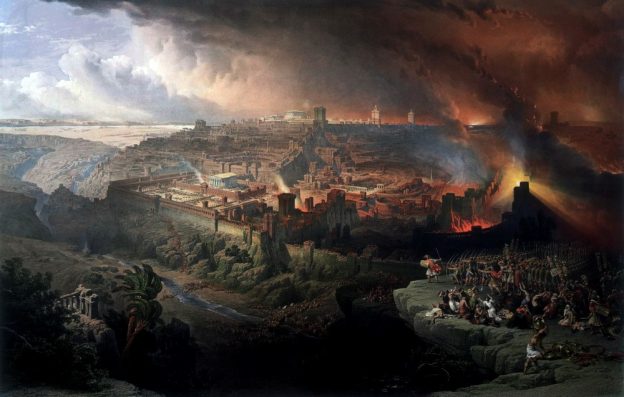
Dr Axel Stähler, Reader in the Department of Comparative Literature, who is currently working on a new Leverhulme Trust funded book project on ‘Jerusalem Destroyed: Literature, Art, and Music in Nineteenth-Century Europe’ gave a lecture entitled ‘Giving the Lie to those “Gloomy Depictions”: Nineteenth-century Jewish Reinterpretations of Josephus’ at the University of Bern in Switzerland. His lecture was scheduled in the context of the newly-established project ‘“Lege Iosephum!” Ways of Reading Josephus in the Latin Middle Ages’ (Swiss National Science Foundation) which supersedes the project ‘The Latin Flavius Josephus in its Christian and Jewish Reception’ at the Walter-Benjamin-Kolleg in Bern.

Ever since it was described in much ‘historical’ detail by the Jewish historian Flavius Josephus, the destruction of Jerusalem and the Second Temple in 70 CE has been considered a pivotal event which initiated with the loss of the Promised Land and the religious centre of Judaism the Jewish diaspora and cemented Christian supersession. The Jews, thus the Christian master narrative, suffered a divine punishment for their rejection of Christ. In his paper, Axel explored the attempts of a writer and a historian of Jewish heritage to challenge and re-write this narrative in mid-nineteenth-century Germany.

Julius Kossarski’s Titus; Or, The Destruction of Jerusalem (1855) was the very first publication of the Institute for the Promotion of Israelite Literature (1855–73), a venture that was of crucial significance to the creation of a Jewish reading public in the German-speaking lands. Within its first year the Institute published also the third volume of Heinrich Graetz’s influential History of the Jews (1856) which covers the period from the Maccabees to the destruction of Jerusalem and thus offers a scholarly complement to Kossarski’s dramatic poem.

In his talk, Axel proposed a comparative reading of both texts in relation to the emerging modern Jewish historiography in nineteenth-century Germany and to conceptions of a Jewish mission among the nations. More specifically, he offered an analysis of the narrative strategies employed in the dramatic poem and the historiographic text to undermine the authority of Josephus in order to validate Jewish existence and particularity in the contemporary present with reference to what has been called ethical monotheism.


A Level student wins translation competition

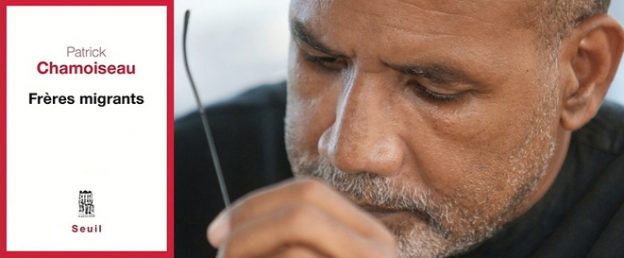
The French translation competition for A level students, organised by Dr Sara-Louise Cooper, has been won by Shifa Mahomed Teeluck. Shifa won £50 and the two runners up won £10 each. For this competition, entrants were tasked with translating a short passage by contemporary author Patrick Chamoiseau . After the competition, local entrants will be invited to a translation workshop at the University of Kent to discuss the passage and learn more about the author.

The winning translation is featured below:

‘Pain has no borders!
No pain remains an orphan!
No suffering inflicted on the living has a limit to it.
The victim is within us and the persecutor too. Threats make alliances and affect us together. Each one of us is a target without shelter. A front line and a transmitting antenna. Inaction gives the slightest indecency a terrible impetus. A child who dies in the Mediterranean recaps the ignominies tolerated for thousands of years by the human conscience and accuses us too. And those who have let him die, claim our name and put us at their bedside as if we were complicit. The slave trade prospered at a level of consciousness fed by the Enlightenment. Our current level of consciousness, which is that – phenomenal – of a connected consciousness, becomes infected by the slightest cowardice, but it welcomes with as much force and speed a simple refusal, a little bit of indignation, a rage, a smile, a coffee… the slightest radiance where vital integrity is protected, and sustained, like an ultimate torch, human dignity.’

Sara said of the event: “There were over forty entries to the competition and the standard was very high.”