The art of books

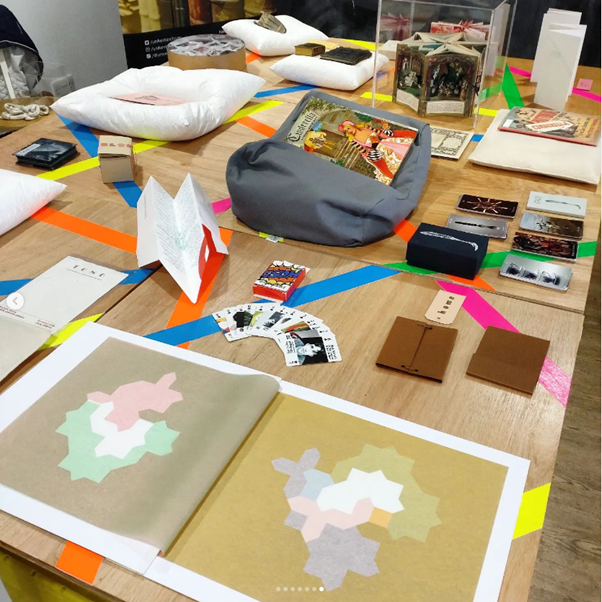
Display of artist books and other materials from Special Collections and Archives.

The art of the book (diverse examples from Special Collections and Archives).

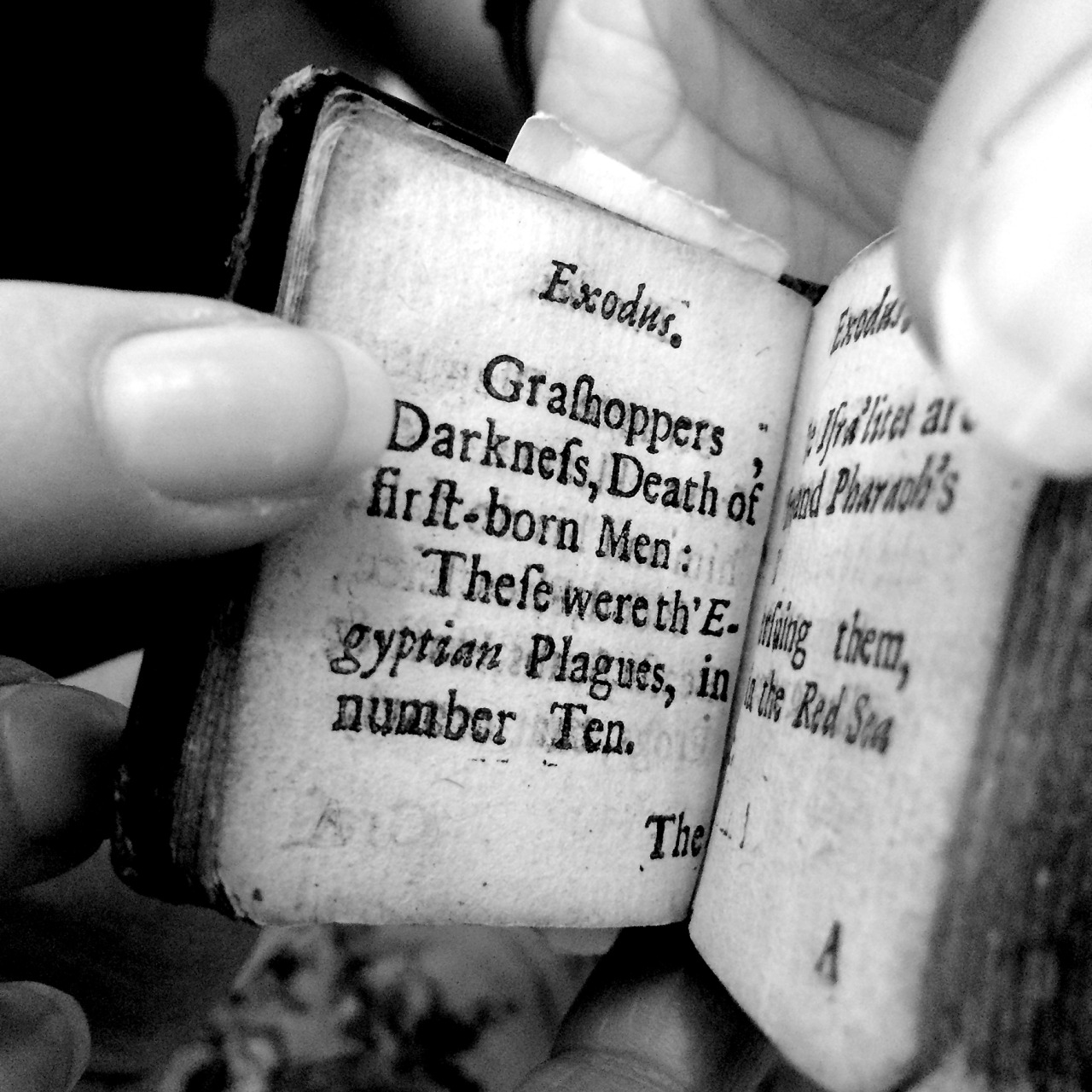
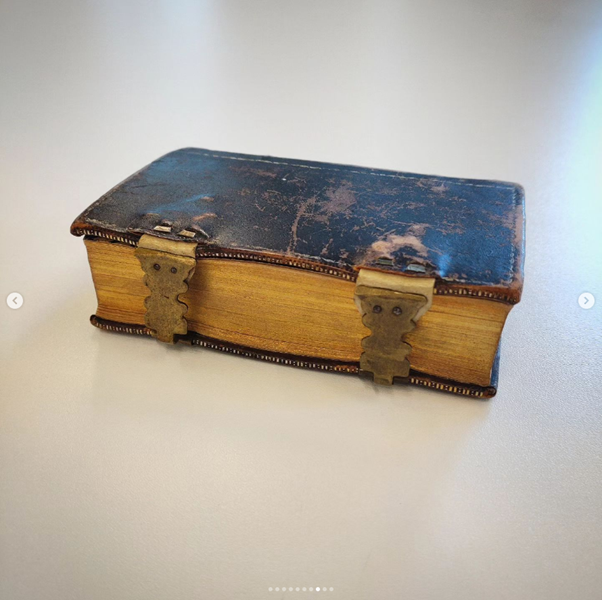
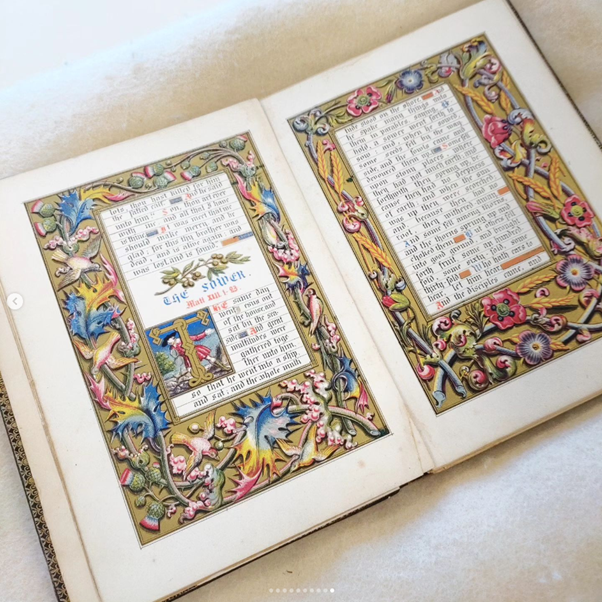
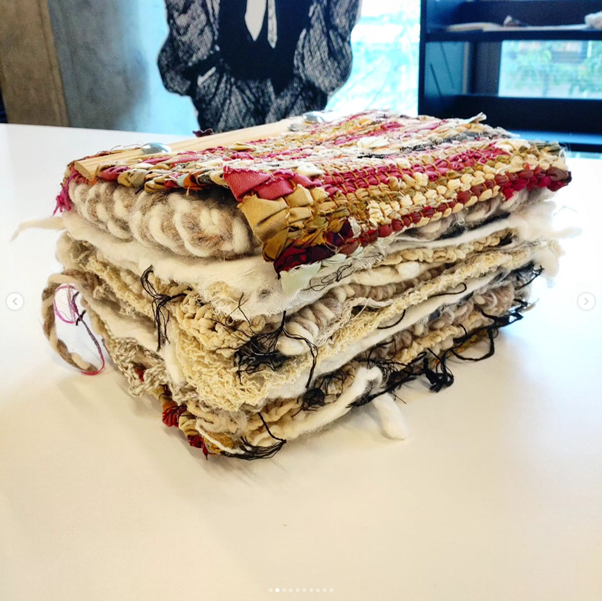
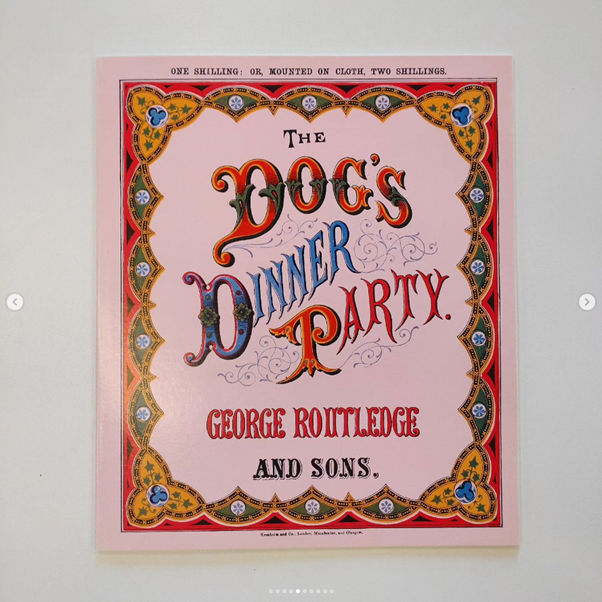
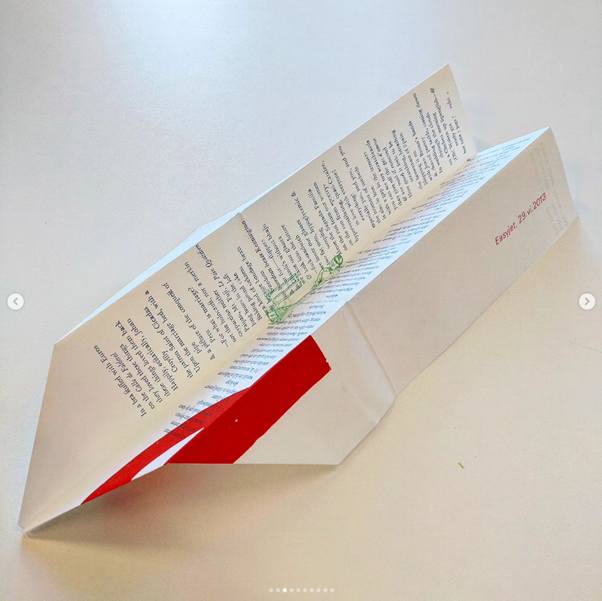
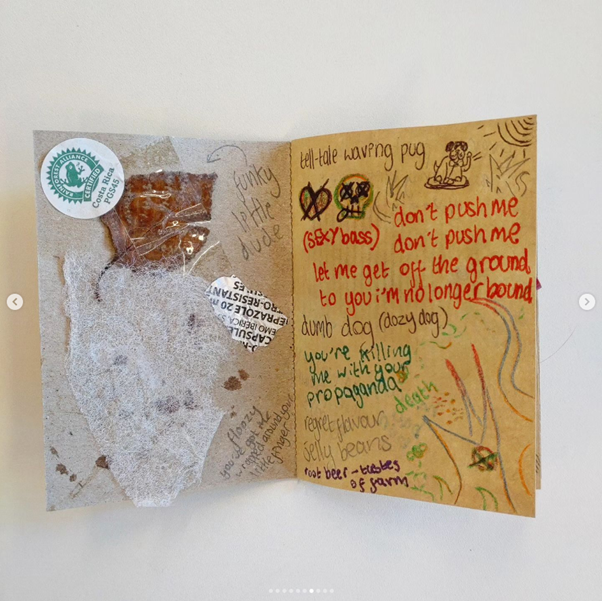
For the book lover, the book is often comfort, adventure, escape, and home-coming all at once. There can be nothing as delicious as settling into a cosy armchair with a steaming mug of tea and lifting the book into one’s lap, opening the cover and absorbing oneself and one’s senses in turning, gazing, reading the pages and the words thereon. We would all likely recognise a book, we have grown up browsing the shelves in libraries and book shops, judging covers, considering blurbs, selecting the next read to suit our interests. Typically, we recognise a book as being a text-block of multiple pages, bound together, and protected by covers and sometimes dust-jackets. We know books can come in a variety of different shapes and sizes, and have different features such as illustrations, pull-outs, glossaries, or perhaps ribbons to serve as bookmarks. But it’s not often we realise the art of the book, the book as a work of art. Last week we visited Discovery Planet, Ramsgate, with Stella Bolaki from the School of English and Tina Lyons, a book artist, to explore this with our Prescriptions: Artist Books Collection and complementary items from the rest of Special Collections & Archives.

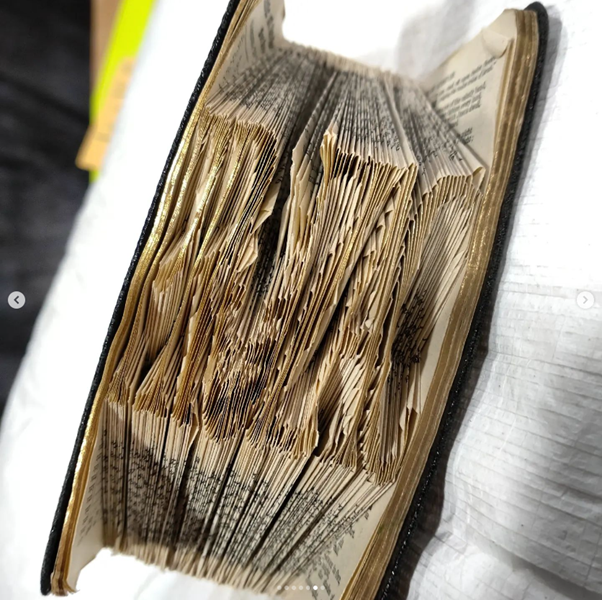
Image of The book of common prayer, the text-block folded to reveal the word 'Prozac'.

Sophia Adams, The book of common prayer (2016)

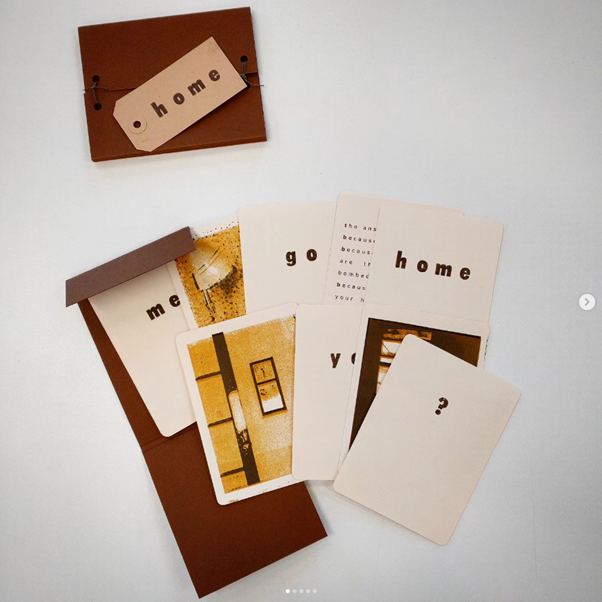
Image of Home, showing loose leaves of book in a random arrangement, revealing words 'me', 'go', home', 'you'.

Gemma Lacey, Home (2012)

Over the course of two workshops with a local Home Education Group and year 9s from The Royal Harbour Academy, as well as a free drop-in day for the public, we both engaged children and young people with questions of what makes a book, and helped them make one for themselves. It is always gratifying to find collections come to life in new conversations, and I was astounded by the intelligence and creativity with which these groups approached book forms never seen before. Sophie Adams’ Book of common prayer prompted conversations about the origins of print and the prevalence of religious literature during those early years when the technology was in its infancy, from the Gutenberg to the King James’ Bible. Besides that, it also showed how texts could be repurposed to have alternative meanings and highlighted how simple folds could change a book into something more sculptural and three-dimensional. Gemma Lacey’s Home fascinated people with its loose leaf format, for what happens to narrative linearity when a book is unbound?

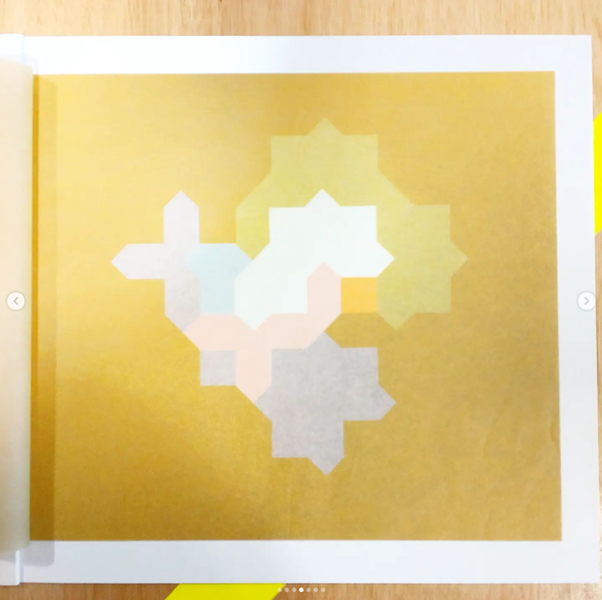
Page from Arabesque 3, showing abstract shapes on fine tissue paper.

Randi Annie Strand, Arabesque 3 (2014)

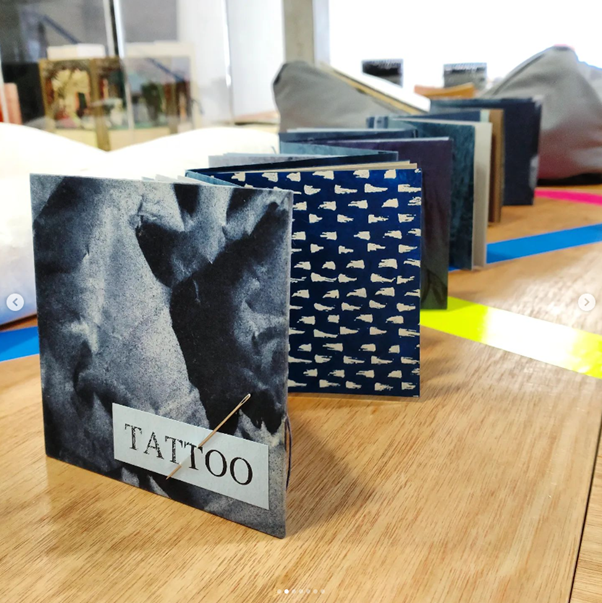
One highlight for me was simply having time to sit with and interpret two of my favourites from the collection for myself: Randi Annie Strand’s Arabesque 3 and Martha Hall’s Tattoo. Having recently visited an exhibition of Arabic and Islamic art in the Re-Orientations exhibition at the Kunsthaus Zürich, Switzerland, I was immediately drawn to Strand’s geometric patterns that alternate as one turns the fine tissue pages of Arabesque 3, and the encounter offers a tangible metaphor of how one would treat a patient: with care, patience, delicacy. Martha Hall’s concertina Tattoo features inserted stitched booklets that narrate the artist’s own revised perceptions of tattoos, from something signally naval occupation or corroborating stereotypes of hyper-masculinity to something that is necessitated by certain medical treatments, such as radiation for cancer, and even evocative of inner female strength, as sported by women over mastectomies.

Image showing the concertina length of Tattoo, with needle inserted into front cover.

Martha Hall, Tattoo (2001)

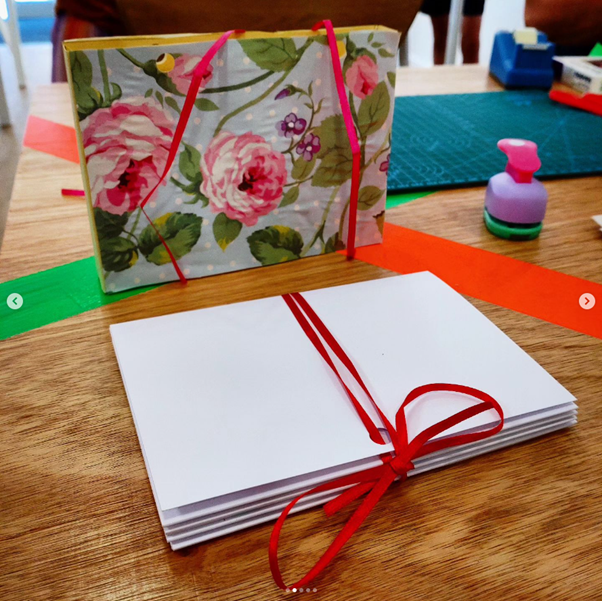
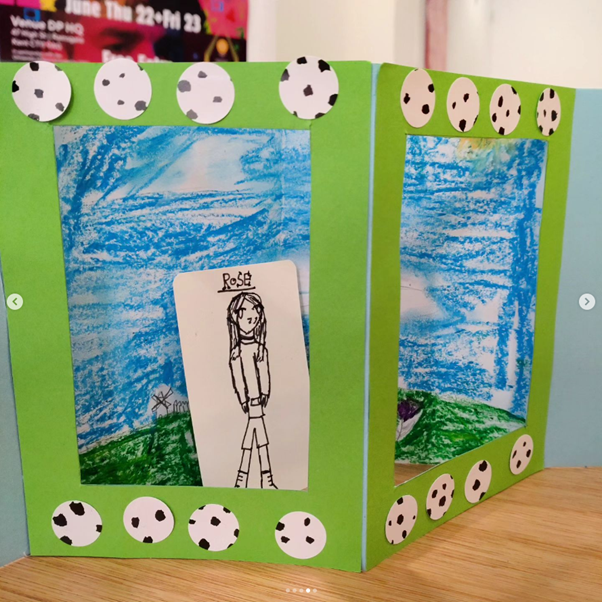
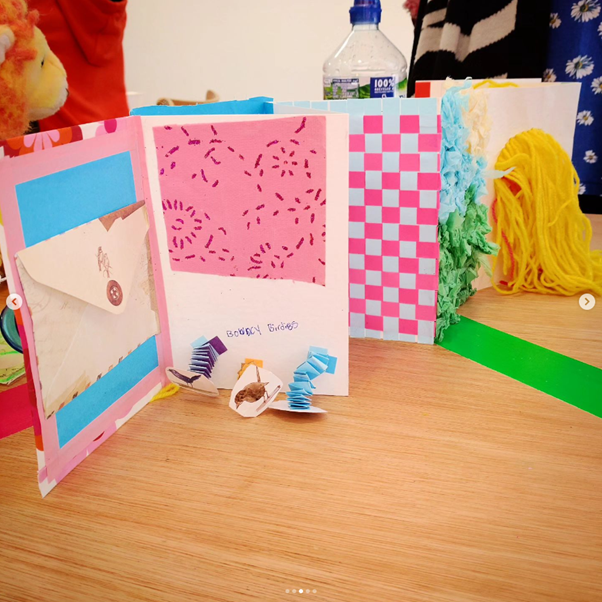
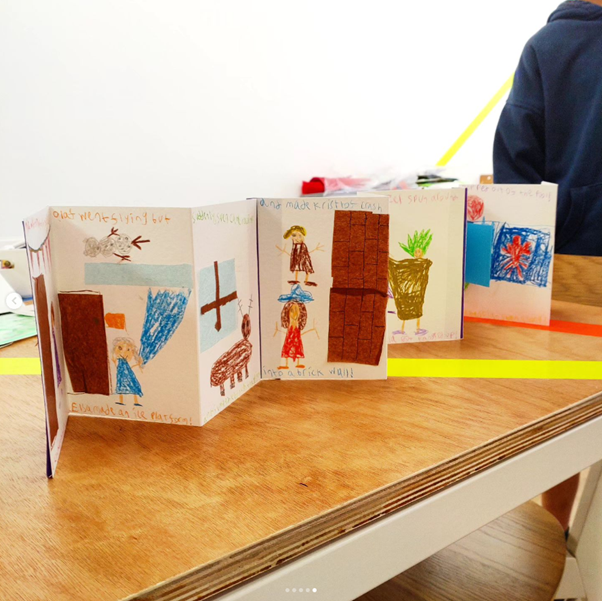
Having introduced Special Collections & Archives, and welcomed groups to encounter these artist books for themselves, the workshops turned to making books: encouraging our young people to reflect both on the collections and their own stories and emotions as they folded, cut out, manipulated paper to craft books for themselves. On the Friday we were lucky to have book artist, Tina Lyons, with us, and she took us step-by-step through making a T-fold booklet as well as extended concertinas. (Check out her videos to have a go yourself!) On Saturday, Stella Bolaki led the groups and it was astonishing to see the diversity of approaches and creations that stemmed from her instructions. I have to give a special commendation to Leo and Libby for their mutual dedication and inspiration. Leo’s Art is an expression for his dad (just in time for Father’s Day) featured multiple sensory pages to signify, for instance, the satisfaction and confusion art can evoke. Libby was inspired by the form of Allison Cooke Brown’s Core sample, and – prompted by conversations regarding the status of the book as something special, even a gift – made a beautiful slip-case for her concertina book. We also had a variety of big books, little books, pop-up books, stitched books, handbag books, every book you could imagine. To close, I can only showcase a sample of what was made – enjoy!

A hand-made book with be-ribboned slip-case decorated with roses.

A hand-made book with slip-case.

A hand-made pop-up book, showing a character in a landscape, with a decorative frame.

A hand-made pop-up book.

A hand-made concertina book, with varied sensory pages.

A hand-made concertina sensory book.

A hand-made concertina book revealing a story of a surprise birthday party and the arrival of different guests.

A hand-made concertina picture-book.

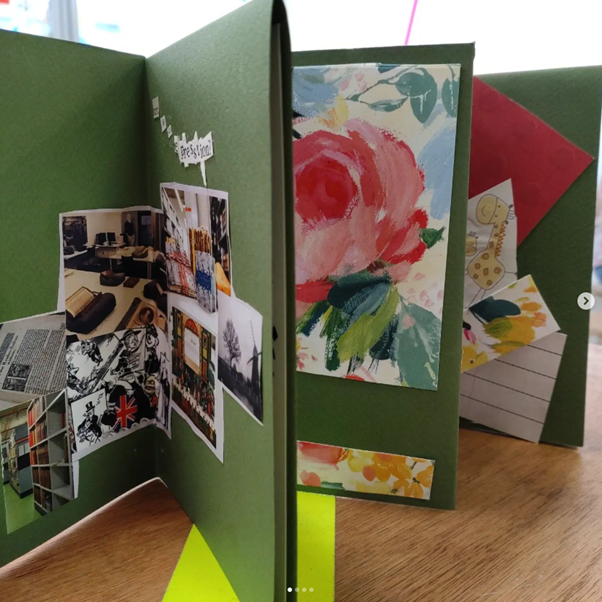
A hand-made T-cut book, with lots of different images pasted inside in scrapbook fashion.

A hand-made T-cut book, titled ‘Art is an expression’.


An intern’s experience: Jenni-Rose Nicholl

We were lucky enough to work with student Jenni during her internship from March to April 2023, as part of her Classical & Archaeological Studies course at the University of Kent.

Jenni worked on a variety of collections during her time with us, including the Colin Seymour-Ure and Holt Bairnsfather collections in the British Cartoon Archive, the Papers of the Shirley Foundation collection in the UK Philanthropy Archive, and the Max Tyler Music Hall collection. She also assisted us with facilitating seminars and school visits. Jenni writes about her experience below.

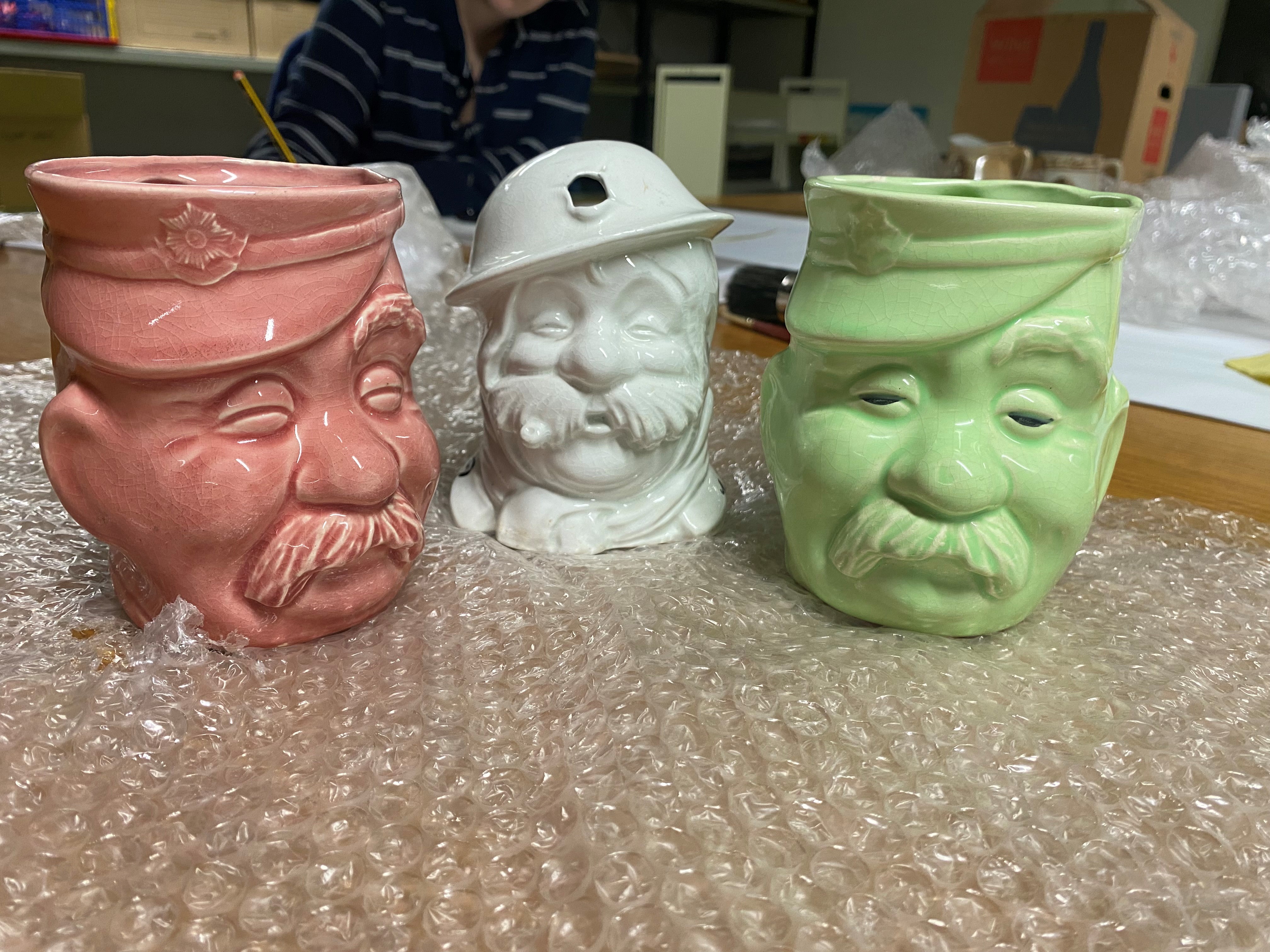
Objects from the Holt Bairnsfather collection being sorted and packaged in our workroom.

An internship is designed in its nature to provide the intern with real-world experience in the relevant field of work they are completing their study in. Having recently completed my internship with the University of Kent’s archive team, it can safely be said that I have gained a tremendous amount of experience and hands-on professional context in which to take my degree further.

From my first day being shown around the archives by the incredibly knowledgeable Clair Waller, my mind was blown by the sheer amount of work and effort that our incredible archivists do every single day in order to keep the University archives, alongside the British Cartoon archive, up to date and relevant for today’s scholars and students alike. By far my personal favourite part of the internship was cleaning the books given to the archives team from individual’s personal collections [ed – the Colin Seymour-Ure collection], being carefully instructed as to the care and management of dirty and weak covers and how to prevent the books from deteriorating further.

A portrait of Professor-Colin-Seymour-Ure

Professor-Colin-Seymour-Ure

Whilst partaking in my internship I was regularly using a scanner and uploading photos in an organised manner onto the computer, something a self-confessed technophobe such as myself found greatly beneficial for future employment as well as daily life. A career in archaeology would not be such without numerous types of paperwork in which listing remains crucial.

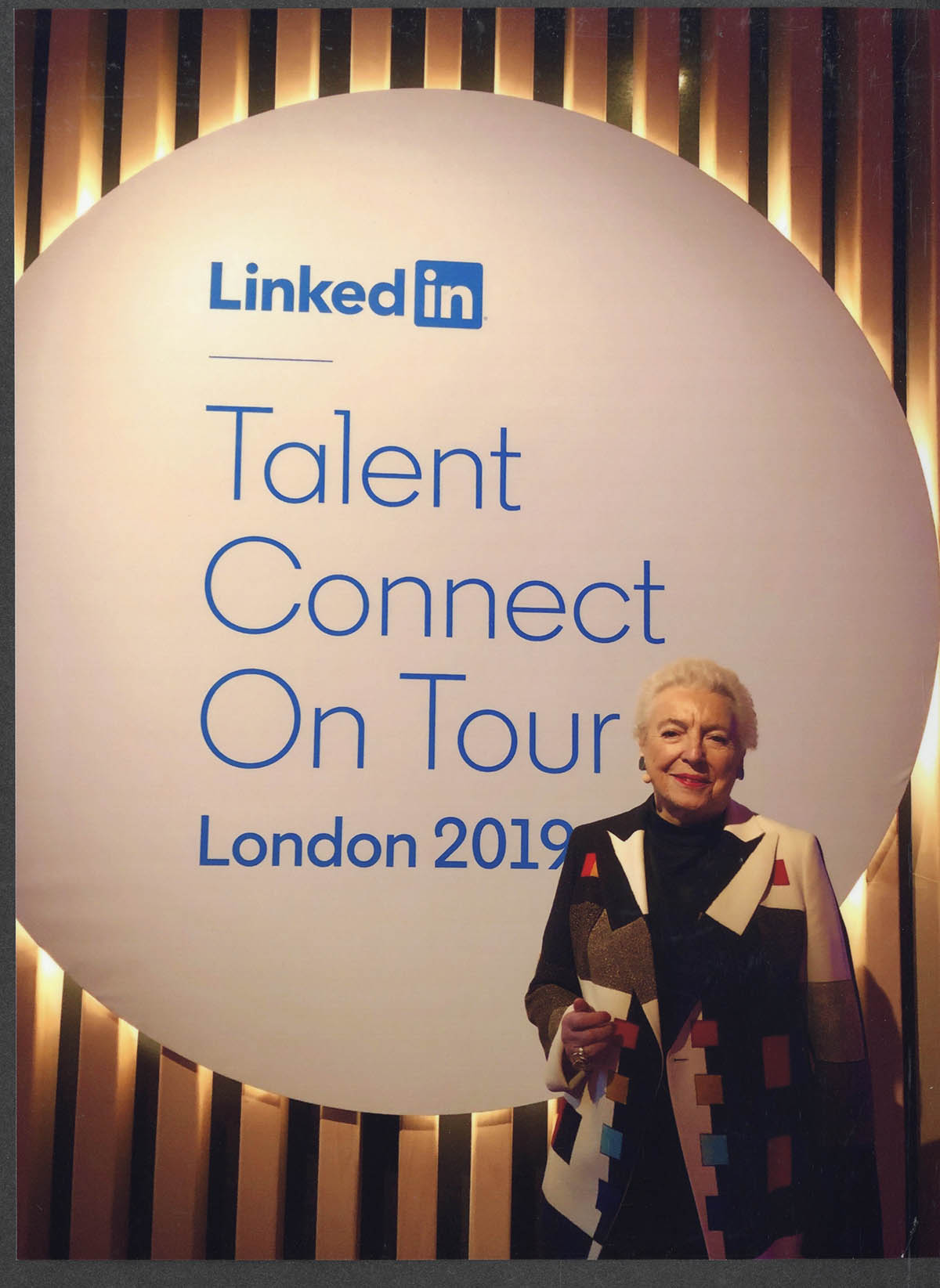
A photograph of Dame Stephanie Shirley standing in front of a large promotional sign at the 2019 Linkedin Summit, Talent Connect On Tour.

Dame Stephanie Shirley at the February 2019 Linkedin Summit. Papers of the Shirley Foundation.

Through my internship I was instructed in the use of listing sheets and how to correctly fill them out directly benefiting my future prospects in the archaeological field. My internship has greatly grown my confidence in a professional environment and with the instruction of Clair Waller, Beth Astridge and Karen Brayshaw, I have gained invaluable experience and fond memories for my future career.

A photogrpah of Jenni's hand holding a book that has been laid between boards and wrapped with cotton tying tape.

An example of a book Jenni cleaned before applying a bit of collections care by wrapping the book between boards using cotton tying tape. This helps to preserve the book, providing support to otherwise fragile or damaged bindings.


Happy Birthday James Bond!

Seventy years ago on 13th April 1953, Ian Fleming published his first James Bond novel – Casino Royale. To note this anniversary, at the beginning of April our fabulous intern Jenni Nicholl who is studying an MA in Curating, used our British Cartoon Archive collections to look at where the James Bond character has featured in our collections. We hope you enjoy this sample of cartoons from Jenni!

Bond, James Bond.

A line synonymous with the Bond franchise, James Bond represents to the world an idealised version of the British upper class through the representation of decorum, humour and seemingly, suave middle-aged men. Due to this, cartoons depicting Bond have been used widely in many circles such as politics and comedy in order to portray the seriousness or lack thereof of many matters concerning society through different time periods which is extremely well encapsulated in the British Cartoon Archive of The University Of Kent.

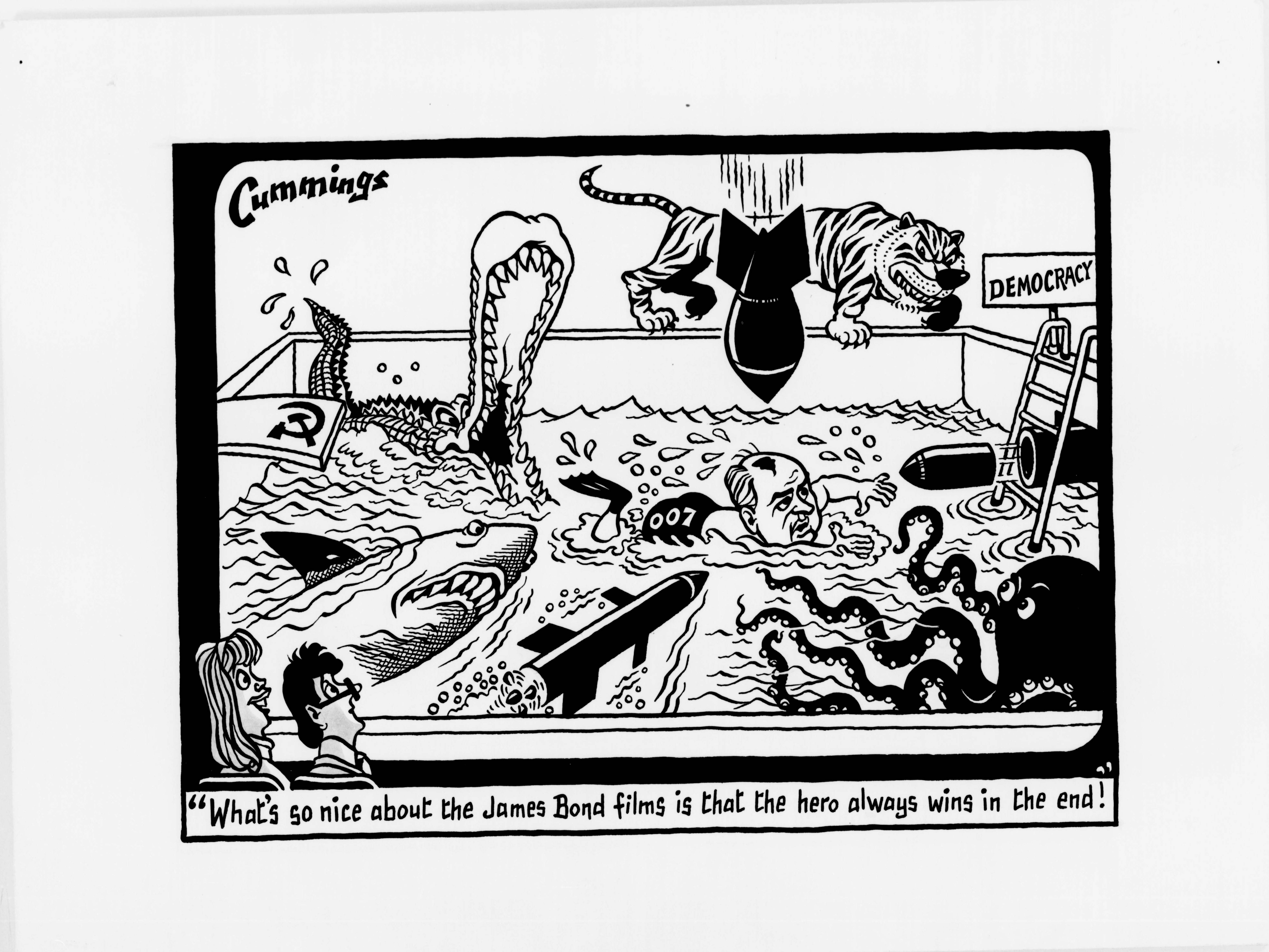
A brilliant use of the James Bond franchise within the political cartoons seen throughout the 1990s’ is Michael Cummings ‘fishbowl’ view of the fight between democracy and communism. This post-Cold War decade marked the end of the Soviet Union and so the battle of communism vs democracy was largely felt to be won by the side of the democrats with the individuals looking into the screen surmising that the hero always wins in the end of the Bond films, which however whilst actually looking at the screen, doesn’t appear to be true with Bond grasping for the democratic side under bombardment.

Cartoon in black and white showing a swimming pool with two people looking at the scene. In the pool a man (Mikhail Gorbachev) wearing swimming trunks labelled 007 has dived into the pool from a diving board labelled with a hammer and sickle (representing communism), and is swimming towards a ladder to get out of the pool. The ladder is labelled 'Democracy'. As he swims he is trying to avoid multiple attacks or obstacles including a crocodile with it's mouth open, a shark, a missile, a bullet coming out of a gun, an octopus, a bomb dropping from the sky, and a tiger prowling around the edge of the pool.

Michael Cummings, “What’s so nice about the James Bond films is that the hero always wins in the end”, Daily Express, 7th February 1990. British Cartoon Archive, Ref: CU1641. (Copyright: Express Syndication)

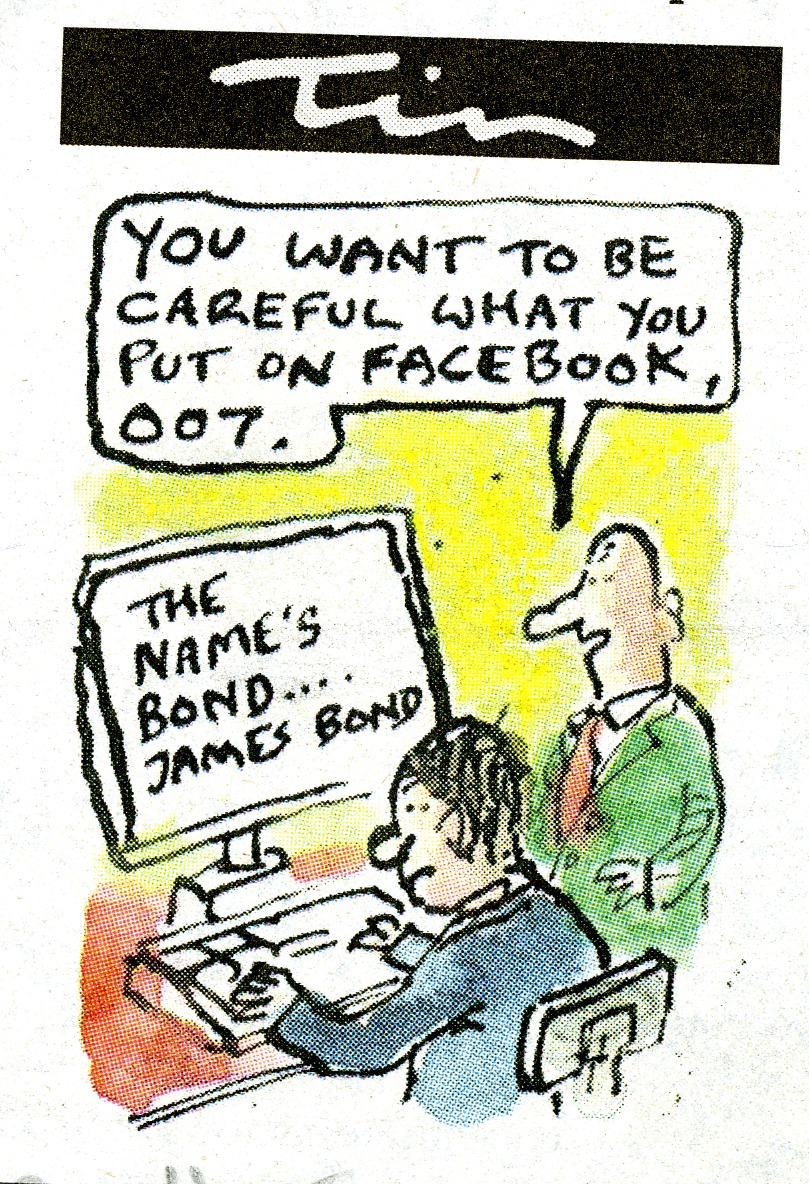
Whilst the cartoons may be used for political satire, the Bond Franchise was also used in the comedic arena in order to portray very normal aspects of daily life. Within this cartoon James Bond can be seen delivering his infamous line to his Facebook audience revealing his entire name, despite the nature of his job, with his supervisor urging caution. This may also give reference to the fact that despite building their foundations as the secret backbone of the safety of Britain and the monarchy, the MI6 building is one of the best known and most visited throughout London.

Colour cartoon showing a man in a blue suit at a computer terminal with the text showing on the screen "The name's Bond...James Bond". Another man in a green suit stands behind the first man and says "You want to be careful what you put on Facebook 007".

Tim Sanders, “You want to be careful what you put on Facebook 007”. The Independent, 11 June 2013. British Cartoon Archive, Ref: 99154 (Copyright: Tim Sanders).

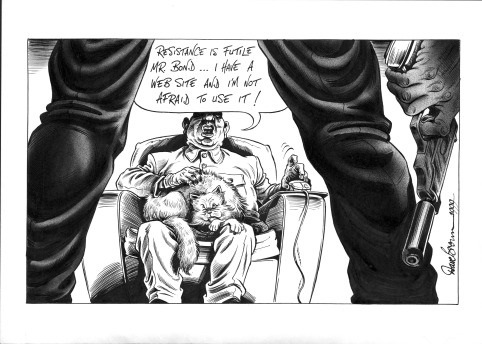
Satire mixed with solemnity gives rise to a brilliant cartoon by Dave Brown depicting the MI6 disaster of the 14th of May 1999 in which a former officer leaked hundreds of names of agents some of whom were on active duty abroad and whose lives were put in serious danger. The cartoon highlights the nonchalant nature of the internet and the ease at which such an integral aspect of society can be broken and represents the fragility of the British security system.

Black and white cartoon showing Bond villain 'Blofeld' with his cat sitting on a armchair - viewed between the legs of James Bond standing as if immediately infront of the viewer and framing the cartoon - holding a gun down alongside his right leg. Blofeld is saying 'Resistance is futile Mr Bond... I have a web site and I'm not afraid to use it!'. Blofeld is using a computer mouse in one hand and stroking his cat with the other.

Dave Brown, “Resistance is futile Mr Bond…”, The Independent, 14 May 1999. British Cartoon Archive, Ref: DB0197A. (Copyright: Dave Brown).

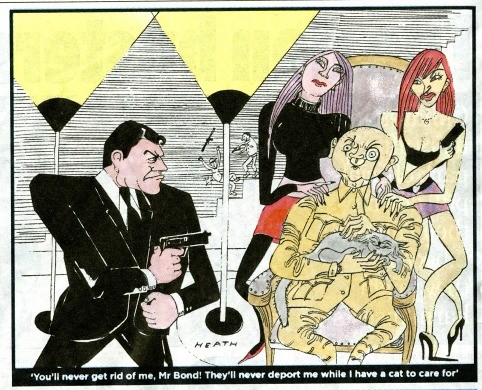
Though the situation may prove to be humorous, Theresa May would have to disagree as Mr. Avila, who was due to be deported back to his country of birth, was allowed to stay in England as he cared for a cat. This hilarious situation caused such a political uproar that it was used as a point in order to stop the abuse of Labour’s Human Rights Act which were occurring during 2011.

Colour cartoon showing James Bond pointing a gun at Blofeld, sitting on a chair holding his cat, with two women standing behind him. The caption reads: You'll never get rid of me Mr Bond! They'll never deport me while I have a cat to care for'.

Michael Heath, “You’ll never get rid of me Mr Bond! They’ll never deport me while I have a cat to care for’.” Mail on Sunday, 9 October 2011. British Cartoon Archive, Ref: 95323. (Copyright: Associated Newspapers Ltd/Solo Syndication)


Curated and written by Jenni Nicholl, April 2023. 


The 50/50 Project: Celebrating 50 Years of the British Cartoon Archive

Help us to select 50 cartoons representing 50 years of the British Cartoon Archive!

We are looking for volunteers to participate in a project to explore and select 50 cartoons from across the British Cartoon Archive collections to feature in an exhibition in the Templeman Gallery. The project will take place on Mondays, 11am-4pm, throughout June 2023.  The exhibition will be on display from September to November 2023.

This is an opportunity to get hands-on with our cartoon collections and be involved with our celebration activities for the 50th anniversary of the British Cartoon Archive. Volunteers will receive a tour of the collections, training in searching our catalogues and writing captions, and an opportunity to gain experience in selecting material and curating an exhibition. Remote participation is also available.

Get in touch with us for more information or to volunteer to take part. We would love to hear from you: specialcollections@kent.ac.uk

And now – enjoy a selection of cartoons from the British Cartoon Archive marking other 50th anniversaries!

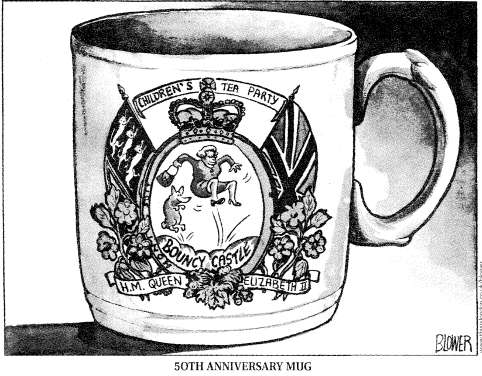
Black and white cartoon of a mug with a royal crest and a central depiction of Queen Elizabeth II jumping on a bouncy castle with a corgi with a label above reading Children's Tea Party

Cartoon marking the 50th Anniversary of the Coronation of Queen Elizabeth II – Patrick Blower, “50th Anniversary Mug”, Evening Standard, 2nd June 2013. (Reference: British Cartoon Archive, Cuttings, 65815)

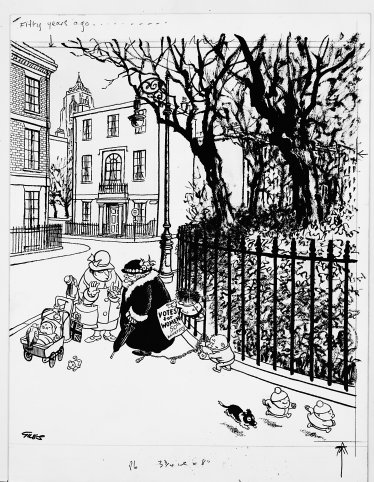
Black and white cartoon of a residential street with park gates, with Grandma, Vera, George Junior, Stinker and the twins (members of the Giles Family) standing on the pavement. George Junior is chaining Grandma's foot to the railings while she looks the other way.

“Fifty Years Ago…”- Giles cartoon featuring Grandma and Vera from the Giles Family, showing George Junior and Stinker chaining Grandma to the park gates as a prank. A poster held by one of the children notes the 50th Anniversary of Votes for Women. Ronald Carl Giles, Daily Express, 6th February 1968. (Reference: GAN1736)

Black and white cartoon titled Happy 50th Birthday Ikea..., showing a man drinking a glass of Moet champagne at Ikea HQ and another man reading instructions for how to drink: 1. Hold glass firmly in hand, 2. Empty Contents into mouth, 3. Swallow...

“Happy 50th Birthday Ikea” – Cartoon marking the 50th Birthday of Ikea in 2006. Neil Kerber and David Black, Daily Mirror, 30th June 2006. (Reference: British Cartoon Archive, Cuttings, 87975)

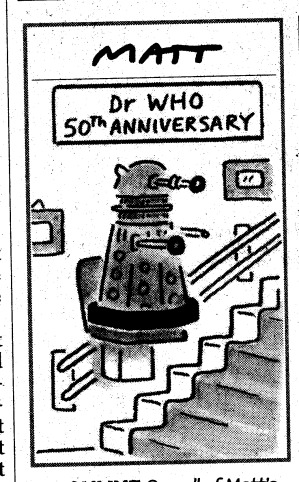
Black and white cartoon showing a poster on a wall reading Dr Who 50th Anniversary and a Dalek on a stair lift

“Dr Who 50th Anniversary” – Cartoon marking the 50th Anniversary of Dr Who in 2013. Matt [Matthew Pritchard], Sunday Telegraph, 24th November 2013. (Reference: British Cartoon Archive, Cuttings, 99878)

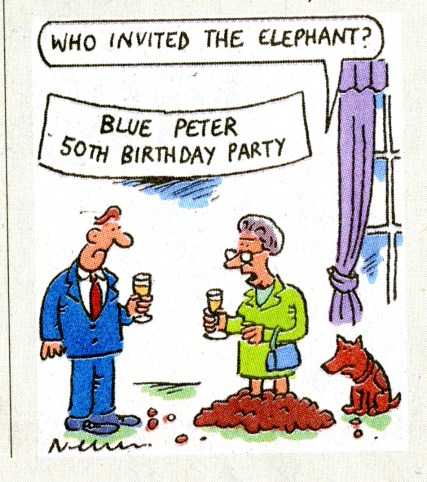
Colour cartoon showing Queen Elizabeth II drinking a glass of champagne with a man, below a poster reading "Blue Peter 50th Birthday Party". The Queen says "Who invited the elephant" and is depicted standing in a pile of elephant dung, next to one of her Corgis.

“Who invited the elephant?” – Cartoon marking the 50th Birthday of Blue Peter in 2008, depicting Queen Elizabeth II. Nicholas Newman, Sunday Times, 19th October 2008. (Reference: British Cartoon Archive, Cuttings, 90501)

Wally ‘Trog’ Fawkes (1924-2023)

We were very saddened to hear of the death of Wally Fawkes last week, who passed away at the age of 98 on Wednesday 1st March 2023. Fawkes (also known by his pen-name ‘Trog’) was a revered cartoonist and illustrator with a talent for caricature and an instantly recognisable style. Johanna Fawkes said of her father, “He was warm, funny and thoughtful. Everybody adored him”.

Wally Fawkes

Walter (“Wally”) Ernest Fawkes was born in Vancouver, Canada on 21 June 1924. He moved to England with his mother, siblings, and stepfather in 1931. He loved comics from a young age and from the age of 14 studied at Sidcup Art School for a short time before the outbreak of war in 1939. During the war, Wally worked at Woolwich docks, painting camouflage on factory roofs in an effort to protect them from bombing. This effort was not rewarded as the docks were flattened during the blitz in 1940. Wally did not serve in the war due to a bout of pleurisy, instead working for the Coal Commission tracing maps.


Fawkes’ artistic talent was discovered in 1942 after he took part in an art competition at work that was judged by the Daily Mail’s political cartoonist, Leslie Illingworth. Illingworth was impressed and got him a job drawing for the Clement Davies advertising agency. Then in June 1945 on Fawkes’ twenty-first birthday Illingworth found him a job at the Daily Mail, where he was tasked with creating decorative illustrations and column breakers.

A photograph of Fawkes at his drawing desk

Fawkes married journalist Sandy Boyce-Carmichelle in 1949, with whom he went on to have four children, Johanna, Kate, Sarah and Jamie. Sadly, Sarah passed away at a young age. Wally and Sandy were divorced in 1964, but Wally found love again with Susan Clifford, who he married and had two more children with, Lucy and Daniel.

In 1949, the Daily Mail’s owner, Lord Rothermere, asked Fawkes to illustrate a cartoon strip, ‘Flook’. Originally created by Douglas Mount in 1949, the strip ran for 35 years in the Daily Mail before moving to the Mirror in 1984, and featured many writers throughout its lifetime.

FO0025, [No caption], Daily Mail, 25 Apr 1949. ©Associated Newspapers Ltd. / Solo Syndication

The name of the strip was originally named after its redheaded character ‘Rufus’, but this was quickly changed to ‘Rufus and Flook’, before finally becoming known as simply ‘Flook’. By the early 1950s, the strip was one of the Daily Mail’s most popular features, and was syndicated to the United States and New Zealand.

A Flook model hiding in the archives

When the news broke that Fawkes was leaving the Daily Mail in 1984, the Daily Mirror signed him up, with Flook transferring to them in that October. They announced the transfer with the following cartoon:

38393, [No caption], Daily Mirror, 19 Nov 1984. ©Mirrorpix

An accomplished clarinet player, the pen name ‘Trog’ comes from one of Fawkes’ early jazz bands, ‘The Troglodytes’. Fawkes went on to play in the ‘George Webb Dixielanders’ with trumpet player and fellow cartoonist Humphrey Lyttleton in 1944. Later they co-founded ‘Humphrey Lyttleton and His Band’ in the late 1940s. Fawkes left Lyttelton’s band in 1956, but continued to play with various groups throughout his life. In the late 1950s he established a jazz club night at the Six Bells, Chelsea with fellow musician Jim Goldbolt that became known as ‘Trog’s Club’.

When Illingworth retired in 1969, Fawkes took his position as political cartoonist at the Daily Mail. However, this position did not last long, with Fawkes being replaced with Stan ‘Mac’ McMurtry in 1971 when David English took control of the paper. During his career, Fawkes drew for many publications, notably the Observer and Punch, but also the Spectator, New Statesman, Sunday Telegraph, Today, London Daily News, and Private Eye.

WF0113, [No caption], Sunday Telegraph. ©Telegraph Media Group Ltd

Fawkes was one of the founding members of the British Cartoonists’ Association, established in 1966, alongside Kenneth Mahood and John Jensen. He was twice the winner of Granada TV’s ‘What the Papers Say’ Cartoonist of the Year Award, the US Cartoonists’ and Writers’ Syndicate World Award 1976, International Political Cartoonist of the Year (1976), CCGB Humorous Strip Cartoonist of the Year (1981), CAT Caricaturist of the Year (1997) and the CAT Lifetime Achievement Award (1997). In 2001, Fawkes received an Honorary Doctorate from the University of Kent.

Fawkes retired from cartooning in 2005 at 81 as his sight began to fail, after 62 years in the business. His work continues to be popular today; the Cartoon Museum in London held an exhibition of his work in 2013, and the University of Kent’s British Cartoon Archive continue to make his work available to researchers, students and enthusiasts alike. His work was admired not only by the public, but also by his contemporaries.

“…there is an astonishingly sharp focus…particularly in the caricature, which makes the characters seem larger than life, as if seen under a brilliant light and a powerful lens…his blacks seeem to be blacker than black” Raymond Briggs[1]

“Very few artists can see a likeness the way he can, and catch it so completely. He doesn’t develop a hieroglyph for each politician and then simply reach for it each time it is needed. Every Trog caricature is carefully recrafted.” Nicholas Garland[2]

Wally by Flook, Daily Mirror, 16 Nov 1984. ©Mirrorpix

The British Cartoon Archive’s Fawkes Collection includes almost 3500 original artworks, 6600 original Flook strips, over 5000 cuttings and even one of the orange plastic squeaky Flook toys marketed by the Daily Mail. For a full biography, please see https://www.cartoons.ac.uk/cartoonist-biographies/s-t/WallyFawkes_Trog.html.


[1] Trog : Forty Graphic Years – the art of Wally Fawkes (introduction and commentary by Frank Whitford; foreword by Raymond Briggs), London: Fourth Estate, 1987, 191pp.

[2] Nicholas Garland “Undimmed, inimitable Trog”, Sunday Telegraph, 20 June 2004, Review p.7.