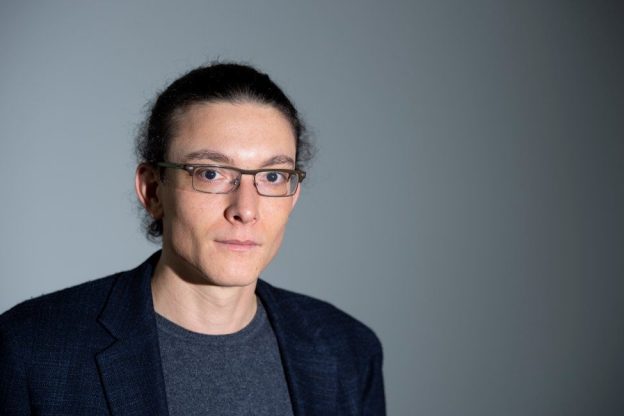
Graeme A Forbes

Staff member’s role in ‘best Edinburgh Fringe show

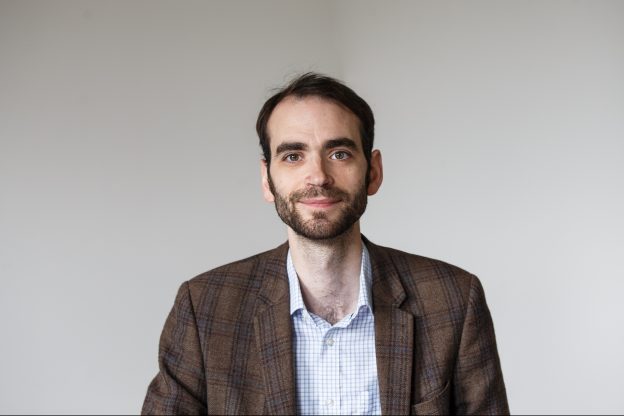
Lecturer in Philosophy Dr Graeme A. Forbes has supported theatre company Theatre Re by acting as philosophy consultant for their recent production of BIRTH, which has been named Best Theatre Show of the Edinburgh Fringe by Theatre Weekly. The publication described the show as “one of the most beautiful and accomplished pieces of theatre to be staged at the Fringe”.

BIRTH is the story of Sue, Katherine and Emily, three generations of women from the same family whose lives are part of an invisible web they help to weave. It traces their journey of self-discovery, acceptance and hope. In staging the production, the company explored the idea of secrets in families, unearthing the parallels between our own lives and the lives of our parents and grandparents, and engaged with women and families who have experienced pregnancy loss. The collaboration with Graeme allowed the cast to explore questions such as ‘what is being passed down from one generation to the next’ and ‘when does memory begin’?

‘Pregnancy loss is experienced by a great number of women. What the parents go through is rarely discussed and often considered taboo. It is part of the realm of the ‘unspoken’, or the ‘unvoiced’. It is buried.’ describes Theatre Re’s website.

‘It was a privilege to work with this exceptional creative team,’ said Graeme; ‘I’m incredibly glad I had the opportunity to work with them. It was immensely rewarding to see how our conversations — about the passage of time, and how even when we repeat a pattern each moment in our lives is specific to us — got woven into the show. I’m so pleased that all their hard work has been recognised, and I’m sure they will have a very successful tour.’
Dancing

Japanese students share their culture at Kent

Students from three Japanese universities taught Japanese crafts to students, staff and local residents at the annual Japan Festival in August, hosted by the Centre for English and World Languages (CEWL).

Japan Festival was a wonderful opportunity for the students from Kobe Women’s University, Kogakkan University in Ise and Musashino University in Tokyo, who had come to Kent to improve their  English language and learn about British Culture,  to practise their English and give local people a chance to experience Japanese culture.

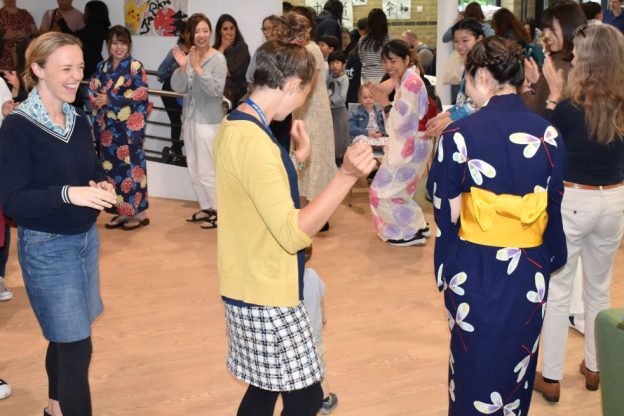
The evening began with some of the students introducing their home universities, which gave them the opportunity to practise public speaking in English. The Kobe students performed a traditional dance, encouraging the audience to join in the fun.

Japanese dancing
Having a go at Japanese dancing

Everyone then had a chance to learn origami, calligraphy and to practise using chopsticks in the Japanese style.

Learning calligraphy

Natsuki Okuno , who accompanied the students from Kobe Women’s University, said: “I think Japan Festival was a great opportunity for my students to use English and meet a variety of people. They really enjoyed talking with them. Also, it was an opportunity for them to know more about their culture and [I was] proud of them. They were happy to know that so many people were interested in Japan.”

While they were at Kent, the students worked hard to improve their English and their teachers were very impressed with their efforts and enthusiasm. As well as working on their English, the students went on excursions, including Canterbury Cathedral, Leeds Castle, Dover Castle, Broadstairs, Whitstable and London to give them a taste of British culture and history.

Canterbury Cathedral
Visiting Canterbury Cathedral


We have created a warm and lasting relationship with the Japanese universities who visit Kent for short courses at CEWL each summer and we very much look forward to working with them back in future.

teach-1968076_960_720

Nostalgia interview with Janet Neilson

In the latest episode of the Nostalgia podcast series, Chris Deacy, Reader in Theology and Religious Studies, interviews Janet Neilson, a former teacher in Swansea, who talks about her educational background and the differences in career advice given in those days compared to today.

Janet talks about the days when married women were not allowed to teach; why she became a junior school teacher; her thoughts on the National Curriculum; not having a TV before 1962; singing in the Swansea Philharmonic Choir; having a grammar school education; studying Religious Studies as a mature and disabled student; being bullied on her first day at school; the taboo around calling teachers by their first names; why as a teacher she was ‘strict, firm and fair’; and her fascination with genealogies.

The next interview will be with our own Professor Jeremy Carrette, Professor of Philosophy, Religion and Culture and the University’s Dean for Europe.

Dr Alvise Sforza

Alvise Sforza Tarabochia on alienation, languages and Brexit

Dr Alvise Sforza Tarabochia, Head of the Department of Modern Languages, was interviewed on the Italian regional TV channel Telequattro on Monday 26 August, as part of the ‘Trieste in Diretta’ programme.

Alvise spoke about his my new edited book, The Years of Alienation (Palgrave, 2019) as well as about modern languages, and living as a foreigner in pre-Brexit Britain.

In discussing alienation, the interviewer asked about the features of architecture favouring alienation. Alvise responded: “The wall, the wall is the architectural symbol of any alienation, any separation, any marginalisation.” This was in reference to a recent proposal by the governor of the Trieste region to build a wall between Italy and Slovenia to address perceived issues of migration from Slovenia into Italy.

A recording of the interview (in Italian) is available online. Alvise appears at approx. 33:45.

Estates Logistics update

The Estates Logistics team provide a removal and disposal service for all Schools and Departments based at the Canterbury Campus. Services include the collection of certain recyclable materials; confidential waste, batteries, toner and ink cartridges and waste electrical equipment. As well as assisting with furniture removals and deliveries during office moves.

After 30 August 2019, the way customers contact Estates Logistics is changing.

From 31 August 2019, the Estates Logistics email account will be closed and all enquiries should be made to Estates Customer Services: estatescustomerservices@kent.ac.uk or by telephoning extension 16666.

For more information about how Estates Logistics can help you, or for further information regarding the Estates Department, please visit our website: www.kent.ac.uk/estates. The Estates Logistics service level standard can be found here.

If you have any enquiries in relation to this or anything regarding the Estates Department in general, please contact the Estates Customer Services team.

One hour degree logo

One Hour Degree narrative based adventure game

The One Hour Degree is a narrative based adventure game that simulates all the key elements of gaining a degree at Kent condensed into as little as one hour.

Developed by the Student Success Project, the game is designed to specifically address issues affecting the transition into university, to highlight best practice, allow students to take risks and see what repercussions this has on their results.  As such, it is primarily aimed at students who are about to join or who have recently begun their degree journey at Kent, even though the game is available for anyone to play anywhere.

There are five independent ‘quests’ focused on:

  • Welcome Week
  • the first term
  • the rest of the first year
  • year 2
  • year 3

The game introduces key facilities, support networks and social opportunities that are available at Kent as well as being able to view stunning imagery of our parkland campus.

Players will earn ‘knowledge’ and ‘wellbeing’ points along the way as well as a badge for each completed quest.  Together they will dictate the classification of the ‘degree’ received at the end before you have the opportunity to be part of your very own graduation video!

With more than 100 million unique pathways through the game, players can easily choose a different story path each time to see how different decisions result in different outcomes.

There has been considerable input from around the University including the Library Services team, Student Learning Advisory Service, Careers and Employability Centre, Student Support & Wellbeing and several Academic Advisors.

The game does not require a login or user account and can be played by anyone who has access to a web browser, on any device. Find the link to the game on the Hello Kent and Student Success web pages. Play the One Hour Degree now.


Ewelina Ochab

First UN International Day for victims of religious persecution initiated by Kent PhD scholar

Today’s first UN International Day Commemorating the Victims of Acts of Violence Based on Religion or Belief  was initiated by Kent Law School postgraduate research scholar Ewelina Ochab.

Ewelina authored the initiative in 2017 in a bid to recognise the importance of providing victims of acts of violence based on religion or belief and members of their families with appropriate support and assistance in accordance with applicable law. It was proposed at the UN by Poland at the end of 2017 and adopted by the UN General Assembly on 28 May 2019.

 UN Secretary-General, António Guterres said: ‘On this Day, we reaffirm our unwavering support for the victims of violence based on religion and belief. And we demonstrate that support by doing all in our power to prevent such attacks and demanding that those responsible are held accountable.’

In an article for The Conversation, Ewelina lists ‘Five reasons the world needs a wake-up call on religious persecution’ and explains the need to shine a light on “those dark corners where acts of violence based on religion or belief are a daily reality.”

Ewelina says: ‘This initiative is intended to raise awareness and provide a springboard towards an action plan rather than being an end in itself. What will become of this day is up to all states, civil society and individuals. Everyone needs to play their role in making this a meaningful day – one that can bring a change to the lives of the people targeted for their religion or belief.’

A video on Ewelina’s Twitter feed features contributions from academics, politicians and policymakers from across the world affirming their support for the Day’s message.

Ewelina’s thesis focuses on the accountability of medical professionals for their involvement and complicity in torture in American detention centres.

GROUP Photo-workshop Robben island

Workshop on world heritage and sustainable development in Africa

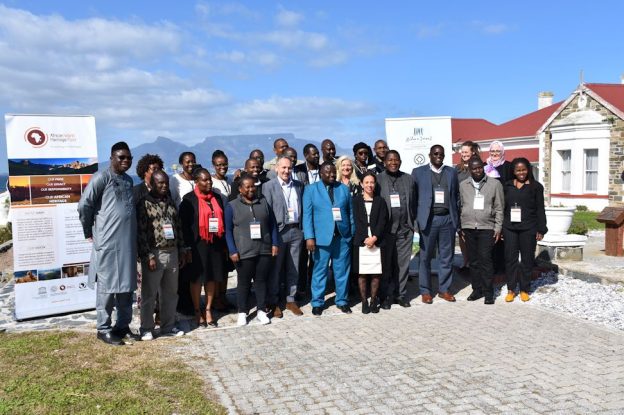
A workshop on World Heritage and Sustainable Development in Africa: Implementing the 2015 Policy, is being hosted this week at the iconic Robben Island World Heritage site, 19 – 23 August.

Organised by Dr Sophia Labadi, Senior Lecturer in Heritage and Archaeology, the African World Heritage Fund, Cape Town University and Robben Island Museum, the workshop aims to better understand how the principles contained in the 2015 UNESCO Policy on World Heritage and Sustainable Development, and the Sustainable Development Goals (SDGs) have been operationalised and localised at and around World Heritage properties in the whole region of Africa.

The 20 presentations of different case studies illustrate the integration of a sustainable development perspective at and around World Heritage sites and different challenges.

The expected results of this workshop include a published e-book with case studies and step-by-step guidelines on how to implement the 2015 policy and related key texts at site level in Africa. Key areas for curricula development by educational institutions on World Heritage and Sustainable Development in Africa will be identified and an Action Plan for the implementation of collaborative projects will be drafted.

Sophia comments: ‘This workshop has revealed the rich, diverse and too often unknown experiences of integrating sustainable development perspectives into the management of World Heritage sites’.

Kent Union To Open Second Campus Co-op

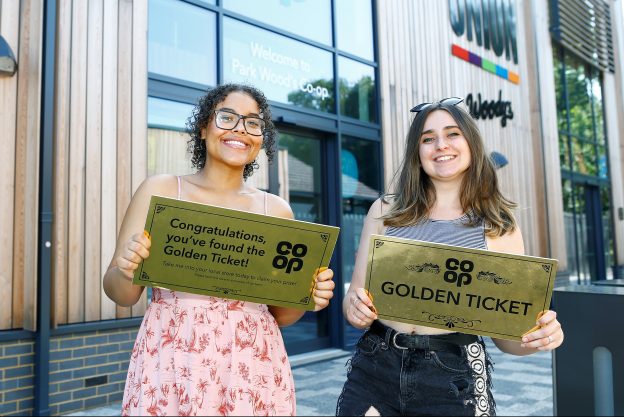
The second Kent Union campus Co-op will open next Thursday 29 August, and you’re invited to join us for the ribbon cutting at 10am!

All staff and students are welcome to pop along and try some samples and check out the new store which promises to make shopping on campus an easier and quicker experience. To celebrate the store opening there are 20 Golden Tickets to be found on campus, to swap at the store for a £5 gift card! Plus there will be some lucky winners in store on the day, you’ll have to pop along to find out what!

The store will stock a wide range of Co-op products, making it cheaper for those with both NUS Totum cards (10% off) plus Co-op members can earn an extra 5%*. Stocking all your usual favourites, the expansion of the store into what was Jobshop, means the larger store has increased range of goods available. There will be an in-store bakery, newspapers – including Inquire, your monthly student newspaper, fresh fruit & veg, alongside a wider range of meal deals and evening offers. And with 16 new self-service till points, long queues should become a thing of the past!

For details on Coop Membership click here.

Felicia-Fricke

Research contributes to understanding of lifeways of enslaved people in Caribbean

Postgraduate student Felicia Fricke, who has recently completed her PhD in Classical & Archaeological Studies, has received media attention in the Caribbean islands of Curaçao and St Maarten for the research she undertook for her thesis entitled The Lifeways of Enslaved People in Curaçao, St Eustatius, and St Maarten/St Martin: A Thematic Analysis of Archaeological, Osteological, and Oral Historical Data.

Felicia’s research combined oral history, archaeological and skeletal data to generate a narrative about the lifeways of enslaved people on the Dutch Caribbean islands of Curaçao, St Eustatius, and St Maarten/St Martin.

In an interview aired on television show Prome Enkuentro, Felicia notes the dominant narrative from this period has been developed from accounts given by European colonisers and that it is important that “other voices are heard” when describing the lived experiences of enslaved people in this region of the Caribbean. In combining archaeological evidence with other records including oral histories from those resident on the islands, Felicia has been able to construct a narrative that better describes these lifeways. In continuing her research, she hopes to make the results open access so that the information is made available to the people of the islands.

Felicia’s research has also been featured in local press including the Saint Martin News Network (in English) and in print in a recent edition of Amigoe Nieuws (in Dutch).

Felicia-Fricke

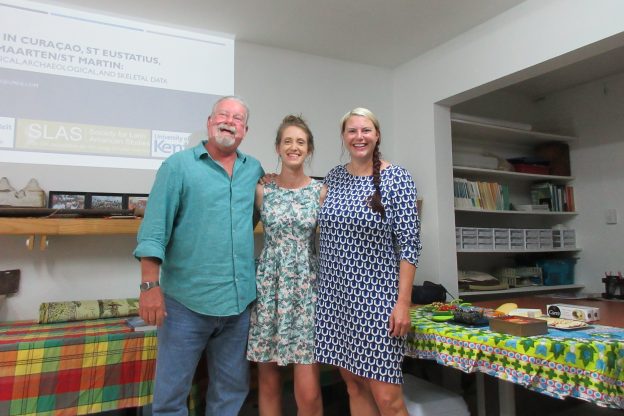
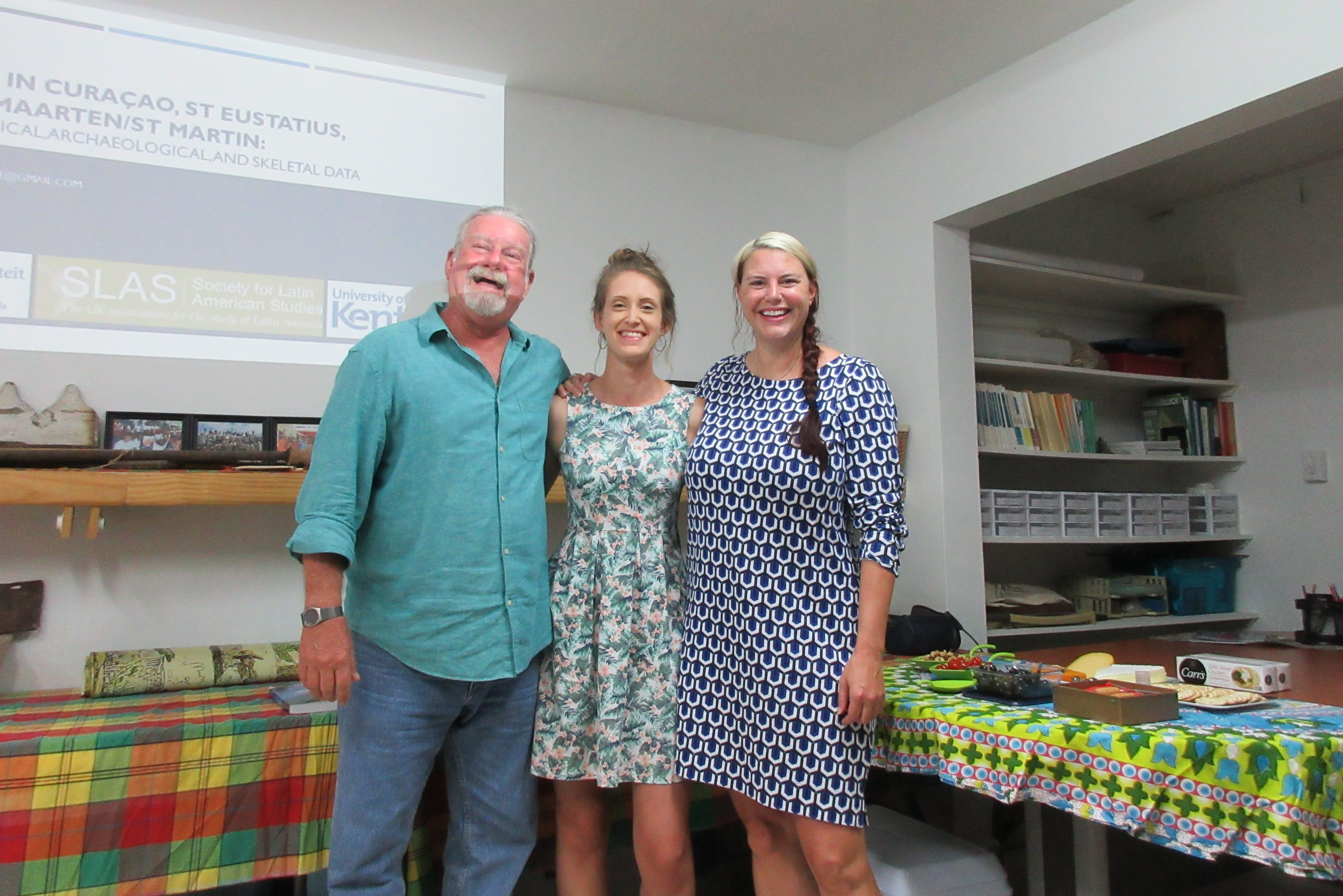
Felicia is pictured below (centre) in St Maarten with Dr Jay Haviser, the archaeologist in charge of the St Maarten Archaeological Center, and Jennifer Yerkes from the St Martin organisation Les Fruits de Mer, which runs the Amuseum Naturalis on the French side of the island.