Category Archives: Student Guide

Staff and students welcome to the Kent Community Oasis Garden Launch

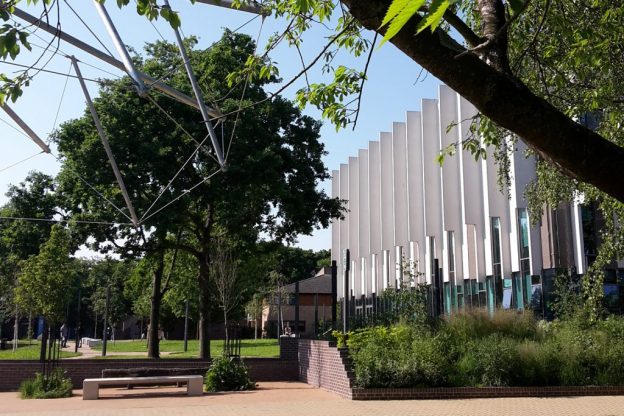
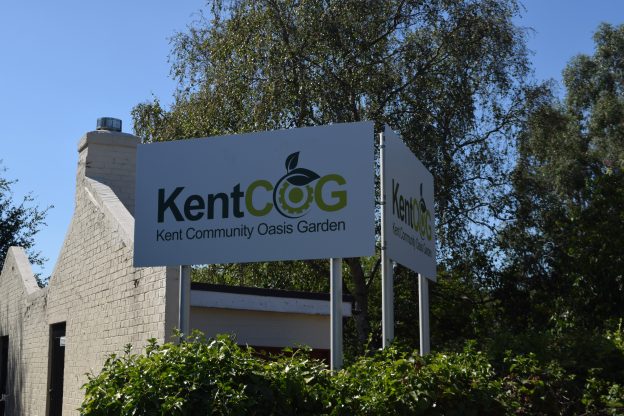
The Kent Community Oasis Garden (KentCOG) will be officially launching on 26 September and staff and students are welcome to attend our lunch time gathering at 12.00 at the KentCOG site.

The site is located along the crab and winkle pathway at the back of Parkwood, you can find us here.

The Kent Community Oasis Garden is a collection of students, staff and community members working to create a sustainability hub centred around growing food.

The existing garden plot and the larger area around it has the potential to become a well-used resource for teaching, learning and engagement, and the KentCOG project aims to: create an accessible multiuse space; provide opportunities for skills building and training; promote sustainable and healthy food; create activities and quiet spaces for wellbeing and mental health programmes; as well as promoting social enterprise and enhancing social cohesion.

The project is made up of a number of partners including The University of Kent, Kent Enterprise Trust, The Gardening and Foraging Society (Kent Union) and the Whitstable and Herne Bay Beekeepers.

At the launch, everyone will have the opportunity to find out more about the project, share their ideas and vision for the site, discuss the design of the site with landscape designer and BBC Gardeners World presenter Mark Lane, and enjoy some drinks and nibbles from local suppliers.

For more information please visit our blog or email kentcog@kent.ac.uk.

Free household essentials for students available from Saturday

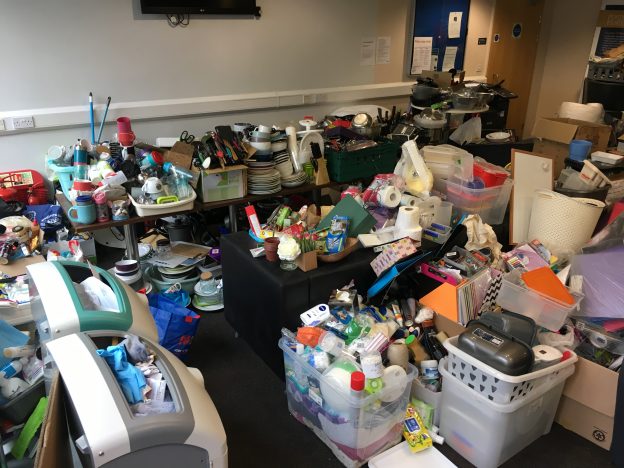
On Saturday, new and returning students to Kent are urged to visit the Woolf common room on the Canterbury campus to stock up on household essentials as part of a Freecycle campaign designed to cut down on waste.

The Freecycle, organised by the Kent Graduate Student Association (KGSA), features items donated by former postgraduate students. Available items include duvets, pillows, kitchen items, drying racks, toasters, fans, a multitude of household cleaning products, and some non-perishable food items. All students are welcome to visit and gather what they need upon arrival to campus.


KGSA volunteers

KGSA volunteers

Items are available on a first come, first served basis, and to ensure that as many people as possible benefit from the event, the KGSA asks that students visit once, sticking to a five-item limit. From 3pm on Sunday, the Freecycle will be available for second visits.

Postgraduate student volunteers will run the Freecycle on Saturday 15th and Sunday 16th September. To guarantee that nothing goes to waste, remaining items will be donated to various charities, such as the Salvation Army and Necessary Furniture, as well as food banks in Kent.

When will I get my timetable?

If you’re fully registered for your modules, here’s when you can expect to receive your personal timetable for 2018-19:

Stage 0 and 1 modules

Stage 0 and 1 module timetables will be on the Student Guide by Friday 21 September 2018.

Stage 2 and 3 modules

Stage 2 and 3 module timetables will be on the Student Guide on Tuesday 11 September 2018 (revised date due to technical issues. Sorry for any inconvenience caused).

Postgraduate modules

Postgraduate module timetables will be on the Student Guide by Friday 21 September 2018.

If you change module or register late there may be a delay in receiving your personal timetable.

Resit students

If you had to resit an exam over the summer your timetable might be delayed. Your timetable will be on the Student Guide by Friday 21 September 2018 at the latest.

If you change module or register late there may be a delay in receiving your personal timetable.

Important – check your timetable in the Student Guide regularly!

Continue to go back and check your timetable regularly for updates including other events.

Got a question?

Read our timetabling FAQs.

Library and IT services- Autumn term update

More library study space

You’ll be pleased to know that while you have been away we have been busy creating 140 new study spaces in Block D of the Templeman Library by converting office space on Floors 2 and 3. The toilets in Block D are also getting a make-over and will be gender neutral! The work in D Block will be completed before the end of the year.

Easier finding and checking out of books

We have been working on LibrarySearch, making it easier to:

  • see if a book is available
  • see where it is held
  • request it from another University of Kent library

When the same book is held by the Templeman, Drill Hall or Tonbridge Centre Library we have combined them into one entry!

DVDs have moved

The DVD collection has moved location, but it is still on the ground floor of Block B. This is a result of consultation with the School of Arts about how best to place the DVDs and viewing stations to enable collection-related academic activities throughout the year. Watch this space for some talks about our film collection in the Autumn Term.

Study Hubs

There have been some exciting changes to Study Hubs over the Summer. We’ve got a new study space opening in the Park Wood Student Hub complex, Darwin’s small PC room had a make-over and Senate will be opening as a dedicated Postgraduate study hub!

Comparison

Research documentaries on campus

Join us for a screening of two fascinating short research documentaries over lunchtime at our Canterbury and Medway campuses on Monday 17 September and Thursday 20 September.

Made for KMTV, each film will last around 12 minutes followed by a guided debate with the scientists, contributors and filmmakers involved. There will also be a small gallery showcasing some of the public engagement work being undertaken by researchers at  Kent.

Film 1: The Mohawk of Consciousness

What does it mean to be conscious? How do we know if someone is a conscious entity? For centuries, human consciousness has continued to both intrigue and baffle.

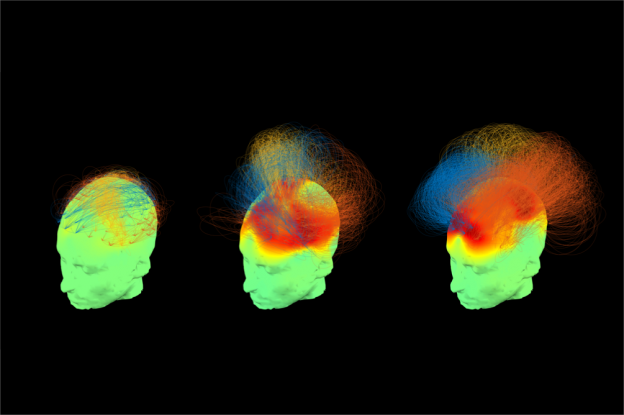
This film follows the research of Kent computational neuroscientist Dr Srivas Chennu who, using advanced electroencephalogram technology (EEG), is able to look inside the brain of vegetative state patients who are otherwise unable to respond and appear unaware of their surroundings.

Dr Chennu’s research has revealed remarkable levels of activity in patients that are often indisguishable from healthy controls. Today it is estimated that up to 40 per-cent of patients in a vegetative state have some hidden level of consciousness but are effectively “locked in”.

The documentary explores the increasing reliance on medical technology to make life and death decisions and in doing so delves into one of the most ethically, socially and clinically complex areas faced by the modern medical community.

Film 2: IVF – Science & Society

Louise Brown, the world’s first IVF baby celebrated her 40th birthday in July. Since then more than six million IVF babies have been born and the technique has evolved considerably. This short documentary will explore the world of IVF from the scientist’s laboratory bench to the private clinic.

World leading IVF scientists Professor Darren Griffin (Kent) and Professor Alan Thornhill will explore the science behind the procedure and talk about the techniques and advances being developed globally.

The film includes touching interviews with a mother about to have her first pre-natal scan, and a father of two teenage sons both conceived by IVF. As the NHS slashes IVF funding, the film also explores how this decision will impact on people and sectors of society that don’t have the funds for private treatments and asks if it’s time for the Government to review the current regulatory framework.

The Medway screening will take place from 12.00 to 13.00 on Monday September 17 in the Dockyard Church at Chatham Maritime Historic Dockyard and you can register for this here.

The Canterbury screening will take place from 12.00 to 13.00 on Thursday September 20 in the Gulbenkian Cinema and you can register here.

Entry is free and open to anyone but places are limited. Please reserve a seat by booking through either the Eventbrite Medway or Canterbury page or by contacting Jill Hurst – j.hurst-853@kent.ac.uk or ext 3907.


Image details: 

The Mohawk of Consciousness: A new way of analysing brain activity shows a striking difference in the brain activity of two vegetative patients (left and middle). Despite being unresponsive, the patient in the middle had brain activity similar to that of a healthy adult (right). 
Issues viewing module timetables – now fixed

Update at 9.30 on Tuesday 11 September

The technical issue with timetables has now been fixed. You can view stage 2 and 3 module timetables on the Student Guide. 

Sorry for any inconvenience caused.

Update at 15.19 on Monday 10 September

We are working on a technical issue which is preventing some students from viewing their timetable.

We hope to have this issue fixed by Tuesday 11 September so please check the Student Guide again then.


Hello Library and IT services!

If you’re a new student, you’ll soon be using the Library, IT systems and study spaces to help you do your work. Here’s how to get started and make the most of them.

Don’t buy books yet unless your lecturer advises you to as we aim to stock every book on your reading list.

Come to a Library and IT! Welcome Session

A welcome session is your best chance to explore the Library and find out about IT you will need to use at Kent.

They run from Monday to Friday in Welcome Week, between 09.30–16:30, starting on the hour and half hour, from the Welcome Hall, Main Entrance, Templeman Library.

Check your timetable to see if there is a session for your subject booked. If not, or if you miss it, join any session during the week.

You’ll learn about:

  • what’s in the Library
  • finding and borrowing books
  • where you can study
  • using PCs, printers, loan laptops

…and much more!

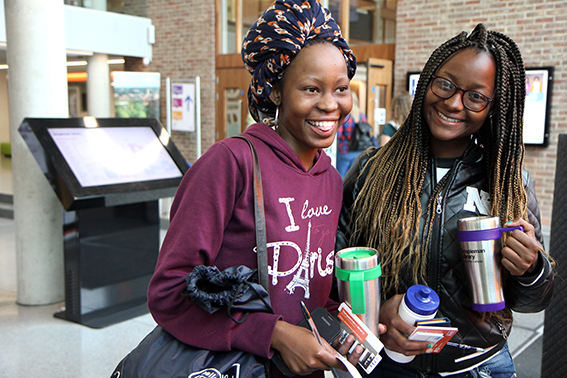
You’ll also get a free gift, and the chance to win a £20 Amazon voucher in our prize draw. Don’t forget your KentOne card as you will need this to enter the Library!

Get Connected

You can connect to Wi-Fi as soon as you arrive on campus. If you’re living on campus, look out for your ‘Get Connected’ booklet in your accommodation.

Use the wired internet with a network cable for the fastest gaming and streaming. If you don’t have one, get one free from the IT & Library Support Desk in the Templeman Library. For help in connecting to your phone, tablet or laptop ask IT & Library Support Desk.

Need more help?

For help with Library and IT Services:

Stephan Lewandowsky

School of Psychology Annual Lecture – 25 September

Beyond misinformation: Parallel Universes in a Post-Truth World is the title of the School of Psychology’s Annual Lecture on Tuesday 25 September.

The talk will be given by Professor Stephan Lewandowsky, FAcSS, FAPS, Chair in Cognitive Science and Royal Society Wolfson Research Fellow, Chair in Cognitive Science and Royal Society Wolfson Research Fellow.

If you would like to join us, please register by emailing George Oatridge by 23 September. The event will begin with an optional drinks reception in Keynes College Atrium at 17.00, followed by the talk at 18.00 in Keynes Lecture Theatre 1 (KLT1).

Abstract

Imagine a dystopian world in which it is not medical knowledge but a free-for-all opinion market on Twitter that determines whether a newly emergent strain of avian flu is really contagious to humans. There are signs that public discourse is evolving in this direction: Terms such as “post-truth” and “fake news”, largely unknown until 2016, have exploded into the media and into public discourse. I explore the implications of the growing abundance of misinformation in the public sphere, how it influences people and how to counter it. I argue that misinformation in the post-truth era can no longer be considered a localized “error” that can be corrected with appropriate communication tools. Instead, I suggest that responses to the post-truth era must include technological solutions that incorporate psychological principles, an interdisciplinary approach that we describe as “technocognition.”

Brief biography

Professor Stephan Lewandowsky is a cognitive scientist at the University of Bristol. He was an Australian Professorial Fellow from 2007 to 2012, and was awarded a Discovery Outstanding Researcher Award from the Australian Research Council in 2011. He held a Revesz Visiting Professorship at the University of Amsterdam in 2012, and received a Wolfson Research Merit Fellowship from the Royal Society upon moving to the UK in 2013. He was appointed a Fellow of the Academy of Social Science and a Fellow of the Association of Psychological Science in 2017. In 2016, he was appointed a fellow of the Committee for Skeptical Inquiry for his commitment to science, rational inquiry and public education.

His research examines people’s memory, decision making, and knowledge structures, with a particular emphasis on how people update information in memory. His most recent research interests examine the potential conflict between human cognition and the physics of the global climate, which has led him into research in climate science and climate modeling. As a result of his work in climate science he was appointed Visiting Scientist at the CSIRO Oceans & Atmosphere laboratory in Hobart, Tasmania, in August 2017.  He has published more than 200 scholarly articles, chapters, and books, including numerous papers on how people respond to corrections of misinformation and what variables determine people’s acceptance of scientific findings. (See www.cogsciwa.com for a complete list of scientific publications.)   Professor Lewandowsky is an award-winning teacher and was Associate Editor of the Journal of Experimental Psychology: Learning, Memory, and Cognition from 2006-2008. He has also contributed around 50 opinion pieces to the global media on issues related to climate change “skepticism” and the coverage of science in the media. He is currently serving as Digital Content Editor for the Psychonomic Society and blogs routinely on cognitive research at www.psychonomic.org.

The talk is being hosted by Professor Karen Douglas, Professor of Social Psychology at Kent.

Condolences for John Simmonds MBE

The University was very sorry to hear of the death of John Simmonds MBE, former Chair of the University Council.

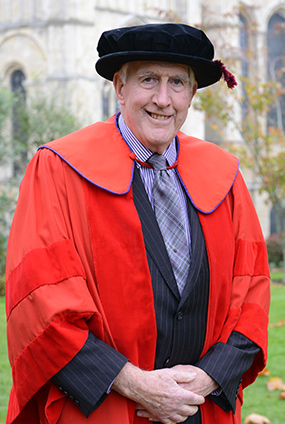
John served as a member of the University Council for twelve years from 2002.  In 2006 he started his appointment as Deputy Chair of the Council/Chair of the Finance and Resources Committee and from 2011 until 2014, John was Chair of Council.  John’s strong and wise leadership helped steer the University during that time and he also acted as an effective bridge between the University and the wider community in Canterbury and Kent, due to his involvement with and commitment to local government and education.

John was awarded an MBE in the 2014 New Year’s Honours List, for services to local government, and was also made a Doctor of the University in November 2014.  He was a long-serving Kent County Councillor, elected to the Kent County Council in 2001, and at the time of his death he had only just stepped down as Cabinet Member for Finance.

John Simmonds was a calm, friendly, approachable and supportive person, who was very generous in his service to the University and to his Council and University colleagues.  He will be much missed.

A Service of Thanksgiving in memory of John Simmonds will be held on Thursday 6 September at 1pm in All Saints Church, Whitstable (7 Church Street, CT5 1PG).  This will be followed by drinks and canapes at John’s home (43 Downs Avenue, Whitstable, CT5 1RR) for all who would like to raise a toast and share their memories of John.  A private cremation will have taken place earlier in the day attended by family members.

Family flowers only.  Donations in memory to the RNLI (quote supporter number 45996835).

For further information please contact Council Secretariat on 01227 823903 or councilsec-staff@kent.ac.uk.

New book by Professor Geoffrey Samuel re-examines legal reasoning

A new book by Kent Law School Professor Geoffrey Samuel re-examines legal reasoning through the context of legal knowledge (or epistemology).

Rethinking Legal Reasoning, published by Edward Elgar as part of their Rethinking Law series, offers new insights into the nature of legal reasoning.

In the book’s introduction, Professor Samuel defines legal reasoning as “the reasoning used by lawyers to solve a legal problem, to advise a client, to justify a legal decision and (or) to comment on a legal text or case.” It’s also the reasoning attached to the application of legal knowledge to specific problems. He goes on to distinguish legal reasoning from legal argumentation saying that “one has the aim of both arriving at and justifying a decision while the other aims to convince.”

Rather than offer a new theory, Professor Samuel’s book aims to examine historical perspectives on legal reasoning and suggest epistemological and ontological frameworks to help readers rethink it. The book, for example, compares legal reasoning to medical reasoning and to reasoning in film studies. It also suggests consideration of Vaihinger’s ‘as if’ fiction theory and the importance of the notion of an interest as a way of understanding and rethinking legal reasoning.

Whilst introducing new topics, this latest book shares certain topics and approaches with Professor Samuel’s earlier work in A Short Introduction to Judging and to Legal Reasoning (Edward Elgar, 2016).

Professor Samuel is Professor of Law at Kent and Professor affilié, École de droit, Sciences-Po in Paris. He holds doctoral degrees from the Universities of Cambridge, Maastricht and Nancy 2 (honoris causa). He has also held many visiting posts in France, Belgium and Switzerland and continues to visit at Aix-Marseille Université and at the University of Rome Tor Vergata.