‘Nothing Changes, Nothing Ever Will’

While volunteering at the University of Kent’s special collections, I was cataloguing the C. P. Davies Collection of Mill Memorabilia and the collection threw up many surprises. One, which I was not prepared for was how some of the documents were earlier versions of things that we often think of as exclusively modern. By modern I mean post-war. However, it was genuinely surprising to see a personalised pencil from the late 19th century, recorded post, a picture from a sport’s work day, letters about everyday life as a tenant and the fascination with family history. These things, I believed, were quite modern creations (especially the personalized pencil) but by finding them in this 19th/ early 20th century collection, it made think how different are we really to people of just over 100 years ago? How different are our priorities, our cares, our worries? Obviously, we are so unlike in many ways: technology, general attitudes, work, shopping… There are so many developments to name! However, sometimes, we get a glimpse into how similar we are to past generations. A chance to take people from the past and make them more than just a memory, but empathise and understand their world that little bit more. It is this idea that makes me love history. I have called this piece after a lyric in Les Misérables as I thought that not only does it show the closeness between ourselves and a past generation, but also I hope that people in the future will be able to look back at us and seem the similarities of our everyday life to theirs.
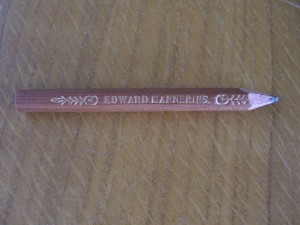
Dover Mills, Box 1, Item 75

The first and perhaps one of my favourite items in the collection is this personalised pencil of the owner of Buckland Mill, Edward Mannering. I remember having personalised pencils (both drawing and colouring) when I was younger and I suppose that I had always thought of these as an invention on the post war era. But to find one which could be traced to the late 19th early 20th century was a pleasant surprise. I loved the little flourished design either sides of his name. Moreover, you can see where the owner has sharpened the pencil with a knife. Perhaps the owner stopped in order to preserve the name and thus shows us the care people could have for their belongings, just as we have today.
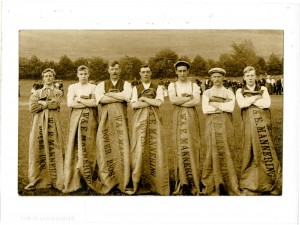
Dover Mills, Box 1, Item 21

This next photo I found fascinating because it gave a face to the ordinary men that worked in the Mannering Mill’s in 1908. A chance to see the faces of those from less well-off backgrounds in history is rare until the development and spread of the camera. This looks like a type of sports day as you can see that the spectators in the backgrounds have a rope to separate them from what could be the track. These men, stood all in flour sacks could have been taking part in a sack race. There is no hint as to whether these men worked in the mill but it could be a safe conclusion to draw. It is also unclear as to whether the mill owners would have organised this type of sports day or whether it was a general community day for all those close to the Dover mills. But again like the pencil, I had long thought that this idea of a community/work sports day was a modern invention, like dress down Fridays. However, this picture sparks many questions and ideas as to how Edwardian communities would come together, what they would do and why? It is a nostalgic ideal of a community all coming together and one of the few things in this blog that I found has unfortunately depleted throughout the years.
Dover Mills, Box 1, Item 36D

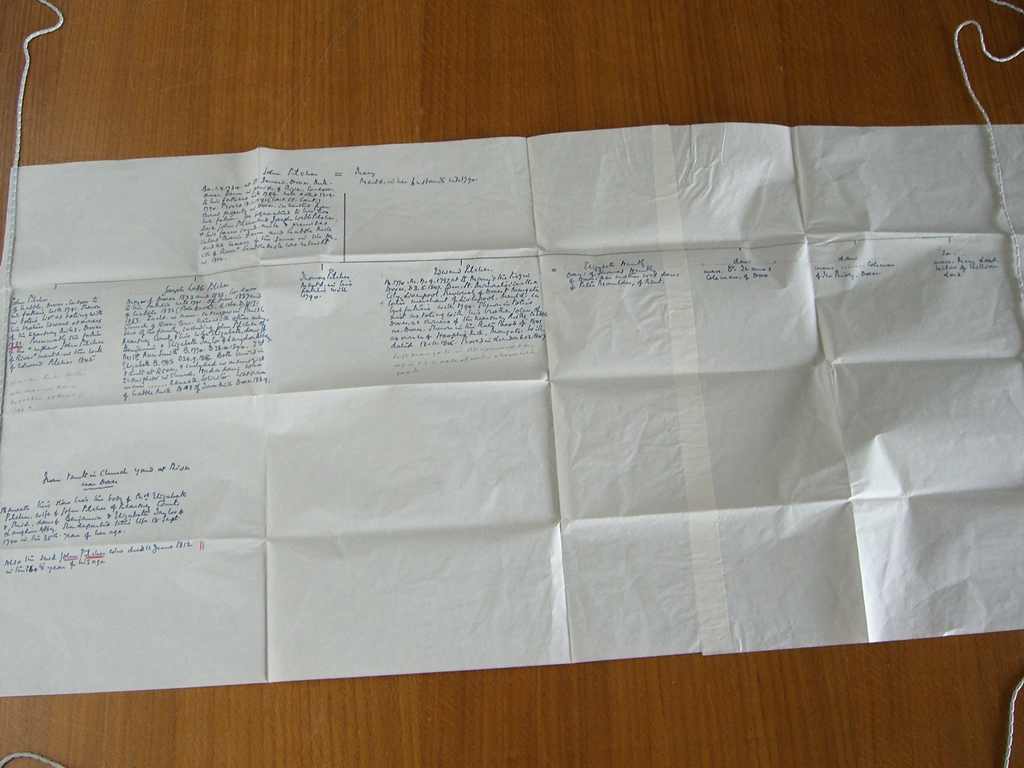
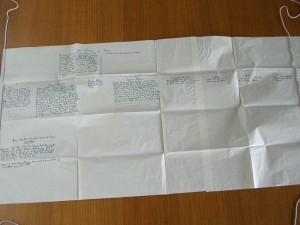
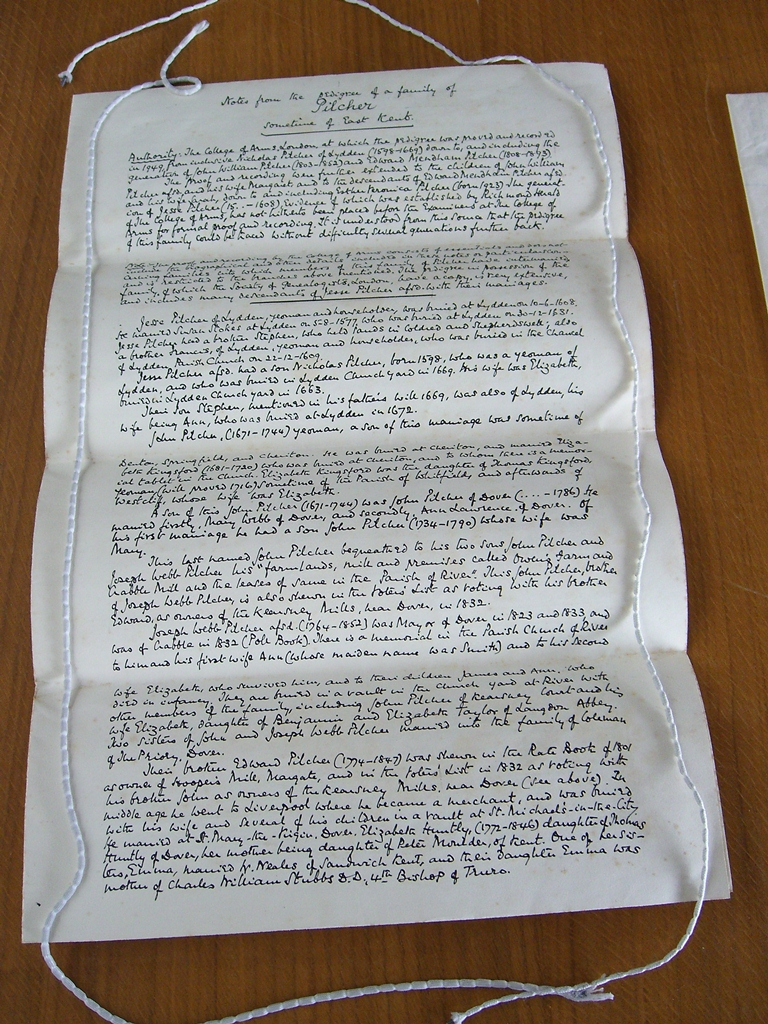
The recent upsurge in the interest in family history has been shown with the many adverts for genealogy history by sites like Ancestory.com. The idea of researching and presenting you past is not new (Noblemen of the Middle Ages would have wanted to show off their illustrious family tree). But some historians have criticised the idea of ordinary people collecting their family history as not really helpful for the bigger study of history – but some highlight the chance for new angles of research[1].  However, by having this research done on the Pilcher family, we have a lot of background information as to who owned various mills in Kent and their life story. Niche areas of history are becoming ever more popular and it is this type of research that is invaluable to people interested in the topic.  Moreover, the ability to trace a family from 1598 to 1952 can help in so many other regions of history. So I included this document because of its vast usefulness as a source but also to show the enduring appeal of genealogy and the continuing importance, despite some historians protests, of its use to general history.
Dover Mills, Box 1, Item 36 E
Dover Mills, Box 1, Item 36 E

Chegworth Mill,Box 2, Item 31T

Chegworth Mill,Box 2, Item 31T

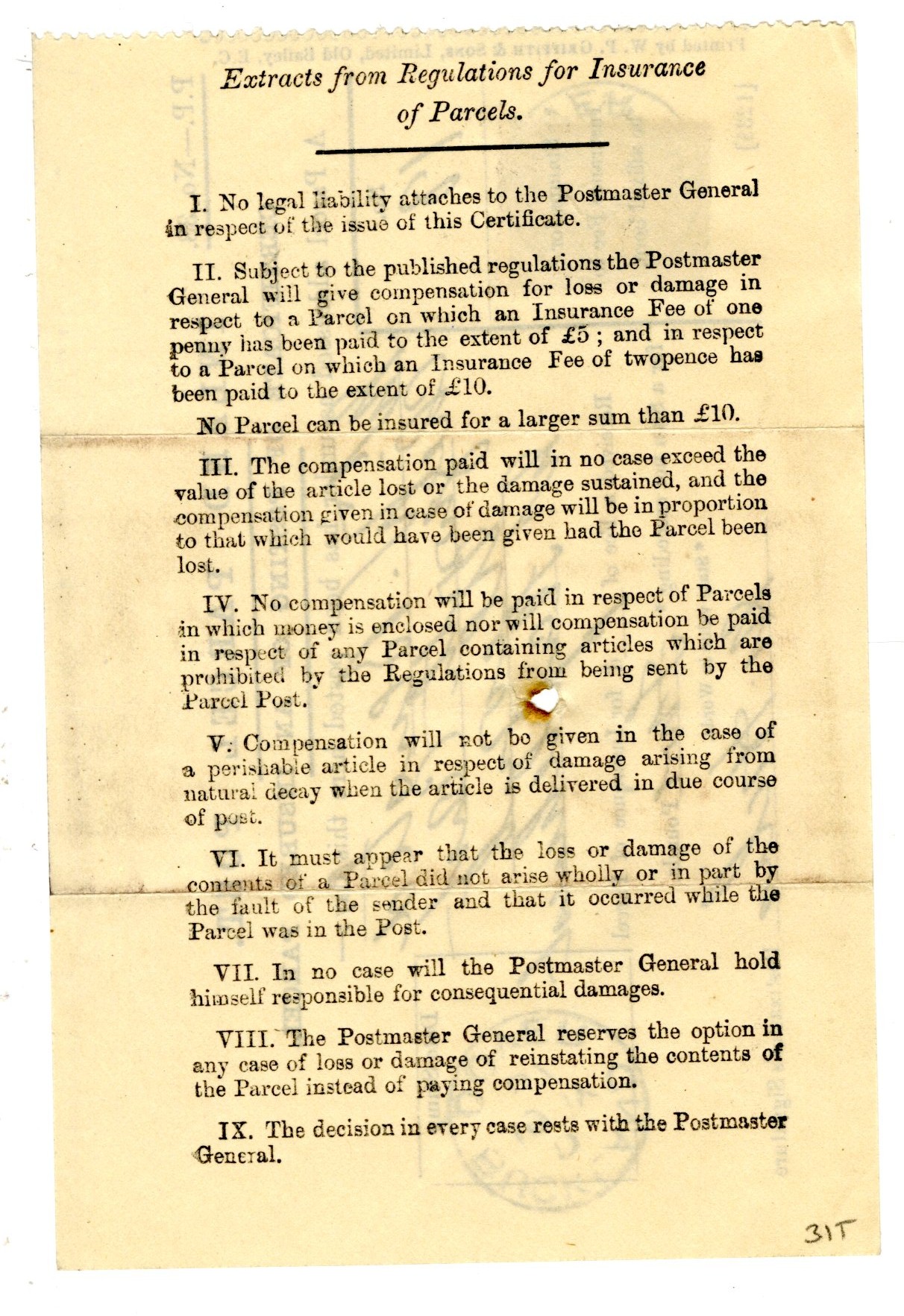
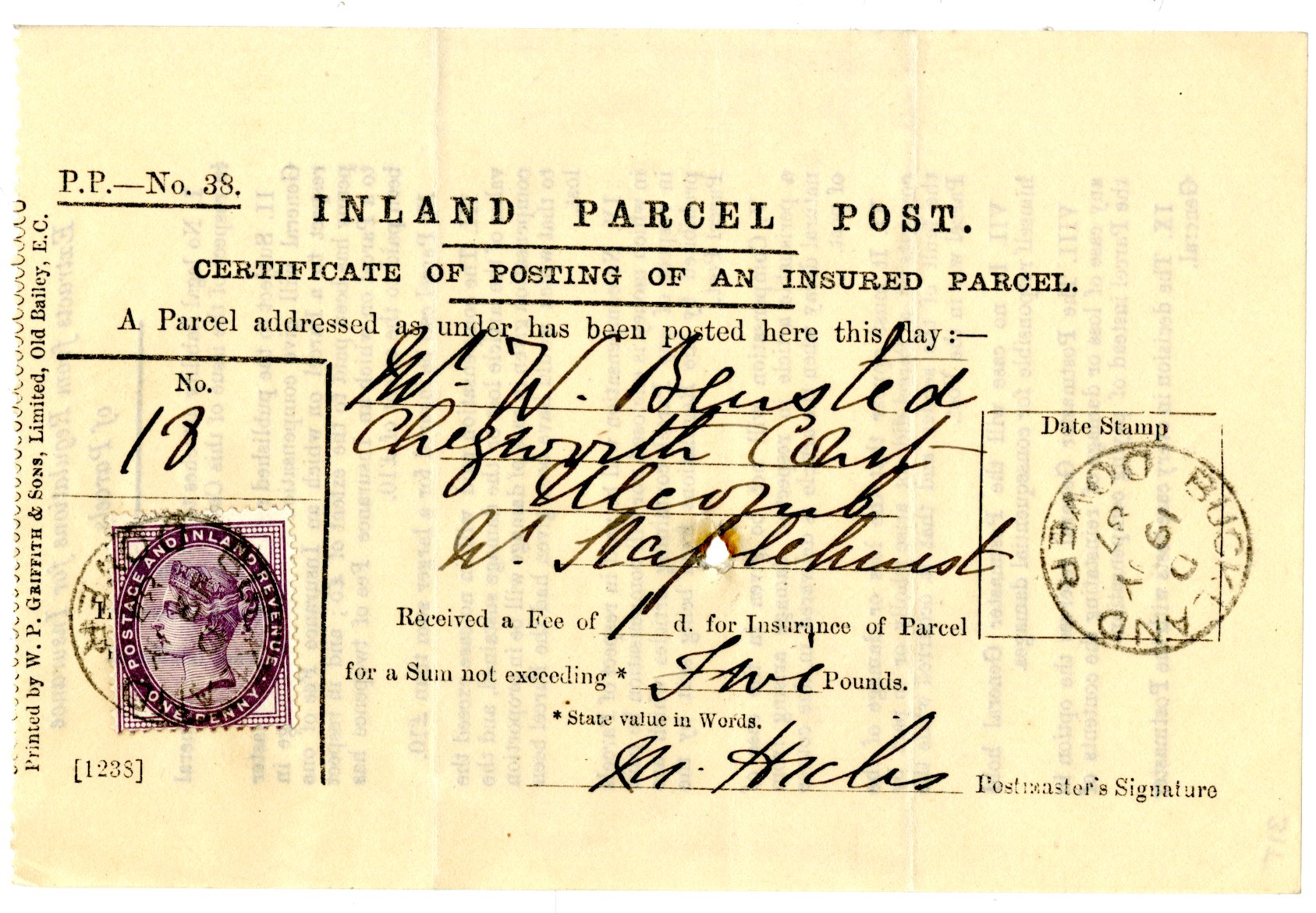
The postal service has been an important part of the country for many generations and although we all have our modern gripes with the system,we still rely on it regularly to transport our letters and parcels. But for special items, we would usually get a recorded delivery so as to ensure the safe deliverance of the item. Like many, I presumed that it was only in recent years, as the country expanded and long distant relationships became more normal, did the invention of recorded post come about. But my opinion was soon changed when I perceived this ‘certificate of posting of an insured parcel’ with in the C. P. Davies Collection. I loved seeing all of the terms and conditions on the back of the note explain who was responsible for what and what would be done in case of loss or damage (and to be honest, the terms and conditions are a step that we all skip over from time to time). However, unlike today’s jargon-busting maze of terms, the sheer simplicity and openness of the regulations was something that I wish had continued from this period!
Chegworth Mills, Box 2, Item 31T

Chegworth Mills, Box 2, Item 31T

What this small slip of paper also reveals to us is that people must have cared about what they were sending and, similar to the pencil, the attachment we see to object is much like our own. Moreover, the want to ensure that something personal or important has arrived at its destination is the exact same mind-set that we have today, whether it be a birthday cheque or a return for student finance! Thus, I included this small note because of the charm I found in the regulations but furthermore, because I could identify why we would want certain things we post to be protected.
Chegworth Mill, Box 2, Item 20Y

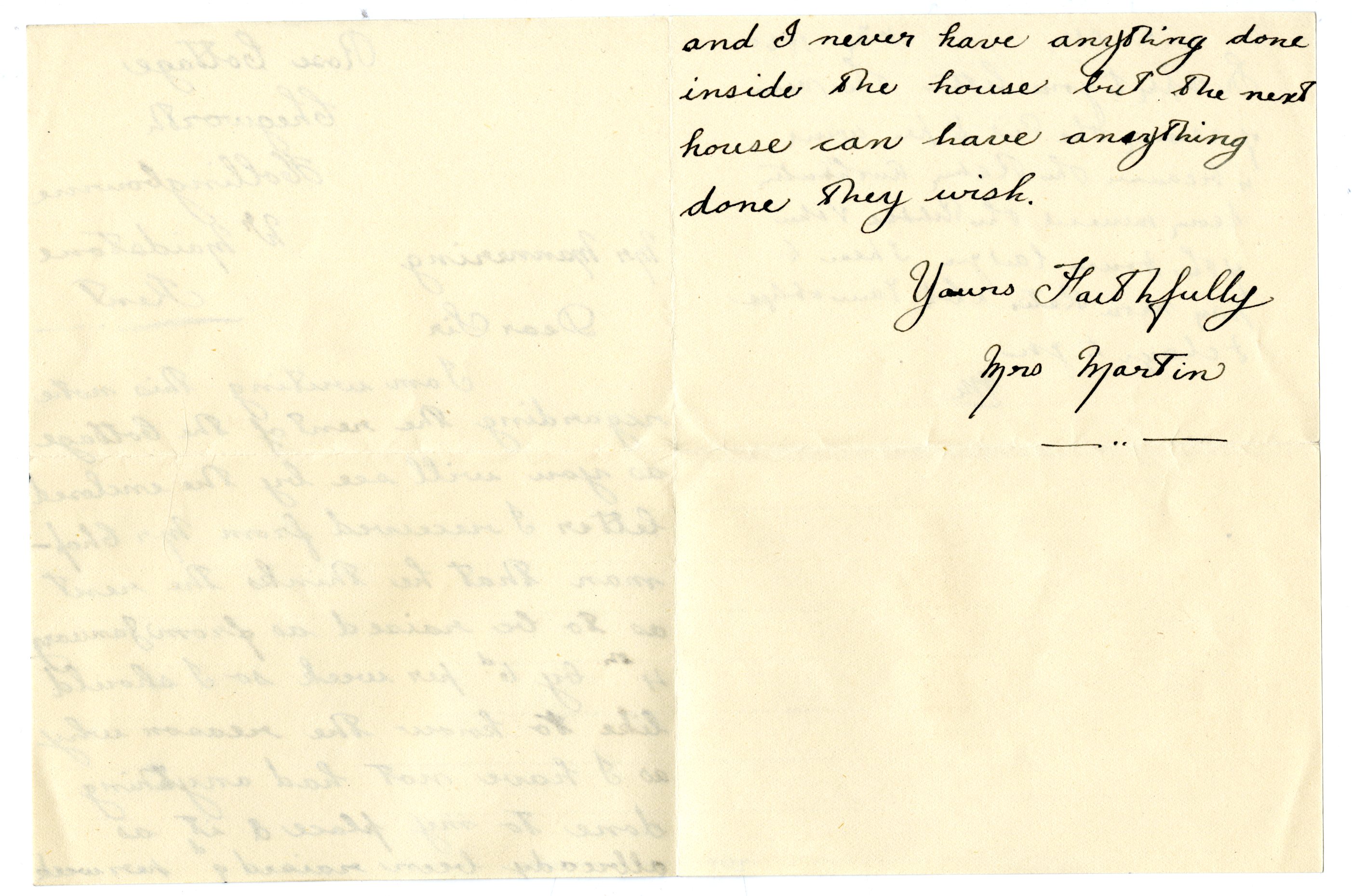
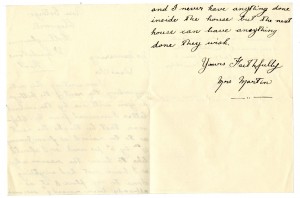
The next item I chose was because of its simple ability of letting us see someone’s everyday life from the earl part of the 20th century. The letters from Mrs Martin to her landlord, Mr Mannering, were among my favourite documents in the collection and reading them always put a smile on my face. From her letter, I could really paint a picture in my mind’s eye of this lady and what she was like (all from the expression of her words, the tone, and the phrases that she uses in the letters). The first picture is the end part of a letter in which she questions the rise in her rent (although in other letters, despite her protests, she does seem to have shortcoming with regards to the rent). What I found interesting was the final sentence of: “I never have anything done inside my house but the next house can have anything done they wish”. To me, not only is there a bitter jealous tone, but I sense
Chegworth Mill, Box 2, Item 7

Chegworth Mill, Box 2, Item 7

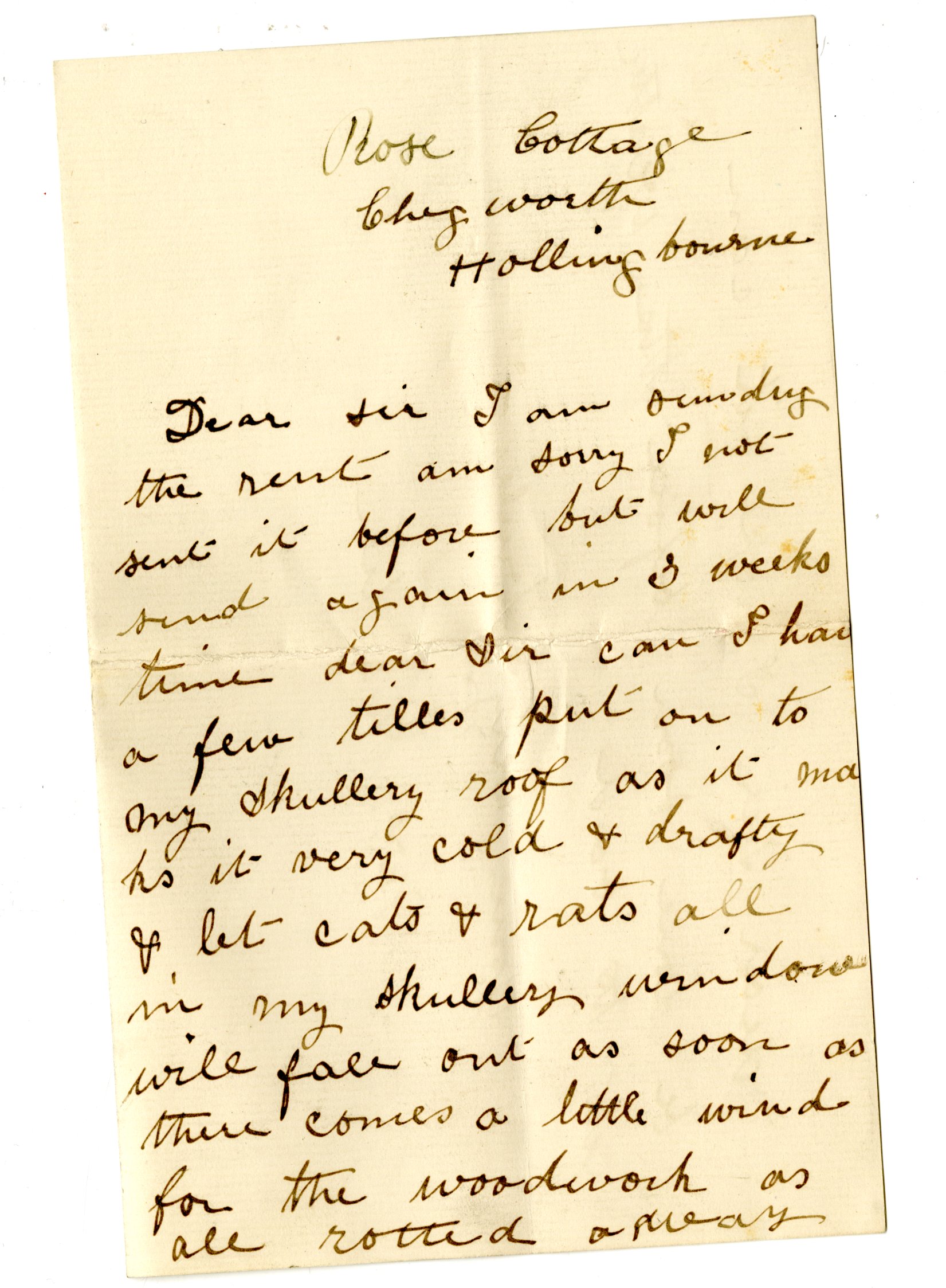
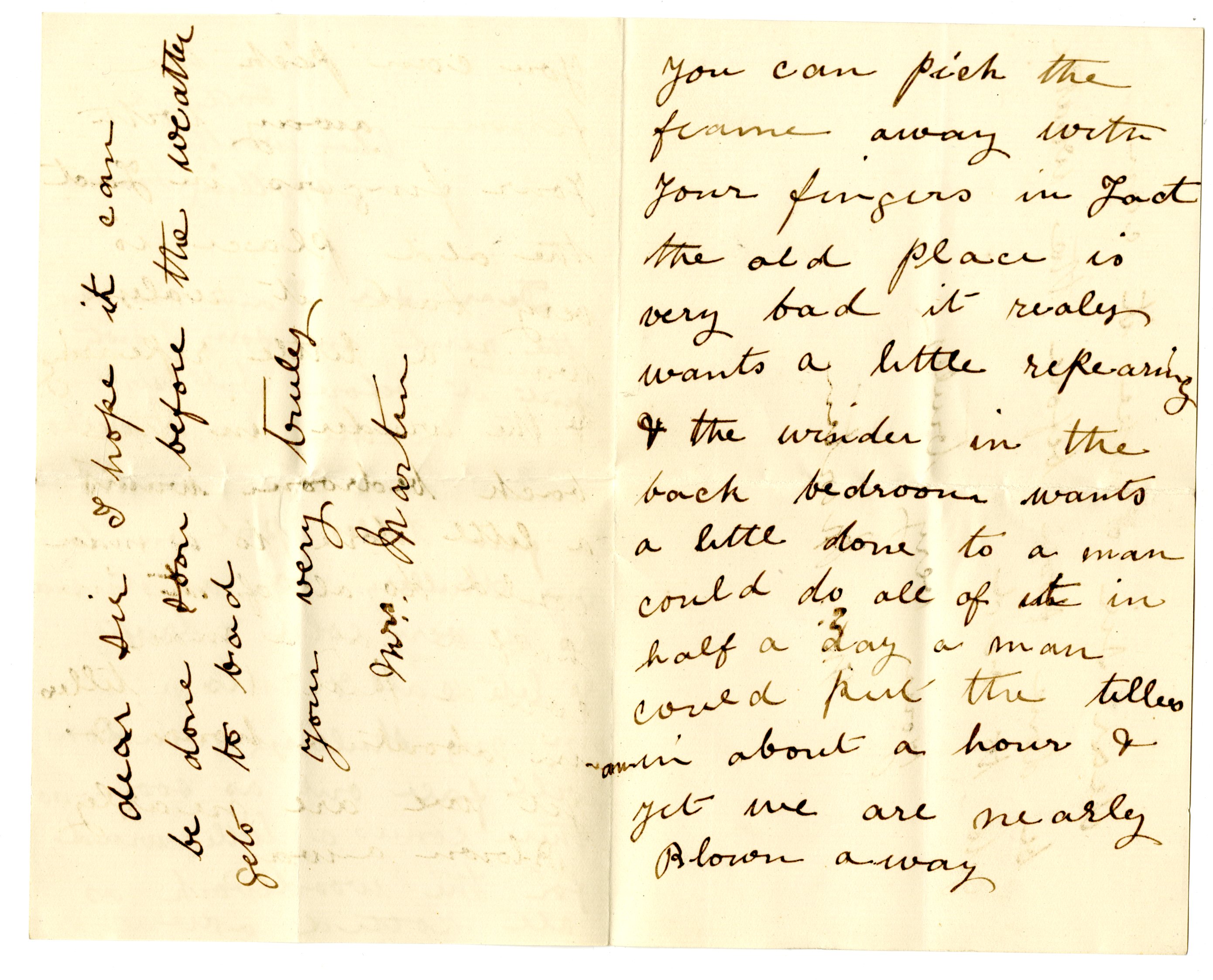
that there is a massive hint that she would like improvements done to her house, but she does not wish to out rightly say. I could empathise with this as I started to think that we all, at some point, out of politeness try to ask or hint at things that we would like in an indirect way. The next letter I picked out follows this trend of wishing for work to be done, but has less of the jealous tone, more of the ‘woe-is-me’ feel about the letter. She starts off asking for some new tiles on the roof as it is “cold and drafty” but this then snowballs into the idea that it lets “cats and rats” into her scullery. Furthermore, it has resulted in the rotting away of the woodwork of her window as ”you can pick the frame away with your fingers” (which to me suggests that she has been occupied with this problem for some time). Finally she concludes by saying that “the old place is very bad it really wants a little repairing”. The endless list of issues with the house that all seem to stem from one another gives a sense of hyperbole which made me smile while reading it. The problems she had can be so easily transferable onto our modern world, that we can really see the startling similarities to our modern reliance on councils or landlords to help fix and maintain our houses.
Chegworth Mills, Box 2, Item 7

Chegworth Mills, Box 2, Item 7

In conclusion, I hope you have enjoyed looking at some of the unique and interesting items that I found within the C. P. Davies Collection and that, just as they have done for me, they have shown you how many similarities we still have with the past (despite the general consensus that we have changed and that we are so different from our ancestors 100 years ago). These little items can reveal to us so much about everyday life, a topic which is only just being revealed to us in the past few decades. Some may not see a past generation’s everyday life as particularly exciting or interesting compared with big events like the Reformation or World War One; however these are big events that radically changed society (hence why we all have this perception of drastic change). It was nice to discover these artefacts and documents and see that, below the surface, the themes and attitudes to everyday life such as community, care of belongings, up keep of a house etc. can be seen as relatively the same as over a century ago. Of course there are some small differences between us (a shown in some of these documents) however, as the title suggests, our basic cares and worries in the world, regardless of the mass changes that happen, seem to always continue on a steady course.

By Charlotte Daynton


Please comment below with your thoughts on the items featured or if you have any more information about the materials covered.


[1] Tim Brennan, ‘History, Family, History.’, in Hilda Kean, Paul Martin and Sally J.Morgan (eds.), Seeing History: Public History in Britain Now, (London: Francis Boutle Publishers, 2000), p.44.
Wood would: The forgotten campaigner

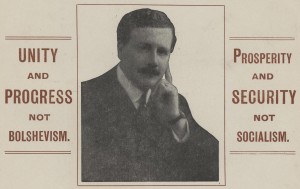
Few people know who Sir Howard Kingsley Wood was, or what he did. A century, after all, is a long time in which to forget. But recent work by historian Hugh Gault, researching for a biography on Wood, has brought this little known and unassuming man into the light. To celebrate the new biography, Special Collections & Archives is curating an exploring the early part of his life: ‘A Thoroughly Modern Man? Sir Howard Kingsley Wood, 1881-1924’.

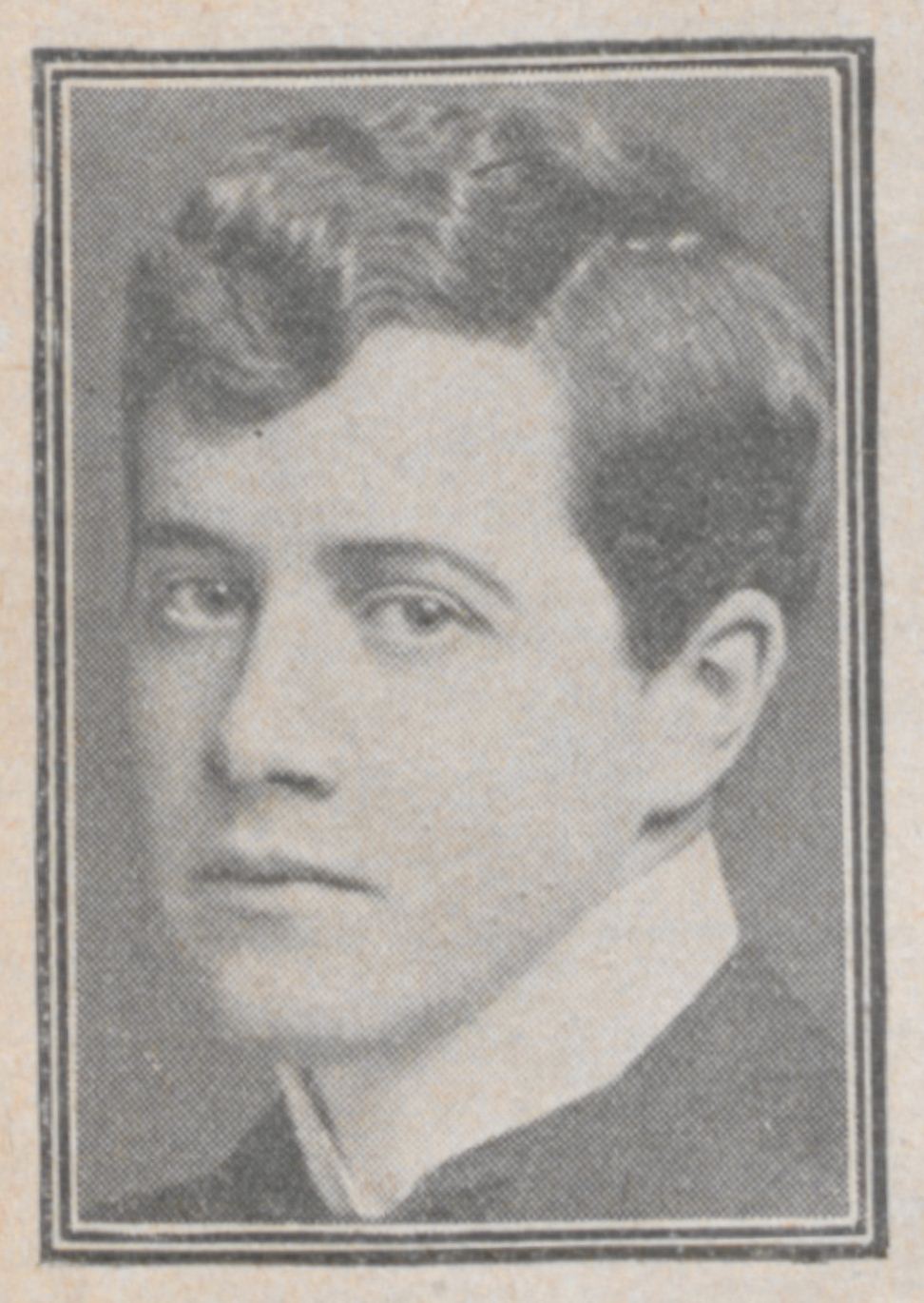
Wood in his mid 20s, a recently qualified solicitor

Wood as recently qualified solicitor, pictured in ‘The Methodist Recorder’ in 1905

Born in 1881, Wood’s lifetime saw a huge number of changes; from the First World War to the successful provision of Votes for Women, and this exhibition charts the formative influences on his life.

Wood was a politician, lawyer and a Methodist: all of these aspects of his life combined to make him a key player in significant political and social changes happening in Britain one hundred years ago. In fact, many of the issues which the turn of the century government was dealing with were not so different to those of today; health, tax, welfare and housing to name but a few.

With his background in insurance, Wood was key in setting up National Insurance; working as a Poor Man’s lawyer, he successfully prosecuted a number of employers for death and injuries at work. Standing up for the weakest in society was one of his core values: he championed pensions and other benefits for widows, orphans and relatives of soldiers fighting in the First World War. He also saw first-hand the appalling conditions in which many lived and was determined to improve them. In proposing a Ministry of Health in 1918, Wood set in motion the best of the welfare state, aiming to provide good homes, prevent disease and support the disabled. Many of his proposals are still with us today in the guise of the National Health Service and laws protecting employees from exploitation.

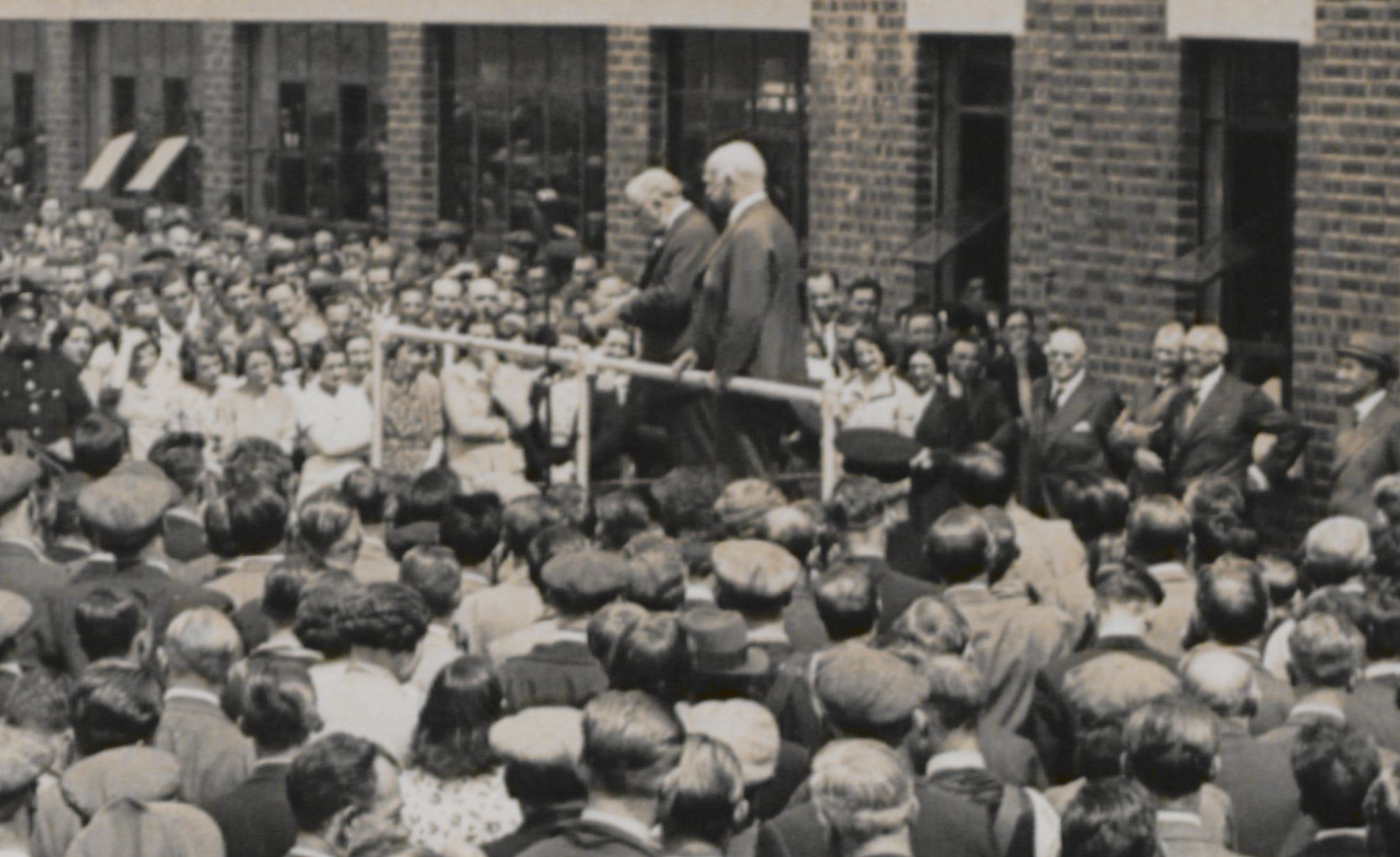
Wood giving a speech as Secretary of State for Air in 1938

Wood giving a speech as Secretary of State for Air in 1938

Later, Wood would continue his mission as Postmaster General, Minister for Health, Secretary of State for Air during the Second World War and finally Chancellor of the Exchequer.

This exhibition focusses on Wood’s formative years from his training as a solicitor, his experience of elections and insurance, and his role as a London County Councillor during the First World War. Come along to the Templeman Gallery (next to the Library Café) from 22 May to the 20 June to find out why this man is worthy of remembrance.

For more information about the materials in the Kingsley Wood Archive at Kent, take at look at our Collections pages. For a flavour of some of the items in the collection, see previous blog posts ‘The antiquity of new politics‘ and ‘Flu a hundred years hence‘.

The exhibition coincides with the publication of Hugh Gault’s book, the first part of a new biography of Kingsley Wood, Making the Heavens Hum: Kingsley Wood and the Art of the
Possible, 1881-1924
(Gretton Books, 2014).

Oranges, sensation and the Lyceum theatre: student exhibition

On Monday evening, we had the wonderful opportunity to celebrate a term’s worth of students’ hard work, intensive research and in depth study on some of our archival materials.

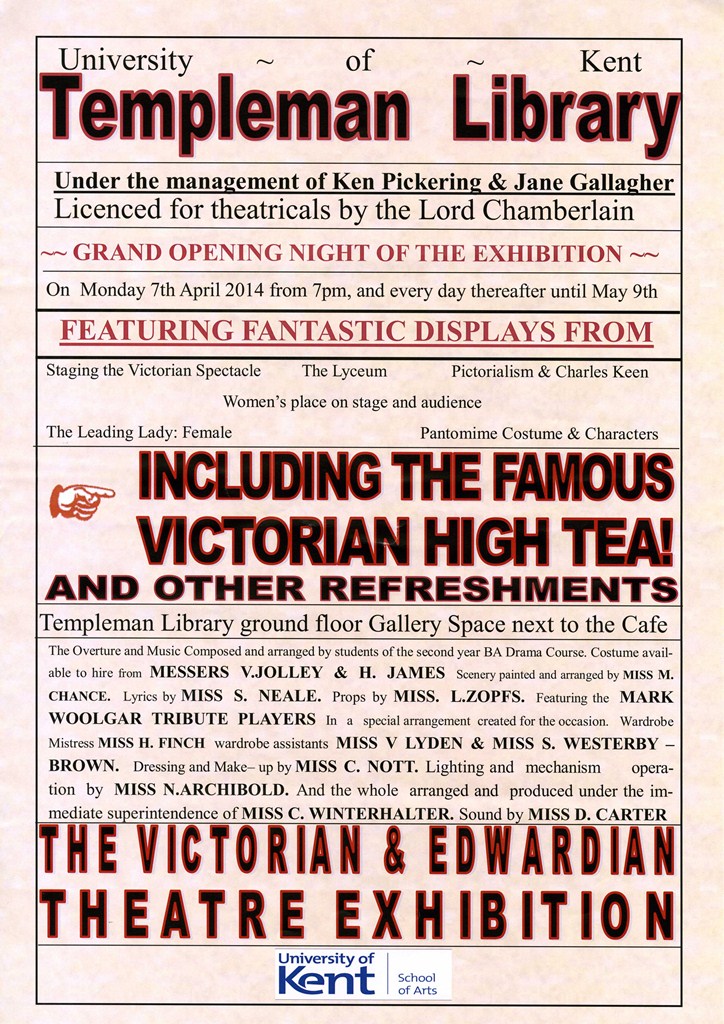
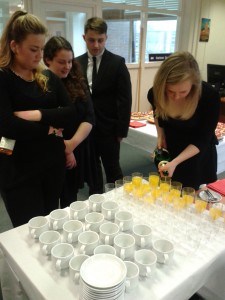
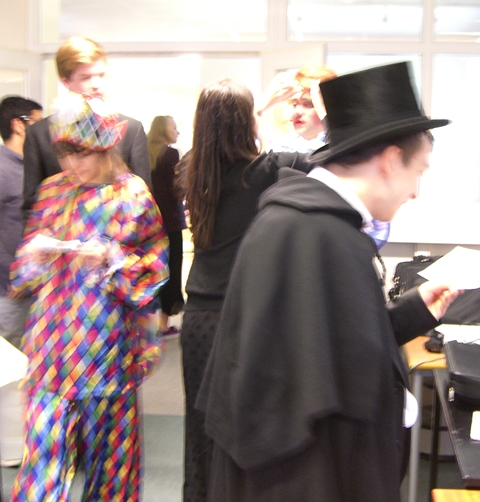
posterAll term, second year students from the Drama department, taking the British Theatre History: Victorian & Edwardian module, have been enjoying enhanced access to some of our unique and rare Theatre Archives. This access has involved two hours of teaching with the collections each week, and the opportunity to explore and research a topic of their choice independently. Their work has culminated in an exhibition curated entirely by the students, in groups, presenting their research and the materials which they have used. It’s been wonderful to see people get so inspired and enthusiastic about the materials which we’re lucky enough to hold.

Students with their orange poll

Students with their orange poll

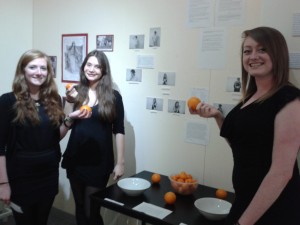
This year, we’ve had some very innovative ideas presented, including a walk-along timeline, a reconstruction of the sensation scene from ‘After Dark’ (on a miniature scale) and an orange poll about the real orange women in the theatre. The topics covered include sensation on stage, women in the theatre, pantomime costume and characters, damsels in distress, the Lyceum Theatre and pictorialism and Charles Kean. As ever, the students’ work has been illuminating and has shown just how creatively archival materials can be used.

 ‘Very good, the costume was amazing’

The students arranged the launch, refreshments and all!

The students also arranged the launch, refreshments and all!

On Monday, we celebrated all this hard work with the launch of the exhibition, which was attended by a wide range of people who left great feedback. The students have, I think, been amazed by what they have achieved and delighted with the responses – and here in Special Collections, we’re very proud of their success!

‘Excellent work by all and very well presented’

This is the fourth year which this module has been run in conjunction with Special Collections. Each year has brought up some new success and, we hope, inspired some new theatre historians into archival work. It’s also become something of an annual tradition, and we’re delighted that this work has now become firmly embedded in the academic year. The pressure is on for our 5th anniversary next year!

‘A wonderful worth-while event and I loved the sequence of exhibits’

The exhibition will run until 8 May, in the Templeman Gallery, during library opening hours. Please do pop in to have a look, and let us know what you think!

Victorians, assassinations and monsters

Here we are at the end of the first week of term – and would you believe, it’s almost exactly a month since Christmas. With so much of January behind us already, we’re looking forward to the rest of the year and I’d like to take the opportunity just to mention some of the excitement we’ve got to come in the next few months.

0594848

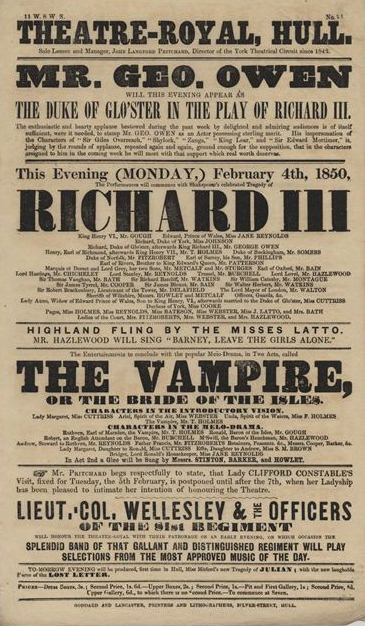
Playbill from Theatre Royal, Hull, 1850

On Monday, we had our first taught session with the Victorian and Edwardian Theatre students in the reading room. It’s always great to get to meet and talk to researchers, as well as providing materials to inspire them and help them with their discoveries. One of the great things about this module is that each time we’ve run it, all of the second year Drama students are swept up with enthusiasm for the materials and being able to use them in creative ways to explore a topic of their choice. Of course, we’re in the early days so far and tutors Ken Pickering and Mark Woolgar still have plenty of sessions left – covering topics as diverse as pantomime, Henry Irving and votes for women. We’re very much looking forward to getting to know the students and to support their work which leads to a public exhibition in April.

If you’d like to learn more about this module, or see examples of past exhibitions by students of this course, take a look at our Exhibition pages on the website. If you’re interested in setting up teaching opportunities with the collections, please do get in touch with us.

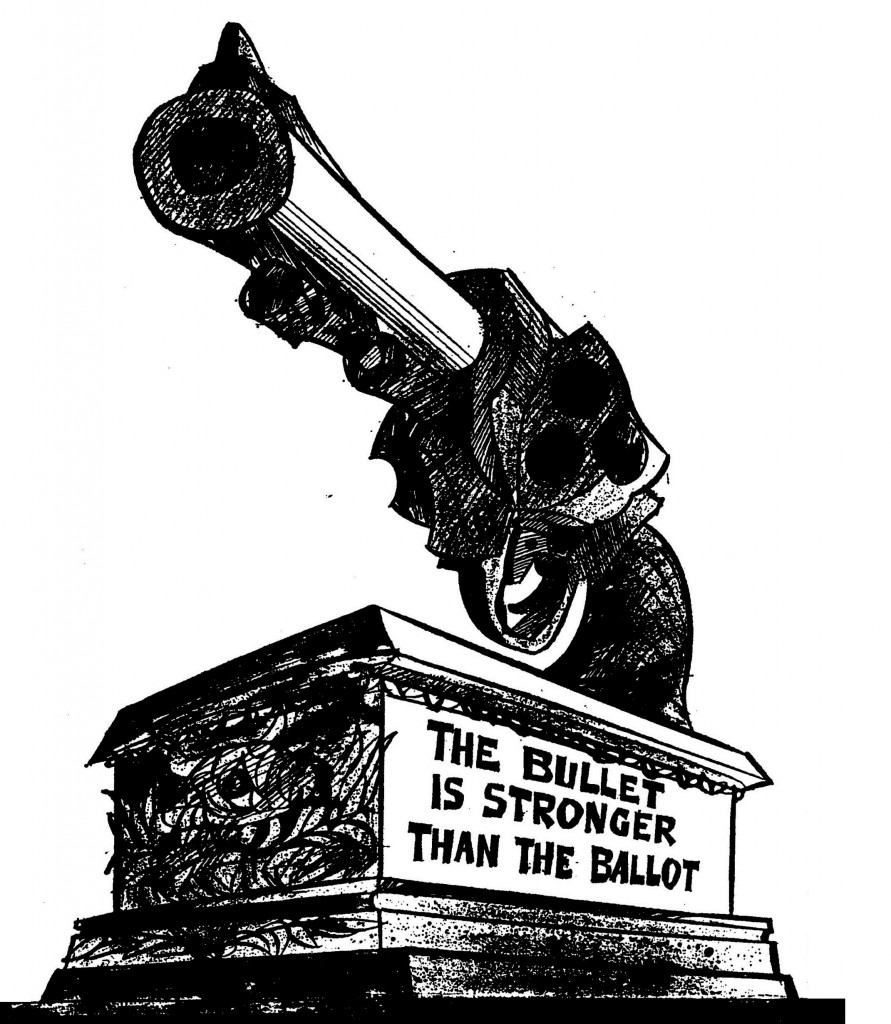
While we’re on the topic of exhibitions, we have a brand new exhibition in the Gallery this term. ‘The Bullet is Stronger than the Ballot‘ is built around the unique holdings on the British Cartoon Archive, and explores the theme of political assassination. This ties in with the Beaney’s season on the theme which features Manet’s ‘The Execution of Maximilian’ and John Opie’s eighteenth century painting, ‘The Murder of Thomas Becket’. More information about our exhibition, which will run until 2 March, is available on our website as well.

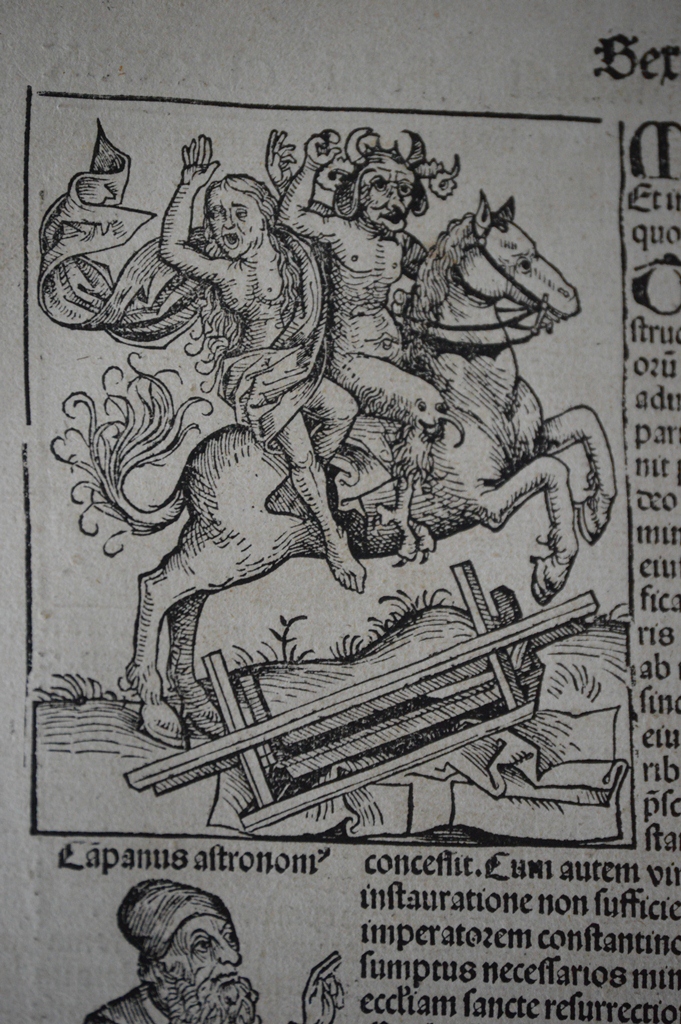
The Devil rides again...come and discover the monsters hidden in the library

The Devil rides again! Discover monsters hidden in the library

If you’re more interested in some mystery and the odd spine-chilling tale, the second lecture in our annual series could be the event for you! Monsters in the Library: M. R. James and bestiaries at Canterbury Cathedral will be presented by Diane Heath, who is an assistant lecturer in History at the University of Kent and also teaches at Canterbury Christ Church University. She will be telling us about her research into mythical monsters and beasts in the Cathedral’s collections, drawn together through the work of scholar and author Montague Rhodes James. I have been told that we may discover, as part of this lecture, the medieval methods for finding unicorns. In any case, it will be an intriguing evening which we hope will not result in any nightmares!

The talk will take place at the AV Theatre, Cathedral Lodge, in the Cathedral Precincts at 6.30 on Wednesday 12 Febuary, with refreshments from 6pm.

And that’s all we have time for this week, although I’m sure I’ll be updating you about all kinds of exciting and interesting aspects of our collections in the next months. I hope that we’ll see you at some of these events, and please do let us know what you think of them!

An unforgettable year: 2014

A very happy new year; on behalf of the Special Collections & Archives, I’d like to wish you a successful, peaceful and happy 2014. We finished 2013 in celebratory style, with two book launches for the ever talented students of Simon Smith’s The Book Project module, and a festive get together for our volunteers. Now back at the Templeman Library, we’re getting back into the flow of things, with the reading room back to our normal opening hours, ahead of the start of term on 20 January.

And what a term it’s likely to be! To start with, we have our first exhibition of 2014 opening in just a week’s time, on Friday 17 January. ‘The Bullet is Stronger than the Ballot‘ will explore cartoons of political assassinations, in collaboration with The Beaney, who are 15884 croppedhosting Manet’s ‘The Execution of Maximilian’, as part of a season looking at political assassination, as far back as Thomas Becket. Drawing on a wide range of cartoonists’ work since the Second World War, ‘The Bullet is Stronger than the Ballot’ will be on display in the Templeman Gallery until the end of February. Dr. Nick Hiley, Head of Special Collections and Curator of the British Cartoon Archive, will be giving a talk about British cartoonists and political assasinations at the Beaney on Thursday 20 February.

Exhibition launch 2013We’ll also be heavily involved in teaching this term, particularly with the Drama department, whose ‘Victorian and Edwardian Theatre‘ module has become a huge success. This involves intensive teaching in Special Collections, encouraging students to analyse the rare and unique performance materials we hold, and culminates in an exhibition curated by the students in the Templeman Gallery in April. I’m sure I will be blogging much more about that as we get closer to the time.

With the Templeman Development Project now well under way (foundations and ground floor level now visible), we’re starting to see our planned changes coming into effect. The first impact is going to be the closure of the Templeman Gallery space in the summer of 2014. This means that our final major exhibition, for the time being, will also be our first public presentation of the Kingsley Wood papers, in May 2014. The exhibition will open with the launch of historian Hugh Gault’s new book Kingsley Wood: Making the Heavens Hum. We can’t wait to see the results of all Hugh’s hard work, and many hours spent poring over cuttings in the reading room!

Section of Kingsley Wood's election poster for 1918.

Section of Kingsley Wood’s election poster for 1918

In addition, we still have two talks to come in this year’s Special Collections & Cathedral Library Lecture series – in February, Diane Heath will be telling us all about the monsters and beasts in medieval books, followed by Olly Double guiding us through the giggles of popular comedy, from music hall to standup in June.

Of course, we’ll also be doing all of our normal work cataloguing, processing and caring for collections, helping you with enquiries and research and in particular preparing for the University’s 50th anniversary celebrations next year. And that’s not to mention the start of the 4 year World War One centenary commemorations, or the exciting prospect of watching the Templeman extension – and the new Special Collections basement, offices and research and teaching space – take shape.

All in all, I think it’s going to be a very exciting and busy year!