Category Archives: Uncategorized

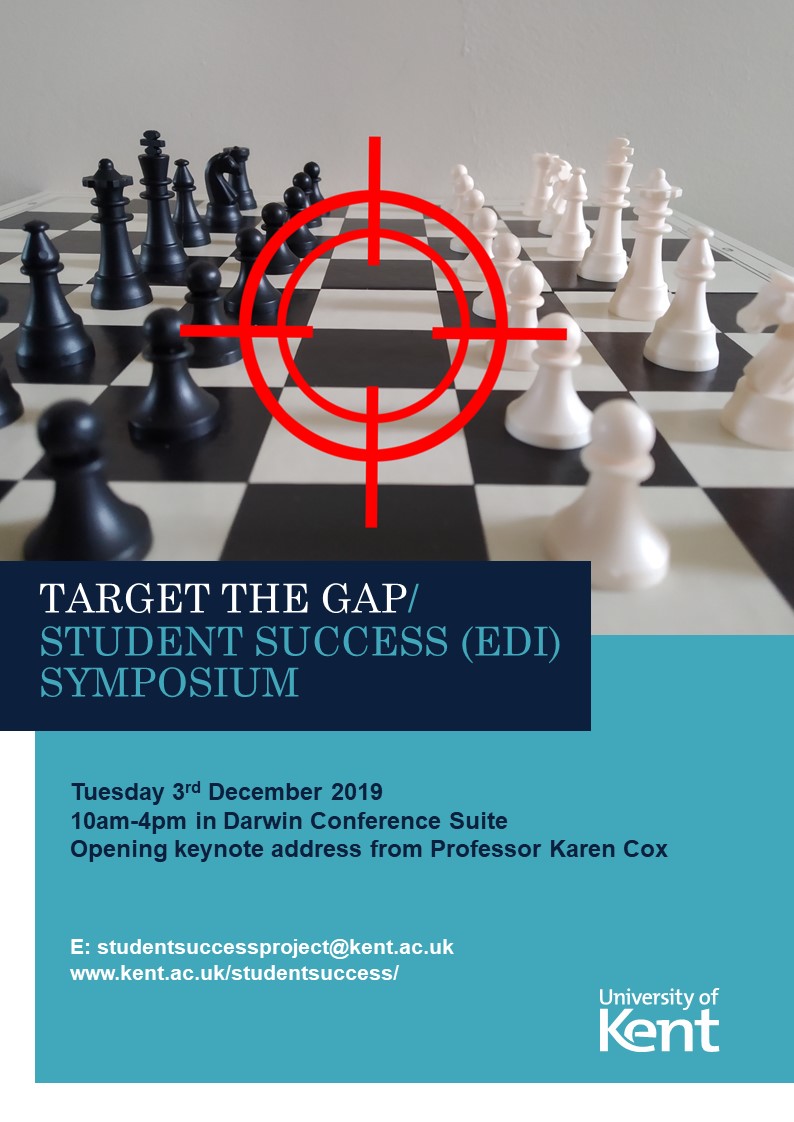
Symposium_poster4

Target the Gap: Student Sucess Staff Symposium

The Student Success (EDI) Project are delighted to present a special one-day Staff Symposium, in which we look at the ‘what, why and how’ of addressing the Black and Minority Ethnic student attainment gap at the University of Kent. Delegates will hear:

‘Why‘ we need to address attainment gaps, and potential consequences for the University of Kent if we don’t

‘How’ Student Success interventions are supporting students and impacting attainment gaps in Student Success Project Schools

‘What’ the University of Kent and your school needs to do to reduce attainment gaps, and ‘when’ you should take action

Who should attend?   All University of Kent staff – we can ALL do something to reduce attainment gaps.

Event booking information:

 Delegates may attend either the morning or afternoon sessions, or both.

A buffet lunch and poster exhibition will provide networking opportunities, with Student Success Project School staff on hand to discuss interventions in their respective schools, highlighting ‘what is working’ but also what challenges they have faced.

Full event details, Symposium programme and ticket reservations are available on Eventbrite via this link:     Student Success Project: Staff Symposium tickets 

Event organiser:   Chris Laming – Student Success project Administrator

Contact:                 studentsuccessproject@kent.ac.uk
Patty Baker

Lessons from Roman Floral Design workshop

Dr Patty Baker, Senior Lecturer in the Department of Classical & Archaeological Studies, has received funding from the Institute of Classical Studies to hold two public outreach events in early 2020. She will work with local floral designers, flower growers, and the Canterbury Flower Club leading workshops that focus on how Roman floral designs and gardening can assist in promoting sustainable floristry today.

This workshop brings together two strands of Patty’s work experience. First, her research focuses on Greco-Roman medicine, health, and wellbeing. Recent publications explore the sensory experiences the Romans had in their gardens along with their conceptions of ‘pure air’ that they believed contributed to their humoral balance that informed their mental and physical health. Through her research, she found that flower crowns, like gardens, were believed to have balancing properties. Second, she had a summer and holiday job when she was an undergraduate working as a florist, so knows the business and how to arrange flowers.

The global nature of the floristry business makes it environmentally unsustainable. There is a movement to grow and buy local, seasonal flowers, as well as to avoid the use of non-biodegradable floral sundries. By introducing historical methods of design to those who work in the field, Patty is hoping to contribute to this growing environmental movement.

Have your say

2019 Staff Survey – have your say now!

Just to remind you the staff survey will remain open to all staff until 13 November. You can take part in the survey now via this link.

This is an excellent opportunity for you to provide confidential feedback on your perception of Kent as a place to work and help us understand some of the issues that affect your working life – what we do well and what we can do better. We want to know how we measure up against our values and Kent 2025 ambitions during this time of organisational change.

Unlike the previous survey, the main purpose is to gauge feelings across the University during this time of change, enabling us to benchmark engagement levels during and after the Organising for Success project. Obtaining a measure of how well (or not) the University is navigating through change will provide valuable feedback on how and where to act. The results will be used for high-level action planning which will feed into the strategy for effectively delivering Organising for Success.

The Staff Survey is just one method of obtaining staff feedback during this time of change. Organising for Success was developed following extensive feedback from staff, with a number of staff engagement sessions as the proposals were developed. The focus is now on implementing the agreed proposals to ensure we can deliver the project by the end of 2020.

Staff will continue to have a voice as the plans are implemented – each implementation strand for Organising for Success will form stakeholder groups as needed to implement part of the project, with Strand Leads responsible for ensuring appropriate levels of engagement with all stakeholders.

Additionally, as announced in a  recent VC blog, EG members and colleagues will be holding further Open Forums later in the year which will allow feedback on what is working, what is not working as well as we would like, and how we can do things differently. Please visit the dedicated Organising for Success webpage for more detail.

For more information on the survey, please see our Staff Survey webpages.  If your question has not been answered here, please speak to your line manager or email: staffsurvey@kent.ac.uk


University of Kent logo

Cases of suspected mumps

We have been advised by Public Health England South East (PHESE) that there has been an increase in cases of suspected mumps associated with our Canterbury campus.

Please read the PHESE letter to staff and students or read on to find out more.

If you think you have mumps or would like to enquire about being vaccinated, please contact your GP. The University Medical Centre can be contacted by phone on 01227 469333.

Out of hours you can call NHS 111 and the University Nursing Service on 01227 823503 or ext 3503. The service is available to all students and staff at the University of Kent (Canterbury Campus) and is staffed by registered nurses 24 hours a day during term time.

What is mumps?

Mumps is a contagious viral infection. Swelling of the parotid glands is the most common symptom of mumps. The parotid glands are a pair of glands responsible for producing saliva. They’re located in the side of the face, just below the ears.

Other symptoms of mumps include headaches, joint pains and a high temperature, which may develop a few days before the swelling of the parotid glands.

The symptoms of mumps usually resolve within one or two weeks.

Complications of mumps include swelling of the ovaries (oophoritis), swelling of the testes (orchitis), viral meningitis and deafness.

How the disease spreads

Mumps is spread in the same way as colds and flu – through infected droplets of saliva that can be inhaled or picked up from surfaces and transferred into the mouth or nose.

A person is most contagious a few days before the symptoms develop and for a few days afterwards.

If you have mumps, you can help prevent it spreading by:

  • regularly washing your hands with soap and water
  • using and disposing of tissues when you sneeze
  • avoiding university or work for at least five days after the onset of swelling

When to see your GP

It’s important to contact your GP if you suspect mumps so a diagnosis can be made. Let your GP know in advance if you’re coming to the surgery, so they can take any necessary precautions to prevent the spread of infection.

Protecting against mumps

The MMR vaccine protects against measles, mumps and rubella. Two doses of the MMR vaccine are needed. If you are not sure whether you have had two doses of the MMR vaccine, please check with your GP. If you have not had two doses of MMR vaccine, please make an appointment with your GP to get vaccinated. Staff can also receive MMR vaccine if not previously vaccinated. There is no upper age limit for receiving MMR vaccine.

Further information on mumps is available on the NHS website.

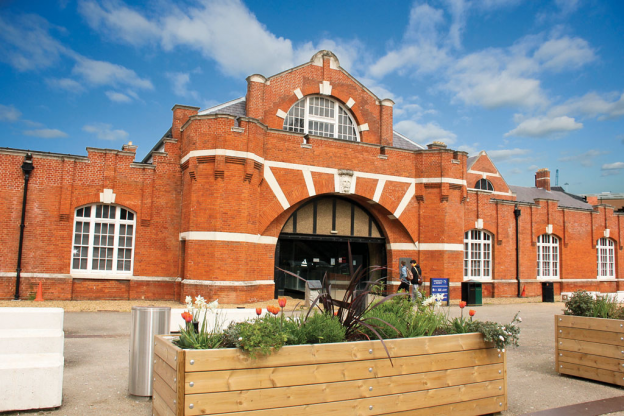
Entrance to the Drill Hall Library in the sunshine

Sexual Assault Responders required for Medway campus

Student Support and Wellbeing are looking to recruit staff to the Sexual Assault Responder (SAR) team at Medway.

The role of the Sexual Assault Responder is to provide immediate support to victims of serious sexual assault or rape at the Canterbury and Medway campuses out of hours (between 17.00 and 09.00) and at weekends. Currently we are only recruiting SARs for the Medway campus.

Full training is provided, and SARs operate on a rota system. The role is to provide advice and guidance to victims of serious sexual assault or rape with regards to aftercare support procedures. The role is NOT a counselling role.

SARs receive a £100 remuneration for joining the team and completing the training, and receive £70 for the first hour of a call out, with time and a half for subsequent hours. Any transport costs are also reimbursed.

A Sexual Assault Responder must meet the following criteria:

  • Be a University of Kent member of staff
  • Be able to access the University of Kent Medway campuses within 45 minutes of receiving a phone call from Campus Security out of hours (considering the accessibility of a staff member’s usual mode of transportation when accessing the University)
  • Attend a training session
  • Have the permission of their line manager to register for the role of SAR.

For more information, to request a role description, or to express an interest in becoming a SAR, please email Becky Wyatt in Student Support and Wellbeing.

iese certificate of excellence

Excellence award for Kent Digital Inclusion Initiative

Kent Digital Inclusion Initiative has been recognised with an iESE certificate of excellence 2019

The certificate recognises the wide-ranging partnership and collective commitment to accessibility between the University and Kent local authorities.

The certificate follows an award of £20,000 Local Government Association (LGA) funding last month (September) for an Initiative-led project to embed digital accessibility and productivity skills training in the wider community.

The University has been working in partnership with Kent Connects (a partnership of Local Authorities across Kent) and Kent County Council (KCC) for the past year. The aim has been to align key strategies around meeting the requirements of the Public Sector Bodies (Websites and Mobile Applications) Accessibility Regulations (2018) with a single approach to Accessibility Statements, training, procurement, auditing and use of assistive technologies within both organisations.

The partnership work has been led by George Rhodes and James Church from KCC and Ben Watson from University of Kent Student Support and Wellbeing.

The value of this type of cross-sector working includes sharing and learning from different experiences and skills. Through the shared expertise of the two leading organisations, an initial plan of deliverables was devised focusing on:

  • Shared resources for improving accessibility made available to all partners
  • Awareness raising through conferences and training for staff
  • Engagement with a variety of partners that cover diverse services including Libraries and the NHS
  • Engagement with central government to represent the concerns of our sectors and to work together to agree common sense approaches to new regulations.

Kent Accessibility Statements

Among results so far have been an accessibility statement published by both KCC and the University – an easier-to-read guide to getting the best from our sites, as well as advice on potential accessibility issues.

The University and KCC were among the first public sector organisations to publish these statements using the new model and our collective statements had over 9,000 hits between June and September 2019. Lessons learnt from publishing the statements were also shared with the Government Digital Service (GDS) which informed the development of their subsequent guidance.

Digital Accessibility Toolkit

All of the Kent Digital Accessibility Initiative’s collective knowledge has now been published in the nationally distributed LexDis Digital Accessibility Toolkit.

Please contact opera@kent.ac.uk if you would like to find out more.

7 women's hands placed on each other in solidarity

Nostalgia podcast with Jacqui Double

In the latest episode of the Nostalgia podcast series, Chris Deacy, Head of the Department of Religious Studies, interviews Jacqui Double who works in Student Support in the School of Arts at the University of Kent

We learn about Jacqui’s religious sensibilities as a child and our experiences of growing up in faith environments and the limitations thereby, and move on to speak about different friendship communities that have been built up, and growing up with children who have challenging medical circumstances.

Jacqui also talks about student support; growing up in the Potteries in a Mormon family, how going to university in Sheffield (where she read English Literature) forced her to make choices to live independently, working for a theatre company, why she is a practical person, reading a book a day as a child, meeting one’s heroes; how truthful we can be to ourselves, her grandmother’s spiritualist beliefs, ‘letting things go’, wanting to be a writer, and the paradox of looking forward while also being obsessed with history.

Research council logo

Kent Professor appointed to AHRC Advisory Board

Kent Law School Professor Diamond Ashiagbor has been appointed to the Arts and Humanities Research Council’s Advisory Board for a three-year term.

The AHRC funds world-class, independent researchers in a wide range of subjects including history, archaeology, law, digital content, philosophy, languages, design, heritage, area studies, the creative and performing arts. Its 15-member AHRC board is made up of senior academics from across the arts and humanities together with leaders from the ‘GLAM’ sector – representing galleries, libraries, archives and museums.

The Board advises the AHRC Council on developing strategies and programmes to support and fund research, to respond to the challenges facing arts and humanities research, and to articulate the value of arts and humanities research to a range of audiences.  This financial year the AHRC will spend approximately £98 million to fund research and postgraduate training, in collaboration with a number of partners.

Other members of the Advisory Board include leaders from Opera North and the Science Museum, and academic experts in performance, dance and technology; literature; classics; and social history.

Professor Ashiagbor’s research seeks to bridge social science-influenced legal scholarship (on labour, markets and economic governance) and humanities-inflected legal scholarship (on history, development and the post-colonial). Her most recent book, Re-Imagining Labour Law for Development: Informal Work in the Global North and South (Hart Publishing, 2019) was published in July.

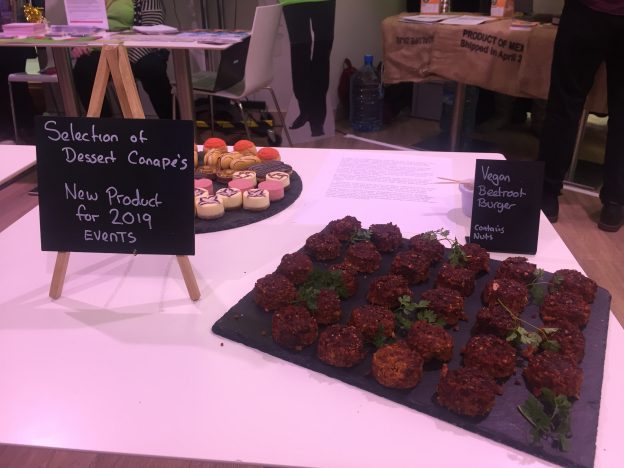
Table with selection of Gulbenkian cakes and vegan beetroot burgers

Gulbenkian Cafe focus group meeting – 4 November

The Gulbenkian are hosting a focus group for University of Kent staff and students to discuss all things cafe at Gulbenkian  and to taste some samples from our new menu on Monday 4 November 12.00-14.00.

Popular topics will be coffee, sandwiches and hot food but we are more than happy to answer any questions or any ideas you have that you would like to see at Gulbenkian.

If you are interested in attending please RSVP by emailing Dan Parsons D.Parsons@kent.ac.uk.

cork board with yellow post it note with light bulb drawn on it

GCRF and GCDC Funding Opportunities: Staff briefing session

Have you heard about internal Global Challenges Research Fund (GCRF) opportunities or the Global Challenges Doctoral Centre (GCDC) but are not sure what either is all about?

Dr Beth Breeze, GCDC director, and Dr Andrew Massoura, Deputy Director of Research Services, will lead a GCRF/GCDC staff briefing session on Tuesday, 5 November 2019, 13.00-14.00 in CESR1 (Cornwallis East, ground floor).

The session is open to academic and administrative staff in all schools and centres and will cover the following:

•       The GCDC postdoctoral researcher appointment competition

•       The GCDC student-led scholarship competition

•       The GCRF Partnership Development Fund competition

The session will provide an overview of the competition processes and guidance on ODA compliance and GCRF funding criteria, and there will be plenty of time for questions at the end of the presentation.

Please book a place by emailing Grace Grussenmeyer at kentgcdc@kent.ac.uk.