Category Archives: Student Guide

Gulbenkian’s Eutopia Festival 28 March – 2 April

Gulbenkian is leaving the bickering to the politicians next week, as we choose instead to celebrate the creativity and shared humanity that crosses borders.

  • Thursday 28 March, 19.30 – An Evening of European Poetry. Dynamic, innovative, collaborative poetry from over a dozen of Europe’s most interesting poets marks the night when the UK may or may not leave its own continent. Tickets £5.
  • Friday 29 March, 18.30 – Karlheinz Stockhausen: “Hymnem”. Electronic and concrete music (1966-7), created at the height of the Cold War.  Preceded by free music from Centre for Music and Audio Technology. Tickets: Full £8 / Student £5.
  • Saturday 30 March, 10.00-16.00 -Translating Europe: Hear four European plays translated into English, performed throughout the day. Free admission.
  • Sunday 31 March, 12 noon – Dash Café: Eutopia. Join us for an afternoon of FREE live music, delicious food, storytelling, comedy and short animated films. Free admission.
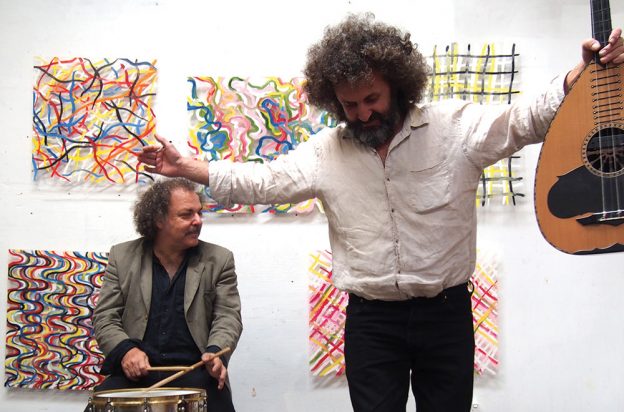
  • Thursday 2 April, 20.00 – Xylouris White. Playing Cretan music of original and traditional composition, Xylouris White consists of Georgios Xylouris on Cretan laouto and vocals and Jim White on drum kit. Full  admission £20 / Concessions £15

European Films as part of Eutopia

  • Thursday 28 March, 19.00Happy End (15) – A Michael Haneke drama about a family set in Calais with the European Refugee crisis as the backdrop.
  • Friday 29 March, 19.00  – Girl (15) – Lucas Dhont’s transgender coming of age story of a 15 year old girsl, born in the body of a by, who dreams of being a ballerina.
  • Saturday 30 March, 17.15 – Loro (18) – A film by Paolo Sorrentino about the life of Silvio Berlosconi.
  • Saturday 30 March, 20.30The Favourite (15) – Yorgos Lanthimos’ splendid drama around the court of Queen Anne includes Oscar winning performance by Olivia Colman.

Find out more about these and other events on the Gulbenkian webpages.
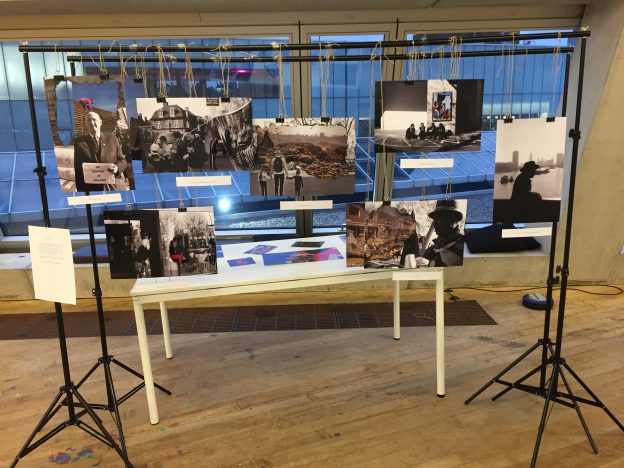


Students take over the Tate Exchange

Students from the School of Politics and International Relations took over Tate Exchange at Tate Modern, last weekend (March 16/17), with a series of inventive and inspiring projects aimed at engaging the public in the idea of movement and resistance.

Activities included transforming big business advertising into origami birds; film work on borders, mental health and how people have responded to racism in sport; interactive image work on media representations of gender and politics, body positivity, the meaning of change, the relationship between art, politics, education and Brexit, and the nature of disagreement and conflict; performance work on identity politics; and an immersive experience in a pod exploring the connection between choice and resistance. There were also 2,000 dominoes used to create some amazing constructions and, with some effort, the word ‘move’ in the form of a domino run.

This is the third year of the School’s involvement in the Tate Exchange project but the first time the whole floor – Level 5 of the Blavatnik Building – has been activated and animated entirely by the students. With over 1,000 visitors in two days, the students had a wonderful range of conversations with members of the public. As one visitor put it, ‘this is great, such amazing work!’

The students came from undergraduate module, How to a Start a Revolution, and the Postgraduate module, Resistance in Practice.  

UKC Student

UKC Student’s top tips for exam success!

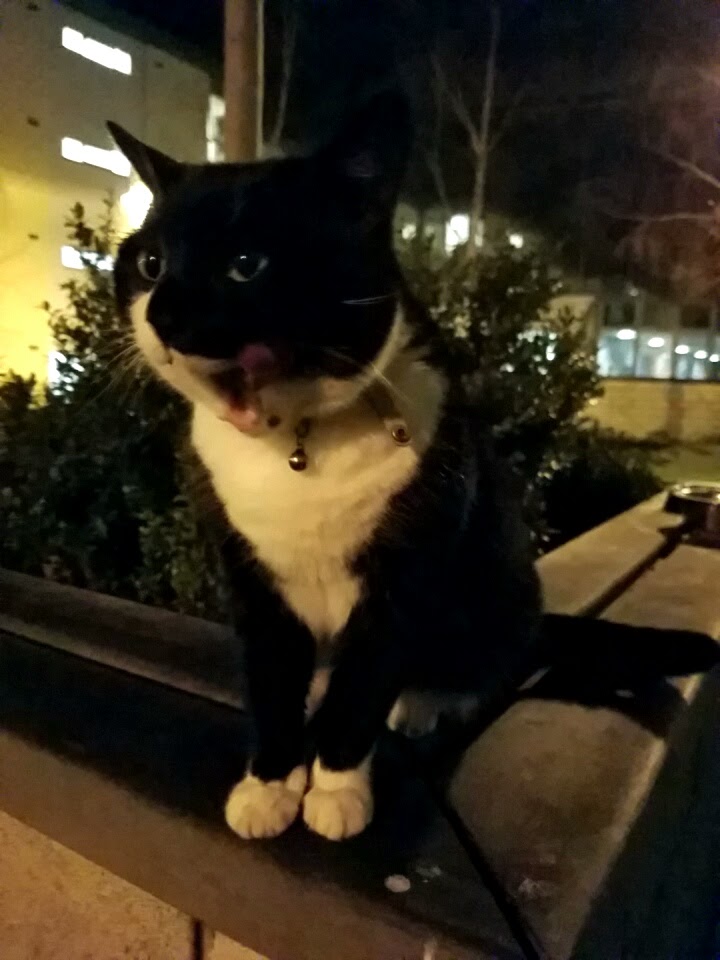
UKC Student, Rowena reveals her top tips for exam success, with the help of Gandalf, the University of Kent, Woolf College cat.

1) Don’t leave revision to the last minute so you’re feline good for the exam. Give yourself enough time to cover each topic within the module. Factor in time to go through all the example questions, or even better if you can get your paws on them, the exam paper from the year before! Don’t try and cram everything last minute and get enough sleep the night before.

2. If you have a purrticular learning style, have a go at tailoring this to how you revise. There are online quizzes which can identify which type you are. I’m a visual learner so drawing ideas really helps for me! If you are an auditory learner, try reading your notes aloud and reciting them. If you are a physical learner, try and keep active whilst revising –  have a stress ball to hand or even some playdough! It may sound strange but give it a go, you might be surpurrised!


Gandalf’s preferred style is to stare at you with his big innocent eyes until you feed him his 7th dinner of the day… I can’t guarantee this will work well in your exams though…

3. Read the question slowly and carefurlly. Don’t be that guy who realises an hour in that you’ve misread the essay question. Read it several times and make sure you understand exactly what’s being asked before planning your answer. Keep refurring back to the question to see if you have addressed each part of it. If possible, underline or highlight the important words in the question to help you stay focused. Don’t get caught out by a simple mistake.


Meow-velous luck to you all. Ace your exams by giving it your best shot. Stay pawsitive, you can do it!

Modern Languages panel

Alumni reveal what life is like after your Modern Languages degree

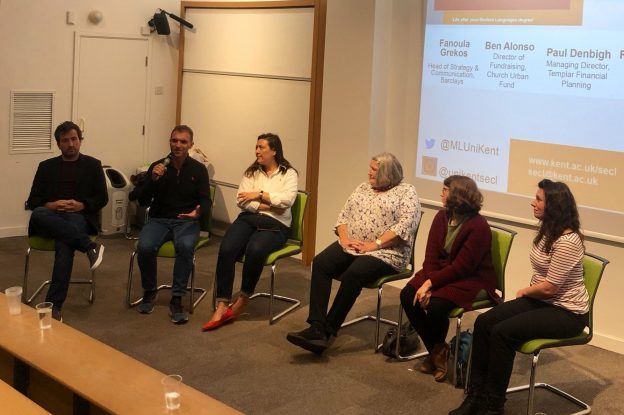
On Saturday 16 March, the Department of Modern Languages was delighted to welcome six former students to campus for “life after your Modern Languages degree” – an event designed to give students an opportunity to discover the wide range of career paths that alumni have taken.

The event also featured two video interviews, with graduates Greg Pioli – who graduated in 2004 with a BA in French and is now Director of the Online Language Academy – and Ruth Martin, who graduated in 1992 with a BA in European Studies (Italian) and is now a Freelance Translator.

The event was chaired by Tobias Heinrich, Lecturer in German, and Rebecca Ogden, Lecturer in Latin American Studies, with advice from the panel on how to tailor your application when applying for lots of different roles; how to make the most of your year abroad when applying for jobs; how to “sell yourself” as a languages graduate; and being aware of – and maintaining – your digital footprint. After the event, guests including students from all year groups as well as students from local schools and sixth form colleges, had the opportunity to speak to members of the panel and brush up on their networking skills.

Our alumni panellists:

Ben Alonso graduated in 2008 with a BA in Psychology with Studies in Europe 2008 and is now Director of Fundraising at Church Urban Fund, a charity focussing on community development.

Fanoula Grekos graduated in 2001 with a BA in French and Spanish and is now Head of Strategy and Comms at Barclays.

Paul Denbigh graduated in 1995 with a BA in European Studies (History) and is now Managing Director of Templar Financial Planning.

Ros Gregg graduated in 1968 with a BA in French (making her one of the University’s very first graduates!) and has taught at primary and secondary level.

Lucinda Smith graduated in 2016 with a BA in Hispanic Studies and is now a PR Assistant at Citigate Dewe Rogerson, a financial corporate communications company.

Julia Marques graduated in 2010 with BA in Drama and Spanish and is now Project Support Officer at the Gaia Foundation, an environmental charity.

Hong Kong

Hong Kong Partner Summer Schools Fund

Scholarship funding has recently become available for University of Kent students who would like to take part in one of our Hong Kong partner summer schools this year. The scholarship will cover a contribution towards tuition, travel and subsistence.

The Scholarship provides a contribution of up to £1,800 for a number of successful applicants to summer schools at our partner institutions in Hong Kong.  We are particularly promoting and seeking applications for HKBU, with a priority focus on WP students, although applications from all students are welcome.

Find out more about our partner institutions on our website. If you are interested, you can fill out an application form here.

Any questions? Please email studyabroad@kent.ac.uk.

FitnessFest 2019

FitnessFest 2019

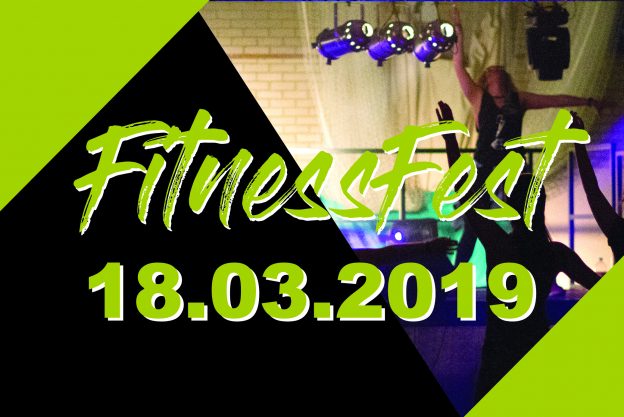
As part of the University of Kent’s Worldfest celebrations this month, FitnessFest 2019 will offer four different classes to get you moving – open to all members and non-members. In our annual fitness class shakeup, Kent Sport invites you to join the fitness team to sample a unique evening of group exercise at the ninth annual FitnessFest medley on Monday 18 March.

FitnessFest kicks off with Metafit at 17.45. Raise your heartrate and keep burning calories long after the class is over. Adam will make you sweat – in a good way! This is a HIIT workout you do not want to miss.

At 18.30 we mix things up with Funky LBT – target those legs, bums and tums with a funky beat to get those hips shaking. Hayley brings out the FUN in funky.

Following on at 19.30 we join the epic duo Jeni and Emma for Zumba. If you love to move, then this is the perfect class to let loose and live your best life. Jeni and Emma are the perfect package in this exciting dance class.

To close the evening, we’ve put on the perfect class to calm your mind and body – Relax and Unwind with Laetitia. Take the time to breath and stretch away all that stiffness in your muscles. Laetitia leads this class through tranquillity and calmness – exactly what you need to relax the mind and body.

All FitnessFest classes are free for Gold and Silver Members. Bronze members and non-members pay £2 per class. Class fees are payable at the Sports Centre reception. Please book and pay (if required) on to each class you will be attending. Gold and Silver members can book online up to seven days in advance at kentsport.kent.ac.uk/Horizons or by visiting the Sports Centre or Pavilion receptions.

If you’re not a member it’s easy to join, ask at the Sports Centre or Pavilion reception or visit https://www.kent.ac.uk/sports/membership

For Kent Sport news, events and special offers, Like us on Facebook and follow us on Instagram and Twitter @UniKentSports

PRES and PTES surveys

Postgraduate student? Take the PRES or PTES survey and get a £10 voucher

We are strongly committed to enhancing the quality of your postgraduate student experience at Kent.

The Postgraduate Student Experience Surveys are an opportunity for postgraduate students to provide feedback on their academic experiences.

About the Postgraduate Research student Experience Survey (PRES)
If you’re a research student, you will be emailed a unique web link to take the PRES. Once you have completed the survey, you will be emailed your £10 Amazon voucher.

The Postgraduate Research student Experience Survey (PRES) is an opportunity for you to provide us with feedback on many aspects of your postgraduate student experience including supervision, resources, research community, progress and assessment and skills and professional development.

About the Postgraduate Taught student Experience Survey (PTES)
If you’re a Master’s student, you will be emailed a unique web link to take the PTES. Once you have completed the survey, you will be emailed your £10 Amazon voucher.

The Postgraduate Taught student Experience Survey (PTES) is an opportunity for you to provide us with feedback on many aspects of your postgraduate student experience including teaching and learning, engagement, assessment and feedback, organisation and management and skills development.

Why should I complete the survey?
This is your chance to tell us your thoughts about your experience at Kent. The results from the postgraduate experience surveys will help us make changes that will improve what we do in the future and to keep doing the things that are important to postgraduate students.  It will also help us compare how we are doing against other institutions and what themes are trending nationally.

It only takes 10 -15 minutes to complete and you will receive a £10 Amazon voucher code to say thank you for taking part.

For more information visit the Graduate School website.

CEWL Individual Writing Tutorials

The Centre for English and World Languages (CEWL) is offering Individual Writing Tutorials to give you the opportunity to discuss your academic writing with a member of staff from CEWL.

Advice will be given on your language and the structure, coherence and cohesion of your work. Individual sessions last 20-30 minutes each and are free of charge.

Tutorials are available all year. To make an appointment, please email us at cewl@kent.ac.uk

Please note that this is not a proof-reading service.

Exams 2019 – Your Timetable

You can view your timetable now by logging into your Student Data System.  (SDS)

The timetable is published with the usual caveat that it is subject to potential amendments. Students affected by changes to the timetable will be contacted in the usual way by email directly from the Exams Team and by their school.

Where is my exam Venue

Not sure where you need to go?  – See our Venues

My ILP

If you have an Inclusive Learning Plan (ILP) please take a moment to check your exam adjustments are correct. On SDS select ‘Details and Study’ and ‘My Details’. You’ll see a button marked ‘My Inclusive Learning Plan’ if you have been in contact with the Student Support and Wellbeing team (SSW).

We appreciate Exams season is a stressful time of year, we are here to support and help you throughout this period

If you have, any questions please contact Canterbury: exams@kent.ac.uk  or Medway: medwayexams@kent.ac.uk

Our website: www.kent.ac.uk/csao/exams/

Follow us: @UniKent_CSAO

Skepsi publishes on borders and remembrance

Skepsi, the peer reviewed online journal of European thought and theory in the Humanities and Social Sciences promoted by the School of European Culture and Languages, is delighted to announce the publication of its latest issue.

Skepsi is run by PhD/MA candidates, with the support of established and early career academics, and commits to publishing the work of postgraduate students and emerging scholars.

The journal’s title, which comes from the Ancient Greek ‘σκέψις [skepsis]’ or ‘enquiry’ and the Modern Greek ‘σκέψη [sképsi]’ or ‘thought’, symbolises the will to explore new areas and new methods in the traditional fields of academic research in the Humanities and Social Sciences

The issue combines volumes 9 & 10 and contains articles arising from its 2016 and 2017 conferences, ‘Borders’ and ‘Time to Remember: Anniversaries, Celebration and Commemoration’, respectively.

Contents:

Arianna Dagnino,the University of Ottawa
Translational Practices and Transcultural Commons in the Age of Global Mobility

Nadja Stamselberg, Regent’s University London
On the Right Side — Borders of Belonging

Kimberley Bulgin, University of Kent
The Refugee Identity Crisis: How Athens is Trying to Bridge the Gap Between a Person and their Homeland through Heritage and Meaning Making

Joseph Cronin, Queen Mary University of London
Wladimir Kaminer and Jewish identity in ‘Multikulti’ Germany 

Nihad Laouar, Canterbury Christchurch University
‘It is at the ghosts within us that we shudder’: Voicing the Anxieties of Liminality in Virginia Woolf’s Mrs Dalloway