Yearly Archives: 2020

Kent logo

Black Lives Matter – VC’s update

I didn’t want this week to go by without following up on last week’s joint statement on racism. I recognise we need to do more than simply make statements. The conversations and interactions I have had this week make it clear we are falling short and need to do more. We are identifying areas we must focus on and take further action.

Many staff and students are affected by these issues and working hard to raise awareness and address them and I am inspired and humbled by their work, experiences and commitment.

Combatting institutional racism is a serious challenge, but we must address it if we are to ensure that the University provides an environment in which everyone can thrive. I am committed to keeping this a high priority within the University.

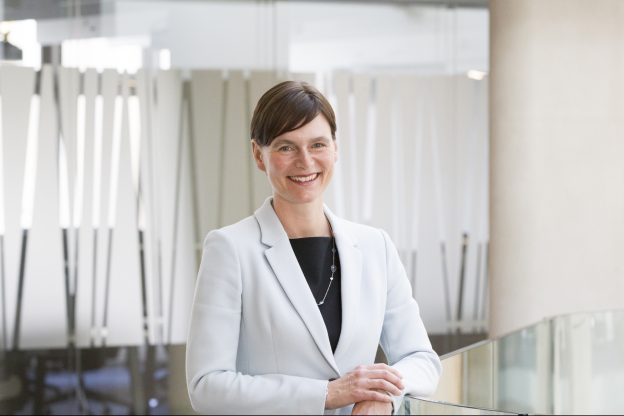
Professor Karen Cox | Vice-Chancellor and President

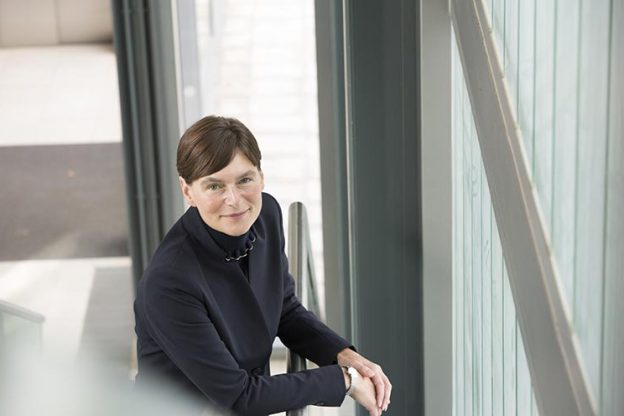
Professor Karen Cox

Vice-Chancellor’s update – 12 June 2020

My continued thanks to everyone for all that you are doing across the University. As lockdown continues to ease, our plans for a phased return to campus are progressing well, thanks to the considerable efforts of all those involved. I recognise though that there remain many unknowns, concerns and uncertainties that we will need to continue to engage with and address over the coming weeks and months. I also know that Covid-19 is having many varied and serious impacts on the lives of our staff and students and that it can be incredibly difficult to manage the many demands you experience. Please continue to prioritise your health and wellbeing and please ask for support if you need it.

Covid-19 continues to have a major financial impact on Kent as it does across the sector. I will be writing to you about that with more information shortly. You will no doubt have seen a range of articles and opinion pieces in the media about the unprecedented financial harm it has caused universities across the sector and the risks it poses to longer term sustainability. While there has been some Government support – in the form of bringing forward Student Loan Company payments and Quality Research Funding – which will help support cash flow in the early part of 20/21, there has been no new money offered to the sector. Student Number Controls have been brought in as a way of ‘stabilising admissions’ for 20/21 but this brings with it challenges as competition for students (international and home) only intensify.

Together with other vice-chancellors, I have been engaging with Universities UK on a regular basis to feed into and lobby Government. This has enabled meetings with the Minister of State for Universities, where we have set out the case of need for financial support for universities to protect the teaching and research base, raised the need for Government to provide timely advice on opening up campuses, as well as asking Government to proactively promote UK HE internationally. In addition, we have been in touch with our local MPs across Kent and Medway updating them as to the challenges we face and asking them for their support as we engage with Government on these issues.

Universities have a crucial role to play in the economic and social recovery from the impact of Covid-19. This morning I will be presenting to other Board Members of the South East Local Enterprise Partnership, on the impact of Covid on the 9 universities within the SELEP region. I will be noting the economic and social impact of these universities, the significant role they have within our region and the part they will play in its recovery from the impact of COVID-19, a role we can only play if we are in a sustainable position ourselves. I will be asking for their support to advocate on our behalf for additional government support to enable us to play our part in regional and national recovery.

I will continue to do all I can to help navigate us through these challenging times and I thank you for your support.

Yours sincerely

Karen

Professor Karen Cox | Vice-Chancellor and President

overhead view of students sat at sofas studying

Why I chose further study at Kent

After doing my undergraduate degree in History at Kent, I went straight into an MA beginning in September 2015. I would love to say I had a burning ambition to go further into academia, but I wasn’t sure of anything. In fact, I chose to do an MA mostly because of that – having no clue what came next! 

I had no real idea of my dream job, I felt I wasn’t done yet and I panicked quite a bit. A year of further study seemed like the solution. Modules were running that seemed better tailored to my interests than my undergraduate ones. I could keep learning and it served as a procrastination to entering the real world. My family joked I wanted to be a student forever, and it actually came true.  

I’m not ashamed of those being my reasons for carrying on to PhD study. It brought me to my PhD which I’m almost finished with and it’s given me a dream. 

There were many reasons why I chose to stay at Kent for my MA. Canterbury was a city that felt like home and I wanted to stay living here. In terms of the staff, I had developed good relationships with them and received a great quality of teaching and dissertation supervision. I had an idea of my research interests, but I wanted to find out more – I didn’t quite feel like a historian yet.  

If I had to give advice to a UG student considering PG life, I’d say go for it! I justified it to myself as most people have a degree these days; a PG one is a way to stand out. But when you’re doing your Masters, make sure you get involved in PG specific events and things that are going on in your school. Know what career you’d like to get to at the end, and consider employability and work experience to enhance your CV with that goal in mind. You’re only here for a year for a Masters, so it all seems like a lot, but know your limits and ensure self-care is on your radar. And most of all, enjoy it. 

–Ellis Spicer, Research Postgraduate, School of History 

Kent Logo

Covid-19 update – 10 June 2020

As the Covid-19 lockdown eases, plans to re-open our campuses are progressing according to schedule. The health and safety of all our staff and students remains the priority.

Colleagues in Estates continue to work hard on re-opening buildings on both the Canterbury and Medway campuses. The first phase remains the research labs, libraries and the Registry. At Medway, where there are shared facilities, the Estates team is working closely with Greenwich and Canterbury Christ Church universities.

We continue to work with the trade unions and staff representatives as we move through this process and the risk assessments for opening of the labs have been approved by the JSNCC. The risk assessment for the wider University will be considered at next week’s meeting.

Once the assessments have been approved, HR will engage with senior leaders to identify staff in their areas who need to return to campus. Due to the complexity of the work required, we have revised the previous estimates of when anyone who is currently working at home might return to campus. We are now looking at the start of July at the very earliest.

Deciding who will return to work on campus will depend on a range of factors, including building capacity, personal circumstance, home-working conditions and flexible working arrangements. Our overarching principle remains that we are keeping to national guidance, which states that you should work at home if you can and that only essential staff should be on campus. We will continue to revise our Health & Safety policy in line with any changes to government guidelines.

The move to online exams and assessment has gone well and Exam Boards are in progress. A paper on the shape of the academic year 2020-21, which provides a framework for learning and teaching for next year, has gone before today’s meeting of Senate.

Our aim is to welcome all students on to campus this autumn. If we need to prioritise groups to accommodate social distancing, we will prioritise first years and postgraduate taught and research students.

We will continue to provide updates on our return to campus over the coming months.

A globe of the world

Think Kent Discover Series

The “Think Kent Discovers series”, which started in May is a series of nine cutting edge research documentaries produced by the University of Kent in association with KMTV.

Each event starts with the screening of a research documentary followed by a live panel discussion on the topic and is live streamed via Research Services ‘YouTube channel and the university’s facebook page.

All events are FREE to watch and to book your place,  please visit EventBrite. 

Here are the rest of the events coming up:

Thursday 11 June at 19.00: “La Cristiada – A Civil War” 

Dr Mark Lawrence, from the School of History,  explores Mexico’s bloodiest civil wars.

Panel members:
– Dr Mark Lawrence, Lecturer in Latin American History at the  University of Kent
– Dr Nathaniel Morris, Leverhulme Research Fellow at University College London
– Dr Ben Fallaw, Professor of Latin American History at Colby College in USA (Maine)

Thursday 18 June (time tbc): “Virus to Vaccine”

Professor Colin Robinson and Dr Alison Walters (School of Biosciences) are leading a British-Thai consortium in mass producing a vaccine to tackle Porcine Circovirus disease.

Thursday 25 June at 19.00: “Counting Butterflies”

The film explores the research carried out by Professor Morgan and former student Dr Emily Dennis, who have developed advanced mathematical models which are now being used to map and manage butterfly populations in the UK and abroad.

Panel members:
– Professor Byron Morgan, Emeritus Professor of Statistics at the University of Kent
– Dr Emily Dennis, Senior Ecological Statistician at the Butterfly Conservation Trust
– Ian Middlebrook, Butterfly Monitoring Coordinator at the Butterfly Conservation Trust

Week commencing 29 June: “The Mohawk of Consciousness” (details to be confirmed)
This film charts the investigation into brain injury and whether analysing brain activity can reveal the true level of consciousness in patients believed to be in a vegetative state.

Week commencing 6 July: “Catching Cancer: Rapid Diagnosis” (details to be confirmed)
Can you detect Acute Myeloid Leukemia (AML) not with a traditional blood test but with a kit which gives an immediate indication from a simple pin-prick?

Week commencing 13 July: “The Science of Making Babies” (details to be confirmed)
In July 1978, the world’s first test-tube baby, Louise Brown, was born in Oldham to her parents, Lesley and John. It’s now estimated 1 in 50 babies born in Britain today are the result of IVF or similar methods that allow an egg to be fertilised.
An iPhone 11 with the Facebook homescreen on it's screen next to an opened grey lantop with a balck keyboard.

Kent students take part in the Kent Digital Accessibility Conference 2020

Paul-Georg Ender and Ben Watson from University of Kent will be taking part in the Kent Digital Accessibility Conference. The event is a collaboration between the University of Kent and Kent County Council.

The event ends this Thursday and the aim is to inform Public Sector organisations about digital accessibility, inclusion and the impact of the regulations.

Paul-Georg and Ben will be discussing the student journey. This will include Paul-Georg speaking from the perspective of a visually impaired student in relation to primary, secondary and higher education both in his native Germany and in the UK, whilst Ben will talk about the work that the University of Kent is doing to map and improve the accessibility of the overall student journey.

The session takes place on Thursday 11th June between 15:30 – 16:30.

A laptop, with a notebook, glasses and cup of tea.

Care First webinars from 8 June 2020

As we’re all still dealing with the impacts of Covid-19, Care First have still got some webinars for you for next week.

Please find the schedule below.

Monday 8 June 2020 – A guide to Care first Zest ‘A guide to Care first Zest’

Time: 11.00 11.30 – register by clicking on this Go to webinar link.

Tuesday 9 June 2020 –  ‘Tips to keep safe in the workplace during COVID-19’

Time: 12.00 -12.45 – register by clicking on this Go to webinar link 

Wednesday 10 June 2020 – ‘Woebot: A user guide to our new AI support’

Time: 16.00 – 17.00 – register by clicking on this Go to webinar link

Thursday 11 June 2020  – ‘Understanding Suicide’

Time: 12.00 -12.45 – register by clicking on this Go to webinar lin

Friday 12 June 2020  ‘Understanding the COVID-19 guidelines for your area’

Time: 15.00 – 15.30 – register by clicking on this Go to webinar link

Four students walking on the University grounds

Local charities benefit from National Student Survey responses

The School of European Culture and Languages (SECL) has been able to donate £260 to ‘The Friends for Mental Health’ and the East Kent Rape Crisis Centre following the 2020 National Student Survey.

The National Student Survey (NSS) is an independent annual survey of final-year undergraduate students and is one of the key measures of how students rate their time at university. The survey asks students about many of the factors that are most important to them, including aspects of their teaching, their subject and the wider University community.

This year, it was also an opportunity to donate to a cause, with £1 being donated for every student who completed the survey. The Friends for Mental Health and the East Kent Rape Crisis Centre were joint winners in a poll of final year students. After 260 students came forward to complete the 2020 National Student Survey, each charity received a donation of £130.

Head of School Professor Shane Weller said:

‘The views of our students are incredibly important to us as teachers and researchers and the National Student Survey is a vital way in which the University – and the School – receives feedback. I am grateful to all the students who took the time to share their views in this year’s Survey and am delighted that we were able to make donations to the East Kent Rape Crisis Centre and The Friends for Mental Health as a result of your participation’.


Have you ever consider a part time Msc?

Are you wondering what to do after your degree? How about a part time Msc? The Centre for Professional Practice offers flexible, part-time work-related Postgraduate degrees. Teaching is structured around a series of extended taught weekends between Friday to Sunday from 9.00 to 17.00. The duration will be an average of four weekends a year at our Medway campus.

You will be working with a team who have a wealth of knowledge and experience in #professional development courses. This will enable them to support you and help you realise your potential in working life.

These are the courses on offer:

Advanced and Specialist Healthcare – PCert, MSc

The PCert and MSc in Advanced and Specialist Healthcare is a flexible, part-time, multi-professional programme.

Advanced and Specialist Healthcare (Advanced Dental Clinical Practice) – MSc

The MSc Advanced and Specialist Healthcare Articulated Pathway (Advanced Dental Clinical Practice) is a part-time Master’s-level programme studied over 18 months.

Advanced and Specialist Healthcare (Applied Dental Professional Practice) – MSc

This part-time, flexible, multi-professional Master’s-level qualification is suitable for all dental care professionals and offers opportunities for Accreditation of Prior Experiential and /or Certificated Learning or Credit Transfer.

Professional Practice – MA, MSc

MA/MSc Professional Practice programme is a part-time, work-related learning programme designed for participants from private, public and third sector settings.

Professional Practice (Teaching and Learning) – MSc

Professional Practice (Teaching and Learning) MSc is a part-time, work-based programme for qualified teachers who want to develop and enhance their working practice at Master’s level.

Watch our academics talking about the MSc Professional Practice programme:

https://www.youtube.com/watch?v=rzG_43JTrGk&feature=youtu.be

Find out more and apply.

Pic by Elaine Potter.

Professor Karen Cox

Vice-Chancellor’s update – 5 June 2020

I want to start by acknowledging the recent events in America, events that have triggered waves of shock and anger both in the US and across the world, highlighting the terrible impact racism continues to have on peoples’ lives. As a University, we have a responsibility to tackle racism in our own community as well as in the wider society.

As you will know, we have agreed a joint statement with Kent Union on our commitment to improve efforts to address racism on our campuses, building on the work that has already taken place across the institution. This has now been shared with students as well as staff, and I know several schools have also written their own response which have been well received.

I want to stress that we will not allow this statement to be just empty rhetoric and, together with my colleagues on Executive Group, I will ensure we deliver on its commitment.  I would like to thank members of the BAME staff network, Kent Union and the Decolonise University of Kent movement for the work they are already doing with the University in this area.

On Covid-19 related matters, work progresses to implement our plans for opening up the campuses. I particularly want to say thank you to all those colleagues in Estates who are working to systematically re-open the buildings in Canterbury and Medway, to enable the phased return of staff and the creation of a safe working and studying environment. With more than eighty buildings to work through, the complexity cannot be underestimated. We will continue to work with the trade unions and staff representatives throughout this process and keep you updated with the progress of this huge task.

I send you my continued good wishes and thanks for all you are doing in these difficult times.

Yours sincerely

Karen

Professor Karen Cox | Vice-Chancellor and President