Special Collections and Archives highlights: 2025 edition

Karen Brayshaw, Special Collections and Archives Manager

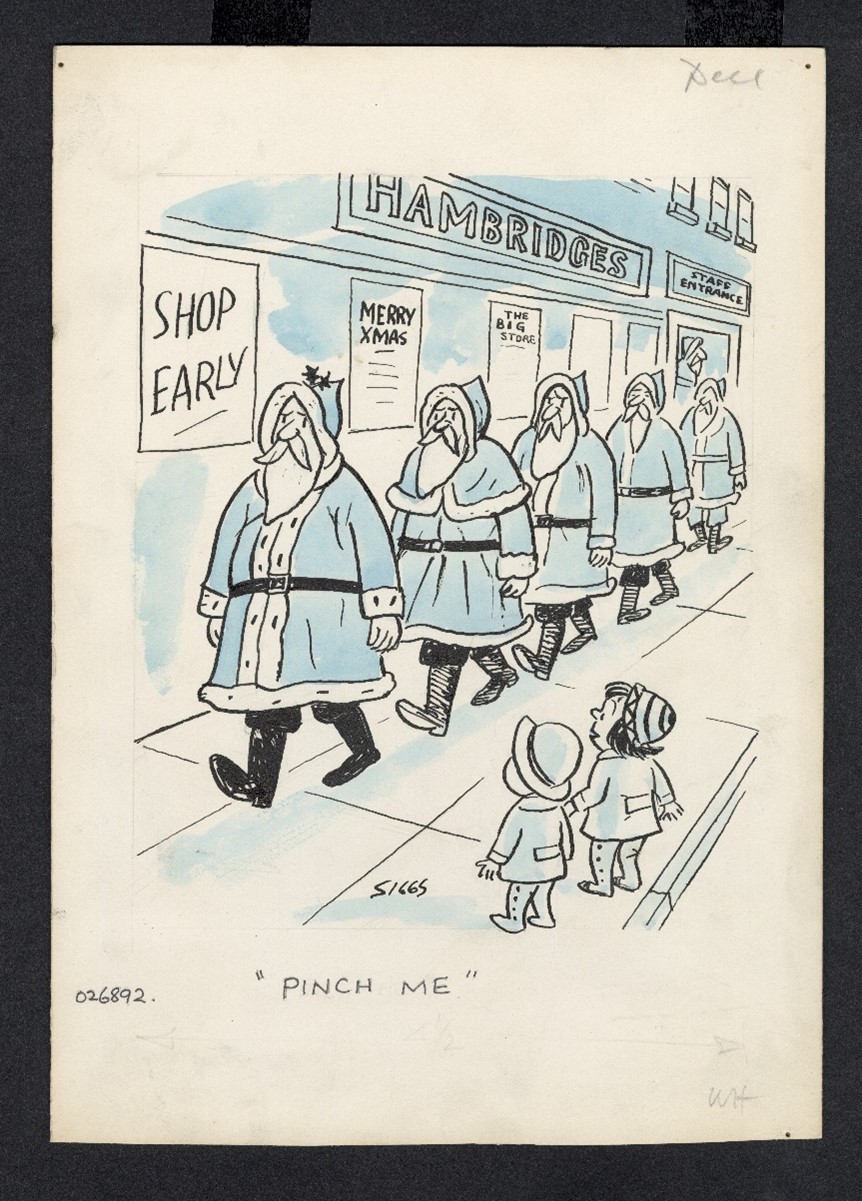
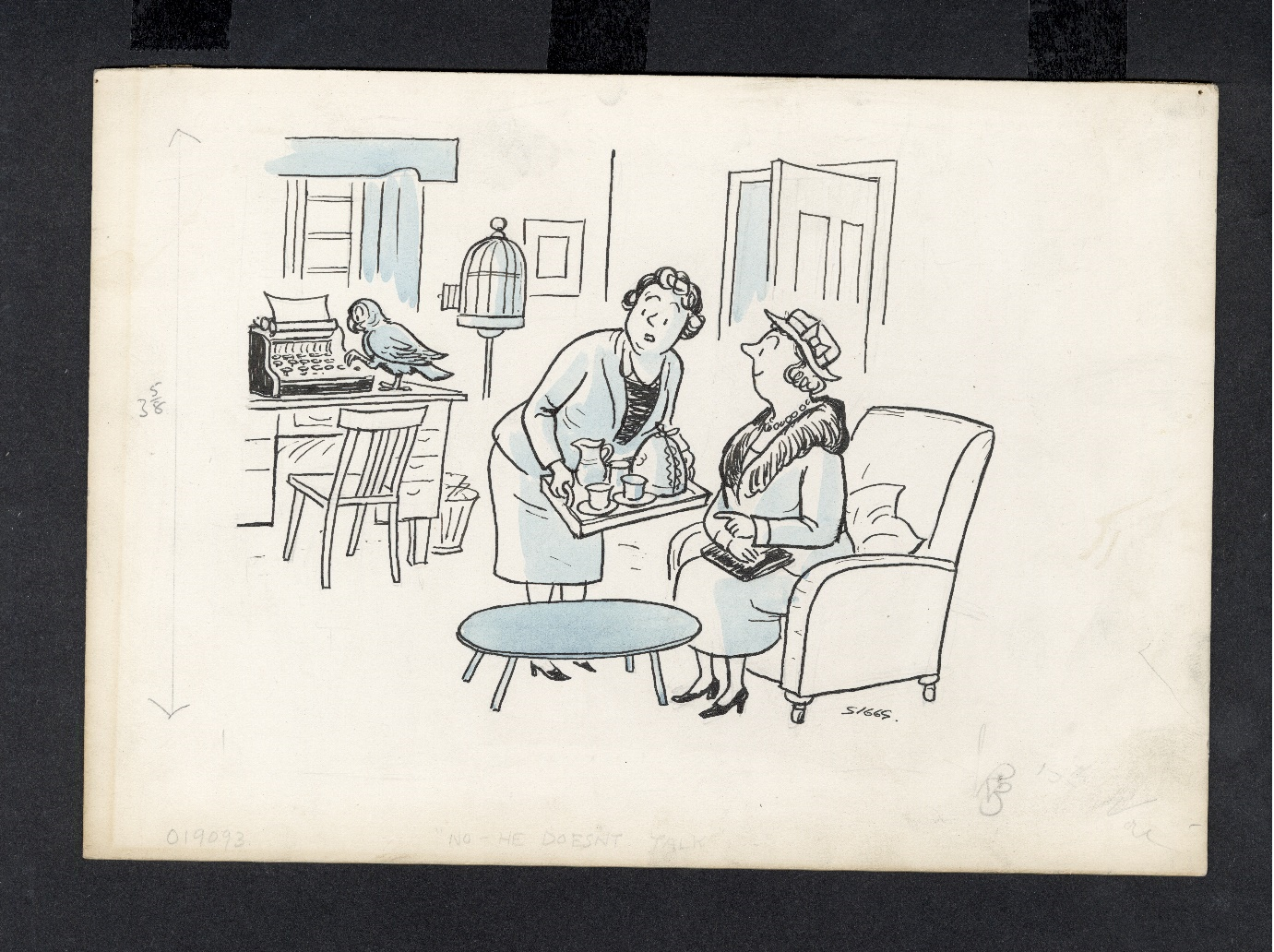
Welcome to the Special Collections and Archives annual highlights 2025. It’s always a pleasure to look back at what has taken place in the University’s Special Collections and Archives, and I’m always amazed at how much the team achieve – well done Team! This year some changes have taken place at the University and as a result Library Services (of which we are part) has now joined the Student Life Directorate. Don’t worry though – you can still find us in the same place. As a Team we said goodbye to Beth, our University Archivist. Beth joined us as Project Archivist for the UK Philanthropy Archive, before taking over the post of University Archivist. We wish Beth well in her new post. In September we also said goodbye to Sam Datlen, Project Digital Administrator.  Sam has worked with us on a part-time basis since 2023, digitising the original artworks of Lawrie Siggs, Geoff Laws, Ron McTrusty and some of the Donald McGill collection. Although we said goodbye to Sam as a colleague we are delighted he has agreed to continue to come on to work on some of our volunteer projects.
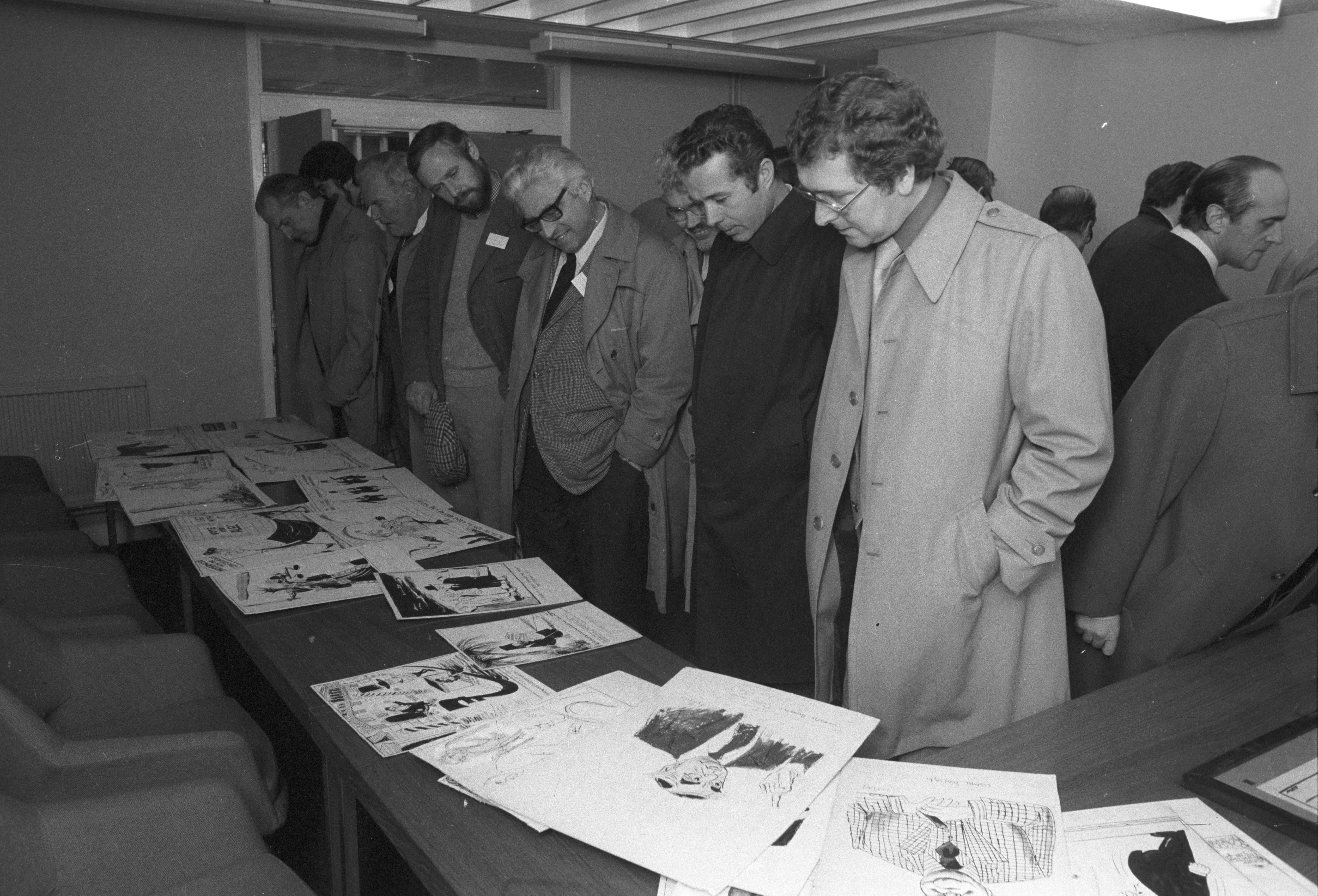
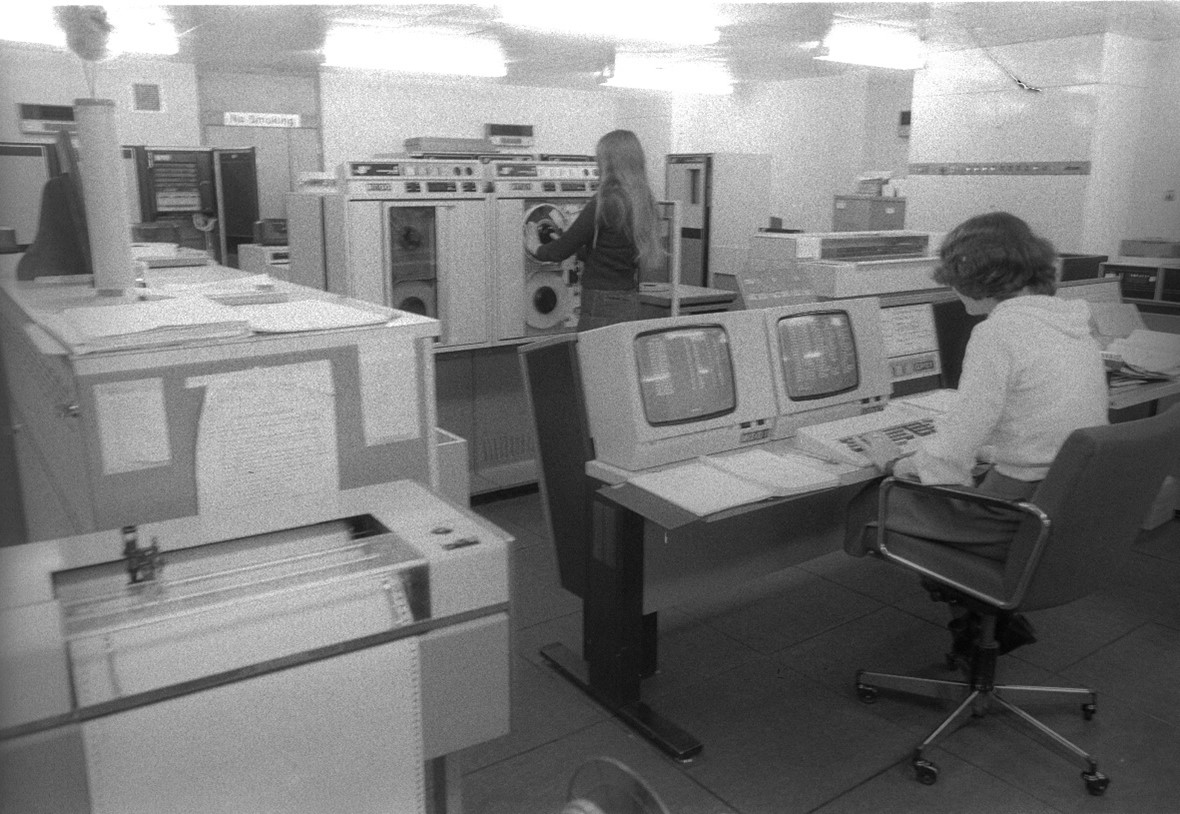
Photograph from c. 1978 – Early days of the Centre for Cartoons and Caricature, now the British Cartoon Archive (University Archive UKA/PHO/1/1039)

This year it was 50 years since the inaugural lecture took place to launch the Centre for the Study of Cartoons and Caricature. The collections have grown enormously since then and to celebrate we hosted an exhibition. It was amazing to work with Clair on this. The activity was funded by the Beaverbrook Foundation, which covered the cost of two scholars and three interns and they were a delight to work with. The exhibition has been a huge success and there is still time to see it if you missed it, as it will remain on view during the first two weeks of January.

I don’t know about you, but I enjoy a good podcast and what better time of year is there to do just that. Clair and Christine feature in two separate podcasts, you can read all about it below and do treat yourself and have a listen.

Clair and Jacqueline have been working on Dr. R.E.W. Maddison’s collection, which arrived at the University in 1985. The collection is fascinating and they’ve both discovered some treasures – more of which you can read below. The printed works are available to browse via our online catalogue. The archival material is also available but more detailed work is being undertaken in the new year.

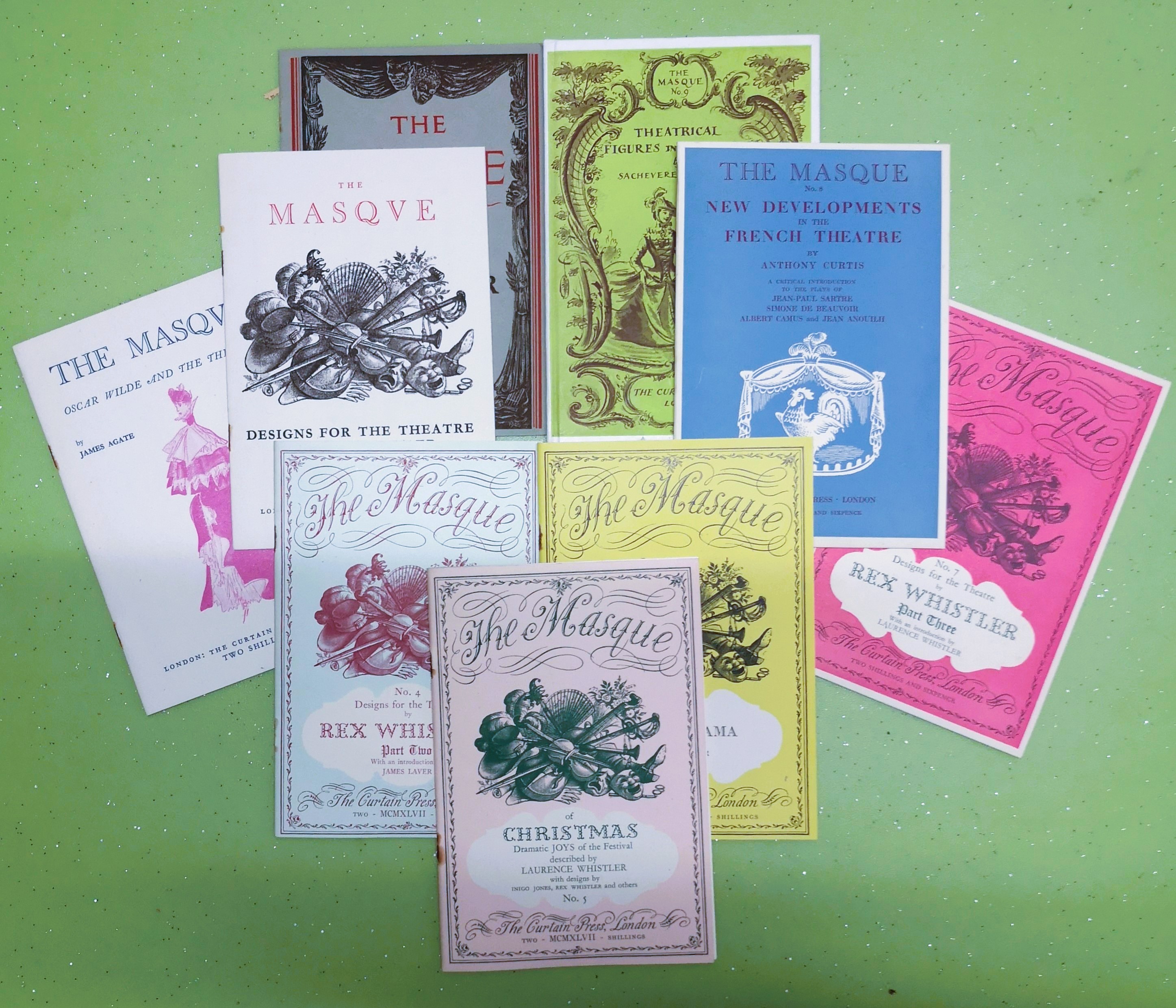
Christine continues to deliver an array of excellent and diverse sessions for our engagement and education activities, using her best Miss Marple skills to uncover treasures for our participants – eat your heart out Poirot. Although she doesn’t mention it here Christine is also doing some brilliant work with volunteers to sort out and make available our extensive theatre programme collections and many more have been added to our catalogue for your perusal.

This year we welcomed Emily to our team. Emily is Project Archivist, working on the UK Philanthropy archives, which continues to grow. As I type this, we await the latest addition to the archives… watch this space for more news next year!

We’re very lucky that we have managed to secure funding to retain the services of Jacqueline, our Project cataloguer. Although Jacqueline is with us part-time, she has managed to catalogue at least six collections over the last few years, which equates to several thousand books! Her latest target is the Ronald Balwin collection, which is turning up some real treasures. I know I’m looking forward to seeing what she unearths in the new year.

Soon we will have all the John Jensen original artworks available online as Alex has almost completed digitising them. At the same time he is exploring the audio material in the Max Tyler collection – we hope to have more to share with you about that next year.

Mandy also continues to digitise our cartoon cuttings as well as supplying the images for the Giles Annual every December and January. Mandy also supports us with requests for digitised material from staff and readers – including interesting scripts (of one of my all-time favourite programmes!)

Stuart and Matthias, our Curation and Discovery colleagues have been working their way through a variety of material, including books about cartoons, literature and sheet music, as well as our digital cartoons. This means there is now more than ever available online for everyone to access through our online catalogues.

And finally we have the contribution made by our volunteer community – our volunteers bring so much to our team. By giving us their time we are able to progress the processing of our collections and ultimately, we can make them accessible to everyone. So it’s a HUGE thanks from me to them.

Clair Waller, Digital Archivist

British Cartoon Archive – 50 years

2025 marks 50 years since the formal opening of the Centre for the Study of Cartoons and Caricature (now known as the British Cartoon Archive) and it’s been a bumper year of activity.

Beaverbrook exhibition
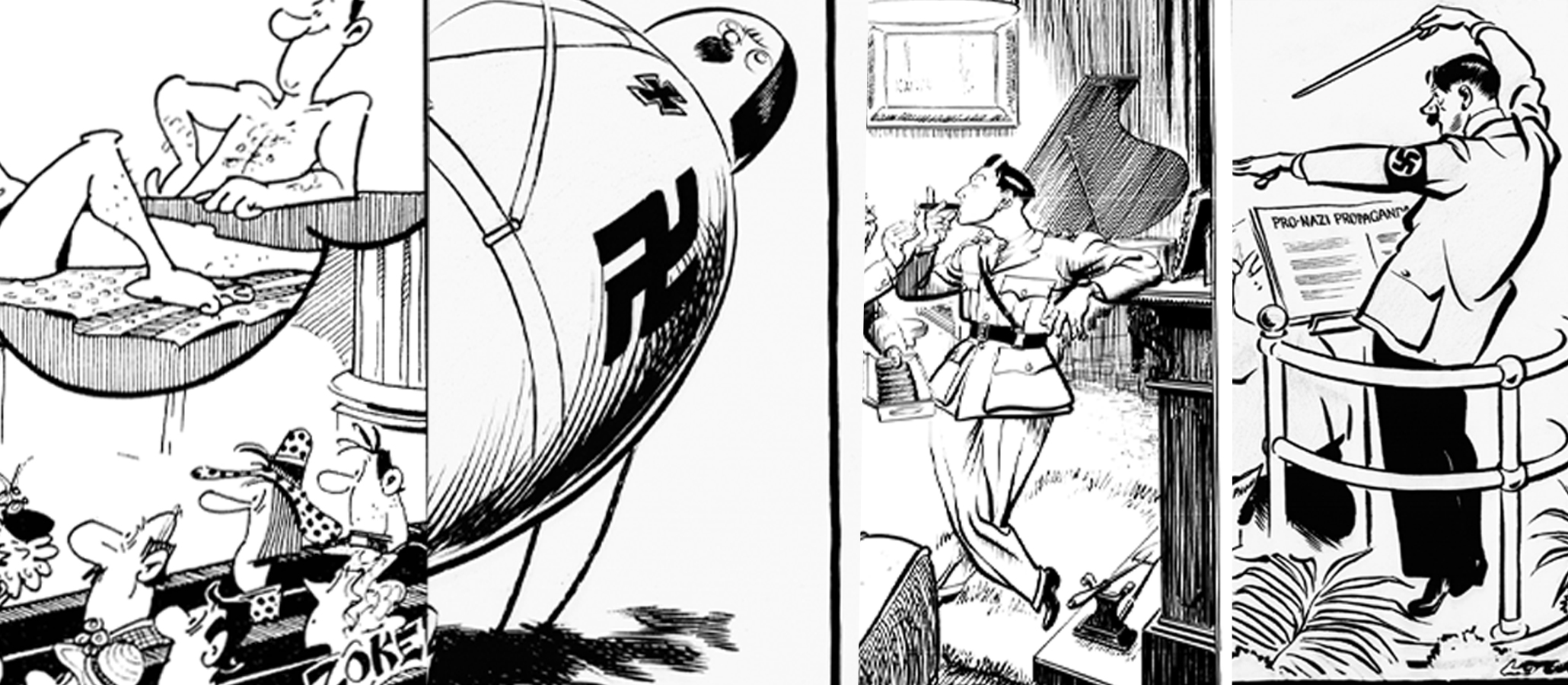
Images from the British Cartoon Archive left to right: Zoke [Michael Attwell], ‘Ah-men!’ [46886] ; David Low, ‘All blown up and nowere [sic] to go’ [DL0741a] ; Joseph Lee, ‘Smiling through: queer new world’ [JL 2539] ; David Low, [no caption] [DL1613].

This year saw us finish up our Beaverbrook Political Cartoon Collection Strategy project, and it finished with a bang. We invited two scholars (Amy Matthewson from the University of Birmingham and Dominic Janes from Keele University) to work with us to research and curate an exhibition using the Beaverbrook Collection and the British Cartoon Archive as inspiration. They could select any theme they wanted, and we were very fortunate to be able to employ three student interns (Isabel Walford, Freya Francis and Freja Dixon) to assist them in their research. The resulting exhibition was titled ‘Laughter in the Long Twentieth Century’ and explored the rise of fascism and the (in)visibility of LGBTQ+ people and communities since the 1960s through the lens of cartoons. Despite choosing two distinct topics to explore, Amy and Dominic were able to recognise and bring together a number of themes in the work, highlighting how humour acted both as a powerful tool of social control but also of resistance and defiance in the face of oppression and uncertainty. The exhibition was launched with an event on 1st July 2025, which featured guest speakers Dr Harriet Earle from Sheffield Hallam University and artist David Shenton. You can explore the exhibition online on our website and both Amy and Dominic will be exploring the topic further through a number of published articles, so keep your eyes peeled for more news on those!

[Update – see Amy’s article at https://doi.org/10.1080/14714787.2025.2576832]

new additions

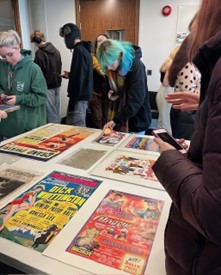
The British Cartoon Archive has seen a number of additions to the collection this year. This included a collection of almost 100 originals of the cult satirical cartoon strip ‘Biff’, created by Mick Kidd and Chris Garratt, and a selection of original cartoons by Jeremy ‘Banx’ Banks. We were also very lucky to acquire a large collection of underground comics from Tony Bennet of long-standing alternative UK publisher, Knockabout. The collection not only spans over 50 years of underground and alternative comics from the UK and beyond, but also includes documentation and papers related to several legal cases brought against the company for breaches of the Obscene Publications Act.
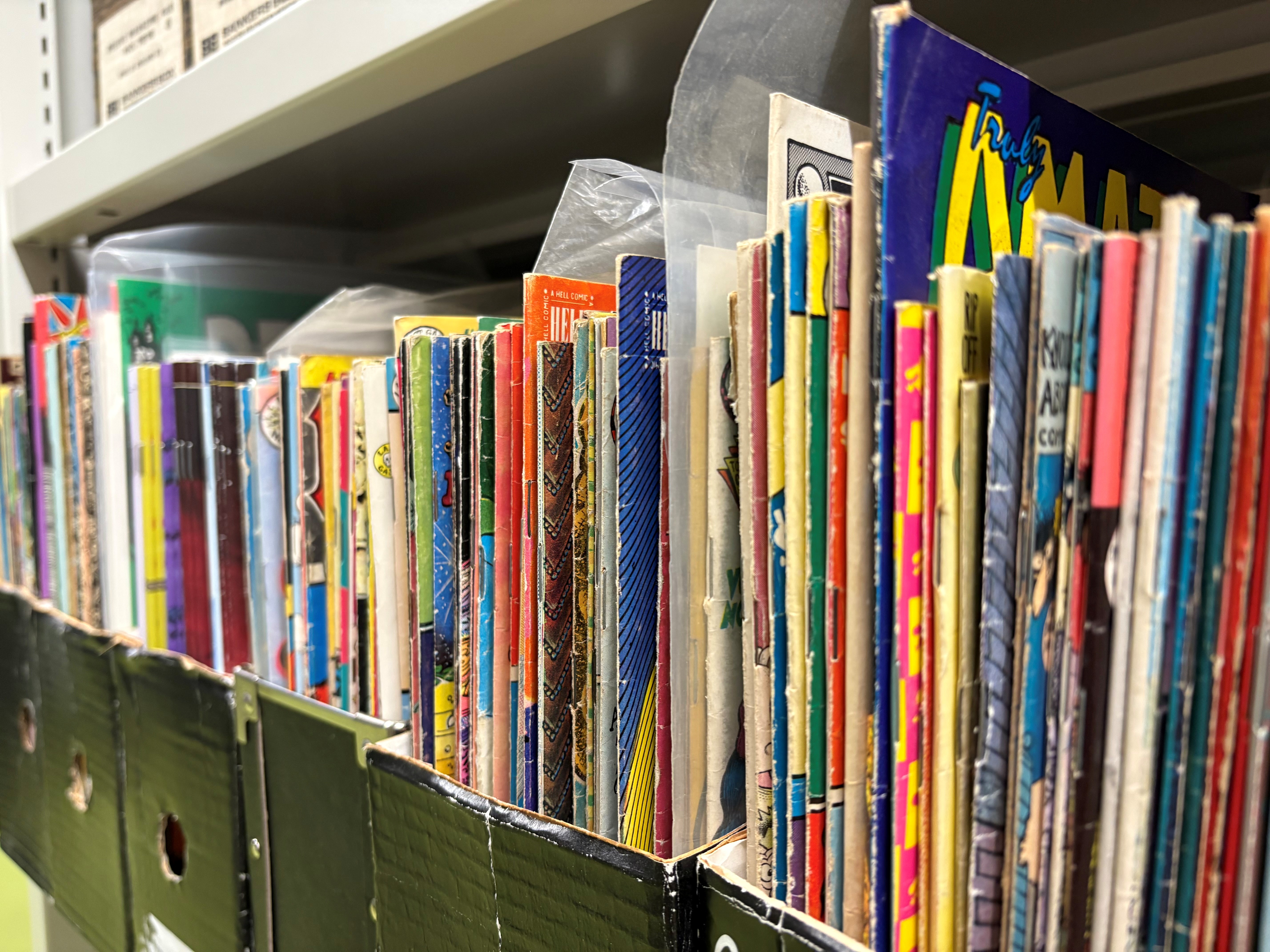
Comics from the Knockabout Underground Comics collection

cartoon county, brighton

In August 2025 the British Cartoon Archive was invited to talk at a meeting in Brighton run by Cartoon County, a community group of local artists and storytellers. These events are held on the last Monday of every month, with host Alex Fitch inviting different speakers to come along and share their current work, after which Alex broadcasts the talks on Resonance FM’s Panel Borders. I was delighted to attend and had a great time speaking to the group about the work we do at the BCA. I can highly recommend attending if you find yourself in Brighton on a Monday evening!

The R.E.W. Maddison Archive
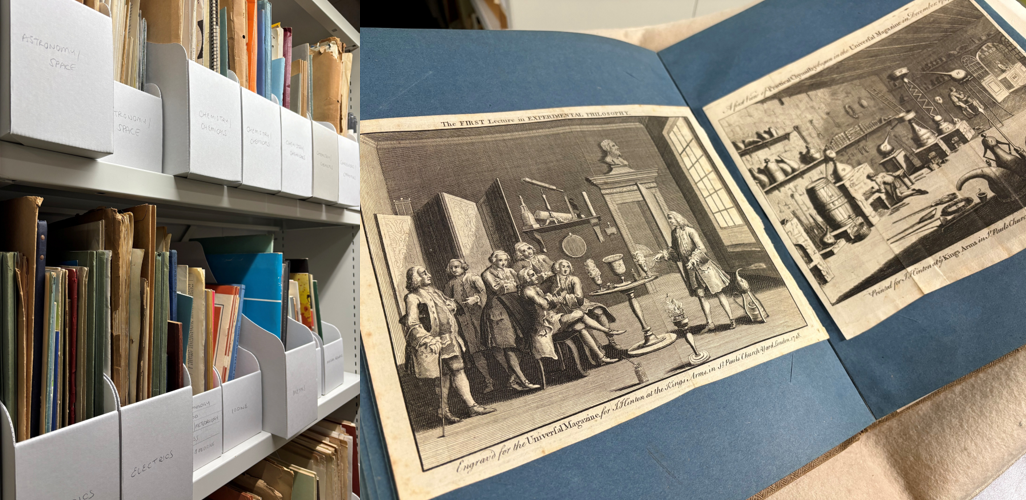
Images of items in the Maddison Archive

Dr. R.E.W. Maddison’s library has been a fixture of Special Collections and Archives, and the Templeman Library, since our university’s early days. Maddison was a personal friend of a fellow bibliophile, John Crow, whose own library constituted one of the University’s founding collections and who encouraged Maddison to deposit his with us too.  Maddison’s library was built up over a period of 40 years and was considered one of the finest private collections on the history of chemistry. Alongside his large collection of books (read more in Jacqueline’s entry below), we were also gifted a substantial archive of material from his career, which I have had the pleasure of cataloguing this year.

The archive contains many different aspects, including correspondence, research papers, scrapbooks, published pamphlets, prints, and Maddison’s own notebooks. Particularly exciting items I identified whilst working on the collection include some 18th century Gillray cartoon prints and many beautiful early-printed engravings depicting scientific instruments and diagrams. It’s been very satisfying to bring the collection to order and to make it accessible, so have a browse on our online catalogue.

Christine Davies, Special Collections and Archives Coordinator

One of the privileges of my role lies in the diversity of projects and groups of people I get to support with engagement and education activities. This year, one of the highlights was working with David Smith (Outreach & Widening Participation, University of Kent) in delivering two bespoke sessions for secondary school students about protest and activism, showcasing some of the wacky materials from the Mark Thomas Collection (including a toy Barbie car and hi-vis demonstration jackets) and crafting zines with which to empower their own civic voice.
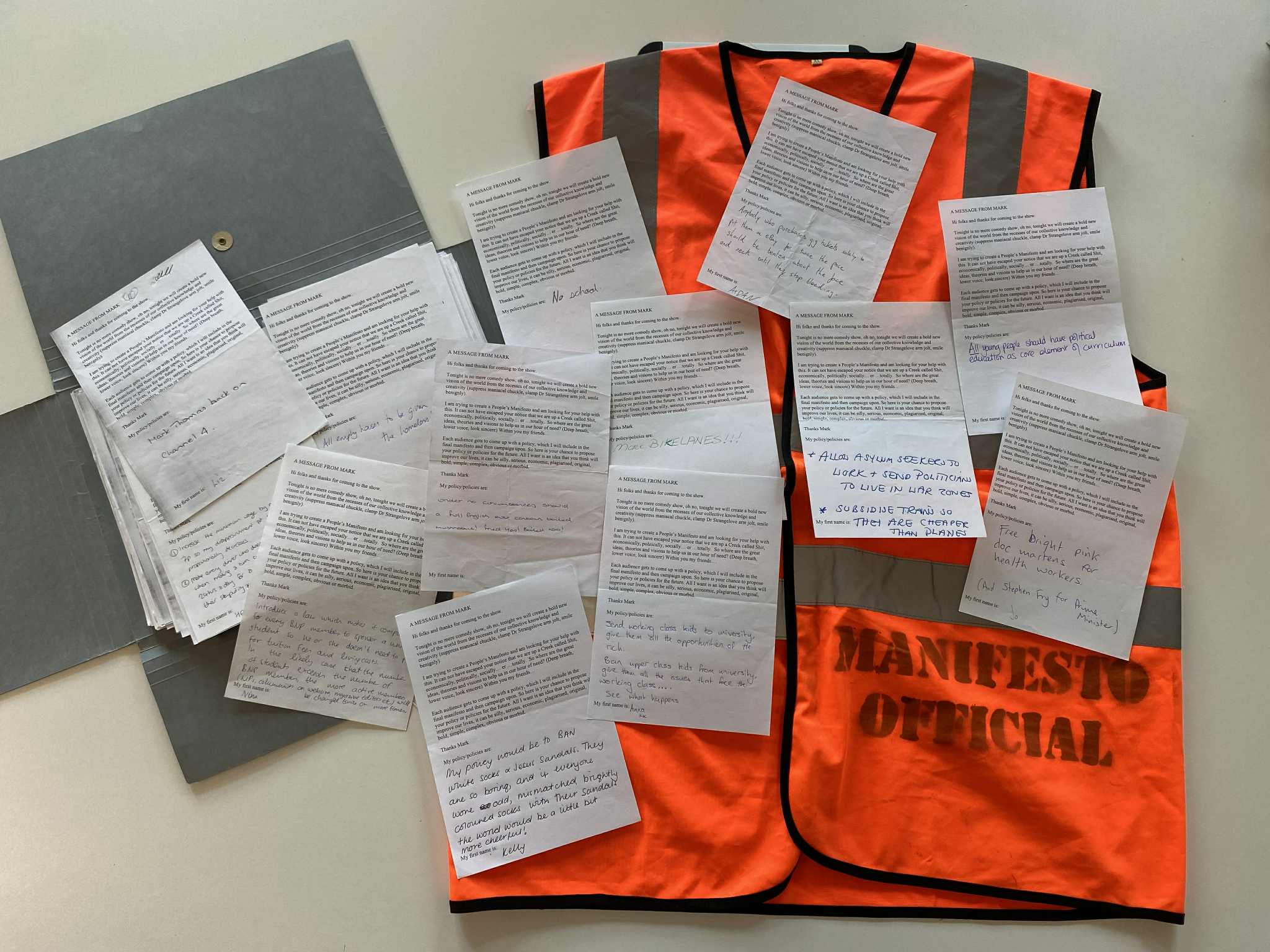
Audience contribution slips and hi-vis jacket from Mark Thomas’ It’s the stupid economy tour, 2009 (Mark Thomas Collection, BSUCA/MT/2/12/1 and BSUCA/MT/12)

Another highlight was in supporting the wider Library Events Group with a social media campaign to celebrate Shakespeare’s Birth Year; it was thrilling to uncover so much unique material in our collections testifying to both the literary and social contexts of Shakespeare’s lifetime and the enduring performance legacy of his plays. We also created a pop-up display of these materials to complement a talk given by Dr Rory Loughnane (School of English, University of Kent) in which he shared research for his upcoming book – favourites included a 1502 copy of Cicero’s Tullius de officiis, a text Shakespeare would have recognised from the school he attended, a copy having been bequeathed by local vicar John Bretchgirdle in 1564, and several 19th-century libretti that were used by Arthur Williams as prompt-copies in Victorian productions of Othello featuring his annotations and paste-ins as well as intriguing printed front-matter about contemporary casts and costume recommendations.
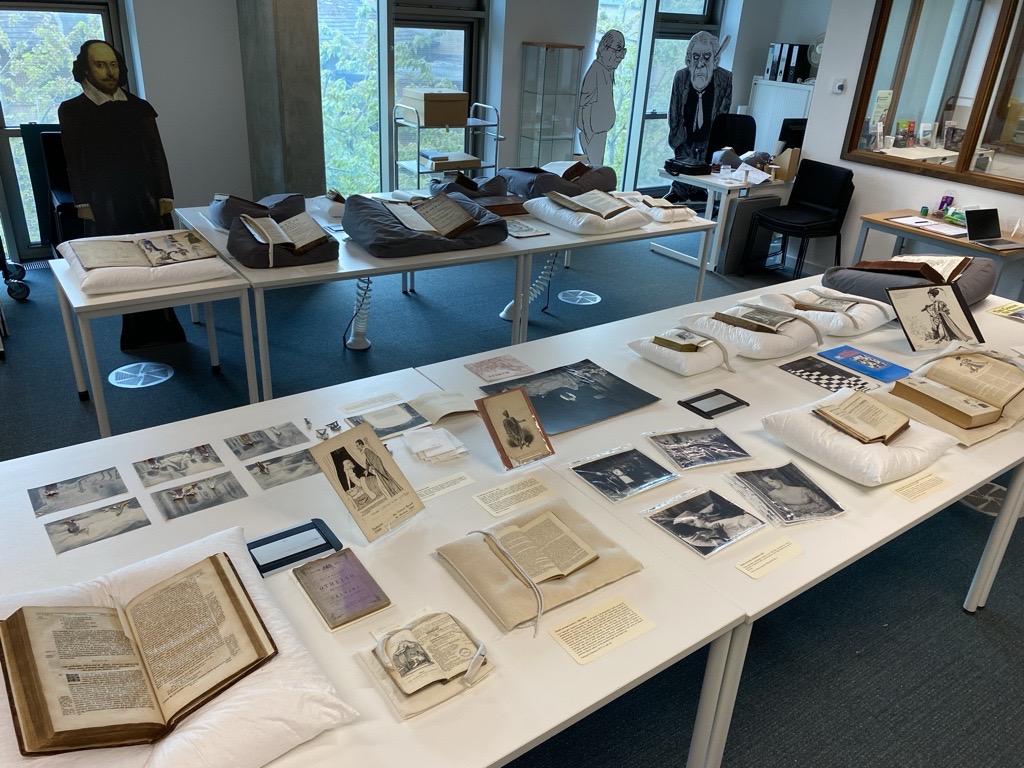
Shakespeare’s Birth Year (pop-up display of Special Collections and Archives materials)

Lasty, and most recently, I collaborated with Dr Bala Chandra (School of Advanced Study, University of London) in a series of activities to coincide with the Being Human Festival, engaging the wider public with prominent literary and cultural figures associated with Canterbury through a curated display of our materials and a radio podcast now on Spotify.

Emily Royston, Project Archivist

This year brought about an exciting change for me as I joined the team in April as Project Archivist! Since stepping into the role, I’ve been working closely with the UK Philanthropy Archive (UKPA), appraising, cataloguing, and rehousing our newest collections. These include major acquisitions such as the Craigmyle Fundraising Consultants Archive, the Wates Foundation Collection, the John Ellerman Foundation Collection, and the Hilden Charitable Fund Archive. Recently established in 2019 with the late Dame Stephanie Shirley’s founding collection, the UKPA will benefit enormously from these additions, opening up fresh avenues for research into UK philanthropy and fundraising.

I’ve really enjoyed diving into our newest collections from the Wates Foundation and the John Ellerman Foundation, which has revealed the distinct yet complementary stories of two family-endowed trusts. The Wates Foundation Collection traces the work of a trust set up in 1966 by brothers Allan, Norman, and Ronald Wates, who earned their wealth in the building industry. As generalist grant-makers, the Foundation has supported a wide range of causes from housing and homelessness to young people and education, women’s health and wellbeing, and criminal justice and prison reform. Its records, including grant files, correspondence, publications, photographs, and audiovisual materials, offer a vivid picture of family-driven, community-focused philanthropy.
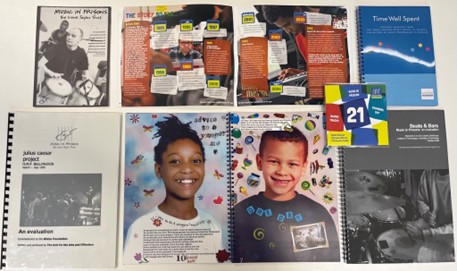
Arts and music projects supported by Wates Foundation and The Irene Taylor Trust, part of their work in prison reform and rehabilitation (UKPA/WATE/3/144)

The John Ellerman Foundation Collection, meanwhile, captures the legacy of a trust established in 1971 by John Ellerman II who inherited the fortune of his father, shipowner and investor Sir John Ellerman I. Its grant-making spans both UK-based charities and international projects, including support for disability organisations in South Africa. Also present in the collection are the Ellerman family’s personal photographs, records, and belongings, providing a rare insight into a family often described in the press as reserved and elusive. Together, these collections provide a rich and exciting resource for researchers, offering insight into how philanthropy and grant-making have shaped communities in the UK and beyond.
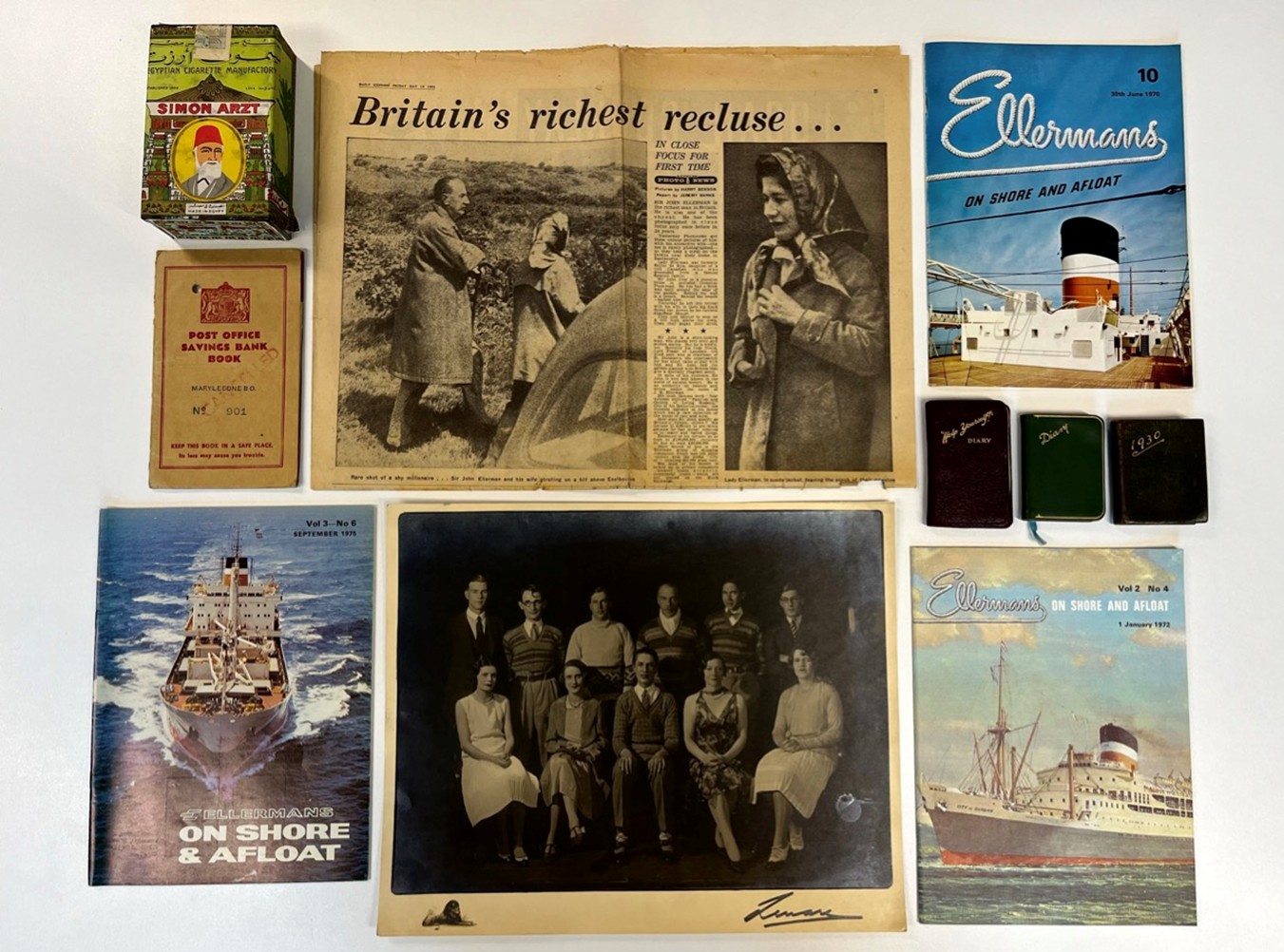
Newspaper clippings, publications, and personal belongings from the John Ellerman Foundation Collection (UKPA/JEF/1—4)

Making these collections accessible to researchers this year has been incredibly rewarding, with scholars traveling from as far afield as Japan and the United States to consult our UKPA materials. As our UKPA collections continue to grow, I’m excited to see the new research they inspire in 2026!

Jacqueline Spencer, Project Curation and Discovery Administrator

This year I have enjoyed working with the collections of two extraordinary book collectors, Dr. R.E.W. Maddison and Ronald A. Baldwin, Kent historian. Dr. R.E.W. Maddison was an academic and librarian of the Royal Astronomical Society who wrote the major work on Robert Boyle (1627-1691). His collection spans the history of sciences, particularly physics. In 2025 I completed the cataloguing of his later deposit of about 800 books including works on alchemy, astronomy and applied science. Dedications and notes in some of the books indicate Maddison’s personal connections with scholars across Europe. The older books include a four-volume set of the 1787 Paris edition of M. Sigaud de la Fond’s Eléméns de physique bound in block-printed pastepaper and John Dalton’s A descriptive poem addressed to two ladies at their return from viewing the mines near Whitehaven (1755) which indicate the range of his interests.
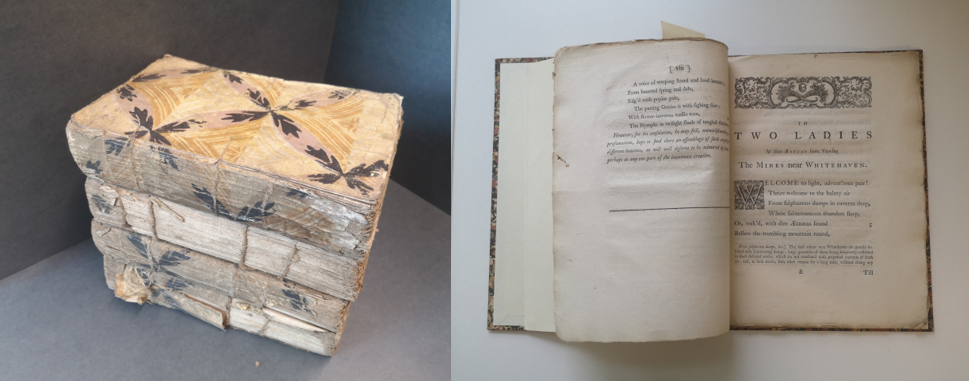
Élémens de Physique (Maddison Collection, QC 19 FON)
A descriptive poem [of…] the mines near Whitehaven (Maddison Collection, LRG PR 3395 DAL)
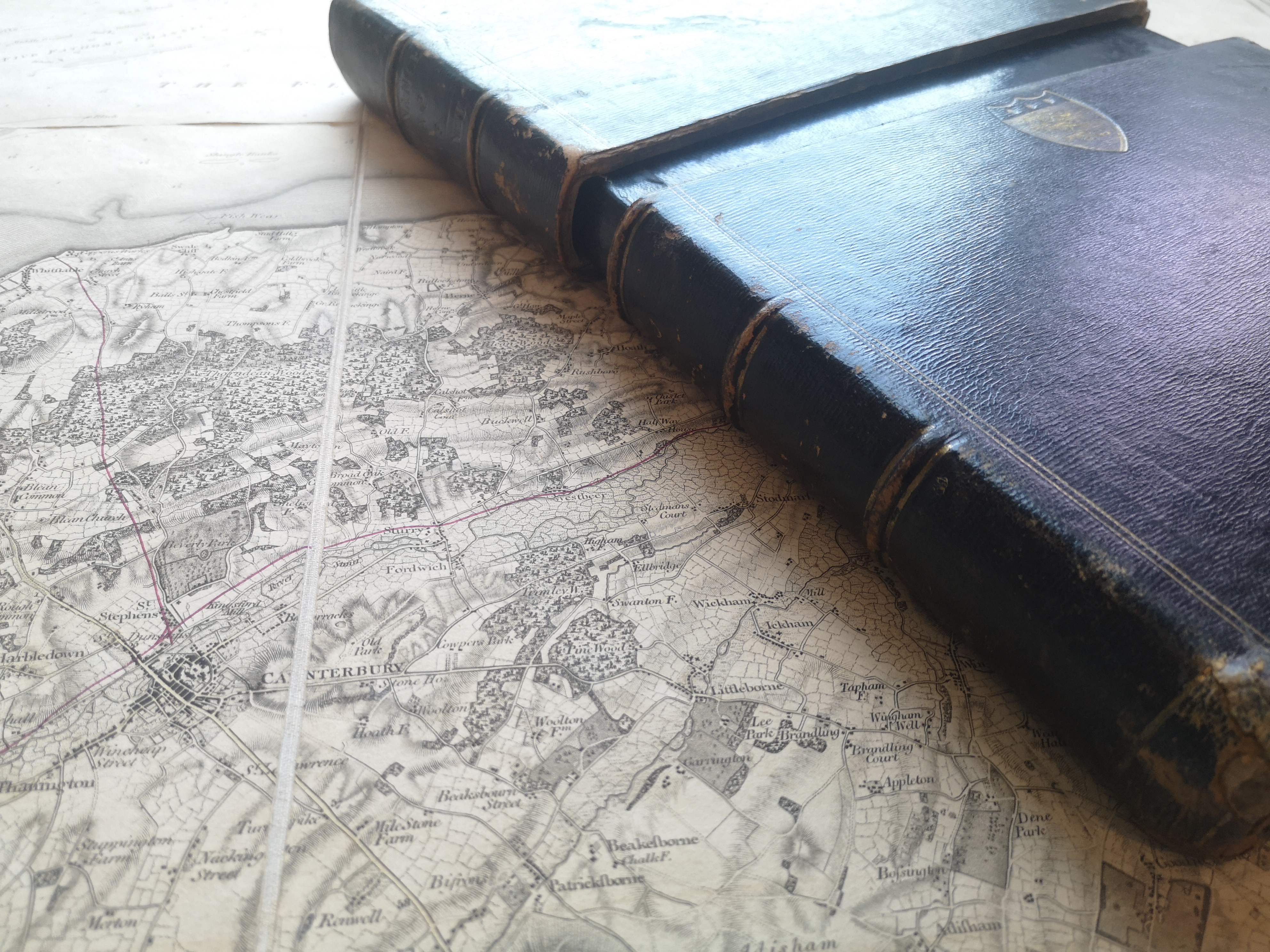
Ronald A. Baldwin was an indefatigable collector. The cataloguing project has revealed his interest in the quotidian history of Kent. Our collections have been enhanced by his material on hopping and farming of cherries and apples and the papermaking industry, on folklore, the natural history of the county and early practical medicine. The collection has added to the university’s holdings of older books on the history of the county including the first Ordnance Survey map of Kent from 1801, the General survey of England and Wales. : An entirely new & accurate survey of the County of Kent … surveyed by Capt. W. Mudge, at large scale, showing field boundaries, mounted on a single sheet and in its original box case.

An entirely new & accurate survey of the County of Kent (Ronald A. Baldwin Collection, G 5753.K4 1801)

Railway lines have been drawn on in red pen which, Baldwin notes, must have been before 1860 as the Crab and Winkle line is shown but not the line from Canterbury to Faversham. Baldwin assembled Acts of Parliament relating to the use of land and rivers in Kent and he sought out sources on local government and on crime. He was a Methodist and his interest in religious biographies may have helped him to acquire scarce pamphlets, amongst which is the rarest book I have ever catalogued, his pamphlet printed by James Abree in St. Margaret’s, Canterbury in 1745, A true and authentick confession of the many robberies committed by William Hook …the notorious house-breaker; our copy has now been added to the ESTC (English Short Title Catalogue) by Dr. David Shaw. I have been able to catalogue part of his collection this year; the biographies of people of Kent, of Kent authors and religious nonconformist groups are yet to be explored.
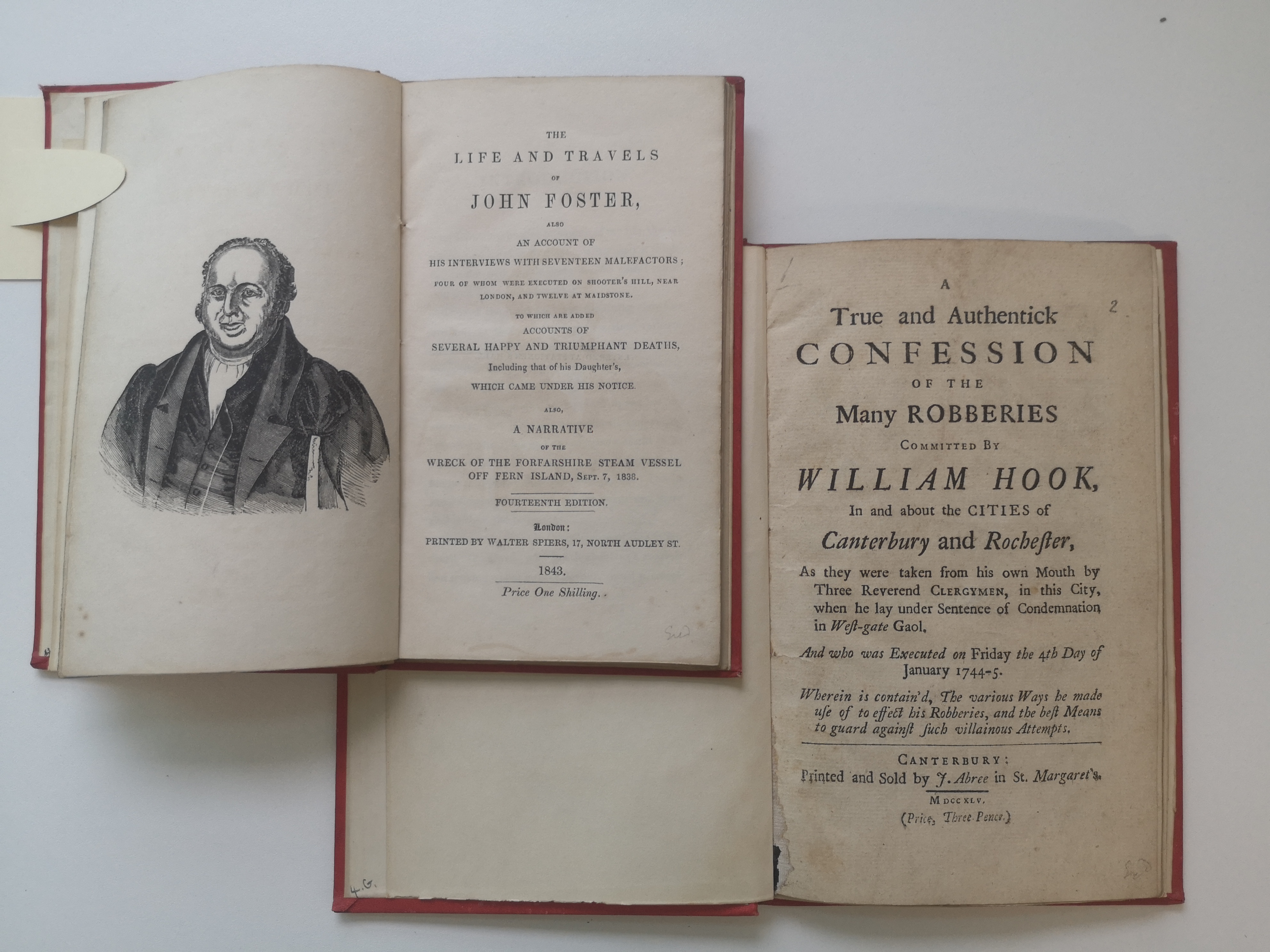
The life and travels of John Foster (Ronald A. Baldwin Collection, HV 28 FOS)
A true and authentick confession of the many robberies committed by William Hook (Ronald A. Baldwin Collection, HV 6653 HOO)

Alex Triggs, Digitisation Administrator

During 2025 I continued with the high resolution digitisation of the British Cartoon Archive collections. This year has been dominated by the original artworks of Jensen (John Jensen, 1930-2018), who drew for a wide range of publications; newspapers, books and magazines, but is perhaps most widely known for his work for Punch magazine and the Telegraph newspapers. Born in Australia Jensen came to Britain as a young man and began his career as a cartoonist and illustrator which went on to span six decades. He was a skilled artist who could draw with either hand and in a wide variety of styles. The Jensen collection contains circa 3000 artworks and is now almost entirely digitised. Personally it has been one of the most interesting collections I have worked on, largely due to Jensen’s artistic ability and stylistic diversity.
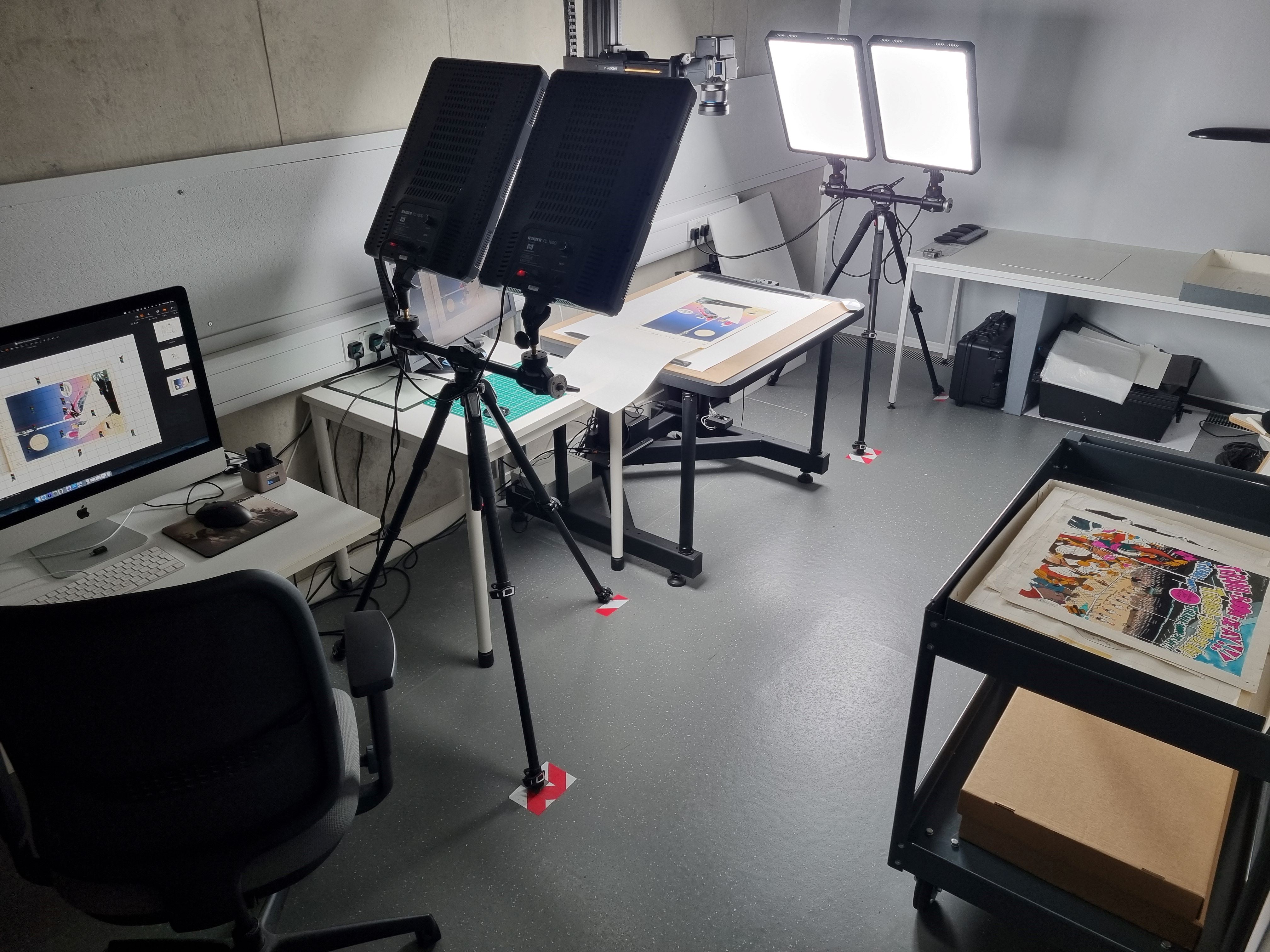
Digital Imaging Suite, Special Collections and Archives

The focus of my digitisation work on the audio visual collections has now moved on to the vast Max Tyler collection of Music Hall analogue magnetic audio cassette tape recordings. Max Tyler was the archivist and historian for the British Music Hall Society, and this substantial collection includes a wide variety of Music Hall memorabilia including sheet music, playbills, books and recordings. We are currently running an initial test digitisation of this eclectic collection of audio recordings to evaluate how we will approach the process as we move forward.
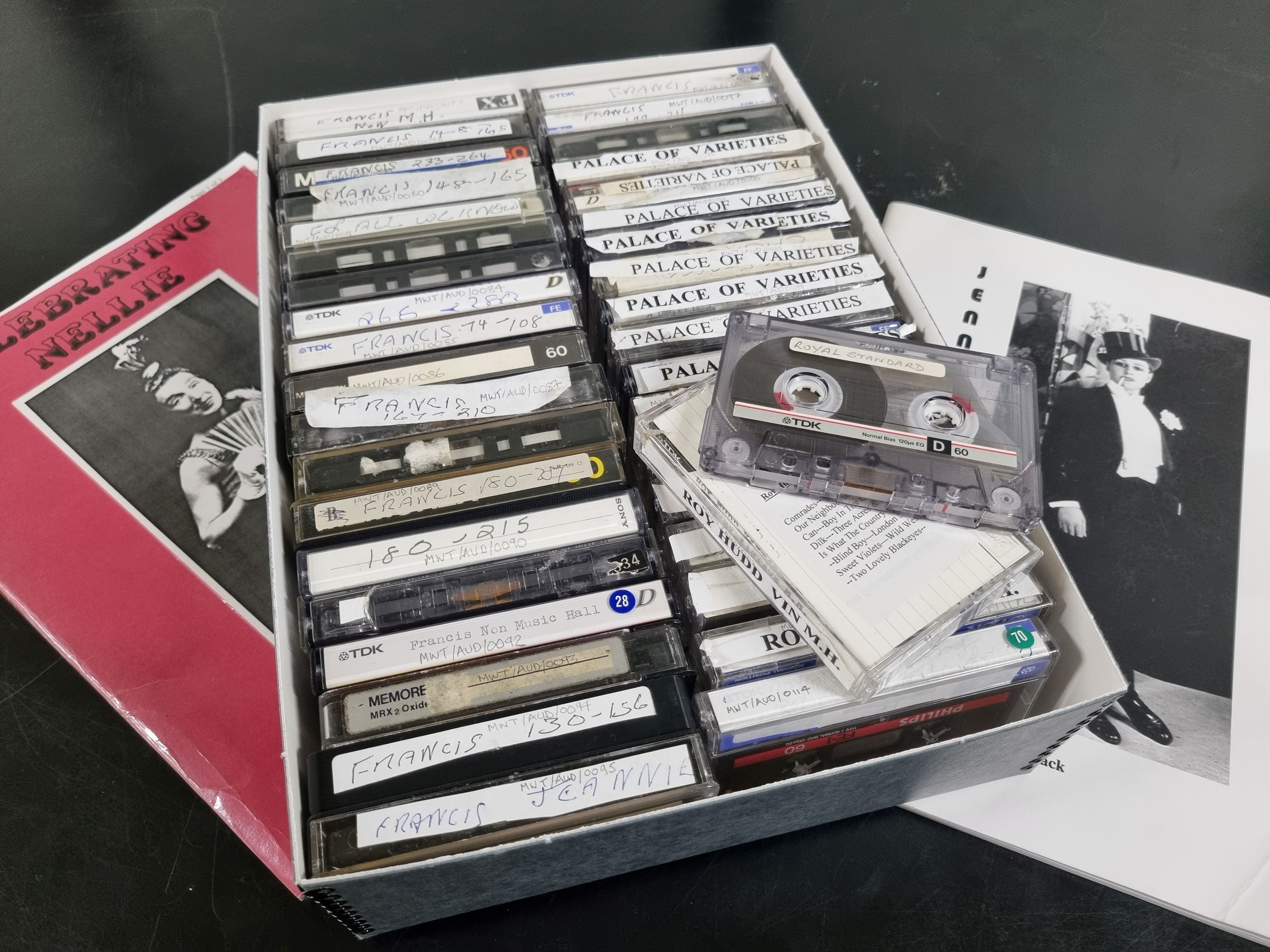
Box of cassettes (Max Tyler Collection)

Mandy Green, Special Collections and Archives Assistant

Back in January I completed scans from the Giles annuals that we receive every year, they are always so good to scan and the comedy element always funny. I’ve also been scanning the Donald McGill postcards which are particularly colourful and detailed. Most recently, I have scanned two of the Alexei Sayle scripts for the Young Ones, it was so interesting to see how the scripts are written.

Stuart Tombs, Curation and Discovery Administrator

This year, as well as cataloguing many more music hall song sheets from the Max Tyler collection, I have enjoyed cataloguing items for the Reading-Rayner Literature Collection. These have consisted mainly of twentieth century fiction and biographical works by authors including Charles Morgan, Evelyn Waugh, T. H. White, Jerome K. Jerome, and Gore Vidal (including a copy of his memoir, Palimpsest, signed by the author).

Many more interesting items have been added to the British Cartoon Archive of which the highlight for me has been “Drawing the curtain: the Cold War in cartoons”, a beautifully presented collection of Soviet cartoons from the Cold War era, published in 2012. Sergei Kruschev (Engineer, and son of Cold War Russian leader Nikita Kruschev), in his preface describes it as “a history of the second half of the twentieth century: from the gentle humour of the mid-1940s, when the world lived in a state of euphoric anticipation of peace and prosperity to come; through the mutual mistrust – not to say hatred – of the 1950s to 1970s; right up to the hopes of perestroika, and even the diplomatic ‘reboots’ of modern times.”
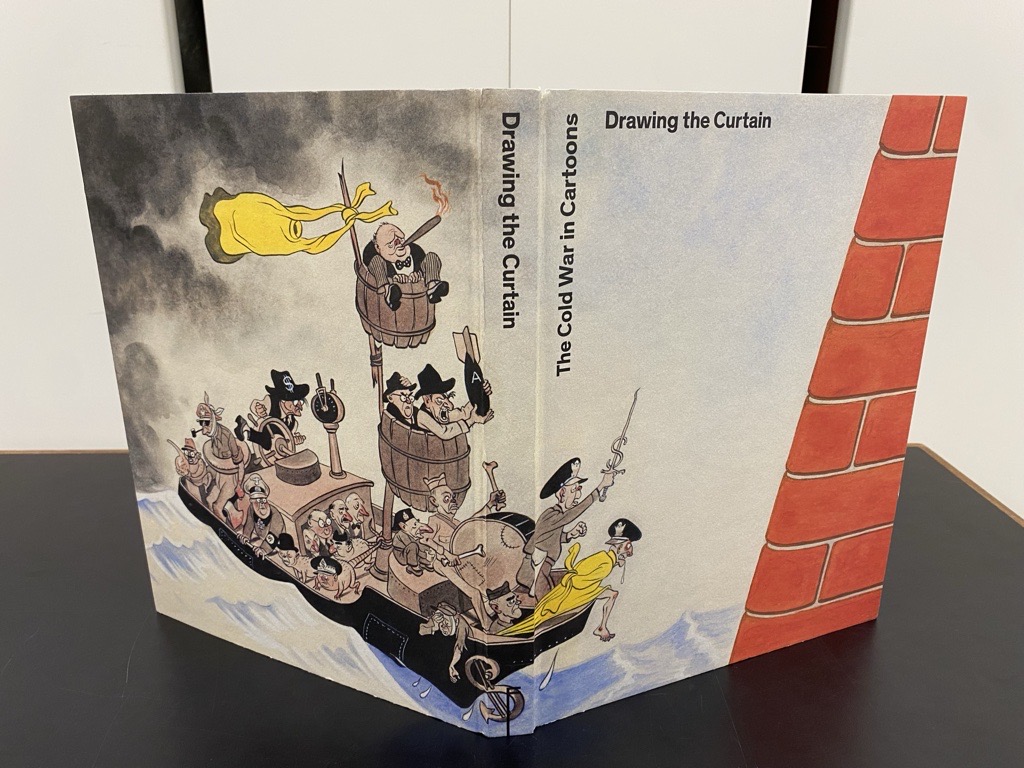
Drawing the curtain : the Cold War in cartoons (British Cartoon Archive Library, LRG NC 1763.W3 ALT)

Matthias Werner, Curation and Discovery Administrator

I have started to work on a collection of books and periodicals generously gifted to us by the late Graham Thomas, who sadly passed away in 2023. Dr Graham Thomas was a former Politics lecturer at the University of Kent and played an instrumental role in establishing the Centre for the Study of Cartoons and Caricature, now known as the British Cartoon Archive. He left us a substantial collection, comprising a large number of books and periodicals, an extensive postcard archive, and a significant assortment of ceramics. The Graham Thomas book and periodical collection includes works of cartoon and  caricature artists, but also books on humour, drawing and design. Among the highlights are a number of first editions by Fougasse, George Molnar and Francis Carruthers Gould.

In addition, I have continued to catalogue Steve Bell’s cartoons for the British Cartoon Archive, making them available to the public. Steve has very kindly sent us his published editorial cartoons from The Guardian. It has been fascinating to revisit the political scandals of 2021, which made me realise how quickly things in politics have moved, although the broader topics have largely remained the same as we continue to battle with the fallout from Covid, Brexit, and the (first) Trump presidency.

Volunteers

We couldn’t end our annual newsletter without a massive thank you to all our volunteers, who provide indispensable support to managing our collections and making them more discoverable. Collectively, they contributed 1031 hours over the last twelve months – equivalent to 186 full work days. Read on for some of their own insights.

Martha Pledge

I have been volunteering in Special Collections and Archives since the spring. Most of my time has been spent archiving theatre programmes gifted to the university by Seona McKinnon and I’ve made some fascinating finds. This Sylvia Plath programme features her poems, a timeline of her life, and a scene sequence of her poetry to the dance movements performed. It even folds out to become an amazing poster, revealing a creativity of production which reflects beautifully on the legacy of Plath’s life and work. As a Shakespeare lover, I also want to highlight this 1979 adaptation of Hamlet at the Half Moon Theatre, starring Frances de la Tour in the title role. A more traditionally-structured programme, it includes an article on the lesser-known performance history of Hamlet being played by female actors. These are just two of hundreds of programmes I’ve encountered whilst volunteering, all of which has reminded me of the importance of preserving literature for future academics and students.
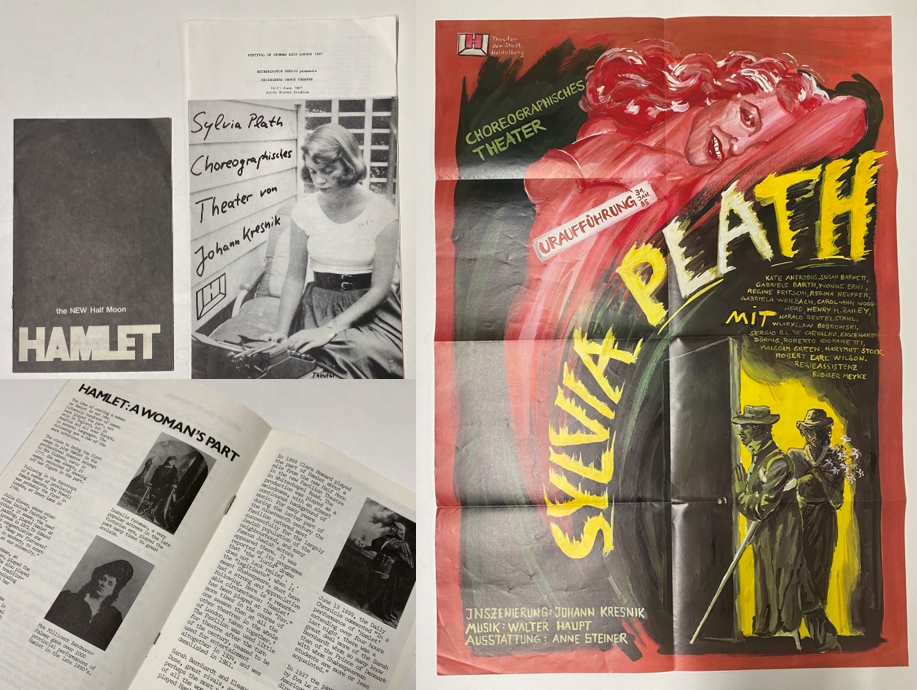
Programmes for productions of Hamlet (Half Moon Theatre, 1979) and Sylvia Plath (Heidelberg Dance Theatre at Jacob Street Studios, 1987). Seona McKinnon Collection

Emma Jeffree

As a Special Collections and Archives volunteer, I have been writing summaries and editing transcripts of interviews in the Winstanley Oral History Collection. These interviews were conducted by Michael Winstanley in the 1970s, looking at everyday life in Kent before 1914, and formed the basis for his book Life in Kent at the turn of the century [1978]. Listening to the original digitised recordings has given me the chance to hear the voices of people who lived at the time, and learn from them what their life was like, and how society worked 100 years before I was born. Having grown up in Kent myself, it is fascinating to hear of familiar places in very different lights. Volunteering at the archives is not only interesting and enjoyable, but it also provides me with good work experience vital for a student and the confidence and skill set necessary to embark on my future career.
Special Collections and Archives highlights: 2024 edition

Karen Brayshaw, Special Collections and Archives Manager 

As 2024 draws to a close it is my great pleasure to look back on another busy and exciting year of activity in the University’s Special Collections and Archives. The only change to our Team this year is that we said goodbye our project archivist Daniella in the summer. Daniella worked with us on two funded projects, the David Drummond Pantomime Collection and the collection from the Craigmyle Fundraising Consultants.  The project included sorting, listing, repackaging, and making the two collections accessible and discoverable. You may have seen what she got up to on our social media channels. We wish Daniella well in her new venture. 
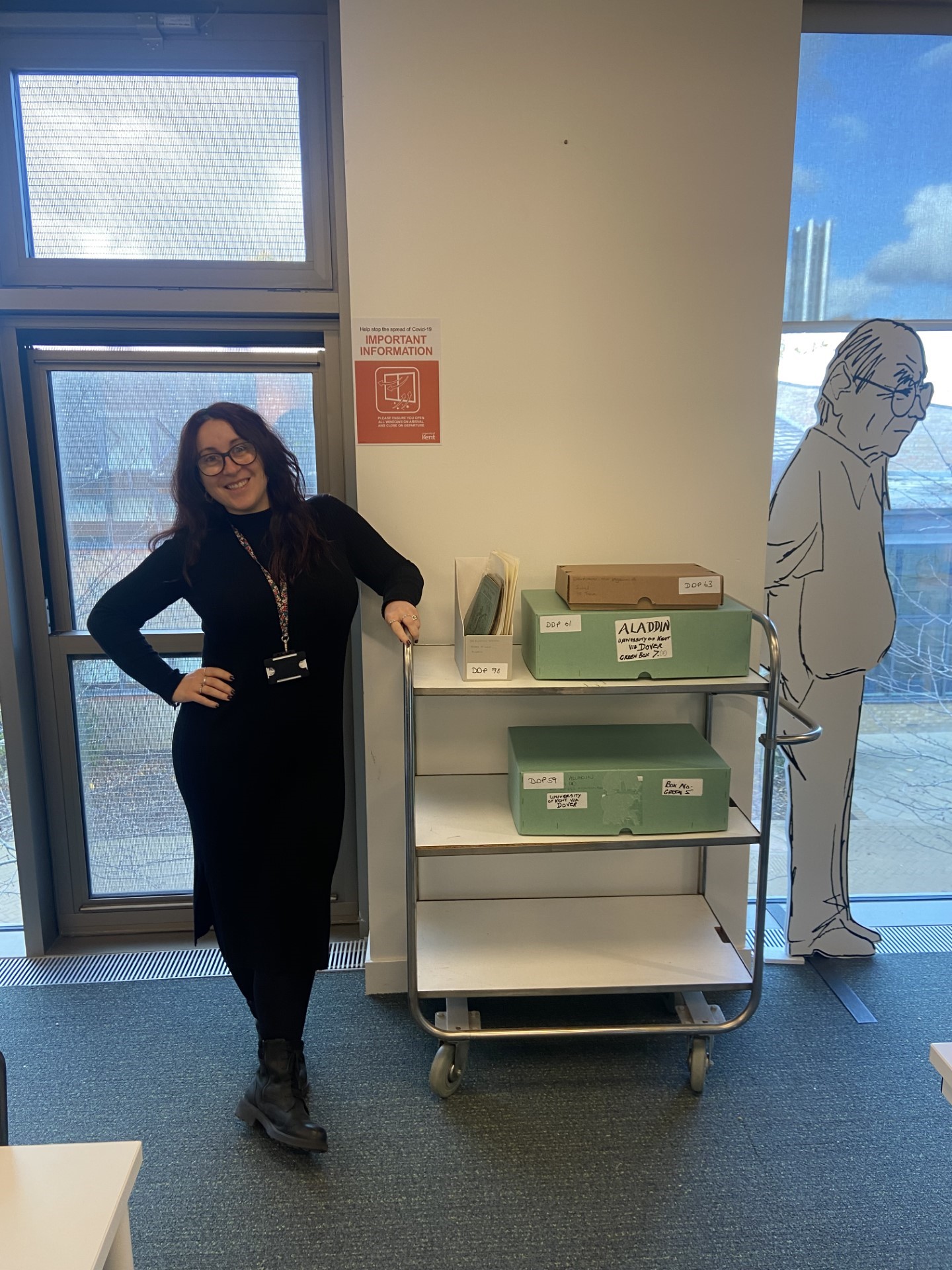
Daniella with some Aladdin material from the David Drummond Pantomime Collection.

The whole team have been amazing colleagues throughout the year – especially when I had to step back from work for a few months in order to recover from a health issue – I am very lucky to work with such an awesome team!  Although I’ve missed seeing the work that has taken place in the last three months, I have been able to follow the exciting events through colleagues and social media. One of the many highlights of the year for me was the amazing exhibition celebrating Kent’s rich mining history.  It was a great example of collaborative working with our volunteers and in this case we owe many thanks to Amy. It proved to be a popular attraction, and we had many visitors to the gallery, including external groups. As well as overseeing and co-curating our wonderful exhibitions, Beth has been busy working with the philanthropic community to grow the UK Philanthropy Archive and raising the funds to enable us to catalogue them. I’m looking forward to 2025 when much of this work will take place and the records will be added to our catalogue. Beth also has a loyal group of volunteers who come in regularly to work on the University archive, which will be super helpful next year as we approach the University’s 60th anniversary. Beth has also worked to deliver new and innovative sessions for external groups, and it was a joy to see the pantomime collection being utilised to stimulate the students from Canterbury College exploring ideas for their projects.  

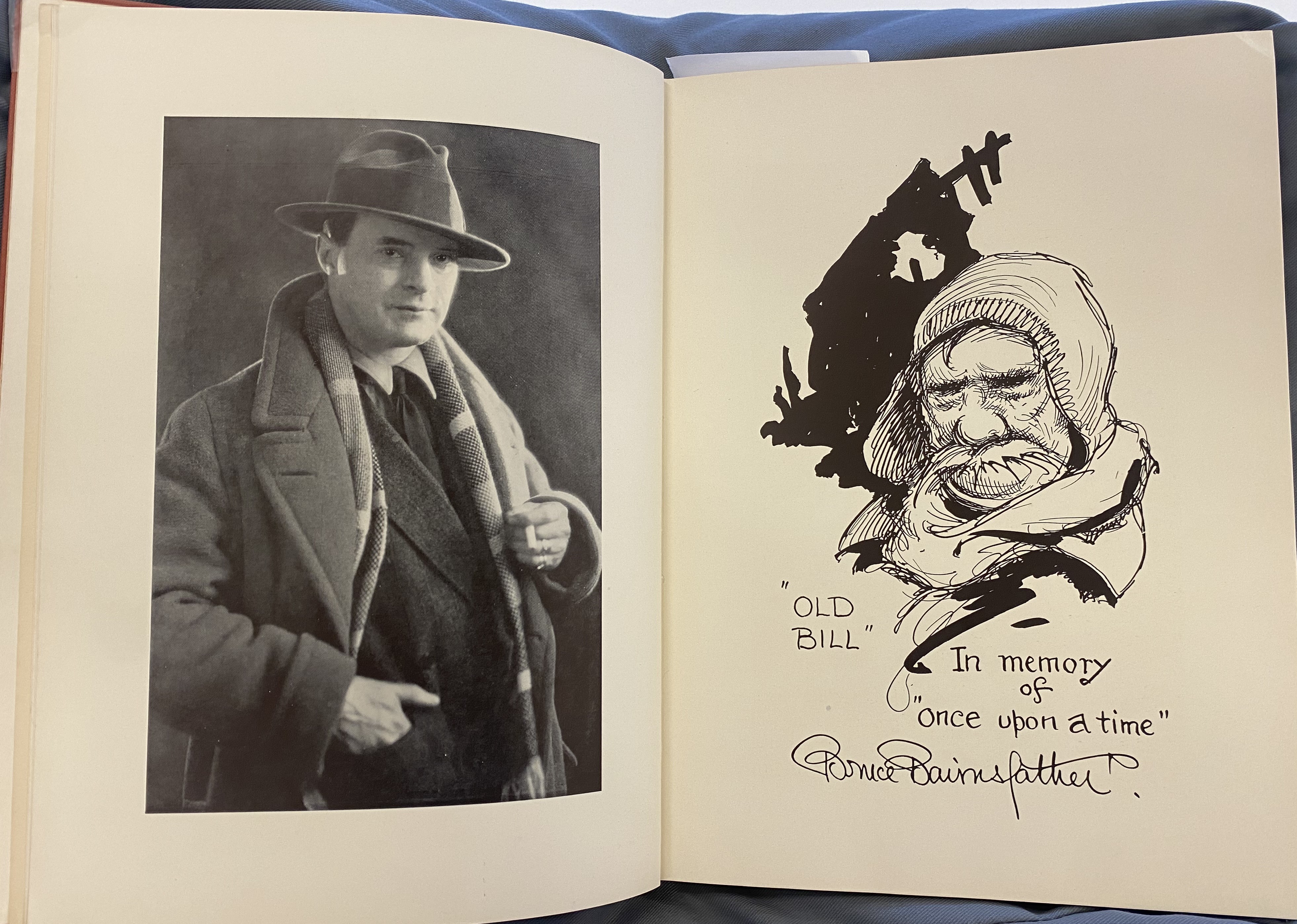
Clair has had an amazing year, working to get more of our collections listed, repackaged, and added to the online catalogue for all to see. A significant amount of this has been made possible through the excellent work Clair does with student work placements and volunteers.  I was especially pleased to see the Holt’s Bairnsfather collection being listed and repackaged – you can read more about it below. Clair has also been busy this year overseeing loans of collection items for external exhibitions, which is another way of sharing our amazing collections with wider audiences.   

Christine has also been busy devising new sessions and introducing new material to the seminar groups, exposing the academics and students to the richness of our collections. In 2023 we were pleased to receive the Louis James collection and Christine has done an amazing job of cataloguing the whole lot! The collection is already proving its value in enriching our teaching offer and Christine is being a brilliant advocate for it. It’s also very satisfying to witness the great work Christine and her volunteers are doing with our theatre programme collection.   

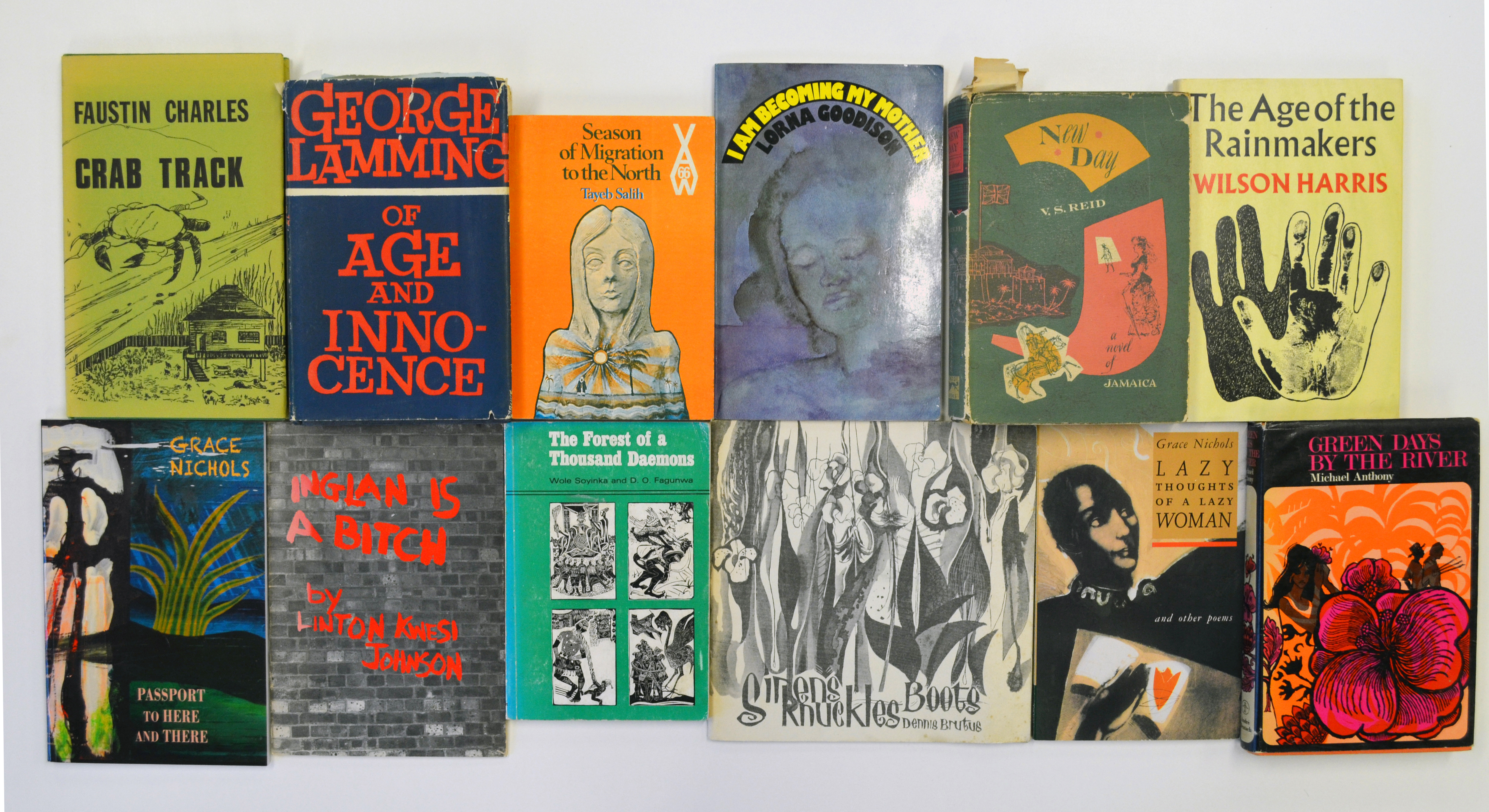
Items from the Louis James Collection

Alex is keeping the Phase One rig busy and producing amazing images from the cartoon and theatre collections. This enables greater access as well as supporting the preservation of the collections. Mandy continues to beaver away making sure our cuttings collection is kept up to date. At the same time, she has been digitising some original art works and sheet music. Sam has been working on digitising and cataloguing collections in the British Cartoon Archive, specifically Lawrie Siggs and Donald Rooum Collections. You can now find the records for Lawrie Siggs on our catalogue. Jacqueline completed cataloguing the Arnold Rood collection, Jack Reading and Colin Rayner’s collection, Charles Lewen’s collection, and books from the David Drummond Pantomime collection. It’s always a joy to see what treasures she brings back from the basement!

Our colleagues from the Curation and Discovery team, Stu, Matthias and Emma have been working with us one day per week and continue to make big strides in dealing with our British Cartoon Library backlog as well as our digital cartoon collection and various book collections, making them available to everyone.   

I never cease to be amazed and humbled by the talented people that come to support us in our work. Our volunteer projects this year have yet again been hugely successful – many thanks to everyone who has helped us in 2024! – and we look forward to working with our current and new teams of volunteers in 2025. 

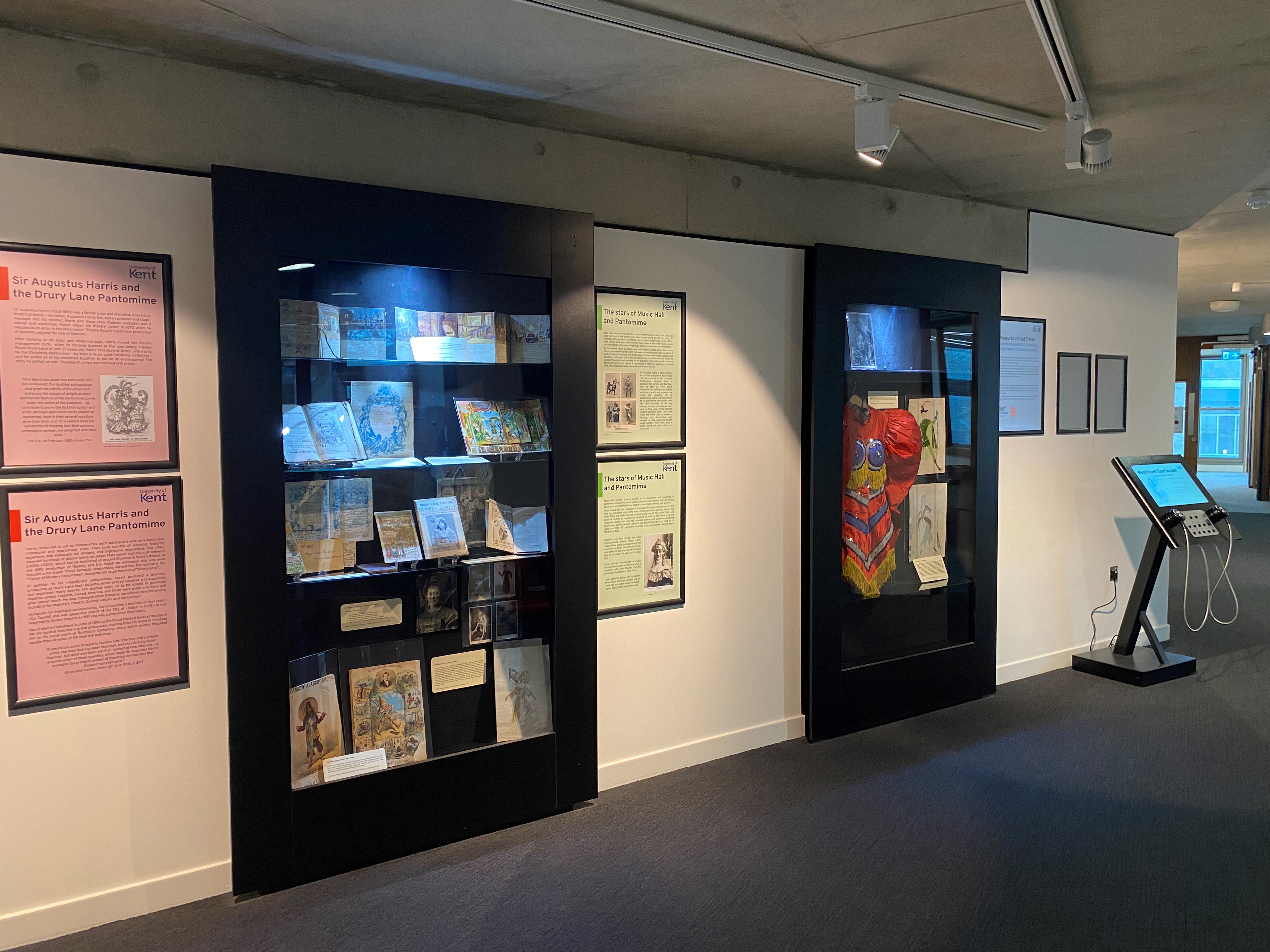
If you are on campus do drop by the Templeman Gallery, Block A|1. The team are currently installing a wonderful exhibition about pantomime (Oh yes they are!) which I promise will not disappoint you.  The new listening station has some lovely content on it. And do keep an eye on our social media channels for updates on our associated events.  

Sneak preview of our upcoming pantomime exhibition ‘Magnificent! Spectacular!’

Clair (Digital Archivist) 

Once again, the year has gone by super-fast and I feel as if I can only just recall all the amazing things the team has achieved this year, but there are a few stand outs for me.  

Firstly, we are so lucky to have worked with some amazing volunteers and placement students this year.I supervised a group of three students – Lizzie, Harvey and Nirvanna – who worked on packaging and preserving some ceramic objects in the British Cartoon Archive. You can read a blog post about this work here. I’ve also had the pleasure of working with our lovely volunteers, one of whom, Grahame, not only donated a collection of theatre programmes to us last February but also committed to listing them all for us! He’s now finished that work but continues to volunteer with us, working now on our Max Tyler collection. 

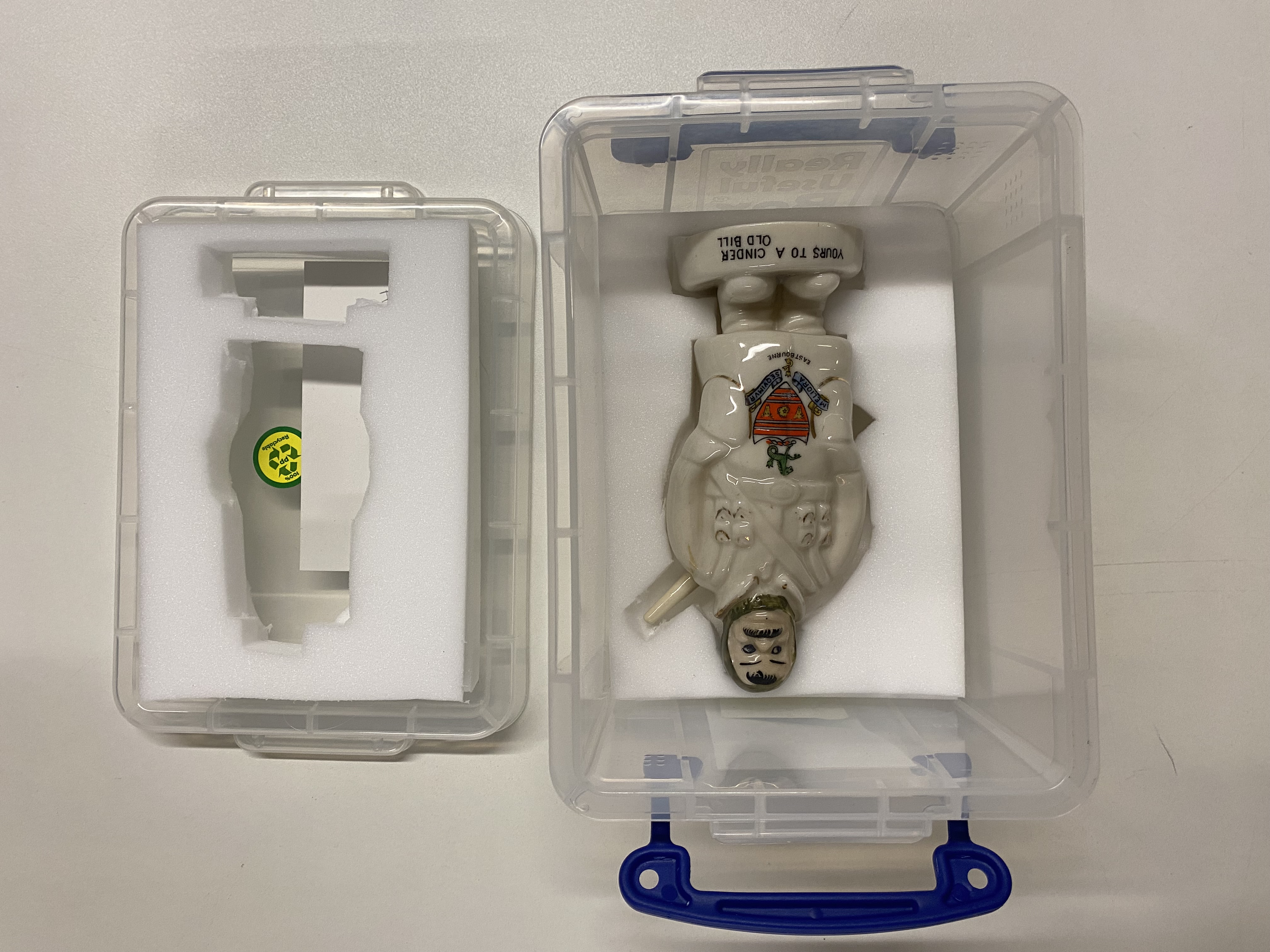
Completed packaging of Holt Bairnsfather Collection objects.


We’ve received some fabulous material for the British Stand-Up Comedy Archive this year which I’ve had the pleasure of sorting, accessioning and cataloguing, including three fan collections (Laura Grimshaw’s Teenage Obsessions, Richard Gill’s ‘A Rich Comic Life’ Collection, and the Joseph Champniss Collection), the Lakin McCarthy Entertainment Ltd Collection, and a collection of material from Stewart Lee.

Our loan service has been busy again this year, with British Cartoon Archive material going out to the Herne Bay Cartoon Festival and Imperial War Museum, and a continuing loan of a Nick Garland cartoon to the V&A that is part of an international touring exhibition.

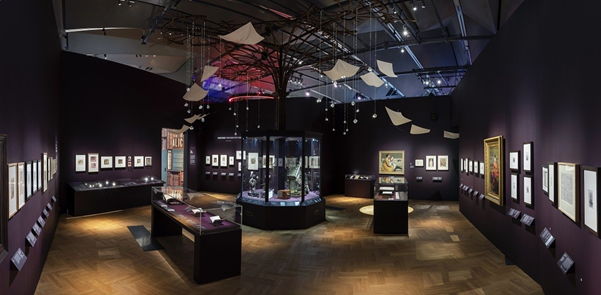
Image of the V&A exhibition ’Alice: Curiouser and Curiouser’ installed at the V&A Musuem in South Kensington.

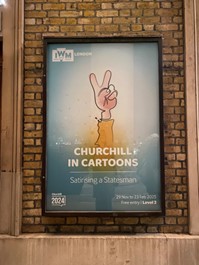
The poster for the ‘Churchill in Cartoons’ exhibtion outside the doors of the IWM.

It’s such a pleasure that we’re able to share our collections to the wider public in this way and I really enjoy being able to make connections with institutions in Britain and abroad through supporting their exhibitions.The exhibition at the IWM (Churchill in Cartoons: Satirising a Statesman) opens from 29 November 2024 to 23 February 2025, so do check this out if you can. We were very lucky to be invited to the Private View of the exhibition, which we very much enjoyed. It’s a fabulous look at Churchill’s political career through satirical cartoons. And I’m delighted to say we already have two exciting loan requests in process for next year, so things aren’t slowing down!


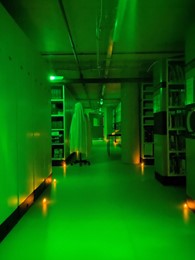
Lastly, I was thrilled to organise a Halloween event with my colleagues Beth and Christine this year. Called ‘Ghost Stories’, it was a behind-the-scenes tour of our archival stores with a difference! Attendees were titillated with (battery-powered) candle-lit readings of classic ghost stories. The event was very well received, and we hope to do another event next Halloween, albeit with a new spooOoOOooky theme.
An image of a spectre in our stores, lit only by emergency lights and (battery) tea lights

Beth Astridge (University Archivist)

Exhibitions in the Templeman Gallery

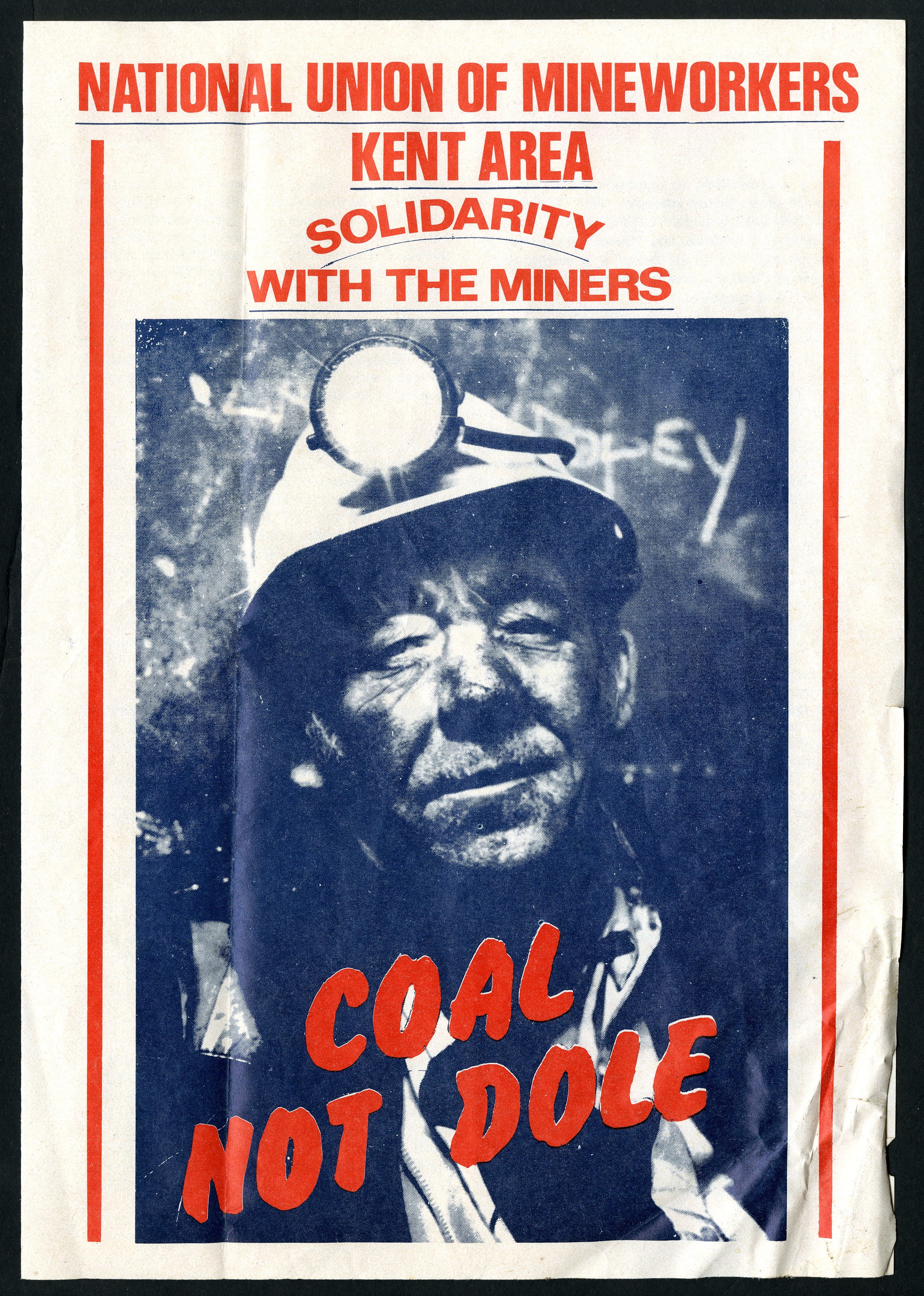
We run a regular programme of exhibitions in the Templeman Gallery and our ‘Mining in Kent’ exhibition was a particular highlight! Using a range of our archive material this exhibition told the story of the history of mining in Kent, from the early days of discovering the Kent coalfield to the impact of the 1984 Miners’ Strike. We were able to showcase material from several collections including the Richard Richardson Mining Collection, the British Cartoon Archive, the British Stand-Up Comedy Archive, and the Labour and Socialist Newspapers. We held several tours of the exhibition as well as a launch event and have been really pleased with the local interest and feedback about exhibition and our events. We are particularly grateful to one of our volunteers, Amy Green, who assisted with research, writing panels and captions, and installing the exhibition.

We also curated a virtual version of this exhibition which you can view on our exhibitions page.

Image of Coal Not Dole leaflet from the Richard Richardson Mining Collection

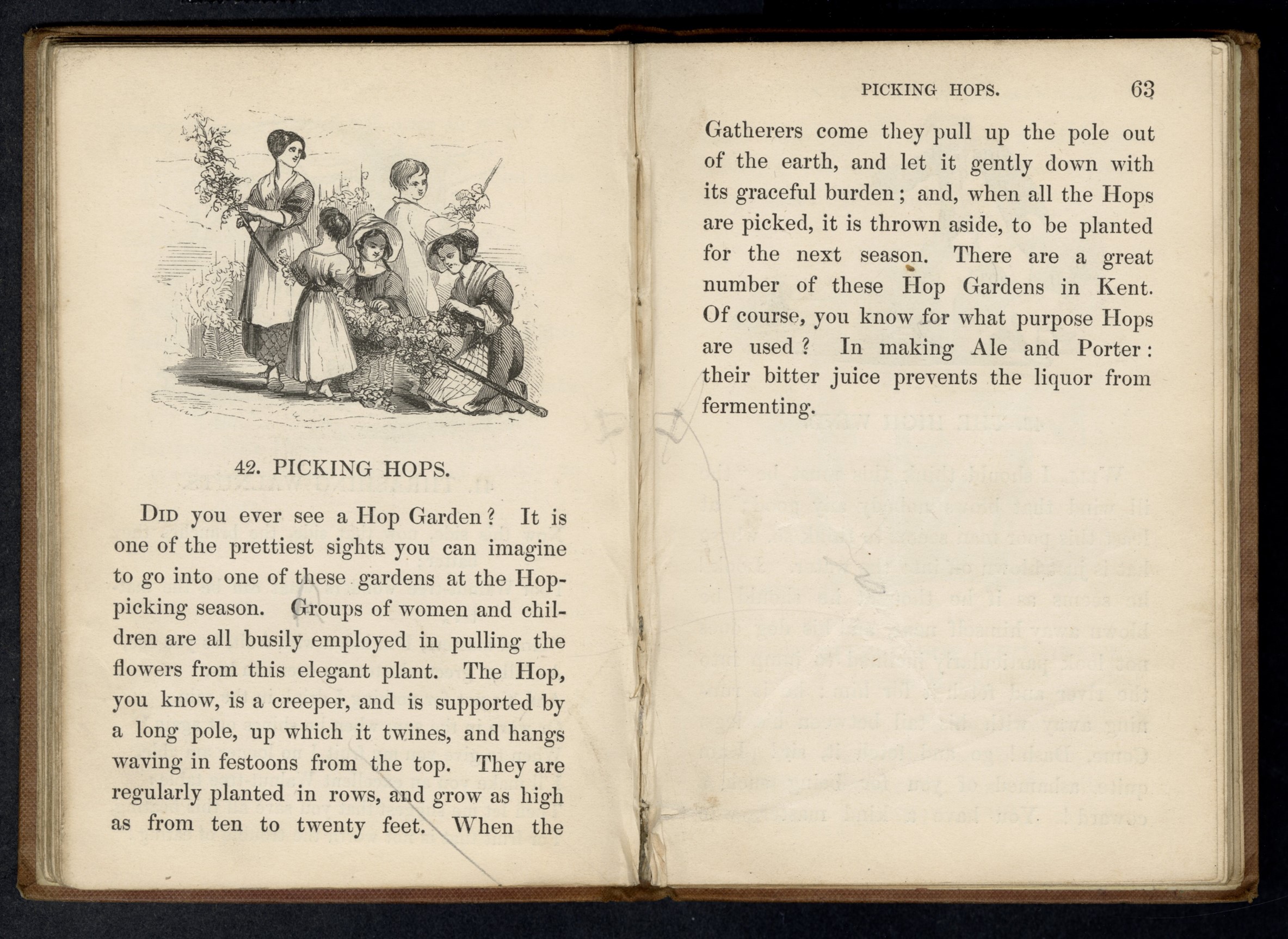
Another exhibitions highlight this year has been our collaboration with the Brook Rural Museum on an oral history project relating to memories of hopping and hop production in the Brook and Wye area of Kent. This resulted in an exhibition in our Gallery space featuring recordings of the oral history interviews alongside material that described the history and future of hop production in Kent. This exhibition will be on show again in 2025 at the Brook Rural Museum, so make sure you plan a visit!

Page on Picking Hops from Ann and Jane Taylor, Rural Scenes or a peep into the country: For children (1840), a book in our Children’s Literature collection (S 519.T23 TAY CLC

Listening Station

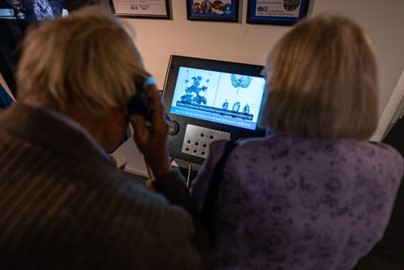
Our Listening Station in action during the exhibition, Local Stories: Memories of Hopping around Brook and Wye, Kent

The oral history exhibition gave us the opportunity to show off our new listening station in the Templeman Gallery. This is a new audio-visual unit that allows us to upload video and audio material for viewers to listen to/watch in the exhibition space. It is hearing aid enabled and has two listening speakers – so please watch out for future opportunities to discover more of our video and audio collections – including material for our next exhibition on the David Drummond Pantomime Collection.

Philanthropy and Fundraising

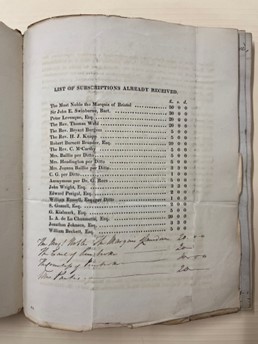
Page from early records of the National Benevolent Fund showing some of the early donors/subscribers, National Benevolent Fund Archive

The UK Philanthropy Archive continues to thrive and a highlight this year was receiving some important new collections. In July we received the collection of the National Benevolent Fund – a charity established in 1812 which used a subscription model to support ‘distressed gentlewomen’ with pensions and annuities and later supported those experiencing poverty. The collection had been identified as a collection at risk by The National Archives and we were pleased to play a part in saving this fascinating collection and giving it a home.

In September we were delighted to receive the archive collection of the John Ellerman Foundation along with a grant to enable the repackaging and cataloguing of this important collection of a foundation established by Sir John Ellerman, once Britain’s richest man, and the family behind the Ellerman Lines and Wilson Lines shipping business. Look out for more about this in 2025 when we start the cataloguing process.

And finally, also in September, we received the Jack Petchey Foundation archive. Sir Jack Petchey was a businessman and philanthropist who started a taxi business, a second-hand car business and later a property business, generating the wealth that he dedicated to charitable work and philanthropy focussed on young people through his Foundation. The full catalogue for this collection will appear on our website soon.

This year we have also made great strides towards cataloguing the Craigmyle Fundraising Consultants collection – a project that will be completed in 2025! The partial catalogue is available now to view on our website.

University Archive

In the University Archive we are gearing up to the University’s 60th anniversary celebrations later in 2025. One aspect of this will focus on music and live music performances on campus, and I have enjoying communicating with alumni who have memories and sometimes photo evidence of fantastic bands and gigs they attended. Volunteers Peter Stanfield and more recently David Blair have been doing an amazing job researching and logging the gigs and bands who played at the University since we opened in 1965. We are looking forward to making this complete list available for researchers and former students highlighting what it was like to work, study and enjoy live music on campus throughout its history!

Cataloguing the David Drummond Pantomime Collection

The Archives Revealed funded cataloguing project was almost(!) finished this year by our brilliant Project Archivist Daniella Gonzalez.

Students from EKC Canterbury College studying the David Drummond Pantomime Collection – image courtesy of Amanda Sefton-Hogg, Canterbury Festival.

We are using Daniella’s work to inform the final exhibition of the year – Magnificent! Spectacular! – which will showcase this fantastic collection and tell the story of the history of pantomime from the early days of the Commedia dell’Arte to the modern extravaganza we know today!

A panto project highlight was working in collaboration with the Canterbury Festival and  EKC Canterbury College to bring more than 100 students onto campus to use the David Drummond Pantomime Collection as inspiration for coursework across subjects such as fine art, textiles, graphics, and photography. You will be able to see a couple of the students creations in our exhibition, and we were super pleased that this highlight was featured in The National Archives publication, A Year in Archives.

Christine Davies (Special Collections and Archives Coordinator)

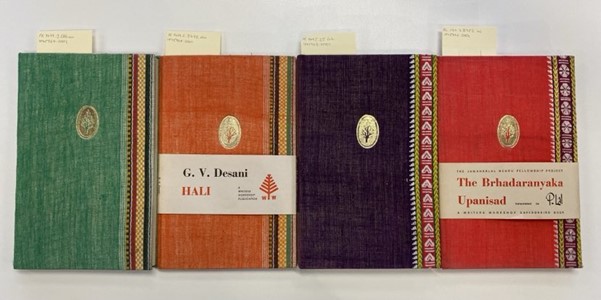
I had the great pleasure this year of cataloguing the collection of literature gifted to us by a former professor of Victorian and modern literature at Kent, Louis James. The Louis James Collection primarily comprises literature of the Caribbean and African diasporas, but there are also important theoretical and historical works on race, colonialism and slavery too. Many of us have heard of Olaudah Equiano, the famous abolitionist, but Mary Prince is less well known – born into slavery in Bermuda, her dictated memoirs were published in London in 1831 and reprinted twice in the same year. Further highlights in the collection, for me, include an unpublished typescript of Derek Walcott’s play Franklin; diverse artisanal, cloth-bound books published by the Writers Workshop (a small printing press established in Calcutta); the plethora of Caribbean poetry which details the migrant experience in Britain with irony, sometimes anger, always charisma, and which – on the page and in performance – was completely innovative. Kamau Brathwaite created the ‘Sycorax video style’ by combining customized typefaces with irregular page layouts; others’ are marked by their rhythmic similarity to reggae (dub) and/or their fusion of dialects. Amongst the African literature, there are works that reflect on Apartheid, delve into Anasi lore, and diverse anthologies that celebrate the continent’s diversity (from works of magical realism to social justice, from Nobel prize winners to Onitsha market literature); one of the most powerful works, for me, is Ngũgĩ wa Thiong’o’s Devil on the cross, the manuscript of which was written in secret, from gaol, on toilet paper. The collection amounts to more than 1000 items and is fully accessible on Library Search.

Examples of Writers Workshop publications in the Louis James Collection, as displayed for our South Asian History Month Archives tour

I’ve also had good fun this year devising new material and seminars for Kent’s School of English, which gives students the opportunity to handle rare books and consider the intricate cultural and socio-political contexts of their period of study. The explosion of print in the eighteenth century gave rise to numerous newspapers and periodicals, the latter typically published monthly. These new arenas of print were not only used to disseminate information but also direct public taste and opinion and even shape literary developments. Fiction could be serialised in these monthly publications and biographies and gossip columns fuelled an emerging celebrity culture, giving voice to more obscure figures since forgotten – how many of you have heard of the blind poet and early disability advocate, Thomas Blacklock (1721-1791)? Did you know that The Lady’s Magazine (1770-1847) provided inspiration for both Jane Austen and the Brontë sisters?

Volunteer Amelia Bocskei working on photographs found in Terry O’Brien’s programme collection

As Beth and Clair have both mentioned, we couldn’t do all we do without the invaluable support of our volunteers, and this year has marked a significant leap forward in the management of our theatre programme collections.

Through the collected efforts of Ladaya Berrier, Amelia Bocskei, Stefana Ivanova, Rhea Nurice Lempert and Jessica Mulroy, thousands of programmes have been organised, re-packaged, and listed on spreadsheets, and this will be used to create and enrich catalogue records next year. This work has already enabled us to consolidate our existing holdings of theatre programmes and refine our collecting priorities; it has also enhanced our engagement work by filling gaps in performance history. Our volunteers have also found the experience greatly beneficial, stating how much a privilege it has been “to preserve a voice from the past” and “interact with original historical documents.”

Alex Triggs (Digitisation Administrator)

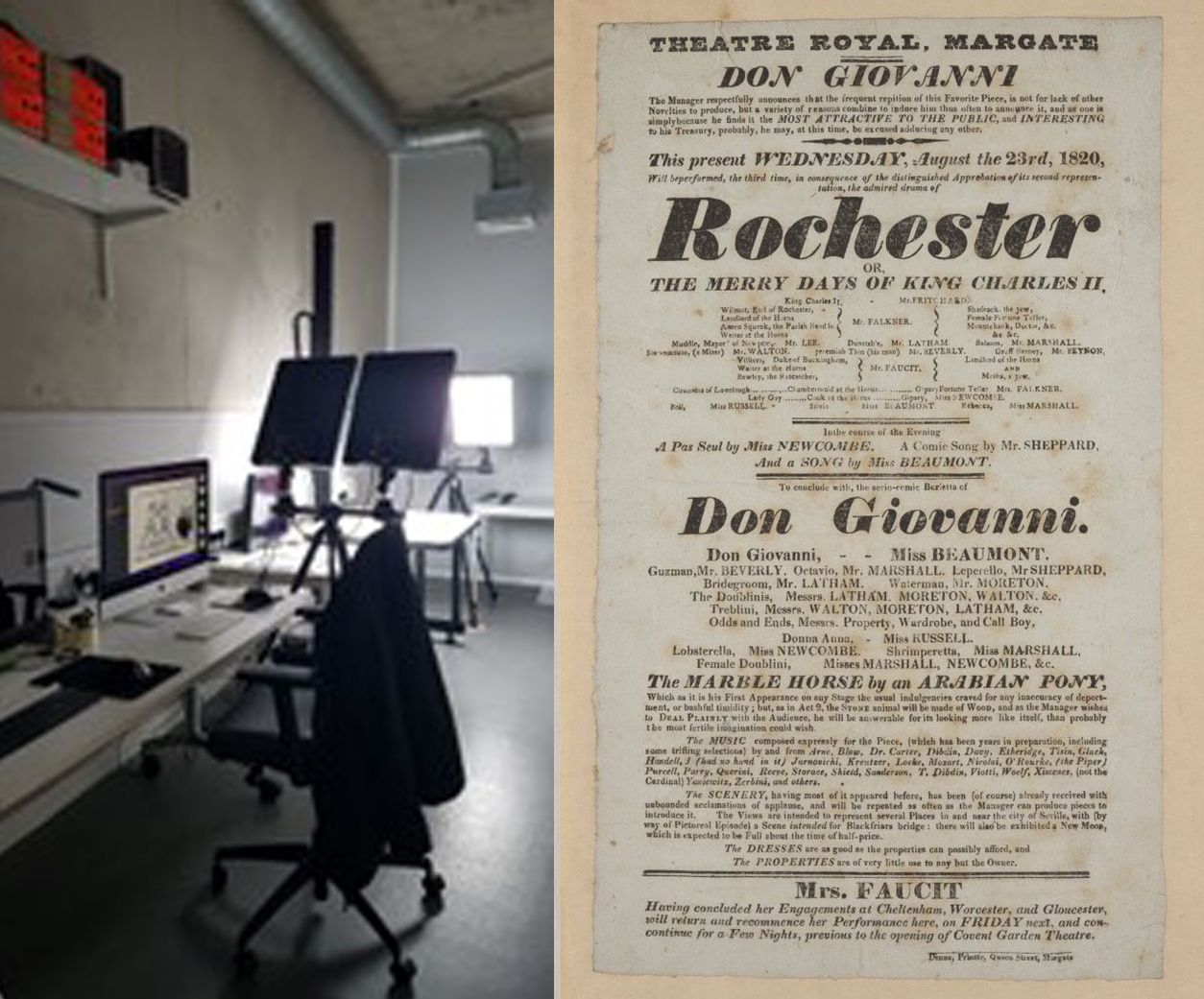
The high-resolution digitisation of the British Cartoon Archive collections continued throughout 2024 utilising the Phase One photographic rig. This year the focus has been on the original cartoon artwork of Mac (Stanley McMurtry), cartoonist with the Daily Mail. Mac’s career with the Daily Mail began in 1971 and lasted for almost five decades. As a result, this collection contains circa 5000 items of which approximately 80% have been digitised during the year. In addition, a selection of playbills from the David Drummond Pantomime Collection have also been digitised over the past 12 months. Many of these date back to the 1850s and require careful handling as they are extremely delicate.

Left: Our ‘digital kitchen’; Right: a playbill from the David Drummond Pantomime Collection.

On the audio-visual side, I have continued the digitisation the University of Kent Archive collection of vulnerable analogue magnetic audio cassette tape recordings. Moving forward, I am now beginning to address the significant number of at-risk VHS video cassette recordings contained within a several of the Special Collections, perhaps most significantly the British Stand-Up Comedy Archive.

Mandy (Special Collections & Archives Assistant)

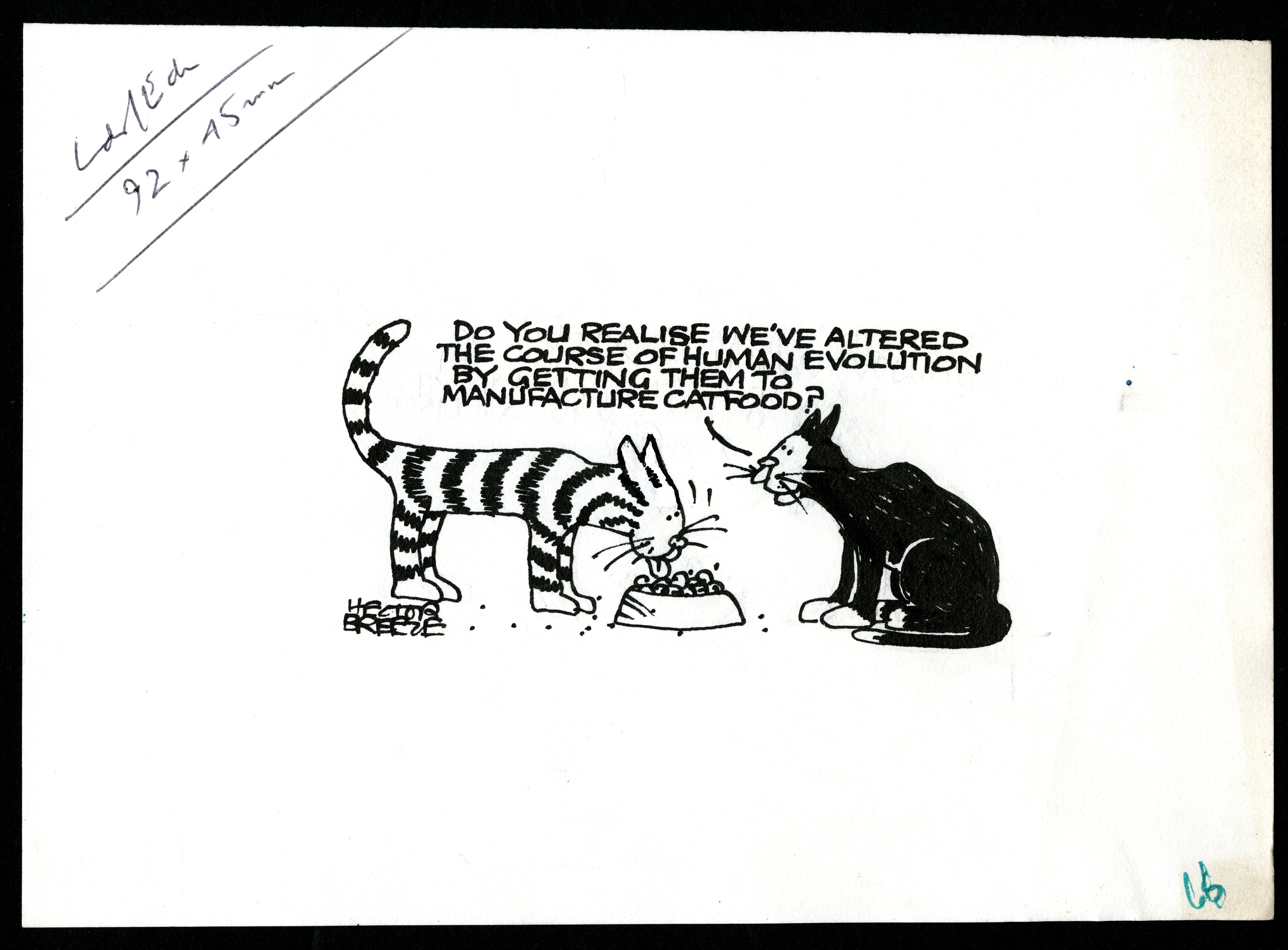
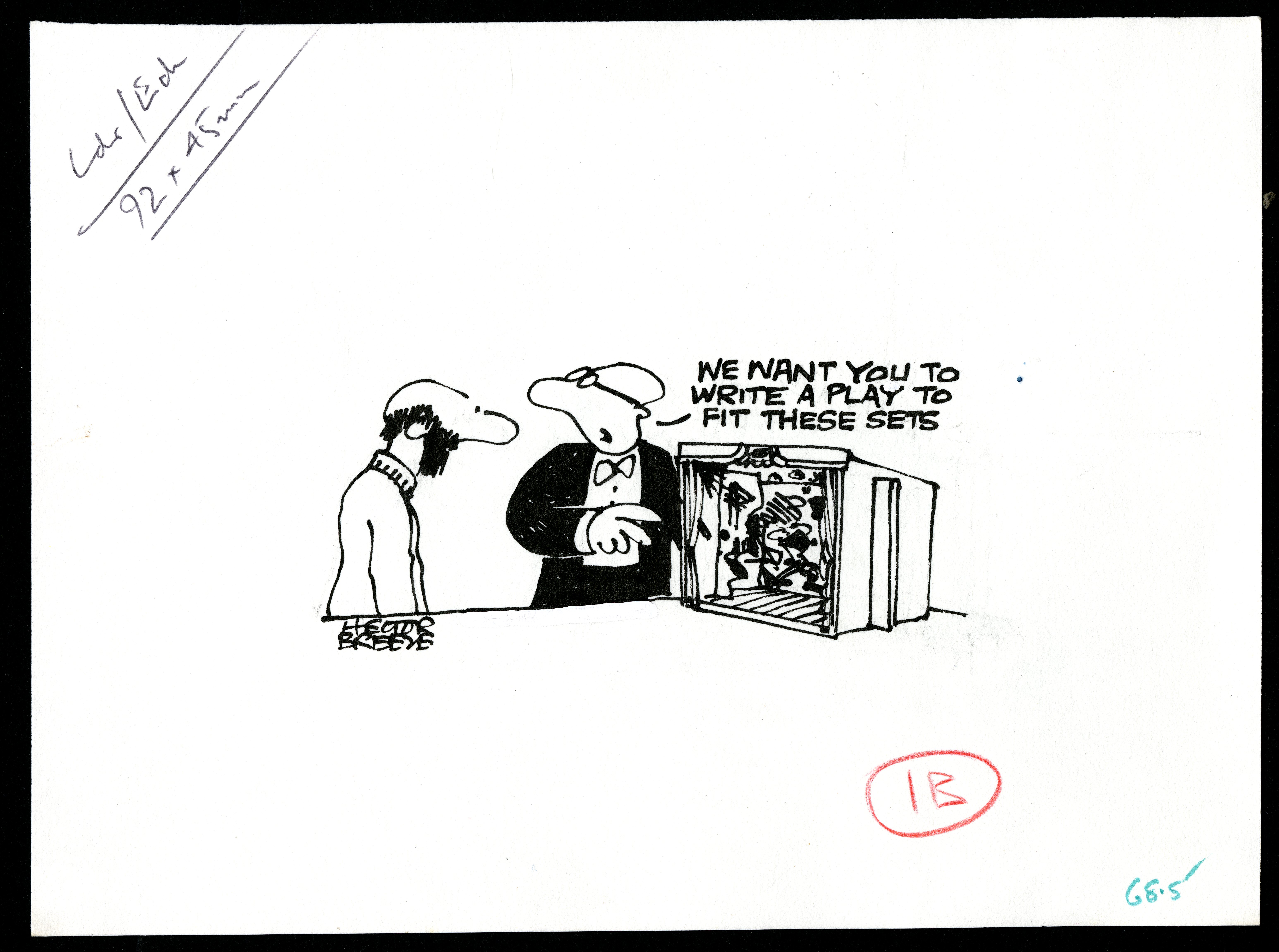
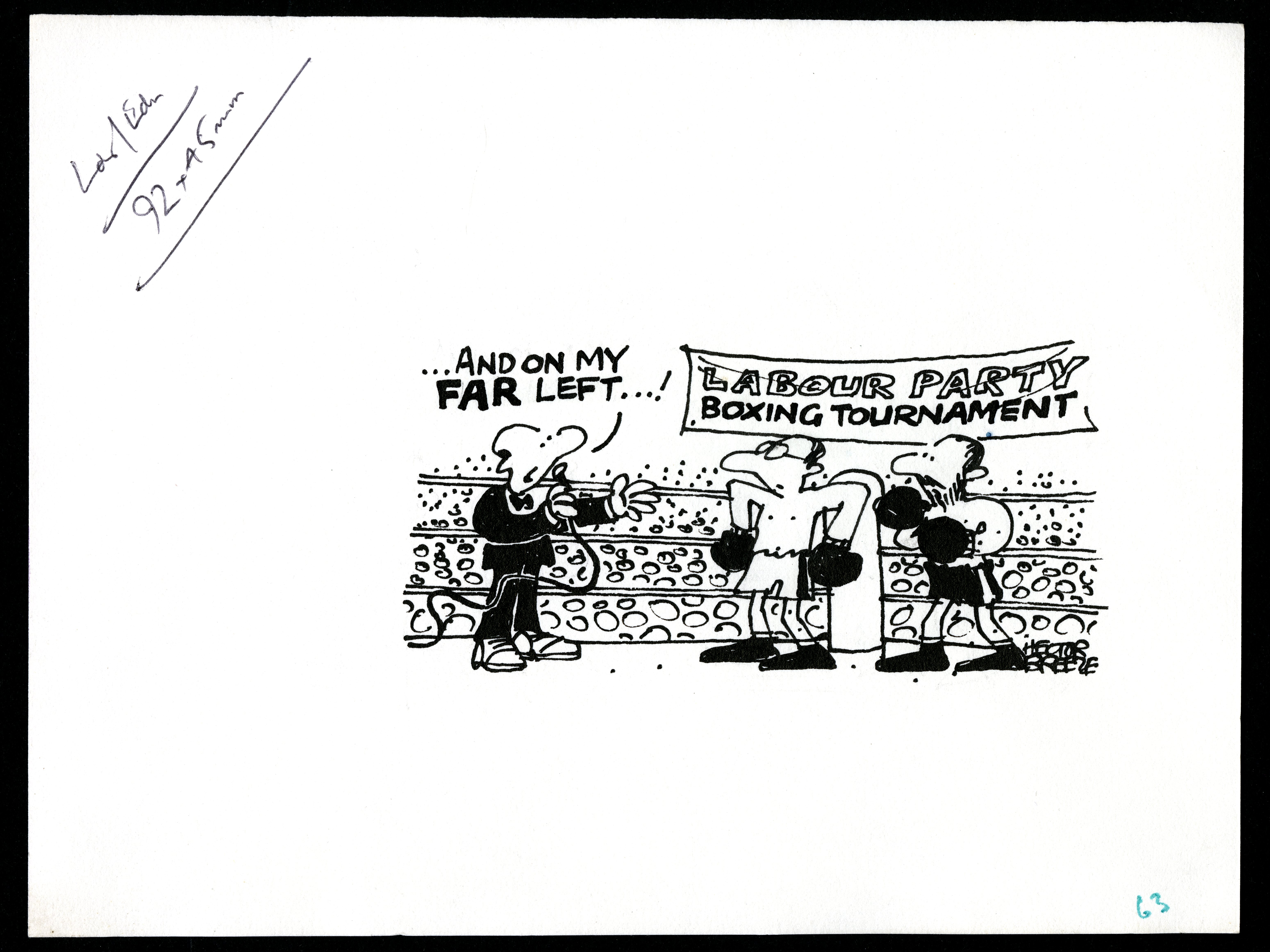
I always enjoy scanning our Carl Giles collection every year for the Giles Annual, they are always fun. I have scanned 6,000 cartoons in our Hector Breeze collection, which is so interesting to do. I’m now working on another cartoon collection – the Alan Ralph Collection – which is now being digitised. The song sheets in the Max Tyler Music Hall Collection have also been so lovely to scan as some of them are so vintage and very delicate. Overall, it has been a busy and interesting time for 2024!

Hector Breeze cartoon (HB0012)

Jacqueline Spencer (Project Curation and Discovery Administrator)

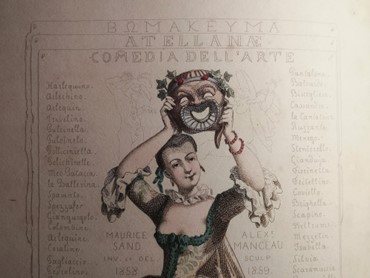
I began the year cataloguing Arnold Rood’s collection of books on theatre. He collected widely around a strong nucleus of works by and about the extraordinary theatre designer (and son of Ellen Terry) Edward Gordon Craig. Next, I catalogued the extensive set of 20th century theatre periodicals in the Reading Rayner collection, then I added books from David Drummond Pantomime Collection to the library catalogue supporting the project to catalogue his archive. He collected books related to pantomime including both scholarly works on the origins of the genre such as ‘The reminiscences of Thomas Dibdin at the Theatres Royal, Drury Lane ..’ of 1824, and some lovely, illustrated children’s books such as ‘Naughty Cinderella’ from 1936.  Charles Lewsen’s books on theatre arts enhance our collection scope in this area, his collection contains more 19th century material. This delicate personification of ‘La Comedie’ with mask and barely visible sprites over her shoulders is the frontispiece from his copy of ‘Masques et bouffons (Comedie Italienne) with text and drawings by Maurice Sand, Paris 1862.

‘La Comedie’, Masques et bouffons (Comedie Italienne) with text and drawings by Maurice Sand, Paris 1862

The Holt Bairnsfather books came next, with a bottom-up view from the trenches of the 1914-18 World War. As this year ends, I have started cataloguing the Muggeridge Book Collection. Focusing on windmills in the U.K. and the Netherlands, William Burrell Muggeridge and Donald Muggeridge were also interested in industrial archaeology and country life and work and sought out locally published pamphlets which can be hard to find as well as substantial scholarly works on mills. Their books are now to be found in our ‘Wind and Watermills Collection’.

Matthias Werner (Curation and Discovery Administrator)

This year I have been focused on cataloguing books and cartoons for the British Cartoon Archive (BCA). I’ve catalogued the remaining books from the Eric Linfield Collection. I am currently working on the John Jensen Collection. John Jensen passed away in 2018, and the Special Collections Team has collaborated with his widow, Pat, and sons, Hal and Sean, to incorporate material from his estate into the existing collection at Kent. The books that have been passed on to us are from various eras and countries and primarily focus on caricature, cartoons, and comics.

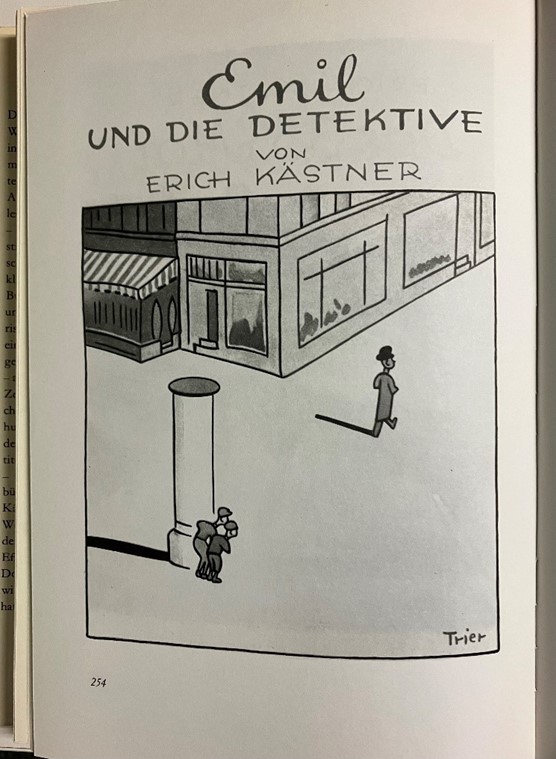
Das grosse Trier-Buch, Walter Trier (1972)

My personal highlight, however, has been working on a book from our general BCA collection: Cataloguing a book on Walter Trier, a renowned German artist and illustrator, best known for his work on Erich Kästner’s children’s books. Seeing illustrations like the one below brought back some fond memories from my own childhood.

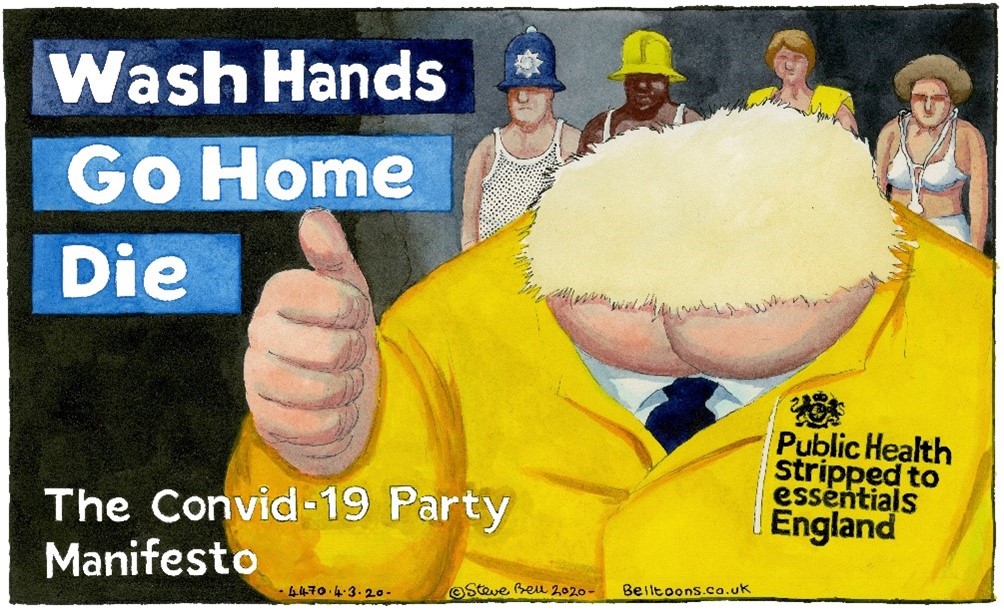
Additionally, I continue to catalogue Steve Bell’s cartoons for the BCA catalogue. Steve has been sending us his works published in The Guardian, ensuring they are preserved in the national cartoon archive. Looking through pieces like the one below takes me back to the surreal and bewildering times of the COVID pandemic.

[No caption], Steve Bell, 04 Mar 2020 (4470-040320 CONVID19)

Emma Solway (Curation and Discovery Administrator)

Ella Baron- Political Cartoonist

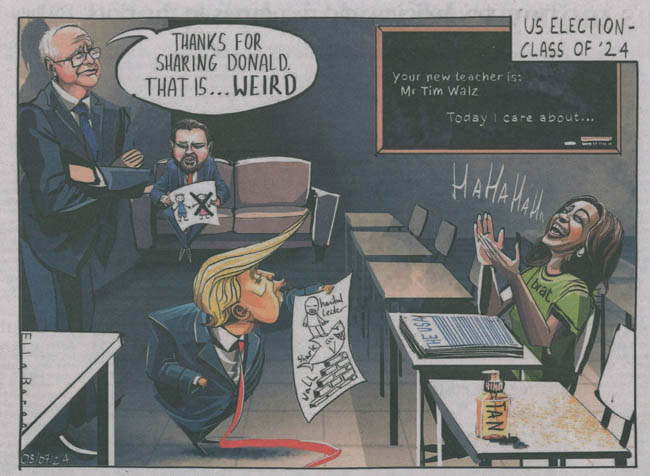
The British Cartoon Archive, housed in Special Collections and Archives, is a unique and ever-expanding collection. I have recently started cataloguing cartoons published in the summer of 2024, from a range of newspapers and cartoonists. This is challenging as each artists’ signature caricatures, styles and motifs must be learned and recognised over time. In addition, describing the events satirised within each cartoon involves developing a good knowledge of current domestic and world politics and the significant public figures of the day.  This is an interesting and stimulating part of my job, even more so when a cartoonist new to you grabs your attention.

[No caption], Ella Baron, 05 Jul 2024 (115193)

It is still quite rare to see political editorial cartoons drawn by women in my work, so she interested me immediately. The “boys’ club” is a common complaint of women working as cartoonists. As most editorial cartoonists stay in their jobs for life and are historically all men, this leaves women with little opportunity. However, it was great to see Ella’s biography, as she is having a flourishing career working regularly for the Times and the Guardian amongst others, after winning the British Cartoon Associations Young Cartoonist of the Year in 2017. As she once commented she enjoyed making a living from drawing Trump all day, I’ve included one of her cartoons featuring him from the Times in August this year. To learn more about Ella visit Ella Baron Cartoons.

Phoebe Barnes – Special Collections and Archives: Preserving the Past and Shaping the Future

What follows is a blog post written by Phoebe Barnes, a Kent student who completed a week-long internship with Special Collections and Archives in November 2024 as part of her research for her dissertation. 

My Week at the University of Kent’s Special Collections and Archives: Preserving the Past and Shaping the Future

[In November 2024] I had the opportunity to intern at the University of Kent’s Special Collections and Archives, immersing myself in the captivating world of historical preservation. During my time there, I gained invaluable hands-on experience in archival preservation techniques, delved into Canterbury’s rich history, and engaged in insightful conversations with the archivists whose work upholds these collections. My week spent alongside this dedicated team not only deepened my appreciation for the significance of archives but also illuminated their evolving role as stewards of community memory and culture in the digital age.

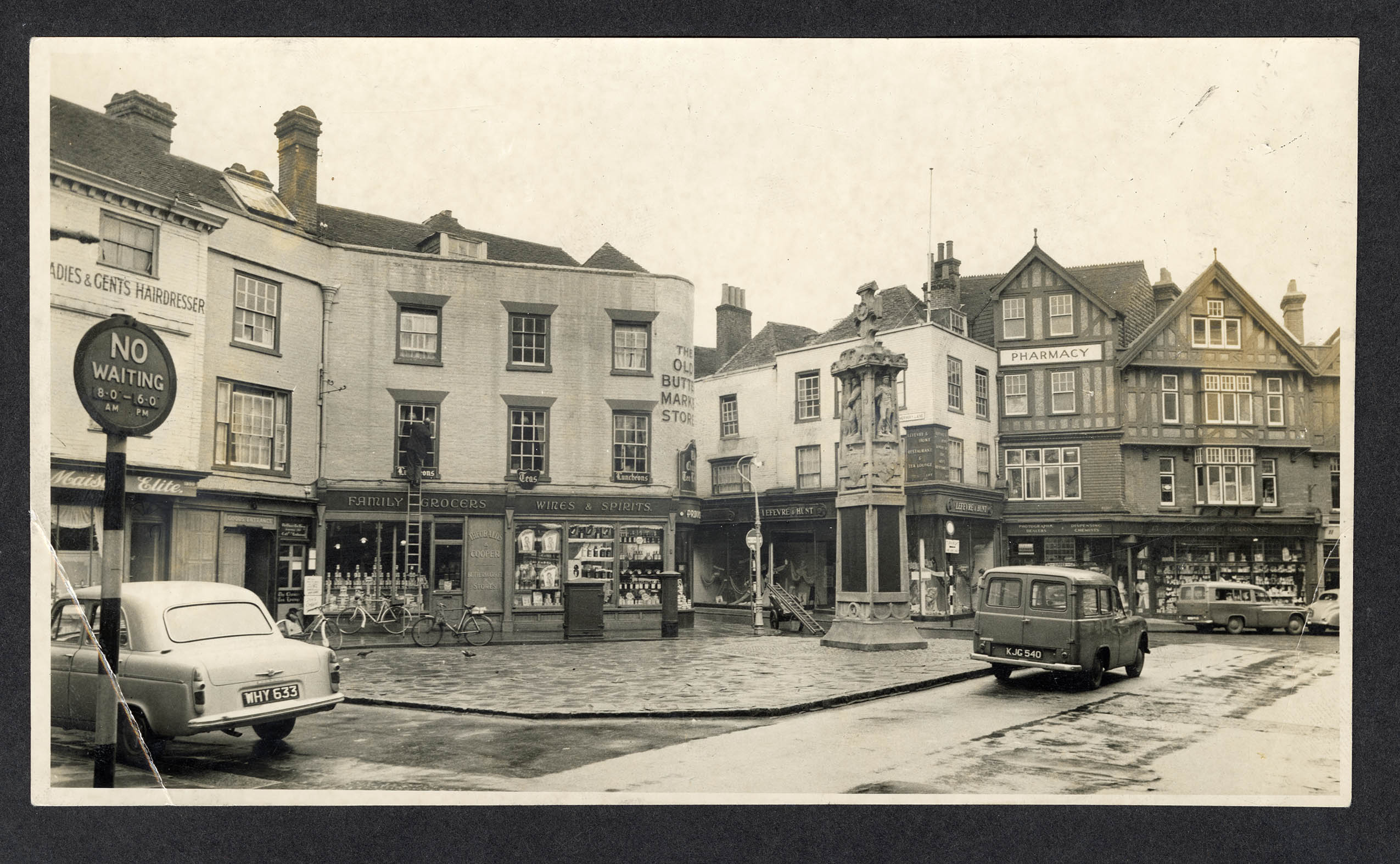
Photograph taken at the corner of Burgate and Buttermarket c.1950s, Crampton Canterbury Photograph Collection (LH/CANT/PHO/12/102)

Rediscovering Canterbury in the 1940s Through Historical Photographs

One of my initial tasks involved rehousing a collection of photographs from the 1940s—a delicate process that allowed me to interact directly with images from a bygone Canterbury. As I transferred these photographs into archival-quality storage, I was struck by the scenes captured on film: familiar landmarks in their original, often unexpected settings. The photos challenged my assumptions about the city’s past—Canterbury’s streets were not as cobbled as they are now! This work underscored for me the power of visual history, highlighting the importance of preserving such images for future generations to appreciate and learn from.

Assisting with Seminars and Learning Preservation Techniques

Throughout the week I assisted in preparing for student seminars, which introduced students to historical materials in an engaging, hands-on environment. Observing the students’ interactions with these primary sources offered an inspiring perspective on how archives can bring history to life, sparking interest in research, history, and archival studies. Witnessing their reactions to these authentic materials reinforced my understanding of archives as vibrant educational resources.

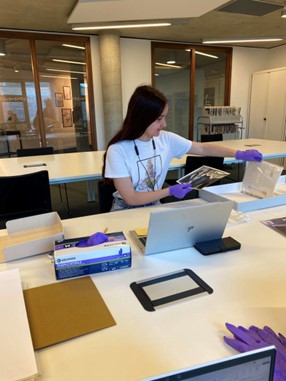
In addition to seminar preparation, I took on a variety of preservation tasks, from meticulously cleaning fire-damaged sketchbooks with specialised brushes and smoke sponges, to creating custom protective covers for books dating back to the 1800s. These activities required patience and precision. Each task reminded me of the care and dedication that preservation work demands to ensure that these historical treasures endure for future generations.

Touring the Stronghold and Discovering Preventive Preservation Practices

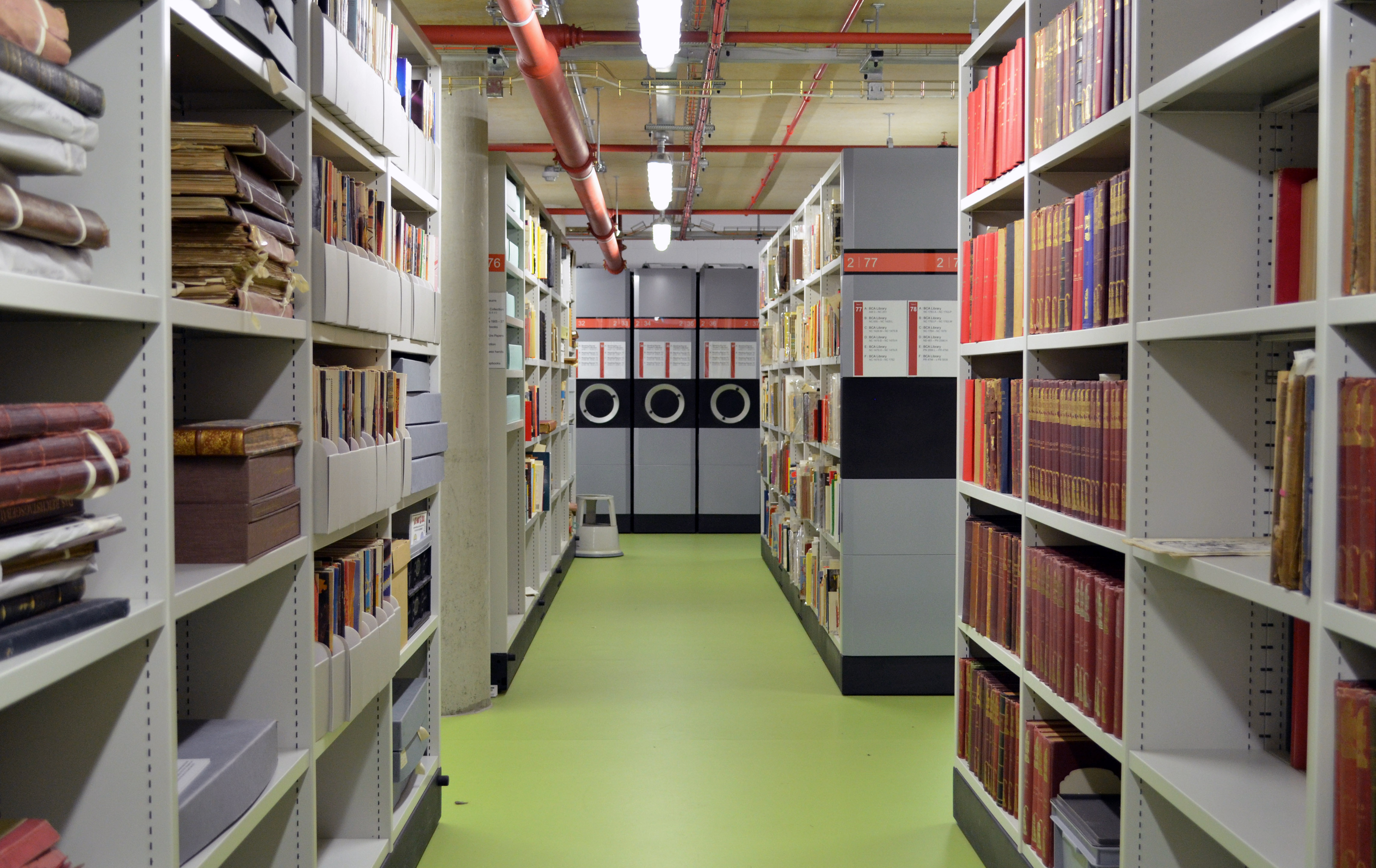
One of the highlights of my internship was a tour of the archive’s stronghold, where the most sensitive and rare materials are housed. In this climate-controlled environment, I observed the extensive preventive measures employed to preserve delicate items, from temperature and humidity control to collaborative conservation efforts with experts, including those from Canterbury Cathedral. I was struck by the proactive nature of preservation work – it’s not solely about repairing items but involves safeguarding them from deterioration in the first place.

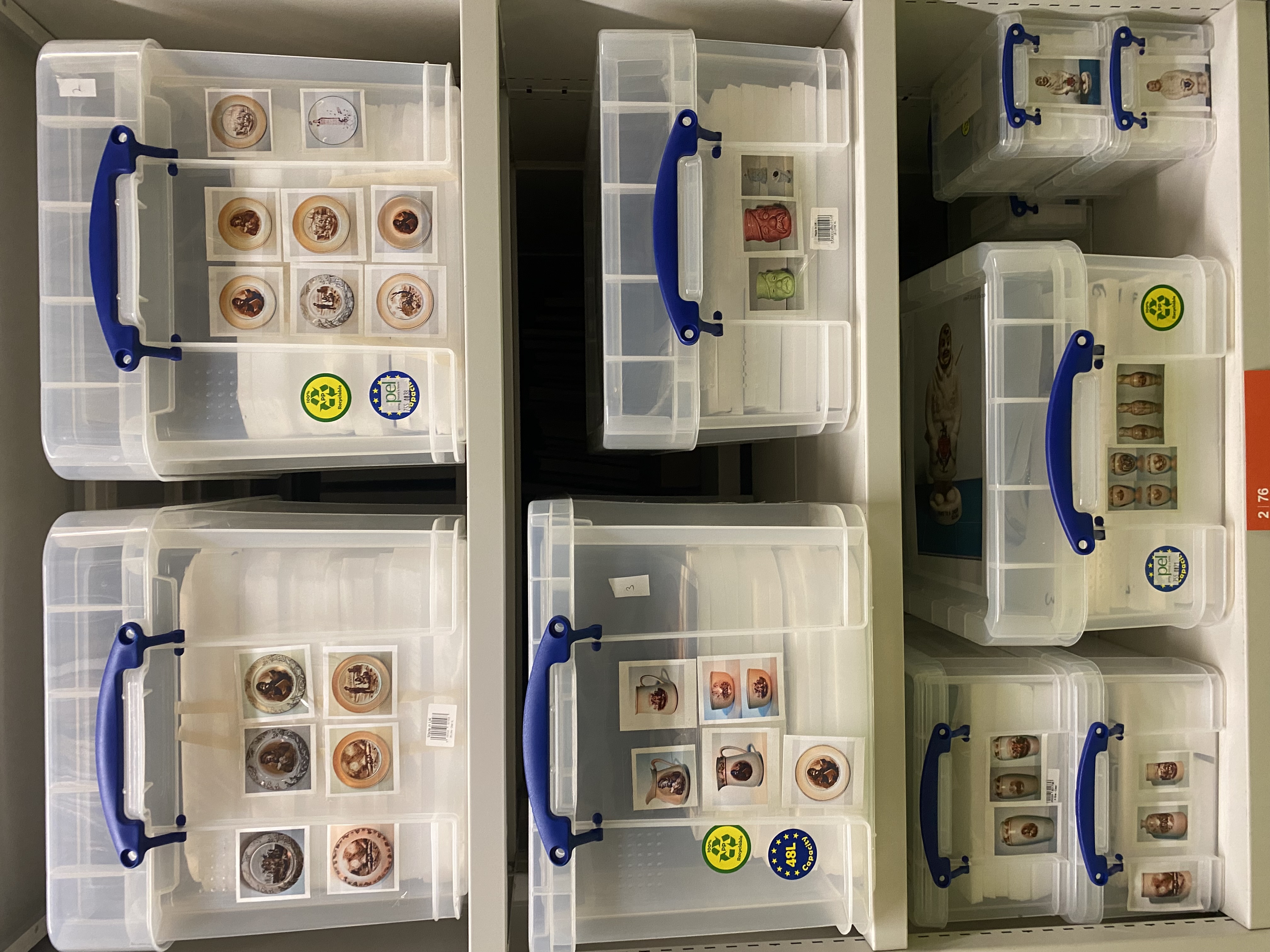
Special Collections and Archives store

Visiting Canterbury Cathedral’s Libraries and Discussing the Role of Modern Archives

Mid-week, I had the chance to visit the archives, reading room, and libraries at Canterbury Cathedral, where I continued to explore primary sources and connect with experienced archivists and conservationists. Our conversations with the collections team were particularly thought-provoking, as we discussed the evolving role of archives in today’s world. Archives are no longer static repositories of old documents; they are dynamic spaces that foster a sense of community and historical awareness. The team shared insights into how archives support cultural identity, encourage historical understanding, and promote collective memory.

The Reading Room at Canterbury Cathedral Archives and Library

A significant aspect of this work involves digitisation, which enables archival materials to reach a wider audience and facilitates access regardless of geographic limitations. By digitising fragile items, archives allow individuals around the world to engage with history, explore primary sources, and take part in the shared experience of discovering our collective past. This commitment to accessibility and outreach emphasises how archives are adapting to the demands of the modern world, making history available to all.

Reflections on a Transformative Experience

Reflecting on my week at the University of Kent’s Special Collections and Archives, I am incredibly grateful for the experience. While I entered this internship with a sociological view of the archival space, I left with a newfound respect for the archival practice and a deeper appreciation of the vital role archives play within the community. From handling historical photographs and learning preservation techniques to discussing the importance of archives in community building, each day provided fresh insights into this meaningful work.

I extend my heartfelt thanks to Christine, Beth, Clair, and the entire team for their guidance and mentorship. This internship revealed to me that archives are far more than mere collections of historical documents; they are dynamic, accessible resources that promote education, community engagement, and a shared appreciation of our past. This experience has inspired me to consider the many ways we can support and interact with archives to ensure these invaluable collections remain accessible and preserved for generations to come.

Preserving ceramics – a work placement project

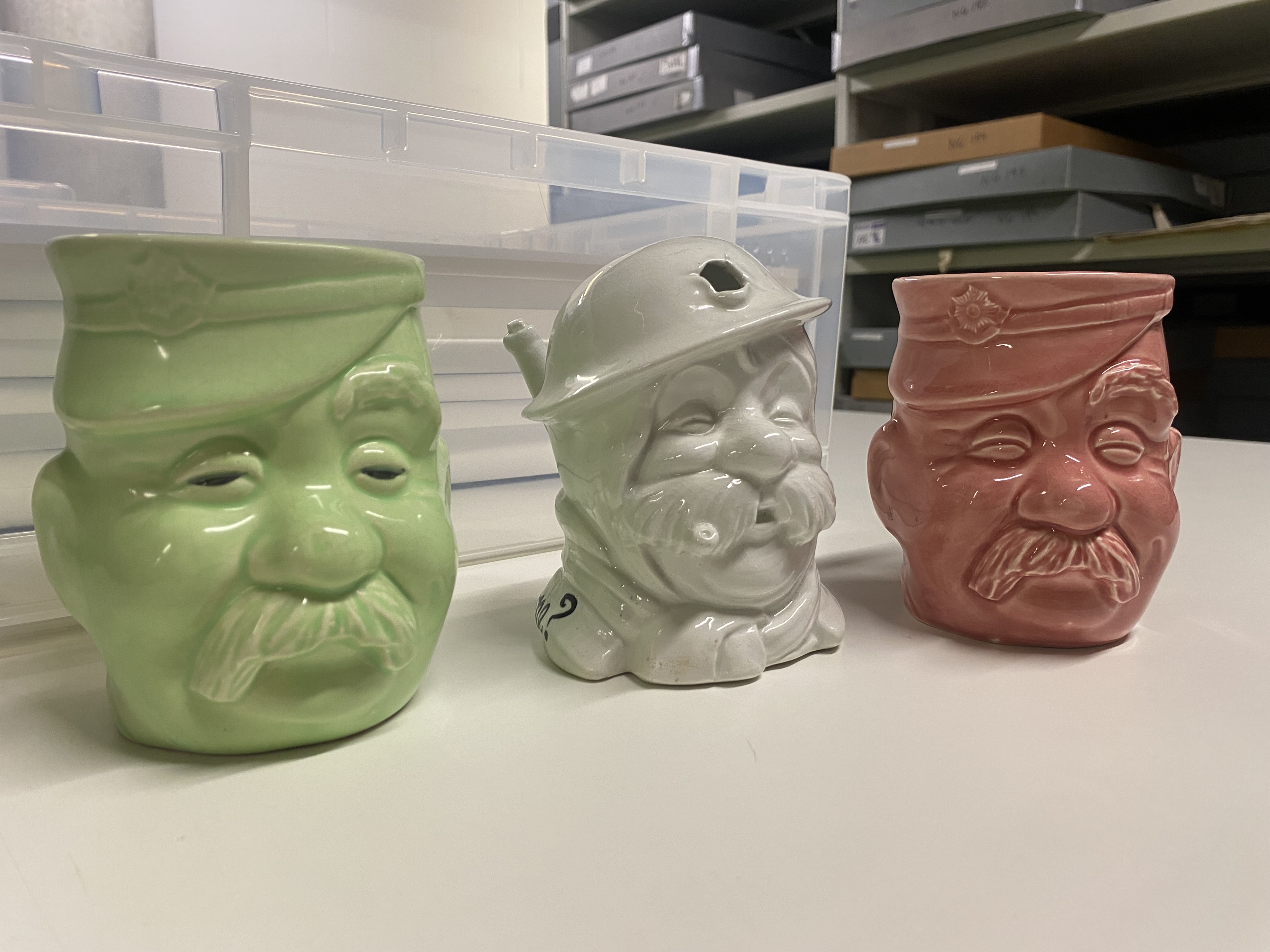
We welcomed three university students to the archives earlier this year to work on ceramic objects in our Holt Bairnsfather Collection and Graham Thomas Collection. The students were joining us on work placements as part of their studies, and were asked to complete a number of tasks to help us preserve, catalogue and make accessible these collections:

  • Reviewing: Carrying out a condition report for each item in the collection and photographing each item
  • Cleaning: Using conservation materials to gently clean the items to ensure they are free of dust and grime
  • Repacking: Creating custom enclosures for each item using plastazote and ‘Really Useful Boxes’
  • Listing: Creating descriptions for each item in a spreadsheet that will be imported into Calm, our Collection Management System

You can find out more about these collections on our catalogue:
Holt Bairnsfather Collection
Graham Thomas Collection

Harvey (Canterbury Christ Church University)

Working on the Bairnsfather Collection has been my first experience working as a part of an archival team. It has been an amazing experience and has taught me a lot about not only how working in an archive works but also about a part of history that I did not know a lot about before starting my placement here.

The work I did as part of the team was cataloguing, filling out condition reports, and packaging the items that were to be added to the collection. When cataloguing and completing condition reports it was vital to note down every important detail which people might find important when looking to study these items. Fully assessing the condition was also important as it could be that a detail that someone wanted to look at is damaged, or it could help the archival team know what needed to be handled with a little extra care. When looking into the items to write up their description I learned a lot about not only the items themselves but also about the history surrounding them. This was history I was unlikely to look into myself as I am more of a medievalist.

The beginnings of packaging being constructed

The process of creating protective packaging for the items was a very interesting one as it was not something I had considered as a part of working in an archive before this point. It was one of the reasons for which I applied to do my placement at the Kent Special Collections and Archives department. The way I created the packaging for the items changed throughout my placement.

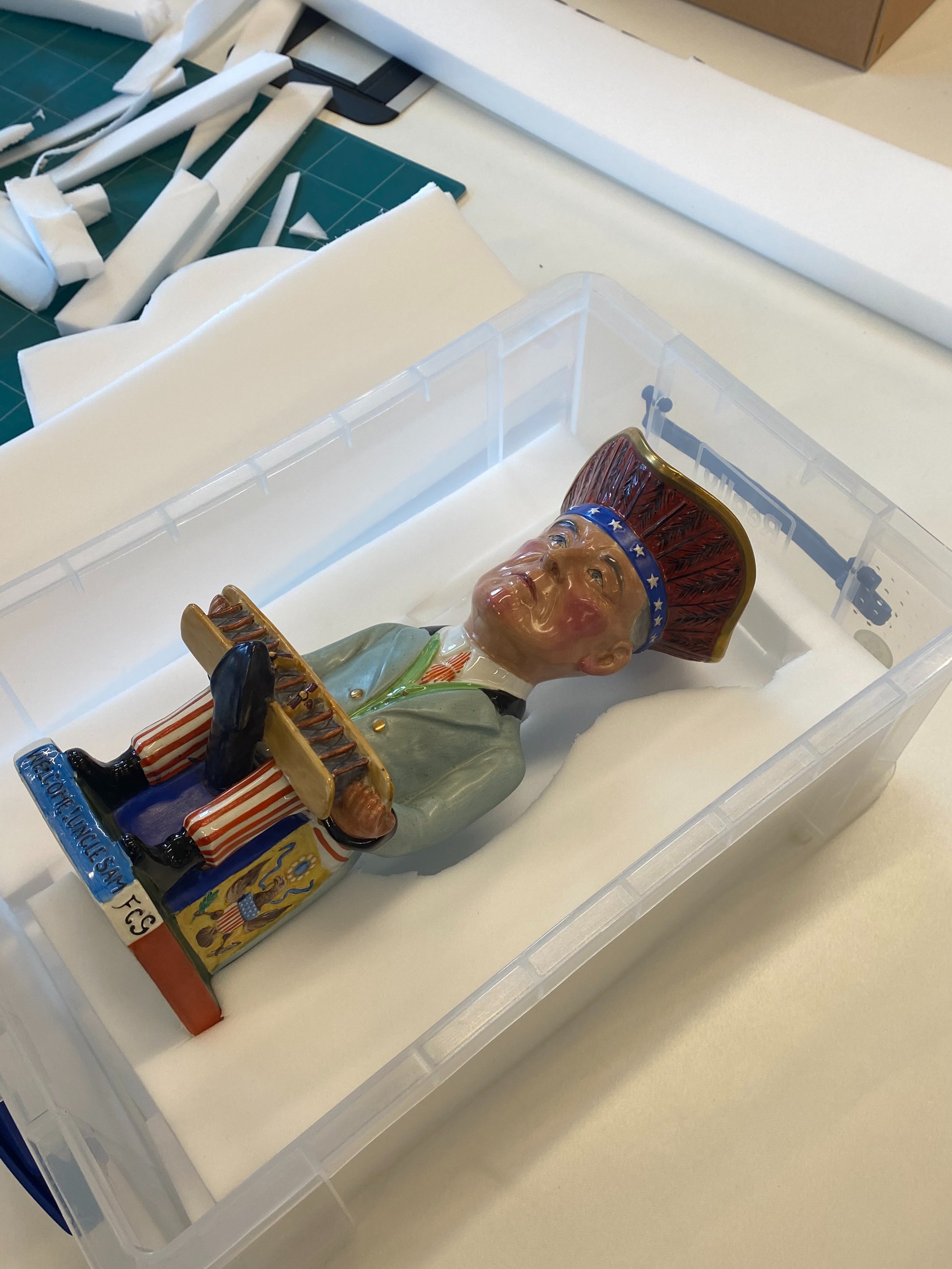
The figure of President Wilson, depicted holding an ammunition shell.

At first I took measurements at every new layer of plastazote (the main material used in the creation of the packaging). However, by the end, I would measure the first layer and then use that as a template for the rest of the layers. Using scraps of the foam was also a way in which I could make layers on particularly unique shapes of items as it was easier to use the smaller, already-cut pieces than it would be to cut out new ones.


Overall, I found my time working with the Bairnsfather Collection to be very rewarding. The skills and history I learned are invaluable and I look forward to going back and helping out again.

______________________________________________________________________

Nirvanna (Canterbury Christ Church University)

This post is dedicated to commemorating the University of Kent’s Special Collections and Archives department and their continuative effort to make unique historical collections available to the benefit of wider society. This department houses and stores over one hundred and fifty collections which range from materials including memorabilia, ceramics, and publications. Throughout the duration of my time working alongside this department, I assisted with the archival processing of the Graham Thomas Collection.

The Graham Thomas Collection

This collection was gifted to the University’s Special Collections and Archives Department by the former lecturer in politics Dr Graham Thomas, after he passed away in April 2023. Dr Graham Thomas was an active participant in the founding of the British Cartoon Archive in the early 1970s. His addition to the Archives consists of the personal items he acquired throughout his lifetime, relating to theatre and cartoons, including the political and cartoon ceramics that will follow in this post.

F.C.G “Toby” Jugs

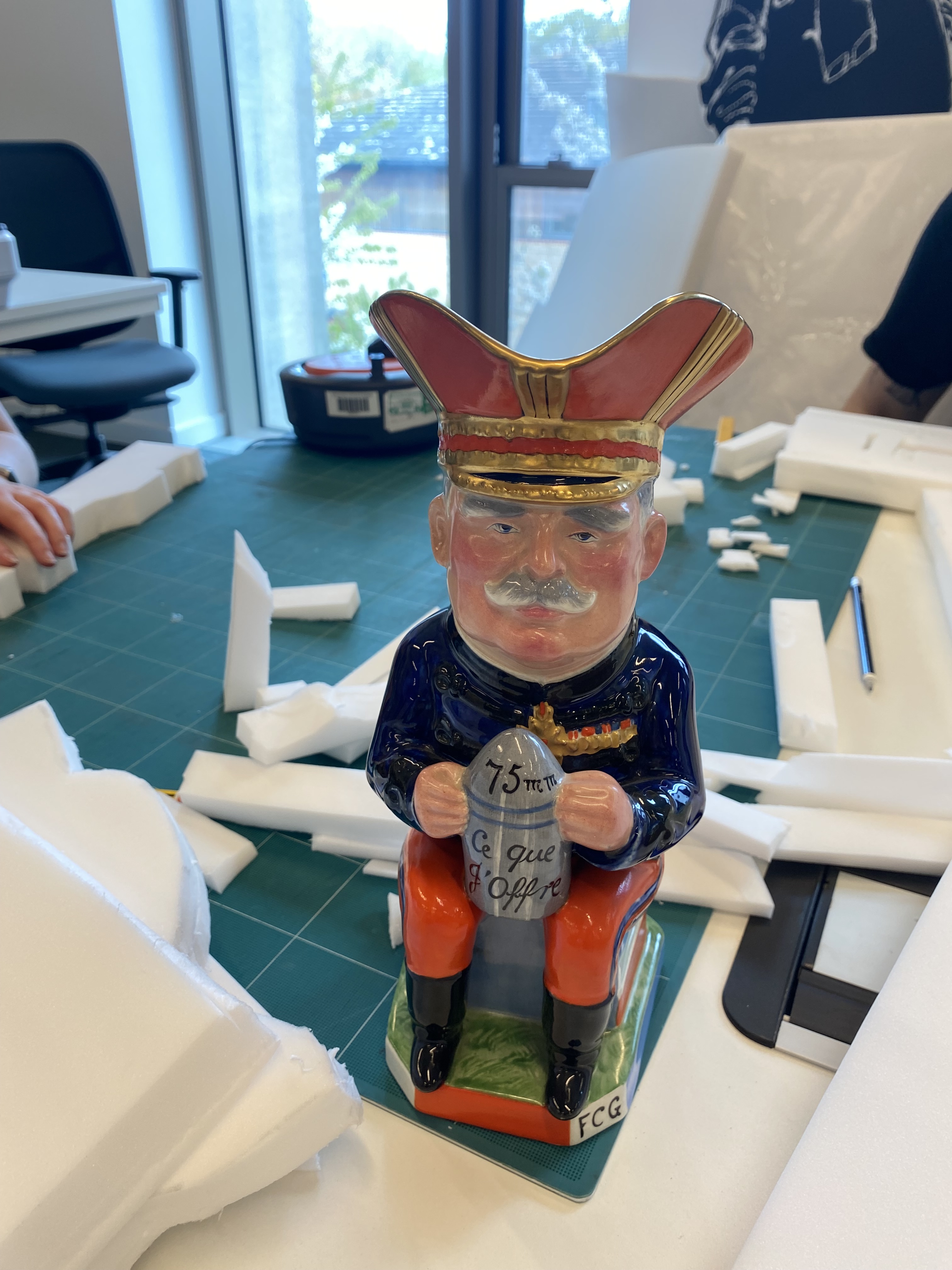
Fig 1. Pictured is the F.C.G “Toby” Jug Collection depicting seven of the eleven allied war leaders, President Woodrow Wilson depicted in navy blue to the left, Marshall Foch in the centre and David Lloyd George on the right.

A large part of this collection is the political memorabilia collected by Dr Thomas in the form of ceramics. An example of this is the F.C.G “Toby” series pictured in figure 1. This collection represents the full series created by political cartoonist Sir Francis Carruthers Gould in 1917, depicting eleven allied war leaders as decorative ceramic toby jugs. These figures include Winston Churchill (pictured in figure two below) and President Woodrow Wilson (pictured in figure one above), both of whom were widely influential during World War I.

Figure two: pictured Winston Churchill Soane and Smith Toby Jug, 1918, © University of Kent Special Collections and Archives

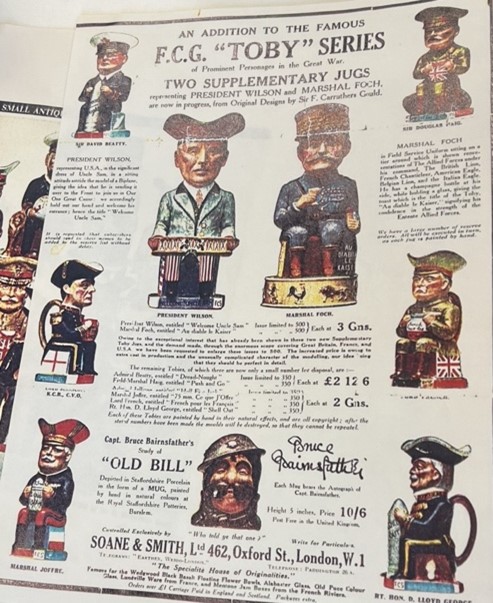
The accumulation of this series has proven to be a rarity as, upon research, only a limited number of each character toby jug was produced by the makers, Wilkinsons Ltd. Accompanying the figures of the Toby jugs is documentation explaining the release of this toby series as pictured in figure three below. The documentation briefly states that during the time the series was released, there was an increase of demand leading to a ‘reserve list’ for subscribers enquiring after these unique pieces, which consequently required buyers to pay a high price for them. With their existence being in demand from consumers it prompted the producers Soane and Smith to destroy the moulds after their creation so that others could not attempt to replicate them.

Background of Political figure ceramics

The use of ceramics to depict images has been historically significant to convey wider societal opinions on specific subject matters. For modern-day political artists, ceramics and cartoon depictions will be created with the intention to capture the common thoughts and reactions to the affairs of political leaders. The narrative behind these creations has followed the attempt to admonish their audience using satire to question political thought and encourage subversion in the public.

Fig 3: Documentation of a poster promoting the release of the F.C.G “Toby” Series © University of Kent Special Collections and Archives.

The importance of archiving and housing records of such suggestive ceramics is so that there is an inclusive record of public opinion. Not only the fact of historical events, but the lasting effect of politicians on public lives. Many of which, during their time period, did not have a voice to change or challenge governmental authority on their own.

Concluding thoughts

In credit to the Special Collections and Archives department, the artefacts they collect continue to increase the exposure of unknown stories to the wider public. Thus, allowing the general public to access resources that sustain the education of past culture for current and future generations.

Further Reading

Books: Edith Garcia, Ceramics and the Human Figure, (A&C Black Visual Arts, 2012).

Open Access Articles: Deniz Onur Erman, ‘Ceramics and Humour,’ Procedia – Social and Behavioural Sciences, Vol. 51, (2012), p 413.
https://www.sciencedirect.com/science/article/pii/S1877042812033198?ref=pdf_download&fr=RR-2&rr=87d0ff274cec888f

______________________________________________________________________

Lizzie (University of Kent)

I spent multiple weeks working as a volunteer in the University of Kents Special Collections department documenting and packaging the Holt Bairnsfather collection of ceramics with the cartoons of Captain Bruce Bairnsfather on them.

This was not only an enjoyable time but also educational. This experience allowed me to apply the information I had received during lectures as well as receive some additional insight into the career of archives. During this internship I experienced the process of cataloguing the ceramic collection (this included the writing of a description on excel that would later be put on the website) and packaging the ceramics.

While it started off easy with the packaging it became more difficult due to the unusual shapes of the ceramics like jugs cups and figurines. Each ceramic was stored properly in plastic containers with padding to prevent movement. As each item was packaged, I became more proficient and became able to make up a box in one to one and a half sessions depending on the number of objects.


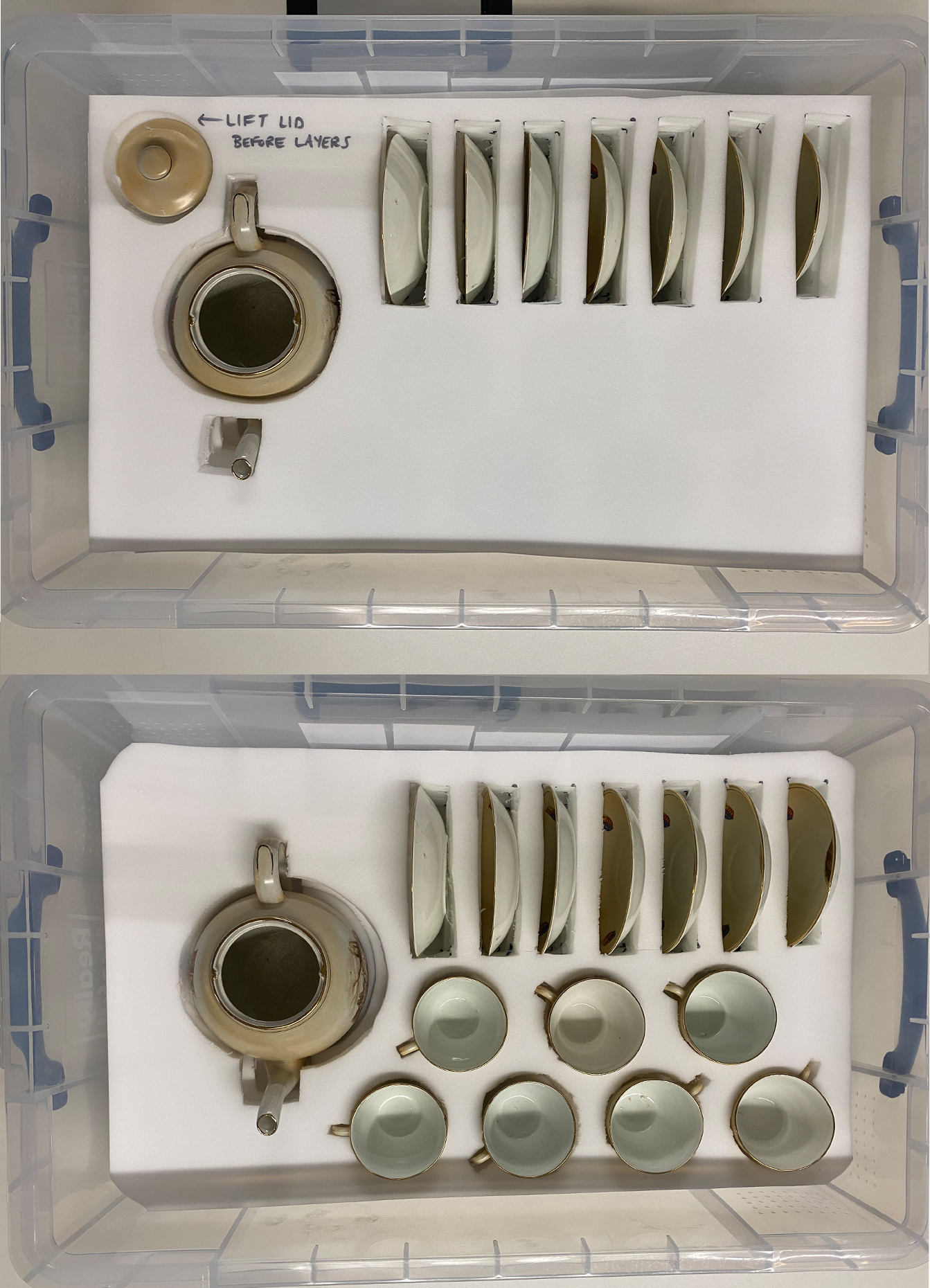
A useful method was applied when helping me adjust to the volunteering; they gradually increased the difficulty of the objects until I got to the largest and most intricate box. This was the tea set. I had to pack seven cups and seven saucers as well as a tea pot and its lid in one box. This was the largest number of objects that needed to go into a single box that I had done. As the cups were all the same it saved time on documenting them onto the spreadsheet, but it still took the entire 6 hours I was there to get the whole box recorded. By the end of the second session I had completed work on the teapot and the saucers. These took a really long time as there was a lot of layers to the packaging that was needed to be cut in order for the ceramics to be secure. As I had to fit so much into one box I discussed with Clair, my supervisor, on how to fit it in. I couldn’t use the same method I had done for previous plates as there wasn’t enough room. This led to the plates being placed on their side rather than flat. I found that the teapot and teacups were more difficult to secure due to their handles. I had to cut through multiple layers of plastazote accurately and rather narrowly to ensure they fit. In comparison the saucers only needed rectangles which is easy to adjust when necessary.

Overall, this was a wonderful, and well supported experience in a friendly environment that enabled me to steadily progress through different difficulties. Out of all I’ve learnt it was also an amazing opportunity to explore the archives in the basement of the library and see how the ceramics would be stored after I had finished packaging them.

Special Collections and Archives highlights: 2023 edition

2023 has been a year of challenges and delights, we’ve amassed new collections, colleagues and knowledge, and – as is tradition – we want to use this post to share some of our highlights with you.

Karen (Special Collections and Archives Manager)

2023 has been another exciting, as well as challenging, year in Special Collections and Archives. We’ve seen a number of changes in our team. In the summer we said goodbye to two members of our team, Rachel who worked with us as a part-time project archivist for the UK Philanthropy Archive and Matt who was our Digital Lead. While in May we welcomed Daniella to the role of Project Archivist – Daniella’s post is externally funded and she is working to make two of our collections accessible and discoverable. If you follow us on our social media channels you’ll already know something of what she gets up to but there is more in her section below. In July we also welcomed Sam to the team. Sam is working on the Laurie Siggs Archive, purchased earlier this year with support from the Arts Council England/V&A Purchase Grant Fund and Friends of National Libraries. The collection includes, original artworks, rough sketches and sketchbooks as well as notebooks and correspondence. 

Beth has had an amazingly busy year; working with me on funding applications, completing a survey of artworks around campus as well as all the things she mentions in her piece. One of the highlights for me was the amazing exhibition commemorating 100 years since the publication of T. S. Eliot’s Wasteland.  It was a great example of collaborative working with our academic colleagues. It proved to be a great attraction and we had many visitors to the gallery. Beth and I were delighted when Faustin Charles contacted us about his archive. Beth shares more about Faustin below but what you may not know is that he is the author of The Selfish Crocodile – a fantastic book for children. Clair has had great fun working on some of our collections and I know she especially enjoyed working on the Mark Thomas collection. Thanks to her excellent efforts you can now enjoy it too through our online catalogue or by visiting our collections. 

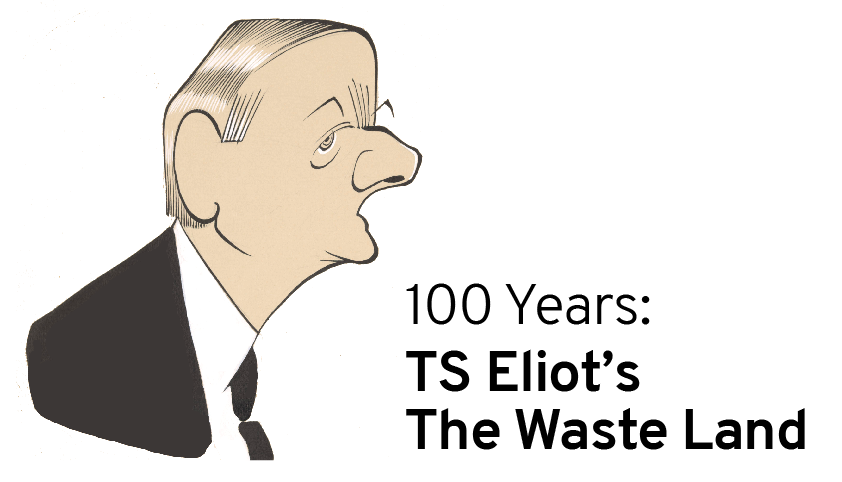
Exhibition poster for 100 Years: TS Eliot’s The Waste Land.

Christine has gone from strength to strength in developing her skills and talents as our Coordinator. She has finished cataloguing her first book collection, of which you can learn more about below and the Childrens Book Collection has so many lovely books for us all to enjoy. Christine also helped to develop the sessions for Discovery Planet in Ramsgate, working with our academic colleague Stella, and our whole team. I hope we can do more to these amazing sessions in the coming year. Mandy continues to beaver away making sure our cuttings collection is kept up to date. At the same time she has been working on digitising the original art works of Hector Breeze. Hector’s cartoons were published in Private Eye, Punch, Evening Standard, and other popular Daily newspapers. Jacqueline completed cataloguing the Carl Giles books, and moved on to catalogue Arnold Rood’s collection (he had a very attractive bookplate) and Jack Reading and Colin Rayner’s collection. Jacqueline has uncovered some real treasures, which I’ve enjoyed seeing. We’re looking forward to seeing what she uncovers next year! Our colleagues Stu and Matthias have been working with us one day per week and have made great progress in dealing with our British Cartoon Library backlog as well as our Shirley Toulson Poetry Collection, making them available to everyone.  

Display of Special Collections and Archives materials at Discovery Planet, Ramsgate.

Our volunteer projects this year have been hugely successful, and we continue to be amazed by the talented people that come to support us in our work.  

Looking forwards to 2024, we have some recently acquired collections that will be announced very soon. One I can mention though is a beautiful collection of Caribbean literature, donated by one of our former academics. We plan to start work on this collection in 2024 alongside some work to process a collection of African literature including works in the African Writers Series. Keep an eye on our social media channels for updates. And if you are not already following us do have a look at the Special Collections and Archives Advent Calendar – it’s on X (formerly Twitter) and Instagram @UniKentArchives. 

Beth (University Archivist)

2023 has been full of highlights and it is hard to pick out a few special things to represent such a busy year!

With the University Archive collections this year I focussed on the archives of the Colleges. At the beginning of the year I started a huge (and still ongoing) project to sort and catalogue the enormous Eliot College archive. This has now been un-boxed and arranged in a logical way, and cataloguing is on-going. This is a huge step forward in preserving the history of these important institutions within the University, and there are many fascinating records coming out of this.

We also received a brilliant collection of literary manuscripts from alumnus Faustin Charles, a storyteller and poet, originally from Trinidad and who studied at the University of Kent from 1977-1981. Faustin is an important voice in Caribbean poetry and storytelling, and his collection of manuscripts and correspondence will provide a fascinating insight into his work.

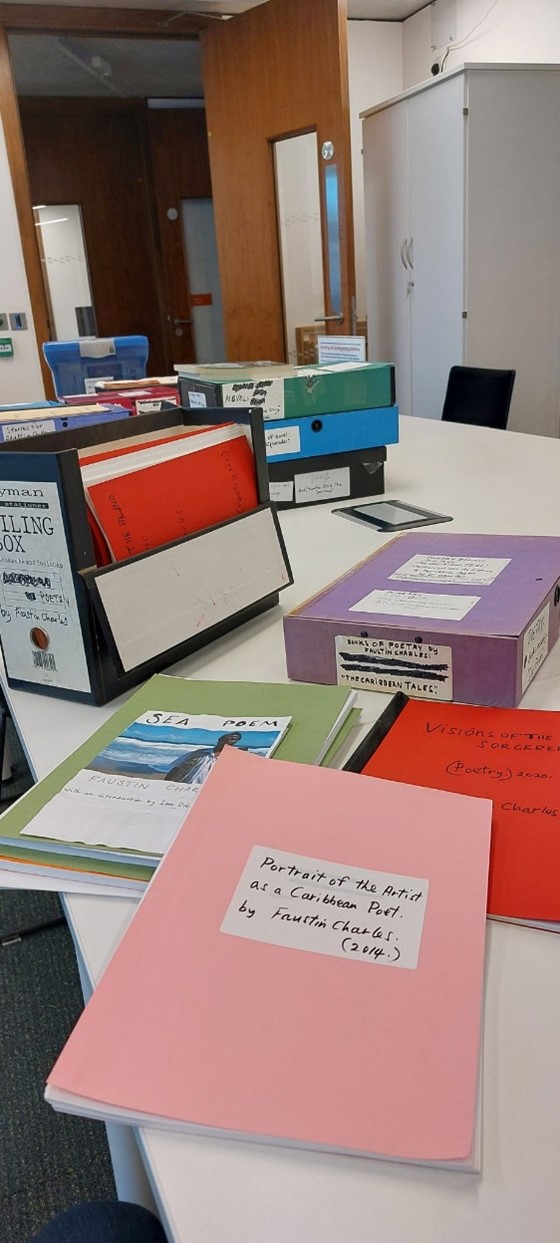
The archive collection of Faustin Charles, Caribbean storyteller and poet, being catalogued at the University of Kent Special Collections and Archives.

With the UK Philanthropy Archive collections we have continued to build and expand this growing collection receiving a new collection from the Hilden Charitable Trust in the last few weeks! We have been involved with two great events to showcase the wider philanthropy collections and begin to share information about the content and its importance for research. In April we held a mini-display of material at the Understanding Philanthropy conference, and then later in November we helped organise the 15th Anniversary Colloquium for the Centre for Philanthropy, Philanthropy: Past, Present and Future, which included our 3rd annual Shirley Lecture. This year we were delighted to welcome Orlando Fraser KC, the Chair of Charity Commission of England and Wales, who delivered an interesting lecture of the role of philanthropy in the charity sector. We were able to showcase the UK Philanthropy Archive collections at this event, giving tours of the collections talking to participants about their value for research.

Display of philanthropy related items for the Centre for Philanthropy’s 15th Anniversary Colloquium in November 2023.

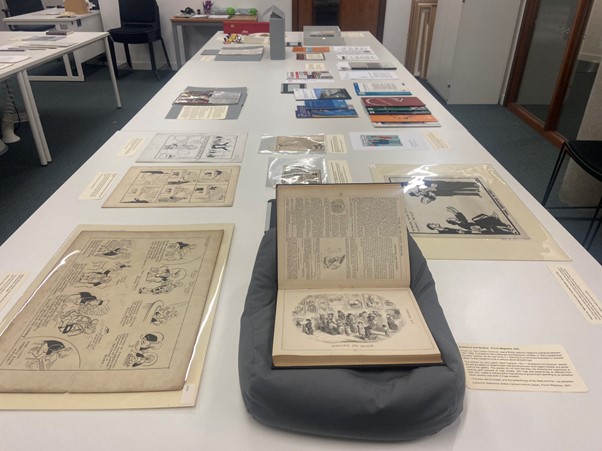
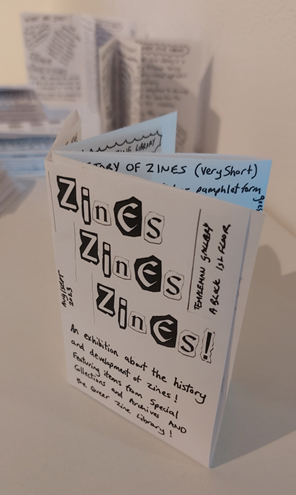
Our exhibition schedule has been jam packed this year beginning with the 100 Years: TS Eliot’s The Wasteland which was on until April, after which we installed the Migrating Materia Medica exhibition in collaboration with colleagues in the Schools of English.  In August we added a fabulous short term exhibition on zines and zine making, called “Zines Zines Zines!” which explored the history of this popular genre of self-publishing and allowed us to display some of our zine collections, modern poetry and artist books, and also a loaned collection of zines from the Queer Zine Library.

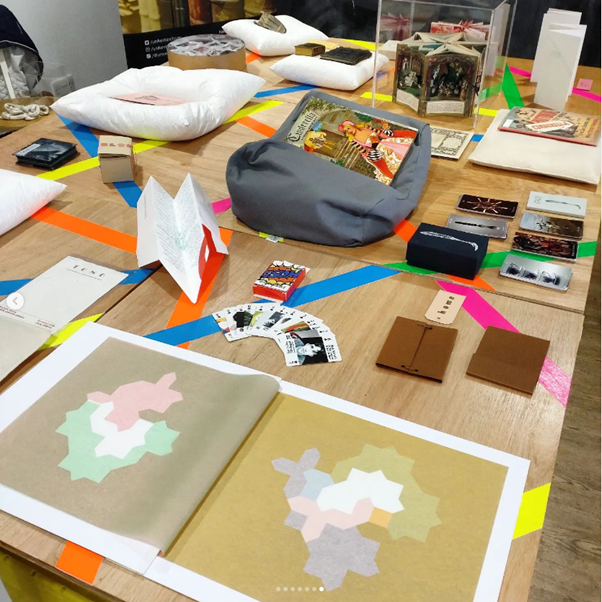
The zine we made to support the Zines Zines Zines exhibition this year.

We have ended the year by installing our new exhibition – which has been curated by a fab team of volunteers to kick off our celebrations of the 50th anniversary of the British Cartoon Archive at the University. The first cartoons arrived at Kent in 1973 and the Centre for the Study of Cartoons and Caricature opened in 1975 – which later developed into the British Cartoon Archive. Between 2023 and 2025 we are running a programme of events and activities to mark this significant anniversary. The 50/50 Project, where our volunteers have selected 50 cartoons reflecting the 50 years of the British Cartoon Archive, was the first of our celebratory activities and was launched in October. The exhibition will be on display until the end of February so do come along and see it if you can.

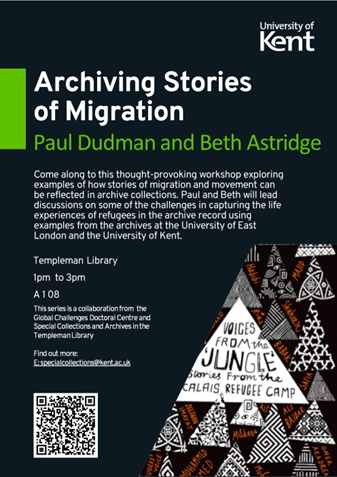
In addition to all of this – a particular highlight for me this year was in organising and delivering our Telling Our Tales series of workshops, held in June, in the run up to Refugee Week. This series of creative workshops related to our project and exhibition in 2022, Reflections on the Great British Fish and Chips. The workshops explored the ways in which we tell, share and preserve stories of migration and movement. Working alongside our amazing colleague Basma El Doukhi, we invited speakers to run artist-led workshops where participants learned about sharing migration stories and how these can be expressed and recorded through portraiture and photography. We held an In Conversation event between Basma and Rania Saadalah, a Palestinian Refugee, who shared her photography work where she lives in the refugee camps in Lebanon. Our final workshop was with Paul Dudman from the Living Refugee Archive at the University of East London, who talked about how to preserve stories of migration and the lived experiences of migrants living in Britain.

The workshops were all thoughtful and impactful events, that encouraged us to challenge stereotypes, build better relationships with people in our communities, and foster a spirit of understanding and compassion for others. This sentiment seems particularly important to highlight at this time of devastation and suffering in the ongoing war between the Israeli and Palestinian people. It remains vital that the stories and experiences of refugees and those with lived experience of migration are heard, shared and preserved to ensure their voices do not go unrecorded.

Poster for one of the Telling our Tales workshops, held by Paul Dudman and Beth Astridge.

Clair (Digital Archivist)

Once again, it’s been an incredibly busy year for Special Collections and Archives, and if you can excuse the cliché, it has really flown by! There’s been lots of enjoyable projects along the way, but I’ve chosen just three to talk about in this year’s round-up.

Firstly, we’ve had a bumper year for volunteering! Volunteers bring so much to our service, and help us achieve more than we could ever do alone with our small team. We’ve had the pleasure of working with over 20 individual volunteers this year on various tasks and projects. In particular, we’ve run two volunteer projects related to the British Cartoon Archive (BCA) this year. The first was the 50/50 project where volunteers were asked to research, select and curate an exhibition of 50 items from the BCA to celebrate 50 years since the founding of the collection. The second was the Cartooning Covid-19 project, where volunteers supported us in making over 400 cartoons published during the Covid-19 pandemic available to the public via our catalogue. It’s been such a pleasure working with all of our fantastic volunteers this year, and we hope to continue to work with some of them again in the next.

Our 50/50 volunteers.

In terms of cataloguing, I had a blast sorting and cataloguing material from our Mark Thomas Collection in the British Stand-Up Comedy Archive (BSUCA) this year. The Mark Thomas Collection has been part of BSUCA since its very beginnings, with the earliest set of records being deposited in 2013, and we were delighted to receive an accrual to his collection in 2020/21. This new batch of records contained notebooks, publicity, audiovisual material, and material related to his radio and TV work. In addition to this cataloguing, I also had the help of two work experience students in sorting and cataloguing the significant ‘100 Acts of Minor Dissent’ series. Records can be viewed on our catalogue now: https://archive.kent.ac.uk/Record.aspx?src=CalmView.Catalog&id=BSUCA%2fMT

100 Acts of Minor Dissent: Act 61-63 – the BASTARDTRADE logo (designed by Greg Matthews) is trade marked and was created as a symbol of bad corporate behaviour (BSUCA/MT/3/8/26).

Finally, in the first half of this year I was lucky enough to take part in the National Archives’ peer mentoring scheme. I really enjoyed the experience of being a mentee and benefited from having a very knowledgeable, kind and supportive mentor. The scheme was the perfect opportunity for me to take the leap in creating a Digital Asset Register for our digital collections. Having a Digital Asset Register in place is important as it enables us to have control over our digital objects (both born-digital and digitised) and helps keep us informed of the file formats we hold so that we can make decisions about any preservation actions we may wish to take. It’s a huge step forward in improving our digital preservation maturity, so that’s definitely something to celebrate!

Computer Laboratory, Nov 1977 (UKA/PHO/1/1014)

Daniella (Project Archivist)

2023 has been an exciting year for me as I joined Special Collections & Archives as a Project Archivist, working on two cataloguing projects – Craigmyle Consultants UK Ltd’s archive and the “Oh Yes It Is!”: Cataloguing the David Drummond Pantomime Collection project, funded by Archives Revealed a partnership programme between The National Archives, The Pilgrim Trust and the Wolfson Foundation.

Donated by the collector David Drummond, the collection contains materials relating to a range of pantomimes, such as Cinderella, Puss in Boots, and Sleeping Beauty, as well as ephemera and photographic materials showcasing Principal Boys and Principal Dames. There are also gorgeous costume designers by prolific costumer designers, such as Wilhelm and Archibald Chasemore. Positive steps have been made with the cataloguing and, so far, I have catalogued in draft materials relating to Florrie Forde, Albert Chevalier, Godfrey Tearle, and David Wood. My latest cataloguing work package has focused on items relating to the pantomime Aladdin, started to coincide with this year’s pantomime performance at the Marlowe Theatre in Canterbury. Watch this space to see these be added to our catalogue! Fantastic work is also being done by a wonderful group of volunteers who sorted and have been listing programmes and flyers for the pantomime Cinderella – they have made amazing progress and we can’t wait to share this with researchers.

Aladdin materials in the David Drummond Pantomime Collection.

Linked to the above, an absolute highlight of working on the David Drummond Pantomime Collection was going to the local pantomime at the Marlowe Theatre to watch Aladdin with my colleagues. We had an absolute blast watching the Dame strut her stuff whilst dodging the oncoming water guns!

Craigmyle’s archive is very different to the David Drummond Pantomime Collection and provides a different perspective to fundraising. It is interesting because the collection shows how this organisation, which was set up in 1959, helped charities across the United Kingdom fundraise. They work with a variety of clients ranging from Cancer Relief Macmillan to cathedrals and parish churches. Schools and education fundraising is of particular importance to Craigmyle. In fact, the company’s earliest focus was on this sector, with initial clients including The King’s School Ely, Tonbridge School, St John’s College Durham and Wycombe School. The project is well underway, and I have scoped what there is and begun to appraise and weed to select what we will be keeping for permanent preservation.

Working on Craigmyle’s archive has also given me the chance to meet staff in the Centre for Philanthropy, and Beth and I had the exciting opportunity to work with Professor Beth Breeze and Dr Karl Wilding to organise the Philanthropy Past, Present and Future colloquium. We had over 80 people register and attend, and has fantastic talks from Michael Seberich and Orlando Fraser, Chair of the Charity Commission for England and Wales. It was also a great chance to get the Craigmyle collection out and engage participants with what research can be done with this archive.

We’ve had an exciting end to the year by appointing two Archive Assistants, Cassie and Farradeh, who have joined me on the project to catalogue Craigmyle’s archive. We’re thrilled for Cassie and Farradeh to be a part of the team and they are sorting, listing, and repackaging appeal literature that forms a part of this collection. They have made an amazing start and have the following to say about their experience on this project so far:

Cassie: “I’ve only been working on the project for a couple of weeks so far but I already feel like I’ve learned so many new things about working in archives, and about the philanthropy sector. It’s been fascinating working through the new Craigmyle collection and I can’t wait to see what else we find and discover the ways in which this material can contribute to the UK Philanthropy Archive”.

Farradeh: “It’s really exciting to see what goes on behind the scenes at an archive, and have an active part in the formation of a new collection. It has made me see archives in a different light, understanding the thought and care archivists put into their craft, and appreciating the level of nuance that goes into executive decisions”.

Cassie and Farraday working on the Craigmyle Archive.

Outside of my collections work, Karen and I contributed to Dr Suzanna Ivanic’s module The Early Modern World: Conflict & Culture, 1450-1750. I gave a lecture about the recordkeeping revolution and archives between the sixteenth century and mid-eighteenth century. I also supported Karen and Christine in delivering the seminars for this module, during which students were able to examine and handle some of the spectacular early modern printed texts in the collection, including editions of William Lambarde’s Perambulation of Kent, William Somner’s Antiquities of Canterbury, and indentures ranging from the reigns of Henry VI to Elizabeth I that are found within the Ronald Baldwin collection.

Christine (Special Collections and Archives Coordinator)

This has been my first full year working as the Special Collections and Archives Coordinator, and it’s been a real opportunity to increase my knowledge of our collections and support a variety of digital and in person engagement activity – in the Autumn term alone, we engaged 177 UG and PG students through seminars, not to mention individual readers, school groups and prospective open day students.

Earlier this year I did a #FacsimileFridays series on Instagram to shine a spotlight on what is often underprized and overlooked – for facsimiles are copies, not originals. However, they increase the circulation potential of unique items and thereby fulfil an important place in telling the history of the book. The knowledge I gleaned from many of these items also became pertinent to my teaching of a seminar on Chaucer this December for third year School of English students, in which we were considering very early manuscripts and print technology.

Produced between 1330-40, the Auchinleck manuscript gives an idea of reading practices pre-Chaucer: it consists principally of romances (think Arthuriana) along with other secular tales and religious pieces. Chaucer died in 1400, just before the advent of the printing press, and no copies of his works survive from his lifetime. The most famous of 15th-century manuscript versions of his work is undoubtedly the Ellesmere Chaucer, which became the authoritative example for organizing the Canterbury Tales. It’s written in the hand of a single scribe, and is incredibly grand both in its use of blank space and famous miniature illustrations of the Canterbury pilgrims. You may even be familiar with one of these, for its portrait of Chaucer is blown up on the side of the former Nasons building in the Canterbury high street! Now in the Huntington Library, our monochromatic facsimile still gives us access to the scale and content of the original. The first printing of the Canterbury Tales was William Caxton’s 1476 version, and the earliest printed version of Chaucer that we hold dates to 1598. With ‘Dorothy Smallwood’ inscribed on the title page, we know this copy once had female readership and it is also fascinating for its marginalia showing just how much its readers relied on a glossary to make sense of Chaucer’s language just 200 years after it was first circulated. William Caxton was also responsible for bringing Mallory’s Morte D’Arthur to an English audience, and we are really lucky to have a facsimile of this work because only one and a half of Caxton’s original version survive to date. Given the depth of the book, and the pressure reading puts on the spine, this is not surprising – original copies would literally have been read to pieces.

The Ellesmere Chaucer (F PD 1865 Classified sequence).

Le morte d’Arthur (Q PD 2040 Classified sequence).

From the history of books to the art of books, I have had several opportunities this year to appreciate the variety of forms books can take and really get to grips with the non-textual components of books which is crucial to special collections cataloguing. In cataloguing our Children’s Literature Collection, I had to give condition and provenance notes as well as a physical description of each book, noting such varied features as illustrated fly-leaves, dust jackets, fold-out maps, pages of publisher’s advertisements, volvelle frontispieces and pop-up engineering. Children’s books are a joy to handle because they are so self-conscious of being tactile interactive objects, and they have proved inspirational – alongside our artist books – when displayed at book-making workshops led by Dr Stella Bolaki at Discovery Planet, Ramsgate. It has been a particular privilege for me to accompany our collections to a different venue off campus and engage different audiences, notably children, and witness them transpose their awe for special collections into creative responses.

This year : next year (PZ 8.3 DEL Children’s Literature Collection).

Les grotesques : en quatre tableaux (PZ 8 Children’s Literature Collection).

Mandy (Special Collections and Archives Assistant)

Over this past year I have been digitalizing our Hector Breeze collection, they are very interesting to scan and the way that they have been drawn.

HB0005, Hector Breeze Collection.

HB0011, Hector Breeze Collection.

I have also been scanning our cartoons collection, to see how they have changed over the last few years is so interesting, changes in the government also.

Sam (Project Digitisation Administrator)

In my first year as an official member of the Special Collections team, I have been cataloguing and digitising the charmingly offbeat world of Lawrie Siggs (1900-1972), a cartoonist who worked for various publications (including Punch, John Bull and Lilliput) for 35 years.

Here are a few examples to set the tone.

Pinch Me, SIG0307.

No He Doesn’t Talk, SIG0319.

Jacqueline (Curation and Discovery Administrator)

The theatre designer Edward Gordon Craig described himself as “fond of print.” His designs for theatre stage sets and scenery surpassed possibility in his time and he turned to typography and woodcuts. I have spent this year with the collections of three men who can all be described as fond of print. Arnold Rood’s collection is centred around Gordon Craig and his circle. It includes Craig’s woodcuts in print. I began the year at the end of Carl Giles’ collection (the cartoonist Giles) where I found a set of Puffin Picture Books from the 1940s-50s, their design and illustrations redolent of a return to delight in books after austerity. After Rood, I’ve been cataloguing the periodicals in Jack Reading and Colin Rayner’s collection; they were thorough collectors who focussed on theatre and literature. Last week amongst odd issues I came across a complete set of The Masque, a small and pretty journal of 9 issues each one on a theme. Issue 5 is The Masque of Christmas, presenting dramatic JOYS of the season to you.

The Masque, Reading-Rayner Literature Collection.

Stu (Curation and Discovery Administrator)

Over 90 titles added to British Cartoon Archive Library this year. Most memorable was probably the stunning cold war era illustrations in, Drawing the curtain : the Cold War in cartoons / Althaus, Frank.

Also Daily Mirror reflections : being 100 cartoons (and a few more) culled from the pages of the Daily Mirror. [Vol. I] / Haselden, W. K. (William Kerridge), 1872-1953, formerly owned by prime minister Stanley Baldwin.

Quite moving and of current topical interest, A child in Palestine : the cartoons of Naji al-Ali / ʻAlī, Nājī.- This collection of drawings chronicles the Israeli occupation, the corruption of the regimes in the region, and the plight of the Palestinian people. The images have bold symbolism and starkness to them.

The bottle / Cruikshank, George, 1792-1878, – This is a really interesting little pamphlet promoting temperance through a cautionary tale of the downfall of a family brought about by the evils of drink. No publication date but probably late 19th century.

Matthias (Curation and Discovery Administrator)

I have been working on the Shirley Toulson Collection this year, a collection of over 400 poetry books from the estate of the late author and poet Shirley Toulson. Handling a writer’s private library felt very special and personal. The books, many of them rare editions by small presses, often had personal notes and handwritten dedications by the authors. Often I found postcards or letters inserted between the pages. My personal highlight was a handwritten, seemingly unpublished poem by Shirley Toulson I found inside a W.H. Auden poetry volume.

Collected shorter poems 1927-1957, PR 6001.U4 AUD Shirley Toulson Poetry Collection.

Our reading room will be closed from 16th December 2023 and will reopen 16th January 2024 – we hope you all have a very happy and peaceful break.