Lent by the National Gallery 1997 http://www.tate.org.uk/art/work/L01895

Peter Read and Picasso in Paris

Professor Peter Read is giving two public lectures at the Musée d’Orsay in Paris to accompany the exhibition “Picasso Bleu et rose” (Picasso Blue and Pink), which will run from 18 September 2018 to 6 January 2019 and include 240 works of art. Peter’s first talk, on Picasso and the Circus, will be at 3pm on Saturday 13 October in the restored “fumoir”, or Smoking Room, of the museum, which is a former railway station and hotel, opened in 1900. Peter’s talk is part of the “Picasso Circus Weekend” taking place in the museum that Saturday and Sunday, with a big top in the nave of the building and performances by trapeze artists and an “extreme dance” company from New York.  Peter’s second talk, at 12 noon on Friday 2nd December, in the Musée d’Orsay’s lecture theatre, will be on representations of Paris in Picasso’s work during his early years in the city, from 1900 to 1906.

Peter Read has also contributed several texts to the catalogue of the Cubism exhibition opening at the Centre Pompidou in Paris on 17 October, and has contributed to a Dictionnaire du cubisme being published to accompany that exhibition.


Welcome Week at Medway

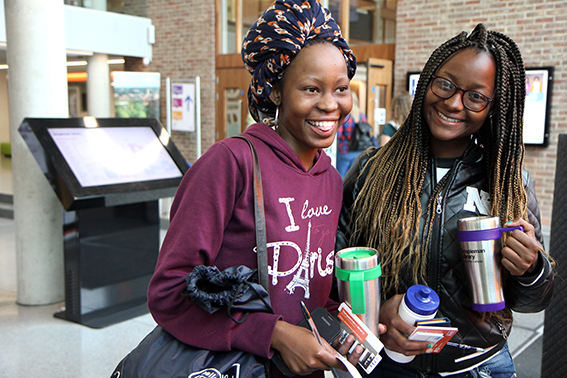
Once you have registered make sure you get involved in all that Welcome Week (or as some people call it, ‘week 0’) has to offer.

This week is a helpful introduction to the University and its services, including the Library and your students’ union, getting you ready for when teaching starts on 24 September 2018.

Even if you’re not living in University accommodation you still need to attend Welcome Week.

Get the most from Welcome Week and make sure you…

  • Go to the Welcome Fair on Wednesday 19 SeptemberThis is your opportunity to find out more about all the societies and sports teams you can join. You can also pick up a few freebies from local businesses.
  • Attend your school’s induction events. School induction events are a great opportunity to meet fellow students studying similar courses to you, while discovering the wide range of support services provided by your school. Contact your school for more information.
  • When studying at university, the Drill Hall Library will be a key resource, so it’s important you know how to use all the services and where to go for help. Find out more about Library and IT services.
  • Follow UKM Student on Instagram, Facebook and Twitter. These accounts are managed by fellow student Arun and will feature opportunities and events for Medway students.

International student?

As well as all the Welcome Week activities, there’s a special welcome programme for international students.

ELL graduate wins LAGB Award

Eloisa Lilywhite, who graduated this year with a First from the Department of English Language and Linguistics, has been named as one of the three winners of the Linguistics Association of Great Britain (LAGB) Outstanding Undergraduate Dissertation in Linguistics Award, worth £100.

Each nomination was evaluated independently by four members of the LAGB committee (who were not from the nominated student’s university). The committee was highly impressed with all of the nominations that received; the overall quality of the dissertations was truly excellent.

Congratulations to Eloisa on this achievement.

Find out more about the LAGB award.


Hello Library and IT services!

If you’re a new student, you’ll soon be using the Library, IT systems and study spaces to help you do your work. Here’s how to get started and make the most of them.

Don’t buy books yet unless your lecturer advises you to as we aim to stock every book on your reading list.

Come to a Library and IT! Welcome Session

A welcome session is your best chance to explore the Library and find out about IT you will need to use at Kent.

They run from Monday to Friday in Welcome Week, between 09.30–16:30, starting on the hour and half hour, from the Welcome Hall, Main Entrance, Templeman Library.

Check your timetable to see if there is a session for your subject booked. If not, or if you miss it, join any session during the week.

You’ll learn about:

  • what’s in the Library
  • finding and borrowing books
  • where you can study
  • using PCs, printers, loan laptops

…and much more!

You’ll also get a free gift, and the chance to win a £20 Amazon voucher in our prize draw. Don’t forget your KentOne card as you will need this to enter the Library!

Get Connected

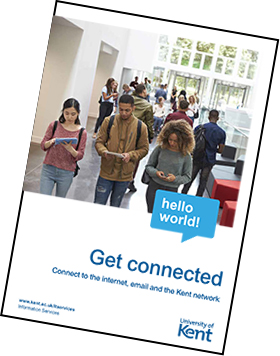
You can connect to Wi-Fi as soon as you arrive on campus. If you’re living on campus, look out for your ‘Get Connected’ booklet in your accommodation.

Use the wired internet with a network cable for the fastest gaming and streaming. If you don’t have one, get one free from the IT & Library Support Desk in the Templeman Library. For help in connecting to your phone, tablet or laptop ask IT & Library Support Desk.

Need more help?

For help with Library and IT Services:

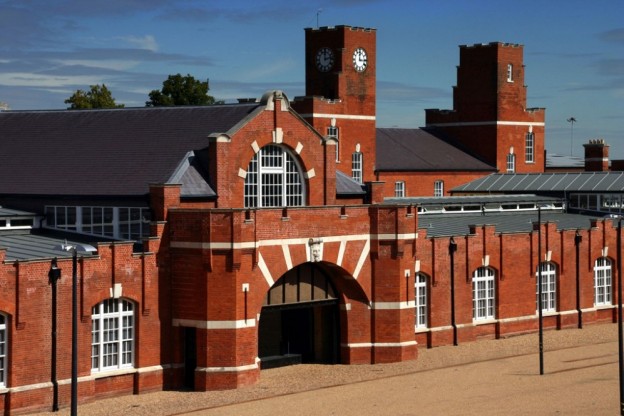
An image of Drill Hall Library with red brick and an arched frontway

Hello Library and IT at Medway!

If you’re starting at University of Kent’s Medway campus in September, you might be wondering where to study, how to get online, and how to find the books you need for your course.

Here’s an overview of the library and IT services you can use:

The Drill Hall Library

The Drill Hall Library is your main library at Medway. It has the books you need, plus study spaces, PCs and laptops, printers, photocopiers and scanners, and support for your subject.

  • Read this useful guide to the Drill Hall Library. It tells you the basics, like when it’s open and how many books you can borrow.
  • Visit the Library for your induction session, which has been pre-arranged by your School or department, to learn your way around.
  • Look out for games, competitions and fun prizes in Welcome Week in the Drill Hall Library.Take part in our induction and experience summer seaside fun and games.

IT services for you

Here are some of the IT services you can use as a Kent student:

  • Over 500 student PCs, laptops and 800 study spaces in the Drill Hall Library and University of Kent buildings.
  • University Wi-Fi (eduroam) in all buildings at Medway. You can set up your Wi-Fi connection before you arrive on campus, which means you connect instantly when you get here
  • Print, copy and scan machines across campus – all Kent buildings and the Library are connected to a nearby printer
  • Borrow a laptop for a day loan from the self-service cabinet in the Pilkington building Monday to Friday 08.00 – 18.30.

If you need help, look out for the leaflet in your welcome pack, which you will receive at registration, visit the Helpdesk in the Drill Hall Library, or contact our IT & Library Support Desk.

Research students

Need a space to work? You can use the Postgraduate Researchers’ Room in the Drill Hall Library. This newly designed and furbished room is available for postgraduates from all three Medway universities, providing an excellent space to study, network, practice presentations and meet those with similar research interests.

Need more help?

For help with Library and IT Services:

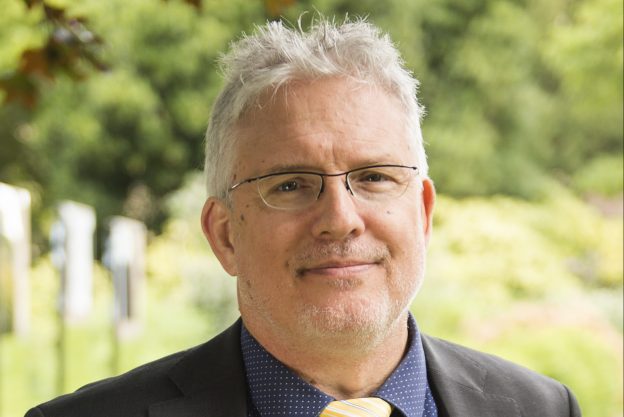
Stephan Lewandowsky

School of Psychology Annual Lecture – 25 September

Beyond misinformation: Parallel Universes in a Post-Truth World is the title of the School of Psychology’s Annual Lecture on Tuesday 25 September.

The talk will be given by Professor Stephan Lewandowsky, FAcSS, FAPS, Chair in Cognitive Science and Royal Society Wolfson Research Fellow, Chair in Cognitive Science and Royal Society Wolfson Research Fellow.

If you would like to join us, please register by emailing George Oatridge by 23 September. The event will begin with an optional drinks reception in Keynes College Atrium at 17.00, followed by the talk at 18.00 in Keynes Lecture Theatre 1 (KLT1).

Abstract

Imagine a dystopian world in which it is not medical knowledge but a free-for-all opinion market on Twitter that determines whether a newly emergent strain of avian flu is really contagious to humans. There are signs that public discourse is evolving in this direction: Terms such as “post-truth” and “fake news”, largely unknown until 2016, have exploded into the media and into public discourse. I explore the implications of the growing abundance of misinformation in the public sphere, how it influences people and how to counter it. I argue that misinformation in the post-truth era can no longer be considered a localized “error” that can be corrected with appropriate communication tools. Instead, I suggest that responses to the post-truth era must include technological solutions that incorporate psychological principles, an interdisciplinary approach that we describe as “technocognition.”

Brief biography

Professor Stephan Lewandowsky is a cognitive scientist at the University of Bristol. He was an Australian Professorial Fellow from 2007 to 2012, and was awarded a Discovery Outstanding Researcher Award from the Australian Research Council in 2011. He held a Revesz Visiting Professorship at the University of Amsterdam in 2012, and received a Wolfson Research Merit Fellowship from the Royal Society upon moving to the UK in 2013. He was appointed a Fellow of the Academy of Social Science and a Fellow of the Association of Psychological Science in 2017. In 2016, he was appointed a fellow of the Committee for Skeptical Inquiry for his commitment to science, rational inquiry and public education.

His research examines people’s memory, decision making, and knowledge structures, with a particular emphasis on how people update information in memory. His most recent research interests examine the potential conflict between human cognition and the physics of the global climate, which has led him into research in climate science and climate modeling. As a result of his work in climate science he was appointed Visiting Scientist at the CSIRO Oceans & Atmosphere laboratory in Hobart, Tasmania, in August 2017.  He has published more than 200 scholarly articles, chapters, and books, including numerous papers on how people respond to corrections of misinformation and what variables determine people’s acceptance of scientific findings. (See www.cogsciwa.com for a complete list of scientific publications.)   Professor Lewandowsky is an award-winning teacher and was Associate Editor of the Journal of Experimental Psychology: Learning, Memory, and Cognition from 2006-2008. He has also contributed around 50 opinion pieces to the global media on issues related to climate change “skepticism” and the coverage of science in the media. He is currently serving as Digital Content Editor for the Psychonomic Society and blogs routinely on cognitive research at www.psychonomic.org.

The talk is being hosted by Professor Karen Douglas, Professor of Social Psychology at Kent.

Winter berries

Pay during adverse weather – new University policy

A new policy on pay during adverse weather has been published by HR.

The new policy, ‘Pay during periods of severe weather conditions/major transport disruption’, replaces the HR Adverse Weather Guidance for Managers.

The  new policy outlines pay arrangements and responsibilities for all University staff during adverse weather conditions and is based on the recognition and appreciation that staff make every reasonable effort to attend work during bad weather.

In line with all previous and current policies, the University will not normally close during bad weather, but there may be circumstances when a reduction to essential services only is declared.

All managers and staff are encouraged to read through the new policy ahead of winter.

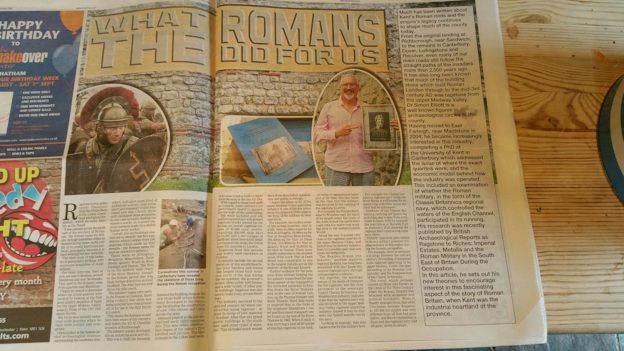
Simon Elliott on Roman ragstone in the Kent Messenger

Dr Simon Elliott, Honorary Research Fellow in the Department of Classical & Archaeological Studies, featured in a double-page spread in the Kent Messenger newspaper (dated 26 August 2018) in an article exploring ‘Roman History in Kent’.

The article looks at Simon’s research on ragstone quarries, an extensive industry in the region in Roman times.

‘Ragstone is grey-green sandy limestone from the Hythe Beds in the Lower Greensand geological formation – which we today identify as the Weald,’ explains Simon in the article.

‘It was utilised across the south east of the province of Britannia – the Roman name for Britain – in huge quantities, either as dressed facing stone in-fill rubble, or to create hard road surfaces, principally because it is hard-wearing but also workable.The sheer scale of this industry is particularly striking, with enormous quantities of stone utilised.’

Read full article here.

Sophia Labadi to Deliver Keynote Speech

Dr Sophia Labadi will deliver a Keynote Speech at the Annual meeting of the European Association for Archaeologists on Saturday 8 September. With over 11 000 members, this is one of the biggest associations for archaeologists in Europe. Dr Labadi’s Keynote, entitled ‘Is Heritage Irrelevant?’, reflects on the two key aims of the 2018 European Year of Cultural Heritage, first on the contribution of heritage to cultural diversity and second on the contribution of heritage to the economy. In order to do so, she discusses the results of her latest books that discuss these issues.

Find out more about the European Association for Archaeologists.

In Conversation with Lord Adonis

Season four of In Conversation with Gavin Esler begins this autumn, with the first talk featuring Lord Adonis, live at the Gulbenkian on Thursday 20 September.

The special subject for this event is ‘Brexit – can it be overturned?’

The talk starts at 18.30 and tickets cost £5 (£4 for staff/students), and are available from the Gulbenkian Box Office.

Make sure to join the conversation beforehand; you can submit questions on Twitter using #GavinAsks or by email via events@kent.ac.uk.

You can keep the conversation going on the night by joining a High Table dinner in Darwin Conference Suite after the talk for £35. Once you have booked tickets for the In Conversation, you will automatically be offered to join the dinner.

Money raised from the sale of tickets for the In Conversation will go towards the Kent Opportunity Fund. Find out more about the Fund here.