Category Archives: Uncategorized

Natalia Sobrevilla Perea

Natalia Sobrevilla Perea on abolishing the army in Costa Rica

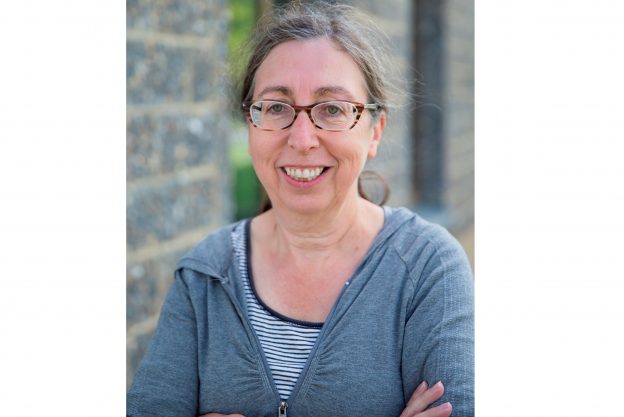
Natalia Sobrevilla Perea, Professor of Latin American history for the Department of Modern Languages, has recently appeared on the BBC’s Writing History programme in an episode entitled ‘Abolishing the army’.

The programme, presented by Mike Lanchin, considers the example of Costa Rica dissolving its Armed Forces after a brief civil war in 1948. After a brief civil war in March-April 1948, the new president of Costa Rica, Jose Figueres, took the audacious step of dissolving the Armed Forces. Since then Costa Rica has been the only Latin American nation without a standing army. Listeners heard from 94-year-old Enrique Obregon, who served in the military before its dissolution.

On the programme, Natalia commented that: ‘The narrative was that the military was not needed, that the more effective way would be through internal policing. That was a very radical move. [Costa Rica] didn’t really have a very big army to begin with, so it was easier than it would have been in other places… and it was couched in this language of inclusion, modernisation and democracy.’

Jo Stoner

Jo Stone on The Cultural Lives of Domestic Objects in late antiquity

Dr Jo Stoner, Research Associate in the Department of Classical and Archaeological Studies, has published a new book entitled The Cultural Lives of Domestic Objects in Late Antiquity (Brill, 2019).

In her book, Jo investigates the role of domestic material culture in Late Antiquity. Using archaeological, visual and textual evidence from across the Roman Empire, the personal meanings of late antique possessions are revealed through reference to theoretical approaches including ‘object biography’. Heirlooms, souvenirs, and gift objects are discussed in terms of sentimental value, before the book culminates in a case study reassessing baskets as an artefact type. This volume succeeds in demonstrating personal scales of value for artefacts, moving away from the focus on economic and social status that dominate studies in this field. It thus represents a new interpretation of domestic material culture from Late Antiquity, revealing how objects transformed houses into homes during this period.

This book is based upon Jo’s PhD thesis, produced at the University of Kent, as part of the research project The Visualisation of the Late Antique City (2011–2014), funded by the Leverhulme Trust, for which Luke Lavan was Principal investigator and Ellen Swift Co-investigator.

Prof Helen Carr

Kent housing law expert speaks to UK policymakers about building regulations

Kent housing law expert Professor Helen Carr has spoken to key UK policymakers at a seminar addressing the future for building regulations in England.

The seminar provided an opportunity to assess the most effective ways forward for improving the safety and standards of buildings in England. In her talk, Professor Carr, whose research interests centre on housing, homelessness and social justice, addressed current building regulations and the priorities going forward.

Among the speakers at the seminar, organised by the Westminster Social Policy Forum, were Clive Betts MP, Chair of the House of Commons Housing, Communities and Local Government Select Committee.

Delegates discussed the Government’s plan to support the development of a more effective regulatory and accountability framework as called for by the Independent Review of Building Regulations and Fire Safety led by Dame Judith Hackitt. They considered what more should be done to implement an effective testing and inspection regime for residents of high-rise buildings and discussed the Government’s ban on combustible materials (and whether it should also apply to non-residential buildings such as hospitals, hotels and student accommodation.)

Among more than 220 attendees were senior government officials, representatives of citizen groups, local authorities, campaigning organisations, businesses and their advisors and social and academic commentators, together with reporters from the national and trade media.

Professor Carr is interested in how law regulates those who are marginal to housing and property. She sits as a part-time judge with the First Tier Tribunal (Property) Chamber and is currently a member of a Civil Justice Council working group on property dispute resolution. She has worked with the Welsh government on proposals to reform housing law and the Renting Homes (Wales) Bill is currently going through the National Assembly.

Chris and Francis

Nostalgia podcast with Francis Stewart

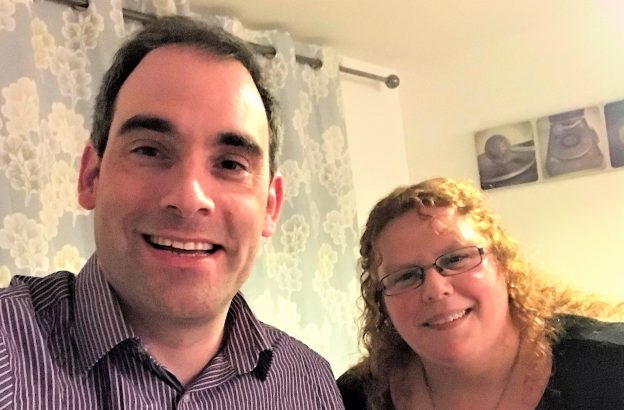
In the latest episode of the Nostalgia podcast series, Dr Chris Deacy, Reader in Theology and Religious Studies in the Department of Religious Studies, speaks to Dr Francis Stewart, Implicit Religion Research Fellow at Bishop Grosseteste University in Lincoln.

Francis was born just outside Belfast and we learn how she had to leave Northern Ireland in order to study World Religions. Chris and Francis discuss growing up during the bomb scares and the at the time of the ‘ring of steel’ in her native Northern Ireland, her working class punk identity (and her book ‘Punk Rock is my Religion’), the way religion has been used as a political tool, jumping up and down in her cot to Status Quo as a baby, being the first person in her family and the estate where she lived to go to university, the use of religion in superhero films, and about wanting to be a tattoo artist when she was 15.

Future interviewees will include Gavin Esler, Chancellor of the University of Kent, and Professor Clive Marsh, Head of the Vaughan Centre for Lifelong Learning at the University of Leicester.

Game pieces on a board

Call for papers: ‘Pro-Social Play’

Professor Nicola Shaughnessey, Professor of Performance in the Department of Drama and Theatre and Dr Dieter Declercq, Assistant Lecturer in Film and Media Studies, along with Dr Chiao-I Tseng from the University of Bremen, are organising an international conference entitled ‘Pro-Social Play! Storytelling and Well-being across Media Borders’. The conference will be hosted by the School of Arts from Thursday 17 October to Saturday 19 October 2019.

Plenary speakers include Charles Forceville (Media Studies, University of Amsterdam); Tobias Greitemeyer, Social Psychology (University of Innsbruck; Anja Laukötter, Max Planck Institute for Human Development, Berlin); and Harry Yi-Jui Wu, (Medical Ethics and Humanities, Hong Kong University).

The conference will also include a screening of Dark River (2017), followed by a round table discussion with Clio Barnard, the award-winning director and Reader in Film in the School of Arts, as well as workshops by artists at the arts charity People United on prosocial performances.

This truly interdisciplinary and international conference brings together scholars of  empirical and theoretical research as well as practitioners working on narrative arts for promoting pro-social behaviours and mental well-being across different media. To date, the pro-social narratives have often been studied with a focus on testing people’s media exposure and pro-social effects. Nevertheless, as explicitly pointed out by most of these studies, we also need to investigate how the narrative factors are designed, structured and mobilised in a specific coherent way to effectively achieve the intended prosocial and mental health purposes. Hence, it is crucial to advance the theoretical link between the design choice of narrative, media technological features for engaging people in difficult topics and their pro-social response. Establishing the link is precisely the main objective of this conference. This includes, but is not limited to, the following topics:

  • Narrative factors for evoking people’s empathy, achieving educational purposes
  • Link between prosocial behaviour and mental health
  • Storytelling, practical application and mental health
  • Narrative medicine​
  • Technology features of different media platforms that afford, strengthen or constrain the pro-social, persuasive functions of narratives
  • Impact of social cultural conventions on different narrative designs
  • Historical perspectives of pro-social storytelling
  • Transmedia comparison of pro-social messages, for instance, across film, TV, comics, video games, games, literature, etc.
  • Pro-social storytelling in social media
  • Pro-social storytelling through live performances and live interaction
  • Balance between emotional engagement and message credibilities
  • Empirical evidence of pro-social, persuasive functions in storytelling across media
  • Pro-social narrative designs for children and adolescents

Submissions may take the form of research papers on these themes, or workshops by artists, designers, health professionals and other practitioners working on pro-sociality and storytelling.

Please send abstracts of 300 words max. along with a short biography of 100 words max. in PDF or Word format to mail@prosocial-narrative.org by Sunday 30 June 2019.

For more details about the conference, please visit their website

Professor Alessandrini Kent Law School

Kent Professor awarded £162k for unique analysis of world trade law

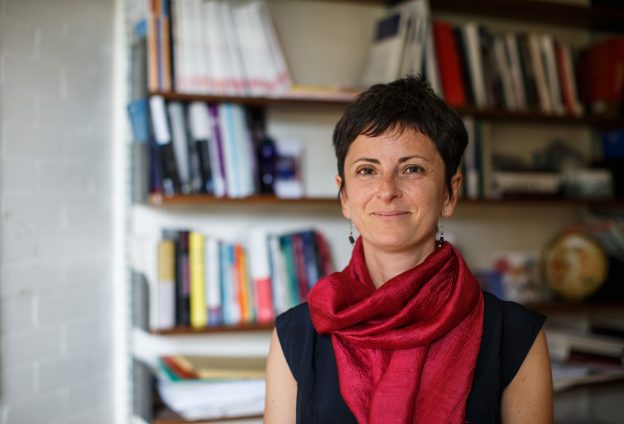
Kent Law School Professor Donatella Alessandrini has been awarded a British Academy Mid-Career Fellowship worth more than £162,000 for a unique research project analysing the role of world trade law in the generation and distribution of economic rewards between and within countries.

The one-year project ‘A Reverse Robin Hood? Analysing the effects of world trade law on the transnational distribution of economic value’, will offer the first sustained legal analysis of the World Trade Organisation’s contribution to the proliferation of Global Value Chains (GVCs) and to the unequal distribution of the economic value along the chains.

Drawing on socio-legal studies, world system theories and feminist economics, the project will explore how trade law brings GVCs into being, helping to create and distribute economic rewards transnationally.

Professor Alessandrini said: ‘The manufacture of products with inputs sourced from around the world dates back centuries. However, the pace, range and intensity of interactions in so-called ‘Global Value Chains’ is changing rapidly, with significant consequences for the people and companies involved. The law of the WTO has played a vital, yet hitherto unexplored, role in this process.’

The project will run from September 2019 to September 2020.

Professor Alessandrini is Co-Deputy Head at Kent Law School. She is also Co-Director of the Social Critiques of Law Centre (SoCriL).

Got 5 minutes? Register to vote!

Local elections are taking place in England and Northern Ireland on Thursday 2 May. To have your say you must be registered by Friday 12 April 2019.

Politicians look at who is on the electoral register and who votes when they’re making decisions. And what do they see? As it stands, only one third of young people (aged 18-34) are registered, compared to 96% of older people.

We can change this together – Register to vote by Friday 12 April 2019

Plus, students are able to register at both their home and term time address – as they spend time in both places local services in both areas may affect them. We encourage as many students as possible to get online and register today.

Why does this matter to you? Because just being registered to vote gives you power; you can influence the community which you live in. Local elections select councillors, who are responsible for making decisions about local services such as leisure facilities, housing and waste collection. And of course, councillors associated with a political party will be working to help achieve the goals of their party, if that’s your thing.

Make your voice heard in your local elections: Register to vote now!

Kent logo

TESSA reminder for May 14 deadline

The TESSA deadline is approaching!

Last year, we introduced the TESSAs. These Teaching Enhancement Small Support Awards are intended for any Kent colleagues who are interested in encouraging and enabling teaching and learning innovation; or who have a great idea that would improve the quality of teaching, teaching-related activity, support for teaching, or the student learning experience at Kent.

You can apply for funding of between £500 and £3,000, with up to £5,000 on offer for large, high-impact, collaborative projects operating across Schools and ideally in more than one Faculty, or across Schools and PSDs. All colleagues who contribute to teaching, learning or teaching support are eligible to apply – you don’t have to be an academic, or based in a School.

The closing date for the second round of applications this year, and the fourth round overall, is 12 noon on Tuesday 14 May 2019. This is for projects to start during the summer of 2019 or in the Autumn Term 2019-20; and we will tell you the results by Tuesday 28 May. If you are interested in applying, but for a project to start in the Spring Term 2019-20 or later, don’t worry – there will be another round of applications in Autumn 2019.

You can find out more, and download the short application form for a TESSA here – successful applicants have been very generous in allowing us to add their forms to the website, so you can see some strong applications, and work out if you can link up with someone doing a project similar to the one you are planning.

Please send us your applications and help improve the quality and enjoyment of education and the student learning experience here at Kent! If you have questions, please get in touch with April (A.M.S.McMahon@kent.ac.uk) or Jess (J.R.W.Sutherland@kent.ac.uk).

Sebastian Payne Senior Lecturer at the Kent Law School

Kent constitutional law expert in consortium awarded $170k for analysis of royal prerogative reform

Kent constitutional law expert Sebastian Payne is a member of an international consortium that has been awarded a grant of over £170,000 to conduct the first comparative analysis of royal prerogative reform variation in Canada, Australia, New Zealand, and the UK.

The five-year project, funded by the Social Sciences and Humanities Research Council of Canada, will explore how and why royal prerogative powers have been reformed within the Westminster System, a democratic parliamentary system of government modelled after that of the UK system.

Royal prerogatives have traditionally included the power to pardon, to negotiate and ratify treaties, to declare war and dispatch armed forces, to appoint judges and public officials, to determine the machinery of government, and to prorogue and dissolve Parliament. These powers have been criticized for a lack of democratic legitimacy, both in terms of secrecy that surrounds their exercise and the fact that they are authorities that are not sourced in parliamentary statute.

Sebastian will be among a team of international legal scholars and political scientists, led by Professor Philippe Lagasse of Carleton University in Canada, undertaking research around the world. The team’s focus will be on four categories of prerogative power: treaty powers; military deployments; judicial appointments; and dissolution of Parliament.

In addition to contributing original scholarship and knowledge on democratic reform and executive-legislative-judicial reform in Westminster states, the project’s research findings will offer invaluable insights into prerogative reform for parliamentarians, governments, and advocates across the Westminster democracies. The project will run until March 2024.

Sebastian is a Senior Lecturer at Kent Law School. He is also President of the United Kingdom Constitutional Law Association (UKCLA), an organisation which aims to encourage and promote the advancement of knowledge relating to UK constitutional law.

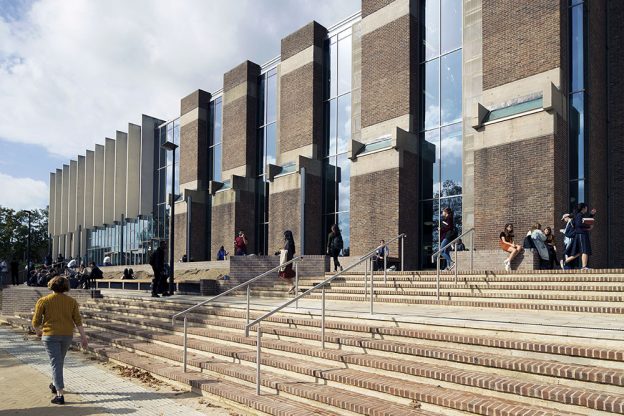
University of Kent Templeman Library

Templeman Library Block B Floors 2 & 3 closed Monday 8 April

Floors 2 and 3 in Block B in the Templeman Library will be closed 09:00-18:00 on Monday 8 April while essential building work is carried out.

Access to books and services

  • Classmarks: B, J, K, L, M, N
  • Study carrels on Floor 2 and 3

If you need books or journals from Floors 2 or 3 please talk to staff at the IT & Library Support Desk on Floor 1 in Block C.  They will be able to check the availability of the item and arrange to fetch it for you. Books will be collected from B2 and B3 hourly, so there may be a delay in retrieving your item(s).

Study carrels will be checked and closed 08:00 before the work begins. Please return carrel keys to the Welcome Desk by 08:00.

Work on Floor 2 may finish earlier in the day. If this is the case every effort will be made to reopen the Floor as soon as it is safe to do so.

If you have any problems please talk to staff at the IT & Library Support Desk or contact their Welcome Desk (01227) 82 4777.