Category Archives: Student Guide

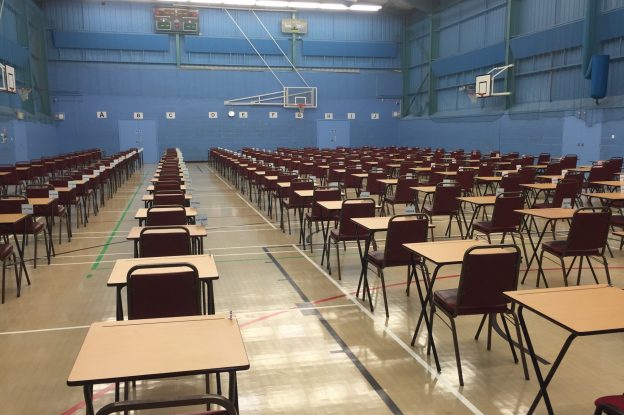
Exam hall

August exams 2019

My timetable

1 August – 15 August 2019

 You can view your timetable by logging into your Student Data System  (SDS)

What time should I arrive?

Morning exams begin at 9.30, you should arrive 15 minutes early.

Where is my exam venue?

Not sure where you need to go?  – See our Venues

What should I bring?

  • KentOne Card. If you have lost this please contact us
  • Pens, pencils and writing equipment (in a clear pencil case)
  • Still water (ONLY) in a clear plastic bottle

What can I do with my mobile phone?

You are permitted to bring the following small items into the exam venue:

Mobile phones, smartwatches, headphones, keys and wallets.

You must place these under your desks and ensure all electronic items are switched off.

Electronic items that are concealed from invigilators or make any sound during your exam (ringing, text notifications, alarms etc) will be reported to your school.

NO Bag Room

There will be NO bag room available to students. Please avoid bringing a bag by leaving this at home or in your car.

NO bags are allowed in exam halls.

Resit fee payments

You will have already received an email explaining how to make payment for your resits via the online store.

The deadline to pay via the online store is Monday 29 July. After this date, any unpaid fees will be added to your student account.

Please note that students who are absent from a resit (without notifying us in writing prior to the start of the examination period at exams@kent.ac.uk) are still liable to pay fee.

Please note that all students taking exams are required to read the University Regulations for the conduct of examinations.

If you have, any questions please contact Canterbury: exams@kent.ac.uk or Medway: medwayexams@kent.ac.uk

See Exams webpage for more information.

Follow  @UniKent_CSAO on twitter


Krysia Waldock

PhD Student from Tizard Centre on BBC local radio stations

Krysia Waldock is a PhD student in the Tizard Centre, researching autism and religious/humanist groups.

She represented Kent in the BBC Radio 2’s Faith in the World Week. As part of this, she spoke to seven BBC local radio stations on the 7 July 2019 (Cornwall, Jersey/Guernsey, Tees, Stoke, Bristol and Sheffield).

Krysia spoke about the research that she has carried out as part of her Masters in the Tizard Centre under the supervision of Professor Rachel Forrester-Jones. Please see the link to one of the interviews here.  It starts at 1:39 in for about 8 minutes.

Kopia fot.Z.Warzynski5

Call for proposals: ‘Words In, Of and For Performer Training’

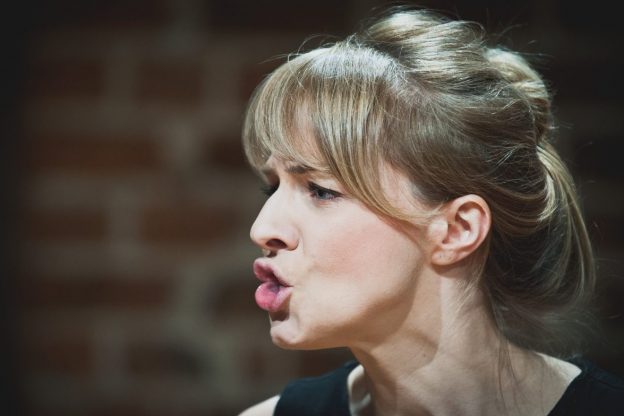
Paul Allain, Professor of Theatre and Performance and Dean of the Graduate School, Stacie Lee Bennett-Worth, PhD candidate at De Monfort University and Honorary Research Associate at Kent, Alicja Bral, PhD candidate at Kent, and Dr Roanna Mitchell, Lecturer in Drama and Theatre are organising a practice-based symposium titled ‘Words In, Of and For Performer Training’. This is with the support of Professor Esa Kirkkopelto (University of the Arts, Helsinki) and Professor Cecilia Lagerström (Academy of Music and Drama, University of Gothenburg). The symposium is the 7th edition of the International Platform for Performer Training (IPPT), and will be hosted by the School of Arts, University of Kent from Thursday 9 to Sunday 12 January 2020.

The event call out reads as follows:

In the Bible, words came first. In performance practice, words probably followed movement, dance, art and sounds. Who knows….? Exploring what comes next, this seventh edition of the IPPT will investigate how words function in, of and for Performer Training across three broad areas:

  1. how the denotative or nonsemantic properties of words in performance are explored through training, and how movement, voice and text can be combined to achieve an integrated mise-en-scène (or not).
  2. how trainers use words in training practice, in order to exhort, encourage, clarify or instruct as well as what they do and don’t say, to whom and when;
  3. how words that are written about training, be it our own practices today or that of others past or present, might document or act as inspiration for practice.

The United Kingdom is well known for its excellent vocal and textual training and the quality of its playwrighting. Our ‘text-based’ theatre, however awkward such a categorisation, arguably is the envy of the world. What is much less developed are understandings and examples of how to integrate voice and text with movement, music and other performance practices, across all forms, from circus through dance to Live Art. In some ways, Physical Theatre evolved in the 1980s as an antidote to such textual supremacy and it is still widely celebrated in the UK. But how often do we admire performers’ physical ability whilst perhaps lamenting the dramaturgy, the vocal delivery or the way these things combine?

We still need to develop more productive ways and deeper insights into how words might support, challenge, reinforce or otherwise work against other aspects of a performance. What role can words play in the total mise-en-scène, how might they be spoken or sung, and how, through training, can they earn their place? How can we move on from any hierarchical or segregated positioning of words in, of and for performer training, giving them their full force and value? More pragmatically, in a country that has such strong traditions of performer training and its study across companies, conservatoires and universities as well as the pioneering development of practice as research, we will look also at how words operate in and after training, as a vital part of the process but also in terms of legacy and forward momentum and energy.

The event will combine workshops, presentations, talks (which might use words, silence, discussions, conversations and perhaps non-semantic sounds) in order to discover how words operate as functions in, of and for performer training.

The platform will work closely with the Theatre Dance and Performance Training journal blog to document and disseminate the event – through words and other means.

The organisers welcome proposals for workshops, demonstrations or presentations in a range of formats but will prioritise those involving or foregrounding practice. The time frame will be either 40 or 60 minutes including discussion. Proposals should consist of:

• Name and any affiliation plus short biographical note (150 words max)
• Abstract and information on ideal mode of presentation (500 words max)
• Technical requirements (AV, type and size of space, special props, etc.)

Proposals will be selected for their fit to the platform’s aims, as well as the clarity and feasibility of the proposed investigation. The deadline for proposals is Saturday 21 September 2019, by 5pm. Applicants will be notified of a decision by the end of October at the latest. Please email submissions to: IPPT@kent.ac.uk

There are no costs for participation or attendance and attendees are expected to cover their own travel and accommodation. The welcome dinner and coffees/teas etc will be provided by Kent gratis. Participants are expected to attend all the platform. Please note that places are limited.

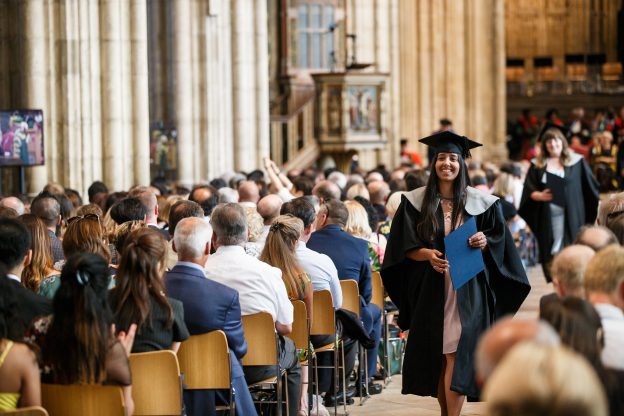
Student walking in Canterbury Cathedral after collecting their degree

Canterbury graduation live streams

You can watch live streams of the Canterbury graduation ceremonies at the links below:

Monday 15 July
14.30 https://youtu.be/otchsmeHacU
19.30 https://youtu.be/SuIjHPgWedo

Tuesday 16 July
10.30 https://youtu.be/9oqNhsfimrc
14.30 https://youtu.be/stGpou0R-Ko
19.30 https://youtu.be/Fc-jEL_yp-I

 Wednesday 17 July
10.30 https://youtu.be/-9Hx9kFxyfs
14.30 https://youtu.be/oL8FmN9p7dQ

Thursday 18 July
10.30 https://youtu.be/q1CHzRsd5c0
14.30 https://youtu.be/00VHRF0EMdg
19.30 https://youtu.be/s_VC22uq6Co

Friday 19 July
10.30 https://youtu.be/ye_yzWxbAlE

This information is also available on our website: www.kent.ac.uk/graduation-dates

The videos will also be available to watch after the ceremonies.

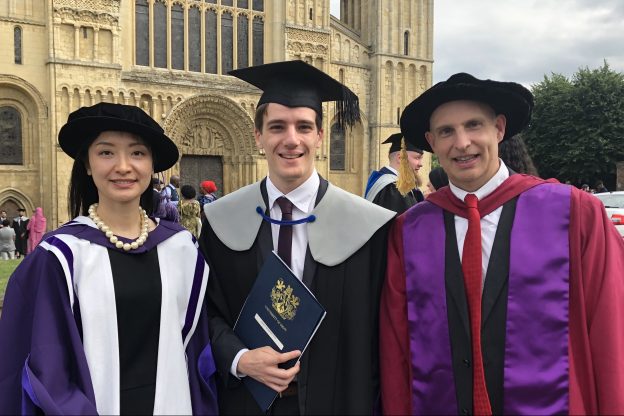
James Merrington Caroline Li and Professor Ian McLoughlin

Prizes awarded to Computing graduates

At the Medway graduation on 9 July, Professor Ian McLoughlin presented the prizes to the 2019 graduates who had excelled in academic achievements or contribution to the life of the School.

Computer Science Project Prize: James Merrington

“James is a self-driven and highly motivated individual. He used industry standard throughout the development of his final year project, InsomiApp, a cross-platform sleep-tracking app and website. He delivered excellent contributions to all areas of the project and acquired knowledge beyond what was taught.”

School of Computing Prize: Anthony Ip

“Anthony has a consistent track record of excellence throughout his degree program. In his final year, Anthony has made solid contributions to his final year project. In doing so, he produced highly commendable work and garnered praise from his teachers and his peers.”

School of Computing FIVIUM Placement Prize: Ekta Ahira

“Ekta produced an outstanding report about her experience at General Electric, where she worked as a Project Manager for their Oil & Gas business based in Aberdeen. The report gave a lively and reflective account of the challenges faced, and the personal learning that she experienced.”

School of Computing KITC Prize: Chris Lam

“Chris is an extremely hard working and committed consultant. He played a pivotal role in all of the projects that he was involved in, and built great rapport with his clients and colleagues alike. This award recognises not only Chris’ talents, but the effort that he put in to develop and hone these skills over his time in the KITC.”

School of Computing Contribution Prize: Anthony Ip

“As a Computing workshop assistant during the last two years Anthony has been enthusiastic and helpful to other students. He is a highly reliable team member and has willingly taken on extra sessions to cover for others when they are not available.”

School of Computing Careers & Employability Prize: Ed East

“Ed did his year in industry at SAP, a multinational software manufacturer and took every opportunity available to network and improve his skills. On his return to university he was keen to spread the word about the advantages of the year in industry to other students, becoming Employability Ambassador for the School of Computing. He helped raise the profile of the School by writing blogs and profiles and taking part in videos about his year in industry and experiences at Kent, as well as promoting the opportunities available to students at open days and applicant days.”

Gabrielle Nesfield

Art donation to mark the 50th anniversary of Keynes College

Keynes College is delighted to have been gifted three works by two artists who in 2017 featured in Particular Places, their joint exhibition at the college.

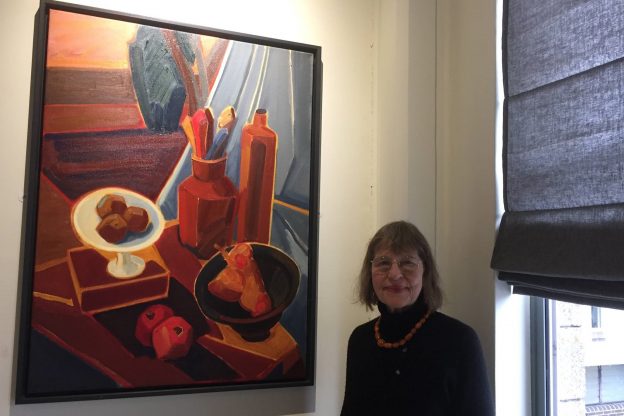
We are extremely grateful to Gabrielle Nesfield, who previously exhibited in Keynes in 2003, for donating Early morning, Eastling, an oil painting made specially for Particular Places. The painting can now be admired in the Keynes Senior Common Room.  

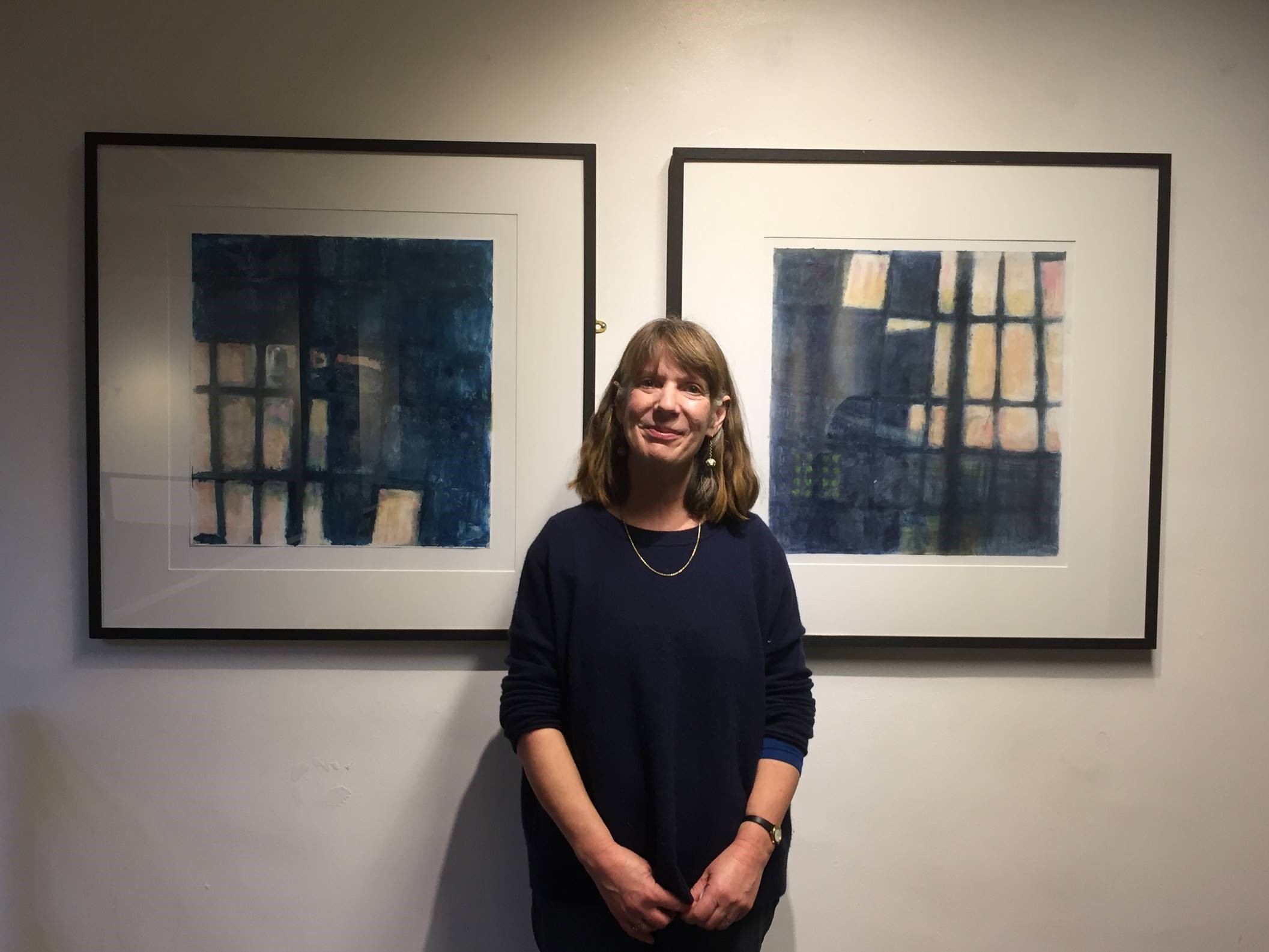
Our heartfelt thanks also go to Bay Lees, who has generously donated Baleenor 1 and Baleenor 2, monoprints inspired by window reflections at an old tea factory in Southern India. They are now on display in the teaching gallery on the first floor of the Keynes building.

Bay Lees

Baty Lees with Baleenor 1 and Baleenor 2

These beautiful gifts provide a fitting end to our 50th-anniversary celebrations at Keynes College, which first opened its doors to staff and students in September 1968.

medical humanities

Call for papers for British Society of Aesthetics conference

Dr Dieter Declercq, Assistant Lecturer in Film and MediaDr Michael Newall, Senior Lecturer in History of Art and Professor Nicola Shaughnessy, Professor of Performance in the Department of Drama and Theatre, are organising a conference sponsored by the British Society of Aesthetics and with the support of the Aesthetics Research Centre The conference theme is  ‘Art, Aesthetics, and the Medical and Health Humanities’ and will be hosted by the School of Arts from Friday 7 February to Sunday 9 February 2020.

The conference will bring together Analytic Aesthetics and the Medical and Health Humanities. These disciplines share important core concerns and have much to offer one another. The medical and health humanities explore the role of the humanities – and especially the arts – in medicine, medical education and healthcare. In the process they engage with many topics that are central to analytic aesthetics, including narrative, creativity, imagination, empathy, emotion, the value of art, value interaction and sensory perception. The conference aims to stimulate conversations about the connections art and aesthetics have with medicine, medical education, healthcare and the advancement of health and wellbeing.

The keynote talks will be delivered by Professor Rita Charon (Columbia University), Professor Paul Crawford (University of Nottingham), Professor Sheila Lintott (Bucknell University), and Professor Jenefer Robinson (University of Cincinnati), alongside confirmed responses from Dr Julie Anderson (University of Kent), Dr Stella Bolaki (University of Kent), Dr Eileen John (University of Warwick) and Professor Matthew Kieran (University of Leeds).

The organisers invite proposals for paper presentations that explore the connections between art, Analytic Aesthetics and the Medical and Health Humanities. The conference supports a broad understanding of art and aesthetics, ranging from fine art to popular media and the aesthetics of everyday life. Similarly, the organisers encourage exploration of a broad range of contributions that the arts can make to health and wellbeing, including in the delivery of healthcare, the education of healthcare professionals, as well as the advancement of health and wellbeing in the broadest sense. Topics of interest include, but are not limited to:

  • Narratives, storytelling and narrative medicine
  • (The decline of) empathy in healthcare
  • The role or place of imagination, emotion or sensory perception in healthcare
  • Art, aesthetics and disability
  • Health in relation to other values of art
  • Art and aesthetics in healthcare education
  • Comedy, humour, health and wellbeing
  • Graphic medicine

Proposals are invited in two formats:

  1. 20-minute presentations (with 10 minutes for Q&A). These are traditional research papers. Please submit an abstract of up to 500 words for blind review.
  2. 5-minute ‘reverse presentations’ (with 10 minutes for audience response). These are designed for presenters to pitch a new research topic which they consider of interest to both Analytic Aesthetics and the Medical and Health Humanities. This format is designed to give presenters suggestions and ideas about how their topic can be tackled from the perspective of both disciplines. Please submit an abstract of up to 300 words for blind review.

Submissions should be prepared for blind review, accompanied by a cover sheet, attached as a separate file, and should include the author’s name(s), email(s), institutional affiliation(s), and the title of the abstract.

Please send proposals to aestheticsandhealth@kent.ac.uk by Sunday 1 September 2019. Please also use this email address for any queries you may have.

henry-palmer

Alumnus Henry Palmer in the Bristol Post

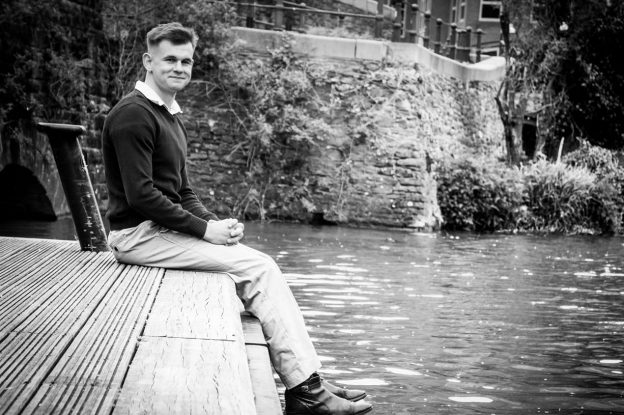
Alumnus Henry Palmer, who graduated with a BA (Hons) in Film and Philosophy in 2016, was interviewed for the Bristol Post last week, as he has authored a non-fiction book Voices of Bristol (Arkbound Press, 2019).

This book is about Bristol’s changing face. Henry grew up in the heart of Bristol’s ghetto, and his book sheds light on the supposed ‘renovation’ that Bristol’s poorer quarters have been undergoing. For his research, he interviewed members of the local community, which revealed the shocking reality that residents face: rent hikes, snobbery, institutional racism, homelessness, and removal from the communities they once loved.

‘When you start to hear that you and your friends can’t afford to live there anymore because house prices have surged so much and it’s now up and coming, it’s a bit bitter sweet,’ he observes in the interview.

Speaking of his time at Kent, Henry told us: ‘For some reason, my time at Kent is grouped closely in my mind with imaginings of a young, studious Scrooge – though admittedly less grey. Not all universities harvest this sort of independence of learning, and this carried me through the enterprise and continues to do so.’

To read the interview with Henry in the Bristol Post, please see the page here.

War-Illustrated

Workshop on digitizing historic WWI magazine

The Network of Research: Movies, Magazines and Audiences (NoRMMA), a research network situated within the School of Arts and founded by Dr Tamar Jeffers McDonald, Reader in Film, will be hosting its first workshop as part of the Digitizing The War Illustrated project funded by the National Lottery Heritage Fund this week.

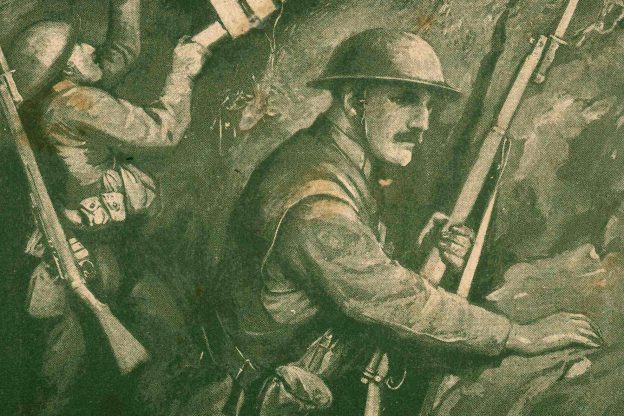
The War Illustrated was a weekly magazine published throughout the First World War, beginning n August 1914. It provided the British public with text and images about the conflict, and continued to shape the British public’s views until after Armistice Day in November 1918.

The research project aims to digitize and make available the entire run of the publication’s 233 issues.

The project will hold three workshops during June and July 2019. During these, we will give volunteers background on the magazine and its history, help them to familiarise themselves with the online archive, as well as plan and complete research projects of their own. The workshop participants will then be able to share their findings online and at a tea dance-themed launch later in the year.

The first workshop will be held this week on Thursday 27 June 2019, from 10am to 5pm, in Jarman Seminar Room 7. Spaces are limited to 12, so please email normma.network@gmail.com to book the first workshop and to keep up to date with further dates.

Gung-Ho_Logo_500x

SARD to take on Gung-Ho!

SARD (who have selected the Kent and Medway Medical School as their Charity of the Year) have registered for Gung-Ho! at Crystal Palace on Saturday 13th July and are looking for adventurous (and brave!) people to join their team.

Gung-Ho! is the world’s biggest inflatable 5km run (think Total Wipeout!) and is a challenging event that can be enjoyed by everybody regardless of age, ability or fitness level.

Team SARD has two places available in their 13 strong team – they have covered the cost of the places but ask that each participant pledges to raise a minimum sponsorship of £100. If all participants succeed they will have raised £1,300 for KMMS through this event alone.

If running isn’t your thing, you can still support SARD through their JustGiving page.

If you would like to join the team please contact Francesca Monk, Marketing Director, on francesca@sardjv.co.uk, for further information.