Tag Archives: Publish on Site Editor

Testing out a theory

World Food Day 2023: Becoming a Right to Food University

With World Food Day taking place on October 16, we take a look at the progress made by Kent’s Right to Food initiative over the last nine months – and look ahead to what we will be working on going forward.

World Food Day promotes awareness of hunger and action for the future of food, people, and the planet. This sits at the core of the Right to Food – our commitment to a world where no one goes hungry, where we develop sustainable food sources for all, and where nutrition is accessible to everyone, wherever they are and whatever their means.

Working with the Food Foundation, we have four missions which we believe will deliver a step change in our approach to delivering equality of access to healthy, affordable, and sustainable food.

Over the past nine months we have made some great strides in all areas, and have started laying the foundations for more exciting plans for the future.

Mission 1: PUTTING THE RIGHT TO FOOD ON THE WORLD STAGE

We have secured a place on the National Civic Impact Accelerator (NCIA) Action Learning Programme (ALP) to help put the Right to Food on the world stage.  Through the new initiative, representatives Kent will attend action learning workshops alongside other universities – sharing the Right to Food and developing a blueprint for it for other institutions.

Kent will also benefit by learning from other institutions about their approach to civic mission and to accelerate our development as a civic university so that we can better serve and support our local and regional communities. Representatives from Kent recently attended an event in Birmingham where they, along with other institutions from the scheme, discussed what it means to be a civic university and how we can work with and share best practice with other institutions to help achieve this.

NCIA event in Birmingham

What next? Work on our blueprint for other universities is ongoing – which includes talking to a number of other institutions to get their valuable feedback on this. We continue to lobby for a visit from the UN Special Rapporteur on the Right to Food and look forward to hosting the TUCO winter conference in December – putting the work of our catering team and the Right To Food initiative at the forefront of the sector.

Mission 2: TRANFORMING FOOD SYSTEMS THROUGH TEACHING AND RESEARCH

The University has started to embed learning on food systems across the curriculum, with the launch of a Right to Food themed module in the M Arch. Food Futures sees students tackle the huge challenge of feeding the urban global population. Drawing on the University’s Right to Food Initiative, students will consider the impacts that food poverty has, and reflect on how good design can engender positive movement in food provision and culture.

Our researchers are working with local farmers to tackle food waste and improve the food system. From capitalising on the health benefits of cherries by creating new products from the waste to using black soldier flies to achieve a circular farming system and seeking to create a Net Zero Egg, our scientists are at the forefront of innovation.

We have also launched The Right to Food seminar series, inviting academics from a wide range of disciplines to address the question ‘What is a Right to Food University’.

Drs Jen Tullet and Marina Ezcura

What next? We are working with Dominic Watters and the ‘Food is care’ campaign to look at how the Right to Food can be embedded in other courses across social work and social policy. We have also launched The Right to Food seminar series, inviting academics from a wide range of disciplines to address the question ‘What is a Right to Food University’.  

Mission 3: TACKLING FOOD INSECURITY IN THE UNIVERSITY COMMUNITY, WHILE PROMOTING A HEALTHY AND SUSTAINABLE FOOD COMMUNITY AT KENT

To support our students and staff on campus, we launched the £3 meal deal on campus. This hot meal, served in our Rutherford Dining Hall, includes a choice of salad or vegetables and has proven to be extremely popular, and important. We have sold over 44,000 meals since November 2022.  This term, approximately 60% of the Cost of Living meal sales have been vegetarian or plant-based.

This £3 meal deal has been extended to our Grab and go sandwich meal deal offer – which is now available in more campus outlets.  In addition to this exciting meal deal expansion, the catering team have reduced hot food price on average by 20%. Through reducing food waste, collaborating closely with our primary food supplier, simplifying operations, and managing food expenses effectively, prices across campus have been significantly reduced.

These price cuts mean that in Mungo’s burgers haven’t been this low since 2012 and the average price of a hot meal at Gulbenkian Café has decreased from n 2011 was approx. £7.42; today, in 2023, it’s £3.95. The average salad price on menus is £1.38 cheaper this year compared to last academic year (Sept 2022, £6.13, Sep 2023 – £4.75). Smashed avacado on toast is also £1.50 cheaper at Gulbenkian Café (Sep 2022 – £5.50, Sep 2023 – £4.00).

What next? We’re benchmarking our menus and sales against The Sustainable Food Plan so that we can set future targets to improve food on campus and exploring how the kitchen and dining space at Origins could be used to provide a social space for students and external organisations to eat affordable food, whilst learning about the food system. We are also creating a River of Vegetation – the development of land dedicated to biodiversity and food across the campus connecting the Kent Oasis Garden and the Jubilee Orchard – which has already got it’s first donation.   

Mission 4: ADDRESSING FOOD INEQUALITY IN OUR REGION

Kent has hosted a number of conferences on the Right to Food, including the Kent Food summit 2023– which saw over 100 key stakeholders come together to hear all about the newly established Kent Food Partnership, a cross-sector partnership between local government, education, public health, industry and community initiatives to help shape the future role of local, sustainable, healthy food in Kent.

This Friday, Kent will host and chair the Canterbury Society’s Annual Civic Lecture – Poverty, Policy and the Right to Food.

Earlier this year, Kent hosted the annual Eastern Arc conference. This year its conference was focussed on ‘food in a time of crisis’, building on the University of Kent’s Right to Food initiative and bringing together a range of stakeholders to tackle our increasingly dysfunctional food system.

Dr Philip Pothen, Director of Engagement at Kent, said: ‘The conference showed us that there is a wealth of expertise, as well as desire, to bring about change and tackle this current food crisis. While we are excited about becoming the first Right to Food university, it’s vital that we share this vision and support other institutions in their own journey to champion this mission. The conference gave us a chance to kick-start a collaborative approach with our Eastern Arc partners, which will pave the way for a number of partnerships to help realise the Right to Food nationally.’

Dr Rob Barker and Phil Ward at the Eastern Arc conference

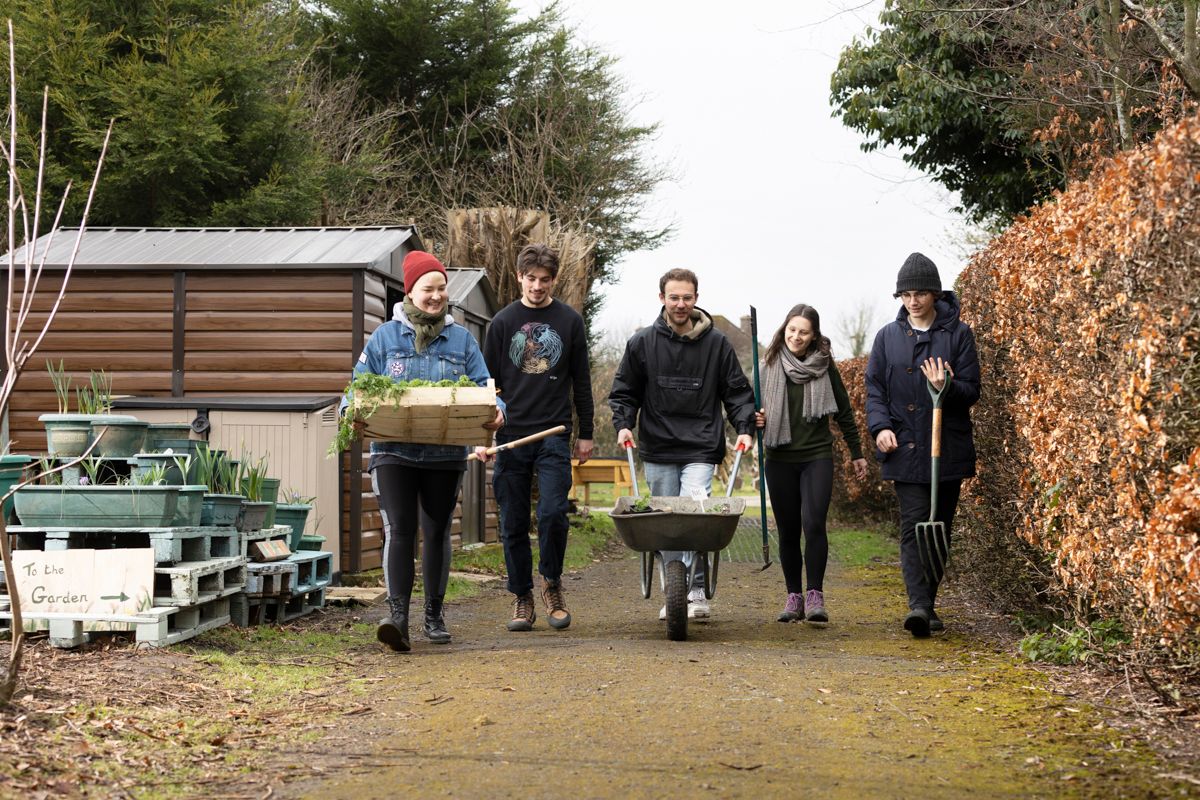
The Kent Gleaning Collective has also gotten underway. A joint project between The University of Kent, Produced in Kent and Kent Union, the first volunteer students have started going to farms to collect left-over food from fields since September. This produce, which would have otherwise have gone to waste, will given to students and donated to charity.

What next? We look forward to taking our Gleaning project forward, working with the student union and wider community groups to extend the reach of our gleaned produce.
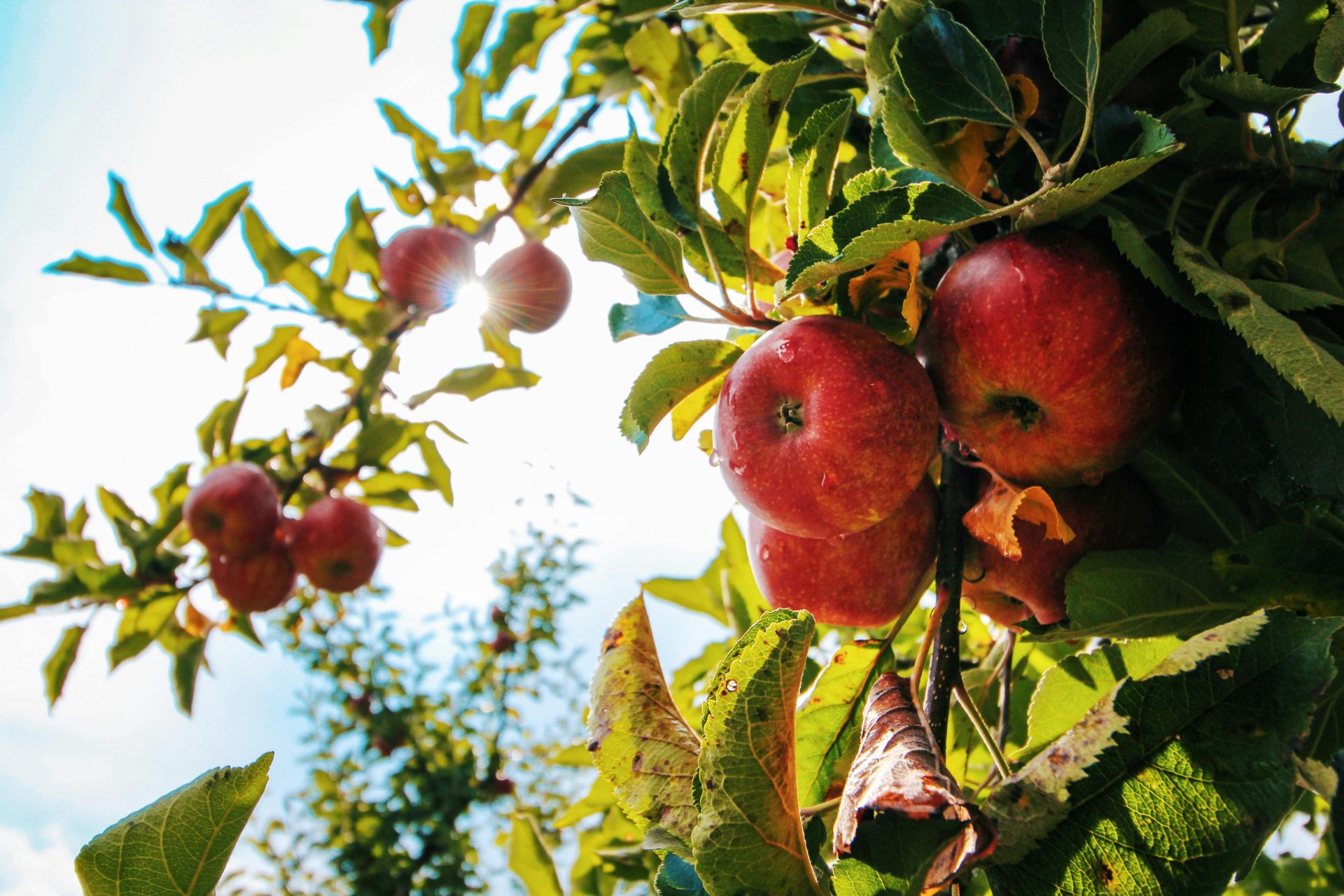
Kent research set to play pivotal role in bringing robot technology to UK orchards

Kent research is set to play a pivotal role in a groundbreaking new project which could revolutionise fruit production in the UK.

Professor of Agri-Environmental Economics, Iain Fraser, is joining a world-class consortium of partners to deliver the £4.5 million Precision Orchard Management for the Environment (POME) project. Led by agronomist Rob Saunders from H.L. Hutchinsons, the team will develop a commercially viable system which can precisely target orchard inputs to specific trees, or parts of a tree.

Funded by Innovate UK and DEFRA, the project will see Professor Iain Fraser collaborate with other academics, engineers, agri-tech startups, software developers, equipment suppliers, NIAB horticultural experts and farmers to implement technology which will improve the sustainability and efficiency of one of Kent’s leading industries.

Specifically, Iain will evaluate the difference between existing technology and new technology, which includes robots, drones and innovative chemical spraying systems. As well as calculating any improvements in efficiency, he will examine the likelihood that farmers will adopt the new technology and consider how the environmental benefits relate to UK environmental policy post EU-exit. By combining all three, he will be able to provide the project consortium with an informed assessment of whether the new spray technology is commercially viable.

Commenting on the impact the project will have on the farming community, Mr Saunders said, ‘The system we are building will cater for different sizes of farm business and with optional services depending on the farm’s need. The industry has changed a lot in recent years and will continue to do so as technology advances, and we believe systems like this will become commonplace.’

Iain has developed his understanding of orchard management, crop production and yields through his involvement in a series of projects, including the development of better crop yield forecasts to help farmers and supermarkets ensure there is sufficient produce available to meet demand. This project comes off the back of the Interreg-funded project Beespoke which examined the ‘pollinator deficit’ and how the support of wild pollinators by appropriate management can support both crop production and biodiversity.

Kent research to support seaweed project in Zanzibar

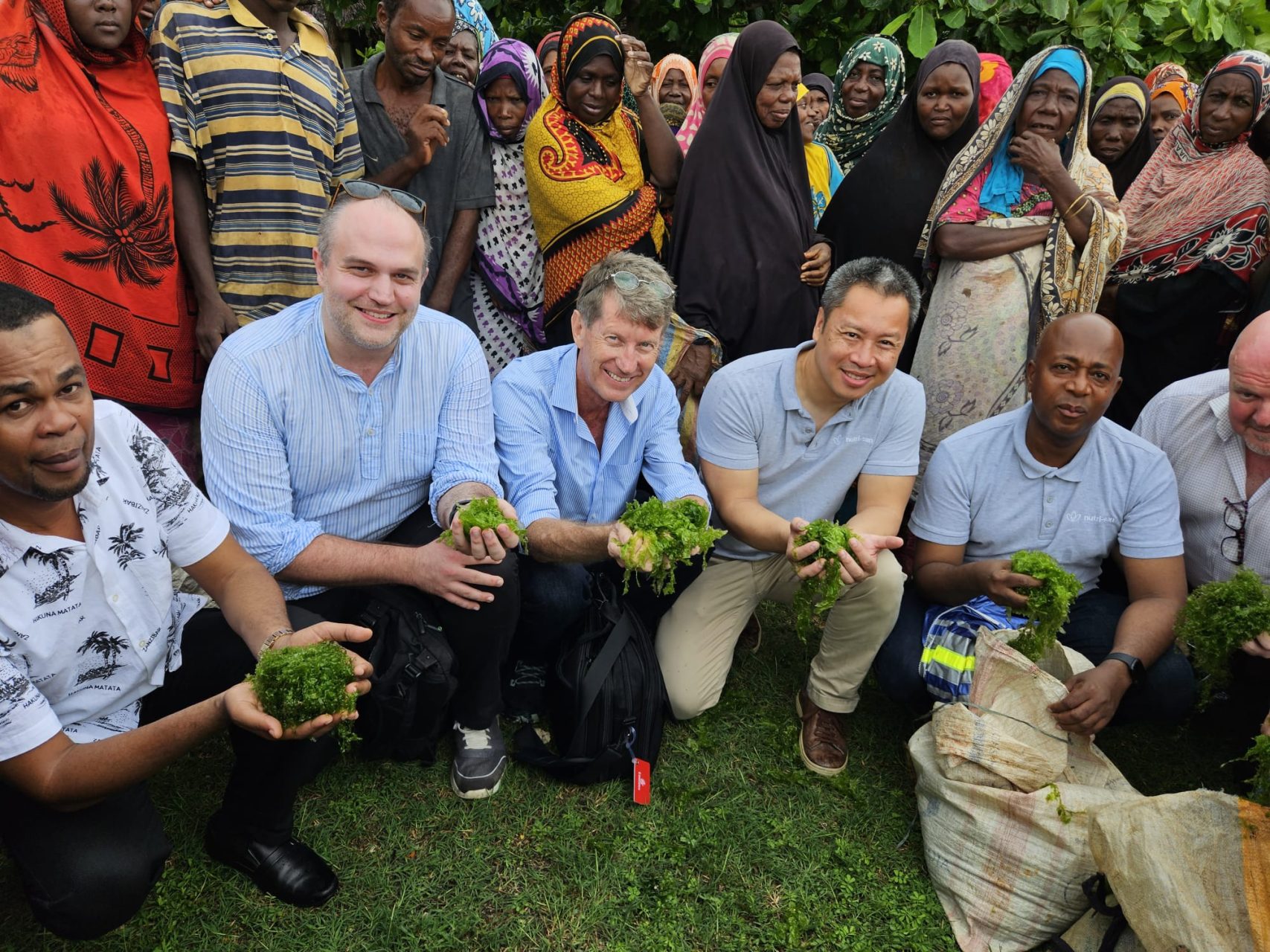
University researchers are helping county Kent-based seaweed technology business Nutri-San develop new techniques to transform seaweed extracts into a plant-based thickening agent for use in the food and pharmaceutical industries. As part of this project, Nutri-san is opening a new carrageenan factory on Pemba Island, Zanzibar.

During a signing ceremony of the Joint Venture Framework agreement between Zanzibar’s state-owned seaweed company, ZASCO, and Nutri-San on 22 November, Kent’s Dr Rob Barker gave a short presentation on carrageenan extraction techniques to an audience of over 100 Zanzibarian Ministers and Government officials, as well as media outlets.   

Nutri-San produces animal feed supplements from a blend of sustainable seaweeds and has been working with Alessia Buscaino, Professor of Fungal Biology at the University’s School of Biosciences, and the team at the Kent Biotech Hub for several years. An Algae UK/Biotechnology and Biological Sciences Research Council-funded initiative enabled the team to conduct research on Nutri-San’s seaweed blends.  This initial research led to the team exploring alternative uses for by-products from Nutri-San’s production process, including the development of horticultural and agricultural bio-stimulants – something which Growing Kent & Medway have been keen to support.  They have since developed a highly productive relationship and are excited that their collaboration is being broadened to include Dr Barker and his team.  Together they will continue to work to drive innovation which impacts positively on people, animals and the planet. 

The new factory will be one of only a small number of facilities globally that is capable of producing high quality carrageenan from red seaweeds. Nutri-San has been supporting the seaweed harvesting community on Zanzibar for a number of years and the company’s diversification into carrageenan production will enable many more jobs to be created including key scientific and technical roles. 

Professor Buscaino said: ‘The partnership between the University and Nutri-San has been made possible by the Growing Kent & Medway consortium and it demonstrates how academia and business can work synergistically to great effect, for the immense benefit of both institutions. Our involvement with the commercial operation of Nutri-San in Zanzibar is exciting and we are also excited to announce that Dr Michelle Marin Chau, Nutri-San co-founder, has become an honorary member of staff at Kent. Her unique insights and experienced leadership will be an invaluable asset to us as we work together towards creating positive change.’ 

San Chau, Nutri-San-CEO, added: ‘We have been very fortunate to have developed a relationship with the University of Kent through our research collaborations with Professor Alessia Buscaino and her team, both in the School of Biosciences and at Growing Kent and Medway, which now spans several years.  Recently, this relationship has been extended to encompass more members of the Kent team.  Going forward together our partnership will have benefits for the community not only in Kent but also globally and we are hugely excited about this.’ 

Kent welcomes University of Sussex to Eastern Arc

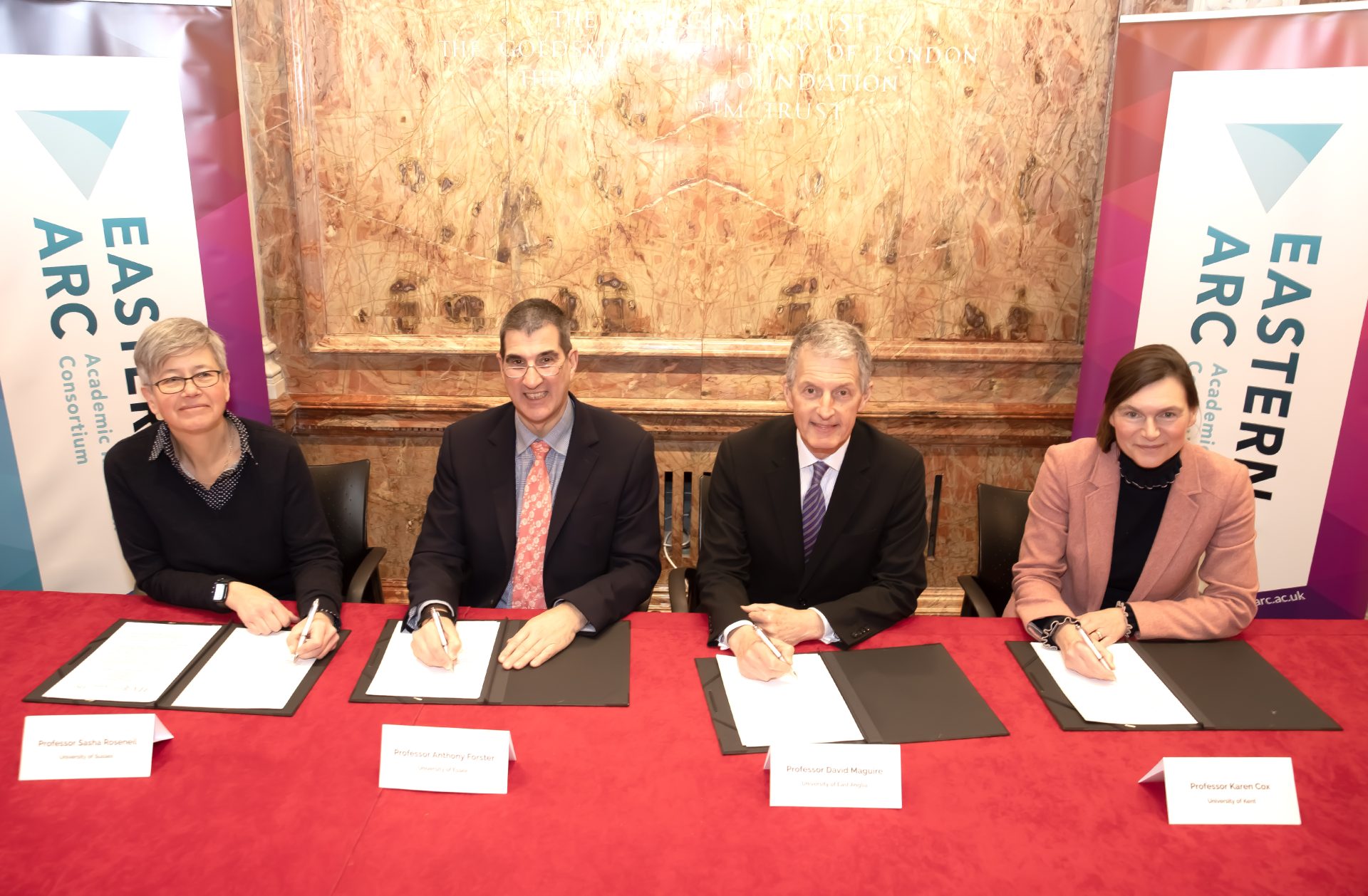
The University of Sussex has joined the universities of Kent, East Anglia and Essex to become the fourth member of the Eastern Arc research consortium.

At a ceremony at the Royal Society in London on 11 January 2024, the vice-chancellors of the four universities signed a memorandum of understanding that will support joint working in research, education, innovation, knowledge exchange, training, and equipment-sharing.

Launched in 2013, Eastern Arc has grown to be a significant regional catalyst for collaboration and cooperation, resulting in over £10m of funding for partnerships between two or more of the member institutions since 2020.

The Consortium has increasingly advocated for and led on issues of particular importance to the greater southeast of England, including coastal deprivation, food, diet and nutrition, and heritage, culture and placemaking. A series of Eastern Arc events has brought together academics and stakeholders to explore these issues, leading to reports which are helping policymakers and directing our future collaborations.

Within the universities, it has supported the development of a positive research culture, opening up training across the consortium, launching an Imaging Platform Alliance, and establishing an innovative mentoring scheme that has matched over 230 academics, technicians and professional services staff for their professional development.

‘I am excited to welcome Sussex to the consortium,’ said Phil Ward, Director of Eastern Arc. ‘The University, with its open, interdisciplinary and creative outlook, is a natural fit with us. It shares a similar geographic location and complementary research strengths but, just as importantly, it has the same ethos, encouraging interdisciplinarity and being ‘disruptive by design’’.

Professor Sasha Roseneil, Vice-Chancellor of the University of Sussex, said: ‘We are delighted to be joining the Eastern Arc research consortium. Membership of Eastern Arc means committing to advancing and energising our collaborations with three great campus-based, research-intensive universities that are both geographically close to Sussex, and that are engaged in solving some of society’s greatest challenges in order to make both our part of the UK and the wider world a better place.’

Professor Karen Cox, Kent’s Vice-Chancellor and President, commented: ‘I am delighted to welcome the University of Sussex to Eastern ARC as the consortium continues to build on its collaborative research strengths and provide new opportunities for our research staff. By working more closely together in areas of common interest we make a greater positive impact across our regions, which will be more important than ever in the years ahead.’

In 2024 the Consortium will develop its strategy for the next five years, supporting the creative, civic and impactful work of its members, and ensuring that the work of regional, dual-intensive universities plays a central role in addressing the key issues that face the country.


Corridor of servers

Free Webinar on ChatGPT

We are pleased to invite you to our upcoming webinar Teaching with ChatGPT: Examples of Practice which will take place today (15th March) from 14:00-16:30 GMT. During this webinar, you will hear from academics across the UK and abroad, who have successfully incorporated ChatGPT and other large language models into their teaching practices or plan to in the near future. In addition, we will hear from Zaid Mahmood (Kent Union President) who will give a student’s perspective on the use of ChatGPT in education.

There is no need to register for the webinar, simply click on the joining link below at 14:00 this afternoon.

Click here to join the webinar 

JSNCC elections – New Staff Representative for Grade 7

The Chairs of the Joint Staff Negotiating and Consultative Committee, Martin Atkinson and Roger Giner-Sorolla are pleased to announce the election of Paul Cornwall-French as the new staff representative for non-union colleagues in grades 7 and above.

Paul has served as a representative previously for staff in grades 1-6 and brings a significant wealth of experience at the university to the committee.

Both Martin and Roger extend a warm welcome to Paul and are looking forward to working with him over the next three years.  The chairs would like to extend their thanks to the other nominees for coming forward and to all staff who took the time to vote.

They would also like to thank Charlotte Ransom, the outgoing representative, for her hard work in representing staff views on the committee and would like to wish her well in her new role.

The vote percentage was 48% for Paul Cornwall-French, 25% for Alastair Bailey, 20% for David Bird and 7% abstain.

Trustee and Governor Opportunities

Have you ever considered fulfilling an Education Trustee and Governance role?

We sponsor the University of Kent Academies Trust (UKAT), which is an established multi-academy trust that has two Secondary Schools in Medway:

  1. Chatham Grammar School (CG) – a selective 11 – 19 girls school with a mixed sixth form
  2. Brompton Academy (BA) – a mixed comprehensive school, with a joint sixth form across the two schools.

The Trust focuses on developing the life experience and opportunities of its students, parents, carers, staff and wider community.

If you would like further details on a UKAT Trustee role, or if you’re interested in finding out what Education Trustee and Governance role opportunities we have at our colleges and schools at Kent, please get in touch with Sam Dorey.

“Being a school governor or trustee is a fantastic opportunity to have a positive impact in our local community, build networks within our region and to develop personal skills and experience. In my time as a trustee, I have found the diverse perspectives from parents, industry leaders and educational professionals to be invaluable in broadening and deepening my understanding of the issues facing young people and our local community. I encourage anyone who is considering this to give it a go!”

Professor Georgina Randsley de Moura, Deputy Vice-Chancellor – Academic Strategy, Planning and Performance

Complete our Right to Food Staff Survey

The University of Kent wants to become a Right to Food University.

What does this mean?

it commits itself to promote food justice, to tackle food poverty, and transform our food system so that it operates to advance human health and an environmentally sustainable society.

The University has four missions to achieve this:

1) Putting the Right to Food on the World Stage, including inspiring and supporting other universities to establish the right to food.

2) Transforming food systems through teaching and research

3) Tackling food insecurity, while promoting a healthy and sustainable food community for staff and students.

4) Addressing food inequality throughout Kent and the Medway

Complete our Right to Food Staff Survey

This Right to Food Staff survey aims to look at the factors involved in food insecurity, including availability and accessibility of healthy food, cost and marketing; whether staff are currently utilising existing cost-of-living support from the University and elsewhere; and the impact food insecurity is having on staff wellbeing, including on physical and mental health.

The issues uncovered will form part of an action plan to improve the University’s food environment. This falls under our Mission 3 of the Right to Food project, which is: Tackling food insecurity, while promoting a healthy and sustainable food community for staff and students.  The University’s aim to “provide a healthy, happy and purposeful environment that promotes the physical and mental wellbeing of all our staff”.

Following this survey, we will share the results and work with you on the actions we need to take to make improvements with some open sessions – Medway Session 19 June 10.00-12.00 and Canterbury Session 20 June 13.00-15.00 – More details to follow.

The survey is anonymous and is open from the 6 to 31 March, paper copies are also available if needed. Complete the Right to Food Staff Survey form.

Got a question email Claire Chapman, HR Manager- Strategic Delivery.

Walking to victory: VC Cup Walking Netball highlights

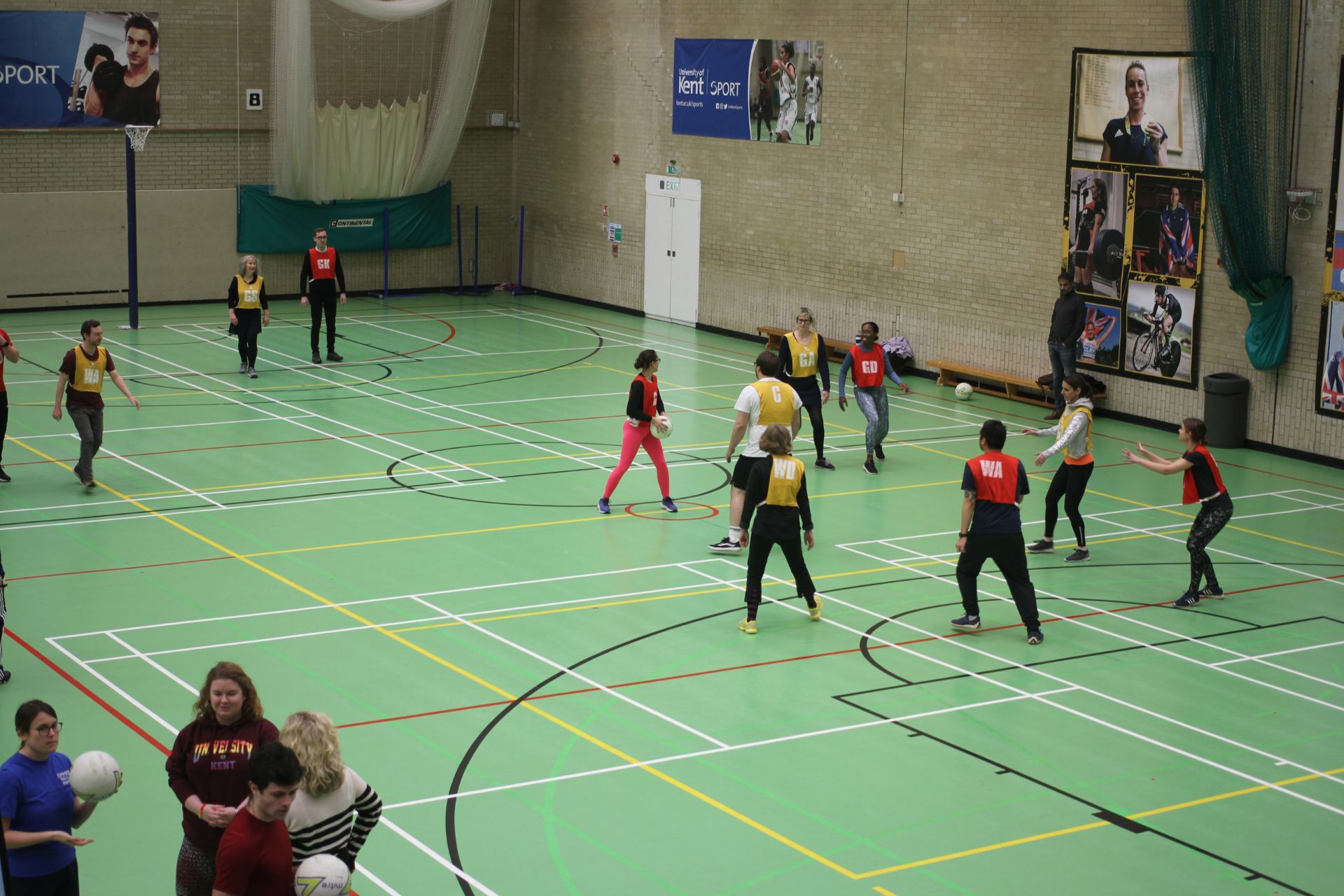
As we enter the 5th event of the VC’s Cup series, teams were primed to play walking netball, a game designed for anyone, regardless of their level of fitness or age.

Initially, it was mayhem on the court! Players were running, jumping, and going offside left, right and centre, which kept the umpires on their toes. Even experienced netball players and Kent’s very own Unicorns struggled to grasp the pace of the game, launching themselves across court and throwing themselves into each game as they would any other. However, as the games progressed, teams and players grasped the rules and became more comfortable and strategic.

Read our blog to find out which teams came out on top! You’ll also find an entertaining and creative rap, written in collaboration with some of the competing teams.

Want to find out more about the Vice Chancellor’s Cup, head over to the VC Cup webpage, where you can see which events are coming up, past event summaries and current leader board positions.

Inclusive Language Think-in: you’re invited

Have you ever read an article, and event description, a social media post about disability, accessibility, neurodiversity or inclusion and thought ‘oh goodness, what a choice of words! Did it make you feel unwelcome because of the way it talked about disability, chronic illness, neurodivergence, race, gender, age, etc?

Or, have you tried to write about one of these topics, or about adjustments for an event or society meet up, and felt out of your depth and worried about what language to use to get your point across clearly and inclusively?

Language matters

Whatever form it’s written or spoken in, the right language can make a world of difference to inclusion. As we try to communicate more openly, honestly and succinctly in the new Kent brand, we need to be able to reach for some good phrases to discuss potentially sensitive issues and make sure we’re consulting all of our audiences for their input.

Let’s think it through together: Monday 27 March 10:30 – 11:30 online/ in DG02 (opposite Nexus) in Templeman Library

Students and staff are warmly invited to an informal hybrid session to think through the terms you’d like to see less of and the terms you’d like to see more of in our University of Kent copy – bring your lived experience, your expertise, or just an open mind and willingness to learn and discuss it together. We’ll try to come up with some practical notes we can use and share with others.

Book now so we know who to expect and can send you joining details for online participation, and share the details with others who you think might be interested!

Questions? Email WellbeingEvents@kent.ac.uk