Tag Archives: Publish on Site Editor

Testing out a theory

Finance

Financial Year Workshops

As you are probably aware, the Financial Year end is fast approaching on 31 July 2019.

The Financial Reporting Office is holding four workshops in Canterbury and Medway from 21 June to 11 July. Following a similar format to last year, the workshops  are intended to be an open discussion offering advice and support on what will be required of you during the year-end process.

Please book a space on a workshop through Staff Connect.

The Financial Reporting Office will  be making the 2019 year end guidance available shortly, along with timetables to help you to plan ahead.

The Office is looking to improve the process overall – if you have any suggestions or comments, please email team members on Finrep@kent.ac.uk

Please also feel free to contact the Financial Reporting Office if you have any questions in the meantime.

‘Cosmopolitanism in an age of global challenges’

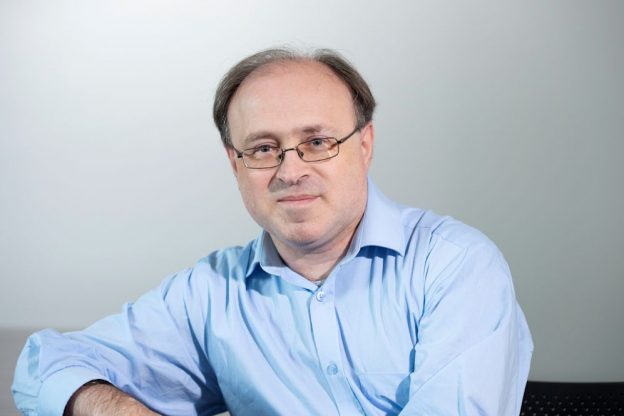
Edward Kanterian on ‘Cosmopolitanism in an age of global challenges’

Cosmopolitanism in an age of global challenges

University of Kent’s Brussels School of International Studies

20 June 2019 10.00-14.00

Some have claimed that a citizen of the world is a citizen from nowhere. Apart from other problems with this claim, humanity faces a number of challenges today that do not stop at any one’s nation borders. These include the rise of artificial intelligence, global economic crises, and, as the most terrible threat of all, climate change. To develop appropriate responses, we need new political concepts, which go beyond the nation-centric ones still (or again) in fashion, concepts that help us understand these threats from a wider and deeper point of view. Kant’s cosmopolitan idea of a ‘citizenship of the earth’ is such a concept, based on what he viewed as our common human morality. Similar cosmopolitan views have been developed by other thinkers as well, e.g. by Hannah Arendt and Hans Kelsen.

To explore their and related ideas, this workshop aims to bring together philosophers, policy makers and any concerned citizens (be they from nowhere or from somewhere), to discuss novel ways of responding to globalised challenges.

Roundtable participants:

  • Sorin Baiasu (Department of Philosophy, Keele University)
  • Jan de Ceuster (Sociologist and political activist, Open VLD, Brussels)
  • Eleanor Curran (Legal philosopher, University of Kent)
  • Nicole Dewandre (Advisor in the European Commission and philosopher)
  • Namita Kambli (Research manager, The Democratic Society, Brussels)
  • Edward Kanterian (Department of Philosophy, University of Kent)

10.00-11.45 First session: Cosmopolitanism – defining the concept
11.45-12.15 Coffee break
12.15-14.00 Second session: Cosmopolitanism – practical applications
14.00-15.00 Lunch reception (please RSVP)

Brussels School of International Studies, University of Kent
2A Boulevard Louis Schmidt
1040 Etterbeek

To register your attendance, please book online.

Tamara Rathcke

Tamara Rathcke receives Sasakawa Foundation grant

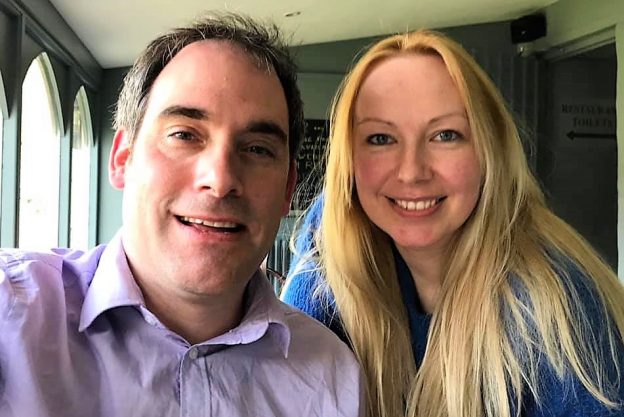
Dr Tamara Rathcke, Senior Lecturer in Linguistics in the Department of English Language and Linguistics, has been awarded a grant by The Great Britain Sasakawa Foundation.

Tamara currently holds a research grant from the Leverhulme Trust for a project entitled “Does language have groove? Sensorimotor synchronisation for the study of linguistic rhythm”, to investigate entrainment with language by native listeners of French and English. This research is among the first attempts to apply the sensorimotor synchronization technique to the study of rhythm in language.

There are currently no existing three-way language comparisons of sensorimotor synchronisation patterns from rhythmically distinct languages, traditionally associated with the syllable-timed (French), stress-timed (English) and the mora-timed (Japanese) group. Funding from the Sasakawa Foundation will support a direct comparison of the sensorimotor synchronisation performance between native speakers of Japanese, English and French and will help illuminate the link between the acoustic signal and its rhythmic perception. This research will contribute to the controversially debated topic of language rhythm, potentially creating a fundamentally new ways of conceptualising the phenomenon.

English Language and Linguistics Research Day

English Language and Linguistics Research Day

The Centre for Language and Linguistics and the Department of English Language and Linguistics are organising a Research Day on Friday 14 June 2019. During this annual event, members of staff and postgraduate students will present their work in progress projects.

The event will be an opportunity for speakers to receive feedback from experts in all different branches of linguistics and related disciplines, as well as testing new ideas and discussing new collaborations. The event also includes an invited speaker, Dr Jonathan Kasstan, who graduated with a BA in French in 2009 and a PhD in Linguistics in 2017, and is currently a lecturer and Leverhulme-funded researcher at the University of Westminster.

The full programme is below:

10.00 – 11.00: Jonathan Kasstan (Westminster): On the systematicity of variability in language obsolescence

11.00 – 11.30: Break

11.30 – 12.00: David Hornsby: When is a language not a language? The case of Picard

12.00 – 12.30: Heidi Colthup: Walking Simulator Video Games – A New Digital Storytelling Artefact – Transportation, not flow

12:30 – 13:00: Tamara Rathcke: When language hits the beat

13.00 – 14.30: Lunch

14.30 – 15.00: Isabella Reichl: Dissecting conflict: a multi-level approach to refusal negotiations

15.00 – 15.30: Dan Wang: Culture-specific metaphors in the Chinese housing crisis discourse

15.30 – 16.00: Eleni Kapogianni: The pragmatics of deception

Cuba

Cuba ‘exceeded all expectations’ for Hispanic Studies students

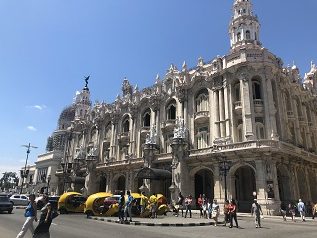
Four final-year Hispanic Studies students spent three weeks in Havana during the Easter vacation on a work placement thanks to funding from the Faculty of Humanities Mobility Fund and the generosity of John Washington, a donor to the University.

Two students worked at the University of Havana teaching English, and two worked as translators for the cultural journal La Jiribilla. Dr William Rowlandson, Senior Lecturer in Hispanic Studies, said: ‘The placements offered cross-cultural engagement and skills exchange, and the students benefited from immersed language practice in context, increased spoken fluency, broadening of cultural horizons, and the development of specific skills including teaching, presenting and translation.’

Carla Biondi commented: “Within the first day, [Cuba] had exceeded all my expectations. I suddenly understood what I’d always been told: ‘Cuba has to be seen, it can’t be described’”.

João Martins Pereira said: “As an aspiring teacher, the experience proved to me that it is still possible to learn and teach incredible lessons even if the only resources to hand are passion, dedication, a chalkboard and a slightly outdated textbook. During the placement, we gave presentations on the UK education system, British stereotypes, and even an amusing quiz on the English language and British culture. At the end of the placement, we gave the students some England football team branded wristbands and some keyrings kindly donated by Kent Union. Overall, it was an amazing experience which I would not hesitate to do again if I had the chance.”

Stephen Hockley described the experience as: “…fantastic and so rich. To have been the recipient of an internship that took me across the world and into the suburbs of Havana is always going to be a cool thing. I’m extremely grateful for the opportunity.”

Rudimental, Rochester Castle

Special discount for Rudimental (Sound System) concert

Rudimental (Sound System) with special guests Example and Mahalia will be performing on Wednesday, 10 July at the Rochester #CastleConcerts.

Rudimental will be performing a DJ set with live vocals and brass with:

  • Mark Crown playing the trumpet
  • Taurean Antonie Chagar playing the saxophone
  • Morgan Connie Smith and Bridget Amofah on vocals

Tickets are just £35 (down from £48.50).  Whether you’re a full or part-time student, or member of staff, simply select the student option at the checkout!  And please tell your friends.

Get your tickets now via Medway Tickets Live.

For more information, see the Castle Concerts webpages.


Paul March-Russell

Paul March-Russell speaks on humanity, animal identities and the eerie

Dr Paul March Russell, Lecturer in the Department of Comparative Literature, gave a keynote address at the Borders, Intersections and Identity in the Contemporary Short Story in English conference at the University of Santiago de Compostela in May.

Paul’s topic was Daisy Johnson’s short story collection, Fen, which he explored in terms of the borderlines between human and animal identities, especially between the blurred lines between human and natural activity in the East Anglian landscape.

Paul also gave another keynote address titled ‘On the Threshold of Sexual Difference: Re-Gendering the Eerie in Daisy Johnson’s Fen’ at the Current Research in Specualtive Fiction conference in Liverpool on Thursday 6 June. Here, Paul continued to explore Johnson’s work while also discussing his preliminary researches into New Wave science fiction and the Decadent imagination.

“Both talks examined Daisy Johnson’s short story collection, Fen, in relation to Mark Fisher’s conceptualisation of the eerie,” Paul explains, “The first did so by looking at a series of ‘border crossings’ – geopolitically (the relationship of the Fenland periphery to the economic heartland of ‘Silicon Fen’), geologically (the deep time of the Fens), and ecologically (in the encounters between humans and other kinds of non-human life). The second drew on the last of these themes, and explored in more depth Derrida’s claim that human-animal encounters occur ‘on the threshold of sexual difference’ by examining the ways in which Johnson describes sexuality through the meetings between human, animal and non-organic life-forms.”

Online Expenses via Staff Connect is now LIVE!

As of midday on 12 June 2019 all professional services, academic and research staff are able to use Staff Connect to submit expense claims replacing the existing paper based solution.

If you need assistance with transitioning to the new system please contact the Payments Office at expenses@kent.ac.uk

The Staff Connect Expenses module allows for the submission of expense claims online and to attach scanned copies of receipts to the claim. The claim will then be forwarded, via the system, to an agreed Authoriser within your area, for approval. 

Once the claim has been approved it will be forwarded automatically for payment. Payments will be made on a fortnightly basis into the same bank account used for your salary payments.

Drop-in sessions

Drop-in sessions will be held in the period following the launch of the expenses module to allow anyone who wishes to attend for informal training, support and to answer any questions. Please find dates, times and room locations within Cornwallis South East Octagon below:

Wednesday 12 June all day – SE14

 Thursday 13 June 10.00-12.00 – SE20

 Tuesday 18 June 10.00-12.00 – SE20

 Wednesday 19 June 14.00-16.00 – SE14

 Monday 24 June 14.00-16.00 – SE14

 Friday 28 June 10.00-12.00 – SE20

 Medway Thursday 20 June 09.00-12:30 – G4-04

 Further help:

 If you have any questions about Staff Connect and the launch of this new module, there is guidance, including a frequently asked questions section, on the Staff Connect website. To find out more about using Staff Connect to make expense claims, please come to one of the demo and drop-in sessions available for all staff and line managers. There is a high level guide available in relation to the process for submission and approval. Please go to support to find out more. Online user guides are available.


Chris Deacy with Katy Hanrahan

Teeside, childhood memories and horses: Nostalgia podcast with Katy Hanrahan

In the latest episode of the Nostalgia podcast series, Dr Chris Deacy, Reader in Theology and Religious Studies in the Department of Religious Studies, speaks to Katy Hanrahan, who works in special needs education and attended the University of Wales, Lampeter.

Katy and Chris talk about Teeside, growing up against the backdrop of an industrial region whose heritage has now gone, being the first in her family to go to university, and Katy’s keenness from a young age to learn about people from different backgrounds. We also find out about what Katy’s perceptions were of returning to Teeside after spending three years in Lampeter and finding that nothing had changed. The conversation then turns to childhood memories and what she remembers doing. We discover that Katy has always been very animal-centred, including having a passion for looking after horses from a young age, as well as why her mother pushed her into something she could thrive at.