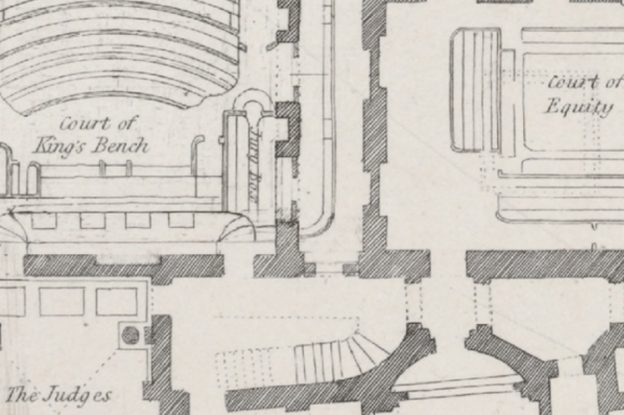
New interdisciplinary Legal Materiality Research Network

Kent Senior Law Lecturers Dr Hyo Yoon Kang and Dr Sara Kendall have been awarded a grant of more than £35,000 to establish a new interdisciplinary and international research network exploring legal materiality.

The Research Network Grant, from the Arts and Humanities Research Council (AHRC), will help bring together a community of scholars with a shared focus on studying and thinking about law’s matters and their materialities.

The network is holding a symposium on ‘Articulating Law’s Matters’ to launch the network at The Warburg Institute on Friday 12 January 2018. This event will offer an overview and map some of the positions, approaches and tensions which the notion of ‘legal materiality’ has raised in contemporary legal scholarship.

Attendance is free, but attendees are required to register online.

The Legal Materiality Research Network includes a broad range of members: from emerging junior scholars and research students to world-leading scholars who have studied the specificity of legal techniques and objects and have engaged deeply with questions of materiality and interpretation. Their disciplinary homes are in fields as diverse as anthropology, English literature, legal studies, media studies, politics, political theory, rhetoric, science and technology studies and sociology. The network also includes artists who are concerned with the force of law and its physical and virtual manifestations.

For questions and enquiry, please contact Dr Kang or Dr Kendall. Follow the network on Twitter @LawsMatters.



University of Kent 2018 Summer Schools

Applications are now open for the University of Kent’s Summer School programme for 2018.

The University of Kent’s high-quality summer schools for university students and professionals with academic credit are designed for anyone who would like to study one or more of the inspiring courses taught at the University’s locations in three of Europe’s most important cities.

Building on our reputation for interdisciplinary study, you will spend time with fellow students and academics studying your chosen subject in specially chosen locations with state-of-the-art facilities.

If you are considering postgraduate study at Kent or would just like to learn more about a chosen subject, either in the UK or at one of our specialist postgraduate centres across Europe a summer school is a great opportunity to discover more about your subject and the University.

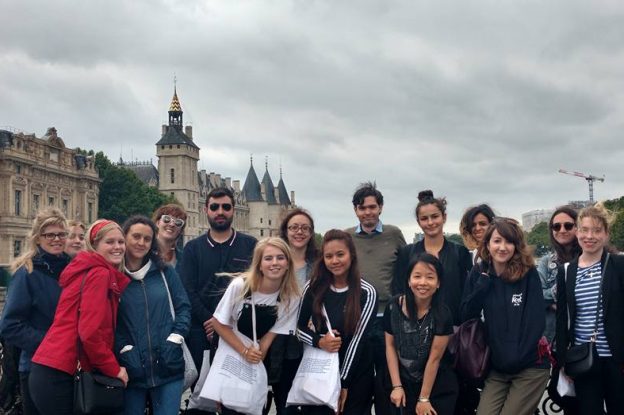
The Summer Schools are two weeks long and run in June and July 2018 with accommodation and a social programme included. Come and discover what it is like to be a student at our Canterbury, Brussels or Paris locations.

Brussels:

  • Europe and the World

Paris:

  • Revolutions
  • Urban Ethnography

Canterbury:

  • European Security and Foreign Policy
  • Molecular Biology and IVF
  • Quantitative Methods
  • Sustainable Architecture and Landscape Design
  • From Plantagenet to Tudor  –  Kingship, Society and Political Culture in Late Medieval England
  • Global Business in a Dynamic Environment
  • Investigating the Social Mind
  • Hidden Histories of the Second World War

Scholarships and discounts

We have a limited number of full and part scholarships to award.

Discounts of £100 if you book and pay in full by 16 April 2018 – students who then study at our Paris or Brussels centres on full year MAs after undertaking one of our summer schools will be entitled to a 10% discount on tuition fees.

Find out more: www.kent.ac.uk/summerschools Contact us: summerschools@kent.ac.uk


Have Your Say: Tell Your VC

Kent Union are holding a session with Vice-Chancellor Karen Cox and Deputy Vice-Chancellor April McMahon where you will have a chance to tell them what you think will make a great student experience at Kent!

The event will take place on Tuesday 21 November in The Gulbenkian, from 18.00-20.00.

Find out more on Facebook.

templeman sunburst

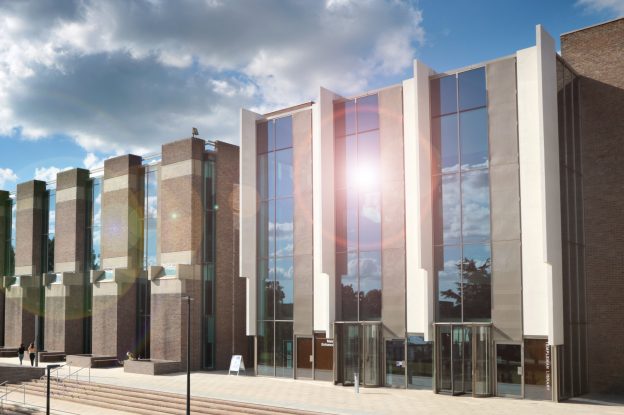
Templeman Library awarded a solid ‘Highly Commended’ at the Concrete Society Awards

The University of Kent’s Templeman Library was ‘Highly Commended’ at last night’s Concrete Society Awards for the use of concrete in its new extension. Collecting the award were John Sotillo, Director of Information Services, John Morley and Mark Ashmore from the University’s Estates Department, Suzi Winstanley and Mara Monteiro (Penoyre & Prasad – project architects) and Helen Page (Structural Engineer, Price and Myers).

Suzi explains: “Our design exploits the aesthetic and formal properties of concrete to knit together the new extension with the existing brutalist building to create a vibrant, contemporary building at the heart of the University of Kent campus.”

Judges take into account such factors as visual impression and integration with the surrounding landscape, functional suitability, concrete properties exploited in the design, innovation in concrete composition, structure or form, execution and finish, sustainability credentials client satisfaction, and value for money.

Picture by Jim Higham. Cropped from original.

Jeremy Carrette

Jeremy Carrette in The Guardian

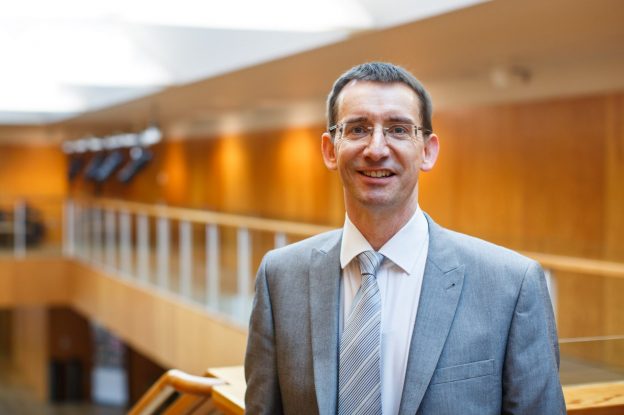
Professor Jeremy Carrette, Professor of Philosophy, Religion and Culture and Kent’s Dean for Europe, featured in The Guardian newspaper last Friday (10 November).

The article, entitled ‘How To Do a Postgrad Course for Free in Europe’ examined the opportunities for postgraduate study on the continent in a post-Brexit era.

As Dean for Europe, Jeremy has responsibility for the engagement strategies in Kent’s postgraduate centres in Paris, Rome, Athens and Brussels.

To read the full article, please see The Guardian’s webpage here.

Edward Kanterian on Radio 3

Dr Edward Kanterian, Senior Lecturer in the Department of Philosophy, featured on BBC Radio 3’s Sunday Feature last week on 12 November in an edition entitled ‘A Column for Infinity’.

The programme explores the work of Romanian sculptor Constanin Brancusi and in particular his powerful memorial to the First World War, the ‘Endless Column’. The sculpture is a unique piece of commemorative art. It carries no specific reference to the dead of 1916 or of their heroic actions and sacrifices. In Romania the first World War symbolises reunification, and some believe the sculpture represents Romania’s expansion and history.

‘Each time somebody from our street would die a very long procession would be formed, and going all the way to the cemetery; and the endless column was there all the time in the background,’ reminisces Edward in the programme. ‘Under such a setting, death, in a way does not feel so bad any more, after all.’

Edward can be heard approximately at both 3 minutes and 13 minutes into the programme.

To listen to the full programme, please see the BBC webpage here.

ThisKentGirlCan

#ThisKentGirlCan

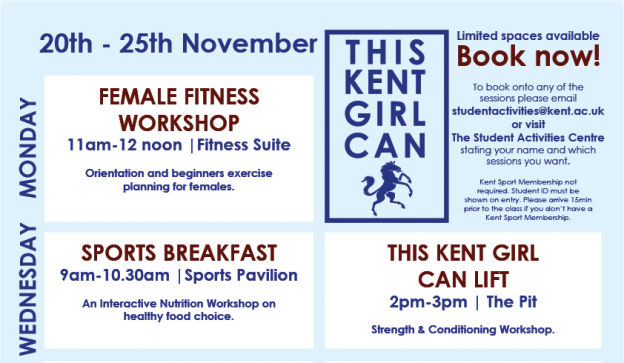
This Kent Girl Can is a campaign celebrating all of our fantastic women in sport.

Kent Union are highlighting the achievements of women already partaking in sport at Kent, as well as organising various sports sessions from the 20 November to encourage more women to engage in sports and Team Kent.

To find out more about the sessions available and to read the stories of some of our #ThisKentGirlCan champions, click here.

#ThisKentGirlCan t-shirts
As part of the campaign, we will also be selling #ThisKentGirlCan t-shirts. These will be sold for £5 per T-Shirt from either Mandela Building or the Online Store and picked up from the Student Activities Centre – £1 of each purchase will be donated to a Sports Club of your choice if bought before 26 November 2017!

MUSU

Man Up, Speak Up

Kent Union have announced the ‘Man Up, Speak Up’ campaign which aims to tackle the stigma surrounding male mental health and hopefully encourage more men to talk about their own concerns.

Mental health is the number one disability at our University, so now, more than ever, this is an issue that needs to be faced head on. Men should no longer suffer in silence.

Facts and figures from the Men’s Mental Health Forum data, September 2017:

  • 12.5% of men in the UK are suffering from one of the common mental health disorders.
  • Just over three out of four suicides (76%) are by men and suicide is the biggest cause of death for men under 35 (Reference: Office for National Statistics).
  • Men are less likely to access psychological therapies than women. Only 36% of referrals to IAPT (Increasing Access to Psychological Therapies) are men.
How can I can I get involved and support this campaign?

With the support of the Movember campaign, our sports clubs are competing to raise the most amount of money for a cause which focuses on male physical and mental health.
We will be hosting an impact event, where we will have a physical wall outside the Student Activities Centre for students and staff to come along and write their issues on the wall from Wednesday 15 – Friday 17 November 2017. This will culminate in the knocking down of this wall, as a sign of breaking down the stigma surrounding mental health.
Speak up.
stay safe

Tips for a safe night out

As the evenings get darker and Christmas festivities begin, we just want to remind you of our safety advice and services.

Safety advice and services:

You don’t need to walk in the dark or late at night, why not:

  • Take the Nite bus, the Uni2. Stagecoach provides a night bus until 04.35 and the route includes campus colleges and the local area.
  • Call a registered taxi– save some money for the end of the night, so you can be brought straight home – it’s much safer and easier.
  • Sign-up with the Safe Taxi Scheme so if you find yourself on your own or in a vulnerable situation you can still get a taxi home, even if you don’t have the money on the night.

However, if you do need to walk, here are some tips:

  • Don’t walk home alone. Stick with your friends and look out for one another.
  • Stick to well-lit and busy areas. Avoid shortcuts through parks, car parks, underpasses, woodlands and unlit areas. View Canterbury’s lit walking routes.
  • Keep your valuables hidden – mobiles, keys, cash, cards and jewelry.
  • Stay alert – don’t walk home on the phone or listening to music.
  • We also have Street Marshals looking after students and local residents when they’re out and about at night. They patrol a number of areas in Canterbury on Wednesdays, Fridays and Saturdays.
  • Get a free personal safety alarm from Campus Security.

On-campus only services:

  • If you find yourself on your own, on-campus, you can call our night-time Walking Taxi Service – 01227 823300.
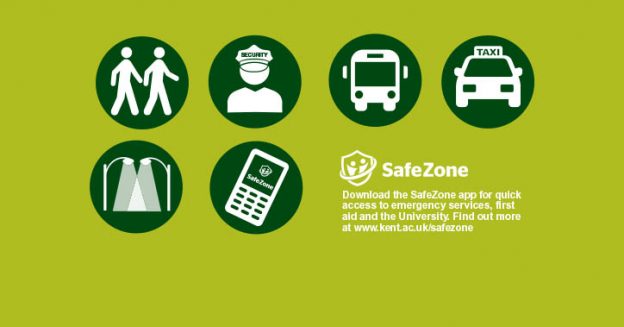
  • Download the SafeZone app for quick access to emergency services, first aid and the University.

Read more on our safety webpages.

Simon-Kirchin

Simon Kirchin publishes on thick evaluation

Dr Simon Kirchin, Reader in the Department of Philosophy and Dean of the Faculty of Humanities, has just published a new book entitled Thick Evaluation (Oxford University Press, 2017).

We use evaluative terms and concepts every day. We call actions right and wrong, teachers wise and ignorant, and pictures elegant and grotesque. Philosophers place evaluative concepts into two camps. Thin concepts, such as goodness and badness, and rightness and wrongness have evaluative content, but they supposedly have no or hardly any nonevaluative, descriptive content: they supposedly give little or no specific idea about the character of the person or thing described. In contrast, thick concepts such as kindness, elegance and wisdom supposedly give a more specific idea of people or things. Yet, given typical linguistic conventions, thick concepts also convey evaluation. Kind people are often viewed positively, whilst ignorance has negative connotations.

The distinction between thin and thick concepts is frequently drawn in philosophy and is central to everyday life. However, very few articles or books discuss the distinction. In his new book, Simon discusses thin and thick concepts, highlighting key assumptions, questions and arguments, many of which have gone unnoticed. He focuses in on the debate between separationists (those who think that thick concepts can be separated into component parts of evaluative, often very thin, content and non-evaluative content) and nonseparationists (who deny this).

Thick Evaluation argues for a version of nonseparationism, and in doing so argues both that many concepts are evaluative, and also that evaluation is not exhausted by thin positive and negative stances.

For more details, please see the publisher’s page here.