Study Plus

Study Plus courses

Have you signed up for a FREE Study Plus workshop yet?

KE051 ‘Writing and Directing Feature Length Fiction for Cinema: “The Selfish Giant”, a case study’ is an interactive workshop, which will give you an introduction to writing and directing a film from initial idea through to completion and exhibition.

If you’re thinking of signing up for a language as a wild module, or just want to have a go at learning a new language, choose from four taster sessions, all suitable for complete beginners:

Arabic Taster session- (KE181)

Japanese Taster session (KE182)

Mandarin Taster session (KE183)

Russian Taster session (KE184)

You’ll also find a range of woodland craft workshops, such as Coppicing, and Brash Fence Building (KE060, KE061, KE072, KE160, KE161)

Don’t miss out: Book your place via the Workshops page in SDS.

For more information and to see all of the courses on offer, please visit the Study Plus website.

Two-weekend short CPD course Introduction to Evaluation within Professional Context

This short two-weekend CPD course for multi-professional healthcare workers will commence with consideration of a key question “what is the difference between evaluation and research” by way of an introduction to evaluative approaches in health services and how evaluation can take into account the complexity of health services.

Dates and time:

Friday 15 – Saturday 16 March 2019, 9.00-17.00 and
Friday 17 – Saturday 18 May 2019, 9.00-17.00.

Convenor – Professor Patricia Wilson

The course will take into consideration the contexts and potential areas of conflict when conducting evaluation in health care settings through a session on the politics of evaluation, this will be followed by topics on different approaches to evaluation within implementation science and putting evaluation to practice.

On successful completion of the course, you will be able to:

  • Demonstrate knowledge of the differences between different evaluative approaches
  • Competently choose between the different evaluation approaches in an informed way
  • Apply an understanding of a variety of approaches to evaluate professionally relevant – interventions and to ascertain impact of professionally based interventions.

Attendance and Venue:

You will be required to attend the course at our Medway campus on the above dates. Venue: University of Kent Medway Building, Chatham Maritime, Medway, ME4 4AG.   Certificates of attendance will be issued to those who successfully complete the course.

The course is delivered by the University of Kent’s Centre for Professional Practice (CPP). CPP offers part-time, flexible work-related Postgraduate and Undergraduate programmes. Our flexible, part-time MA/MSc in Professional Practice programme and short courses have been specifically designed to meet the needs of working professionals who wish develop their expertise within their current workplace.

The fee for this short CPD course is £450. Find out more on the CPP Facebook 

To book a place follow the CPP link

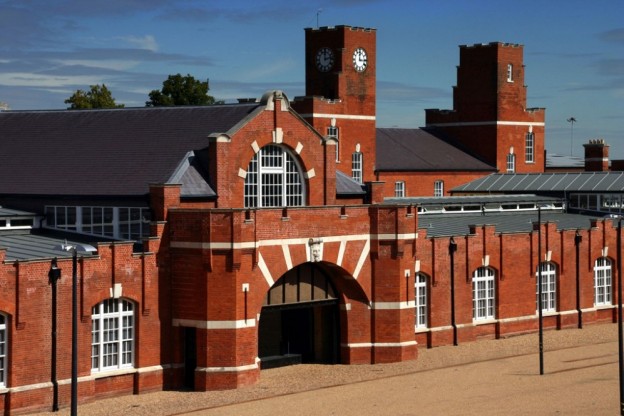
An image of Drill Hall Library with red brick and an arched frontway

Drill Hall Dialogues- 12 February

The next Drill Hall Dialogue talk, ‘An Introduction to the Guildhall Museum’, will be given by Dr Jeremy Clarke, on Tuesday 12 February from 10.00.

Dr Clarke is responsible for all formal education and learning programmes supported by the museum collection or its listed buildings. He mostly works with and in local schools, but also runs courses, lectures and illustrated talks for adults. He has also run partnership projects to support children in making music for Dickens novels, in illustrating scenes from Great Expectations, and in working with actors at locations made famous by the novel.

Drill Hall Dialogues is a monthly series of talks held at the Drill Hall Library, the learning resource centre for the Universities at Medway collaborative project. The talks take place on the first or second Tuesday of the month and usually last no longer than 45 minutes with 15 minutes allotted for any questions and answers.

The talk on 12 February takes place in Room DA002 and all staff are welcome to attend.

For more information on the Guildhall Museum, see the Visit Medway site.

Konstantinos Gravanis wins internship in the Vatican’s Raphael Rooms

Kostas Gravanis, who is undertaking a PhD in History and Philosophy of Art in the School of Arts, has just been accepted for a six-month internship in the Vatican Museums.

The Vatican Museums offer an education and training programme for young specialists and students in restoration techniques. Each intern is assigned to a specific project involved in the museum’s activities.

Beginning in April, Kostas will be working in the area of the Stanze di Raffaello (Raphael Rooms). The internship is directly related to Kostas’ PhD research, as his project is provisionally entitled ‘Sources, Functions and Meaning of Imagery in the Vatican’s Raphael Rooms’. His PhD supervisors are Professor Tom Henry and Dr Ben Thomas.

The Stanze are a series of reception rooms in the Vatican Palace, famous for their beautiful frescoes painted by Raphael and his workshop (1508-24). The internship will give Kostas the opportunity to get involved with projects for the forthcoming 500th anniversary of Raphael’s death in Rome as well as with on-going restoration work in the Sala di Costantino.

Commenting on the internship, Kostas said: ‘Working in the Stanze at this specific time is a great honour and privilege. The anticipation of Raphael year 2020 is a thrill beyond words while the restoration projects are revealing fascinating new aspects of Raphael’s art’.

Professor Tom Henry, Director of the Rome School of Classical and Renaissance Studies, also commented on Kostas’ achievement: ‘Kostas stood out on our MA in History of Art in Rome and developed his PhD topic while there. It is a tremendous achievement for him to now be offered this highly prestigious internship back in the Vatican Museums and at such an exciting moment.’

Click her for more details on the Vatican Museum internships.

Alumnus Dr Simon Elliott at Chalk Valley History Festival

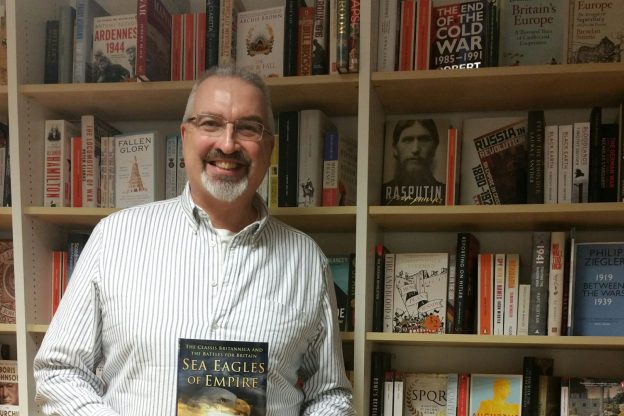
The Chalk Valley History festival has released a recording of a talk presented by alumnus Dr Simon Elliott, Honorary Research Fellow in the Department of Classical & Archaeological Studies, on Septimius Severus in Scotland.

The talk, which Simon describes as “More ‘Game of Thrones’ than Game of Thrones, more ‘Tolkien’ than Tolkien, only real”, received maximum attendance in the main theatre where it took place, and outlines the campaigns of the great Roman warrior Septimius Severus and how he to tried – and failed – to conquer Scotland.

Simon completed his PhD in Classical and Archaeological Studies in 2017, with a thesis exploring the military presence in Kent during the Roman occupation, under supervision from Dr Steve Willis, Senior Lecturer in Archaeology.

FA People’s Cup at the University of Kent

Kent Sport are proud to be hosting the FA People’s Cup on Thursday 14 February at the Pavilion from 18.00-22.00 .The FA People’s Cup is a free five-a-side knockout competition that gives everyone of any ability the chance to play in their version of the FA Cup. University of Kent students can enter online:

UoK male: https://fapeoplescup.thefa.com/Book?sessionId=2975
UoK Female: https://fapeoplescup.thefa.com/Book?sessionId=2976

Entry requirements:

• No British Universities & Colleges Sport (BUCS) Football or Futsal players registered for the 2018/19 season are permitted to enter the competition in the University Male category

• Two BUCS Football or Futsal players are permitted per team in the University Female category

• Attend university of round 1 host

• No mixed gender teams

To find out more about the FA People’s Cup visit BBC Inspired https://www.bbc.co.uk/sport/get-inspired/30657513

Relaunch of Kent Project Management Framework Toolkit

Need help with managing project delivery?

The BIPU Team has simplified the Kent Project Management Framework (KPMF) Toolkit for staff managing projects at Kent.

The KPMF is now available to all staff and provides a suite of useful documentation to help you identify, initiate, set-up, run and manage projects and changes.

The revamped KPMF Toolkit can be accessed via SharePoint.

Further enhancements are planned and will include a selection of online tutorials on key project topics and relevant LinkedIn Learning resources.

So far we have introduced the following LinkedIn Learning Pathways:-

For further information about projects, contact the BIPU team: BIPU@kent.ac.uk

Focus Groups for RPD phase 2

Further to the introduction of using Staff Connect to record appraisal (RPD) conversations, L&OD are starting to discuss the next phase of appraisal (RPD) work with managers in all areas by attending team meetings.

If you are not a manager but are still interested in finding out more about these proposals and/or providing your thoughts about the process

or

if you are a manager unable to attend the session planned within your area, we are holding a number of informal focus groups which you can pop along to.

No need to book, simply come along for the start of the session detailed below;

  • Monday 11 Feb 15:00 – 15:45 Room: TS3(22)
  • Monday 11 Feb 16:00 – 16:45 Room TS3(22)
  • Friday 15 Feb 09:30 – 10:15 Room RCL21
  • Friday 15 Feb 10:30 – 11:15 Room RCL21
  • Thursday 21 March – 09:30 – 10:15 Room KQSCR
  • Thursday 21 March – 10:15 – 11:00 Room KQSCR
  • Thursday 21 March –11:15 – 112:00 Room KQSCR

If you are based in Medway, please contact ldev@kent to discuss potential options available.

Professor Natalia Sobrevilla Perea interviewed for BBC Radio 4’s ‘When Greeks Flew Kites’

Natalia Sobrevilla Perea, Professor of Latin American History in the Department of Modern Languages, was recently interviewed for BBC Radio 4’s ‘When Greeks Flew Kites’ programme for their latest episode on historical deadlocks.

The episode, recorded on Monday 4 February, takes a look at famous example of deadlock in history, in which Natalia brings up the example of General Juan Manuel de Rosas and the rigid manner in which his rules were enforced in Argentina.

“The deadlock in the aftermath of the Argentinian wars of independence that lasted from the 1810s into the 1820s,” Natalia states, “This led to a huge moment of confusion where strong leaders emerge trying to take control, very typical of south America in this period.”

This example of “strong men as a response to chaos” is used to draw parallels to current political events.

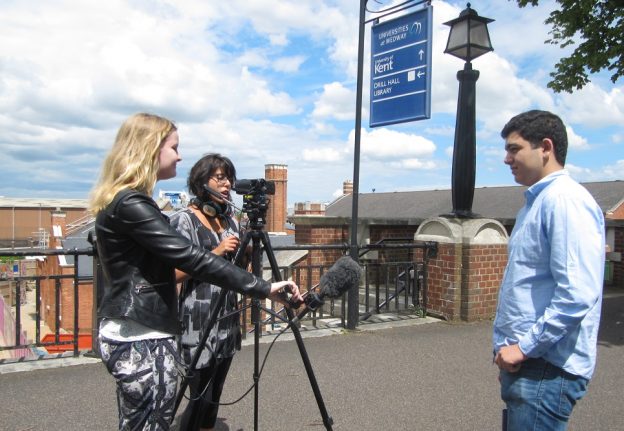
Do you want to be a journalist?

Would you like to learn the skills you need to challenge fake news and get work in a 21st century newsroom? Now you can do just that by taking a Year in Journalism with Kent’s award-winning Centre for Journalism.

This freestanding, self-contained year, is open to students from other schools at Kent and can be taken after stage two or three. It’s classed as part of your undergraduate study programme so you can continue with student finance and living locally while you study.

During the year, you will work exclusively within the Centre for Journalism, based in a live newsroom environment taught by tutors including working reporters, former editors of national newspapers and specialist correspondents.

You will study for the National Council for the Training of Journalists (NCTJ) Diploma in Journalism, a nationally recognised professional qualification for a career in journalism.

Find out more and apply online now or meet us at one of our Year in Journalism Kickstart Lunches, on Thursday 28 February or Thursday 7 March in the Colyer-Fergusson Foyer, any time between 12.30 and 15.00. Book your place now by emailing journalism@kent.ac.uk