Category Archives: Student Guide

Student swimming gala

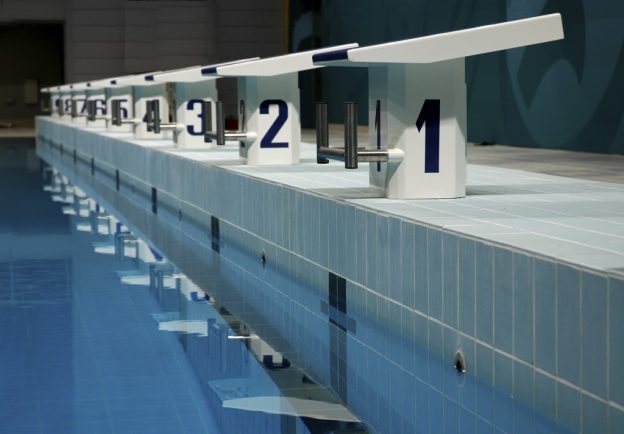
The Swimming Gala will be held on the 12 February from 14.00 to 16.00 at the Kings Recreation Centre. It is a free event, open to anyone. Swimmers of all abilities are welcome as long as they can swim at least 25 metres.

There will be serious races but also loads of fun races such as a float race or a ball chase race! There will be prizes and chocolates for the winners.

Teams will be composed of 6-8 people. To register a team students need to fill out the entry form and either email it to sportsdevelopment@kent.ac.uk or drop it off at reception at the Sport Centre. https://www.kent.ac.uk/sports/docs/forms/swimming-entry-form.pdf

The deadline to enter teams is on Wednesday the 8 February no later than noon so don’t hang around!

Skepsi call for papers: ‘Time to Remember’

The editors of Skepsi, a postgraduate-run journal within the School of European Culture and Languages (SECL), are organising an interdisciplinary conference entitled Time to Remember: Anniversaries, Celebration and Commemoration, to celebrate the tenth anniversary of the journal, scheduled for 26 May 2016, and are looking for 300-word abstracts for 10 minute presentations.

In keeping with the celebration the conference that has as its focus on memory, or more particularly the phenomenon of the anniversary with its dual attributes of celebration and commemoration, depending on the nature of the event which is being remembered. In either case, it sometimes seems that the manner in which the occasion is marked has become a ritual, an opportunity to contemplate how things have changed in the intervening years, how we travel and come to terms with and reflect on past events. At the same time, however, we also wonder why and for how long we need to remember.

Why do we feel compelled to remember once a year events from the past, not only those from our own lives but those which we may never have personally experienced? What are we remembering? Does the act of remembering gradually metamorphose into a ritual the significance of which become hazy) These and other questions can be debated at our interdisciplinary conference.

Abstracts should be submitted as word documents, with the covering email including the name of the author, institutional affiliation and brief autobiographical detail, as well as any audio-visual requirements. Please send to the conference organising committee at: skepsi@kent.ac.uk by 17 March 2017.

Further details and suggested topics can be found at http://blogs.kent.ac.uk/skepsi/

Guiding student achievement. SLAS is here to help

Do you wish to improve your academic writing and study skills?

Need help with essay writing?

Learning from feedback?

Not sure when, how and what to reference?

Managing your time is a concern?

How to give a good presentation?

The Student Learning Advisory Service (SLAS) is here to help. It offers confidential, individual advice and guidance appointments on all aspects of effective learning and study skills.

Advice, guidance and support is also provided off-campus through phone calls or by emails.

To book an appointment, please find below the Canterbury contact details:

  • Online booking system: SLAS CONNECT
  • Phone: 01227 824016
  • Or just drop in to SLAS offices next to Santander bank.

To book an appointment, please find below the Medway contact details:

  • Online booking system: SLASCONNECT
  • Phone: 01634 888884
  • Or just drop in to SLAS office: G0-09.

Improving web guidance for research support

There’s a lot of helpful content for Kent academics and research postgraduates on the University website: from how to upload your electronic thesis, to applying for funding or making your research outputs eligible for the next REF.

As these services are provided by different University departments, there is no single starting point from which to find all the services and information that are relevant to researchers.

In the Library’s Research Support team, we wanted to explore if such a one-stop shop would be useful and what it could look like. So in October we ran a card sorting workshop with researchers to understand:

  • what help do researchers want?
  • what information do they need at what point in the research process?
  • should the information be presented differently for PhD students and for staff researchers?

Format of the workshop

On a table, we set out five A3 sheets with the stages (nodes) of the research lifecycle (as we saw it) written on them:

  1. Your idea
  2. Get funding
  3. Do the research
  4. Publish your research
  5. Make the most of your research

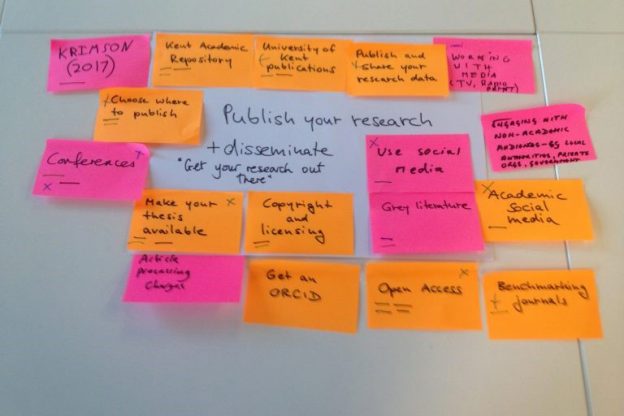
We had also written what we thought were the main activities researchers need our help with on around 40 orange Post-It notes.

Then we asked participants to:

  1. place the orange Post-Its onto the nodes they thought were most appropriate
  2. discuss or provide a running commentary throughout
  3. add pink Post-It notes for any elements they thought were missing.
  4. suggest better ways of wording things
  5. mark with a pen the Post-Its for the “services” they have used.

There was lively discussion among the participants. We deliberately refrained from explaining or making excuses for the way our services or web pages work currently.

Participants

We had 6 participants for the workshop: current PhD students, a recently qualified PhD student now working in research administration, a senior researcher and two mid-career researchers. They represented a mixture of Science, Social Science and Humanities disciplines.

Outcomes

Some of our orange Post-Its got queried, and the participants added quite a few pink Post-Its for things we hadn’t covered or they felt should be in two different places.

The name we had given our first node “Your idea” didn’t resonate with participants and they suggested improvements. For “Publish your research” they suggested expanding/rewording this slightly. They also added a couple of nodes we hadn’t thought of.

We also have lots of comments to work through

It became quite clear that the research lifecycle looks different for PhD students as opposed to more mature researchers, so we will design a separate entry page for both.

Next steps

  1. In the coming month, we will analyse the findings in detail.
  2. We’ll develop prototypes for separate research support web pages for PhD students and staff researchers.
  3. We’ll test the prototypes with researchers in another workshop, planned for March.

If you would like to be involved in the next workshop or have feedback, please email researchsupport@kent.ac.uk

Cellular Dynamics explores hidden beauty in science in image and music: Weds 1 Feb

Daniel Harding, Matthew King – pianos
Dan Lloyd – curator

Taking cutting-edge biological research and placing it in the magnificent environment of the Colyer-Fergusson Hall, ‘Cellular Dynamics’ blurs the boundaries between science and the arts.

Accompanied by live music by Phillip Glass, Tarik O’Regan and Gavin Bryars, the event allows the audience to experience the inherent beauty of research data from the University’s School of Biosciences from spectacular fluorescence microscopy to the world’s smallest guitar.

A unique visual and musical exploration of fundamental processes within living cells, ‘Cellular Dynamics’ will reveal fascinating yet rarely-seen elements of the laboratory research environment against an aural backdrop of meditative music.

This event will be accompanied by an exhibition featuring selected images from the School of Biosciences Stacey Collection, which will be on display in the Colyer-Fergusson Gallery during the Spring term.

Admission is free: find out more online.

CELTA course

A Cambridge CELTA qualification allows you to become an English language teacher and is recognised across the world, allowing you to teach in the UK or overseas.

The Centre for English and World Languages (CEWL) runs a five-week full-time CELTA course starting on 19 June.  It is open to Kent Students and anyone else who would like to gain a CELTA qualification.

The deadline for applications is 28 April. Find out more: https://www.kent.ac.uk/cewl/courses/celta/index.html

Law School academics shortlisted for SLSA book prizes

The work of three Kent Law School academics has been shortlisted for prizes by the Socio-Legal Studies Association (SLSA) in recognition of outstanding socio-legal scholarship.

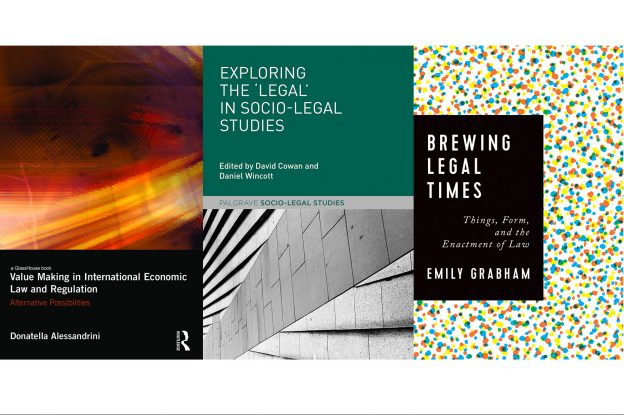
A book by Dr Donatella Alessandrini has been shortlisted for the Hart-Socio-Legal Book Prize; a book chapter by Professor Helen Carr has been shortlisted for the Socio-Legal Article Prize; and a book by Dr Emily Grabham has been shortlisted for the Socio-Legal History and Theory Prize.

Head of Kent Law School Professor Toni Williams said: ‘We are delighted to learn that the work of three of our colleagues has been shortlisted by the SLSA this year and understand it’s unprecedented for this number of academics from one institution to be recognised in this way. It certainly helps to demonstrate the strength and vitality of the scholarship at Kent Law School.

‘We are passionate about are research and are proud to be ranked 8th in the UK for research intensity according to the most recent Research Excellence Framework 2014. Our aim has always been, and continues to be, to produce theoretically informed work that makes a difference to society and to our students.’

Dr Alessandrini’s book ‘Value-Making in International Economic Law and Regulation: Alternative Possibilities’  (Routledge) examines the contemporary production of economic value in today’s financial economies.

Professor Carr’s book chapter ‘Legal technology in an age of austerity: Documentation, “functional” incontinence and the problem of dignity”  was published in ‘Exploring the “Legal” in Socio-Legal Studies’ (Palgrave Macmillan), edited by Dave Cowan and Daniel Wincott.

Dr Grabham’s book ‘Brewing Legal Times: Things, Form and the Enactment of Law’ (University of Toronto Press) offers a fresh and lively examination of the relationship between law and time.

This year’s winners will be announced during the SLSA’s forthcoming annual conference dinner at the University.

Exciting teaching opportunity for September 2017

The Partnership Development Office would like to introduce you to an exciting teaching opportunity that has just arisen and is exclusively for Kent graduates.

Brompton Academy, for which the University of Kent has strategic responsibility for leadership and development, is inviting direct applications from our final year students, for trainee secondary teachers in the following subjects:

  • Modern Foreign Languages
  • Geography
  • History
  • English
  • Media Studies

If you would like to sustain your relationship with the University of Kent and continue into a teaching career, please read the following Q & A section.

Questions and Answers

Who would benefit from this route into teaching?

If you are in your final year, considering a career in teaching and wanting to start in September 2017.

What are the benefits of this scheme above other routes into teaching?

As you are probably aware, there are numerous routes into teaching, which can be convoluted and confusing. The main benefits of this scheme are:

  • A placement starting in September 2017
  • A competitive salary in the region of £22k, which includes the salary and training costs
  • A guaranteed placement in a forward-thinking, local school for your main placement, for three years
  • Support from University of Kent staff, both during the application, interview and work placement stage and also once the programme has started
  • A guaranteed paid work placement in Brompton before starting the scheme, for approximately 6 weeks in the school Summer Term (in May and June 2017)
  • A significantly reduced teaching load in your first year, to allow for a gentler introduction into teaching while you train

How can I find out further information?

We are holding two information sessions about the scheme, on the following dates:

  • Wednesday 1 February, 13.00-15.00 (Stacey Building Lecture Theatre 2, Canterbury campus)
  • Tuesday 7 February, 10.00-12.00 (Keynes College Seminar Room 4, Canterbury campus)

If you would like to come along or have any queries, please email R.Spink@kent.ac.uk.


University achieves prestigious Environmental Management certification

The University of Kent has become one of the first UK universities to attain the new ISO14001:2015 environmental management certification.

Building from our original certification in 2012, the new 2015 version of the standard places greater emphasis on how organisations integrate environmental performance into governance, management and operational processes. Kent’s early certification to the new standard recognises the University’s leadership and its commitment to embedding and improving its environmental performance.

More information on the University’s Environmental Management System can be found on our Safety webpages.

As part of the ongoing improvements to environmental management at the University, we will be re-vamping webpages, launching a new behaviour change campaign and publishing an annual sustainability report. Keep an eye on Campus Online for any updates.

Exams and assignments

Exam and deadline time can be stressful. Here are some exams and assignment FAQs to make sure you’re prepared.

When will I receive my exam/assignment results?

Exam results announcements (Humanities & Social Sciences):

  • Final year and Diploma results will be published Tuesday 20 June 2017
  • Stage two results and CEWL GDIP will be published Friday 30 June 2017
  • Stage one results will be published Monday 7 July 2017

Sciences Students – Please contact your school.

To view your results go to https://results.kent.ac.uk.

All assignments are required to be marked and returned within three working weeks.

When can I expect to receive my exam timetable?

Your personalised exam timetable will be available via SDS usually two weeks before the end of spring term.

Where can I find my exam timetable?

Your exam timetable will be in the Student Data System (SDS).

Who do I contact about my exam timetable and religious commitments?

If you wish to observe a religious commitment during the exam period, you should notify us by contacting exams@kent.ac.uk before Tuesday 7 February 2017, 17.00.

Please include in the email:

  • Your name and student number
  • Details of the religious commitment
  • The date of the religious commitment
  • Proof of religious observance requirements (eg letter on headed paper from your place of worship)

We will make every effort to avoid arranging examinations on a Sabbath or holy day for those students who have informed the Exams Office by email prior to the deadline.

The University, however, reserves the right to hold exams on such days if no alternative time is convenient.

Where can I go for revision/assignment support?

There are several places you can go for revision and assignment support, including your academic adviser and the Student Learning Advisory Service (SLAS). Find out more on the study support webpage.

Where can I find past exam papers?

You will find past exam papers on the library webpages.

Where are the silent study spaces on campus?

Here’s a list of available study spaces across our campuses and centres.

What do I need to bring with me to exams?

Exam details, including what to and what not to bring, can be found on the Exams Office webpages.

How do I make an appeal?

Details of appeals and concessions can be found on the Faculties Support Office webpages. Kent Union also provides advice.

Where can I get my dissertation printed?

You can have your dissertation printed by the University’s print department.

How do I apply for an extension?

You should go to your school to arrange an extension.

For further information and support please see the Exam webpages.