Author Archives: Wendy Raeside

Rock Choir logo

Love singing ? Join our Rock Choir!

Have you ever wanted to sing in a choir, but don’t read music? Do you sing in the shower, or karaoke in the car on the way to work?

If so, then come and try the new Rock Choir – pop, rock and chart singing open to all University of Kent staff and students, and no audition needed!

Just turn up to Colyer-Fergusson Hall every Monday from 12.45-13.45, starting on Monday 8 October.

For more information, contact Susan Wanless, Director of University Music.

SUPC elephants

Ensuring what we buy is accessible to all

An accessible product or service is one that can be used by all its intended users. Products that are designed inclusively will be readily adaptable to the different needs of a wide range of users and the technologies they will be using.

Student Support and Wellbeing (SSW) and the Procurement team from Kent have been leading a project with the Southern Universities Purchasing Consortium (SUPC) to improve the accessibility of digital products and services. In collaboration with the SUPC, Jisc and the Government Digital Service (GDS) we have developed two documents: a SUPC accessibility statement and a toolkit which define the strategy going forward for all SUPC members and suppliers to apply to new purchases­­­­­­­. Both documents can be found on the SUPC website

The SUPC is a national buying organisation for the Higher Education sector with a framework expenditure of £412m.​ This work builds on the accessible procurement work already undertaken at Kent by the Information Services requirements team.

An example of one of the questions for suppliers in the SUPC toolkit is: Have the resources been tested with users that have a range of accessibility needs using a range of assistive technologies (AT)? Considering all users’ needs at the procurement stage is vital for instilling a culture that accessibility matters and is a key criterion that should be embedded as standard. This is in line with the Government Digital Services’ approach that: ‘Accessible design is good design’ and that products that are designed for everyone are simply better products.

To find out more about how this can help you in your role at Kent please contact Ashley Shelbrooke (a.g.shelbroooke@kent.ac.uk) and Ben Watson (b.watson@kent.ac.uk).

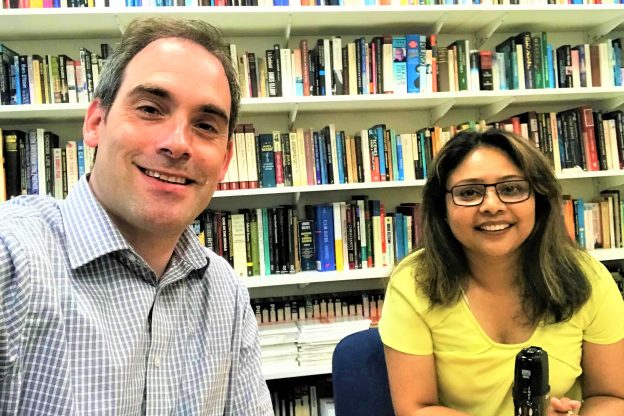
Reshmi Dutta-Flanders with Chris Deacy

Nostalgia podcast with Reshmi Dutta-Flanders

The latest episode of the podcast series on ‘Nostalgia’, hosted by Dr Chris Deacy, Reader in Theology and Religious Studies in the Department of Religious Studies, has just been released.

In this week’s interview, Chris interviews Dr Reshmi Dutta-Flanders, Honorary Research Fellow for the Department of English Language & Linguistics. Reshmi grew up in Calcutta and came to the UK to study English at King’s College London in 1989. In this fascinating conversation, Reshmi compares her experiences of previously studying literature in India and how she was able to acquire various research skills.

Reshmi talks about the influence of her aspirational parents. Her father was a survivor of the Partition, and ended up doing an Engineering Degree in Wolverhampton. She also discusses her own experience of an arranged marriage, and we learn that her mother has just written a book, at the age of 80, in the field of Religious Studies.

Reshmi has often felt a need to prove something to herself, and has often felt a sense of dissatisfaction and never really felt a sense of belonging. She discusses how fear has often prompted her to push herself forward, and we talk about the degree to which education can be seen as an enjoyable pursuit and how it might be possible to enjoy what one is doing in the moment without worrying unduly about the future.

In the final part of the interview, Reshmi speaks candidly about her experience of teaching in Category B and C prisons where her students were often inveterate and institutionalized prisoners.

The podcast is available here:
https://audioboom.com/posts/6993486-reshmi-dutta-flanders

Comparison

Research documentaries on campus

Join us for a screening of two fascinating short research documentaries over lunchtime at our Canterbury and Medway campuses on Monday 17 September and Thursday 20 September.

Made for KMTV, each film will last around 12 minutes followed by a guided debate with the scientists, contributors and filmmakers involved. There will also be a small gallery showcasing some of the public engagement work being undertaken by researchers at  Kent.

Film 1: The Mohawk of Consciousness

What does it mean to be conscious? How do we know if someone is a conscious entity? For centuries, human consciousness has continued to both intrigue and baffle.

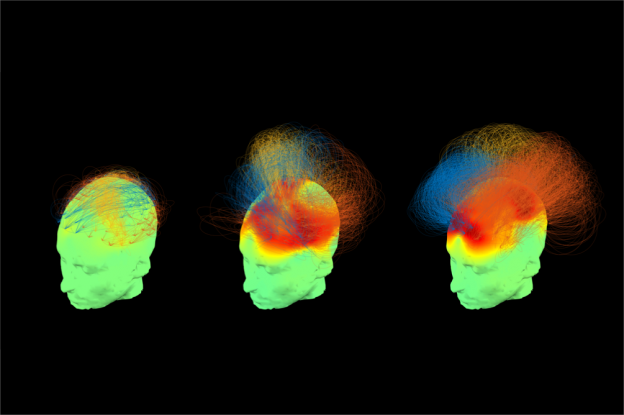
This film follows the research of Kent computational neuroscientist Dr Srivas Chennu who, using advanced electroencephalogram technology (EEG), is able to look inside the brain of vegetative state patients who are otherwise unable to respond and appear unaware of their surroundings.

Dr Chennu’s research has revealed remarkable levels of activity in patients that are often indisguishable from healthy controls. Today it is estimated that up to 40 per-cent of patients in a vegetative state have some hidden level of consciousness but are effectively “locked in”.

The documentary explores the increasing reliance on medical technology to make life and death decisions and in doing so delves into one of the most ethically, socially and clinically complex areas faced by the modern medical community.

Film 2: IVF – Science & Society

Louise Brown, the world’s first IVF baby celebrated her 40th birthday in July. Since then more than six million IVF babies have been born and the technique has evolved considerably. This short documentary will explore the world of IVF from the scientist’s laboratory bench to the private clinic.

World leading IVF scientists Professor Darren Griffin (Kent) and Professor Alan Thornhill will explore the science behind the procedure and talk about the techniques and advances being developed globally.

The film includes touching interviews with a mother about to have her first pre-natal scan, and a father of two teenage sons both conceived by IVF. As the NHS slashes IVF funding, the film also explores how this decision will impact on people and sectors of society that don’t have the funds for private treatments and asks if it’s time for the Government to review the current regulatory framework.

The Medway screening will take place from 12.00 to 13.00 on Monday September 17 in the Dockyard Church at Chatham Maritime Historic Dockyard and you can register for this here.

The Canterbury screening will take place from 12.00 to 13.00 on Thursday September 20 in the Gulbenkian Cinema and you can register here.

Entry is free and open to anyone but places are limited. Please reserve a seat by booking through either the Eventbrite Medway or Canterbury page or by contacting Jill Hurst – j.hurst-853@kent.ac.uk or ext 3907.


Image details: 

The Mohawk of Consciousness: A new way of analysing brain activity shows a striking difference in the brain activity of two vegetative patients (left and middle). Despite being unresponsive, the patient in the middle had brain activity similar to that of a healthy adult (right). 

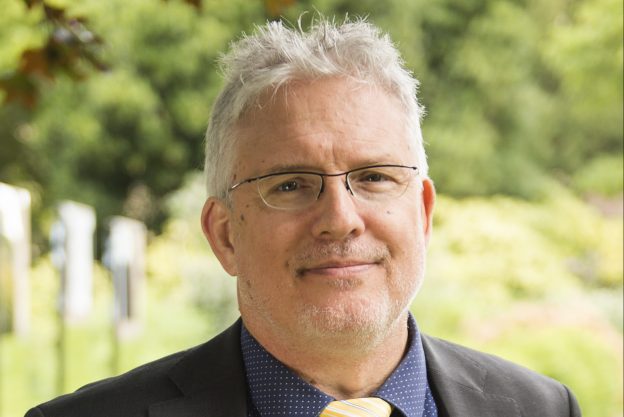
Stephan Lewandowsky

School of Psychology Annual Lecture – 25 September

Beyond misinformation: Parallel Universes in a Post-Truth World is the title of the School of Psychology’s Annual Lecture on Tuesday 25 September.

The talk will be given by Professor Stephan Lewandowsky, FAcSS, FAPS, Chair in Cognitive Science and Royal Society Wolfson Research Fellow, Chair in Cognitive Science and Royal Society Wolfson Research Fellow.

If you would like to join us, please register by emailing George Oatridge by 23 September. The event will begin with an optional drinks reception in Keynes College Atrium at 17.00, followed by the talk at 18.00 in Keynes Lecture Theatre 1 (KLT1).

Abstract

Imagine a dystopian world in which it is not medical knowledge but a free-for-all opinion market on Twitter that determines whether a newly emergent strain of avian flu is really contagious to humans. There are signs that public discourse is evolving in this direction: Terms such as “post-truth” and “fake news”, largely unknown until 2016, have exploded into the media and into public discourse. I explore the implications of the growing abundance of misinformation in the public sphere, how it influences people and how to counter it. I argue that misinformation in the post-truth era can no longer be considered a localized “error” that can be corrected with appropriate communication tools. Instead, I suggest that responses to the post-truth era must include technological solutions that incorporate psychological principles, an interdisciplinary approach that we describe as “technocognition.”

Brief biography

Professor Stephan Lewandowsky is a cognitive scientist at the University of Bristol. He was an Australian Professorial Fellow from 2007 to 2012, and was awarded a Discovery Outstanding Researcher Award from the Australian Research Council in 2011. He held a Revesz Visiting Professorship at the University of Amsterdam in 2012, and received a Wolfson Research Merit Fellowship from the Royal Society upon moving to the UK in 2013. He was appointed a Fellow of the Academy of Social Science and a Fellow of the Association of Psychological Science in 2017. In 2016, he was appointed a fellow of the Committee for Skeptical Inquiry for his commitment to science, rational inquiry and public education.

His research examines people’s memory, decision making, and knowledge structures, with a particular emphasis on how people update information in memory. His most recent research interests examine the potential conflict between human cognition and the physics of the global climate, which has led him into research in climate science and climate modeling. As a result of his work in climate science he was appointed Visiting Scientist at the CSIRO Oceans & Atmosphere laboratory in Hobart, Tasmania, in August 2017.  He has published more than 200 scholarly articles, chapters, and books, including numerous papers on how people respond to corrections of misinformation and what variables determine people’s acceptance of scientific findings. (See www.cogsciwa.com for a complete list of scientific publications.)   Professor Lewandowsky is an award-winning teacher and was Associate Editor of the Journal of Experimental Psychology: Learning, Memory, and Cognition from 2006-2008. He has also contributed around 50 opinion pieces to the global media on issues related to climate change “skepticism” and the coverage of science in the media. He is currently serving as Digital Content Editor for the Psychonomic Society and blogs routinely on cognitive research at www.psychonomic.org.

The talk is being hosted by Professor Karen Douglas, Professor of Social Psychology at Kent.

Winter berries

Pay during adverse weather – new University policy

A new policy on pay during adverse weather has been published by HR.

The new policy, ‘Pay during periods of severe weather conditions/major transport disruption’, replaces the HR Adverse Weather Guidance for Managers.

The  new policy outlines pay arrangements and responsibilities for all University staff during adverse weather conditions and is based on the recognition and appreciation that staff make every reasonable effort to attend work during bad weather.

In line with all previous and current policies, the University will not normally close during bad weather, but there may be circumstances when a reduction to essential services only is declared.

All managers and staff are encouraged to read through the new policy ahead of winter.

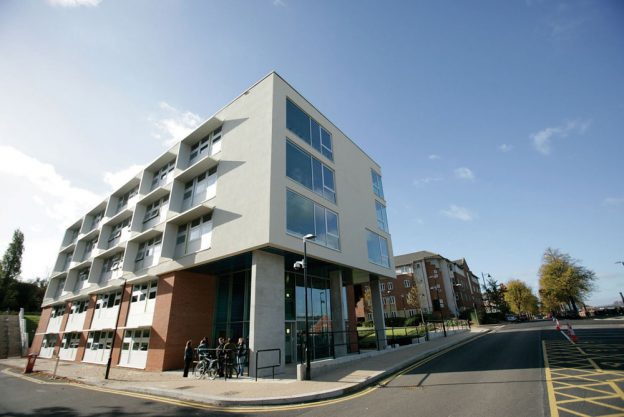
Rochester Building, Medway campus

Changes to central room bookings at Medway

The Timetabling Office has now taken over the booking of central rooms on the Medway campus during term-time. To streamline the process, we have made a number of changes:

  • Staff bookings for non-teaching events during term-time should be made via the staff booking form on the Timetabling Office website. Please note that bookings in standard teaching hours (09.00-18.00, Monday, Tuesday, Thursday, Friday and 09.00-13.00 Wednesday) for 2018-19 can only be made once the timetable has been released to students on 10 September; bookings outside the standard teaching hours can be made at any time.
  • Bookings for events during vacation should be made via the Conference Office: email conferences@kent.ac.uk or phone (01227 82) 8000.
  • Bookings for PC rooms in the evenings and at weekends during term-time and any time during vacation should be made by phoning (01227 82) 4888 or helpdesk@kent.ac.uk
  • Bookings for the meetings rooms in the Rochester building are overseen by the Office of the Vice-Chancellor (Medway) and are requested by emailing: rochesterrooms@kent.ac.uk
  • Requests for changes to standard room layouts should be made directly to Estates using the Archibus system. Your school/department will have a member of staff who has access to Archibus. Please ensure that you allow sufficient time in your booking request to the Timetabling Office/Conference Office/VC’s office to allow for the layout to be changed and then returned at the end of your event. If you change the layout yourself, please ensure it is returned to the standard layout as displayed in the room at the end of your booking.

If you have any other queries or concerns, please email timetabling@kent.ac.uk

Hanging file folder labeled with Pension

USS Consultation opens

The consultation process between the University and all current and eligible members of USS has now opened, running from 3 September until 2 November at 17.00.

Consultation will consider the cost-sharing proposal required to complete the latest pension valuation, details of which can be found on the dedicated USS consultation website. This consultation is entirely separate to, and will run in parallel with, the work of the Joint Expert Panel (JEP), set up to independently assess the basis of the 2017 valuation.

Several channels of communication have been created to facilitate the local consultation including meetings with staff and union representatives, University-wide communications and Kent’s own dedicated website.

Any questions that cannot be answered by the consultation materials and website can be asked by emailing the Kent HR Consultation team at hrussconsultation@kent.ac.uk


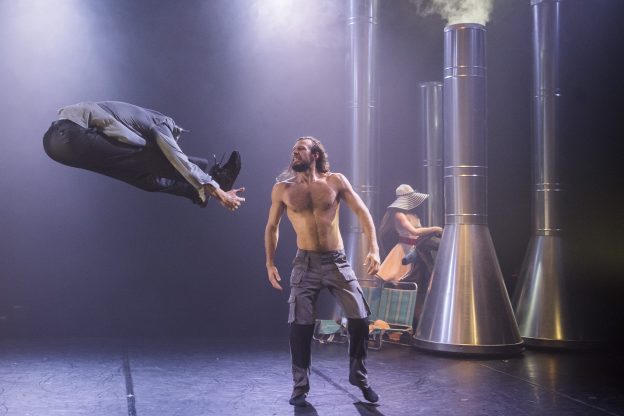
Medusa Joshua Smith, Kieran Graham by Tristram Kenton

It’s not every day we host a world premiere!

Next week the University will host a world premiere.

A brand new work by internationally renowned choreographer Jasmin Vardimon will be performed first at Gulbenkian, before embarking on a national (and eventually international) tour. There are still tickets available for performances on Thurs 13, Fri 14 and Sat 15 Sep – tickets from Gulbenkian.co.uk or call 01227 769075.

See Medusa for free!

If you are not traditionally a dance fan but interested in finding out more, Gulbenkian are offering you the chance to see Medusa for free. We have ten spaces left in our Introducing Medusa group, which you can join by emailing d.yard@kent.ac.uk

The group will meet twice:

Thursday 6 September, 19.00 – to meet the Jasmin Vardimon team, and discuss Medusa over a drink.

Friday 14 September, 19.30 – free ticket to watch the performance, followed by a chance to meet and chat with the dancers in a special Q&A after the show.

You need to be able to attend both dates and not be a regular dance attender.

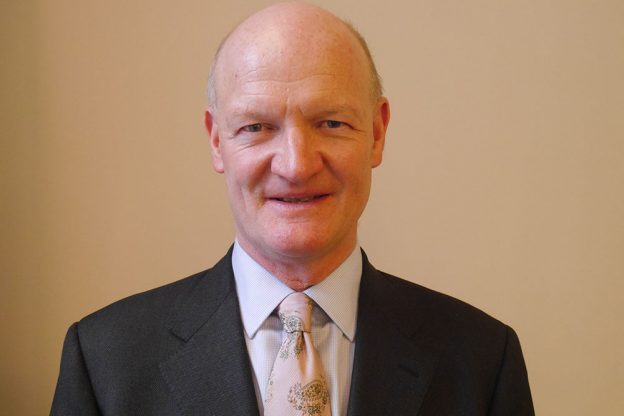
David Willetts

Foundation Day Lecture 2018

The University will be hosting its annual Foundation day lecture on 28 September with a talk from The Rt Hon Lord David Willetts.

Lord Willetts is currently the Executive Chair of the Resolution Foundation and Chair of the British Science Association, as well as the Chancellor of the University of Leicester.

Foundation Day is held each year in celebration of the foundation of the University of Kent.

The talk will be held in the Colyer-Fergusson Concert Hall. No booking is required but seating will be on a first come, first served basis.