Author Archives: Grace Shore Banks

Breaking Barriers: Summer School at Kent

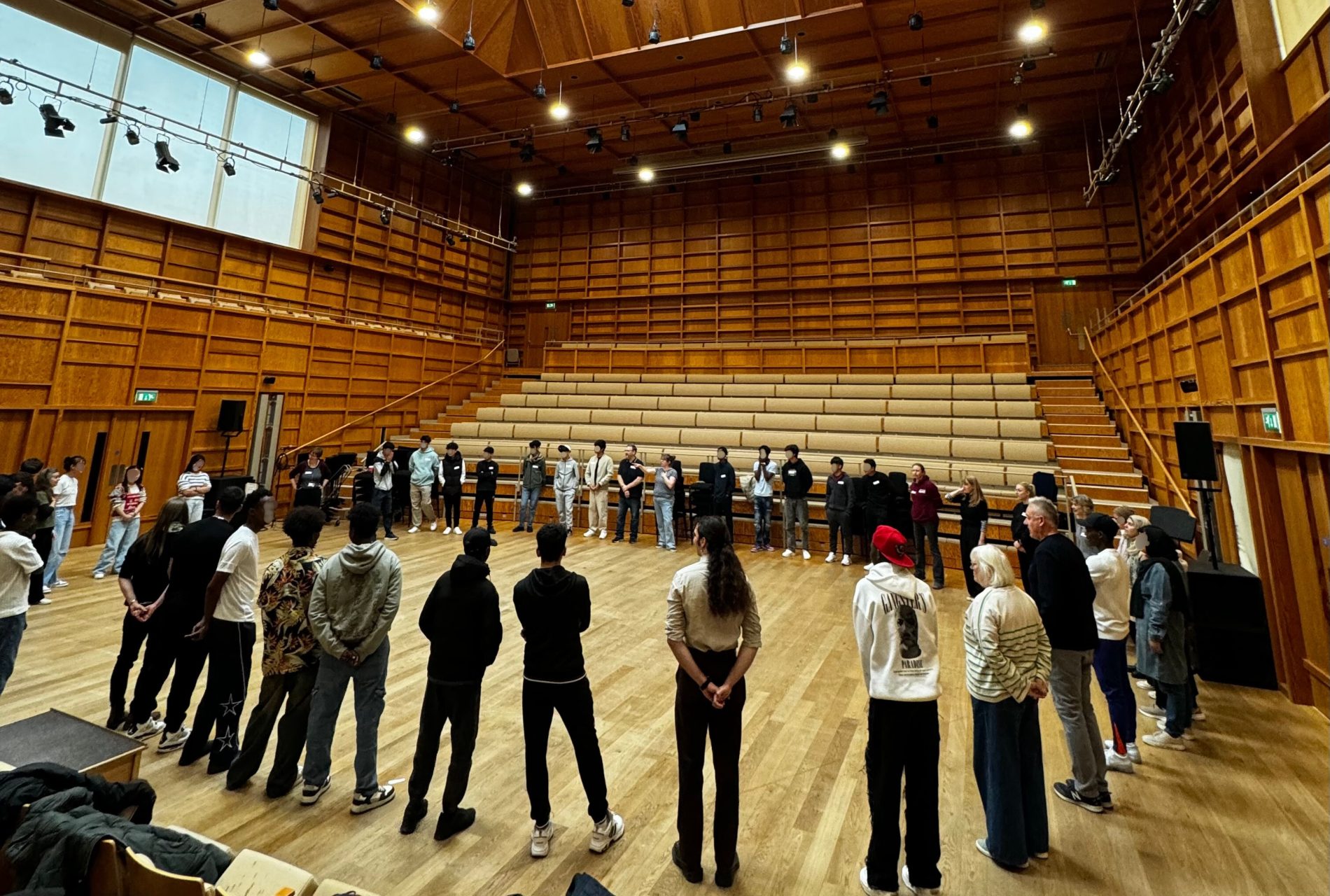
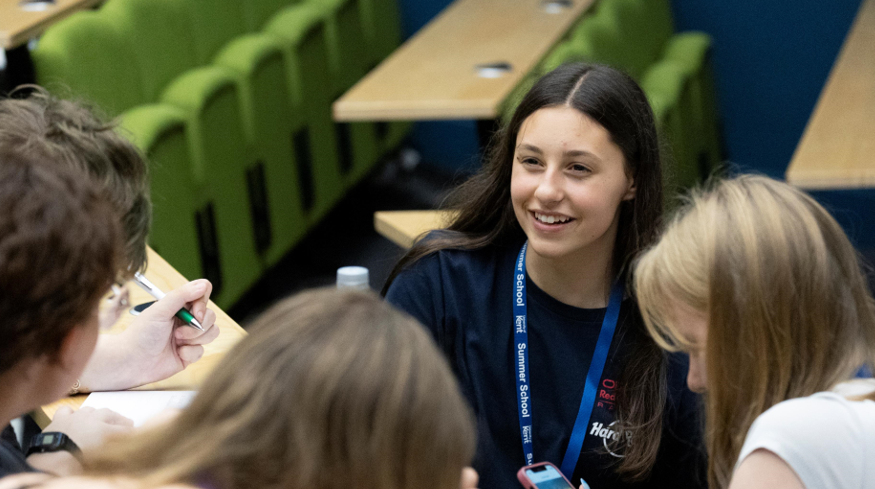
This month, Kent proudly welcomed 55 Year 10 students (aged 15 and 16) for a three-day residential summer school, an inspiring introduction to university life. Delivered by the Outreach team and supported by academic schools and student ambassadors, this annual event is designed for students from local schools, particularly those who may face barriers to accessing higher education. 
 
The aim is to convey as much of a university experience as possible, to give young people who, due to systemic barriers, may not have previouslconsidered that higher education was for them,’ explained Claire Allison, Head of Outreach and Widening Participation.
 
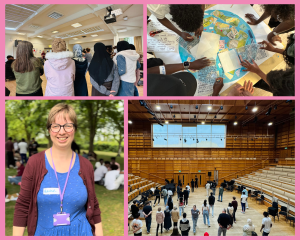
Participants are immersed in every aspect of student life, from academic workshops and seminars to social events and independent living. The packed timetable began with icebreakers and a campus tour, followed by a range of hands-on sessions, including The Maths Behind Game ShowsFilm ProductionBlackout Poetry, and BioBlitz Bingo. Students then collaborated on a group creative project, which culminated in a showcase for their parents and carers on the final day. 
 
Of course, university is as much about community as it is about study. Evenings featured society taster sessions, a lively quiz night at Woody’s—our popular campus sports café—and a formal dinner followed by a disco at the Sports Pavilion. Outreach staff and ambassadors joined the dancefloor fun before ensuring everyone was safely back in halls for lights out at 11pm. 
 
Participants were also encouraged to practice independence and budgeting: while breakfasts and dinners were provided, each participant received a KentOne card with a set allowance to spend on lunches, giving them a taste of real campus life. 
 
Most of the students arrive feeling a bit nervous or unsure what to expect. By the end of the summer school we see a real transformation in their confidence and the belief that university can be for them,’ Outreach Officer Nicola Ballantine said. ‘A large key to the success of the Year 10 Summer School is the connection that our Ambassadors build with the students over the course of the week.’  
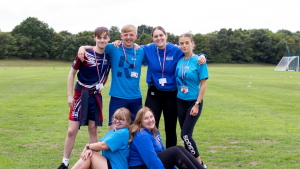


This year, one of those Ambassadors, Owen Craycraft, was once a Year 10 Summer School participant himself. Owen who is now a Kent Computing student, returned to the same programme he experienced as a teenager as a Kent ambassador, paying it forward to the next generation as well as gaining valuable experience for his CV. These ambassadors work on a variety of residentials throughout the summer months, such as the ‘Ambition to Succeed Year 12 programme currently being enjoyed on campus this week by 60 students from local schools and collegesProviding young people with a taster of university life is evidenced as being really impactful in supporting their progression to Higher Educationby developing both their sense of belonging and confidence, and broadening their academic horizons.
One participant summed up the impact of the experience perfectly: 
 
‘I didn’t want to go to uni I wanted to go straight into an apprenticeship. But I came here, and after the tours, and after the seminars and everything, I felt comfortable. When we learnt about breaking barriers, I took that all in because it helped me. It showed you the perspective of breaking barriers in life, in general. And that was really good.’

From new friendships to newfound aspirations, Kent’s Summer School continues to open doors —and minds—for young people across our region. 
Outreach and Widening Participation galvanise discussion on young people and phone use

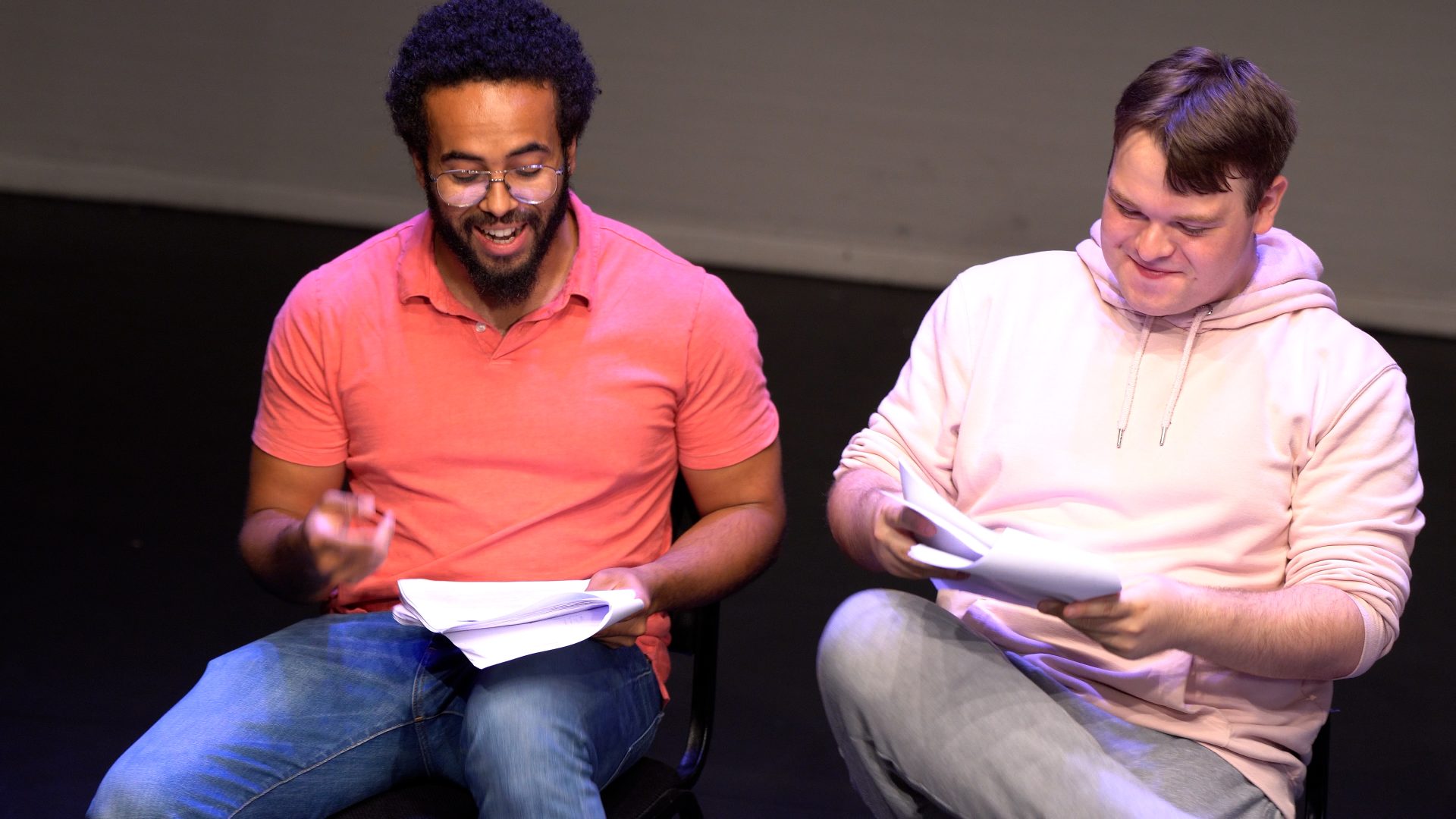
On 8 July, Kent’s Vice Chancellor and President Georgina Randsley de Moura, together with the University’s Outreach & Widening Participation team, hosted a special performance of Generation FOMO by Isabelle Defaut, followed by a panel Q&A. Generation FOMO, a verbatim play created from authentic interviews with young people aged 11-25 about their relationships to phones and social media, was devised by one of Kent Drama’s Graduate Theatre Companies, Portrait Theatre.   

Clare Allison, Head of Outreach & Widening Participation, told us: ‘There has been a huge amount of discussion recently around the use of mobile phones and social media, and the impact that this is having on young people’s mental health and wellbeing. The event was designed to gather educational leaders in the region to galvanise discussion and collective action to address the issues raised in the performance. There was real electricity in the room and having such important people sitting up, taking notice and engaging in the discussion was fantastic.’ 

The play has been expanded to include ‘The Social Experiment’, an ongoing piece of research devised by Isabelle Default (writer and producer of Generation FOMO), and led by Dr Lindsey Cameron in the School of Psychology. To take part young people (and their teachers) volunteer to swap smartphones for ‘dumb phones’ – a simple Nokia model and a Dictaphone, to record their feelings for a week. Dr Cameron interviews all participants before and after, and is collating their responses to be published at a later date. The play and related social experiment has gained a lot of press attention.

‘Excellent performance, really powerful and important piece of work … I hope the work inspires continued open and honest conversation in all schoolsfamilies and communities!’ 

The post-performance panel featured insight from Dr Lindsey Cameron, teachers Stefan Peto (Simon Langton Grammar School for Boys) and Emma Ritchie (The Whitstable School), representatives from the parent led group Whitstable Unplugged, a Year 12 student who had participated in The Social Experiment, along with perspectives from writers and actors from Portrait Theatre. Chaired by Clare Allison, the panel had a rich and wide-ranging discussion about the development of the play, the importance of modelling regulated mobile phone use in the home, along with practical ways that parents and teachers can support young people navigate the ever-evolving digital landscape. 

Outreach & Widening Participation have invested in both the play and associated research, and there are plans to continue the important conversations that this event started, by way of a conference in the 25/26 academic year.  Isabelle Default, Artistic Director of Portrait Theatre, said: ‘I want to express my heartfelt gratitude to the University of Kent’s Outreach Department. Their support has been instrumental in helping us reach such a wide audience in just 12 months. Without them, this simply wouldn’t have been possible. Generation FOMO is currently in the process of booking its third tour of the show this year!  We will be continuing the work we are doing with secondary schools around Kent and beyond, in September.’  

Workshops with Kent Refugee Action Network (KRAN): Storytelling and Community

As part of Kent’s continued commitment to our Sanctuary work, Dr Rachel Gregory Fox, Leverhulme Early Career Fellow writes about her recent series of workshops for students from Kent Refugee Action Network (KRAN) which focused on storytelling.

‘In answer to the theme of this year’s Refugee Week, ‘Community as a Superpower’, we invited students to the University of Kent campus to explore the many ways that we tell stories about community, through drama, art, and poetry, and the ways that crafting and telling stories can help us to build spaces of community.

KRAN is a registered charity organisation which has supported young unaccompanied refugees and asylum seekers in Kent since 2003. Amongst numerous mentoring and advocacy schemes, KRAN’s Learning for Life education programme supports young asylum seekers to develop their English language, and equips them with knowledge, skills, and strategies to help them navigate everyday life in the UK, and to transition to college and other vocational pathways.

The workshops represent one branch of my research project into modes of storytelling about and amongst refugee and migratory communities, funded by the Leverhulme Trust. Part of the intent for these workshops was to work directly with the communities who my research focuses on, and to exalt the process of learning as a valuable research and pedagogical outcome unto itself. Organised with input from Nigel Pantling, the director of KRAN’s Learning for Life programme, the workshops sought to support the learning and social journeys of their students. The KRAN teaching team, and University of Kent PhD candidates Arcin Celikesmer and Vicky Sharples, worked alongside myself, Nigel, and invited instructors and creatives, to create a space of engaged and community-driven learning for students.

The first workshop, headed by Emma Willatts (Gulbenkian), energised students coming together from KRAN’s Canterbury and Folkestone hubs for the first time, and built towards the creation (in small groups) of tableaux and short performances of moments of friendship, community, and celebration. There was dancing, custom handshakes, a convincingly staged boxing match, and a marriage ceremony performed, amongst many other examples.

The following week, artist Dan Thompson guided students in collaging maps of their world—maps shaped not just by place and language, but by the things that ground us, such as our hobbies, conscience, and beliefs, as well as our aspirations. Shoulder-to-shoulder, students got busy tearing and sticking paper and stencilling words, to create maps of their shared roots, values, and hopes.

The third, and final, workshop was led by Dr Kat Lewis. After unveiling the maps the students had made the previous week, students set out to craft poems founded on the things that make us who we are. Throughout, Kat emphasised the importance of each student and their values to the world around them, even when that world can feel alienating and hostile. The poems the students wrote, and which some performed, were delivered with honesty, imagination, openness, humour, and confidence. Their poems represented a celebratory culmination of three days hard work, which focused not just on student learning, but also on creating a safe and sociable community space where they were able to explore the value of their own, and each other’s, stories.

Throughout, I was impressed by the creativity of KRAN’s students, and moved by their stories. It has been a privilege and a joy to work with KRAN in the organisation and facilitation of these workshops and to be able to support a part of these young people’s learning journey.’

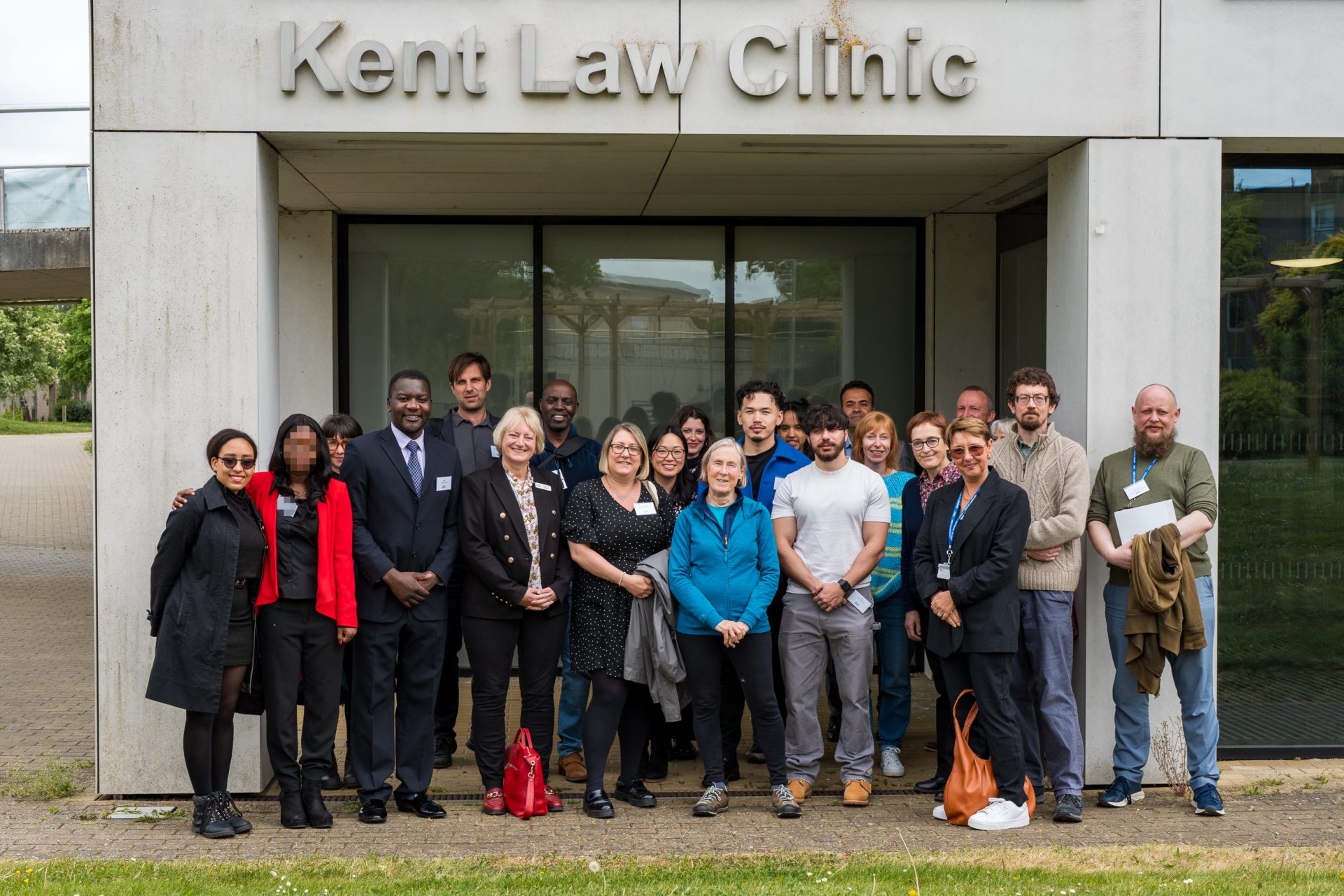
Sanctuary Awards Team and University staff outside Kent Law Clinic

University of Kent awarded University of Sanctuary Status

Kent is proud to announce that we have been awarded ‘University of Sanctuary’ status in recognition and celebration of our values and the work we do to exemplify a commitment to welcome people seeking sanctuary.  

The Sanctuary Award means Kent joins a list of other prestigious Universities of Sanctuary – including our partners through the Eastern Arc research consortium whose upcoming conference will focus on themes related to migration and movement. 

Speaking about what this award means to Kent, Professor Georgina Randsley de Moura, Acting Vice Chancellor at Kent said: ‘We are honoured by this award and proud to be part of a movement that stands for compassion, dignity, and inclusion. As a university, we are committed to creating a place of safety and belonging for all. Our work inspires us to look beyond the classroom and into our wider role as a civic institution, with universities not just centres of learning but also active contributors to our wider communities.’ 

The decision was made after a visit from the Sanctuary Awards team in May, where the panel learnt about the various initiatives, scholars and local partnerships that we have been supporting.  

Talking about Kent’s work, and why we have been recognised, Sian Summers-Rees Chair of City of Sanctuary UK and Kent Alumna said: ‘We very much enjoyed learning more about all your incredible efforts to promote sanctuary and welcome at the University. It was most apparent hearing from the scholars that the university has gone above and beyond to provide the support needed. The University-wide commitment to promoting welcome across the University and beyond was also very evident and made me particularly proud of being a University of Kent alumna.’  

The day included talks from our current and former Sanctuary scholars, who spoke about their time at Kent and how the university has supported and inspired them. One of these, Makomborero Haruzivishe, said: ‘The Sanctuary Scholarship at the University of Kent gave me hope in a hopeless world, re-connected me with ambitions I thought were lost. I am in charge today, empowered to chart my own path, strengthened by the indispensable support the Sanctuary Scholarship award has given me. I will forever be grateful.’ 

This award is further recognition of the work happening across the university to provide a warm, welcoming and supportive community to anyone, irrespective of their background. As well as refugees and asylum seekers, this includes empowering underrepresented students and those who may not have had higher education expectations through our wider outreach work.  

Recent work in this area has included a new ‘Championing Boys’ initiative to address barriers faced by boys in education, along with a special Spring School for care experienced young people looking to access University.  

More about our Sanctuary work can be found here. 

Celebrating our Mental Health Ambassadors

Last week student volunteers from across the University were presented with certificates on completion of their training as East Kent Mind Ambassadors. East Kent Mind, who run the Community Oasis Garden (COG) in partnership with the University, have developed the Ambassador scheme as part of a newly launched East Kent Mind Society, which will run with a strong affiliation between the society and its parent charity to give support. To become an ambassador an individual completes a training package and takes on an element of social action volunteering for the charity.

Simon Dolby, Development Lead at East Kent Mind told us: ‘So far 30 students from the University of Kent have completed their ambassador training and are now planning social action to support the work of East Kent Mind, but we are keen for more potential ambassadors to come forward.’ 

Students who were a mixture of COG Ambassadors, student volunteers and Res Life Ambassadors received their completion certificates from Professor Iain Wilkinson and were inducted to take part in EK Mind Social Action Projects. These include creating supporting East Kent Mind’s Wear It Blue campaign during Mental Health Awareness Week in May, encouraging positive conversations around mental health wider community, a fundraising fun run, as well as volunteering in the wider community for example, at Mind’s Revival Cafe in Whitstable. 

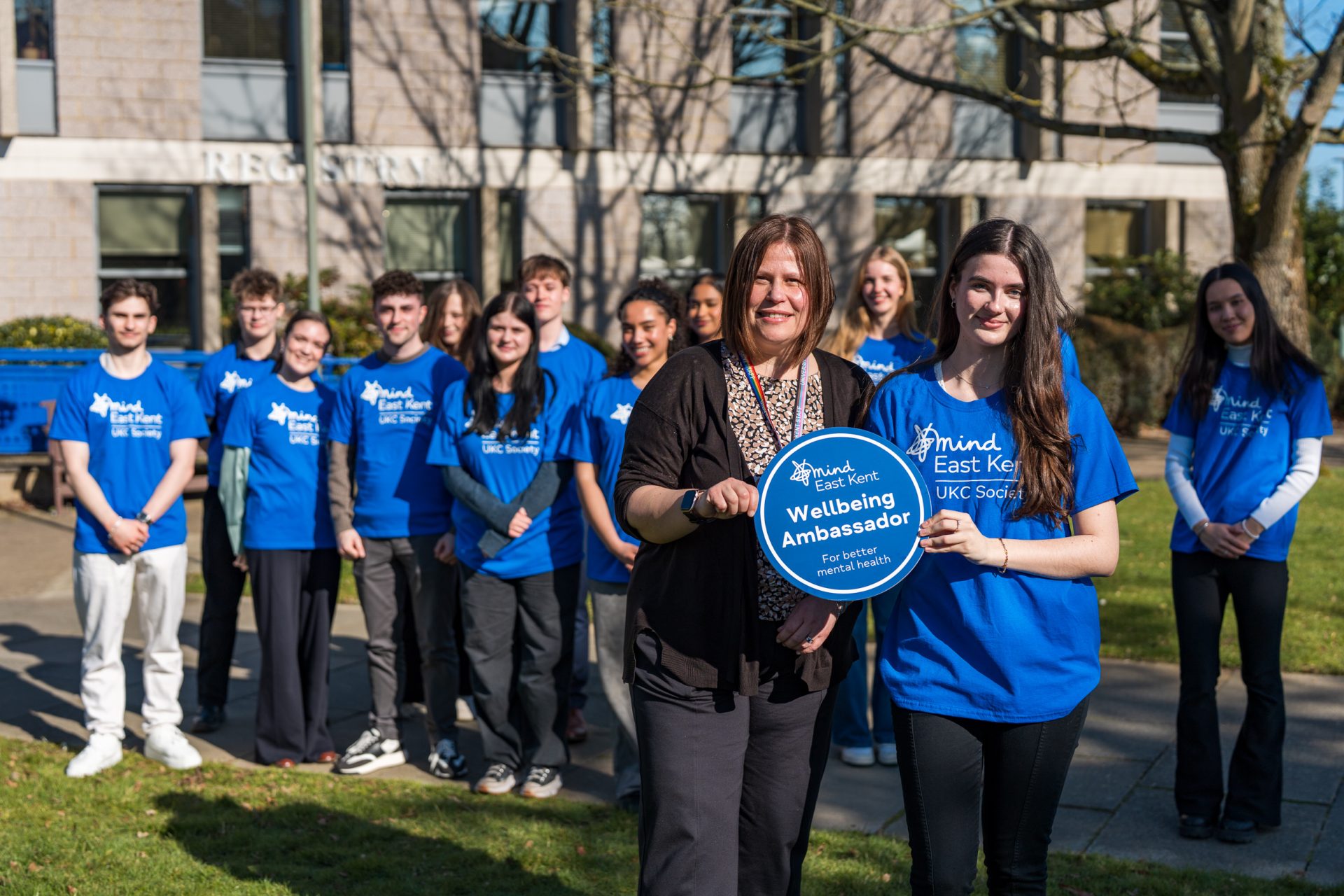
Earning their East Kent Mind Wellbeing Ambassador status with the charity, were third year students Katie Whitewood and Rosie Hawkins, Co-Presidents of the new society who helped create the initiative along with Simon Dolby.

Katie explained her motivation for getting involved: ‘Mind is all about connections and helping others feel seen and supported. I want to help strengthen our links with East Kent mind and really make sure that students are aware of our support off-campus.’ She added: ‘We are looking to expand our outreach, particularly to students at Canterbury Christ Church University, where bridging connections between universities is an important step in supporting mental health universally.’

Rosie told us why she feels this initiative is so important saying: ‘Mental health should always be top of our priority list. It is a given that Uni adds to mental health stresses, with deadlines, presentations and exams – it’s not easy. But one of our driving motivations is to create a safe space so you fell you have a shoulder to lean on, whether you need advice, guidance or a chat.’ 

There is also invaluable experience to be gained too. Wellbeing Officer, Reiss is thinking about this path for his ongoing career: ‘I hope to be able to take my training forward, as I go through a masters’ and hopefully a PHD.’

East Kent Mind Ambassadors with Professor Iain Wilkinson

The full list of East Kent Mind Wellbeing Ambassadors are as follows:  

Katie Whitewood 

Gellian May Legaspi 

Reiss Cordrey 

Alisa Chin 

Neive Wright (external to Uni)  

Daisy Gower 

Tabi Oyewumi 

Mashaal Chughtai 

Eren Newham 

Balpreet Kaur 

Ikeoluma Modebelu  

Franco Brichetti 

Neemisha Das 

Dacian Stan 

Nehi Eigbefoh 

Preston-Paris Ingold  

Zarine Zafar 

Emily Catlin 

Hayley Blackburn  

Ria Groz 

Rosie Hawkins

Parvathy Rajeev

Kerriva Kent-Ramotar

Chloe Birkett

Lauren Mansfield
Himadri Himadri
Melissa Da Silva


If you are interested in the East Kent Mind Society email ( society@eastkentmind.org.uk ) Rosie’s. If you would like to apply to become an East Kent Mind Ambassador contact the East Kent Mind Society ( ambassador@eastkentmind.org.uk ).