Author Archives: Allie Burnett

Drinking safely

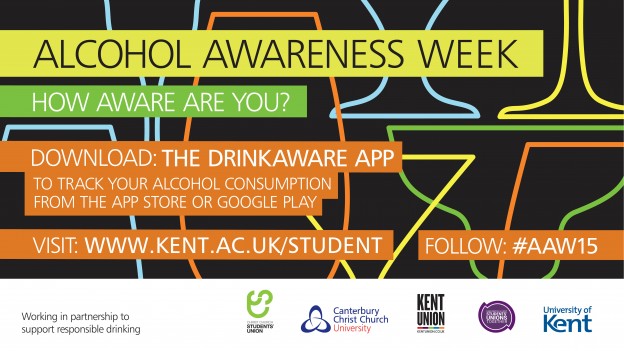
This Alcohol Awareness Week (16-20 Nov), we are encouraging students to think about their drinking habits and the impact it has on their wellbeing.

Today’s advice looks at how to enjoy alcohol safely and protect against drink spiking.

There’s no need to stop drinking altogether, all you need to do is follow the guidelines of 3-4 units for men per day and 2-3 units for women per day. To monitor your drinking why not download the free Drinkaware app.

Avoid binge drinking

Drinking lots of alcohol in a short space of time will raise your blood alcohol concentration and could make you drunk very quickly. This could result in a higher risk of an accident or fall. In extreme cases you could die as an overdose of alcohol can stop you breathing, stop your heart or make you choke on your own vomit.

So why not:

  • start drinking later
  • try a smaller bottle of beer of glass of wine
  • go for a lower strength drink
  • add a mixer to make your drink last longer
  • take a break between drinking and have a soft drink or glass of water which will also help you stay hydrated

Be aware of spiking

Every year hundreds of people have drugs or alcohol added to their drinks without them knowing. This can be by someone they know and it is meant as a joke but the effects are far from funny. Drink-spiking is illegal and seriously dangerous.

How to avoid drink spiking:

  • never leave your drink unattended
  • keep an eye on your friends’ drinks
  • don’t accept a drink from someone you don’t know or trust
  • try sticking to bottled drinks and avoid punch bowls or jugs of cocktails
  • if you think your drink has been spiked, don’t drink it – tell a trusted friend or relative immediately.

How will I know if my drink has been spiked?

Most drugs take effect within 15-30 minutes and symptoms usually last for several hours. Symptoms will depend on which drug has been used, but most include some of the following:

  • blurred vision
  • confusion or disorientation
  • difficulty concentrating or speaking
  • feeling and being sick
  • hallucinations
  • loss of balance and finding it hard to move
  • lowered inhibitions
  • memory loss
  • paranoia
  • unconsciousness

What to do if your drink is spiked

First, tell someone you completely trust, such as a friend, a relative, a medical professional or the police

If you are alone, call someone you trust and get to a safe place. If you need urgent help, call 999. If you don’t have your phone, ask to use the bar’s/club’s phone. Don’t leave with someone you don’t know and be wary of accepting help from strangers.

If you feel unwell, get someone you trust to take you to A&E. Ask a friend or relative you trust to take you home and stay with you until the drugs have left your system.

Report it to the police as soon as you can. The police will need to take blood and urine samples. Most drugs leave the body within 72 hours so it’s important to be tested as soon as possible.

Read more on the NHS website.

If you have been affected by any of the above and want to talk to someone please contact the University’s Wellbeing Team.


Making the most of your winter break

The winter break is a great time to relax and reflect on your year. It’s also a chance to think about new challenges for the New Year. Being a Kent student, there are plenty of opportunities to learn new skills, enhance your employability and have new experiences.

The Employability webpages provide information on many of these opportunities, including:

  • Study abroad. This is a valuable experience which you’re likely to remember for the rest of your life. It’s not only a fun and exciting opportunity, but will put you in a better position when you graduate.
  • Learn a new language. A new year is the perfect opportunity to take on a new challenge. Here at Kent you can take a wide range of language courses, whether you’re a beginner or more advanced.
  • Work experience. In an increasingly competitive job market, relevant work experience has never been more valuable. It’s because of this placements are harder to come by. We offer a wide range of support to help you get that all-important work placement.
  • Why not volunteer? Volunteering is a brilliant way to add essential skills and experience to your CV, while making new friends and supporting a cause you believe in. Also, most the volunteering opportunities we offer go towards your Employability Points.
  • And the support doesn’t end there! Our experienced careers advisers can help you with essential skills development to make you more employable.  Including, creating a quality CV and how to have interview success.

Alcohol and your health

This Alcohol Awareness Week, we are encouraging students to think about their drinking habits and the impact it has on their wellbeing.

Today’s advice looks at how cutting down on the amount you drink can improve your health.

Health benefits of drinking less

  • Weight loss – alcohol is seriously fattening. Four pints could be the equivalent of eating a hot dog and a burger, with a doughnut for dessert. Cutting back on the amount you drink could see your waistline shrink!
  • Clear skin – drinking dehydrates you and deprives the skin of vital vitamins and nutrients. So swap the zit-zapping cream and that extra pint for a glass of the clear stuff.
  • Mental health – too much alcohol can lead to sleepless nights, stress, anxiety and memory loss – not what you want when studying for a degree!
  • At less risk of developing serious illnesses – the more you drink the more likely you are to develop liver disease, some cancers, heart disease, brain damage, infertility, dementia and the list goes on. Read more on the NHS website.

Are you drinking too much?

The government’s lower risk guidelines for alcohol for men are 3-4 units per day and for women 2-3 units per day.

Did you know – there are 1.5 units in a small glass of wine, 2 units in a pint of lower strength cider and 2 units in one can of beer.

Track your drinking, how much you are spending and your calorie intake with the free Drinkaware app.

Want to talk?

If you need support, talk to a trained adviser from Turning Point about your drinking habits and how to cut-down.

Turning Point in Canterbury

Turning Point will be on the Canterbury campus on Tuesday 17 November, providing advice on the raised plinth area next to Blackwell’s on central campus, from 10.00-14.00.

Turning Point advisers are also on the Canterbury campus every Thursday during term-time between 13.30 and 17.00 in Keynes College. Find out more by emailing wellbeing@kent.ac.uk or calling 01227 823206.

Turning Point in Medway

Turning Point will be on the Medway campus – providing advice in their red bus outside Pilkington from 10.00-14.00 on Tuesday 17 November.

If you’re based at Medway you can contact Turning Point on 01634 583660 throughout the year.

Alcohol Awareness Week

This Alcohol Awareness Week (16-20 Nov), we are encouraging students to think about their drinking habits and the impact it has on their wellbeing.

Throughout the week, we will be posting daily blog posts on the Student Guide offering helpful advice, including how to keep track of your alcohol-consumption, where to go for support if you feel you need it and ideas for alcohol free events.

Turning Point will be on the Medway campus – providing advice and refreshments in their big red bus from 10.00-13.00 on Tuesday 17 November. The bus will be between the Pilkington and Jellicoe Buildings.

Download the Drinkaware appto track your alcohol-consumption from the app store or Google Play.

This is a joint campaign with Kent Union, GK Unions, Canterbury Christ Church University and Christ Church Student Union.

Cambridge exam preparation courses

Is English your second language? Cambridge English exams are lifelong qualifications with a worldwide reputation.

The Centre for English and World Languages offers CAE and CPE exam preparation courses. A carefully designed study programme will help you to develop all the language and examination skills required.

The course starts on 26 January 2016 and ends on 5 April 2016.

On Tuesday 19 January 2016 from 18:00-19:30 there is a free taster session. This gives you a chance to meet the teacher and ask questions about the course.