Yearly Archives: 2018

UNI

U.N.I (You and I) Protect: See something? Say something. Do something! Make a difference.

Places are now available on U.N.I (You and I) Protect workshops running in March 2018.

All of us can take action to protect each other and the wider University community to help promote a culture of dignity and respect at Kent. This programme will help you recognise and challenge problematic and harmful behaviour, such as abuse or sexual harassment.

On completion of the course participants will understand what a ‘bystander’ is and be empowered to be able to intervene in situations safely and with confidence.

The workshops will run on Friday mornings from 10.00 to 11.30 during weeks 20, 21 and 22. All students who complete the course will receive 15 Employability Points.

If you want to take part or simply want to find out more please visit the Study Plus website. The module code is KE148. Places are limited so please sign up as soon as you can.

Further information about the course can also be found on the Student Services website.

University of Kent logo

Industrial action – update from the University’s Executive Group

This is to bring you up-to-date with the latest situation regarding the industrial action involving some members of staff at Kent who are members of the Universities and Colleges Union (UCU). The dispute is over proposed changes to the Universities’ Superannuation Scheme (USS), one of the pension schemes provided by universities for their employees.

This a national dispute concerning a large pension scheme involving many UK higher education employers, whose interests are represented by Universities UK (UUK). Although, we are not free to resolve this dispute on our own, or with our own staff, we have been lobbying hard to encourage those involved to return to discussions to reach a resolution.

Therefore, we welcome the announcement that UCU and UUK have agreed to involve the national conciliation service ACAS in the next stage of their talks to help reach an agreement.

In the light of this recent news, the University has made an offer to all members of staff who have taken industrial action over the past five days. If they agree to suspend their action and now work normally, we will not deduct any pay for lost working time. We are aware that some of those taking industrial action have described this as a bribe, and regret the use of such language in response to an offer which was made in good faith and which is in line with our ongoing commitment to minimise the impact of this action on our students.

We have now heard from the local UCU that this offer has been rejected outright but we will continue to keep our offer on the table. Our aim is to ensure our students are not disadvantaged by this industrial action and, as such, we have a duty to try to move this situation forward. A continuation of this action can only have an increasingly negative impact on our students.

We truly hope that the national discussions lead to a resolution in the very near future. There is no doubt that this is a difficult situation for all concerned and, while we have the greatest sympathy with those who have concerns about the future of the pension scheme, the interests of our students remain at the forefront of our activities.

In the meantime, all students should work on the basis that your studies will continue as normal, unless told otherwise. This means aiming to attend scheduled teaching, completing and submitting assessments by the relevant deadlines, and continuing to plan for any examinations.

Further information, including FAQs, is available here (https://www.kent.ac.uk/academic/industrial-action/index.html).

Wellbeing Festival 2018

Wellbeing Festival 2018

Do you #LoveYourMindLoveYourBody? Student Support and Wellbeing encourage you to enrich your life and try something new for free! We have a huge variety of inspiration for all students and staff at the #WellbeingFestival2018. It will be very interactive and a chance to relax and connect positively with your own mind and body, and with each other. Follow @unikentssw on Twitter, Facebook and Instagram as we publish details of the events as they are confirmed over the next few weeks.

For the full programme please visit our web page.

Medway

Come along to the Student Hub, Faith Space, Drill Hall Library and CCCU Rowan Williams building at Medway on Tuesday 20 March between 12pm and 3pm to discover a variety of fun and practical ways to improve your wellbeing. Medway highlights include a Mental Health Stigma workshop, Drill Hall library wellbeing, GK Union, mindful colouring, Medway Activities, Medway Park leisure centre, free healthy snacks, and the University of Kent Krishna Consciousness Society.

Canterbury

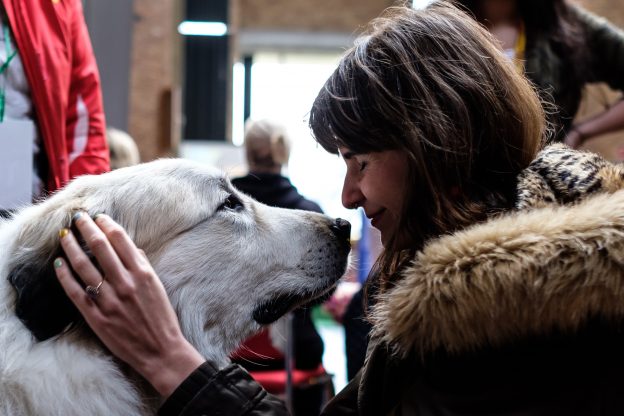
Come along to Eliot Dining Hall on 23 March between 12pm and 3pm for an exciting line up of over 25 internal and external organisations coming to take part in the day, such as Espression Arts café, Canine therapy (the now famous cuddly George!), bush craft, live music, free healthy food and nutrition information, mindful colouring, various mental health and charity stands, representatives from the LGBT network, the Chaplaincy, the Sports Centre and Kent Union. In addition there will be some free workshops so watch this space for details and come and try something new: yoga, Tai Chi, mindfulness, raga singing, writing for wellbeing, HeartMath: stress management & herbal medicine.

Kent logo

Pay policy on industrial action update

In response to a number of queries being received (including feedback from Kent Union), the industrial action FAQ’s and Kent’s pay policy have been updated to provide clarification relating to the treatment of those striking members of staff who are employed on GTA, HPL and part-time contracts.

Please review the updated information: https://www.kent.ac.uk/human-resources/pensions/uss-industrial-action2018/

If you have any further questions please direct them to the Employee Relations Business Partnering team at: ERBP@kent.ac.uk

Interested in public speaking? Become a Debating Tutor

Kent’s outreach debating programme aims to raise the speaking and listening, confidence, teamwork and leadership skills of secondary school students and we are recruiting Kent students to work as tutors to help deliver the programme.

Working hours are variable and flexible, on campus and in secondary schools, and will generally be Monday to Friday 09.00 – 15.00. Previous experience of debating is not essential as full training will be provided.

Salary is £14.99 per hour.

How to apply:

Email your name and a short statement explaining why you would like to be a tutor to outreach@kent.ac.uk .

Application deadline: Thursday 22 March

Assessment and Selection Day: Saturday 24 March, Canterbury

If you have any questions, or would like further information, please email outreach@kent.ac.uk .

To find out more about Kent’s outreach programme please visit our website.

In-sessional logo

CEWL- Individual Writing Tutorials

The Centre for English and World Languages (CEWL) is offering Individual Writing Tutorials to give you the opportunity to discuss your academic writing with a member of staff from CEWL.

Advice will be given on the language, structure and coherence and cohesion of your work. Individual sessions last 20-30 minutes each and are free of charge.

Tutorials are available all year. To make an appointment, please email us at cewl@kent.ac.uk.

Please note that this is not a proof-reading service.

Kent Logo

Industrial action: update

Following yesterday’s (27 February) informal talks between representatives of UUK and UCU aimed at finding a way forward and resolving the current USS related dispute, we have been advised by UUK that the talks were positive and that UCU proposed a further potential solution, closer to the employer position, which can form the basis of further talks.  Both sides agreed to involve ACAS in the next stage of their discussions.

The University is pleased that there seems to have been this progress, in line with the representations we have made to both UCU and UUK to return to discussions. We are writing now to all staff at the University to ask all those who have participated or intend to participate in the industrial action to suspend their action in the interests of our students whilst these negotiations continue. In return for the suspension of action locally, the University would not make any deductions from those staff who participated in the first five days of industrial action.

LGBT+ flags on campus

[Featured image – Rainbow by Benson Kua CC BY-SA 2.0]

As LGBT History Month draws to a close you may have been wondering what the flags flying all over campus represent. Here is a quick guide…

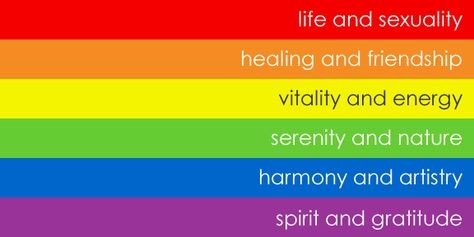
GAY PRIDE FLAG: Medway and Registry (Canterbury)

The pride flag originally held eight colours with pink placed on top of the red, symbolising sexuality and indigo placed below purple, symbolising spirit. When the flag became popular and widespread it demanded production; pink had to be dropped because it was not commercially available, later seven became six so as to keep the colours even.

“The rainbow is a symbol and celebration of the diversity of genders and sexual orientations. It’s beautiful, all of the colours, even the colours you can’t see. That really fit us as a people because we are all of the colours. Our sexuality is all of the colours. We are all the genders, races and ages.” ~ Gilbert Baker


BISEXUAL PRIDE FLAG: Woolf
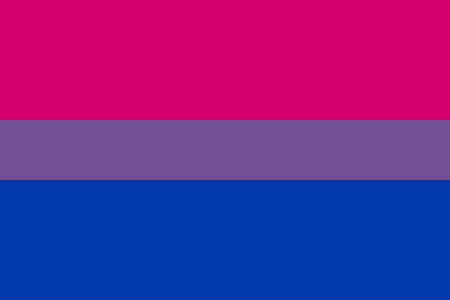
Designed by Michael Page in 1998, the bisexual flag gave the underrepresented bisexual community its own symbol comparable to the gay pride. It had the aim to increase the visibility of bisexuals both among society and within the LGBT community. The colours signify the romantic and/or sexual attraction to multiply genders, your own gender and others.


ASEXUAL FLAG: Darwin
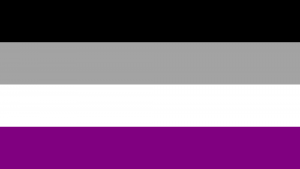
The four colours all have meanings:

  • Black:  Asexuality
  • Grey: Asexuality and Demisexuality
  • White: Non-asexual partners and allies
  • Purple: Community

The flag was created in 2010 and was driven primarily by the desire to have a symbol that belongs to the asexual community. It was agreed upon through a multi-stage vote.


LESBIAN FLAG: Keynes

The lesbian flag features a “labrys,” a double-headed axe associated with early matriarchal Minoan societies and favoured by tribes of Amazon warriors who roamed the area that is now Kazakhstan. The labrys became popular with lesbian culture in the 1970s, but has fallen out of common use since.

The black triangle is a throwback to nazi Germany, similar to the pink triangle used by the general gay movement. The black triangle denoted “anti-social” behaviour, which included lesbianism.

Although the flag was created fairly recently (1999 by Sean Campbell) it’s not as popular now as it once was, possibly because of the relative unknown of the symbols.


TRANSGENDER FLAG: Eliot

The transgender pride flag was created by Monica Helms, a transgender woman, in 1999. The two coloured stripes represent the traditional colours for baby boys and girls and white is for those of intersex, neutral, or other genders.

The flag is intentionally symmetric so that however you hang it, it is in the ‘correct’ orientation. Helms says this was to represent transgender people finding “correctness” in their lives.


PANSEXUAL FLAG: Rutherford
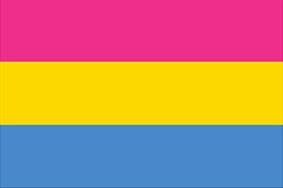
Pansexuality is a recently new categorisation of sexual attraction. The difference between bisexual and pansexual is that pansexuality is an attraction regardless of gender. The colours symbolising blue for male, pink for women and yellow for all.


GENDERQUEER FLAG: Turing
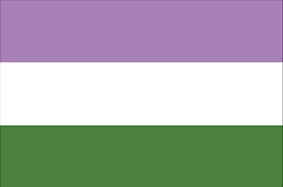
The Genderqueer Pride flag was created by Marilyn Roxie in 2010 with help from the Genderqueer internet community. The lavender is a mix of the traditional blue and pink gender colours for people who are a little of both, the green is meant to be the “inverse” of lavender for those outside the binary and the white represents gender neutrality.