The urban phone box

It’s not uncommon that we’ve used this blog to look at how little things have changed over the past century – and sometimes more! Charlotte Daynton’s work looking at the Muggeridge Collections drew this out in terms of everyday objects she revealed in uncatalogued boxes of material, while a long time ago (or so it seems!), I was struck by the similarities between politics of the early twentieth century and that of today. Perhaps it’s just our nature to try to find links with the past (thought I wouldn’t necessarily argue that this happens more today than in previous generations) – it certainly reminds you that even if something is now in an archive, once it was a ‘working’ item, and meant a lot to its owner.

Historian Hugh Gault, currently working on the second part of his biography of Sir Howard Kingsley Wood, has drawn my attention to some interesting items in the press cuttings through which he’s been wading as part of his research. These particular cuttings are pasted into enormous scrapbooks which take at least two people to lift: quite why Wood had these created, or how he used them, remains a mystery. But what could be more relevant today than the ideas of preserving natural beauty spots, political debates in the media and the questionable ‘issue’ of ladette culture?
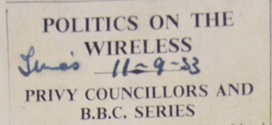
Heading of The Times newspaper articlesFew people can have failed to notice that we’re just a few weeks away from the next General Election – and it would have been hard to miss the issue of who should be included in the next round of televised political debates. While this has caused quite a stir in 2015, in 1933 there were claims that ‘independent’ views were being deliberately censored in upcoming wireless debates on the BBC. Three politicians (none particularly unknown to the Establishment), Winston Churchill, David Lloyd George and Austen Chamberlain, wrote to the Corporation complaining that, despite the assurance that ‘minorities should have their place’ in the radio debates, those not nominated by Party Whips were effectively being discriminated against (‘Politics on the Wireless’, The Times, 11 September 1933). J. H. Whitely, chairman of the BBC, responded by arguing that space necessitated a careful selection of speakers. He added that, while the Corporation had no desire to ‘curtail freedom of speech…it cannot guaranteed that…room will be found for the expression of all shades of opinion’.

The complainants found this response unsatisfactory, responding via a letter subsequently published in The Times, that ‘a precedent is established’ which they considered would result in the ‘effective exclusion from the broadcast’ of anyone holding ‘non-official’ opinions.
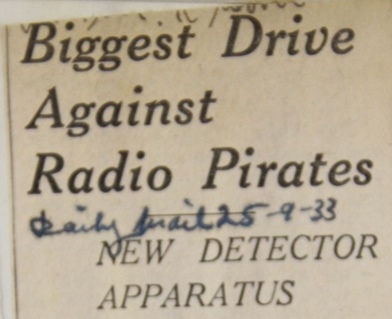
Small KW19-7-11cIn the same year, a different branch of the BBC, under the guidance of Wood as Post Master General, announced its ‘biggest drive against radio pirates’ (‘Biggest Drive Against Radio Pirates, Daily Mail, 25 September 1933). This would be undertaken by means of ‘new detector apparatus’ installed in detector vans and set on a pilot scheme from 1 October. The key intention of these new measures was to catch the ‘pirates’ who were listening to programmes without paying their license fee of 10 shillings a year. Wood himself championed these measures, according to an article in the Daily Mail, ‘realising that the autumn drive by the B.B.C. for better and brighter radio entertainments will attract thousands of new listeners…’

The scale of this drive was expected to be monumental, beginning on the north-east coast, before spreading across the country. The article adds that, in the past, some had considered the detector vans ‘a gigantic bluff’, but quotes an unnamed source assuring readers that  they should not ‘call’ the supposed bluff:

This so-called bluff will be an even more dangerous one to “call” than formerly, as engineers have for the past year been carrying out exhaustive experiments with new apparatus.
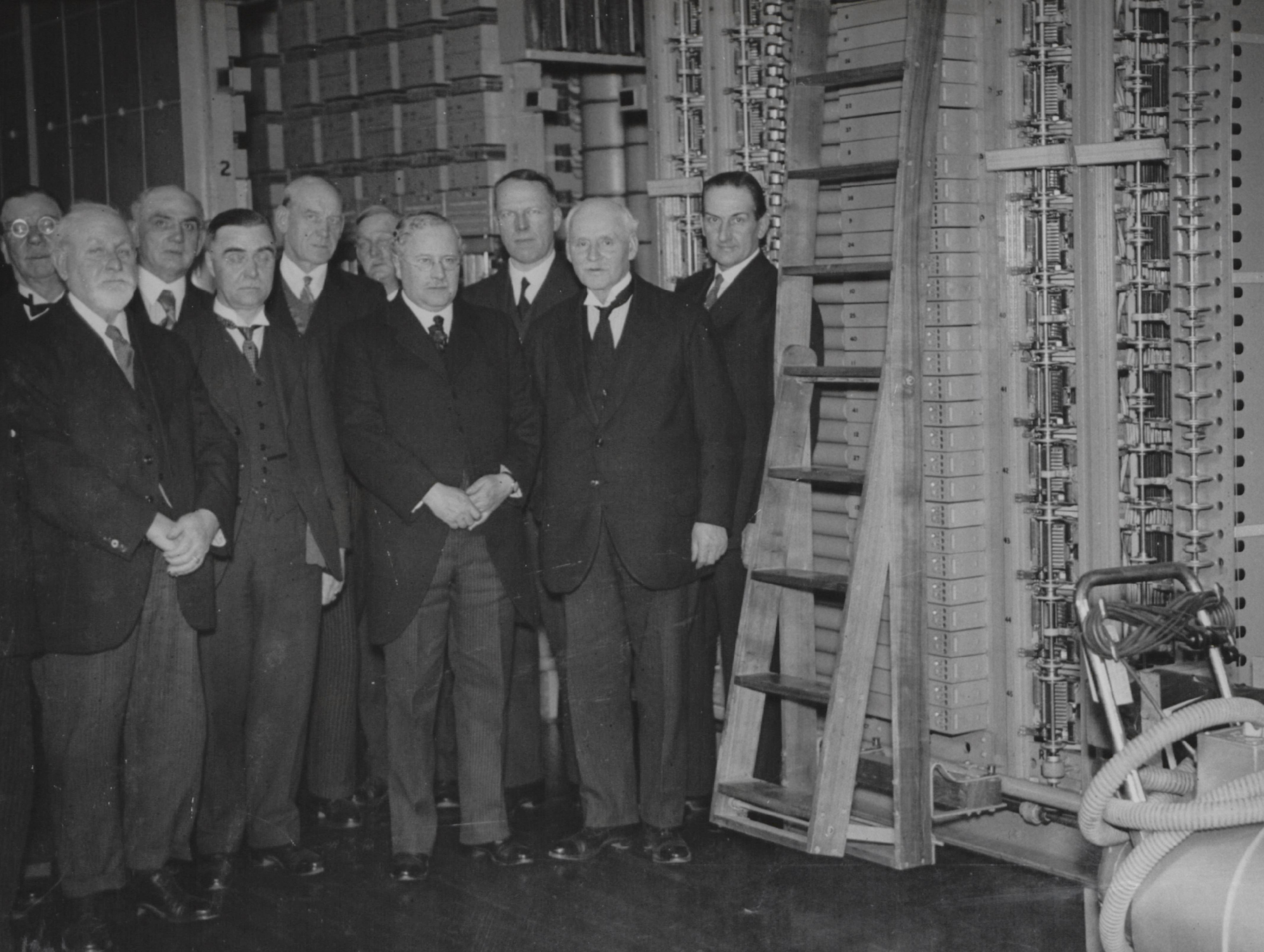
Wood visiting the Hull Telephone Exchange in 1935

Wood visiting the Hull Telephone Exchange in 1935

Advances in new technology were, of course, alarming to some, and nothing was so noticable as the impact on ‘England’s Beauties’ (‘Preserving England’s Beauties’, Sheffield Daily Telegraph, 6 September 1933). Wood felt a duty to preserve beauty spots such as the Peak District and the Derbyshire Dales, issuing instructions to his engineers putting up overhead wires to expand the reach of telephone systems advising them to ‘give careful consideration’ to any proposed lines which might ‘spoil a view’. Indeed, concerns had also been raised about the new telephone boxes: ‘originally designed for urban [settings], these boxes are not always appropriate in a village’. The bright red of the boxes was felt, by some, to be ‘out of harmony’ with its surroundings, and plans to paint some ‘a dull green colour’ had been put forward. It’s strange to think that the red phone box is often only seen in rural areas, now – if at all!
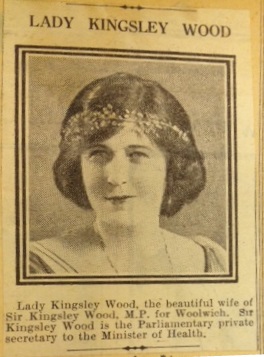
Agnes Wood, in 1923. Agnes was an independent woman prior to her marriage, and wrote articles to support her husband's cause to new, female voters in 1918.

Agnes Wood, in 1923. Agnes was an independent woman prior to her marriage, and wrote articles to support her husband’s cause to new, female voters in 1918.

Finally, a perennial ‘problem’ has been the perception of the younger generation. In 1933, Wood was in his fifties, and the younger generation now coming to adulthood would have known little of the First World War through which their parents had lived. According to the journal ‘Queen’, there was disapproval of ‘modern girls’, supposedly ‘chiefly employed in drinking cocktails in nightclubs’ (untitled article, Queen, 20 December 1933). Given the changes in the legal and social status of women, particularly after women (over 30) were given the right to vote in 1917 and  the vital role women played in the War, perhaps these ’employments’ were considered detrimental to this new-found status. However, Wood was reported as their ‘doughty champion’, saying:

The young woman of to-day…is no longer a clinging vine or the mental inferior and the dutiful handmaid of mere man. But she is self-reliant, tenacious and courageous, and is taking her part more than ever in the world’s work. I do not doubt that the younger generation will provide men and women able to rise to any emergency…. It is quite possible that they will do even better than their parents.

This generation of women would have been the first to grow up with the right to vote from the age of 21 (from 1928), unlike their predecessors who had fought for enfranchisement. It’s rather tragic to think that, six years after Wood’s ‘unquestionably true’ statement, this generation was indeed called upon to rise to an emergency, as their parents had been forced to, with the outbreak of another World War.

The Kingsley Wood Collection consists of 25 scrapbooks of press cuttings, four albums of photographs and a number of loose typescript materials. The first part of Hugh Gault’s biography of Sir Howard Kingsley Wood, ‘Making the Heavens Hum: Kingsley Wood and the Art of the Possible’ is available now; the second part is due to be published in 2017.

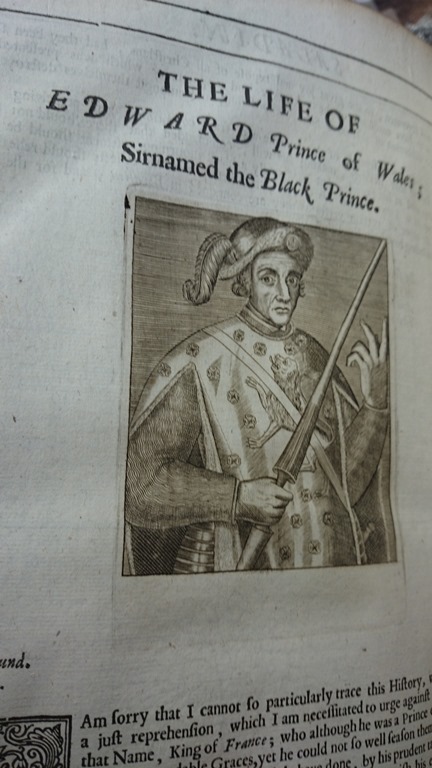
Plutarch’s Lives

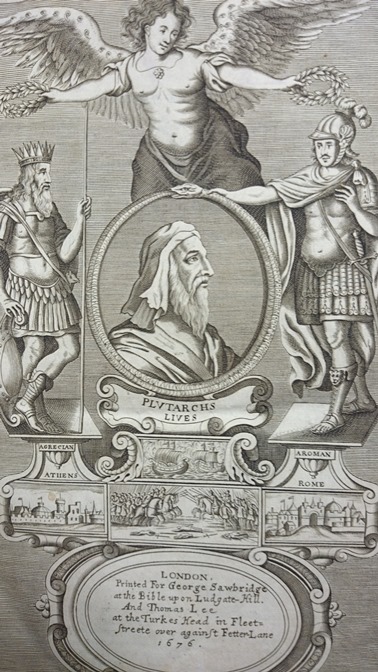
1676 quarto of Plutarch

I had only been working at Kent about a month when I found, by accident, a book to get thoroughly overexcited about. If you study Ancient Greece and Rome, then Plutarch’s ‘Lives’ are a selection of sources you use almost continuously, and there is, happily sitting on a shelf in the pre-1700s collection of Kent’s Special Collections and Archives, a quarto edition from 1676. Considerably more impressive than my own third or fourth hand 1950s Penguin paperback.DSC_0123

As you may know, Plutarch was a Greek historian and biographer, born at the height of Imperial Roman power, who later became a Roman citizen. His ‘Lives’ are his most famous work, and consist of biographies of prominent Greeks and Romans, with one of each being paired together to highlight their shared virtues and vices. Thus, Theseus is paired with Romulus, and Julius Caesar with Alexander the Great. This particular edition also contains various ‘Lives’ by other authors, including those of Homer, Edward the Black Prince, and Plutarch himself.

Frontispiece

Frontispiece

The book includes a beautiful frontispiece, central to which is a portrait of Plutarch flanked by a Roman and a Greek with an angel positioned over all three. Under this are smaller pictures, two of cities, supposedly Rome and Athens, although their accuracy can certainly be doubted, one of sailing ships and one of a battle scene. Inscribed above the frontispiece in manuscript is the name Samuel Davie.

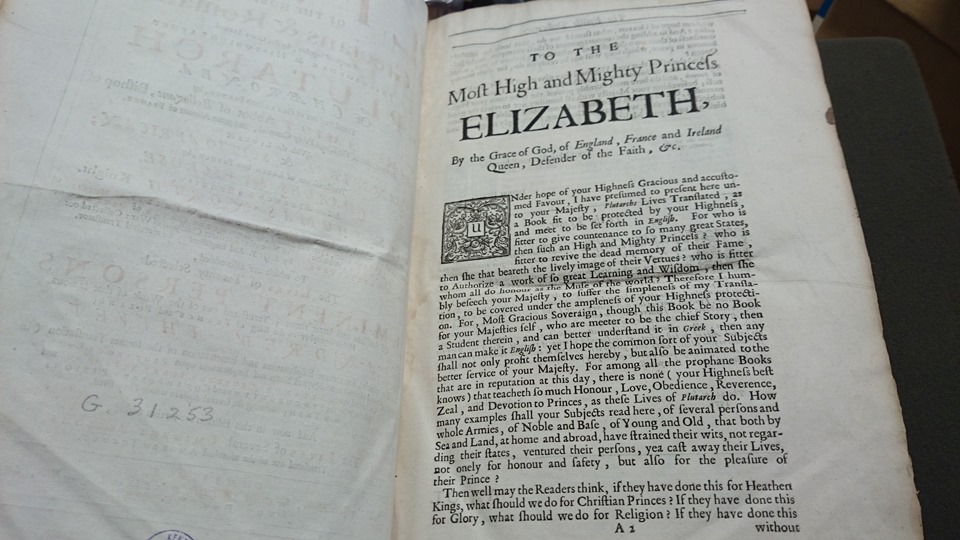
A section of the book I find particularly fascinating is the dedication “to the Most High and Mighty Princess Elizabeth,” Queen of England. Sir Thomas North, the translator of these lives from French to English, was a captain in the English army during 1588 when the Spanish Armada sailed for Britain. In 1591 he was knighted. The first edition of these Lives was published in 1579, and the dedication appeared then. In this dedication he praises her lavishly, to an excessive level even, saying she ‘can better understand [Plutarch] in Greek, then any man can make it English’ and begs her to accept this dedication, after all ‘who is fitter to revive the dead memory of their Fame, then she that beareth the lively image of their Vertues?”. He holds up the people written about as examples that ordinary men should look upon as inspiration to do everything in their power to serve their queen. I can’t help but think that such flattery probably served him well on his way to a knighthood.

Dedication to Queen Elizabeth

Dedication to Queen Elizabeth

Portraits of all the subjects can be found at the start of each of the ‘Lives’. The most elaborate of the illustrDSC_0115ations to Plutarch’s work is that of Theseus, who opens the book. The surroundings of his portrait are more detailed than the others, involving much plant life and several cherubs, where others consist of geometric shapes. The later ‘Lives,’ not written by Plutarch, also include portraits, these are larger and more detailed.

The book appears to have had several previous owners. Other than Samuel Davie, we find other inscriptions on the front pastedown. The book was once part of the library of Edward Webley of Pembroke College Oxford, a gift from his friend DSC_0127Nicholai Hyett, dated 29th October 1742. Turning the flyleaf reveals yet another name, possibly that of Nicholas Webb. The book was bequeathed to the University of Kent by a Miss Margaret Ley. We have no information about Margaret Ley, so if anyone out there knows who she is, we’d love to find out!

This book is just one of many books in our Pre-1700 collection, so explore more on the University of Kent library website.

DSC_0116


Going on a Summer Holiday? 10: long distance shopping

This series is now one of the longest serving on our blog; I wrote several posts ago that I hoped it would not take as long to reveal as the journey which William Harris undertook around Europe between 1821-1823. Well, I have a feeling that I may have already broken that record, but at least it’s given us all a sense of the length of time which this journey from Dover, through France to Italy and then to Sicily actually took!

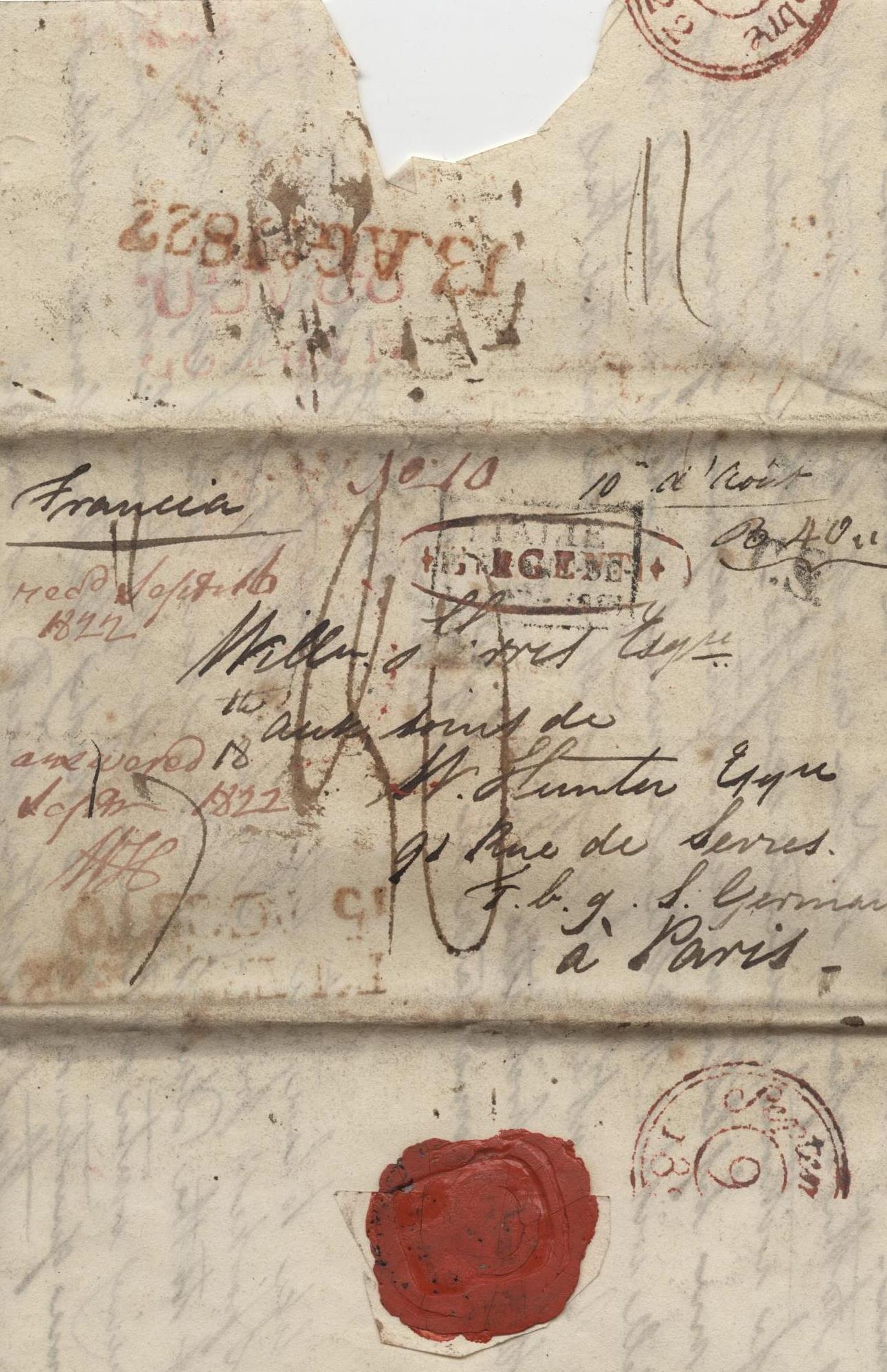
William continued to number his letters for his father.

William continued to number his letters for his father.

In the last post, William had just scaled Mount Etna with his band of architect friends, and found the undertaking rather easier than he had expected. By August 1822, however, William was lodging in the Franciscan convent of S. Vito, near ‘Grigenti’, alone. From my initial reading of this letter, I got the impression that William had been ill, but a second look shows little evidence of this. The group had intended to stay at a monastery before, at Taormina, but their plans were foiled when they discovered it to be full of priests awaiting the election of the new superior. So the fact that he was alone at a convent could simply be that it was a suitable location for his exploration of the ‘pure’ architectural remains of Sicily. In any case, perhaps he would not like to tell his father, so far away, that he was ill. After all, William Harris Snr., back in Norton Street, London, would wait months to receive the letter and then be unable to do much to help his son.

Of the remaining members of William Junr.’s group (two had left before the ascent of Etna), one certainly was ill: Brooks (who I described in an earlier post as the comedy partner) seems to have had bad sea sickness after the crossing from Catania. Thomas Angell and Mr. Atkinson were, however, made of sterner stuff, and had set out to explore Malta. William’s delight in the architectural remains in Sicily had been his reason, he told his father, for remaining alone. In any case, the friends were expecting to reunite, William thought, around the 21 August.

I suppose one of the other reasons why I suspect that all may not have been well with William is the brevity and directness of this letter. In the past, he had written very eloquent descriptions of places he and his friends had visited, and offered opinions on local habits. This letter, however, offers no description of his surroundings, nor of any of the ‘architectural’ (probably archaeological) sites which he visited.

William sent his letters home via his friend Mr Hunter, who lived in Paris.

William sent his letters home via his friend Mr Hunter, who lived in Paris.

Instead, the letter focuses on news from home, in London, which he had left more than a year earlier. We have already established that William’s mother did not enjoy the best of health; William considered that his parents’ removal to Peckham (at this time outside of London) would offer ‘cheerful society and a change of air’ which he was sure would be ‘very beneficial’. As well as his parents, William had a sister, Margaret, married to another architect, Thomas. In an earlier missive, he had learned that, for reasons of economy, they were removing from their home in order to let it. Because of this, he opens his letter having enclosed a letter for them, too, since he did not know where they could be reached. Again, the realities of the distance between William and his family, in terms of both time and miles, must have been playing on his mind. It had been 16 weeks prior to his sister’s letter since he had heard any news from ‘Old England’, having had no reply from his previous letter (no. 8, from Rome). Of course, he writes, his father may have replied to Naples, expecting William to be there, but the change in his plans meant at least a two month stay at Gingenti, rather than returning straight to Italy.

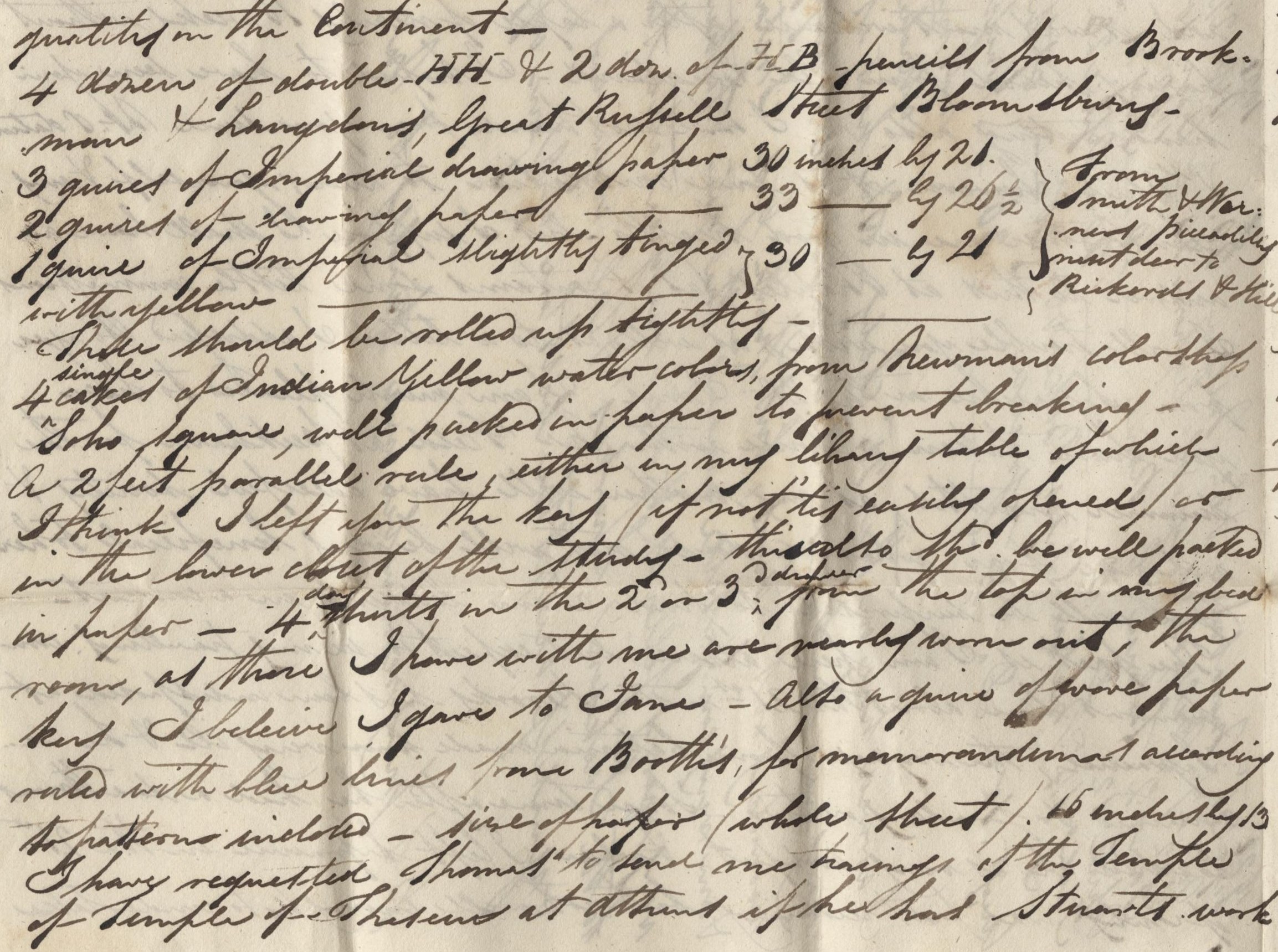
In spite of his desire to hear from home, time was obviously pressing: “As post time draws nigh I will now proceed to business and fill up the leisure if any remains afterwards”. This business consisted of a shopping list of materials and supplies, which William asked to be sent out to Sicily. Including pencils (from Brockman and Langdon’s, Bloomsbury), paper and watercolours, William explained that such drawing materials were ‘not to be obtained of even tolerable quality on the Continent’. Aside from these artists’ supplies for his sketching of classical ruins, William also requested that his father send out ‘a 2 feet parallel rule’, recalling that he had left it ‘either in my library table…or in the lower closet of the study’, paper ‘for memorandas’ and, from his brother-in-law Thomas, ‘tracings of the Temple of Theseus at Athens’. Finally, he asked for ‘4 day shirts…as those I have with me are nearly worn out.’ Unlike his friend Brooks, who had insisted on trunks of the latest fashions being sent out to Rome, William seems to largely have made do with that he had taken with him. Architecture and adventure seem to have been a much higher priority, for him, than clothes and supplies!

William's shopping list.

William’s shopping list.

This is the first instance of William requesting a significant amount of material from home, although he had previously mentioned in passing the cost of his travels, particularly his own frugality when living off his father’s allowance. Evidently, William had been able to spend some free time looking at his father’s responses, as he adds:

I now subjoin a list of the bills I have drawn on different bankers as they do not appear to agree with the memoranda you forwarded me

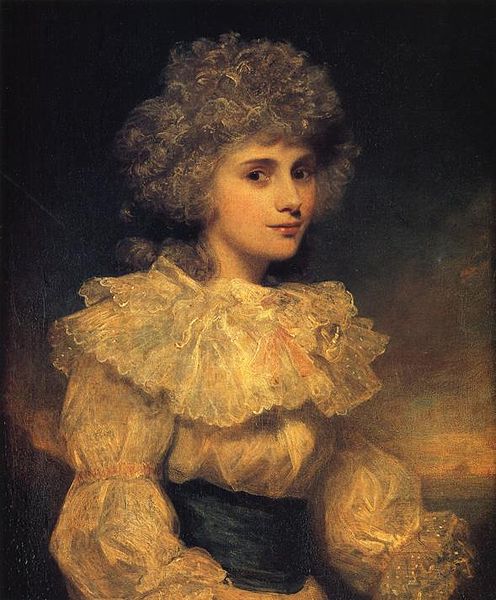
Lady Elizabeth Foster (1787)

Lady Elizabeth Foster (1787), Duchess of Devonshire 1809-1824

Although far from home, William clearly moved in circles of society which spanned the whole of Europe. Having previously visited contacts professional and personal, he asks for a letter of introduction from a mutual friend for the Duchess of Devonshire who was to stay in Rome over the winter. This was Elizabeth Christina Cavendish, who had married the fifth Duke of Devonshire, William Cavendish, in 1809 and retained the title of Duchess after the succession of his son to the title in 1811. The fifth Duke had been married to the celebrated Georgiana, but Elizabeth had lived with them since 1782, having separated from her husband Lord Foster, mystifying polite society. Elizabeth certainly had two children by the Duke prior to their marriage, and some whispered that she was lover to both the Duke and Duchess. In any case, she developed a love for the continent, even accompanying Georgiana during her exile designed to hide her illegitimate pregnancy from polite society. Following the death of the Duke, Elizabeth moved to Italy and developed an interest in antiquities, even financing the excavation of the Forum for eleven years. It is likely that this interest in classical architecture, and the circles in which she moved, were the main draw for William’s hopes of an introduction, but there must still have been a touch of scandal around this 65-year old widow as well.

The tone of this letter seems, to me, to be one of stocking up, preparing to start work again after a period of inactivity. Rather than tell his father about his exploits, as in previous letters, William is anxious to make sure he has the necessary materials to continue his adventure, but is also eager to hear more from home. He mentions ‘Jane’ once more, whom his father had removed from his house in the previous autumn, noting that he had given her the key to the drawer in which his shirts were kept. Perhaps the answer to this mystery is than Jane was a servant, presumably a long term and respected servant, since William had been sorry to hear of her departure. Thinking of home also led William to think of the horses: a favoured mount, Dick, had undergone an operation in the summer of 1821. ‘Pray let me know if Dick has recovered his lameness’, William writes in his closing paragraph.

William had plenty of recourse to bankers during his trip - including to collect his post!

William had plenty of recourse to bankers during his trip – including to collect his post!

In spite of the time it took to journey around Europe in the early 19th century, it was evidently not an insurmountable exercise – at least not for those with the funds to support it. Postage, bankers and even letters of introduction to the seemingly web-like networks of society brought together like-minded individuals right across the Continent. But even with those modern developments, the distance from home could indeed feel great, and leave the intrepid traveller in danger of isolation. Yet William’s thirst for adventure took him still further in his discoveries – right into one of the biggest antiquarian scandals since the exploits of Thomas Bruce, seventh Earl of Elgin, at the beginning of the century.

A happy 2015 to you all; perhaps this year will see the closure of William Harris’ adventure!

A busy new year

Another year comes to an end already…I’m not sure where 2014 went, but once again it’s been full of excitement and events for Special Collections & Archives.

Along with our regular lecture series, and the annual teaching of Victorian & Edwardian Theatre history, 2014 witnessed the publication of the first part of a biography of Sir Howard Kingsley Wood, by historian Hugh Gault, based heavily on the scrapbooks held in our collections. Alongside this, and our normal duties, we have been preparing to move all of our collections: next spring, we will be setting up the service in the new Templeman extension. This has really been taking shape over the last few weeks, and we have been lucky enough to pop over to see the new reading room, offices and stores. We can’t wait to be in there, but first there’s just the small matter of moving all of our collections from one end of the building through to the other, over 3 weeks, along one corridor. Look out for more news about this in the new year!

The so-called 'zebra book'; or, an example of the difference a clean makes.

The so-called ‘zebra book’; or, an example of the difference a clean makes.

In preparation for the move, we have been working closely with a stalwart team of 15 volunteers who have been cleaning our rare and special book collections, packaging the fragile bindings and helping with collections care. This means that the books, which take up several hundred metres of shelving, can be carefully moved without risking any damage. On Wednesday 17 December, we had a special volunteers’ event to mark the end of this project, but I’d also like to take this opportunity to thank all of this term’s volunteers for their hard work, enthusiasm and commitment, which has enabled us to get over 150 metres of books clean and ready to move.

Also this term, we’ve delivered more than 20 taught sessions and workshops with members of the University community and beyond, including a hugely popular event at the Marlowe Theatre to mark the 100th anniversary of the outbreak of the First World War. As ever, it’s been great to see people getting so enthusiastic about archives – whether it’s a book signed by Alfred Russell Wallace, acting out the thrilling conclusion of the melodrama Maria Marten or discussing Shakespeare’s Welsh connections.

We’ve had several new members join us the team this year: our new archivist, Ann MacDonald, who is curating the University of Kent Archive, and Rachel Dickinson, Metadata and Special Collections Assistant, who has been cataloguing materials right across the broad spectrum of the collections. You can take a look at Rachel’s thoughts about her experiences getting started in the collections on the blog. Another exciting development has been the appointment of an archivist and a digitisation assistant to the nascent British Stand Up Comedy Archive for a year; again, more news to follow in 2015! Finally, stalwart member of the British Cartoon Archives Team Jane Newton has gone part time, so we now have Joy Thomas working as the other half of the post of Special Collections & Archives Curator.

So as we look forward into 2015, we know there will be some major changes and a considerable amount to organise. But we’re looking forward to settling into our new spaces and continuing to work with researchers to discover rare and exciting materials in the unique Special Collections & Archives here at the University of Kent.

Wishing you a very merry Christmas and a happy 2015!

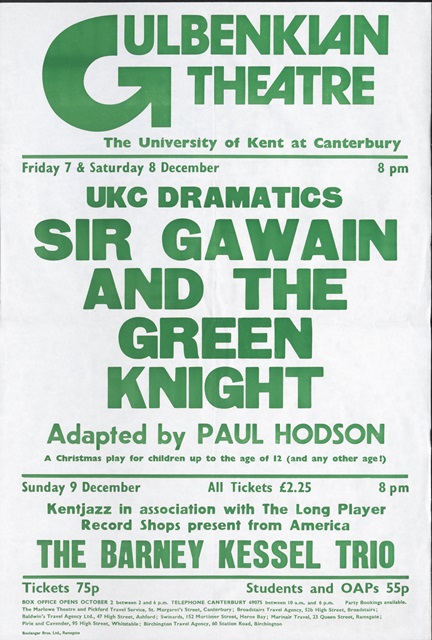
Sir Gawain and the Green Knight

The Gulbenkian Theatre opened on the Kent campus in 1969. In its forty five year history it has seen numerous productions, from Shakespeare to musical extravaganzas such as AC/DC and Steeleye Span. The tradition of Christmas performances, including productions aimed at children, runs strongly through the history of the theatre. A fine example of this genre is ‘Sir Gawain and the Green Knight,’ staged in 1979, ten years after the Gulbenkian first opened its doors to the public.

‘Sir Gawain and the Green Knight’ was put on by UKC Dramatics, adapted from the epic poem, and directed by Paul Hodson. Hodson is still hugely involved in theatre today, and is currently adapting ‘High Fidelity’ by Nick Hornby for a tour in 2015, having previously adapted works by Bill Bryson, and put on plays at the Edinburgh Fringe,  (more information on Hodson’s work can be found at http://blakefriedmann.co.uk/paul-hodson).

Play Poster

A variety of documents and ephemera relating to the ‘Sir Gawain’ 1979 performance can be found in the Gulbenkian collection. This includes posters, a theatre programme, stickers, local newspaper cuttings and a teacher’s booklet, provided by UKC Dramatics for local schools to study the story before seeing the play. In every item, one can see evidence of how the UKC Dramatics society was involved in every aspect of production, from acting to outreach to the local community.

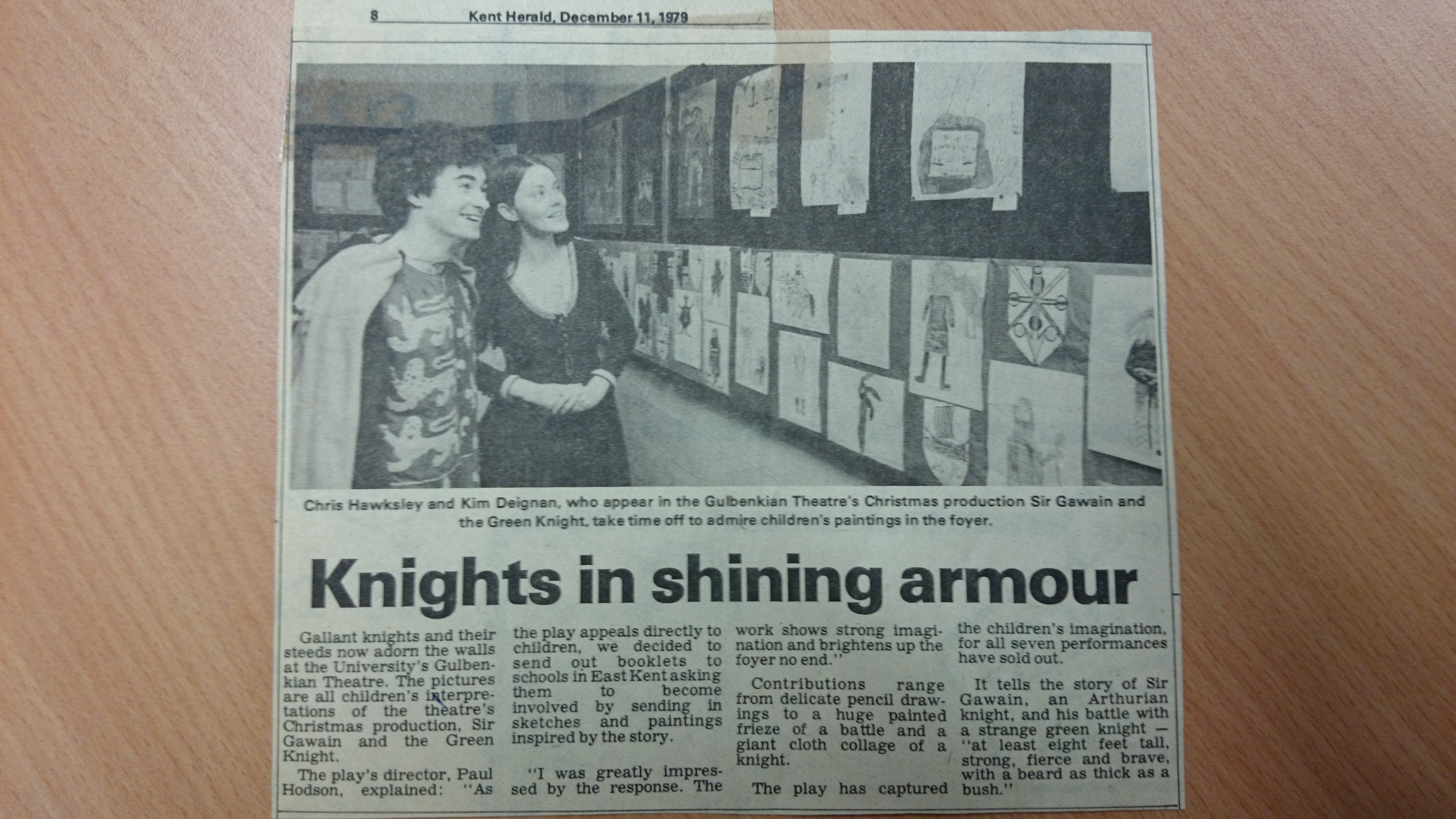
It is interesting how, in a time when school trips to the theatre were not as common as they may be now, the University of Kent was working hard to have a positive effect on theatre in the local community, and fantastic to see just how successful they were. One unidentified newspaper cutting, dated October 12th 1979, is a small article concerning the production, informing the reader that ‘Paul [Hodson]…has contacted East Kent schools to encourage children to take part in his illustration scheme.’ An exhibition of local children’s artwork relating to the play was produced, and could be viewed in the Gulbenkian prior to each performance. Another cutting from the Kent Herald, dated December 11th observes that ‘the play has captured the children’s imagination, for all seven performances have sold out.’ This shows not just how successful the play was in terms of acting and production, but also how keen the local schools and the University of Kent were to work together. In fact, the play and the involvement of the local schools worked so well that two extra matinees had to be scheduled to fulfil demand.

Article from the Kent Herald featuring a picture of cast members with school children's artwork

Article from the Kent Herald featuring a picture of cast members with school children’s artwork


The item that shows UKC Dramatics dedication to outreach to the local schools most is the teacher’s information booklet. Produced by the director, the booklet firstly provides an abridged version of the old poem, complete with illustrations, that teachers could read to their classes. Following this is information on the background of the poem, and then a section containing a series of suggestions of projects that could be employed in school in the run up to seeing the show. The idea of putting on a small in-class production of the play is proffered, using the provided story as the play text. Art projects are also suggested, along with comparisons of different areas of the story, and a more in-depth look at the themes running through it. This booklet must have taken a long time to produce, and the amount of work that has gone into it shows Hodson’s dedication to the production, education, and the wish to have the local community as involved as possible.

Two illustrations from the teaching booklet, featuring Gawain and the Green Knight themselves

Two illustrations from the teaching booklet, featuring Gawain and the Green Knight themselves

Why are Christmas productions so popular? Obviously, as in this case, there is an element of people wanting to see a well-produced show, but be they Christmas plays such as this, winter themed ballets such as The Nutcracker, or a good old-fashioned panto, Christmas seems to be a time for special performances that everybody wants to see, including those who would not necessarily go to the theatre the whole year round. It seems a huge part of the appeal is that Christmas is generally recognised as a time to be with family, and productions such as this provide entertainment for all ages. As the Gazette, dated December 14th, observed about ‘Sir Gawain’ ‘children (and adults) loved it,’ referring to the whole audience ‘roaring our approval,’ and all ages finding the jokes hilarious.

‘Sir Gawain and the Green Knight’ is just one of many student led productions that have graced the boards at the Gulbenkian Theatre. The items within all these collections show clearly the amount of effort students put in to produce such great shows, and are fascinating from the perspective of local and theatrical historians, or those wishing to put on such a production themselves. The Gulbenkian collection can be explored via the Special Collections and Archives website. It has yet to be completely catalogued, so look forward to more opportunities to learn about Kent’s past in the future.

To discover more in this collection go to the Gulbenkian Collection.

Rachel Dickinson.