On this page you can find details of books by founding members of CPCS. Together, these set out the central themes and ideas that drive the work of CPCS and which we aim to develop further. Our book Parenting Culture Studies (2014/2023) brings together many of our ideas in one place.
Parenting Culture Studies (2023)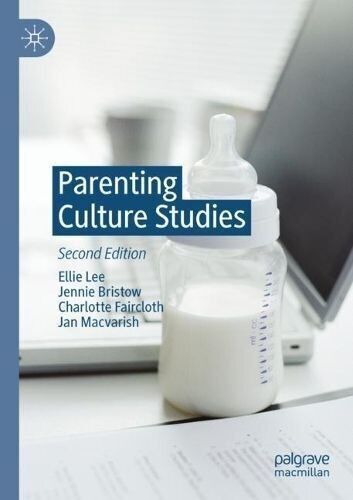
Updated Second Edition now out
Why do we live at a time when the minutiae of how parents raise their children – how they feed them, talk to them, play with them or discipline them – have become routine sources of public debate and policy making? Why are there now so-called ‘parenting experts’, and social movements like Attachment Parenting, telling us that ‘science says’ what parents do is the cause of and solution to social problems?
Parenting Culture Studies provides in-depth answers to these features of contemporary social life drawing on a wide range of sources from sociology, history, anthropology, psychology and policy studies to do so, covering developments in both Europe and North America. Key chapters cover the ‘intensification of parenting’, the rise of the ‘parenting expert’, the politicizing of parent-child relationships, and the weakening of bonds between generations.
Five essays detail contemporary examples of obsessions with parenting, discussing drinking and pregnancy, attachment theory, neuroscience and family policy, fathering, and ‘helicopter parenting’. The Introduction situates parental determinism in the wider context of risk consciousness and the demise of social confidence about how to approach the future. Comprehensive in scope and accessibly written, this book will be an indispensable resource for students, researchers, policy-makers and parents seeking a deeper understanding of the debates surrounding parenting and society today.
Now in its second edition, the book also features a new third part discussing parents dealing with risk assessment, school closures, contradictory care arrangements, and vaccine hesitancy during the COVID-19 pandemic.
Read reviews and order from the publisher here. To order in the US use Amazon US
Reviews
Cieo Labour’s nannying will undermine families – Cieo
Sociological Review https://journals.sagepub.com/doi/full/10.1111/1467-954X.12299
Further reviews are online here
Couples’ Transitions to Parenthood: Gender, Intimacy and Equality
Charlotte Faircloth (2021)
Charlotte’s book Couples’ Transitions to Parenthood: Gender, Intimacy and Equality has also recently been published by Palgrave.
 This book argues that new parents are caught in an uncomfortable crossfire between two competing discourses: those around ideal relationships and those around ideal parenting. The author suggests that parents are pressured to be equal partners while also being asked to parent their children intensively, in ways markedly more demanding of mothers. Reconciling these ideals has the potential to create resentment and disappointment. Drawing on research with couples in London as they became parents, the book points to the social pressures at play in raising the next generation at material, physiological and cultural levels. Chapters explore these levels through concrete practices: birth, feeding and sleeping—three of the most highly moralised areas of contemporary parenting culture.
Generational encounters with higher education: The academic–student relationship and the university experience
Jennie Bristow, Sarah Cant and Anwesa Chatterjee (2021).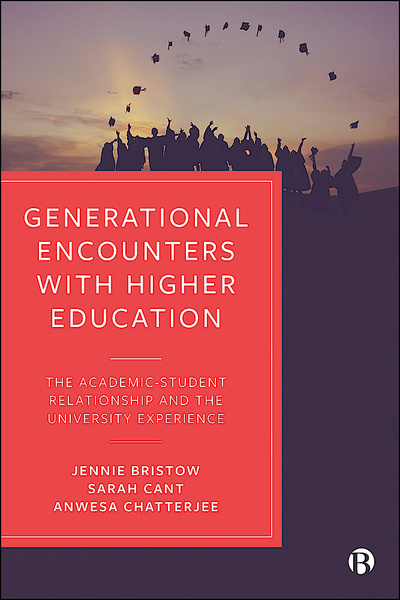
The 21st century has witnessed significant changes to the structures and policies framing Higher Education. But how do these changes in norms, values, and purpose shape the generation now coming of age?
Employing a generational analysis, this book offers an original approach to the study of education. It explores the qualitative dimensions of the relationship between academics and students, and examines wider issues of culture and socialisation, from tuition fees and student mental health, to social mobility and employment.
This is a timely contribution to current debates about the University and an invaluable resource for those interested in education, youth, and intergenerational relations. More info here
The Corona Generation: Coming of age in a crisis 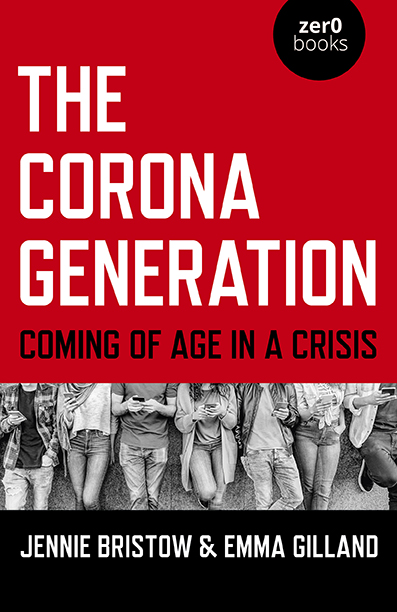
Jennie Bristow and Emma Gilland (2020)
It is already clear that the COVID-19 crisis will have huge social and economic implications. The Corona Generation considers its effect on the generation currently coming of age: the demographic currently known as ‘Generation Z’. A generation that was already considered to be teetering on the brink of an uncertain political, economic, and environmental future now finds itself entering an adulthood in which nothing can be taken for granted; where continuous crisis management is already presented as the ‘new normal’.
More info
Stop Mugging Grandma: The ‘Generation Wars’ and Why Boomer Blaming Won’t Solve Anything
Jennie Bristow (2019)
Millennials have been incited to regard their parents’ generation as entitled and selfish, and to blame the Baby Boomers of the Sixties for the cultural and economic problems of today. But is it true that young people have been victimized by their elders?
In this book, Jennie Bristow looks at generational labels and the groups of people they apply to. Bristow argues that the prominence and popularity of terms like ‘Baby Boomer’, ‘Millennial’ and ‘snowflake’ in mainstream media operates as a smoke screen – directing attention away from important issues such as housing, education, pensions, and employment. Bristow systematically disputes the myths that surround the ‘generational war’, exposing it to be a tool by which the political and social elite can avoid public scrutiny.
Feeding Children Inside and Outside the Home: Critical perspectives
Vicki Harman, Benedetta Cappellini and Charlotte Faircloth (Eds) (2019)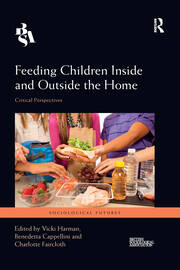
This cross-disciplinary volume brings together diverse perspectives on children’s food occasions inside and outside of the home across different geographical locations. By unpacking mundane food occasions – from school dinners to domestic meals and from breakfast to snacks – Feeding Children Inside and Outside the Home shows the role of food in the everyday lives of children and adults around them. Investigating food occasions at home, schools and in nurseries during weekdays and holidays, this book reveals how children, mothers, fathers, teachers and other adults involved in feeding children, understand, make sense of and navigate ideological discourses of parenting, health imperatives and policy interventions.
The Sociology of Generations: New directions and challenges
Jennie Bristow (2016)
This book suggests that the enduring problem of generations remains that of knowledge: how society conceptualises the relationship between past, present and future, and the ways in which this is transmitted by adults to the young. Reflecting on Mannheim’s seminal essay ‘The Problem of Generations’, Bristow explores why generations have become a focus for academic interest and policy developments today. She argues that developments in education, teaching and parenting culture seek to resolve tensions of our present-day risk society through imposing an artificial distance between the generations.
More info here
Neuroparenting: The Expert Invasion of Family Life
Jan Macvarish (2016)
Neuroparenting: The Expert Invasion of Family Life traces the growing influence of ‘neuroparenting’ in British policy and politics. Neuroparenting advocates claim that all parents require training, especially in how their baby’s brain develops. Taking issue with the claims that ‘the first years last forever’ and that infancy is a ‘critical period’ during which parents must strive ever harder to ‘stimulate’ their baby’s brain just to achieve normal development, the author offers a trenchant and incisive case against the experts who claim to know best and in favour of the privacy, intimacy and autonomy which makes family life worth living.
The book will be of interest to students and scholars of Sociology, Family and Intimate Life, Cultural Studies, Neuroscience, Social Policy and Child Development, as well as individuals with an interest in family policy-making.
More info here
Baby Boomers and Generational Conflict
Jennie Bristow (2015)
The dominant cultural script for Baby Boomers is that they have ‘had it all’ – the benefits of a booming economy, the welfare state, and personal freedoms – thereby depriving younger generations of the opportunity to create a life for themselves. Bristow provides a critical account of this discourse by locating the problematisation of the Baby Boomers within a reductive ‘demographic consciousness’, and an ongoing ambivalence about the legacy of the Sixties.
At the heart of generational conflict is the mediation between past, present, and future: where society is preserved and made anew by the interaction between emerging adults and the existing cultural heritage. However, this process of cultural renewal is situated within people, who also exist within intimate relationships. This book critiques the troubling consequences of ‘Boomer blaming’ for the construction of knowledge, the focus of social policy, and the experience of generational contact.
More info here
Parenting in Global Perspective: Negotiating ideologies of kinship, self and politics
Charlotte Faircloth, Diane Hoffman and Linda Layne (Eds), (2013)
Drawing on both sociological and anthropological perspectives, this volume explores cross-national trends and everyday experiences of ‘parenting’.
Parenting in Global Perspective examines the significance of ‘parenting’ as a subject of professional expertise, and activity in which adults are increasingly expected to be emotionally absorbed and become personally fulfilled. By focusing the significance of parenting as a form of relationship and as mediated by family relationships across time and space, the book explores the points of accommodation and points of tension between parenting as defined by professionals, and those experienced by parents themselves. Specific themes include:
- the ways in which the moral context for parenting is negotiated and sustained
- the structural constraints to ‘good’ parenting (particularly in cases of immigration or reproductive technologies)
- the relationship between intimate family life and broader cultural trends, parenting culture, policy making and nationhood
- parenting and/as adult ‘identity-work’.
Including contributions on parenting from a range of ethnographic locales – from Europe, Canada and the US, to non-Euro-American settings such as Turkey, Chile and Brazil, this volume presents a uniquely critical and international perspective, which positions parenting as a global ideology that intersects in a variety of ways with the political, social, cultural, and economic positions of parents and families.
Read a review and more info here
Militant Lactivism? Attachment Parenting and Intensive Motherhood in the UK and France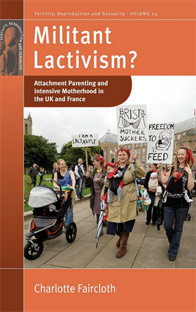
Charlotte Faircloth (2013)
Following networks of mothers in London and Paris, the author profiles the narratives of women who breastfeed their children to full term, typically a period of several years, as part of an “attachment parenting” philosophy. These mothers talk about their decision to continue breastfeeding as the “natural thing to do”: “evolutionarily appropriate,” “scientifically best,” and “what feels right in their hearts.” Through a theoretical focus on knowledge claims and accountability, the author frames these accounts within a wider context of “intensive parenting,” arguing that parenting practices – infant feeding in particular – have become a highly moralized affair for mothers, practices which they feel are a critical aspect of their “identity work.” The book investigates why, how, and with what implications some of these mothers describe themselves as “militant lactivists” as well as reflects on wider parenting culture in the UK and France. Discussing gender, feminism, and activism, this study contributes to kinship and family studies by exploring how relatedness is enacted in conjunction to constructions of the self. A second edition in paperback was released in 2021.
More info here
Licensed to Hug: How Child Protection Policies Are Poisoning the Relationship Between the Generations and Damaging the Voluntary Sector
Jennie Bristow and Frank Furedi (2010)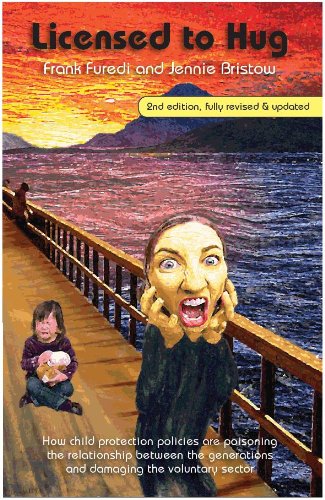
In this fully updated and extended edition of Licensed to Hug, Frank Furedi and Jennie Bristow identify recent developments in child protection policies, and they provide examples of absurdities caused by the police vetting scheme to demonstrate why these issues must continue to be debated in the public domain. Frank Furedi and Jennie Bristow argue that the growth of police vetting has created a sense of mistrust. Communities are forged through the join commitment of adults to the socialisation of children. Now, adults are afraid to interact with any child not their own. The generations are becoming distant, as adults suspect each other and children are taught to suspect adults. The vetting culture encourages risk aversion; there is a feeling that it is better to ignore young people, even if they are behaving in an anti-social manner, and even if they are in trouble and need help, rather than risk accusations if improper conduct. Vetting also gives a false sense of security as it can only identify those who have offended in the past and been caught not what people will do after they are passed as fit to be near children. Licensed to Hug argues for a more common-sense approach to adult/child relations, based on the assumption that the vast majority of adults can be relied on to help and support children, and that the healthy interaction between generations enriches children s lives.
More info here
Standing Up to Supernanny
Jennie Bristow (2009)
Parenthood, we are told, requires a massive adjustment to our lives, emotions, and relationships, and we have to be taught how to deal with that. But can it really be so bad that we need constant counselling and parenting classes? It is a myth that today’s parents are hopeless and lazy: in many ways, we have become too diligent, too hopeful of great outcomes and clear rewards, to the point where we lose ourselves in trying to provide some kind of professional service to our children. The current obsession with perfect parenting increases our insecurity and distrust of each other, and diminishes our authority over our kids. This book is about asking: Why have we invited Supernanny into our living rooms – and how can we kick her out?
Paranoid Parenting: Why ignoring the experts may be best for your child
Frank Furedi (2008)
Ever since Frank Furedi has drawn attention to the issue of ‘paranoid parenting’ this problem has gained widespread recognition from mothers and fathers and policy makers. This new edition argues that if anything – in recent years parenting has become more paranoid.
Paranoid Parenting is an important book that shows how parental fears have been stoked and families harmed. It ought to be read by every sensible individual interested in regaining a sane viewpoint that advances children’s well being. If you want to understand why adults act like children and children act like adults, in short if you want to understand why raising children today is harder than ever before, read this book.
Every day there is a warning about your children. Everything is dangerous; cot, babysitters, school, supermarket and park. We are told that children’s health safety and welfare and constantly at risk. Based on sociological research as well as dozens of interviews, this book will bolster your confidence in your own judgments and enable you to bring up self-assured, imaginative, capable children.
Abortion, Motherhood and Mental Health: Medicalizing reproduction in the United States and Great Britain
Ellie Lee (2004)
Centering on the claim that abortion can result in Post Abortion Syndrome, the author examines the ‘medicalisation’ of the abortion problem on both sides of the Atlantic. Lee points to the contrast in legal and medical dimensions of the abortion issue that make for some important differences, but argues that in both the United States and Britain, the PAS claim in fact constitutes an example to the limits of medicalisation. She contends that examination of contests over PAS point not so much to demedicalisation as to the construction of its alternative – motherhood – as a psychological ordeal. Centrally, Lee makes the case for looking to the social dimensions of mental health problems to account for and understand debates about what makes women ill.
Pingback: New book puts spotlight on notion of ‘good parenting’ as panacea for social problems | CHSS news
Pingback: Successful start for parenting research centre | CHSS news
Pingback: Successful start for parenting research centre | Kent Health News and Events