Visit the home of Sir Winston Churchill 16 March

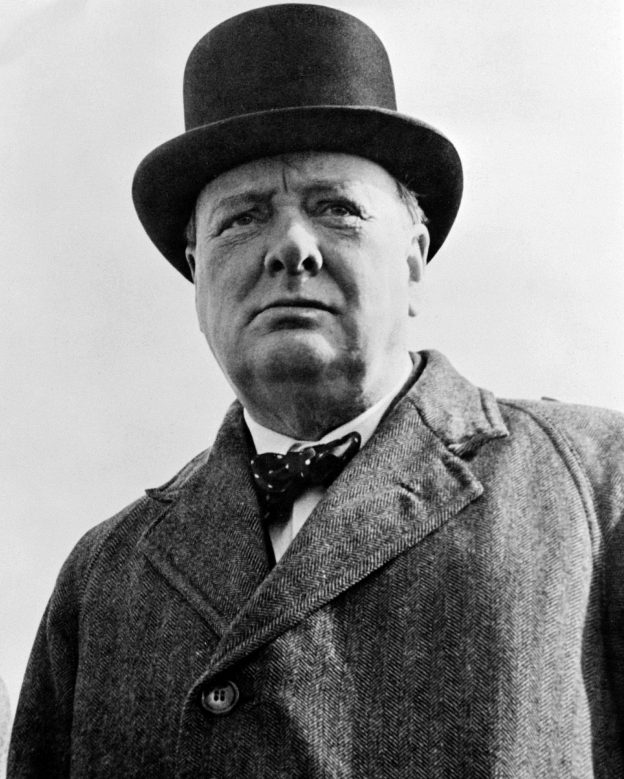
The University Chaplaincy is running a day-trip by coach to Chartwell, home of Sir Winston Churchill, which is located in the West Kent countryside. This will be followed by an afternoon in the attractive town of Royal Tunbridge Wells. The day-trip leaves from the Canterbury campus and there are still some seats available to students. The £18 ticket price includes coach travel and full admission inside the house and grounds at Chartwell.

For more details and information and to book your place visit the University of Kent’s Online Store.

Understanding and Working with Self-harm and Attempted Suicide – 25 March

The Centre for Professional Practice will host a presentation on Understanding and Working with Self-harm and Attempted Suicide at Canterbury campus on Monday 25 March from 9.30-11.30.

The presentation, by Dr Terence Nice, Programme Director (Psychotherapy), at the Centre for Professional Practice, focuses on the assessment and treatment of people who self-harm and attempt suicide.

The presentation looks at the prevalence of self-harm, national guidelines, causative factors and ways of ameliorating suicidal ideations and diminishing acts of self-harm. The territory of self-harm and attempted suicide is often paradoxical and labyrinthine, leaving clinicians, practitioners and workers uncertain about how to react positively and respond appropriately.

The presentation is aimed at all those people who come into contact with young or older people who self-harm or attempt suicide.  The presenter is a Lecturer in Psychological Therapies, Highly Specialist Psychotherapist and an active researcher in this field. Dr Nice has also developed a self-harm tool-kit to assist in the assessment and treatment of this group. The presentation will be followed by Q&A time. Refreshments will be provided and certificates of attendance will be issued.

Venue: University of Kent Canterbury campus, Grimond Lecture Theatre 2, Canterbury CT2 7NZ.

Fee: The event has a charge of £20.

All spaces must be pre-booked online.

For any queries, please email professionalpractice@kent.ac.uk or call 01634 888929.

The course is delivered by the Centre for Professional Practice (CPP). Our part-time, flexible Masters in Professional Practice programme, starting in October 2019, offers you an opportunity to attain academic recognition for the skills, knowledge and experience you have developed in the work place.

Learn more about the Centre for Professional Practice.

T: 01634 888929

Decolonising the curriculum expert is University of Kent inspirational speaker

The Founder and Director of Black British Academics is the inspirational speaker for a University of Kent workshop in Medway that will reflect on the decolonisation, democratisation and diversification of the UK curriculum.

Dr Deborah Gabriel will lead the 3D Pedagogy Workshop on Wednesday 27 February 2019 from 14.00-15.30 in the Rochester Building at the University’s Medway campus.
Dr Gabriel, a senior lecturer at Bournemouth University, has carried out extensive research into the experiences of black academics and the challenges of decolonising the curriculum. She is well known for her expertise on racial inequality in higher education and disparities in pay and progression.

The event aims to equip participants with a basic understanding of critical race pedagogy (a theoretical took applied to understand racism impacts on teaching), social justice pedagogy and critical reflective practice, enhancing educational practice by increasing cultural competence.
The event is part of the Student Success Strategy in the School of Sport and Exercise Sciences (SSES). Head of the School, Professor Claire Peppiatt-Wildman, said: ‘This is a fantastic opportunity to hear from Dr Gabriel. Our focus in on inclusive teaching and by targeting education practice, we enhance the outcomes for students of colour and enrich the learning process for students of all ethnic backgrounds.’

The event is free and open to all. To book please visit the event’s dedicated booking page here.

Online Module Registration (OMR) 11 – 22 March 2019

From 11- 22 March 2019, if you are a stage one or two student, you must choose the modules you want to study in 2019/20.

You will need to log into your SDS during this time to submit your choices.

Further information and instructions will be sent to you via email – please read this and be prepared!

Guidance on how to complete OMR

OMR is not first come first served, but you must ensure that you have submitted your selections by Friday 22 March in order to give you the best opportunity to register for your preferred choice of module.

Note if you are going abroad or to a year in industry next year you do not need to select modules.

If you have any questions please contact us csao@kent.ac.uk

Follow us: @UniKent_CSAO

Worldfest 2019

Worldfest celebrations are taking place all week across the Canterbury and Medway campuses from 18-23 March 2019.

Worldfest is a vibrant, exciting celebration of culture across the University of Kent!

Events include; International Food Fayre & Mini Market, Fitness Fest, African Drumming, HOLI Festival, Bollywood Brass Band, Diversity Fair and much more!

See the webpages for the full programme of events and activities.

Unravelling the mysteries of the Menopause

The Learning and Organisational Development Team will be running a seminar on HRT and The Menopause on Friday 8 March 2019 in the Rochester Board room, Rochester Building, Medway campus starting at 09.30 until 11.15.

This important seminar will provide information, advice and guidance on the Menopause, how it affects women and the impact of this from a work perspective.

This seminar will be delivered in two parts:

Part 1 a presentation by Anita Ralph MSc (Herbal Medicine), MNIMH MCPP, who will share and open for discussion holistic medical approaches in treating the symptoms of The Menopause.

Part 2 of the seminar will be a presentation by Miss Anne Henderson – Consultant Obstetrician and Gynaecologist, who will share information and discuss The Menopause and Prescription HRT, medications etc.

This seminar is open to everyone (this includes men). The menopause is something that affects not only those who are going through it but also colleagues, managers and others who are there to support people who are going through it.

If you are interested in attending, please book a place via Staff Connect.

Tonbridge Centre short courses

The Tonbridge Centre has launched another successful programme of short courses this term. The courses are designed to be studied for personal interest or self-development, among like-minded people from all walks of life and without formal assessment.

Courses for the Spring term continue in topics as diverse as French Painting and Culture: Realism to Impressionism; Travellers in the Greek and Roman Worlds; The Music of Spain; Modern Canadian Literature; Van Dyck and the Court of Charles l; Writing for self-care​. Additionally, a free short talk presenting the survey findings from Kent research ‘Prejudice in the Age of Brexit’ is also available at the Tonbridge Centre.

See full details of the whole programme and book your place online.

Short courses at Tonbridge Centre

Tonbridge Centre Spring short courses

The Tonbridge Centre’s popular programme of short courses is well underway for this term. The courses are designed to be studied for personal interest or self-development, among like-minded people from all walks of life and without formal assessment.

Courses for the Spring term continue in topics as diverse as French Painting and Culture: Realism to Impressionism; Travellers in the Greek and Roman Worlds; The Music of Spain; Modern Canadian Literature; Van Dyck and the Court of Charles l; Writing for self-care​. Additionally, a free short talk presenting the survey findings from Kent research ‘Prejudice in the Age of Brexit’ is also available at the Tonbridge Centre.

See full details of the whole programme online.  A staff discount is available on some courses: please contact the Tonbridge Centre by email tonbridgeamin@kent.ac.uk or by calling extension 4990 for further information.

aeroplane passenger

University travel – new policy and provider

If you’re planning to travel on University business, don’t forget that we now have a new travel provider and a new policy.

All business travel – whether by plane, train or car – should now be booked with Key Travel. If you need help, contact your school/department finance administrator or email the Procurement team in Finance – procurement@kent.ac.uk

The University also has a new Travel Policy, which includes guidance on booking travel, assessing and managing travel risk, the use of rail, taxis and flights, and Uber, AirBnB and Booking.com.

Walking simulations signal a new literary genre

Heidi Colthup, lecturer for the Department of English Language & Linguistics, has published an article exploring the narrative conventions of walking simulators – a new video game genre where there are no winners, and no one is shot at or killed.

Walking Simulators have become increasingly popular in the last few years. They are ‘games’ that do not require participants to have gaming skills; instead they simply walk around a landscape and interact with items they find, resembling a cross between playing a game and reading a book with different potential outcomes. Popular titles include Everybody’s Gone to the Rapture, Firewatch, What Remains of Edith Finch, The Vanishing of Ethan Carter and Dear Esther.

Video games like Dear Esther encourage players to actively identify themselves as the main story protagonist, and it is the use of second person address (‘you’) that drives this identification. In Dear Esther, the player is a man whose wife recently died who walks around a Hebridean island reflecting on the past, with flashbacks, that gradually reveal the true intention of his journey.

To understand how these games are changing the genre of gaming and creating a new form of storytelling that places the player at the heart of the action, Heidi investigated the use of the word ‘you’ within Dear Esther, and how this affects a player’s response to the story.

Heidi found that the use of the word ‘you’ within the narrative contributes to the instability of the story so it is more difficult to work it out because we’re used to observing characters in books, but video games make us the character, and Dear Esther‘s complex narrative makes us both observer and player. It therefore engages the player more than a traditional video game, and as such is more like reading a literary novel – making a new literary genre.

She said that while there had been recent hype over the ability for viewers to choose their own story, such as in in Black Mirror’s Bandersnatch episode, this type of cross-format art form has been growing in popularity within the gaming world.

She said: ‘Walking simulators have great stories that are akin to reading a book, matched with fantastic graphics and music like video games, making it a fantastic way to tell a story and in essence creating a new art form. Examining how the games are devised to bring ‘you’ in explains why the experience is more intense than reading a book and stays with the player for longer afterwards.’

‘You Were all the World Like a Beach to me’. The Use of Second Person Address to Create Multiple Storyworlds in Literary Video Games: ‘Dear Esther’, a Case Study by Heidi Colthup, appears in the International Journal of Transmedia Literacy.