From September 2017, there will be some changes to the Templeman Library’s layout, collections, borrowing rules and more.
Follow this link to a slideshow showing what you can look forward to in the next academic year.
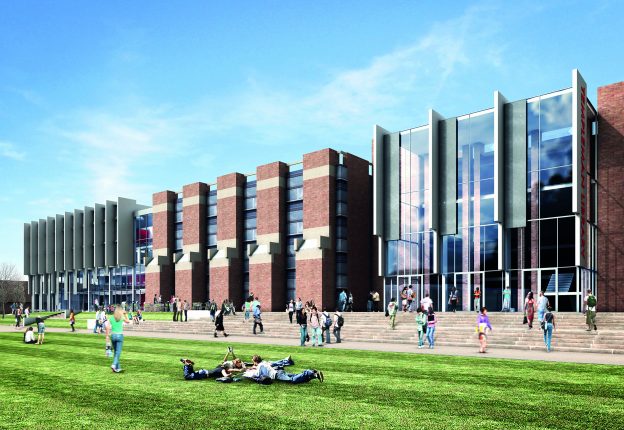
From September 2017, there will be some changes to the Templeman Library’s layout, collections, borrowing rules and more.
Follow this link to a slideshow showing what you can look forward to in the next academic year.

Isabella Reichl, a PhD in Linguistics student, has just been awarded the International Pragmatics Association (IPrA) Student Prize for her paper Refusals in Early Modern English Drama Texts: New Insights, New Classification.
The award includes the publication of the paper in the IPrA journal Pragmatics, as well as £500. Isabella received a message from the prize committee, praising her paper as an admirably accomplished scholarly exploration of historical pragmatics, done with gusto and technical expertise.
Isabella is undertaking her PhD project on ‘Initiating and Countering Pre-cooperative Illocutionary Acts in Present Day English’, supervised by Dr Eleni Kapogianni.
The International Pragmatics Association is the largest and most renowned international community of researchers working in the field of linguistic pragmatics. Established in 1986, it now has on average 1,400 members in over 70 countries. Its conference is organised every two years, attracting a very large number of attendees. This year, the 15th IPrA conference will be held in Belfast, 16-21 July, where Isabella will present her paper.
For more details about IPrA, please see its website.
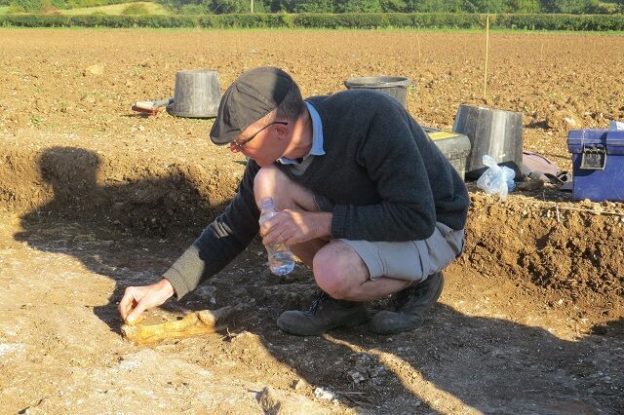
Dr Steve Willis, Senior Lecturer in Archaeology in the Department of Classical & Archaeological Studies, has won funding from the Roman Research Trust to support specialist reporting on late Roman pottery excavated in North-East Lincolnshire. The excavations included a training project for Kent students, in conjunction with the North East Lincolnshire Archaeology and Local History Society.
Pottery is typically the main find on sites of the Roman era and its detailed study is vital for dating site occupation and phases and for understanding culture and activity at sites.
Steve explained: ‘The really interesting aspect of this site is that it sees a growth in activity which becomes intense in the very late Roman period. This is remarkable as at this time it had been thought the eastern coastal region (where the site lies) was abandoned due to raiding from across the North Sea and maybe Scotland.
‘The site was a collection and processing centre for agricultural produce: horses and grain and seemingly brewing. This generated wealth judging from the jewellery finds. The pottery is very distinctive and regionally specific and continues into the Anglo-Saxon era. It will provide information on everyday life as Britain moved towards what was traditionally seen as the ‘Dark Ages’ following the eclipse of the Roman era. It will provide information on everyday life as Britain moved towards what was traditionally seen as the ‘Dark Ages’ following the eclipse of the Roman era.’
The Roman Research Trust (RRT) is a charitable trust that offers financial support to research and education in the field of Romano-British Archaeology. For more details of the trust, please see its website.
The University has a code of practice that underpins its commitment to freedom of speech within the law. The code is available on the policies and procedures page of the University’s governance website. This code replaces a previous version that had been put in place to meet the requirements of the Education Act 1986.
The aims of the code are: to provide guidance on freedom of speech within the law; to ensure that any restrictions are kept to a minimum; and to outline measures that might be put in place to support freedom of speech in circumstances where there may be concerns about the maintenance of order or health and safety.
Annex A of the code sets out procedures for student and Kent Union bookings.
An annual report of the operation of the code is submitted to Council every year. The report for 2015-16 is available here.
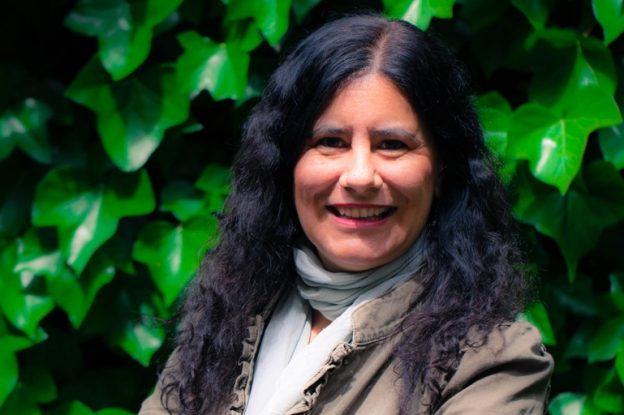
Dr Natalia Sobrevilla Perea, Reader in Hispanic Studies in the Department of Modern Languages, has co-organised and will be speaking at an event, ‘Forced Sterilisations in Peru and the Search of Justice’, to be held at the Human Rights Action Centre in London, at 18.00 on Wednesday 21 June 2017.
The event is organised in conjunction with the Peru Support Group, Amnesty International as well as the University.
Between 1996 and 1998, some 200,000 women and around 30,000 men were forcefully sterilised, many without their consent or understanding what the procedure meant for their fertility. The victims have been campaigning for justice and reparation for two decades. The meeting is an opportunity to learn more about what this policy consisted of as well as its longer-term consequences.
At the event, human rights defender Esperanza Huayama, president of the Association of Forcibly Sterilised Women, from the region of Huancabamba in Piura, Peru, who will be speaking about her experience in seeking justice and reparation.
The event is free to attend, and you can register online.
Dr William Rowlandson, Senior Lecturer in Hispanic Studies in the Department of Modern Languages, was invited to speak at the Swedenborg and the Arts International Conference to be held at Bryn Athyn College, Philadelphia from 6-9 June 2017.
William’s talk entitled ‘The Heavens and Hells of Jorge Luis Borges’ discussed the influence of Swedenborg on the Argentine poet and short-story writer Jorge Luis Borges, the subject of two of William’s books: Borges, Swedenborg and Mysticism (Peter Lang AG, 2013) and Imaginal Landscapes (The Swedenborg Society, 2015).
For further information on the conference and the full programme of events visit the Swedenborg Arts conference webpage.
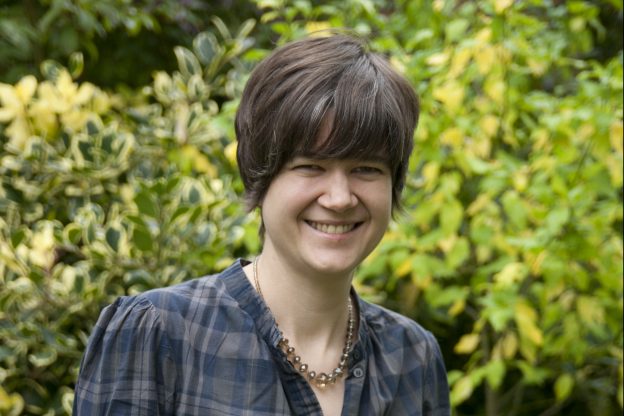
Dr Ellen Swift FSA, Reader in Archaeology in the Department of Classical & Archaeological Studies, has won an Arts & Humanities Research Council (AHRC) standard project grant of c.£380,000 for a project entitled ‘Roman and Late Antique Artefacts from Egypt: Understanding Society and Culture’.
Ellen will be the Principal Investigator on the project with co-investigator Dr April Pudsey from Manchester Metropolitan University. Other key project team members are Kent alumnus Dr Jo Stoner, who is the Post-Doctoral Research Assistant on the project, and Archaeology Technician and Classical & Archaeological Studies PhD student Lloyd Bosworth.
The project involves the study of items in the collection of UCL’s Petrie Museum of Egyptian Archaeology and is the first in-depth study of Roman and Late Antique Egypt that uses everyday artefacts as its principal source of evidence. The research project aims to transform our understanding of social experience, social relations, and cultural interactions, among the populations of Egypt in this period.
The research will bring together specialists in the interpretation of ancient Egyptian texts on papyrus, and archaeological artefacts, drawing on new methodologies and interpretative approaches including the experimental recreation of objects. Presentation of research results will include: a co-authored book on the social history of Roman and Late Antique Egypt from artefact evidence; a journal article on the 3D scanning and recreation of objects; online teaching and research resources for schools and universities; and a workshop for museums and academics.
Towards the end of the project a public exhibition at the Petrie Museum will present their research on musical instruments in particular, displaying the originals from the Petrie collection, as well as prototypes and replicas made via 3D scanning/printing technology.
Further details of AHRC grants are available at: www.ahrc.ac.uk/funding/opportunities/current/researchgrantsstandardroute/

Earn a £10 giftcard in return for taking part in a 1-hour experiment to help colleagues uncover the links between language and music.
Criteria:
Age 20-40
Monolingual English speaker
South Eastern accent
If you are interested, email Georgia at gc292@kent.ac.uk
Here’s some info about the experiment:
Speaking or singing? Unveiling individual variation in the perceptual transformation of speech to song.
Are speaking and singing always easy to tell apart? Some people say yes, others doubt that the decision is as clear-cut as it seems at first. In this experiment, you will be listening to a series of different sentences in English, each looped with 8 repetitions. When listening to a loop, you might have an experience of the sentence melody changing from spoken to sung. We would like you to tell us when it happens (or that it doesn’t). We will also ask you to fill in a brief questionnaire, to collect some data on your musical background, language skills and general audio-visual processing preferences. This research will help us understand the links between language and music, and how these links vary between different people with their different experiences of the world.
Photo credit: Flavio Ensiki via https://flic.kr/p/dVAqc8 under creative commons license https://creativecommons.org/licenses/by/2.0/
Eirini Bersimi, MSc Finance (Kent Business School) graduate was awarded the scholarship by South East Network for Social Sciences (SeNSS).
After completing her MSc Finance (Financial Markets) in 2016 and working in industry for a year, Eirini will return to Kent Business School in September to begin her fully-funded PhD in Finance. Eirini has been awarded a maintenance grant of £14,296 as well as full tuition fees at the home/EU rate to support her research on volatility forecasting and asset allocation in portfolio management as supervised by Dr Ekaterini Panopoulou (Reader in Finance).
SeNSS scholarship students are considered to be part of an elite group of researchers and are given the best possible opportunities at the beginning of what is hoped to be a hugely successful research career. As Eirini explains:
“The ESRC SeNSS Studentship holds a prestige among the academic community. I believe its interdisciplinary research networks and advanced training opportunities will support my research and equip me with the relevant skills to successfully complete my doctorate. By participating in conferences I will learn from others and improve my own skills and knowledge of my field. It is also a great opportunity for networking with researchers with similar interests, that could possibly lead to research collaborations.”
The University of Kent is proud to be part of SeNSS which has been accredited as a prestigious Doctoral Training Partnership by the Economic and Social Research Council (ESRC) in July 2016. Partners include the Universities of East Anglia, Essex, Reading, Roehampton, Surrey and Sussex and Royal Holloway, University of London. SeNSS is one of only 14 UK ESRC-funded Doctoral Training Partnerships and will be offering a number of full-funded ESRC doctoral studentship to start in September 2017.
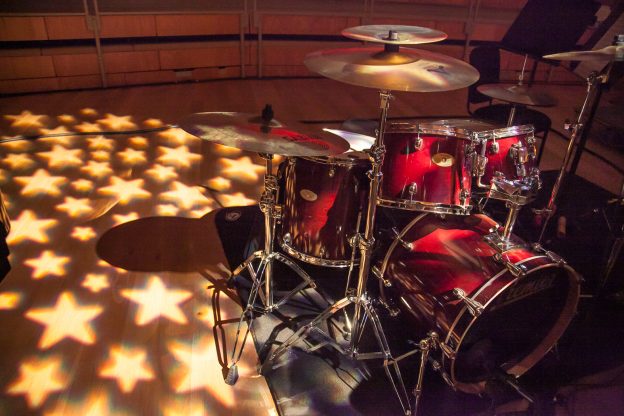
The annual Summer Music Week celebration of music-making at the University launched on Sunday 4 June with the University Big Band playing on the Memorial Bandstand at Deal, ushering in a week-long festival which lasts until Saturday 10 June.
The seven-day celebration includes many of the University’s ensembles, students, Music Scholars, staff and members of the local community, in events from a Scholars’ Lunchtime Recital to the Concert and Big Band’s evening gala concert; the University Chamber Choir and String Sinfonia performing at St Peter’s Methodist Church in Canterbury; all culminating in ‘Music for a Summer’s Day’ at 15.00 on Saturday 10 June, followed by cream teas.
Find out more about all that’s taking place between 4-10 June in Summer Music Week online, or grab a brochure from Colyer-Fergusson and Gulbenkian.
The role of music in the lives of students while studying has been highlighted with the publication of the latest Music at Kent, Donor Report. The document focuses on several student’s experiences playing music at the University and the opportunities on offer, including rehearsing and playing in the Colyer-Fergusson, which numerous students praised.
‘The Colyer-Fergusson is a beautiful space to have,’ said law student Lydia Cheng in the report. ‘As a rehearsal and performance space [it’s] amazing.’