Author Archives: Alice Allwright

Laptop, Coffee, Notebook, Pen & Glasses

Care first webinars w/c 2 November 2020

Our official Employee Assistance Programme provider, Care first offers a numbers of services and provide useful advice and support, including weekly webinars.

This week’s (Monday 2 November – Friday 6 November) webinars are as follows:

Monday 2 November 2020 –  ‘How Care first can support you’
Time: 12.00-12.30 – to register please click on this Go to webinar link.

Tuesday 3 November 2020 – ‘Managing Stress & Pressure’
Time: 14.00-14.45 – to register please click on this Go to webinar link

Wednesday 4 November 2020 –  ‘Stress, Anxiety & Sleep’
Time: 12.00-12.30 – to register please click on this Go to webinar link

Thursday 5 November 2020 – ‘How to keep motivated when you’re feeling stressed’
Time: 12.00-12.30 – to register please click on this Go to webinar link

Friday 6 November 2020 – ‘he links between Nutrition, physical activity and stress’
Time: 12.00-12.30 – to register please click on this Go to webinar link

Dr Gloria Chamorro

Dr Gloria Chamarro receives grant for Refugees project

Dr Gloria Chamarro, Lecturer in applied linguistics in the Department of Modern Languages and Linguistics, has received a grant from the Orange Tree Trust and The Thomas Sivewright Catto Charitable Settlement for her work on The English Hub for Refugees project.

The project helps refugees and asylum seekers gain the English language skills they need in order to integrate into their new communities and access mainstream education and jobs while also allowing University students to gain teaching experience. Apart from the English classes, the project also develops language learning materials for refugees and migrants, which are freely available in our Materials section.

Gloria says: “Thanks to the funding received from the Orange Tree Trust we will be able to continue supporting unaccompanied refugee minors with their language skills so that they can successfully integrate into their new communities and access mainstream education and jobs. It will allow us to continue with our English classes as well as with the development of language learning resources to support these and other migrants for two more academic years.”

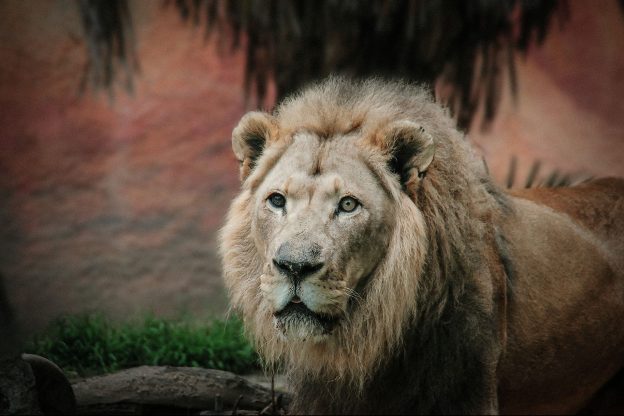
A lion

Oxford University, Hinduism and Narnia: Nostalgia interview with Jessica Frazier

In the latest episode of the Nostalgia podcast series, Dr Chris Deacy, Head of the Department of Religious Studies, interviews Jessica Frazier, former University of Kent member of staff and current Lecturer in Theology and Religion for the University of Oxford.

Jessica was born in Washington D.C. and came to England when a child. Jessica reveals how she fantasized about going to Narnia as a kid, and we learn about the appeal of Thailand where it is always summer – indeed, a portal into something magical.

Jessica also talks about teaching Hinduism at Oxford, how she wanted to be an explorer growing up, why she has become more of a Platonist as she gets older, why she has never been frightened of solitude, and how it is okay to be a nerd.

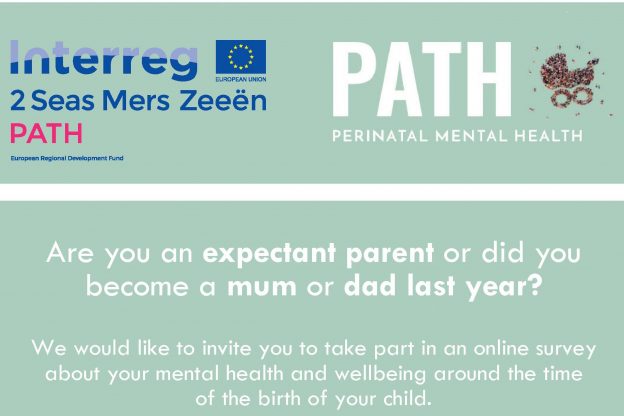
Time1 PATH poste

Attitudes to Perinatal Mental Illnesses – Study for recent parents

Are you an expectant parent or did you become a mum or dad last year?

You are invited to take part in an online study about your mental health and wellbeing around the time of the birth of your child.

If you want to take part then click on this survey.

Led by the NHS Kent and Medway Partnership Trust, with the University of Kent as one of 24 formal participant identification centres, the aim of the present study is to evaluate the effectiveness of a perinatal mental health multimedia campaign (PATHMC) in England. In light of the current coronavirus pandemic, the study also includes questions which aim to assess the differential impact of COVID-19 on parents and partners.

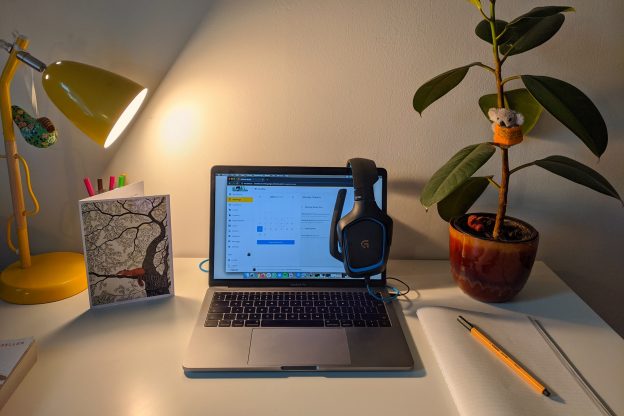
Macbook pro on white table next to a plant and yellow table lamp

Care first webinars w/c 26 October 2020

Our official Employee Assistance Programme provider, Care first offers a numbers of services and provide useful advice and support, including weekly webinars.

This week’s (Monday 26 October – Friday 30 October) webinars are as follows:

Monday 26 October 2020 –  ‘How Care first can support you’
Time: 12.00-12.30 – to register please click on this Go to webinar link.

Tuesday 27 October 2020 – ‘Tips for improving posture’
Time: 14.00-14.30 – to register please click on this Go to webinar link

Wednesday 28 October 2020 –  ‘Fear & Anxiety’
Time: 12.00-12.30 – to register please click on this Go to webinar link

Thursday 29 October 2020 – ‘How the Pandemic has affected how people have accessed support’
Time: 12.00-12.30 – to register please click on this Go to webinar link

Friday 30 October 2020 – ‘Finding joy in 2020’
Time: 12.00-12.30 – to register please click on this Go to webinar link

A line of smiling carved pumpkins

Halloween Web Hangout

All students are welcome to join this fun, Halloween-themed, Web Hangout on Wednesday 28 October at 12.00!

Meet new students, take part in a fun Halloween-themed quiz, a bingo themed game, plus a chance to test your drawing skills to win points and so much more.

Join us for for a chance to win a voucher of your choice.

Fancy dress is optional!

We look forward to seeing you there.

To sign up fill out this MS Form

NIHR Applied Research Collaboration Kent, Surrey and Sussex

Applied health and social care researcher survey

Are you a health care professional, social care professional or an applied health and social care researcher in Kent, Surrey or Sussex currently involved with, or interested in, applied research? Then NIHR Applied Research Collaboration (ARC KSS) would like to hear from you.

ARC KSS is keen to find out how your interests align with its themes and hear about your learning and development needs and preferences. The findings from its survey, which takes about 15 minutes to complete, will help develop and shape the ARC KSS Academy’s activities that will support applied health and social care researchers across the region, over the course of the next four years.

If interested please complete the ARC KSS survey

If you have any questions about the survey please email ARCKSSacademy@kent.ac.uk

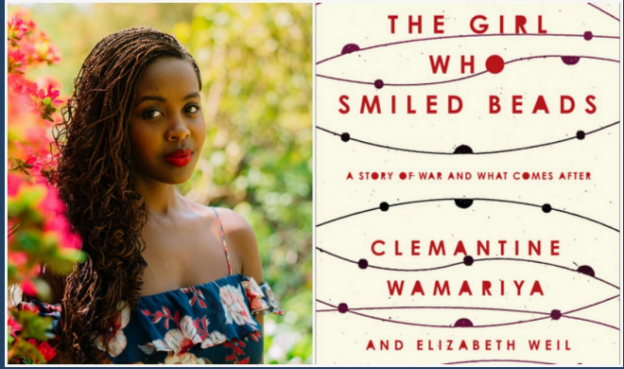
The Girl Who Smiles Beads by Clemantine Wamariya

Would you like to be part of a Global Campus Read?

Kent students are invited to join a common reading experience with West Virginia University (WVU), USA.

Each year, WVU engages its campus and community with a Global Campus Read to foster dialogue, critical thinking, and participation.  This year’s chosen read is ‘The Girl Who Smiled Beads’ by Clemantine Wamariya.

This online course running from 19th January – 30th March will encourage conversation and collaboration between students from West Virginia University and other universities around the world.  Students will have access to virtual Campus Read events, and on completion of the course, students will receive a transcript from WVU.

Please go onto the Global Education website to find out more and to register your interest.

Deadline for applications is 1 November.

If you have questions about this course, please contact studyabroad@kent.ac.uk

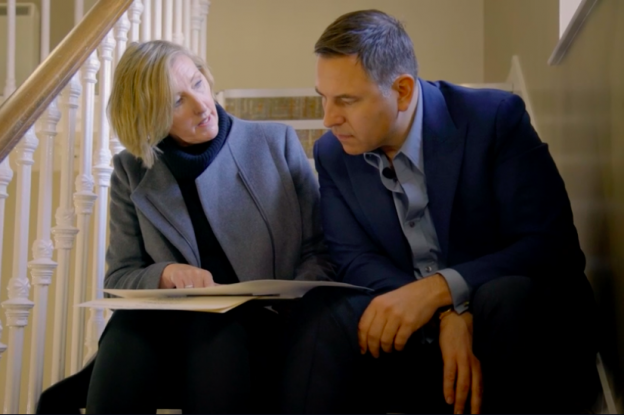
Professor Julia Anderson with comedian David Walliams

History Professor appears on BBC’s Who Do You Think You Are

School of History Professor Julie Anderson has appeared on BBC’s ‘Who Do You Think You Are?’ helping comedian David Walliams find out more about his family history.

Julie provided David with some information on his great great grandfather, who was a patient at Salisbury Infirmary in 1884, suffering from cataracts. You can watch the full episode on the iplayer here, and Julie has shared more about her appearance with the School of History team…

What was it like being on ‘Who Do You Think You Are?’

Being on the show is really good fun. When the researchers call you months in advance, you have no idea of the identity of the person you are going to be working with – it is revealed shortly before you start filming. Before that, there is lots of discussion and the researchers on the show get tips from you about what they should be looking at and images and documents that might work on tv. The crew was so professional and patient and they made me feel relaxed.

What was David Walliams like?

David is obviously an experienced professional who was funny in real life, and curious about his family. He was tall too.

Did anything funny happen while you were filming?

When we were standing outside doing our ‘meet’, people kept recognising David and shouting hello to him. But most people were really respectful as they could see we were working.

Were you nervous?

Not really – I have done TV before and I did a WDYTYA before with Martin Freeman before I came to Kent – I did a lot of work on his show as it was centred on the sensitive topic of venereal disease – that time I ended up on the cutting room floor – which can happen with TV shows as they only have so much time to present everything. It was disappointing, but working with Martin and the crew was great and I remember laughing all day.

What is the strangest thing about doing a tv show like WDYTYA?

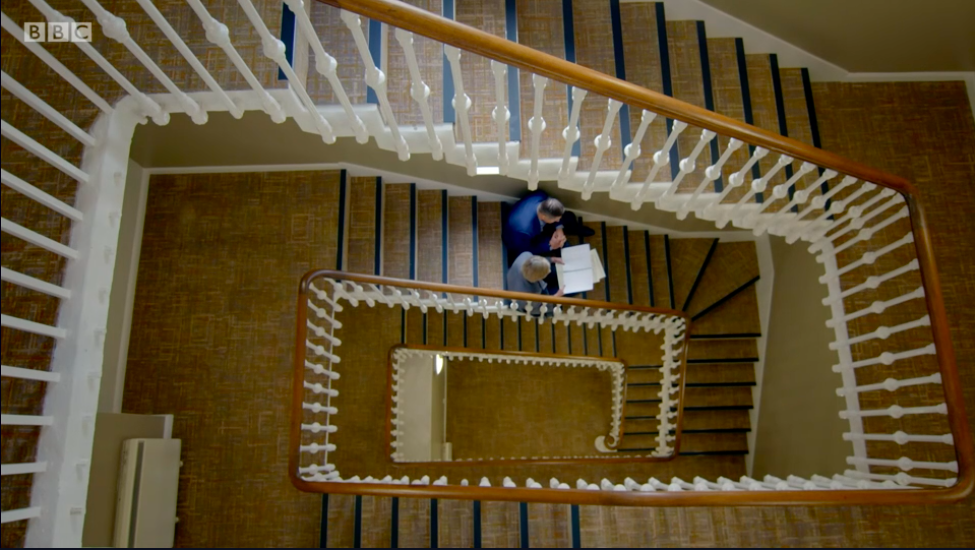
Probably all the walking and pointing. You have to make sure you have nice clean nails as you have to point to lines on documents. What goes on behind the scenes is a surprise – our cameraman was contorting himself in all kinds of ways to get the best shot, and you have to try and not notice. There are lots of people in the space – producers, director, camera and sound persons, so it is not as ‘intimate’ as it looks. There were about seven of us in a little staircase.
Did the segment take a long time to film?

That is one of the oddest things about performing in front of a camera. It takes a really long time to do the filming, so that the director is satisfied. Things can go wrong with the sound and you have to wear a microphone which attaches to your clothes – it is usually stuck under your jacket and then a pack with batteries attached behind you which is really heavy and is why I always wear trousers. I sat in a stairwell with David for at least an hour and a half and I was numb and stiff when I finally got up, even though we took breaks to get different camera angles. You have to do the same thing over and over with different camera angles.

Is filming WDYTYA different from other types of tv?

It is because you are moving and engaging. In a lot of tv historians are talking heads and you stand or sit in a chair. When you are walking and moving it is harder. And when the enthusiasm for history overtakes you, you often forget yourself and get really enthusiastic. With tv you have to think about where your body is in relation to the camera and not bump your microphone.

Did you ever think that being in front of a tv camera would be part of your job as a historian at a university?

Never! I thought tv was only for male historians who did war and royalty. It is good to see a more diverse range of historians on tv these days. I have done a couple of programmes a year since 2011, and I really enjoy doing them.

Who are the people you enjoy working with the most on tv programmes?

I really enjoy working with the researchers and producers. They work so hard to get the context and interpretation right, and there is a lot of communication before the programme is filmed. Interestingly, they often have History degrees, so that may be something for our students to consider as a career in the future.

What did you learn from David Walliams?

He gave me instructions on how to walk up stairs when you are being filmed from above. Not necessarily a life skill necessary to a historian, but you never know.

SEPnet_logo_

SEPnet Diversity Webinar: Nurturing community and belonging

The University of Kent will be hosting the SEPnet Diversity Webinar Nurturing community & belonging – particularly during Covid-19 on Wednesday 2 December 2020, 10.00 – 13.00

Building an inclusive community within universities where students and staff feel heard and supported is more important than ever in the current climate. Universities need to consider the impact of remote working and studying as well as dealing with future uncertainty for different groups including, for example, 1st generation students, those from different BAME backgrounds and those with physical and mental health issues.

Early career researchers can be forgotten and feel a lack of empowerment and anxiety about their future.  Understanding how different groups engage with their working and learning environment is key to helping them feel a sense of belonging and enabling them to achieve their potential.

This annual workshop will explore how we can engage students and support early career researchers through specific interventions aimed at addressing these challenges. This event is aimed at all STEM staff, PGRs and student representatives and those responsible for diversity and inclusion including Project Juno and diversity champions, Athena SWAN representatives, HR managers and academics.

The workshop will be chaired by Professor Nigel Mason, Head of School of Physical Sciences at University of Kent and is FREE to attend.  Places are limited.  Please register for a place  on the Eventbrite website on a first come, first served basis.  Please circulate to your relevant colleagues.

Joining instructions and a link to join the webinar will be sent nearer the time.

PROGRAMME

10.00  Chair’s Introduction – Professor, Nigel Mason, Head of School and E&D Committee

10.15  The effect of online/remote learning on widening participating students

Amy Low, Service Delivery Director, AbilityNet

10.40  Understanding attainment differentials at a London-based university: student engagement through a mixed-method lens

Dr Diego Bunge, Independent Researcher and Dr Daniel Hartley, Trinity Laban Conservatoire of Music and Dance

11.05  Early Career Researcher Mental Health in Academia

Dr Zoë Ayres, Research Scientist and Mental Health Advocate

11.30  Panel discussion

11.50  Break

12.05  Breakout group discussions

12.35  Summary and questions

13.00  Close of proceedings