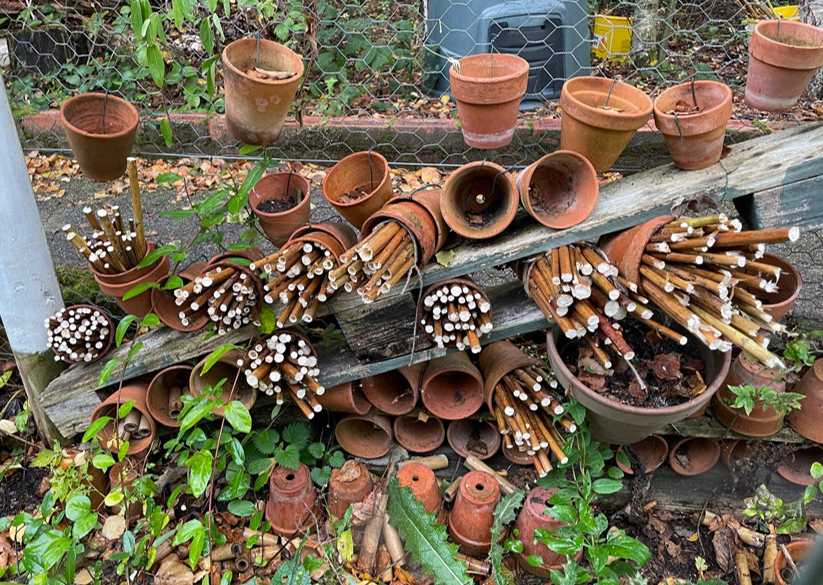
(One of the completed Bug Hotels made with recycled wooden pallets, terracotta pots, collected leaves and Jerusalem Artichoke stems)
According to the Wildlife Trust, an average garden space in the UK, has the ability to accommodate more than 2000 species of insects. At Kent Community Oasis Garden (Kent COG), a lot of work goes in to increasing the habitat diversity in order to increase the overall number of species that use our site. Creating habitats to support invertebrates is important as they play a key role in pollination, soil health and natural pest control as well as being a vital part of the food chain supporting the other wildlife that lives at Kent COG.
For the forth Biodiversity Booster session, we ran a bug hotel creation workshop where student volunteers were able to create new bug hotels out of the Jerusalem Artichoke stems that we had left after our harvest of this years’ bumper artichoke crop! During the session, they were also learning about the importance of supporting the invertebrates in garden spaces as well as discussing what species they were likely to see using these new habitats.
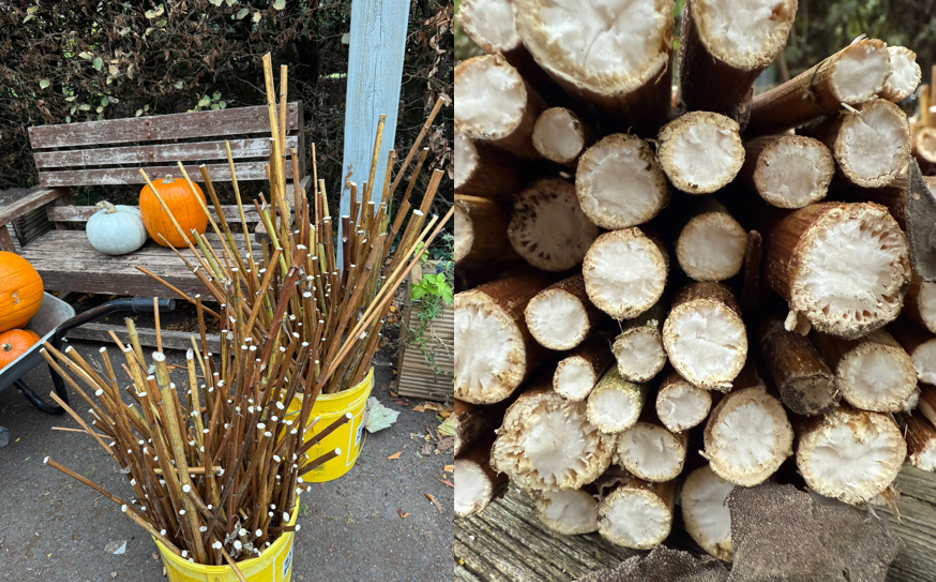
(Some of the Jerusalem Artichoke Stems that were cut down into more manageable sizes for making bug hotels)
As well as being grown as food for the people and the volunteers at Kent COG, Jerusalem Artichokes are actually a very important plant for supporting wildlife both as a food source and through providing habitat. The flowers, which bloom in late summer an autumn, provide an important nectar and pollen source for pollinators like bumblebees, butterflies and hoverflies. The seeds are eaten by goldfinches and when cut, the stems can provide a useful habitat for solitary bees and ladybirds.
For this Biodiversity Booster Session, the student volunteers made two different types of Bug Hotel utilising a range of reused materials as well as the Jerusalem Artichoke stems. They were also able to add to the existing bug hotels and hibernaculum that we already have on site to full any gaps and add more micro-habitats within those areas. Adding things like deadwood, leaves and loose bark to the bug hotels means that they will be able to support a large variety of invertebrates by mimicking a variety of natural habitats. The bug hotels were also placed in areas of Kent COG that had different light levels and a range of nectar-producing plants.
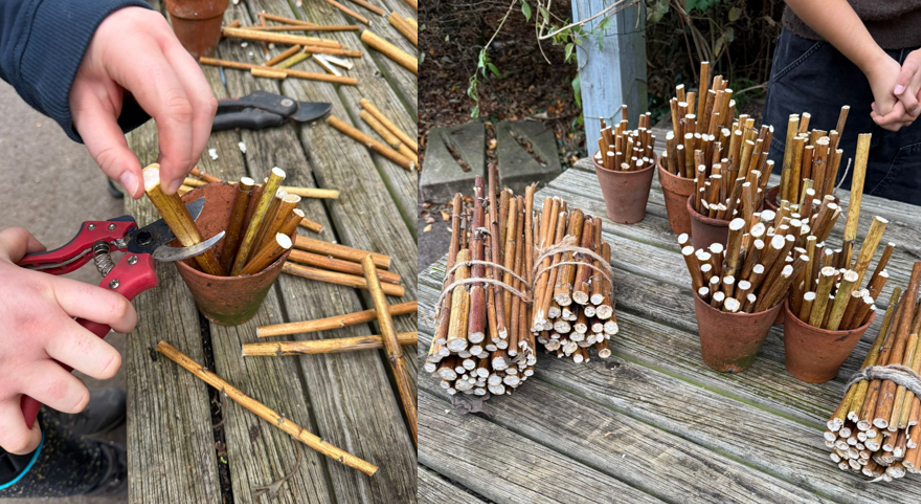
(Bug Hotel in progress and a table full of bundles ready to be placed around the garden)