Maternal Melodrama Symposium 3rd of June, GLT 3

Posted by Sarah

Exciting news! We can confirm the date and location of the Melodrama Research Group’s first symposium.

maternal melodrama

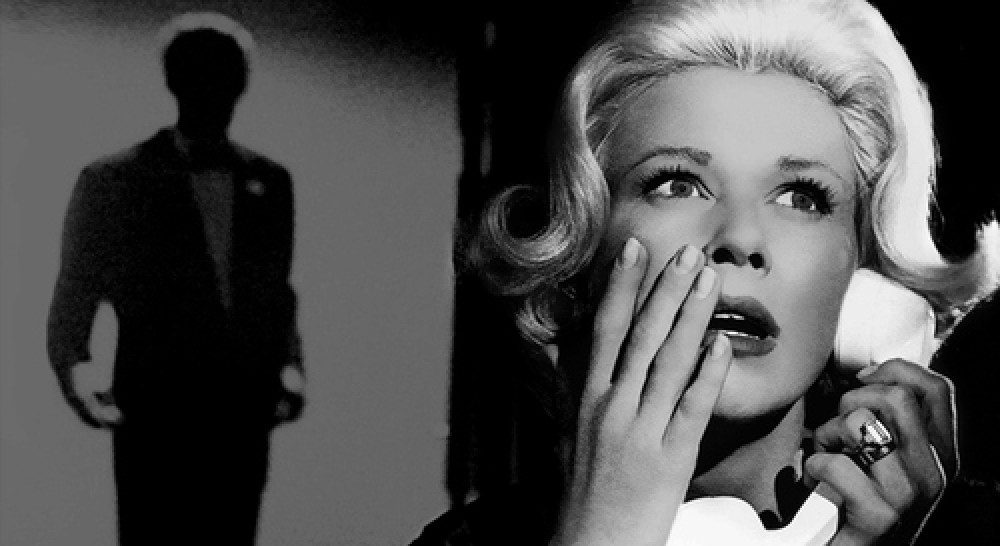
Sponsored by CISFMI and KIASH, the Melodrama Research Group will host a Symposium on Maternal Melodrama during the 3rd of June in GLT3. While Maternal Melodrama is often associated with Hollywood films of the 1930s and 1940s, and actresses such as Bette Davis, Joan Crawford and Barbara Stanwyck, recent academic work on this topic has explored a new area. Sue Thornham’s ‘”A HATRED SO INTENSE” We Need to Talk About Kevin, Postfeminism and Women’s Cinema’ discusses the relevance of maternal melodrama to contemporary cinema, prompting us to re-evaluate some tired assumptions.

The Symposium will be a great opportunity to debate maternal melodrama generally and to respond specifically to Thornham’s argument. Her article appeared in the new journal Sequence: Serial Studies in Media, Film and Music 2.1, 2013. Unlike most journals, Sequence encourages a sequential approach to academic deliberations and its emphasis on a variety of forms for the submission of responses (the traditional written word, but also audio and video) will allow the Melodrama Research Group to engage more fully, and fruitfully, with the Digital Humanities.

The Group is delighted to welcome our special guests: Professor Pam Cook (University of Southampton) and Dr Catherine Grant (University of Sussex). Pam and Katie will present on video essays.

Sue Thornham’s article: http://reframe.sussex.ac.uk/sequence2/archive/sequence-2-1/

Pam Cook’s University of Southampton page:

http://www.southampton.ac.uk/film/about/staff/pc3.page

Katie Grant’s University of Sussex page:

http://www.sussex.ac.uk/profiles/183852

More details, including a timetable and the titles of talks, will be posted here in due course.
Timetable for Meetings in the Summer Term

Posted By Sarah

Leading up to the symposium on Maternal Melodrama on Tuesday the 3rd of June, the Group will be meeting on the preceding Tuesdays from 4-7pm to screen and discuss maternal melodrama.

screening

The meeting dates:

Tuesday 13 May, 4-7pm, Studio 6
Tuesday 20 May, 4-7pm, Studio 6
Tuesday 27 May, 4-7pm, Studio 6

More details on films to be screened will be posted here in due course.
And please note the room change: we will be in Jarman Studio 6.

Melodrama Research Talk 25th of March, GLT3, 5-6pm

Posted by Sarah

The Melodrama Research Group is very pleased to welcome Matt Buckley, Rutgers University, to give a talk entitled ‘On Melodrama as a Modern Art’ on Tuesday the 25th of March, in GLT3, from 5-6 pm.

murray-left

Talk Abstract:

Just fifty years ago, melodrama was regarded, if at all, whether on stage, film, or tv, as a negligible, ephemeral, antiquated form of drama, a laughable thing, enjoyed by the poor, the illiterate, and the naïve—a thing, most importantly, perhaps, that modern realism had, or surely would soon, make obsolete and supersede.  Today, it is starkly apparent that such dismissals were acts of monumental misperception.  In theatre history, film and television studies, cultural history and narrative theory; in studies of the novel, the detective story, science fiction, and popular literature in general; of the vaudeville, the musical, silent film, and Hollywood cinema, and in the vast and diverse histories of popular literature, cinema, and television worldwide, we find melodrama everywhere.  And melodrama is not only modernity’s dominant narrative form: it has become a kind of meme that has penetrated and suffused the modern world.  As a now substantial body of scholarship has made evident, its assumptions and conventions color our fictive drama in every medium and mode, tacitly inflect our political and social performance, implicitly structure our narrative construction of events in the press and in our lives, and appear even to inform our apprehension of external reality and our consciousness of self.

In this talk, I try to come to terms with this emergent history, first by looking to melodrama’s origins and early development in an effort to discern more clearly what makes melodrama distinctive, and then by outlining the primary methods and processes that appear to characterize its development over time, its adaptation to new contexts and media, and its penetration and suffusion of discourse, imagination, and mind.  In closing, I explore the challenges this emergent view of melodrama’s larger history presents to traditional research methods and perspectives, and suggest some of the ways in which those might be overcome.


Matt Buckley’s Bio:

Matthew Buckley is an Associate Professor in the Department of English at Rutgers University, New Brunswick, where he teaches courses on comparative drama, media, and visual culture in modernity. He is the author of Tragedy Walks the Streets: The French Revolution in the Making of Modern Drama (Johns Hopkins University Press, 2006) and has published articles on radical dramatic aesthetics, embodiment in early      modern theatre, and the history and historiography of early melodrama in Modern DramaTheatre Survey, Theatre Journal, Studies in Romanticism, and Victorian Studies.  He is currently at work on two books: Becoming Melodramatic, a study of the formal and cultural development of early stage melodrama, and Place of Seeing, a series of essays on theatre iconography and visual performance between 1580 and 1880.  He is the founding director of the Melodrama Research Consortium, an      international interdisciplinary organization devoted to the comparative study of stage, film, television, and new media melodrama. He is now developing a digital database project on the emergence of melodramatic theatre in Britain, France, Germany, and America.

More details will be posted to the blog in due course.

Do put the date in your diaries, and please note that our planned meeting on the 26th of March will no longer take place.

The Orphanage showing at The Gulbenkian Cinema on the 4th of March

Posted by Sarah

The fifth film in the Gulbenkian  Cinema’s Gothic Season – J.A. Bayona’s The Orphanage (2007) – screens on Tuesday 4th of March  at 9.30pm. It will be preceded by a panel discussion which will include contributions from the Melodrama Research Group’s Dr Tamar Jeffers McDonald, as well as Dr Cecilia Sayad and Professor Nuria Triana-Toribio.

The OrphanageThe Gulbenkian Cinema’s description of the film:

J. A. Bayona | Spain | 2007 | 106mins | Belén  Rueda, Fernando Cayo, Roger Príncep

This terrific Spanish horror film, the debut of J. A.  Bayona and produced by Guillermo del Toro, director of Pan’s Labyrinth, received great acclaim on its release in 2007.

After thirty years, Laura returns to orphanage where she  grew up, accompanied by her husband Carlos and their 7-year-old son Simón, with  a dream of restoring and reopening the long-abandoned mansion as a home for  disabled children. The place awakens Simón’s imagination, and he soon begins  playing not-so-innocent games.

As events take a sinister turn, Laura slowly becomes  convinced that something long-hidden and terrible is lurking in the old house,  something waiting to emerge and inflict appalling damage on her family, in this  cleverly made, utterly terrifying film.

“A shiver of fear  runs right through Juan Antonio Bayona’s pungent and scary film” Peter Bradshaw, The  Guardian, 4 stars

“A good old-fashioned  horror in the best possible way, this is a beautifully told, terrifying ghost  story that lingers with you long after the shivers have stopped” Olly Richards, Empire  Magazine

Spanish  w/Eng ST

For more information and to book your ticket please go to: http://www.thegulbenkian.co.uk/events/cinema/2014/March/2014-03-the-orphanage.html

Melodrama Screening and Discussion, 5th of March, Keynes Seminar Room 6, 4-7pm

Posted by Sarah

All are welcome to attend the fifth of this term’s screening and discussion sessions which will take place on the 5th of March in Keynes Seminar Room 6, from 4pm to 7pm.

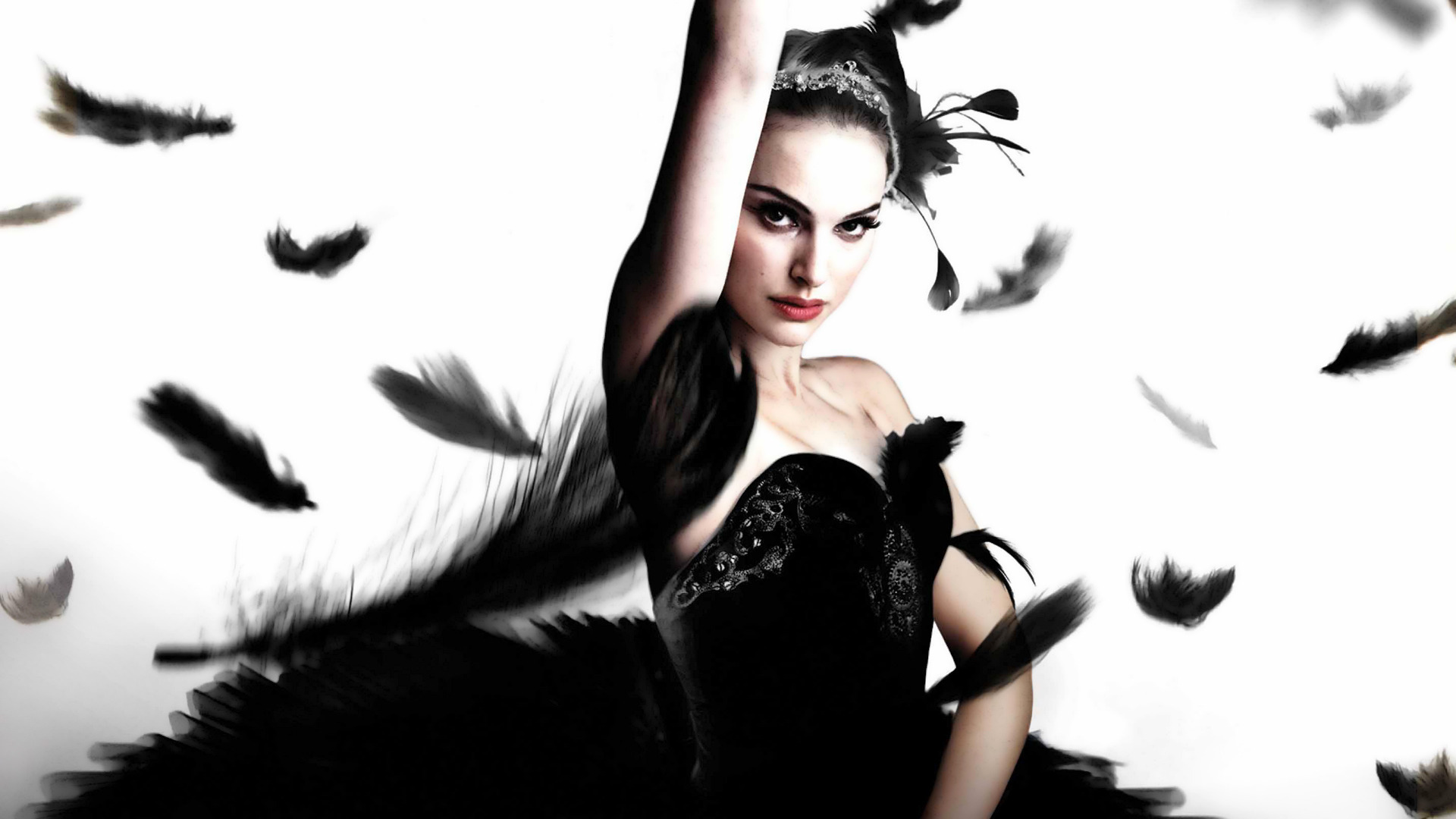
We will be screening Black Swan (2010, Darren Aronofsky, 108 mins).

Black Swan

Ann-Marie has very kindly provided the following introduction:

The film is said to be inspired by Fyodor Dostoyevsky’s 1846 novel The Double. In the book a man goes mad when he encounters his double, and, like Black Swan, the double in Dostoyevsky’s novel is the polar opposite of the original self.

The film revolves around Tchaikovsky’s brilliant ballet, Swan Lake. Natalie Portman plays both the White and the Black Swan. Her performance, (for which she won a Best Actress Oscar) focuses on the slow spiral into madness caused by an over-protective mother, the intense pressure of her work, confusion of her sexual orientation, and perhaps, the acknowledgment of the short-lived career of her predecessor (Winona Ryder). In fact, it is not hard to see the All About Eve (1950) links throughout the film, particularly if we consider the fear and paranoia of the younger/prettier/talented performers. Show business has a shelf-life, something the women in this film are more than acutely aware of.

The film was chosen for multiple reasons, but none more so than the idea of the doppelganger. The doppelganger is the paranormal double of a living person. The doppelganger is seen to be sinister and bad luck, often regarded as an omen of death. Perhaps most fascinating about the use of the double in this film is the idea of identity, both hidden and the eventual loss of it, and it is this that could be further expanded in our meeting.

 Potential discussion points:

The use of music, particularly in reference to Portman’s character, Nina.

Hidden identity and its connection to melodrama.

The extension of a fictional self and/or the dissolution of self.

The double in terms of polar opposites and its importance to narratives as a whole, but particularly melodrama.

Lastly, dance and movement as an expression of character. This brings to mind the sweeping cape of the Victorian melodramas. Plainly, what type of movement do we identify with a type of character? How does this alter our perception and add to the melodramatic mode? Are the villains prone to excessive movement, and how do we interpret that in our culture?

Do join us if you can.

A link to Dostoyevsky’s novella: http://fiction.eserver.org/novels/the_double.html

Summary of Discussion on The Awakening

Posted by Sarah

Frances has very kindly provided the following summary of our discussion on The Awakening (2011):

the awakening


Warning! The following discussion contains spoilers for those who have not seen the film yet…

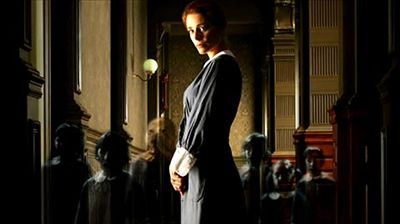
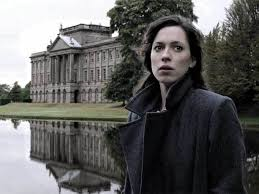
On Wednesday 19th February we watched and discussed The Awakening. I did not want to say too much about the film in my opening remarks and so most of the group present were experiencing the film for the first time and without much previous knowledge. This was an important component for our discussion after the film as quite a lot of time was spent discussing the film’s ending and its twist (or twists). We agreed that the film remained ambiguous about whether Florence is alive or not at the end. We mentioned that, logically, it is probably likely that she survived (the manner in which she interacts with other characters and is about to leave the house points to this) but it is interesting that the film still works to evoke the question of her mortality and does not complete resolve the ambiguity. Costume and performance are important parts to this uncertainty. Florence’s costume has changed and so this suggests she has survived. However we awakening endingnoted how the white coat she wears could make Florence seem ghostly and this is an interpretation reinforced by the way her presence is ignored by the school’s headmaster. In either case, we felt the possibility for different interpretations was a fitting ending to a ghost story where frequently our expectations are continually subverted.

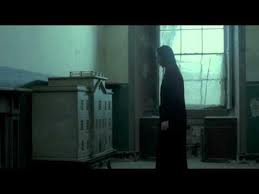
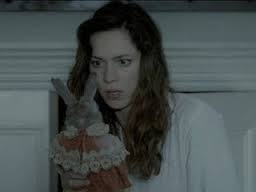
The group commented how, in many ways, The Awakening is a conventional story of a haunted house where the spirits interact with the living in order to resolve unfinished business. The music contributes considerably in establishing this uneasy mood and the film contains some good, unexpected scares. A comparison was made between The Awakening and Turn of the Screw and the relationship between the ghost story in cinema and that in literature. But that is not to say that the film does not contain some very striking moments which we agreed worked especially well. We talked about how the uncanny is evoked by the film, especially in the scene where Florence keeps returning to the same room depicting her mother’s death, despite her attempts to run away. The rabbit toy is also particularly uncanny and signals a rare instance of the use of vivid colour in the film. We discussed how it is possible to extend the Freudian reading of the film further, as the dollhouse functions as another double: it is the double of the house but also metaphorically represents Florence’s mind (it is her ‘mind palace’). Florence’s interaction with the dollhouse – which moves from confusion to trepidation and fear – parallels our protagonist’s the awakening doll's houseincreasing understanding of the haunting. The dollhouse allows Florence to observe the whole house, at once, and yet she is still unable to ‘see’ the larger picture for the majority of the film. This radically changes of course when Florence remembers her traumatic childhood and the memories of those disturbing events are ‘re-lived’ before her eyes.

In this respect the film can be interpretedthe awakening rabbit as a representation of the psychoanalytical process, as a kind of ‘talking cure’. Florence’s experience of the haunted house in the film functions to provide a series of shocks for the heroine so that she may remember the traumatic truth of her childhood. Tom’s presence in the film represents a form of the return of the repressed. The rabbit toy also functions as an important marker and another double. The song which the toy sings remarks that all the children ‘are gone except one’. This creates another double because at first the viewer believes this to be the ghost child (revealed later to be Tom) but this ‘child’ is also Florence herself, as she survived her father’s brutal attack. Only by remembering – or rediscovering – her true ‘self’ can Florence come to terms with this true identity. We discussed how it is interesting that this journey of self-discovery is framed by Florence’s movement from spiritual sceptic to dedicated believer in ghosts. This somewhat undermines Florence’s characterisation at the beginning of the film as an independent, successful author and career woman in the early 20th Century, and so the ultimate ‘message’ of the film is obtuse.

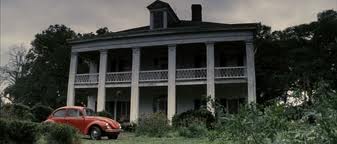
We also discussed the film’s setting and agreed that the post-WWI era is particularly suited to this type of horror story. We said how the film thus taps into a British cultural memory in addition to performing as a conventional ghostly tale. It was commented that The Awakening also correlates to the wider tradition of British horror which emphasises the paganism and spiritualism of the countryside against the supposed rational and sceptical urban city. Additionally, the manor house setting in The Awakening brings in the question of class, particularly through the character of Maud, and how the haunting of the house is caused – in part The Skeleton key– by the oppression of the aristocracy. We commented how this trait in horror extends beyond British films albeit in a slightly different guise: The Skeleton Key is a good comparison point with the manor house now replaced by a plantation house.

Many thanks to Frances for choosing the film, introducing it and providing the above excellent summary of our discussion.

Do, as ever, log in to comment or email me on sp458@kent.ac.uk to add your thoughts.