What has changed in 35 years?

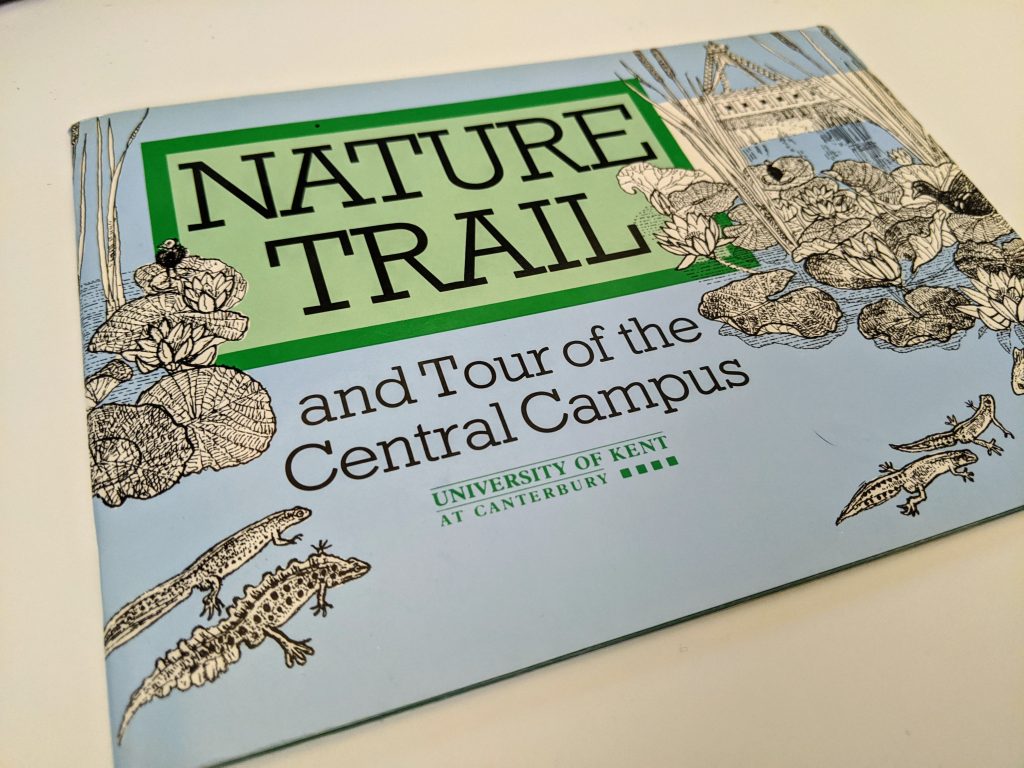
The original nature trail on the Canterbury campus was devised in 1985 and written by John Kesby and Ian Swingland. Here are the opening paragraphs from the original guide:

“The nature trail around the University’s 300 acre campus, with its magnificent hillside setting overlooking the Cathedral City of Canterbury and the valley of the Great Stour, has been devised for the benefit of its staff and students, members of the local community and of the thousands of people who visit us during the year, be they conference delegates or holiday makers.

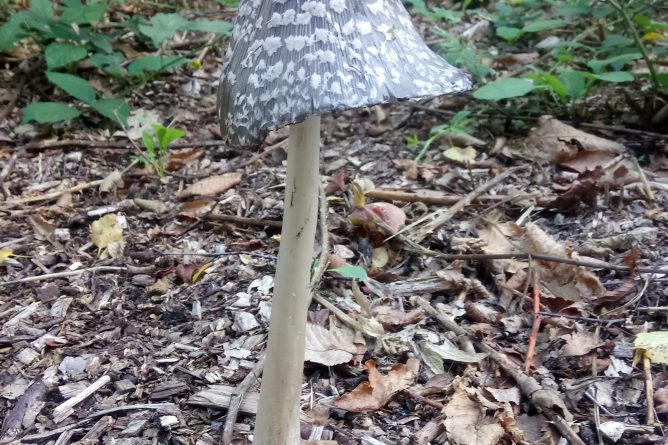
The trail combines the opportunity for attractive walks around the grassy slopes, ponds and woodland of the campus with a challenge to discover how much you can see or hear of the abundant wildlife around us. This brochure will guide you to places where you can find nightingales, willow warblers, great spotted woodpeckers and even the occasional kingfisher, to observe damselflies or Essex skippers; to watch out for lizards, newts, three-spinned sticklebacks or voles; to identify parrot wax caps, prickly lettuce, bristly ox tongue or red goosefoot. We hope it will be enjoyed by those who have difficulty putting a name to even the most common flora and fauna. At the same time, we hope it will be of interest to knowledgeable naturalists and of value to parties from the schools of other groups of wildlife enthusiasts.”
Whilst the description of the campus overlooking the Cathedral may still ring true the list of species that could be seen on campus in 1985 would be much shorter today.

In order to map out what we have lost it is useful to fully understand what we had. Thankfully we have a few copies left of the 1985 guide with its detailed species lists. The Sustainability Team will be digitising all of this information so that it will be available to everyone so that as a community we can start to identify what we still have on campus, what is hard to find and what is gone.

Some trends of population decline go far beyond what we control on campus, however, there may be some species that are found locally that we may be able to encourage back through how we manage our campus and connect to habitats beyond our borders.
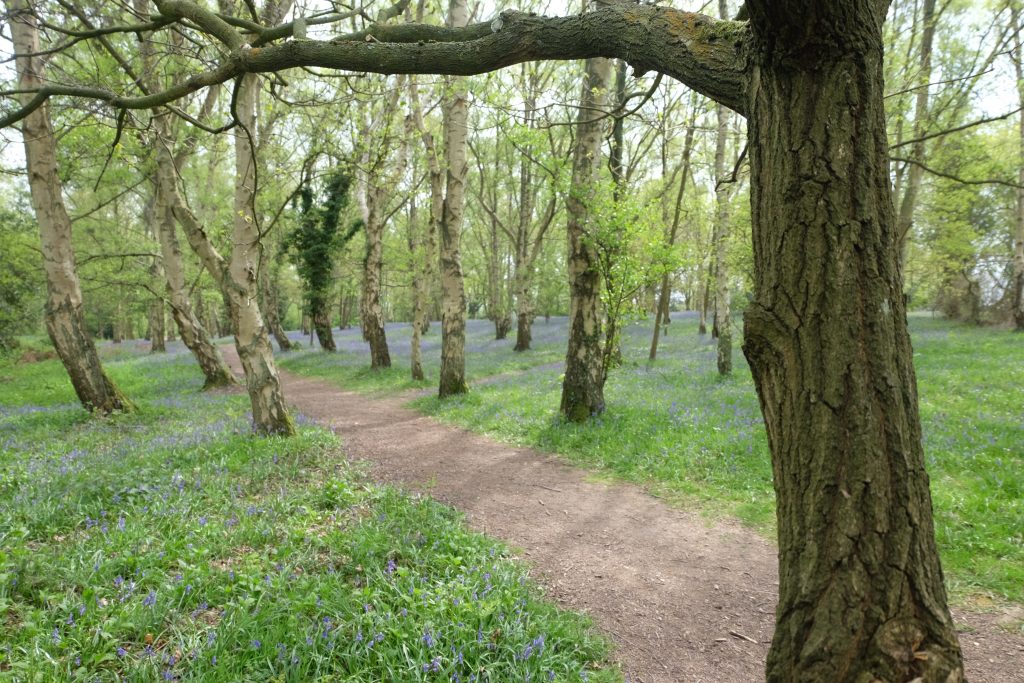
We would like students, staff and community members to help us with this undertaking by, in the first instance, recording what they spot. Big or small, common or rare we want to know what you have seen and where you have seen it. At the moment we are just asking people email their information into us at sustainability@kent.ac.uk and we will collate it all as a first step to building a clear picture of what we have on campus.

We are also working on rejuvenating the information about the nature trails and rerouting the original trail around some of the new buildings on campus that now block the original route.

If you are interested in this project and want to volunteer your time on this, please do get in touch.
Maximising our green space at Medway

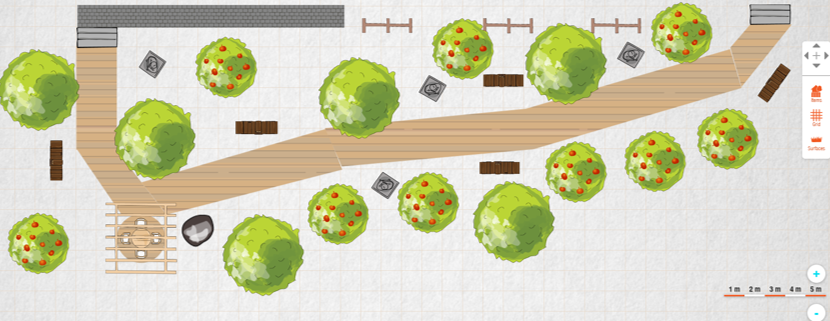
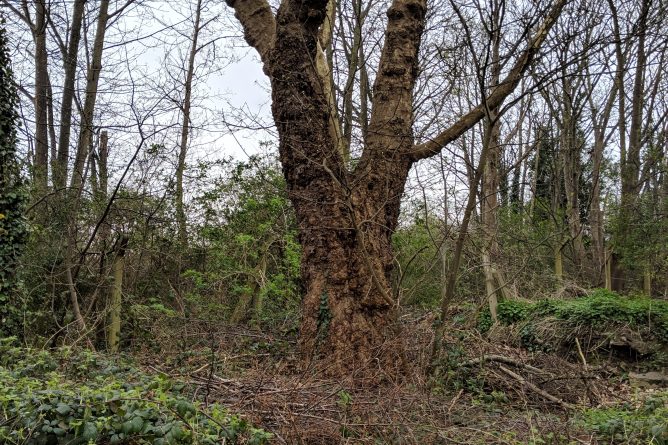
The Medway campus has a patch of green space that is underused and not particularly relaxing to spend time in (it is next to a busy road). However, the Medway sustainability group
made up predominantly of champions from Student Services know it has great potential to be developed into a space that could provide an alternative to an otherwise urban environment.

We aim to maximise the limited green space at the Medway campus by creating a quiet space for reflection that can be utilised by students, staff and the wellbeing team. As a group we have come up with a series of ideas and designs that utilise the campus’ small patch of woodland as a focal point for a wellbeing and art trail, incorporating music and natural sounds to break up the noise from the road. This will provide a unique space for alternative outdoor therapy for students accessing the University’s mental health services, and a space for all campus users to get away from it all.


We are now at the stage where we want to turn our ideas into a reality and are looking for students and staff to join our group to help us create a space that we can all benefit from.
We are looking for people who will bring new ideas into the group, are resourceful and are happy to volunteer their time on the site. At the moment we are on a break due to the Covid 19 pandemic, however if you would like to join the Medway Sustainability Group please email sustainability@kent.ac.uk and we will add you to our mailing list.

What is coppicing?

At the University of Kent we carry out coppicing across the Canterbury campus as part of our woodland management plans.
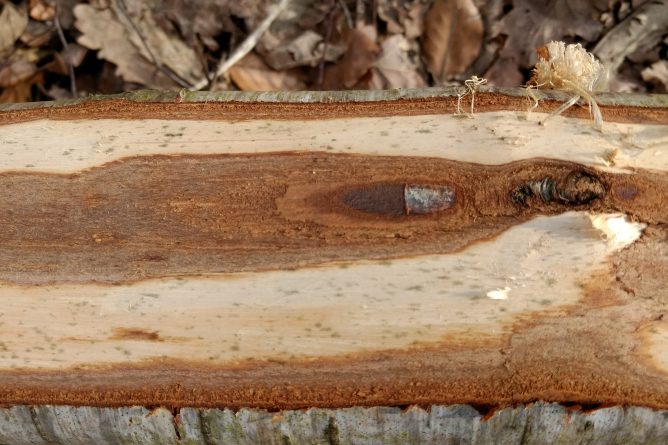
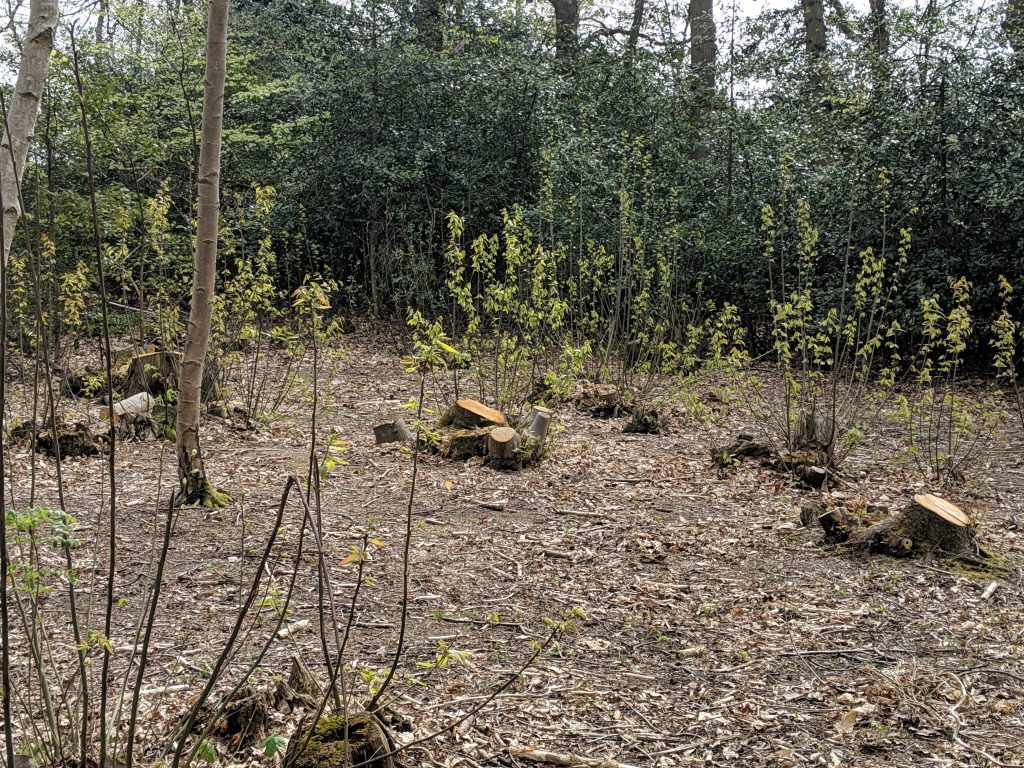
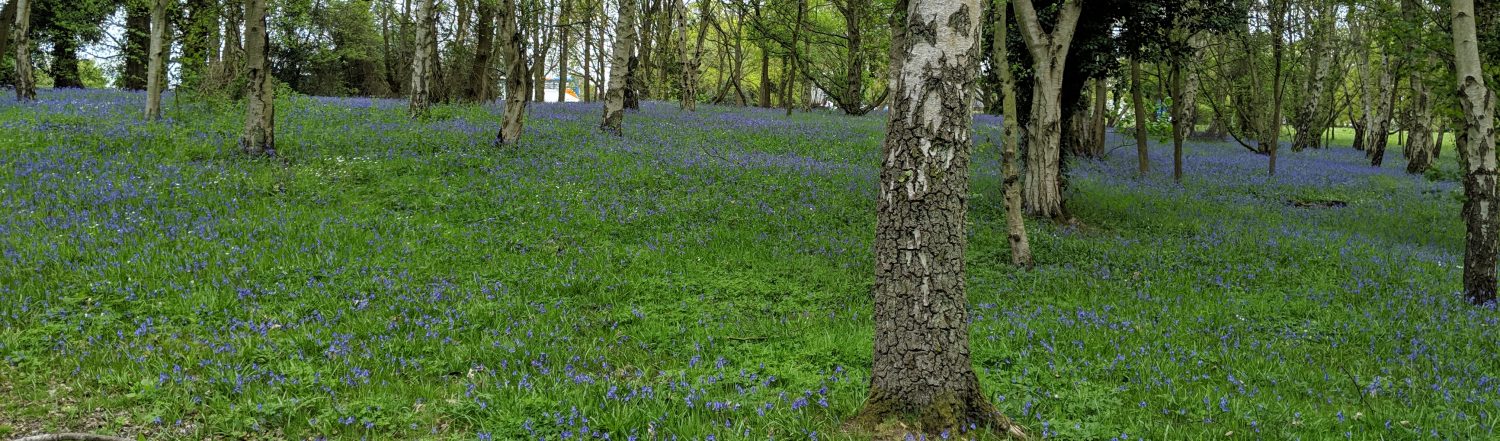
The practice of coppicing can be dated back to the Stone Age and is the traditional woodland management technique of repeatedly felling trees at the base and allowing them to regrow. On campus we usually wait around 15 years for a tree to regrow before we fell it again. We work on defined areas within our woodlands, coppicing one section each winter then moving onto the next section a year later. This means we end up with a very diverse range of ages in our trees across our three areas of woodland – Parkwood, Brotherhood wood and Bluebell blue.
Coppicing was traditionally done in order to provide a sustainable supply of timber, however this is not why we coppice at Kent. Our primary goal for coppicing is to improve the health of our trees and create additional benefits for other wildlife. Coppicing is a human intervention that somewhat simulates the act of retrenching (when trees naturally drop their branches to extend their life) which helps our trees live longer within our woodlands. By removing sections of canopy we are increasing the amount of light that can reach the woodland floor. This allows other species of vegetation that are dormant in the seed bank in the soil the chance to grow and increase the diversity of that area. This increase in vegetation increases the amount of habitat and forage opportunities for insects, birds and mammals.
When we coppice we do not clear fell the sections, instead we ensure that very mature trees are left in place, species such as oak and ask are left and we leave a proportion of ivy, holly and bramble to ensure there is cover and forage for other species. We also leave any newly emerging vegetation and any deadwood we find which is useful for insects.
Whilst coppicing we also take the opportunity to remove any invasive vegetation from the area and collect any litter we uncover.

Increasing recycling rates in the School of Biosciences

The Sustainability Champion for the School of Biosciences has led on a project that has seen recycling rates increase threefold. Alex Moore identified a problem in research labs where the layout of bins and lack of clear information meant that researchers were placing the majority of their recyclable waste into general waste bins (this waste goes to incineration with energy recovery).

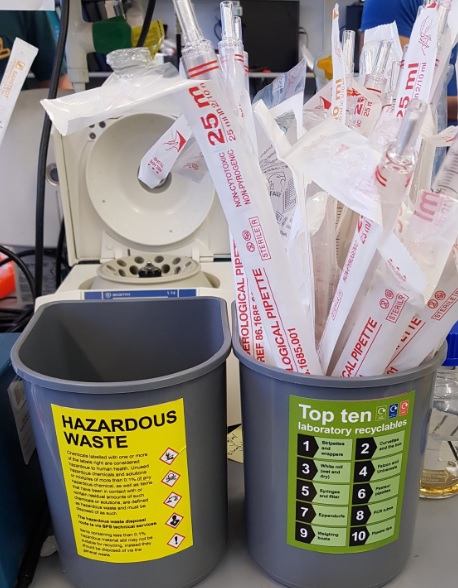
On initial assessment 99% the waste in the general waste bins was recyclable. Due to the nature of the waste produced in a research lab and the lack of space Alex and colleagues from the Estates Department came up with a trial new waste scheme to test what would work for the lab users.

New small desktop bins were installed to help researchers with ease of correct disposal at their fingertips, without taking up precious desk space. The main lab bins were relabelled to ensure they were clear and to reflect how many recycling bins there should be to general waste bins. Clear communications through posters and labelling were designed to showcase the top ten lab recyclables that should be going into the green marked bins. All labelling was checked by the Safety, Health and Environment Unit to ensure that it was clear what to do with hazardous/contaminated waste.

The Kent Fungal Group were the test lab and the results after a month of trialling were extraordinary with recycling rates increasing threefold. Once the trial was successfully completed the project was rolled out throughout the School of Biosciences.

The Gulbenkian: Project Zero

Project Zero – The Gulbenkian have been on a mission to reduce all waste where possible from their café, theatre and cinema operations.  Since the start of Project Zero, headed up by Sustainability Champion Daniel Parsons, they have:

• Removed all single use plastic bottles in the café, saving an estimated 50000 plastic bottles since August 2018

• Switched to reusable plastic pint and half pint cups which has significantly reduced their single use plastic cup buying

• Partnered with ‘Too Good To Go’ and sold 626 magic bags. These are bags of food that would be thrown away and instead offer meals to customers at significantly reduced rates

• Sent all their milk bottle caps to a company that reuse the plastic, that’s about 300 caps a week

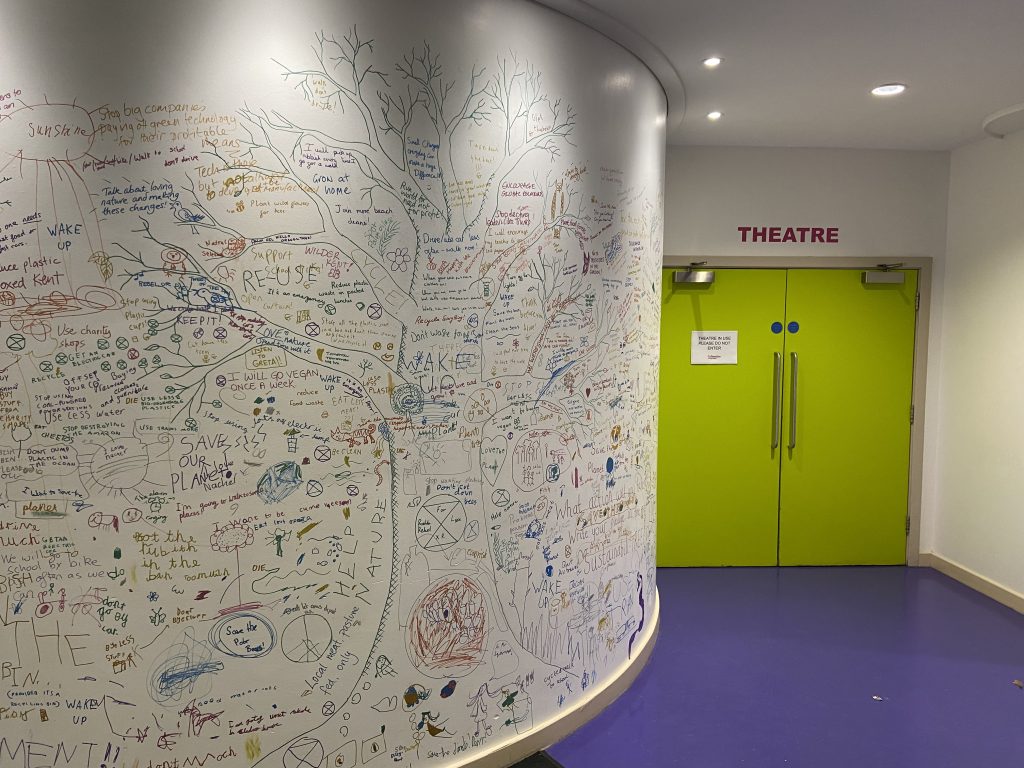
• Hosted a family day on climate change with thoughts, ideas and pledges shared on the ‘SustainabiliTree.’

The Sustainability Team at the Gulbenkian will be continuing Project Zero into the next academic year and will continue their focus on waste as well as looking at carbon.

A career in Sustainability

Guest post

According to the Office of National Statistics, over 220,000 people were employed in in low carbon and renewable energy jobs in 2018 and this is expected to continue to grow over the next decade as we transition to a net zero economy. David Brown, Technical Director at Energy and Carbon Consultancy Longevity Zero gives some advice for those looking of you that may be looking for jobs in energy and sustainability in the future….


As a graduate (longer ago then I care to imagine), I know how hard it can be to figure out what to do as a career. If you are reading this blog, I am assuming you are interested in a career in environmental protection or sustainability. So that’s a great start.

It’s a great time to be considering this field – it may not feel like it with the impact of Covid-19 and the economic situation. But even now I see many clients looking to adjust to a low carbon economy. The UK also has ambitious targets (granted not as tough as they need to be).

Here is my advice for those of you thinking of a career in energy or sustainability. My advice comes from hiring experienced professionals and recent graduates.

  1. Jobs for everyone

Jobs in energy and sustainability require a range of skills from financial, data analysis, graphics, marketing and communications. It’s true we need engineers for energy efficiency and renewable technologies but there are roles for everyone. Don’t ever think you haven’t the right skills. Soft skills are hugely important especially communication of plans, results or instructions. I’ve known some brilliant engineers who have really undervalued this. Whether you are  graphic designer, data engineer, a marketeer or a mechanical engineer there are roles for everyone.

  1. Passionate counts, a lot!

Sometimes people think (wrongly) they have they wrong skills. When hiring someone or in meeting, enthusiasm accounts for so much. Energy (no pun intended) excites people and engages them. This is hugely important in an area as emotive of sustainability. Bring your passion to the table and it will count for so much.

  1. Network

This is really underutilised by so many people. The number of times people have said to me “I don’t like networking” is pretty much every time I directly talk about networking. Of course, networking is partially about talking to strangers at events or Meet Ups, but it’s so much more. It’s connecting with people on LinkedIn, Twitter (you can follow me here) and even Instagram. It’s even writing on a student blog :-).

  1. Be prepared to always learn

What did you do in lockdown? Binge on Netflix or do a micro-course to learn a new skill? There are so many energy and sustainability courses online that with a bit of time and dedication you can acquire new skills to position yourself as a highly competent individual. In a highly competitive and changing world this is hugely important. Your education doesn’t finish with your degree it continues for as long as you want to stay employed or running your own business.

  1. Showcase yourself

Write blog posts, take pictures, post on LinkedIn, volunteer. Do whatever it is that is relevant to what you want to do. The internet allows you to become recognised as competent in your chosen industry or profession. Don’t forget that.

  1. Find a mentor.

I have thrived from finding competent people I respect and learn from over the years. There are many wise (and not so wise) people willing to share their advice. Seek them out. Even experienced professionals need mentors.

  1. Don’t forget to have fun.

I expect to be working into my 70’s. It may even be longer for you. That isn’t meant to depress you. Make sure you enjoy what you do. If you enjoy work then your life is likely to be much richer in both senses of the word.

If you have any questions then get in touch. We’d happily give you some career pointers!

Longevity Zero amongst other things help businesses buy green energy and reduce their energy usage – find out more at our energy consulting page.

A guide to student-friendly toiletries plastic reduction: blog post #3

Guest post by SDG Ambassador Julia Daly

———————————————————————–

Hello and welcome to today’s blog post! I know it’s cliché how Brits always comment on the weather but wow what a heatwave the UK is experiencing right now! Hopefully this week’s sustainability blog post can take your mind off of it for a couple of minutes! Today, I will be introducing Conchus: a small soap making business inspired by reducing waste. All their soaps are 100% natural, vegan, palm oil and cruelty free and they don’t use any plastic packaging.

Conchus are currently in the process of opening a physical store in Devon and have temporarily closed the shop on their website for the relocation and restock. You can still view their products on their Facebook page to see what they have available and keep up with the reopening on their Instagram. I highly recommend checking out the large range of products that they stock. Not only are there a bunch of shampoo and body bars to suit a vast array of skin and hair types, there are also accessories and skin care items available. With my oily hair and skin needs, I was keen to try out their products for people with my skin type. I ended up ordering the Beam shampoo bar (one of four shampoo bars) and the Conch facewash bar (currently their only facewash bar).

Stand-out product: Conch facewash bar, £4.30

Without a doubt, this facewash bar is worth a try. All of the claims in its description the website are absolutely 100% true. It lathers up slightly but not too much, you only need a tiny amount, making it last ages (I am still using the one I purchased in September 2019) and it doesn’t dry out your face too much but leaves you feeling cleansed. It does not have any exfoliation properties (which it doesn’t claim to do) so I used this in combination with the Ethique scrub bars once a day, in the mornings – a match made in heaven.

I took the facewash bar with me on two field trips, which were part of my degree, both of which required packing light for flights. For one of the trips, I only took one backpack as my entire luggage for a week-long trip! As someone who has travelled a ton, I can definitely say that carrying a facewash bar was way more convenient than the stress of finding a plastic container that was less than 100ml, and then transferring a liquid facewash into it which I have done many times in the past. The bar took up very little space and easily slotted into a pocket in my toiletry bag. Very low maintenance and effortless.

Something that is definitely worth noting and is mentioned in the description for every shampoo bar, is the necessity of noting the hardness of the water in your area. This made a HUGE difference in the way that the shampoo bar performed in my experience. Living in Canterbury and being a total newb to the shampoo bar game, I found the shampoo bar very difficult to use initially. It kept clumping in my hair and I would spend ages trying to get it all out. I was really gutted that it wasn’t working with my hair but suspected that the hardness was the culprit. There is a lot of guidance on the Conchus website on tips to make the shampoo bars work in hard water areas and they stock a rinse to combat its effect. Thinking about the realistic student situation, you really want to be streamlining your haircare routine and this extra step didn’t seem to fit into it, but there are definitely options to make it work if you’re willing to give it a go. When I visited Devon and stayed in an area with significantly softer water over 2019 winter holidays, I brought the shampoo bar with me and the results were a stark contrast. The shampoo bar worked like a dream and I didn’t even really need to condition my hair at all following the wash. If you live in an area with softer water, one of the shampoo bars would be an ideal trial product.

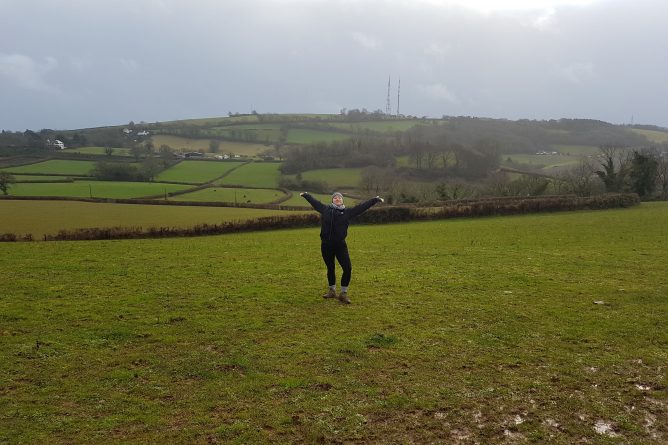
Devon is very lucky to have great countryside walks (me on one of them featured above) and two plastic-free soap shops – both Conchus and Soap Daze (see previous post) are now based there! I hope that you enjoyed today’s post and it helps you on your plastic-free journey!

Disclaimer: All opinions are my own. I purchased these items with my own money, they are not a gift nor is this post sponsored.

Check out the Conchus

Facebook: https://www.facebook.com/conchuslife/

Instagram: https://www.instagram.com/conchuslife/

Website: http://www.conchus.co.uk/

A guide to student-friendly toiletries plastic reduction: blog post #2

Guest post by SDG Ambassador Julia Daly

———————————————————————–

Happy August! How was your #PlasticFreeJuly? I’m excited to continue my plastic reduction recommendations! Today’s blog post is all about the amazing Soap Daze. Soap Daze is a soap and skincare brand and all products are vegan and palm oil free. The soaps are handmade and can be purchased in a number of fragrances, textures and sizes. Can I just express how much I love the aesthetic of the brand? Simple and elegant.

When I first checked out the online shop, I was most drawn to the unwrapped soap range that come on a rope. To me, this screams convenience and reduction in wasted packaging. For my first order, I purchased two unwrapped soap on a ropes and received the order with a couple of free small samples which I used as regular hand soaps – very very useful. I should also say that these soaps on a rope are massive and last ages.

I made a second order of soaps during the initial couple of weeks of the pandemic and lockdown. Where I was quarantining, all that was available was regular liquid handwash which quickly dried out my skin. All soaps in Superdrug, Boots and grocery stores were sold out online. I ordered a couple of soaps from Soap Daze and received my order with some more free samples! Hands down, these saved my hands. They are much more nourishing, moisturising and kind to the skin than your average liquid hand soap, and better for the environment.

The owner has recently opened up a physical store in Devon which looks extremely inviting! If you’re in the Exeter area, you can buy products in store and cut both your carbon footprint and plastic consumption! Both the online and physical store sell a lot more than soap and have branched out into makeup, deodorant, skincare and haircare.

Stand-out product: Unwrapped Black Pepper and Ginger Soap on a Rope, Extra Large Soap, Vegan Soap £7.95

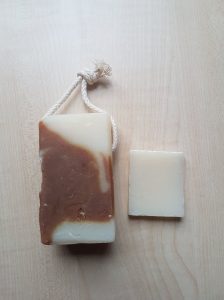
This was the one of the first products I tried and loved the light fragrance, pretty swirls and good lather. I used this in the shower and it lasted a good two and half months. The rope lended itself nicely to hang the soap effortlessly in my shower. The photo is of the full-size unwrapped soap and one of the free samples. I have tried two other fragrances of the large soaps but this one was by far my favourite. If you are looking for a soap that exfoliates as you wash, there are a few that have harsher textures.

For the price point, and how long it lasts, I would highly recommend the unwrapped soaps to students looking to reduce their plastic consumption. I personally love trying different fragrances and textures of soaps and like to mix it up. With the huge range of fragrances, you’re spoilt for choice! If you think friends or family would like the products, there is also the option to create your own gift boxes and give someone the opportunity to try a range of products. Another plus!

I hope you enjoyed the second blog post in this series! Stay tuned for the next post coming soon!

Disclaimer: All opinions are my own. I purchased these items with my own money, they are not a gift nor is this post sponsored.

Soap Daze website: https://soapdaze.com/