– Isabel Müller Eidhamar
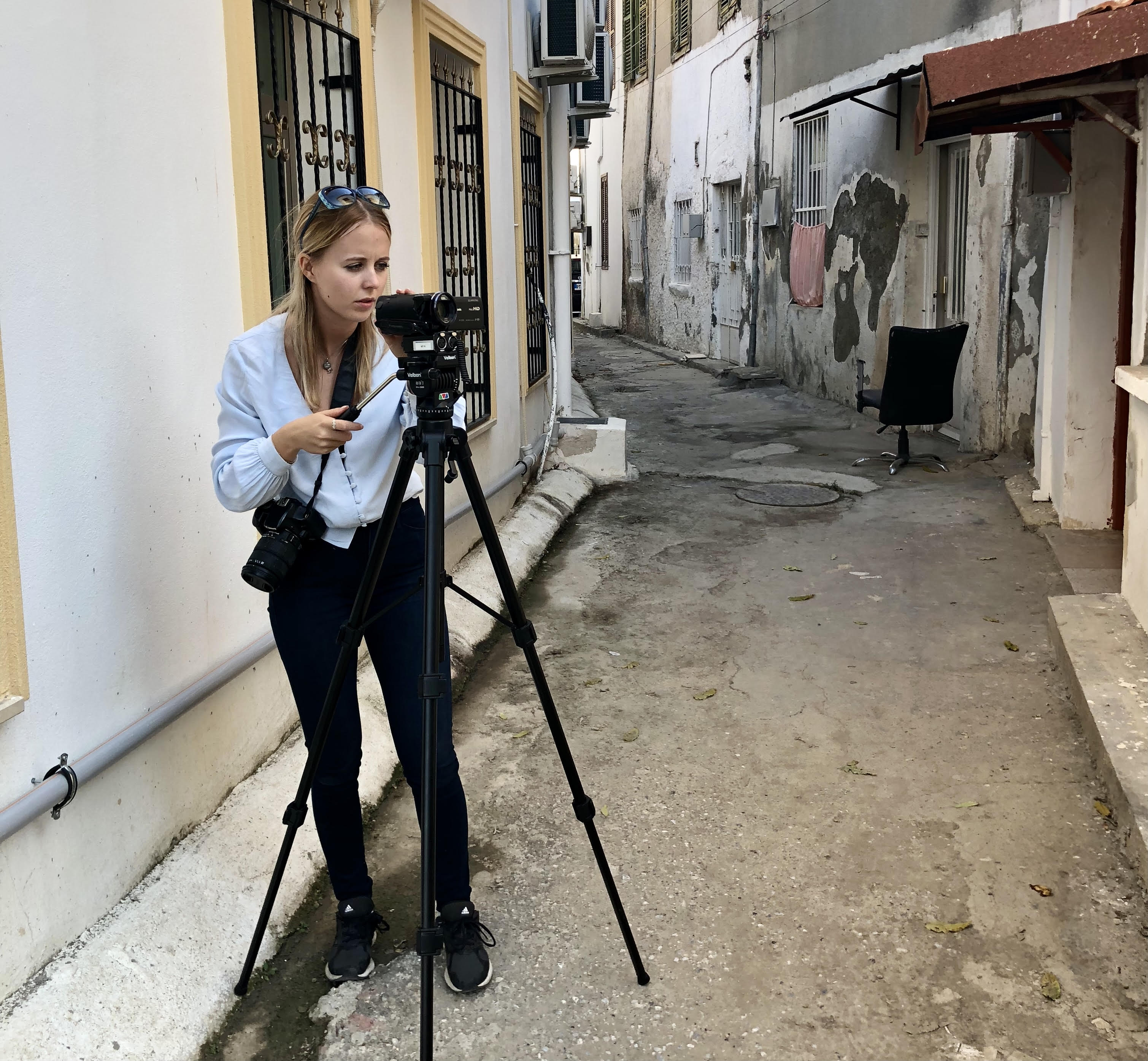
Gunn Eidhamar / personal photographs / archives
- What are you doing now? As of May 2021 I am working with Norway’s largest news agency NTB (Norsk Telegrams Byrå) in Oslo as a Breaking News Journalist covering both National and International news, in addition to sports, economy and culture. This is a summer initiative to begin with, but I hope it will open doors into the industry on a more full-time basis.
- Why did you choose to study a BA Journalism degree at Kent? I always knew I wanted to study abroad, and after spending a year in the United States in High School I began researching potential universities with English as the teaching language. I knew I wanted to study journalism, and when the choice came down to Canada or the United Kingdom, the UK became the obvious choice as they are reputable for their great journalism and training (not to mention close-proximity to home). In between my school exams I actually went to visit University of Kent as one of two shortlisted universities on a 48-hour whirlwind trip to see if it was for me. From the get-go I got such a wonderful first impression of the Centre for Journalism and the lecturers, and though Medway perhaps is not the most exciting place, the professionalism and quality of learning equipment available, not to mention the smaller class size, won me over. At the time Journalism at Kent was also rated number one by the Sunday Times University Guide, which of course also played a role in making it my top choice on UCAS. Its short proximity to Europe’s media capital London, Kent’s beautiful landscapes (it is the Garden of England after all), the fact that it was an NCTJ-certified course and the Centre’s leading employability rates, made it the obvious choice for me. Later I of course also learned the perhaps most wonderful thing about the Centre for Journalism at Kent; how close-knit everyone is and the amazing support offered by lecturers and fellow-students. That is the single greatest thing about taking a BA Journalism degree at Kent. You can always find a helping hand and a welcoming face.
- Why did you decide to study an MA in Diplomacy and Foreign Policy?I have always been interested in foreign affairs and international politics, and it was something I considered specialising in for my Bachelor’s degree or within journalism. However, it was actually during my work with my Final Year Project at Kent about the Cyprus Conflict that I made up my mind. I was incredibly lucky to be able to meet and interview the UN Special Adviser on Cyprus, former Foreign Minister of Norway and long-time diplomat Mr Espen Barth Eide, in Norwegian Parliament for my project. It was an incredibly insightful meeting about his work within the field of diplomacy, and after working in-depth with the Cyprus Conflict and having interviewed multiple people on the ground during my last year of study, it re-sparked my passion for creating change and influencing peacemaking. To me it seemed great to combine my more practical Bachelor’s degree in Journalism with a highly academic Master’s degree. I wanted to specialise so that I could focus my journalism work around foreign affairs and conflict reporting, and I wished to open doors to potentially working with an NGO, the UN or Foreign Service later in my career if I wished to do so. It paid off too, because after completing my MA my writing has gotten a lot sharper and more concise, I have further developed my critical thinking skills and gotten valuable insight into the world of international politics and decision-making. As a journalist I believe it’s crucial to have a deeper understanding of the topics you are writing about, and so I think a more theoretical and principal approach to history, conflict, foreign policy and politics will prove itself as a great strength further down the road.
- Which skills/knowledge did you learn on your courses that you use most now in your career?I learned a lot from my fellow students and lecturers at the Centre for Journalism at Kent. It allowed me to explore and develop creative approaches to storytelling through various media platforms, both TV, radio, print, social media and digitally, and gave me the opportunity to explore what areas suited me best. In work, the media ethics and media law training has proved itself invaluable, not to mention learning the basics to good reporting through understanding news values, writing sharp copy and analysing other people’s journalistic work for inspiration. I also think it taught me to dare to be forward when it comes to career opportunities. I learned technical skills, such as video editing, photography, InDesign, Adobe Suites and other tips and tricks, that have helped me massively in the professional world. If you want to work as a journalist in the UK, the NCTJ accreditation is also really valuable, and will help you stick out from the crowd.
- Did you undertake any work experience whilst at Kent? What did you do? Did you find it was helpful in your studies and has it benefited your career to date? During my time at Kent I worked as a TV Broadcast intern for KMTV, with whom the Centre for Journalism have a close working relationship, as well as a week with the Kentish Express in Ashford. At KMTV I worked as an intern, which included assisting news reporters with LiveUs, going out to film vox-pops for the daily news show, booking guests and guest management, social media postings, occasionally presenting the ‘Pick of the Papers’ segment on live television and assisting in the gallery. At Ashford Express I shadowed reporters on duty, as well as writing my own copy for the newspaper. I also completed some other work experience on my own initiative, such as freelance gigs with Trek & Mountain magazine, KentOnline’s What’s On desk and a month’s placement with Norway’s largest paper VG on their Snapchat Discover desk. Work experience is the most valuable asset you can bring with you when trying to kickstart your career, and it is the most important thing that will make you stand out from the crowd, so I recommend everyone utilise the help available while at university. It is all about who you know, so it is never too early to start developing your professional network and portfolio!
- Can you describe your time at CfJ? My time at CFJ is a combination of lots of hard work and deadlines, as well as great times with friends whether it was in a club, out and about in London, movie nights or late-nights in the newsroom completing our latest project. We were all a big family and I have so many fond memories from my time at university. I was also incredibly grateful for our wonderful lecturers, who always had an open-door policy and who you could chat to about everything.
- As a CfJ student you won many awards for your projects, can you tell us about those? I was very fortunate to be nominated for the NCTJ Awards for Excellence in 2019 by the Centre for Journalism for my work on my Cyprus project (Final Year Project), and won the Student Project of the Year category that year, which was such an incredible honour! It is to date one of my proudest achievements, and one that would not have been possible without their support. I had previously been commended for Feature of the Year at the 2018 NCTJ Awards for Excellence for my two features, one a digital documentary about the 2011 Norway terror attacks at Utøya, and the other a written piece about ocean plastic pollution and endangered sea turtles. Therefore winning the NCTJ Award the following year was such a dream, and extra special as it was a project I was so passionate about on a personal level. My interviewees made it possible by allowing me the privilege of sharing their powerful and intimate stories. It is still available to view: ON THE BORDER OF WAR AND PEACE (shorthandstories.com).
- You have a lot of experience working as a freelancer, could you describe a typical working day and some of the projects you have worked on? I would not say I have a lot of experience in freelance yet, but I have been able to dabble in various fields and work on a range of projects alongside my studies and over the past year, which has been really fun. My first freelance-gig was with Trek & Mountain, a British outdoor- and mountaineering magazine, which started after I sent them one of my university assignments about a Seven Summits expedition on skis. It was published in a seven-page spread in April 2019. They sent me to Italy in 2018 to cover the International Mountain Summit for the magazine, and I got to meet a lot of professional athletes and mountaineers, attend seminars and go rock-climbing in the Dolomites area. That was really cool! I have later written for travel website com, as well as news and features for www.thelocal.no, and some translation gigs for various sites (Norwegian and English translations). I am currently working on a bigger travel-writing project with www.hemsedal.com, writing features about local people and businesses alongside my partner, which will be profiled on their new website that launched in April. I have worked with them previously, so that has been great fun and rewarding work as it surrounds my local community at home in Norway.
- What are your future plans/ aspirations? How do you see your career progressing?I am still in the early-days of my career so anything could happen, and I am open to any exciting opportunity that comes my way. At the moment my priority is my work with news agency NTB, and other projects, and I hope that could give me the springboard to kick-start my career in journalism. Long-term I would love to work with international news, and creating features, digital content and documentaries for a great news outlet, and I would love to live and work in multiple countries around the world. Shoot for the stars, right? I would also love the opportunity to work with an NGO or the United Nations communications teams.
- You are currently writing a chapter of a book based on your MA thesis, can you tell us more about that? I wrote my MA thesis about the British and Norwegian approach to female radicalisation, security, counter-radicalisation strategy and repatriation of Western female foreign fighters in Syria following the fall of ISIS. It consisted of qualitative research where I among others interviewed Dr Jennifer Phillippa Eggert. It was a insightful conversation, and later around the time I was submitting my thesis Jennifer reached out and encouraged me to submit an abstract pitch for a book she was writing about British Muslim women, radicalisation and CVE. My abstract got picked up and the book was approved by publisher I.B. Tauris/ Bloomsbury earlier this Spring. Over the summer and early autumn, alongside my work at NTB, I will be writing a book chapter which aims to cover the radicalisation process and motivations for British Muslim women joining ISIS in Syria – just waiting for the final details. An exciting project that builds on the research conducted during my Master’s study in London, so I am excited about it!
- What is your favourite memory of Kent? There are so many, but one must be the night before our Final Project deadline. A group of us had almost been living in the newsroom the entire month, spending endless late nights working, helping each other and laughing. Despite the smell of fast food 24/7, the atmosphere was great, and we had great fun watching the work we all created and cheering each other on. Although it also undoubtedly was a stressful time, I got to know so many of my classmates so much better. It really was a true bonding experience. We laughed together, cried together and worked together, and those of us who stayed in that newsroom day in and day out really came out with many new friendships and multiple memories to complete our mental scrapbook memorabilia in our last few days at Kent. It was also great that all of us did so well by the end of it, and I truly wish them all the best. Every year those memories come up on my Snapchat, and it makes me smile all over again. A group of talented people that I have no doubt will go far in life. Not to mention the feeling we got clicking submit – incomparable!
- What advice would you give someone aspiring to a career in Journalism? My advice would be to believe in yourself and your work, and acknowledge that all experience is good experience. You will unlikely start your career working your dream job, but by being outgoing, passionate and driven you can get far. Do not underestimate transferable skills from other career fields, get all the work experience you can get and stay true to your journalistic values, not to mention that language skills are a huge asset. Another thing would probably be to think twice about everything you post on social media. As Sky News presenter Sophie Ridge once told us: ‘Don’t post something unless you are okay with it being plastered next to your face on the front page of the Daily Mail tomorrow’. Best advice I have ever gotten.
- Anything else you would like to add, or to tell our students? Get involved with your student union! It is a great way to influence university decision-making and help improve your course and student life. I believe it is particularly important that the Medway students get involved as it can be so easy for the Medway campus to be side-lined by Canterbury. Your involvement really does make a difference, and will help so many others enjoy their student experience at Kent. Volunteering with local charities through the university is also a great way to develop your CV while making a meaningful impact in your local community! And don’t forget to have fun – your university years go by way too fast, enjoy them to the fullest!