Choral life at the University has resumed in full flow this academic year; as we prepare for our Anniversary Weekend celebrating ten years since the opening of Colyer-Fergusson, two events in the run-up have opened our seasonal programme.
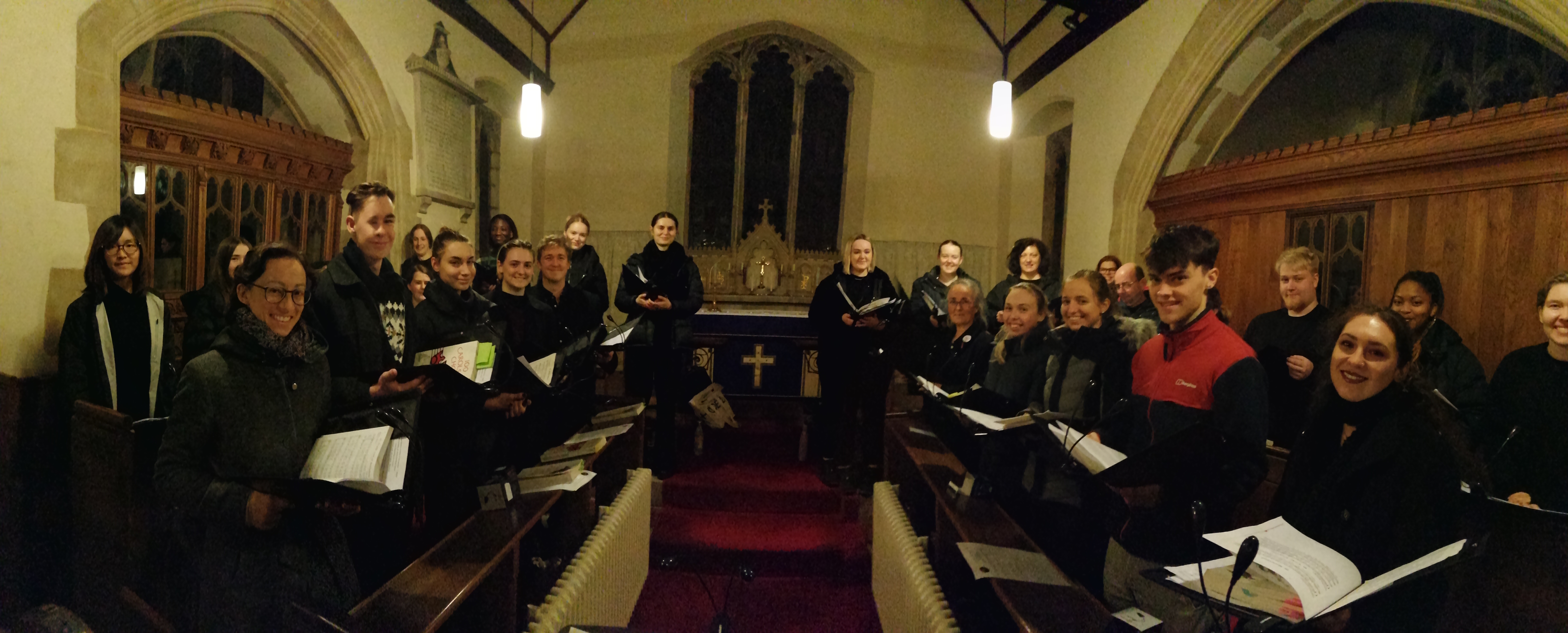
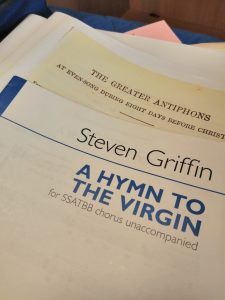
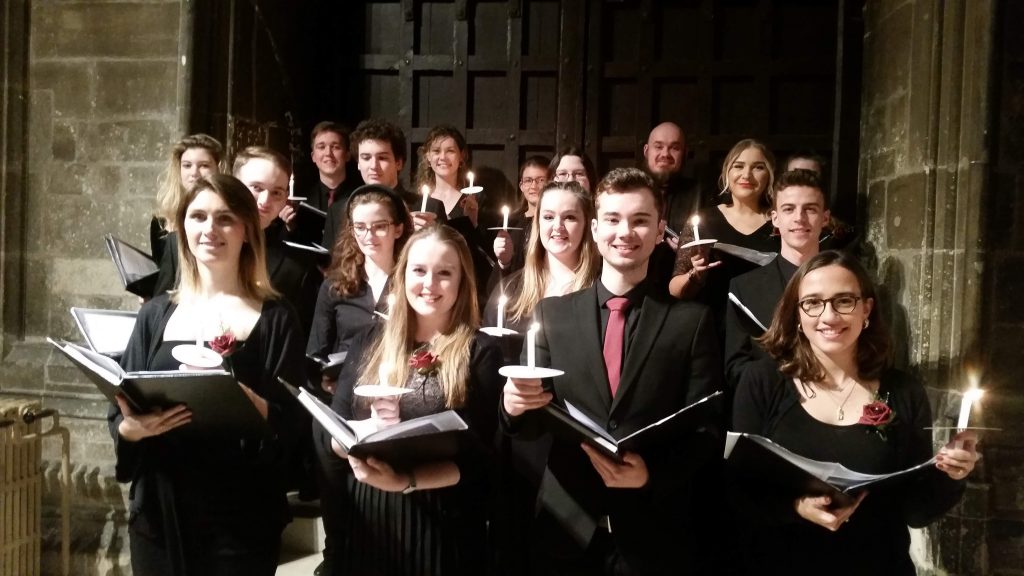
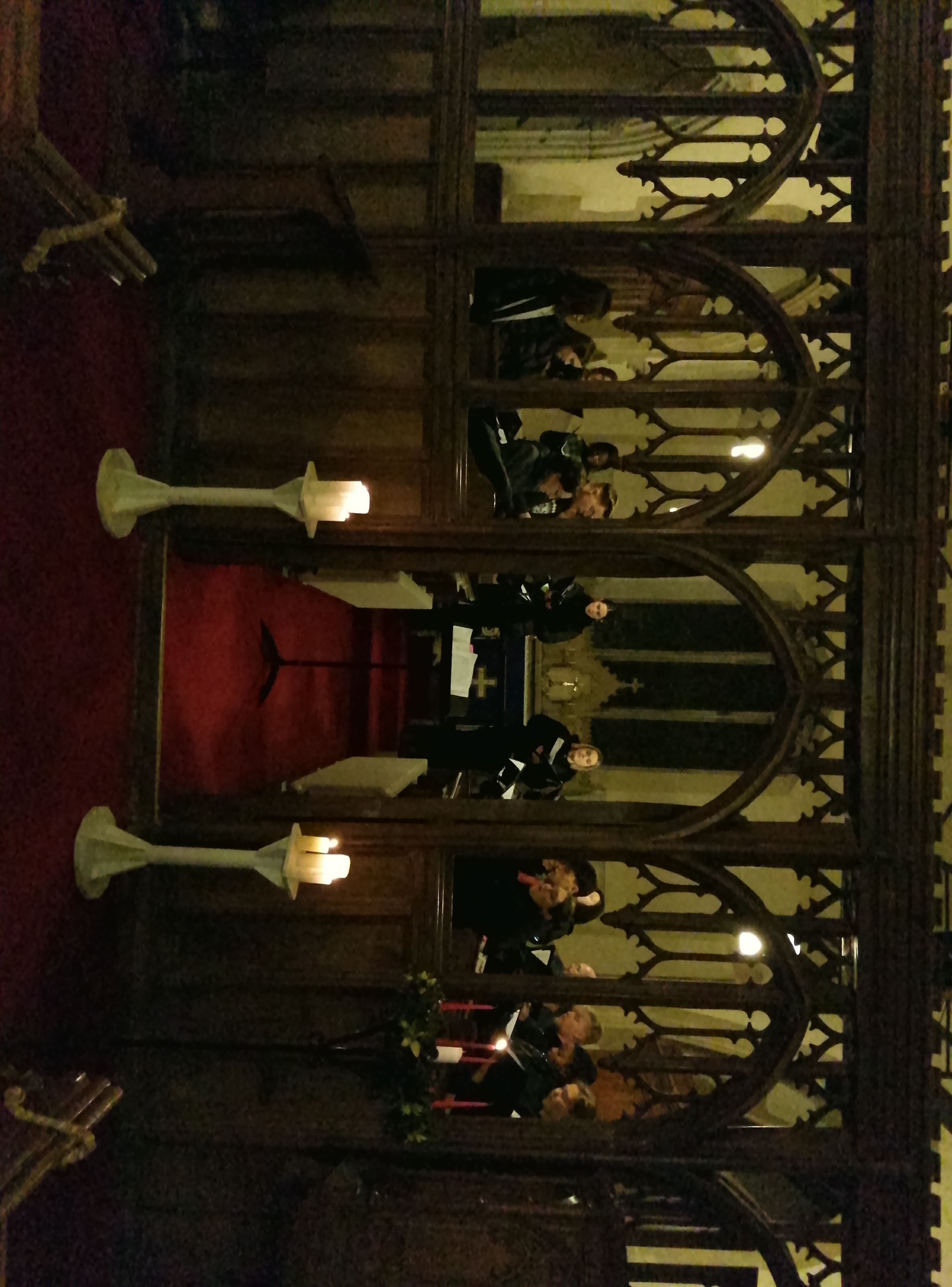 First, the University Cecilian Choir ushered in the Advent season with a sequence of carols, antiphons and moments of stillness by candlelight in St Michael’s, Hernhill, a fifteenth-century church lying at the heart of a Kentish village. Students, staff and alumni came together to sing a meditative sequence, including the great Advent antiphons, to bring music ancient and more recent together in a highly effective performance on a dark winter’s night.
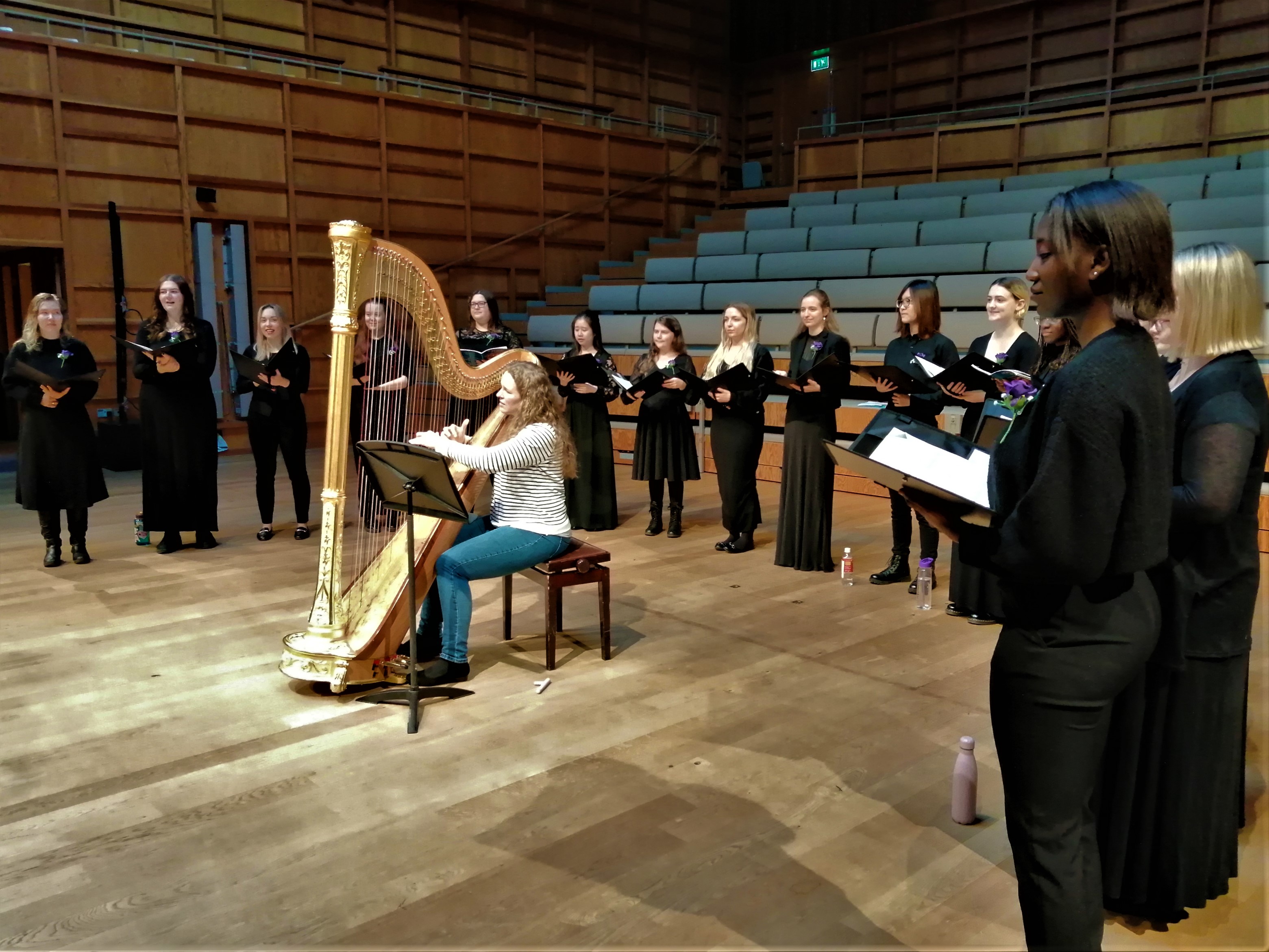
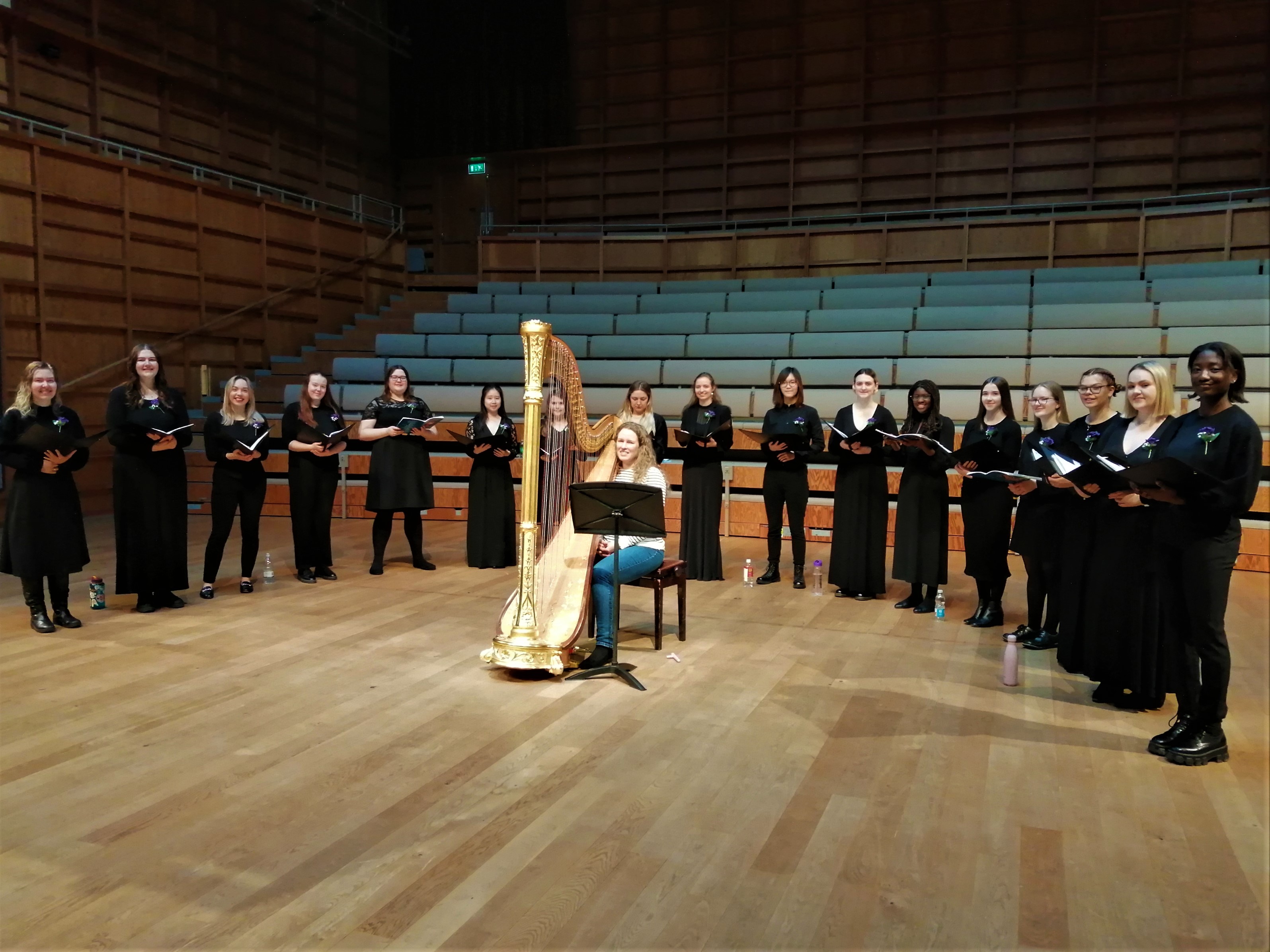
And our upper-voices chamber choir, Minerva Voices, has just performed as part of the final Lunchtime Concert of the term, a sparklingly seasonal concert given by visiting harpist Harriet Adie, for which the choir joined the concert to sing movements from Britten’s Ceremony of Carols. The evergreen ‘Spring Carol,’ the reflective lullaby ‘Balulalow’ and the bravura ‘This Little Babe’ were delivered with real poise around Harriet’s mesmerising reading of the ‘Interlude’ from the sequence.
So, a great start to the seasonal programming, and full steam ahead into the anniversary celebrations this weekend – and then more to come next week… Well, it IS Christmas!
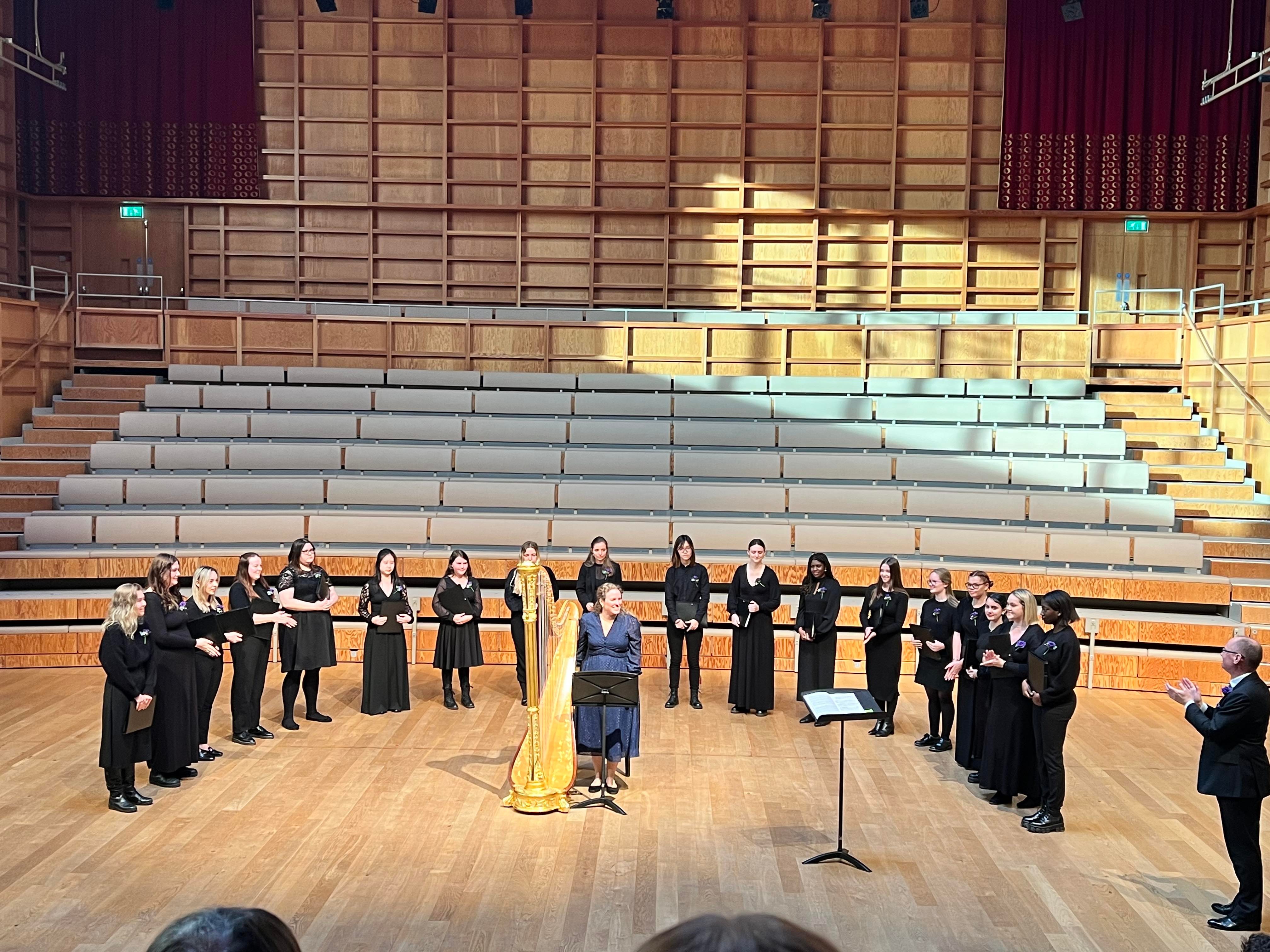
Minerva Voices with harpist Harriet Adie
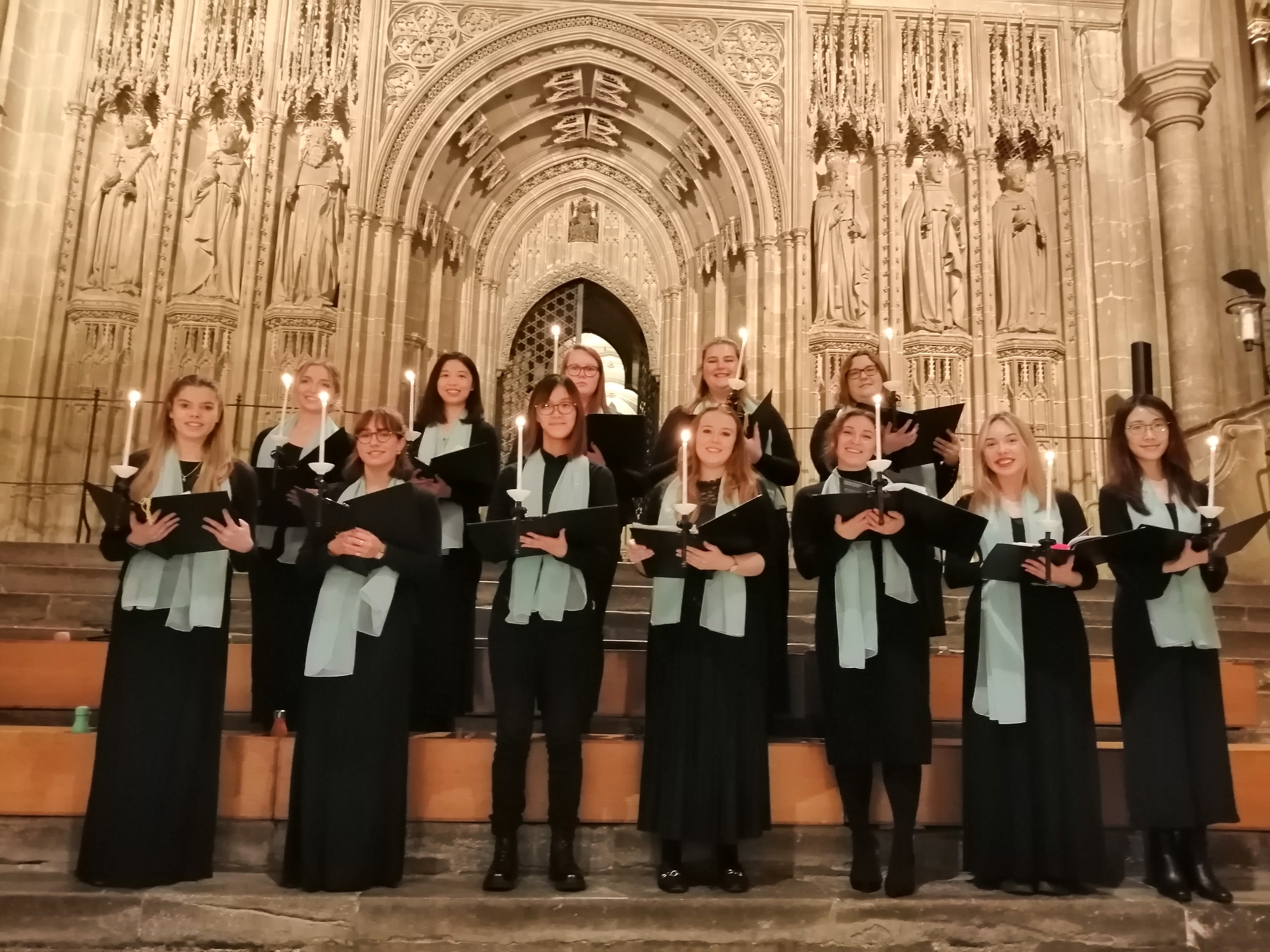
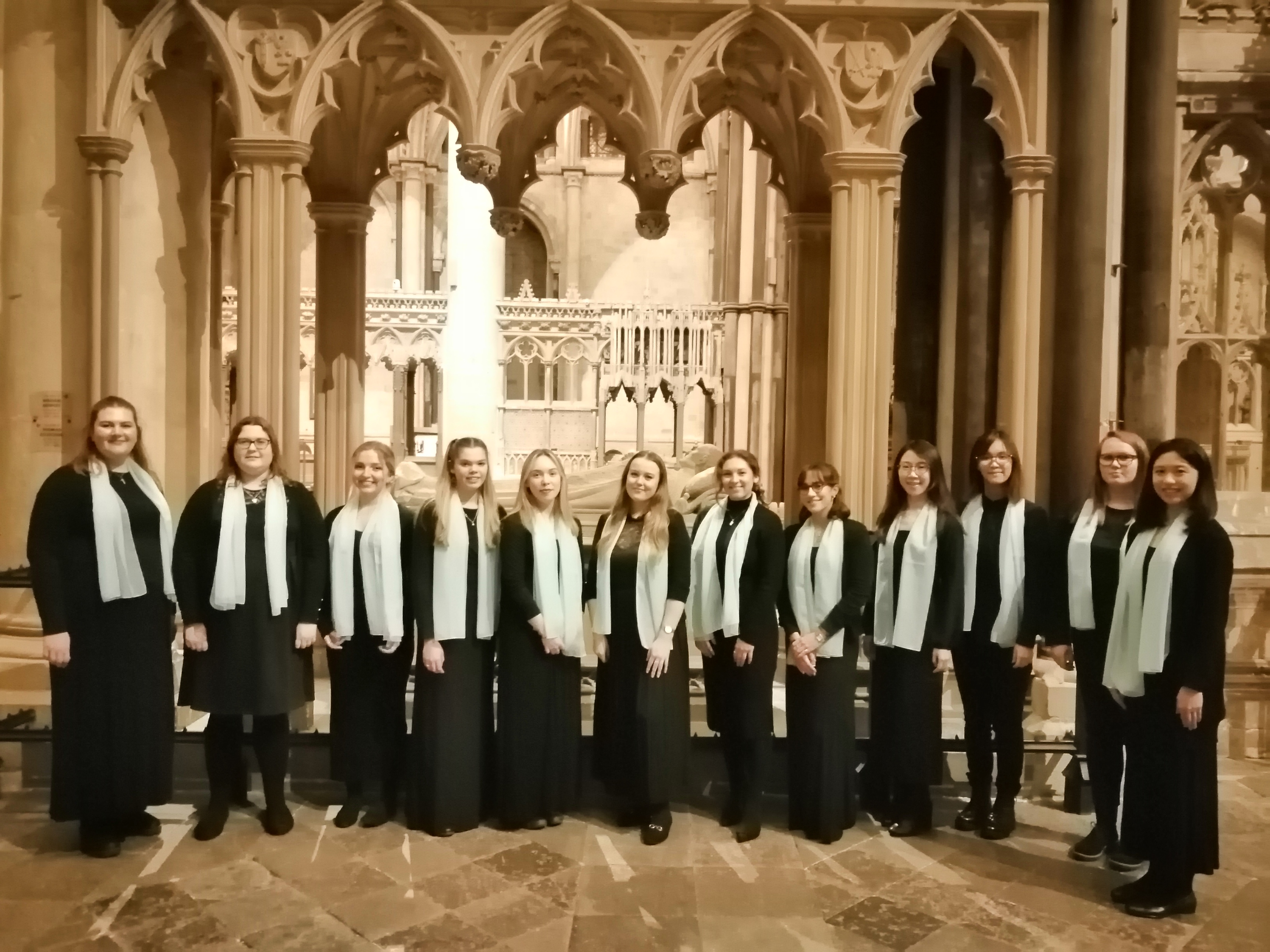 A necessarily streamlined Carol Service, lasting an hour, presented a sequence of lessons and carols, for which the Choir sang three pieces. Comprising both undergraduate and postgraduate students, there’s an international aspect to the ensemble this year, with members from California, Toronto, Hong Kong and from Taiwan, as well as from across the UK.
 The service was the first time we’d been singing at the Cathedral since before the pandemic, and we’ve missed that lush acoustic. Well done too to final-year Music Award Holder reading Psychology, Felicity Bourdillon, on a glorious opening solo verse to ‘Once in royal David’s city.’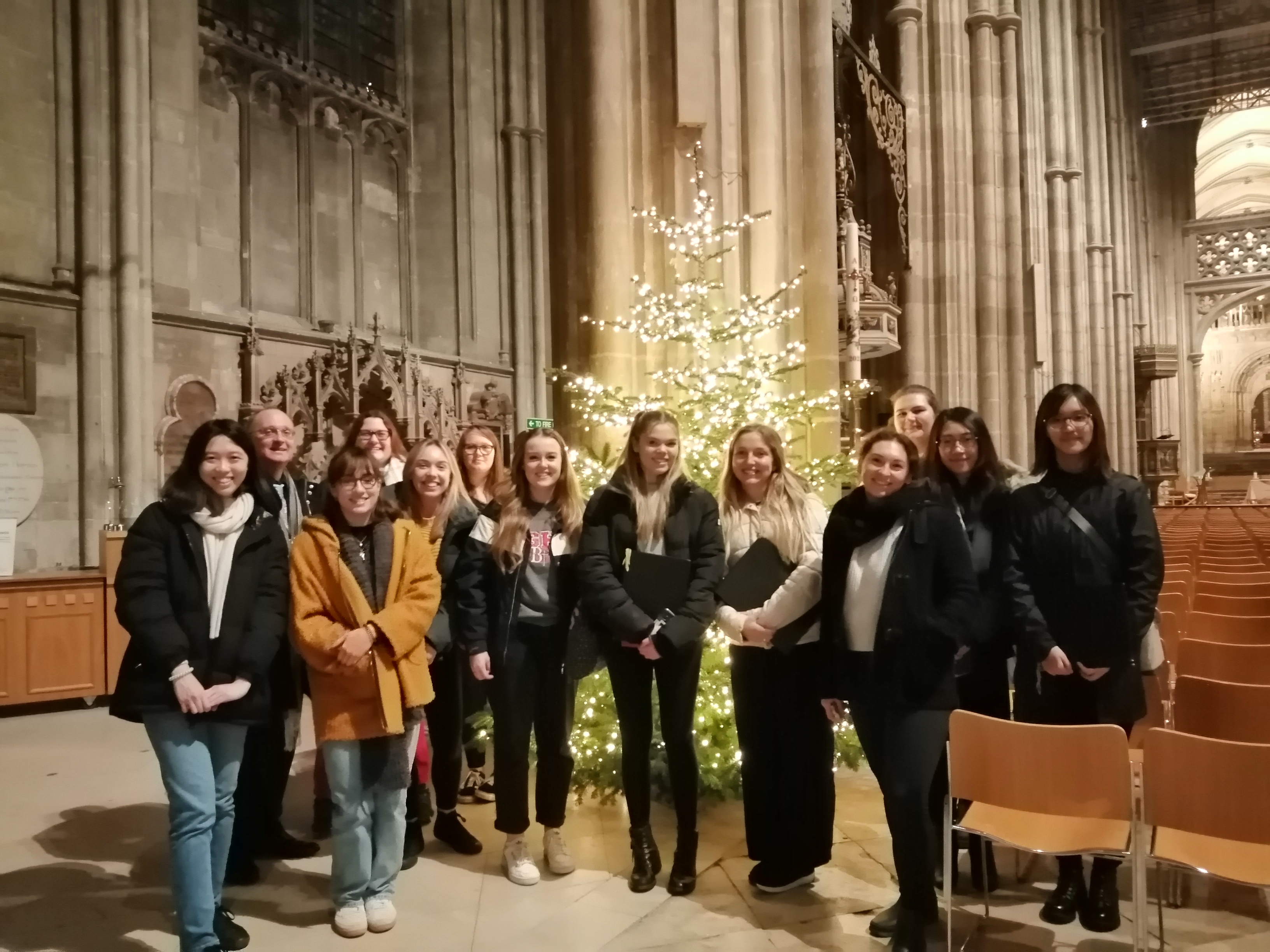
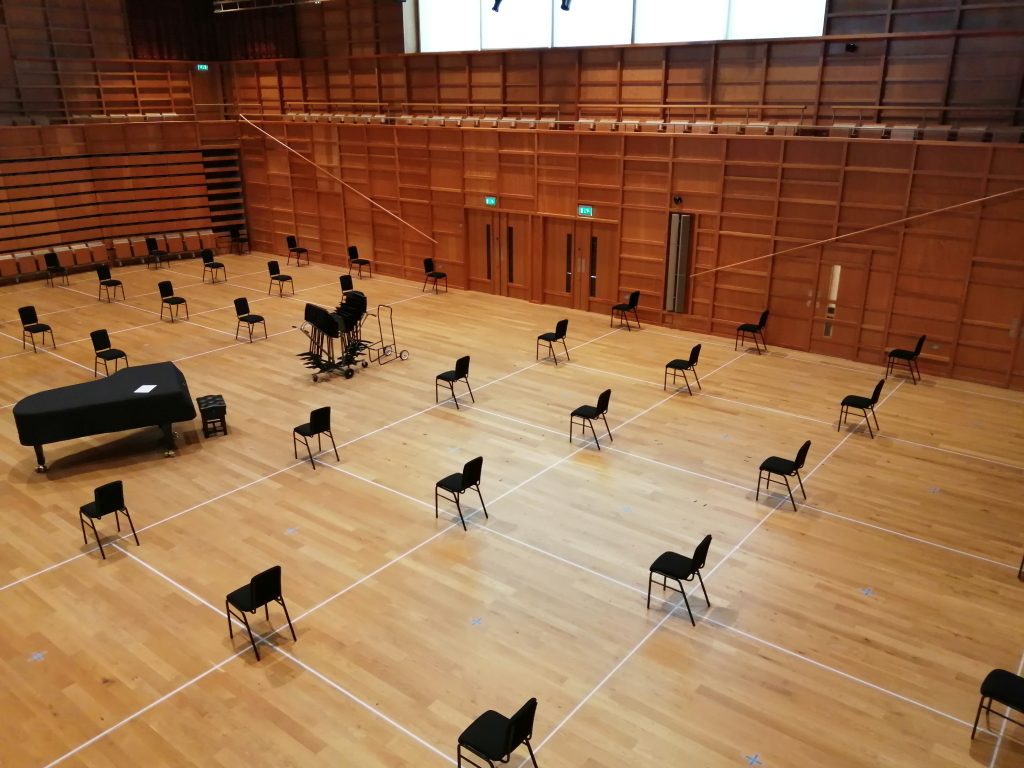
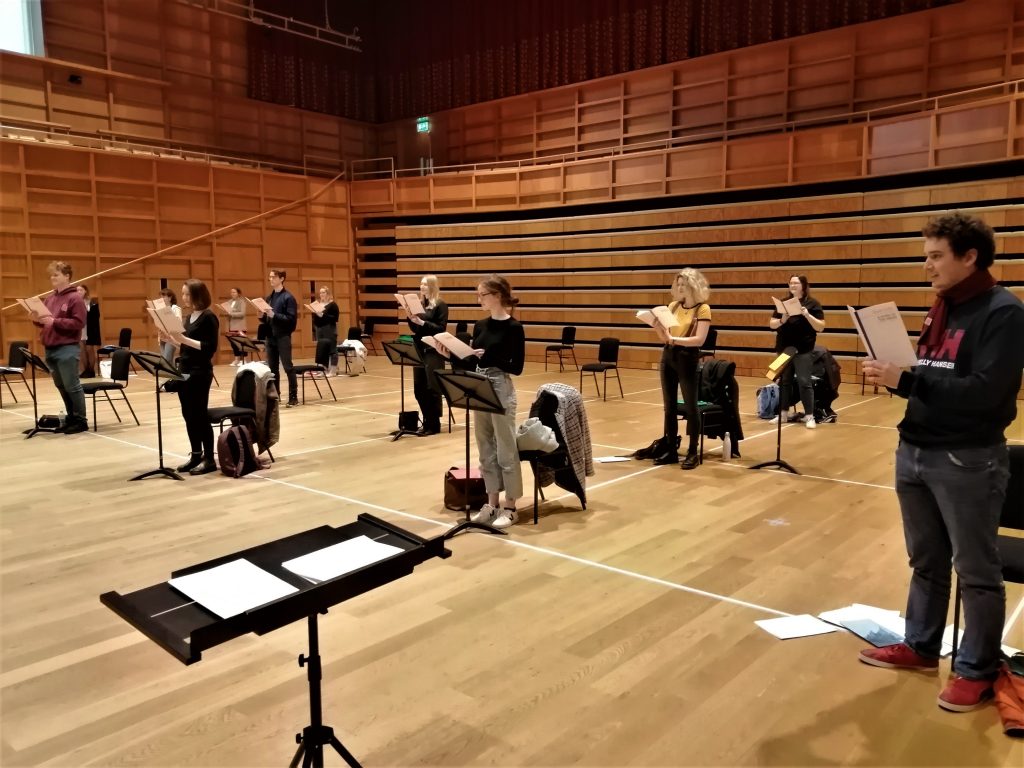
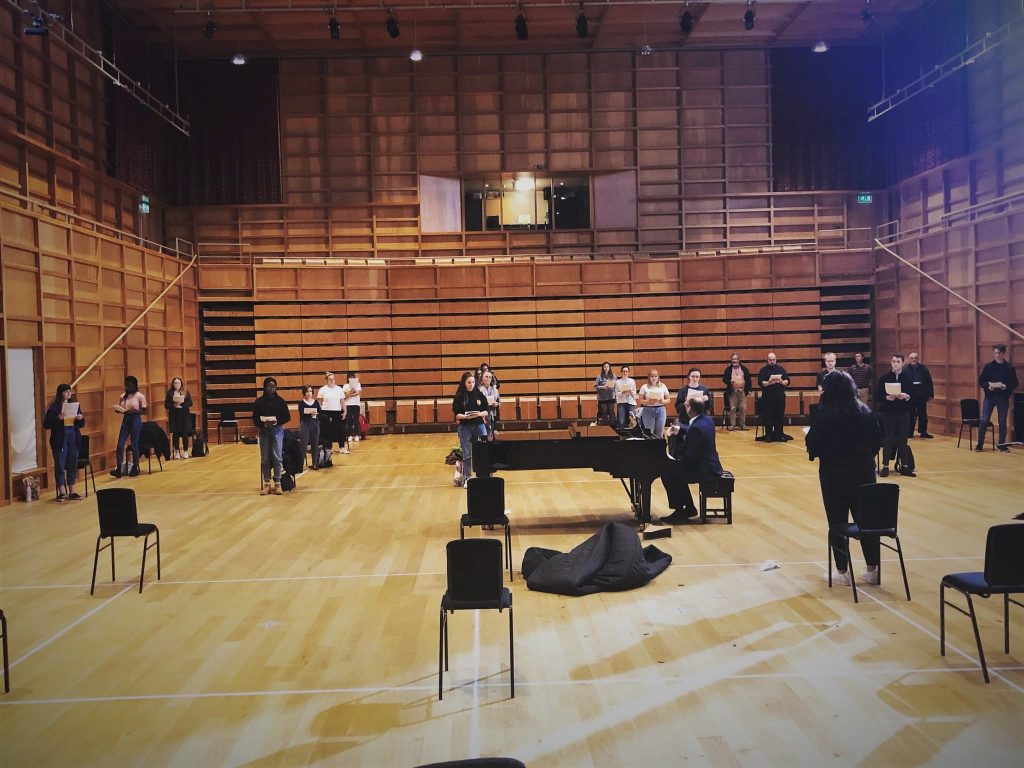
 And who knows; taking those newly-developed skills back into singing in traditional formation (whenever that might be) might lead to a better overall ensemble sound. Like choirs everywhere at the moment, we are just going to have to wait to find out…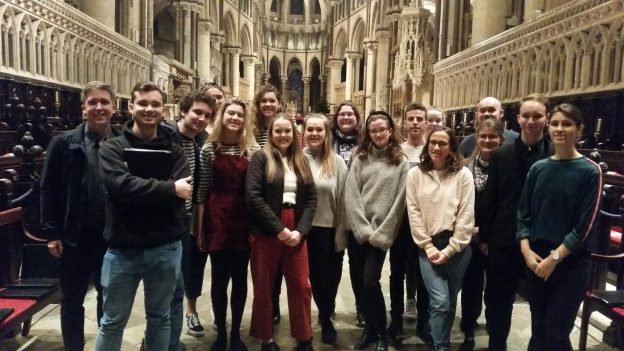
 Later in the service, second-year assistant conductor, David Curtiss, led the Choir on the steps behind the altar in a ravishing reading of O magnum mysterium by Morten Lauridsen, a testing choral piece that requires considerable stamina from the performers.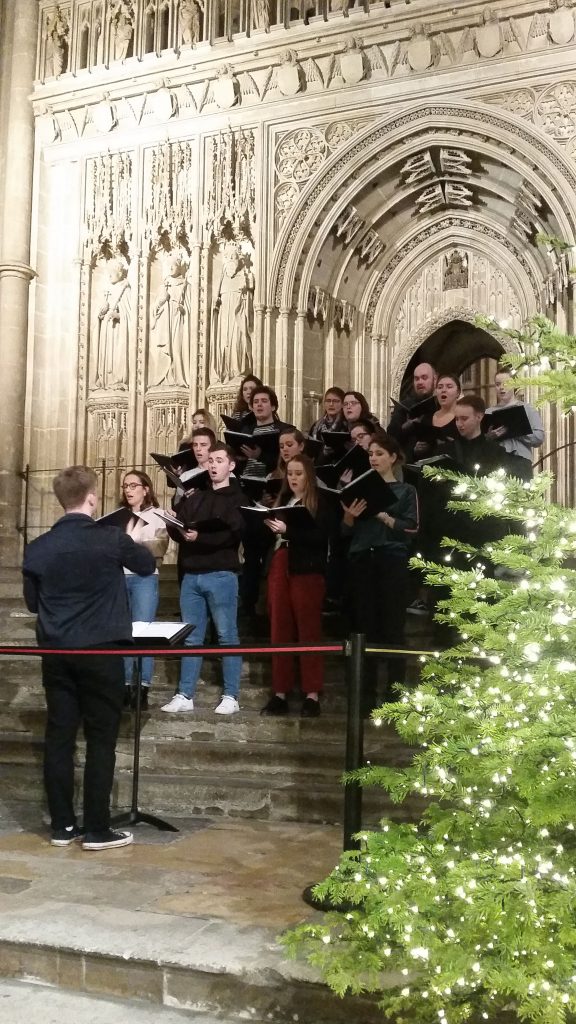
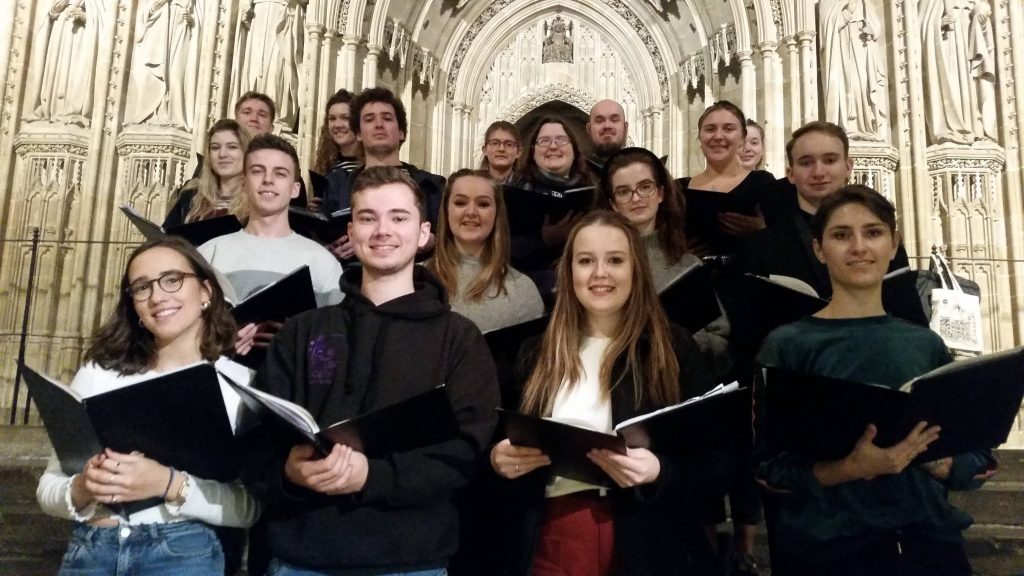 The first time the Choir sings in the Cathedral is during the rehearsal late in the afternoon, and that first moment of launching a choral sound into such a richly-resonant acoustic is always a special one. The lengthy acoustic means there’s no hiding from your own sound; at the end of a piece, you can hear your chord travelling around the Nave, with no opportunity to disguise the tuning! I’m delighted to say that there was nothing to worry about, as we listened a little anxiously to the ends of verses drifting down the Cathedral…
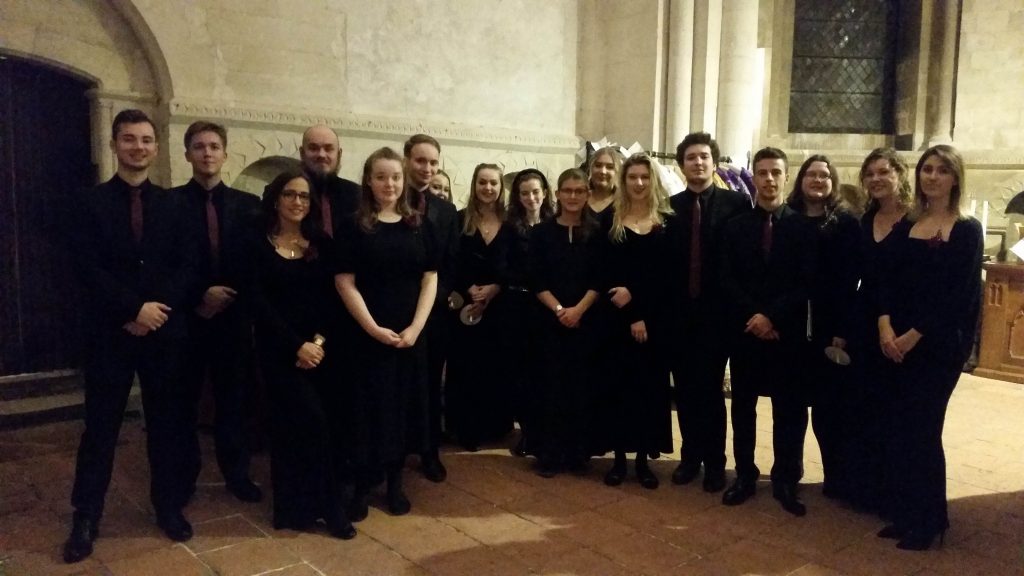 There’s always a lovely sense of occasion at this point in the year, as the University gathers to celebrate and renew the Christmas message, and this year was no exception; a wonderfully evocative service lit both by candles and by music. Congratulations to all those involved, and to the Chamber Choir on delivering a polished set of carols as part of the service.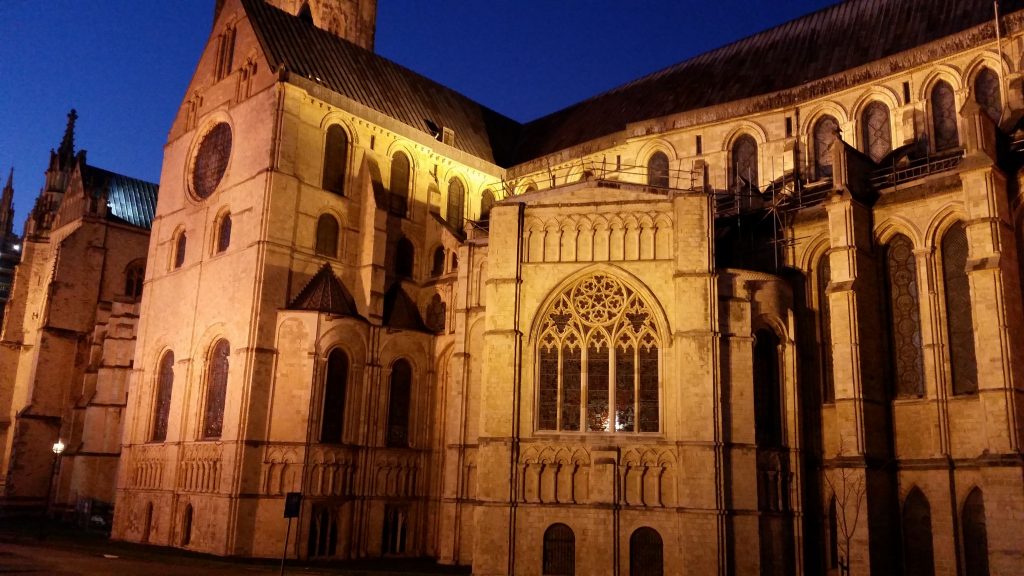
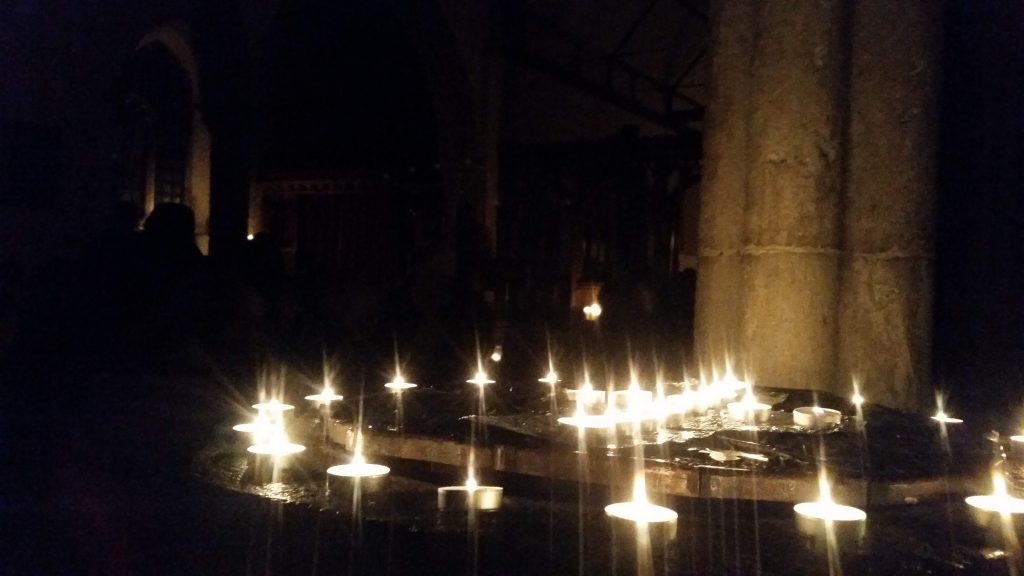 The interior of the church was bathed in candlelight for this unusual event, which is part of a series run by the church during the dark winter months, as an opportunity to escape from the pressures of the Digital Age and find the chance to enjoy a reflective, meditative space on the last Friday of each month. The Cecilian Choir travelled out to the fifteenth-century church to sing a sequence of carols, each prefaced by one of the great Advent antiphons, creating a contrast between the solemnity of the plainsong and the colours of the carols which followed.
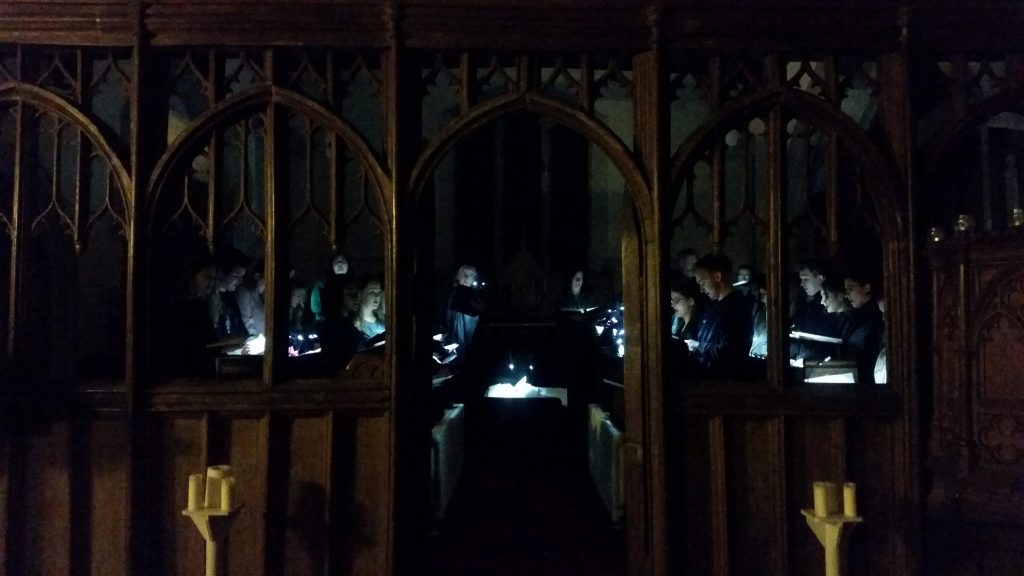 The sequence began with a glass-clear rendition of the opening verse to Once in royal David’s city from second-year soprano, Felicity Bourdillon, which opened the door into the ensuing procession of carols and antiphons, punctuated by periods of stillness illuminated by the dancing candles set around the church.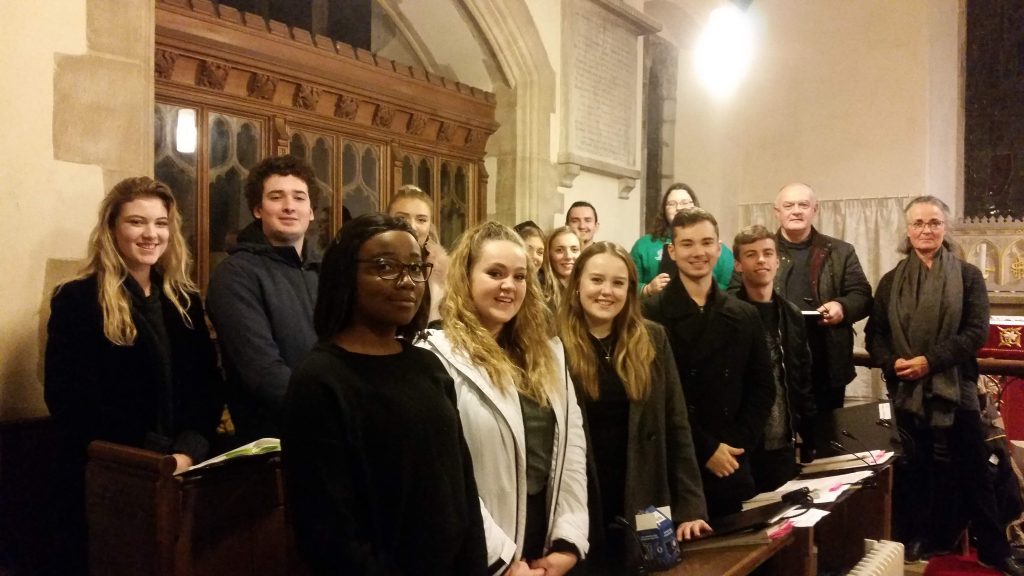
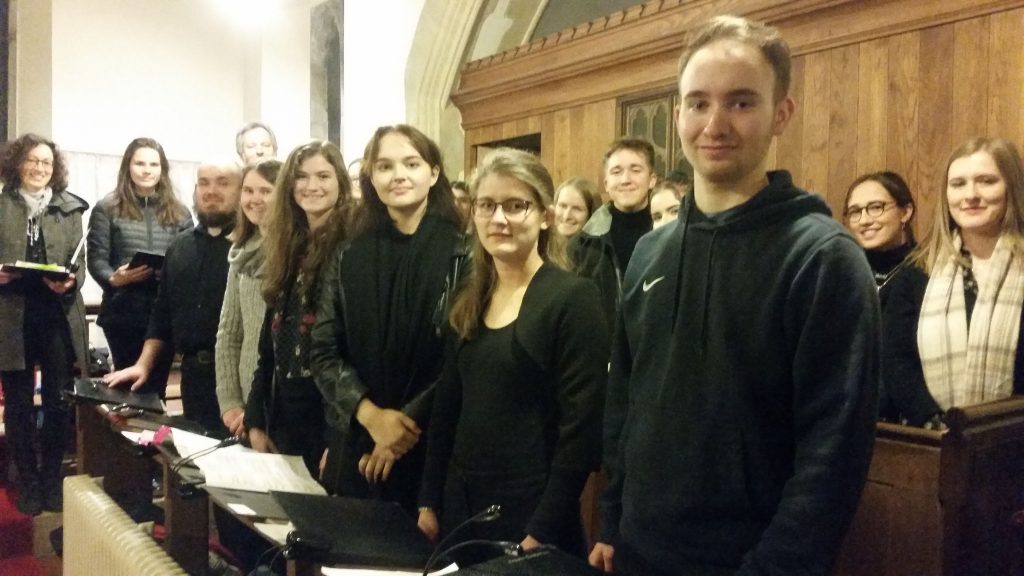
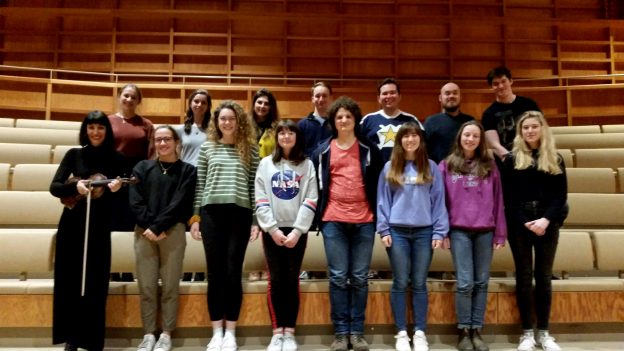
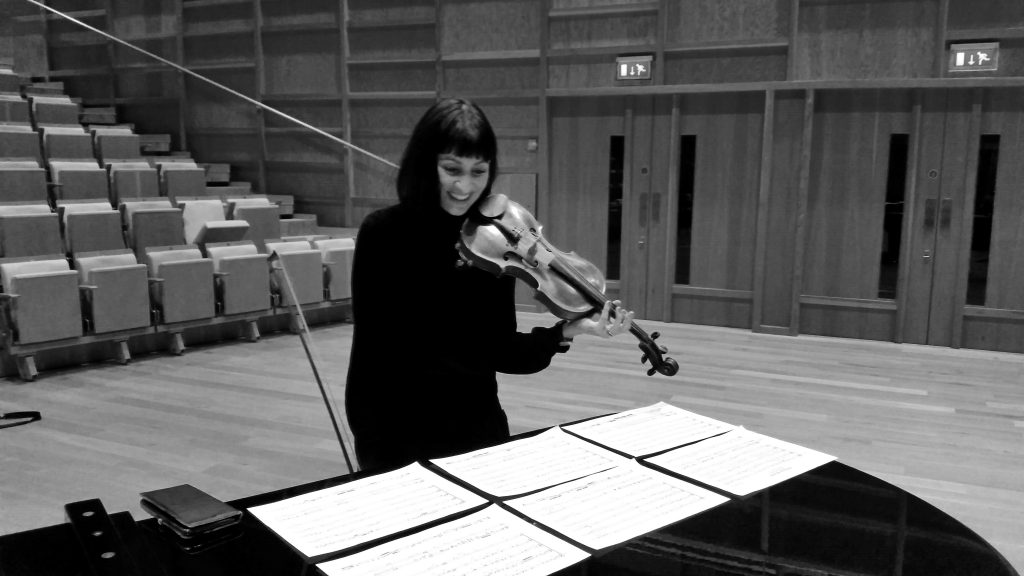 The Choir had the opportunity to work with the composer at Tuesday night’s rehearsal, at which Anna also played the violin in two of the movements. One of the sections features a dialogue between solo soprano and violin above a slow-moving choral backdrop, and it was thrilling to hear the solo violin lifting and skirling around the concert hall, weaving highly decorative arabesques around the soaring soprano line. It’s the first time that Anna has written for choir, and it’s apparent that she has an innate grasp of writing for the ensemble, structuring the vertical sonorities to create colours and contrasts.
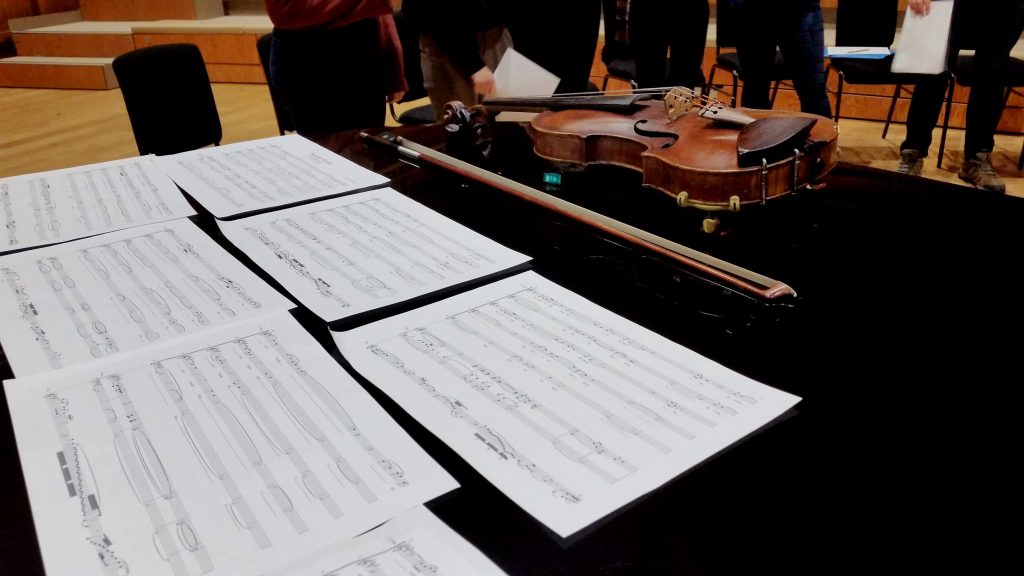 What is striking about the piece is that it’s an engaging emotional, and highly expressive, response to the scientific environment; Anna’s musical language employs added-note chords and suspensions, the occasional slight portamento effect in the voices, creating a richly-colourful musical landscape. Her vision for the piece is cinematic in scope, and there are some scintillating dissonances, highly-charged moments that require the choir to know exactly where their notes are, and to have courage to sing them confidently to make the dissonant colours ring. Elsewhere, the texture includes field recordings made in the laboratory – the clinking and tapping of day-to-day lab equipment – such that the music sounds as though the lab itself is stirring into life; the fabric of the laboratory environment reaching out from the visual imagery and to become part of the sonic environment, a unique connection between science and sound. Last night’s rehearsal was the first step in building the composition, and putting the choir and solo lines together; there were some wonderfully atmospheric moments (notwithstanding the fact that several members of the choir were away that night) that have the Choir looking excitedly ahead to further movements as the piece unfolds.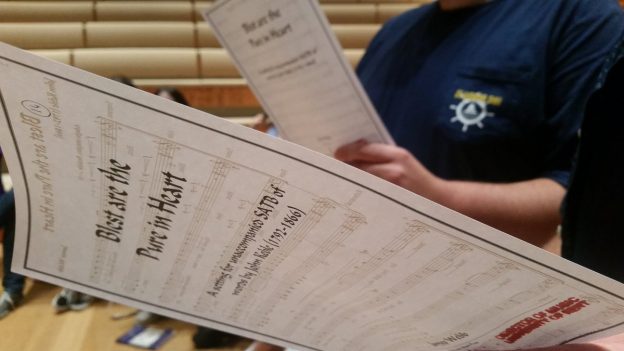
 A former producer with BBC Radio 3, James Webb also won the inaugural BBC Young Musician of the Year Composers Award in 1992; his music has been performed by groups including London Voices, the Delta Saxophone Quartet, and the Royal Philharmonic Orchestra.
 Find out more about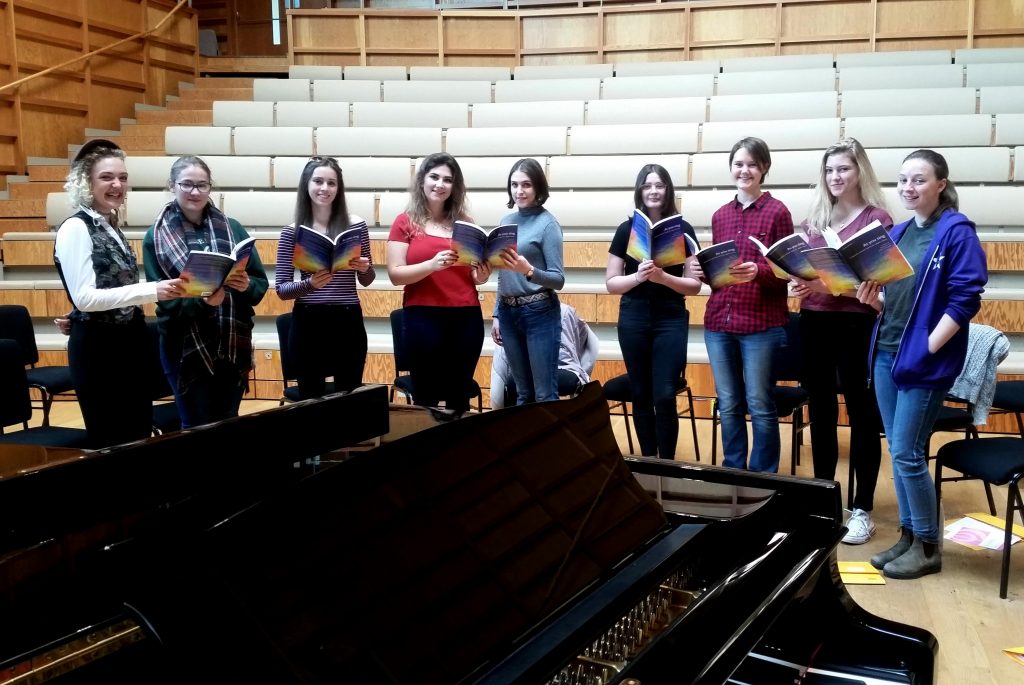
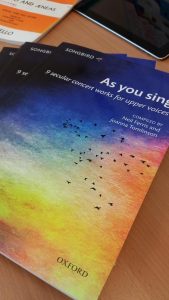 Following on from auditions at the start of term, the upper-voice choir comprises undergraduate and post-graduate singers, and this year is working on some wonderfully colourful repertoire, including a new piece by Russell Hepplewhite, which is part of an anthology recently published by OUP, As You Sing. Russell’s piece, Fly away, over the sea, is a gorgeously-flowing setting of a poem by Christina Rossetti, and the choir has already begun working on it as part of its programme for March. The concert will also include the evocative Tundra by Ola Gjeilo, and movements from Vivaldi’s enduringly fresh-faced Gloria, in an arrangement which reflects how the work might originally have been performed at the orphanage in Venice, where Vivaldi was working at the time, for which the choir will be joined by members of the String Sinfonia.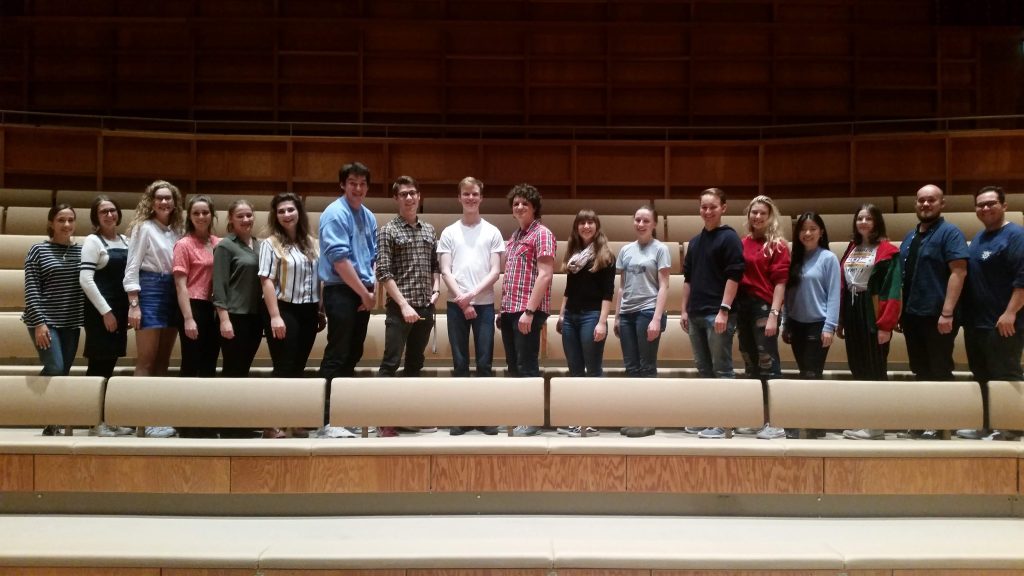
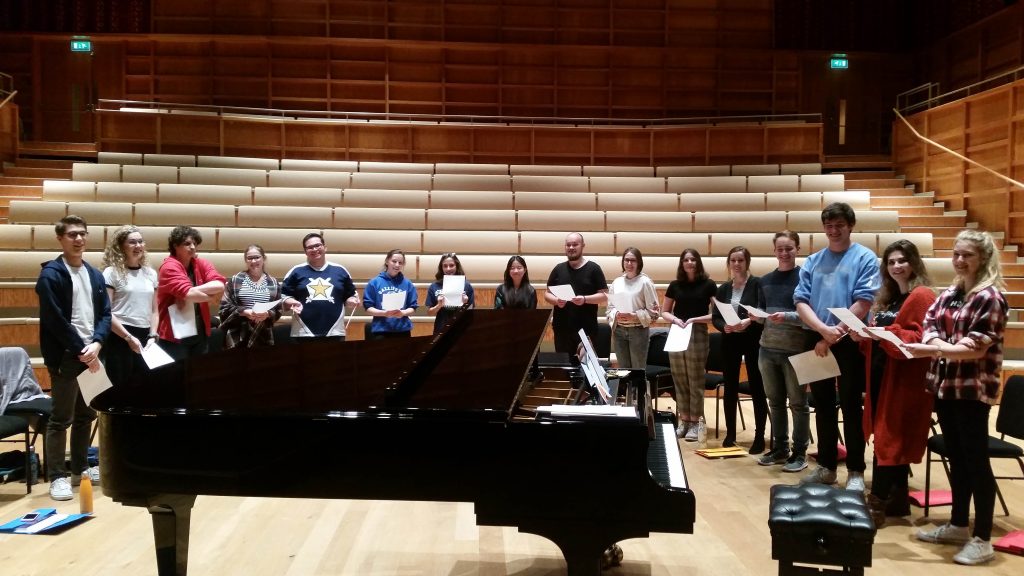
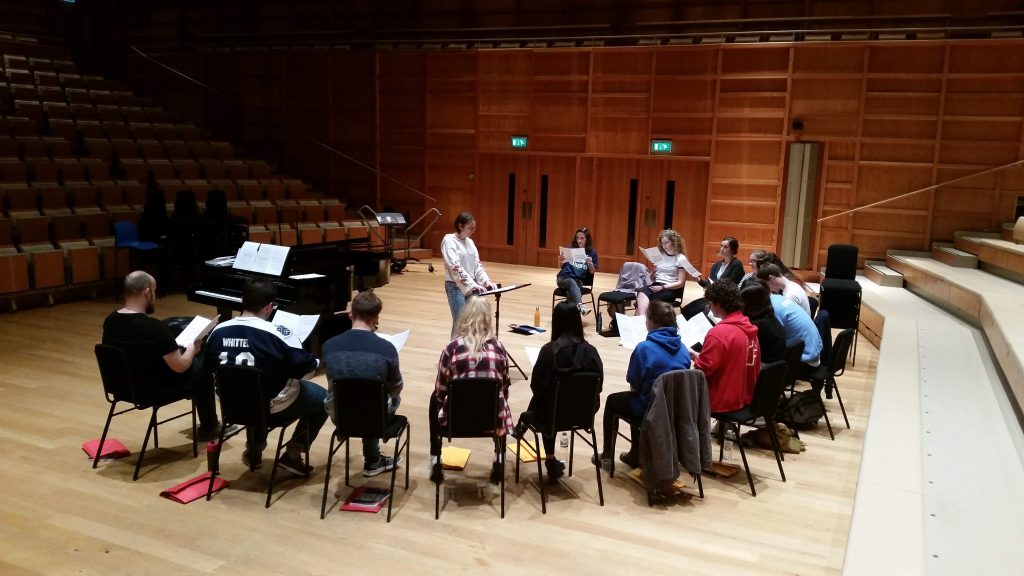
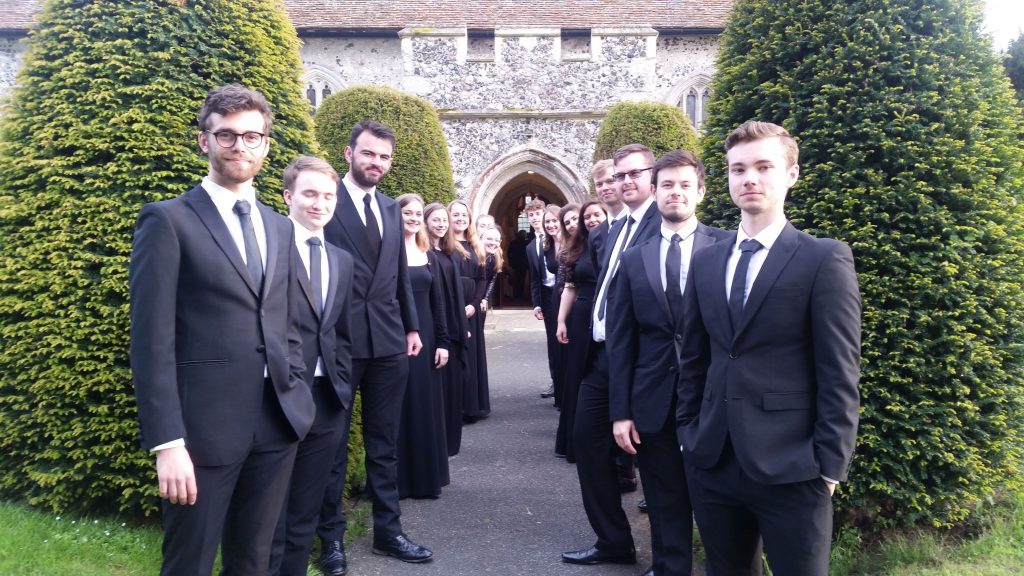
 Set amidst the rolling orchards and fields of rural Kent, the countryside was filled, on a perfect summer day, with choral music ranging across the centuries, from Tudor polyphony to a modern Lenten motet by composer Sarah Rimkus, with at its heart the dramatic Stabat Mater by a youthful Pergolesi, completed shortly before the composer’s tragically early death. Assistant conductor, second-year Matt Cooke (pictured in rehearsal), also led the Choir in music by Rachmaninov and Passereau.
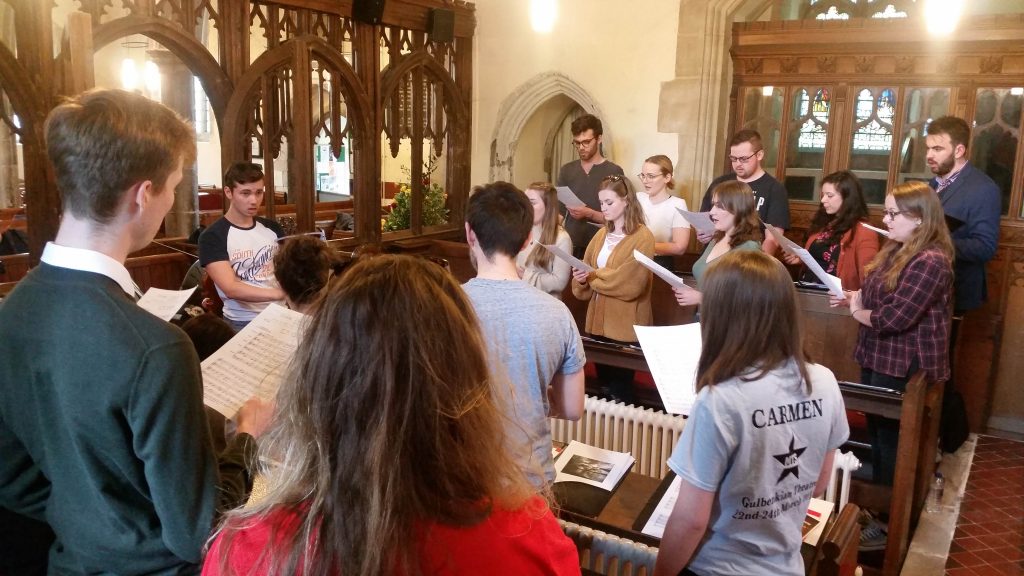 The audience at St Michael’s church responded with enthusiasm and rousing applause at the conclusion of the performance, and we’re delighted that the retiring collection, in support of the church’s much-needed renovation funds, raised close to £500.