Choral life at the University has resumed in full flow this academic year; as we prepare for our Anniversary Weekend celebrating ten years since the opening of Colyer-Fergusson, two events in the run-up have opened our seasonal programme.
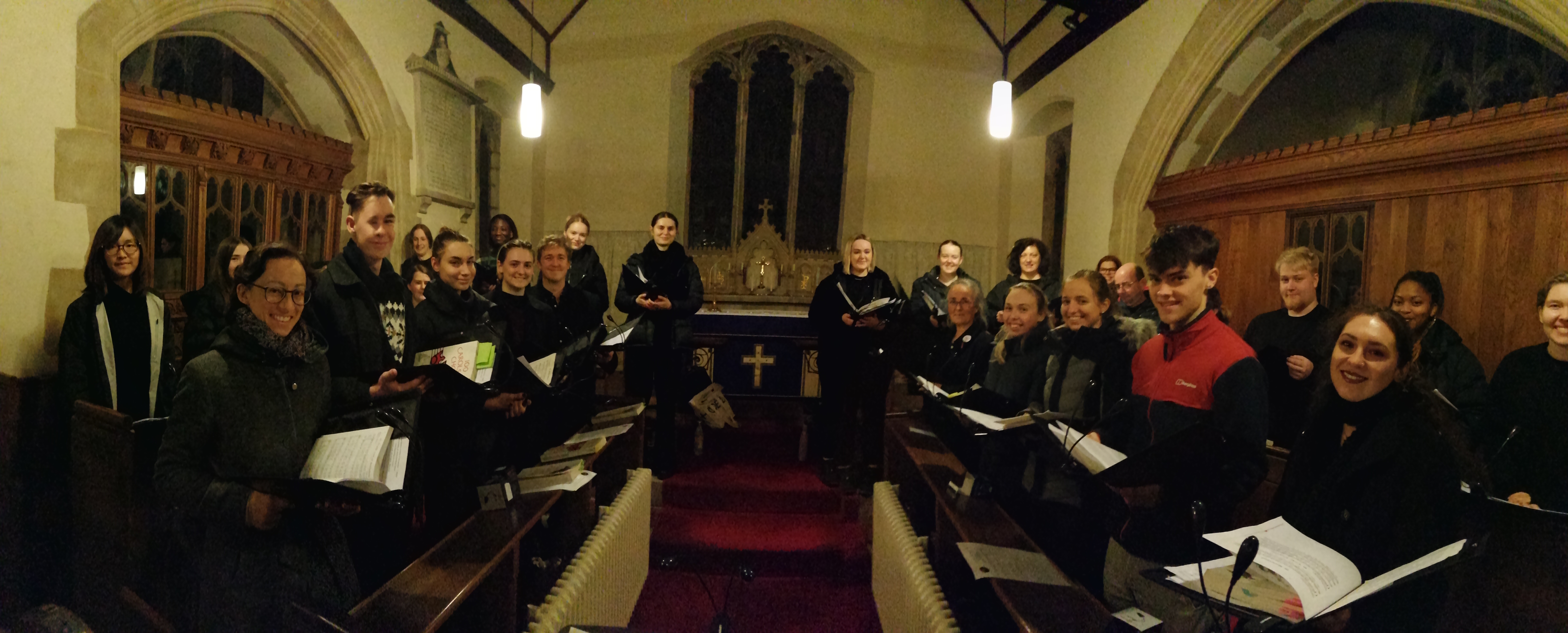
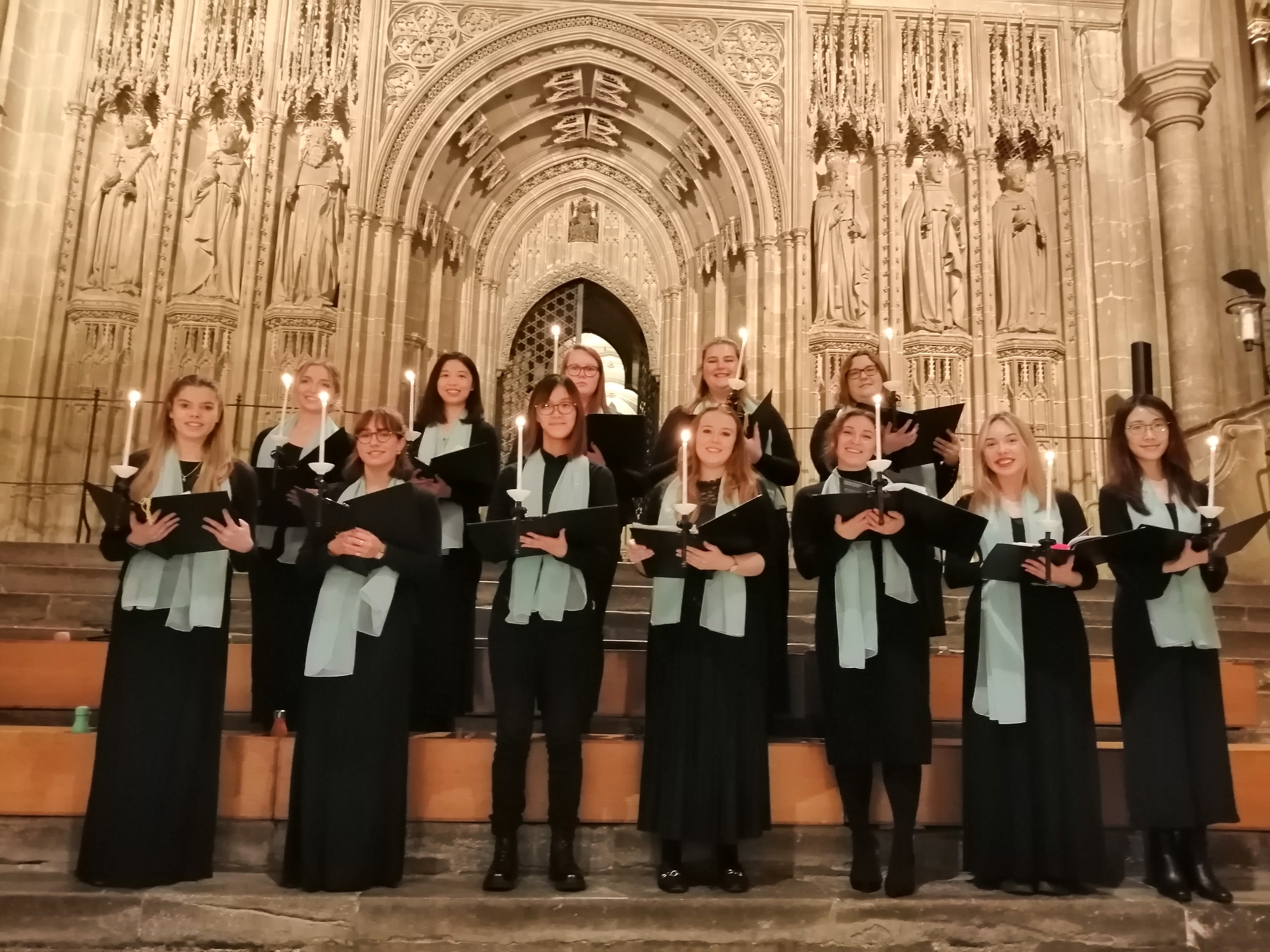
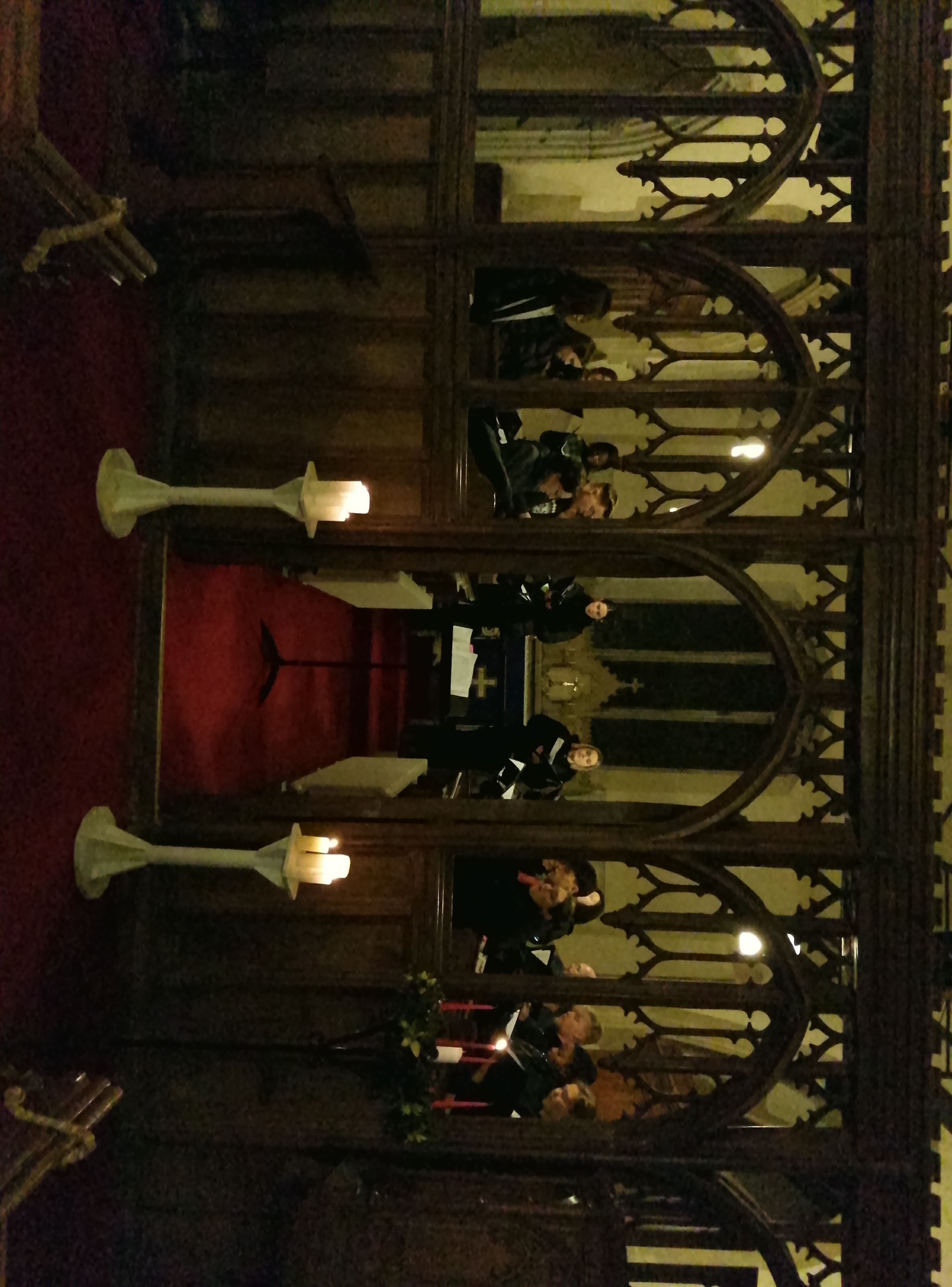 First, the University Cecilian Choir ushered in the Advent season with a sequence of carols, antiphons and moments of stillness by candlelight in St Michael’s, Hernhill, a fifteenth-century church lying at the heart of a Kentish village. Students, staff and alumni came together to sing a meditative sequence, including the great Advent antiphons, to bring music ancient and more recent together in a highly effective performance on a dark winter’s night.
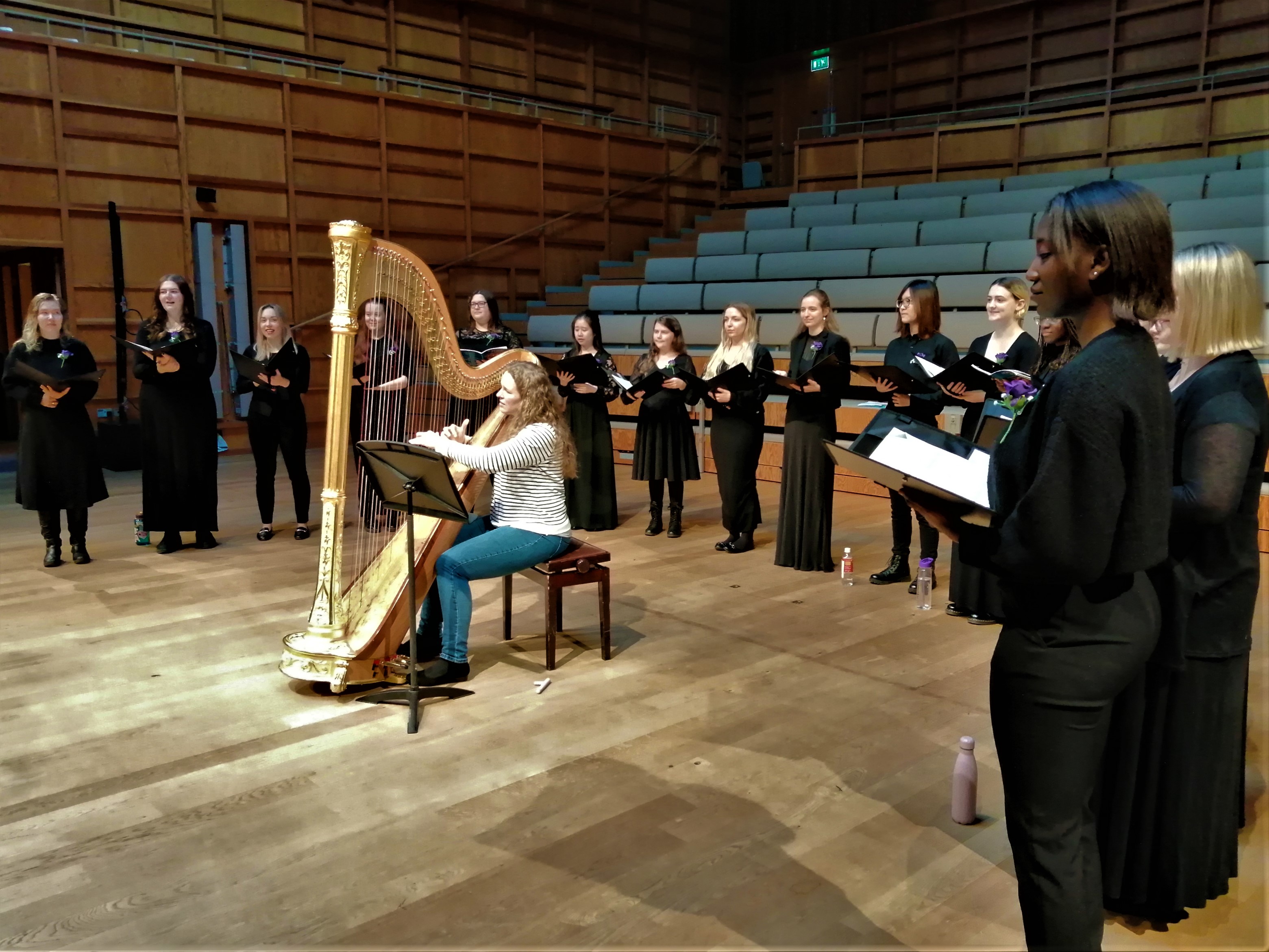
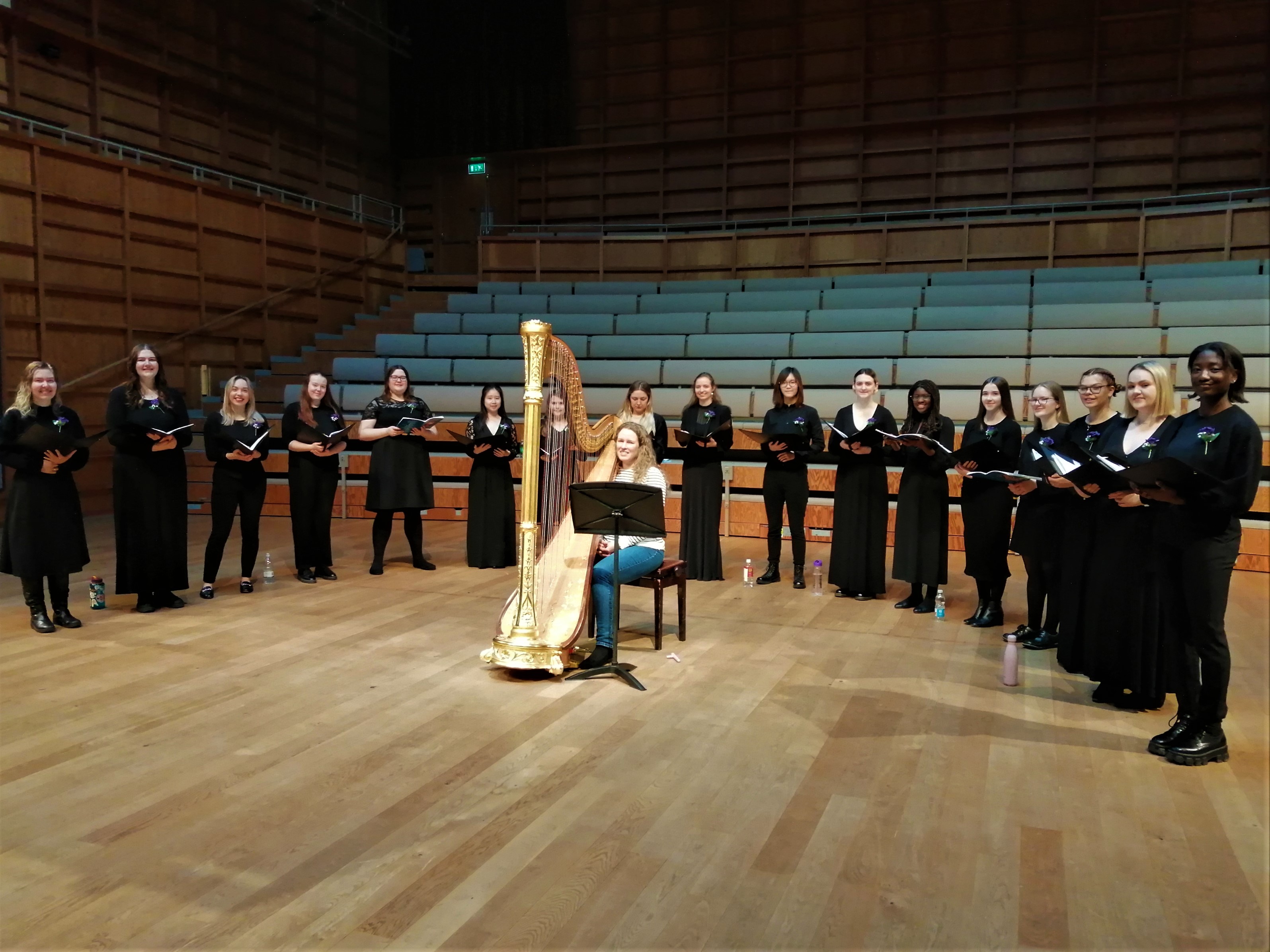
And our upper-voices chamber choir, Minerva Voices, has just performed as part of the final Lunchtime Concert of the term, a sparklingly seasonal concert given by visiting harpist Harriet Adie, for which the choir joined the concert to sing movements from Britten’s Ceremony of Carols. The evergreen ‘Spring Carol,’ the reflective lullaby ‘Balulalow’ and the bravura ‘This Little Babe’ were delivered with real poise around Harriet’s mesmerising reading of the ‘Interlude’ from the sequence.
So, a great start to the seasonal programming, and full steam ahead into the anniversary celebrations this weekend – and then more to come next week… Well, it IS Christmas!
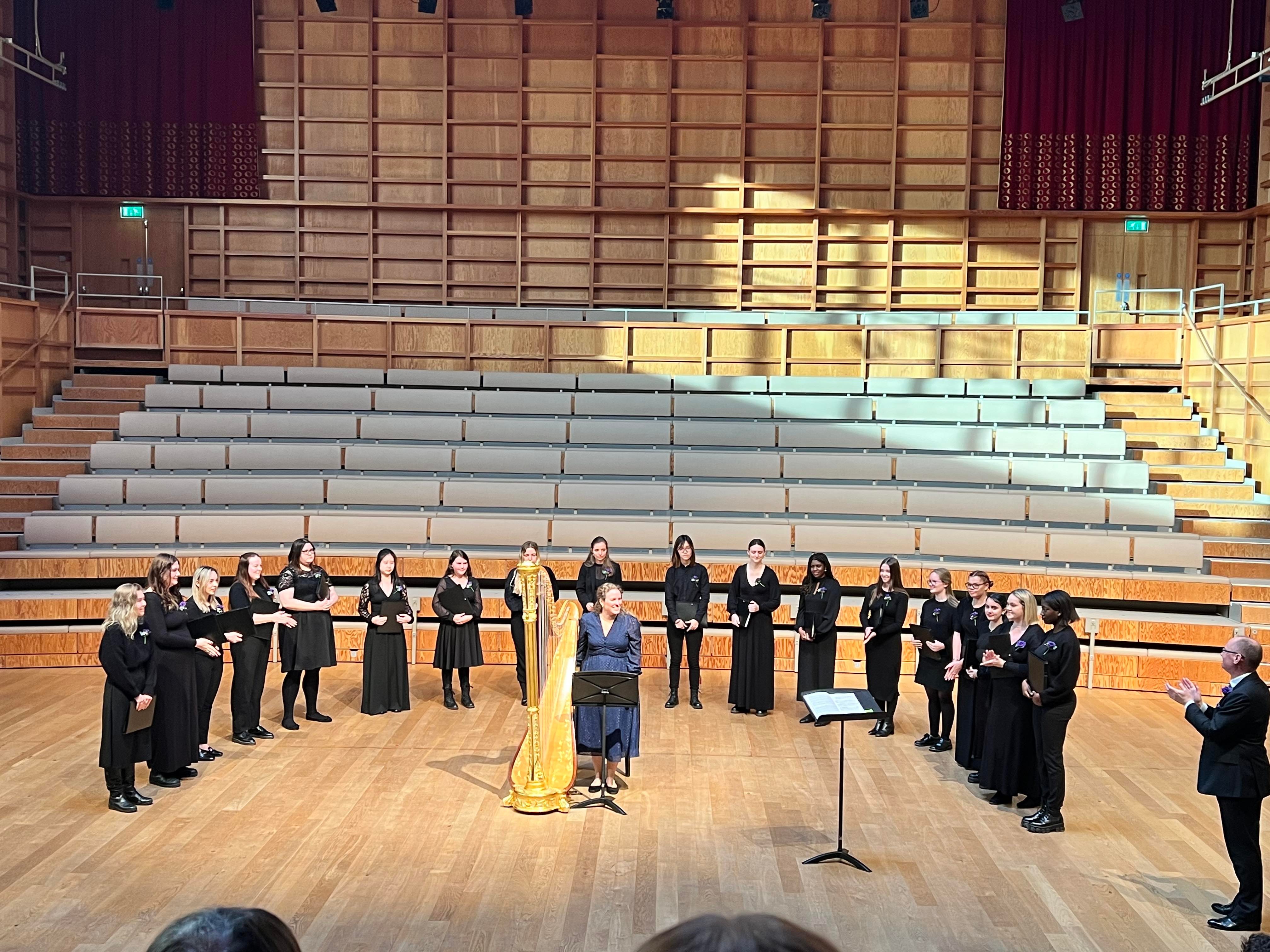
Minerva Voices with harpist Harriet Adie
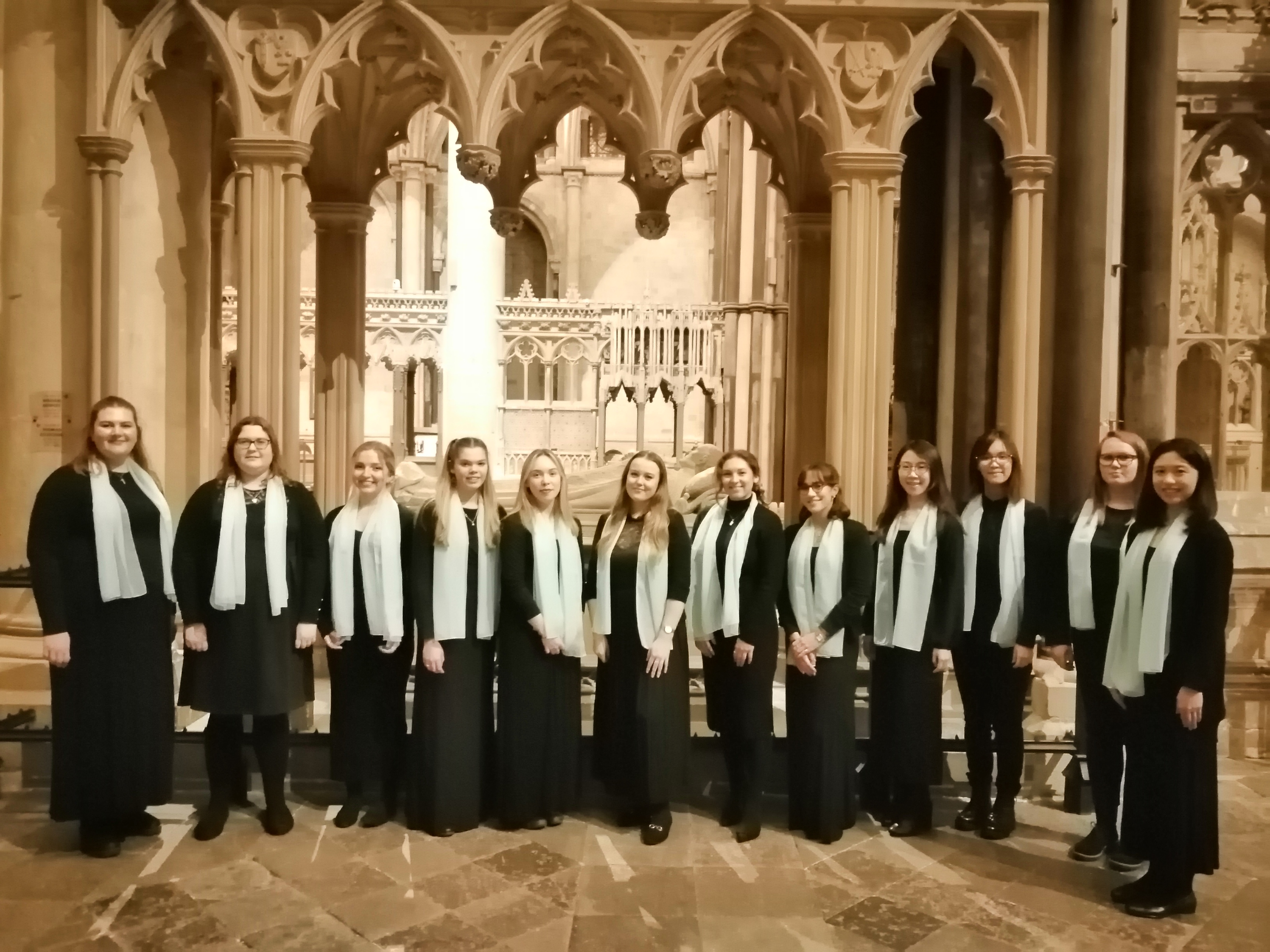 A necessarily streamlined Carol Service, lasting an hour, presented a sequence of lessons and carols, for which the Choir sang three pieces. Comprising both undergraduate and postgraduate students, there’s an international aspect to the ensemble this year, with members from California, Toronto, Hong Kong and from Taiwan, as well as from across the UK.
 The service was the first time we’d been singing at the Cathedral since before the pandemic, and we’ve missed that lush acoustic. Well done too to final-year Music Award Holder reading Psychology, Felicity Bourdillon, on a glorious opening solo verse to ‘Once in royal David’s city.’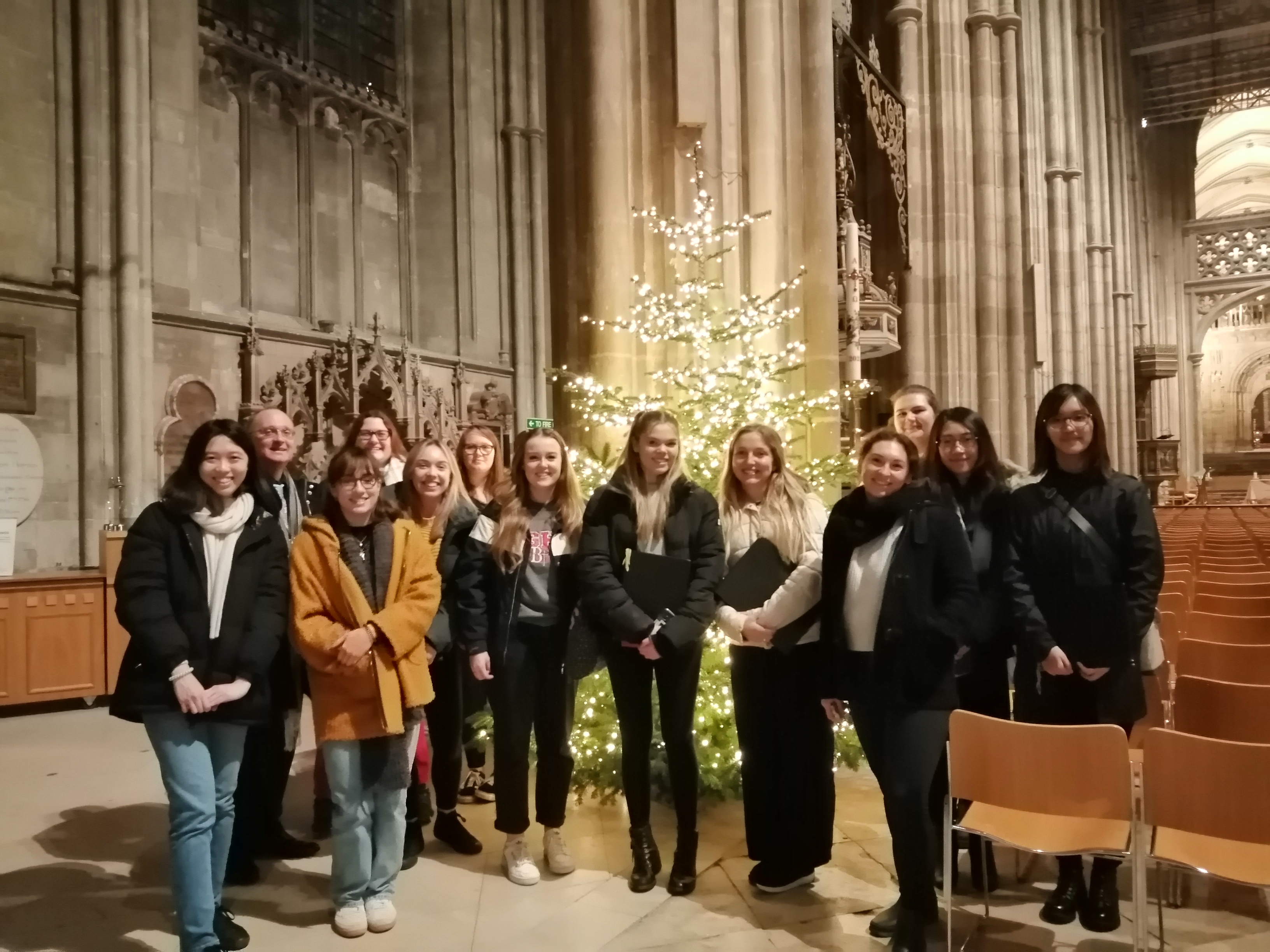
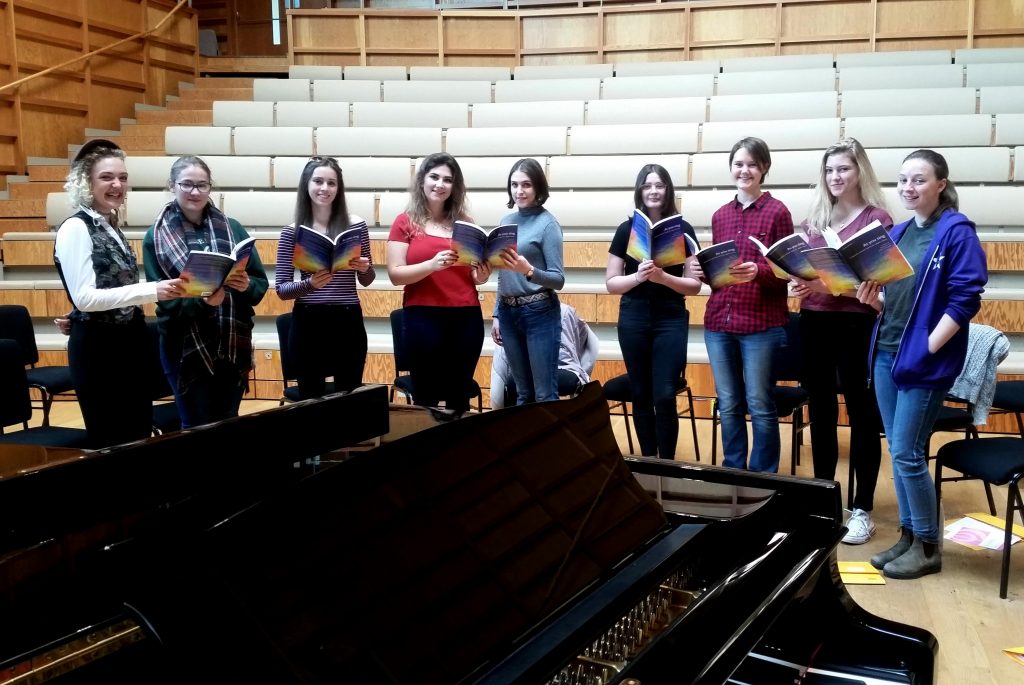
 Following on from auditions at the start of term, the upper-voice choir comprises undergraduate and post-graduate singers, and this year is working on some wonderfully colourful repertoire, including a new piece by Russell Hepplewhite, which is part of an anthology recently published by OUP, As You Sing. Russell’s piece, Fly away, over the sea, is a gorgeously-flowing setting of a poem by Christina Rossetti, and the choir has already begun working on it as part of its programme for March. The concert will also include the evocative Tundra by Ola Gjeilo, and movements from Vivaldi’s enduringly fresh-faced Gloria, in an arrangement which reflects how the work might originally have been performed at the orphanage in Venice, where Vivaldi was working at the time, for which the choir will be joined by members of the String Sinfonia.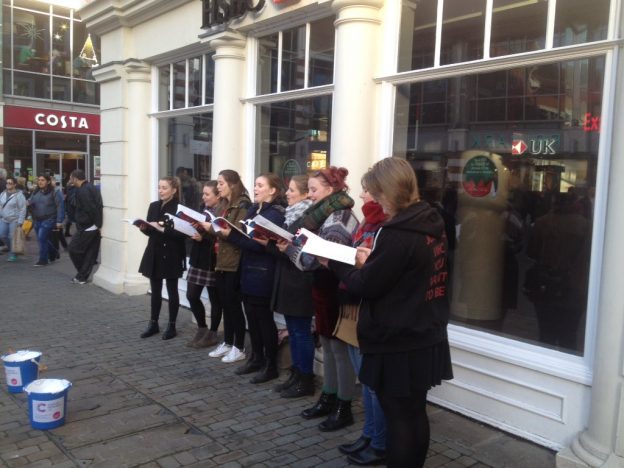
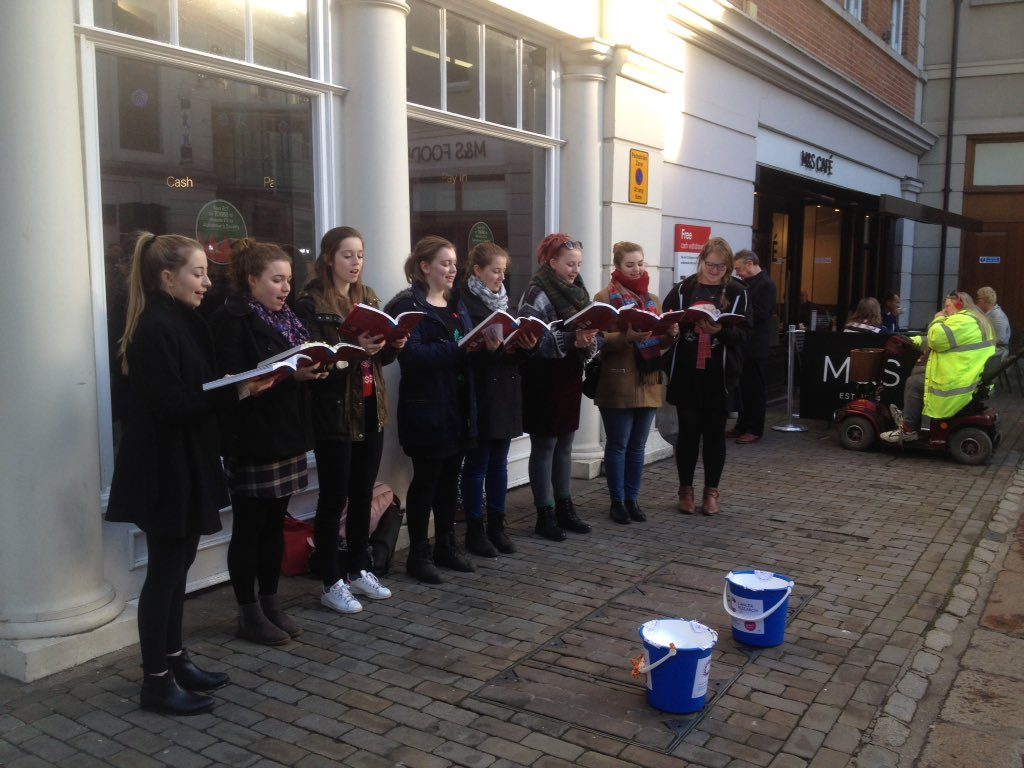 The idea was suggested by Inger Kviseth, a member of the Choir who works part-time for the charity, and asked if we would help with their fund-raising; the team leapt to respond, and were busy singing yesterday afternoon, aided by Music Society secretary, Robert Loveless, who wielded one of the collection buckets.
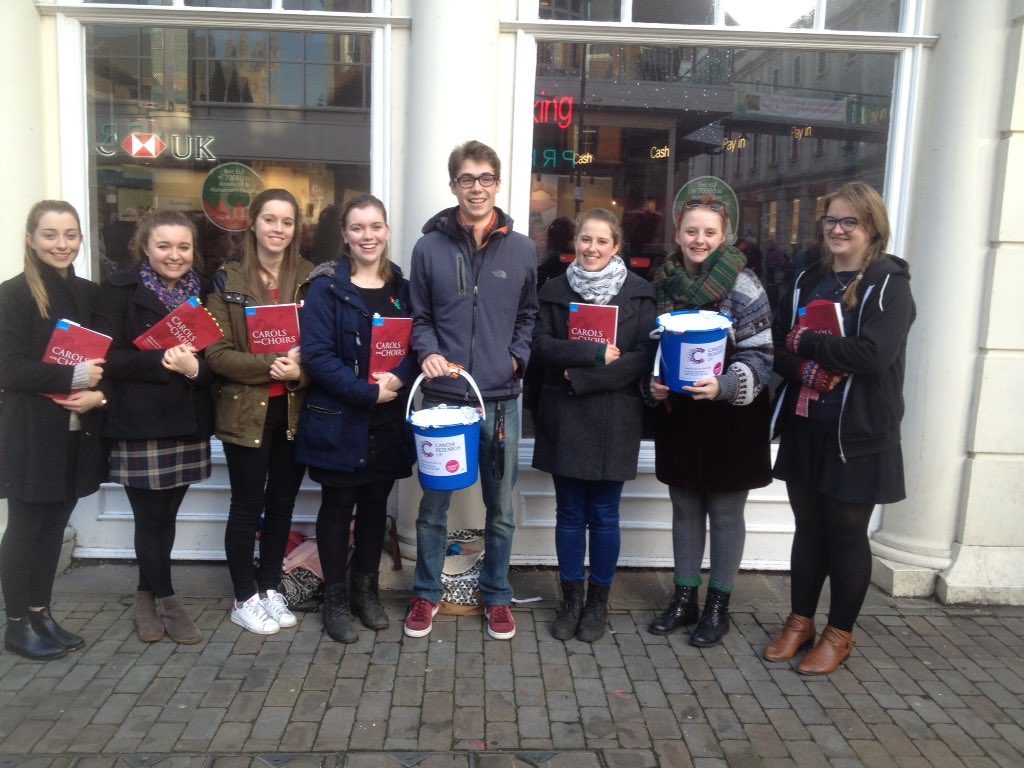 The shoppers responded with enthusiasm to the choir’s bringing Carols for Choirs to life, and a brisk chill in the air was met with a warm response from passers-by.
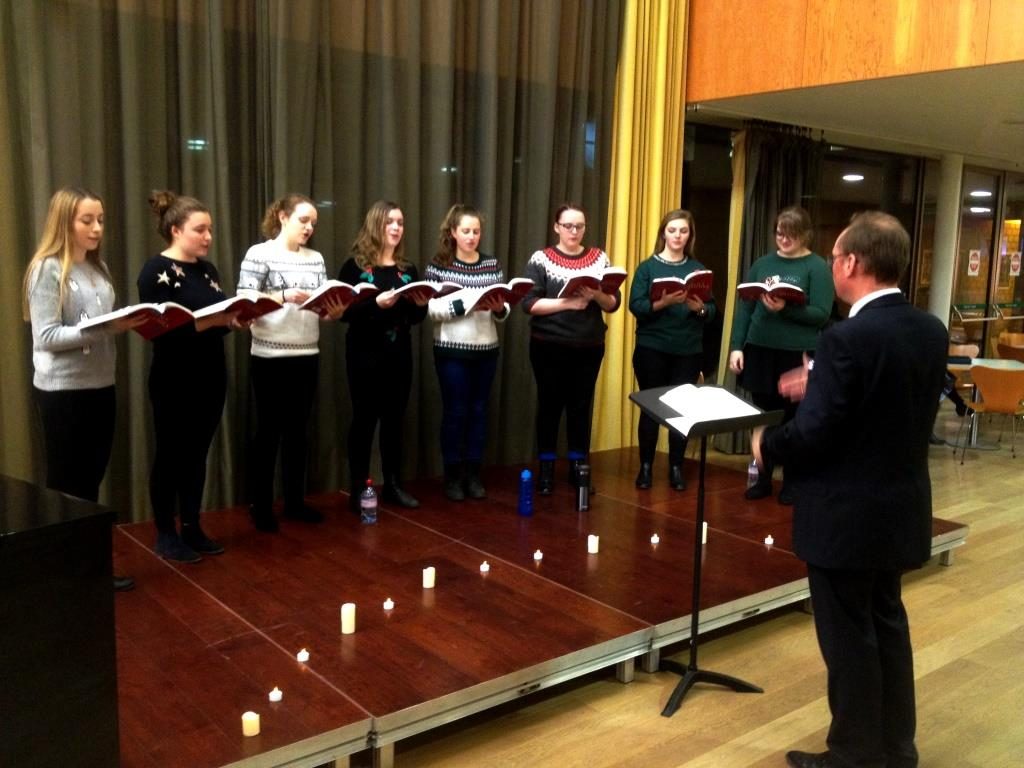
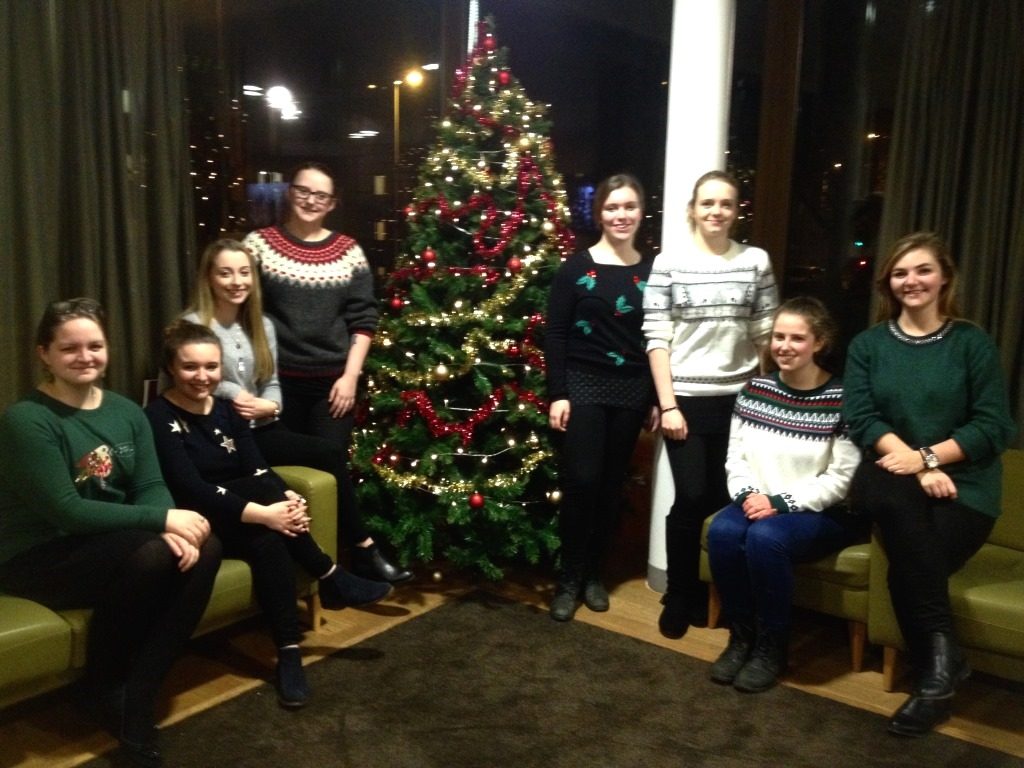
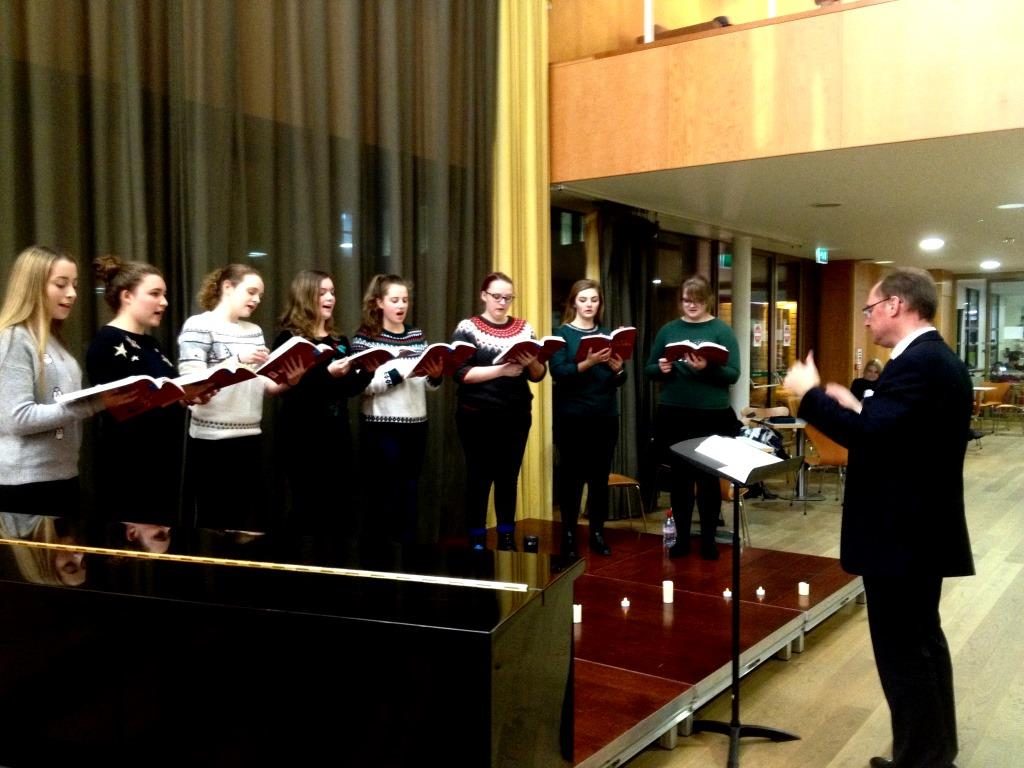 The foyer-stage was strewn with flickering candles (and for the sake of everyone wondering about a predominantly wood-paneled building and flickering flames, I should reassure you that they were electrical candles…) and festive jumpers as members of Minerva filled the foyer with favourites from the fourth edition of Carols for Choirs, an incarnation of the enduringly-popular publication in arrangements for upper voices. There’s something particularly magical about hearing traditional carols in arrangements for sopranos and altos, an extra glimmer of frosted sparkle adorning customary repertoire.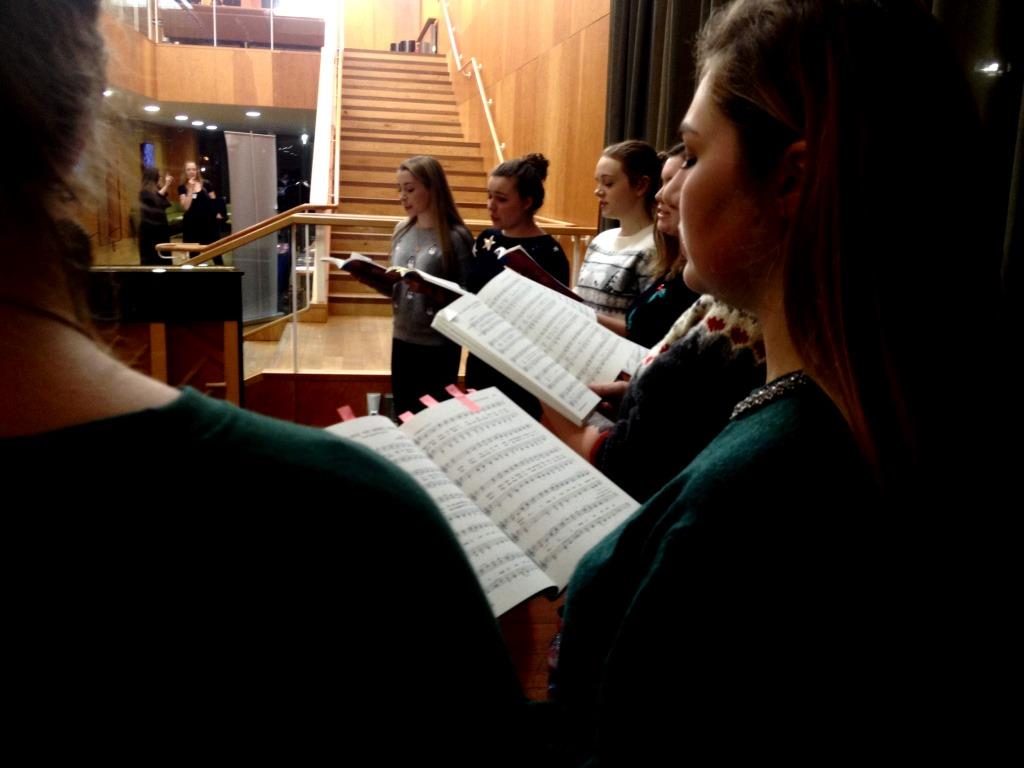
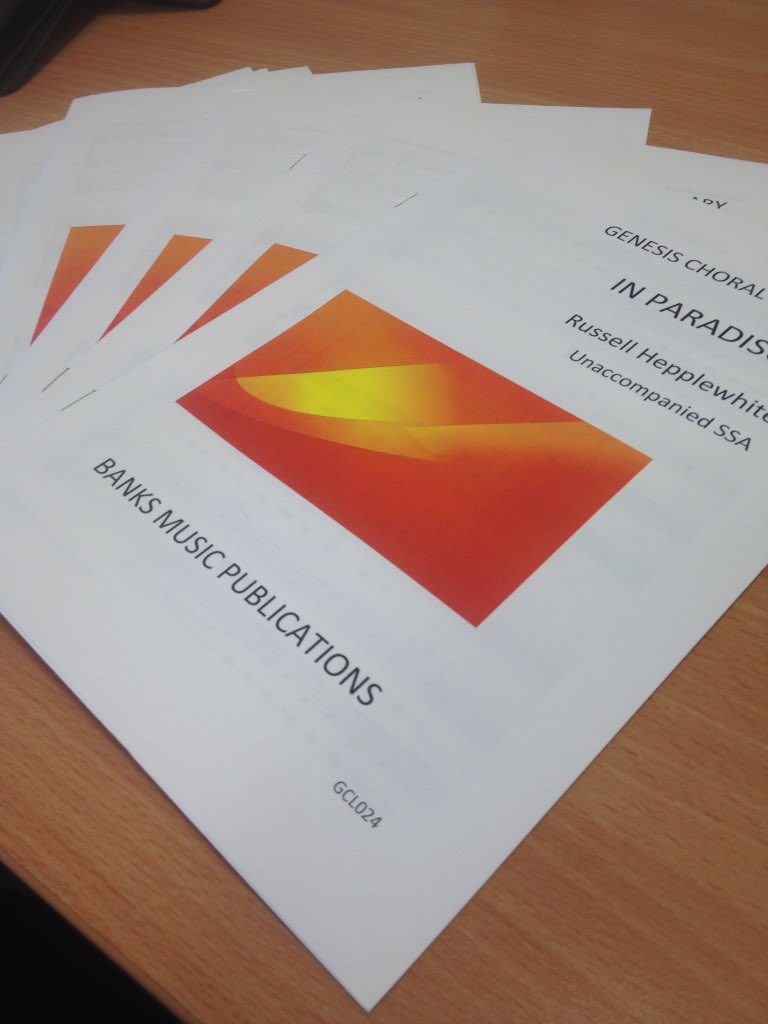
 Russell’s chamber operas for younger audiences commissioned by English Touring Opera have been garnering acclaim, including his Laika the Space Dog, which won the Armel Opera Festival in 2013, and more recently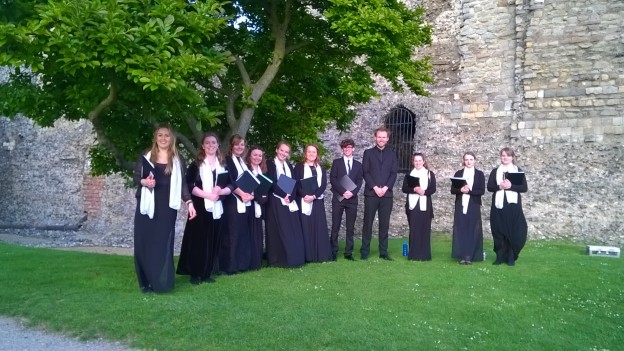
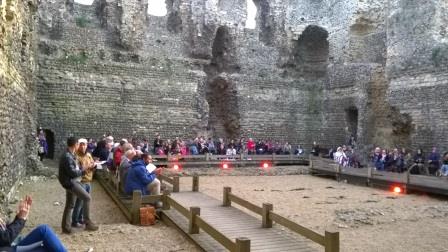
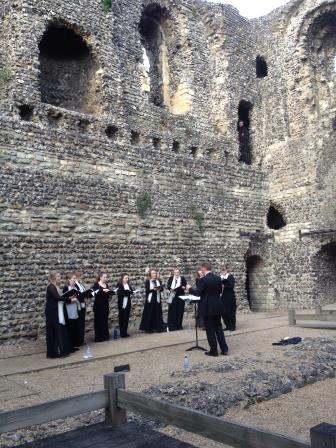 As the sun set, the ancient site rang to the sound of medieval plainchant as the performance opened with a Kyrie by Hildegard von Bingen, the long lines lifting and skirling around the keep and lifting into the blue skies.
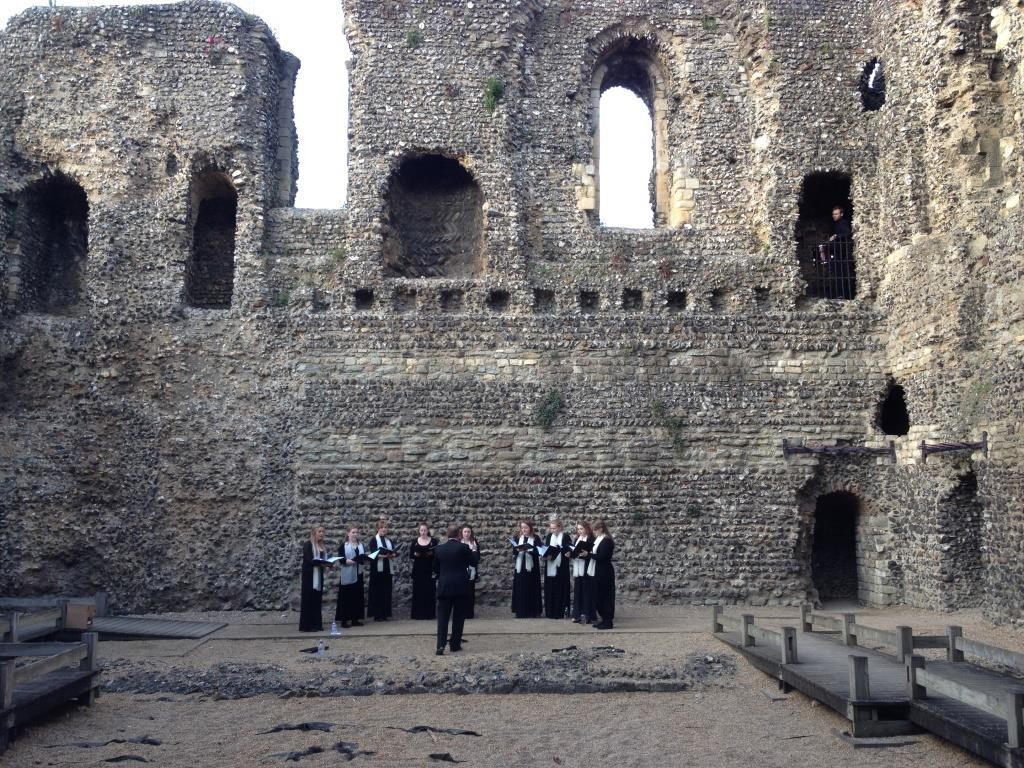 As the programme unfolded, you could feel the audience draw closer to the music across the shingle area which separated the singers from the boarded walkway, around which the audience stood or sat. Assistant conductor Joe Prescott drew forth a tight-knit Ave Verum by Mozart and and sprightly O Swallow, Swallow by Holst, amongst other works.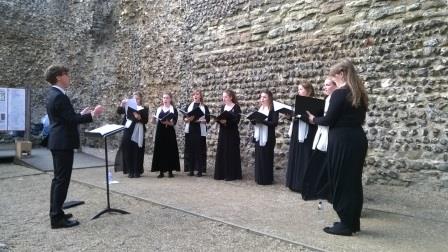
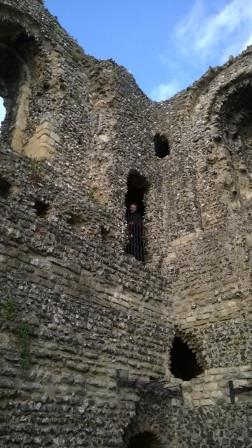 The performance came to a dramatic conclusion with a militant Norwegian setting of the Song of Roland, with drummer Cory Adams positioned above the audience in one of the castle towers, stridently beating a decorative accompaniment that recalled the military nature of the castle’s history in vivid, echoing sound.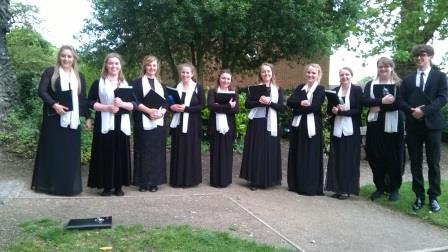
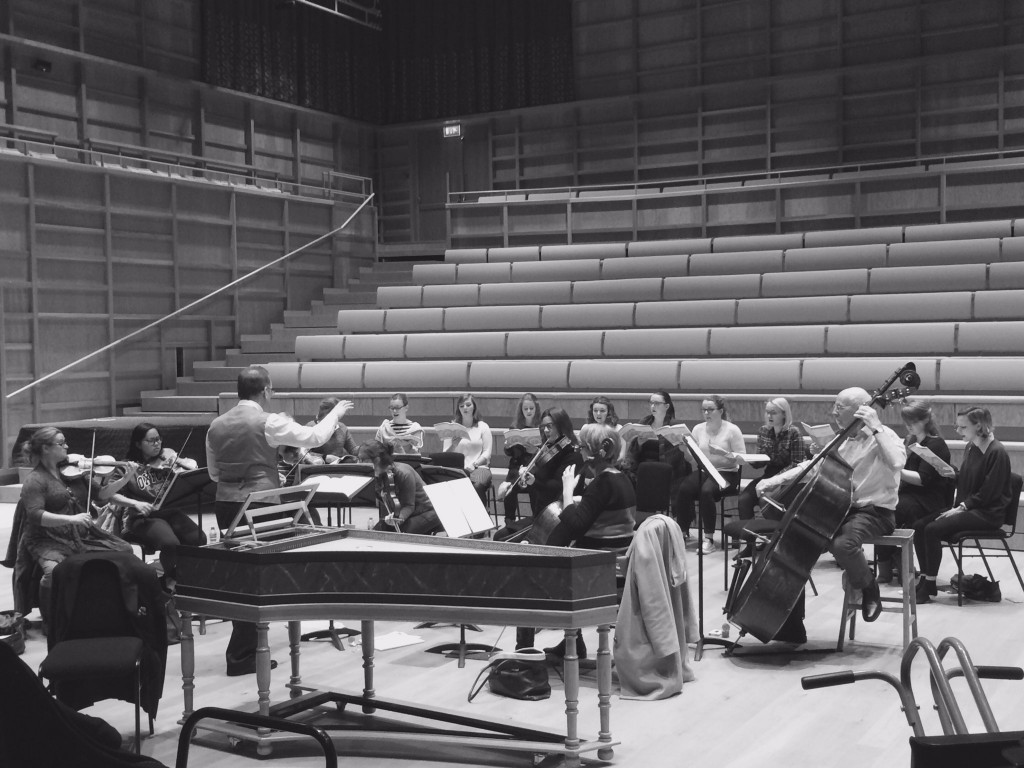 Last night was spent, therefore, making the piece sound as vital, as alive and challenging as possible. From the brilliant opening cry of the chorus, through the pastoral intimacy of the central Domine Deus to the fervent finale, we built a revitalised reading of Vivaldi’s masterpiece, which we will unleash in the Crypt this coming Friday. Combined with the exploratory first half – choral pieces across the centuries, from Hildegard von Bingen to Veljo Tormis – the concert promises to be something quite special.
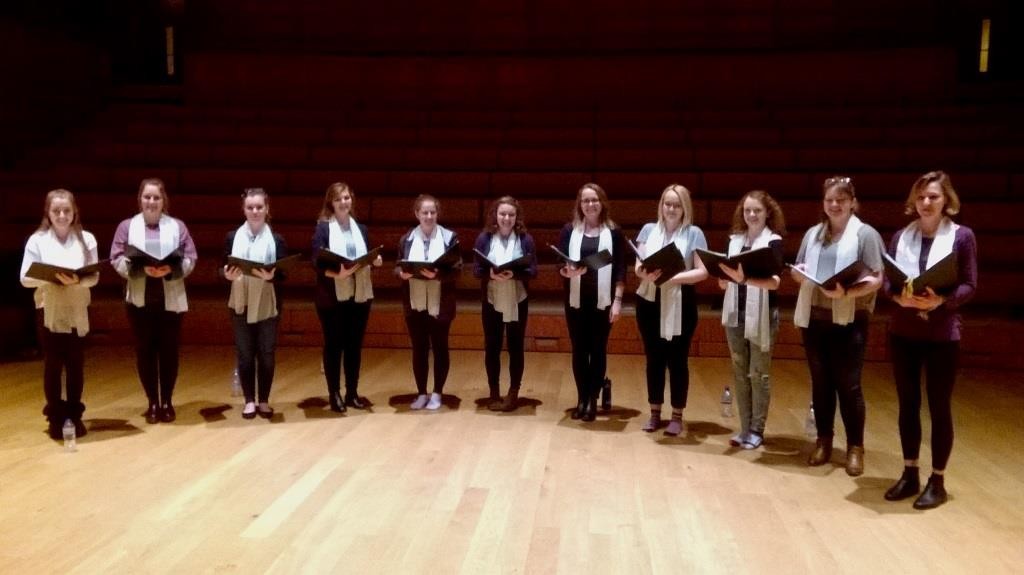 Having spent the first half of the rehearsal working on Vivaldi’s Gloria for the Crypt concert in two weeks, the tone of the rehearsal rose in the second half with our practice run-through. What it taught us was that the level of sustained concentration is very demanding, even in a mock situation. And working through the pieces in order allowed us, afterwards, to reflect on the pacing of the programme as a whole, and how we might improve it. Assistant conductor Joe moved the pace of Holst’s O Swallow, Swallow on slightly, and produced a much freer interpretation; the same also for Tartini’s setting of the Stabat Mater, which needs to avoid luxurious wallowing if the piece isn’t to feel too unwieldy. Of course, you always pace a performance according to the nature of the acoustic in which you are singing, and Studio 3 Gallery has a rich, resonant acoustic that could lure us into really dwelling on chords and the ends of phrases, so we will have to be alert to any tendancy to dawdle!
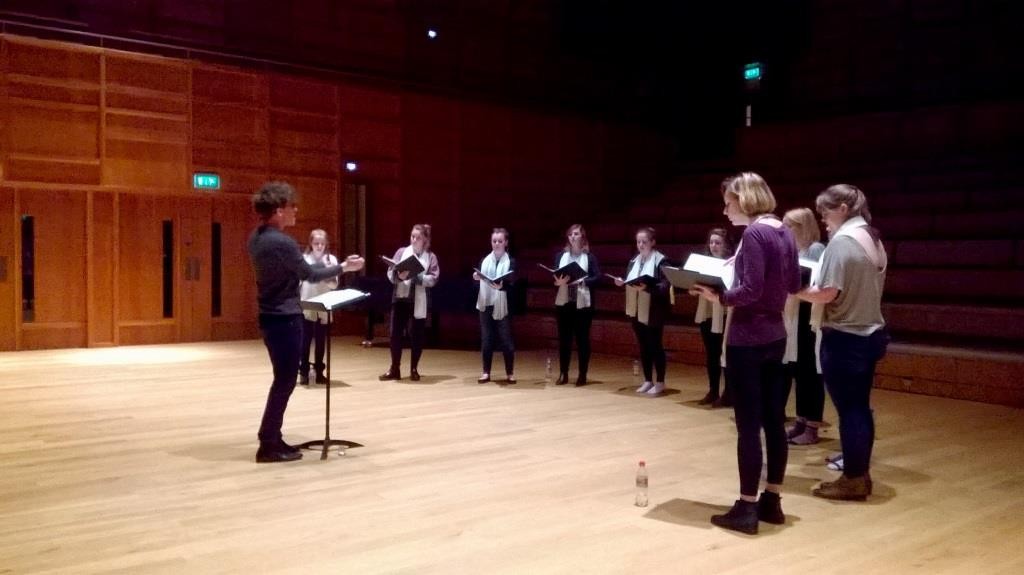 So, the next time Minerva Voices meets, it’ll be in the gallery, warming up for the performance on Friday lunchtime (