A guide to student-friendly toiletries plastic reduction: blog post #4

Guest post by SDG Ambassador Julia Daly

———————————————————————–
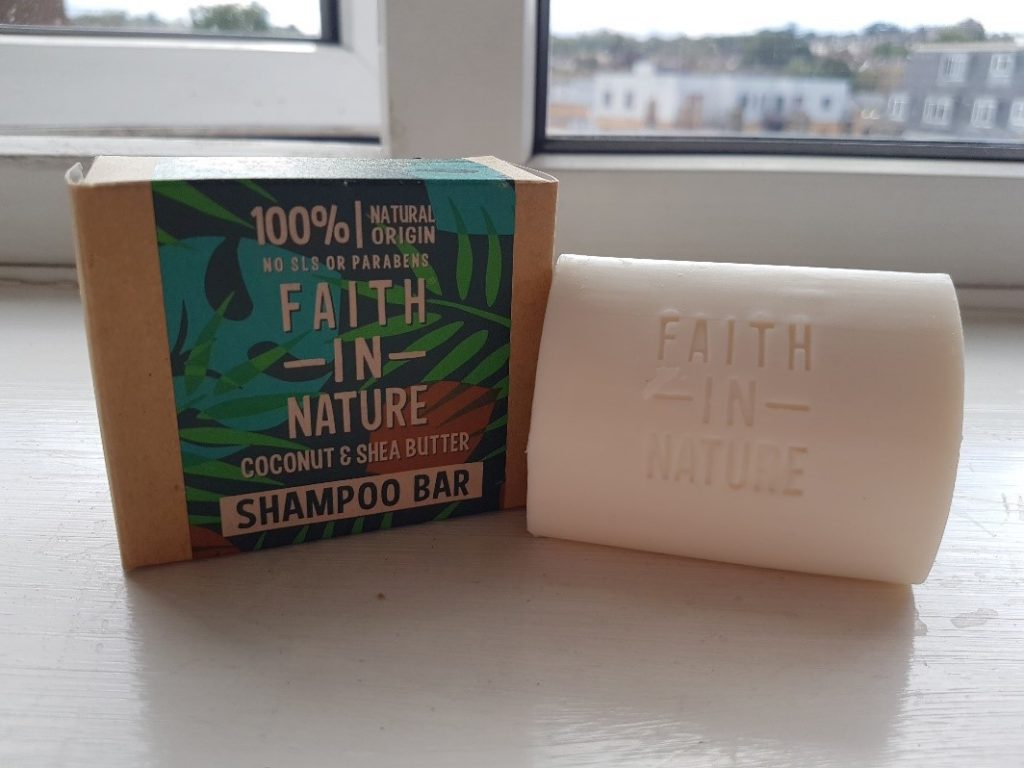
Welcome to the last blog post of this plastic reduction series. I’ve seen many undergrads already receiving their final results, and many postgrads, myself included, will soon be handing in (or have already handed in) our final dissertations. With this closure to the academic year, I will also be bringing this blog series to an end. But before I go, I would like to share two shampoo bar products that I have tried and loved. Shampoo bars that work for your particular hair type are, in my experience, the most difficult to find when it comes to plastic free alternatives, so I am THRILLED to have found two that both work.

Today’s focus are shampoo bars from two brands: Eco Warrior and Faith in Nature. Both are available from Holland and Barrett and Boots so very accessible. Eco Warrior are a British brand that make soap which is vegan, cruelty free and eco-friendly using recyclable packaging. Similarly, Faith in Nature are also UK based, cruelty free, vegan and reducing plastic use by using recyclable and recycled packaging. Eco Warrior are a purely soap bar company, whereas Faith in Nature provide a plethora of options: soap bars, liquid shampoo in fully recycled plastic bottles, the option of buying 5 litre or 20 litre bottles of liquid product to reduce plastic consumption and refill stations in stores across the country.

Eco Warrior – Shampoo Bar, Orange and Ginger Essential Oils, 100g for £4.00

A good size shampoo bar that lathered well when wet. As I’ve not had a great experience with shampoo bars in the past, I found that this one was the first to lather well and could be used by directly placing the bar onto my hair without leaving clumps of product behind. It does take a while to cover your entire head and get to the roots, I would say about twice as long as with liquid product. My hair didn’t need a lot of time to get used to the new product, perhaps a week or so, and after washing, my hair felt very clean and oil free. The only thing that wasn’t ideal about the product was that it seemed to half in size after every use, meaning that it only lasted about a month and a half. My hair, being thick and long probably expedited the use of the product so someone with thinner, shorter hair would definitely get a lot more use out of one bar.

Faith in Nature – Shampoo Bar, Coconut & Shea Butter, 85g on sale for £4.34, RRP £5.79

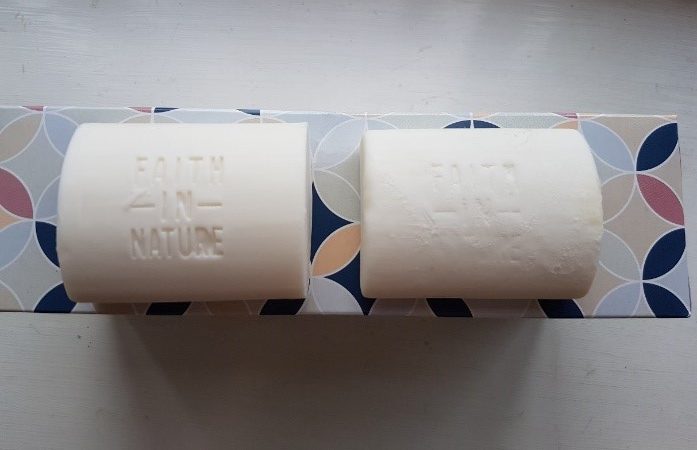
I have only just started using this shampoo bar but needed to include it in this post despite not giving it a full trial. Despite being a smaller bar, it doesn’t seem to use as much product per wash compared to the Eco Warrior bar implying it will last longer (picture shows new, unused bar on the left vs bar used for two washes on the right).
The thing I noticed which was consistent between bars is the necessary for patience to get enough product for a good lather. But once this is achieved, the result is squeaky clean. Both products weren’t particularly drying or moisturising, so you just achieve a neutral clean. Both bars had a pleasant, mild scent which does not linger in your hair once it is rinsed and dried which some people prefer. If you do like to have some scent to your hair or require extra moisturiser, I recommend following up with a conditioner but this is by no means necessary!

Shampoo is a product I personally use a lot of due to my hair length and type so it is great to find plastic free alternatives although they are not 100% perfect! These were definitely a step in the right direction and may work better for you than they do for me depending on your hair type.

Thus concludes my student friendly guide to plastic reduction series! I am so grateful for the opportunity to contribute to the Sustainability Kent blog as a Sustainability Development Goals Ambassador. Although I will no longer be a student in the very near future, I hope to continue sharing my personal plastic reduction journey perhaps through a newly created blog dedicated to plastic reduction. Thank you to everyone who has given me such wonderful feedback and I hope the series is helpful to students and non-students alike!

Disclaimer: All opinions are my own. I purchased these items with my own money, they are not a gift nor is this post sponsored.

Check out Eco Warrior and Faith in Nature below:
https://www.ecowarriorsoap.co.uk/

https://www.faithinnature.co.uk/

Meet John, the Energy Manager at the University of Kent

My name is John Kingsland and I work within the Estates Department in the Energy Manager role. This means that I have responsibility for managing energy and water use at the Canterbury and Medway sites with an overall aim of reducing the associated carbon dioxide emissions arising from their use.

To achieve this I look at everything from how and where from we purchase our utilities to making sure that our buildings and fittings use energy as efficiently as possible. I also work closely with my colleagues on the Sustainability team on promoting energy efficiency and educating people about the impacts of climate change. In the 5 years I have been in this role, I have noticed a huge shift in people’s attitudes towards climate change. More and more people are realising that reducing our emissions is everybody’s responsibility and not just one we can leave for others to sort out.

With two large and complex campuses and a mix of buildings from residential to commercial and laboratories, calculating our overall energy consumption and carbon footprint is an extremely laborious task. Luckily as an engineer, I’m a dab hand with a spreadsheet and enjoy the numbers side of my role!

Last year we achieved our long-term 10-year Carbon emission reduction target a year early. In 2010, we published a target to reduce our emission by 23% over the next decade. By August 2019 we had achieved a reduction in excess of 29% which is a fantastic achievement given the expansion of the campus over that period.

We are now looking towards the future, setting a new emissions reduction target and developing a new Carbon Management Plan for the University. This has been delayed by the Covid-19 pandemic but we hope to be able to announce our new commitments very soon.

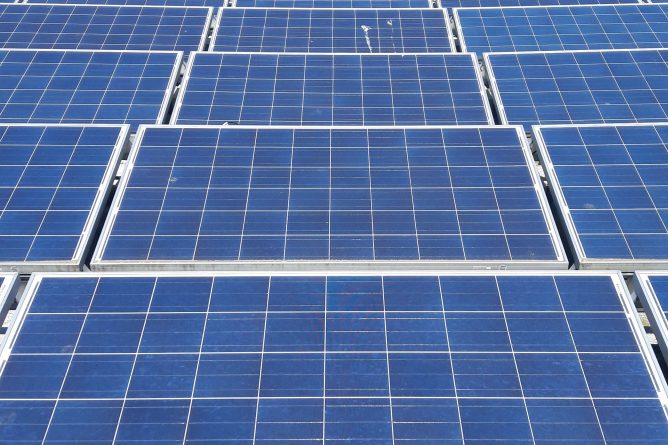
Work on carbon reduction in the future is likely to involve looking much more at renewable energy sources. Currently the University has six roof top mounted solar photovoltaic arrays, which have a combined peak output of 175kW. The amount of electricity produced exceeded 1% of the University’s electricity consumption for the first time this year. This might not sound like much, but the energy produced each year would be enough to power 50 UK households.

Looking at the medium to long-term, we are investigating the feasibility of wind turbines and a large photovoltaic array on the Canterbury site.

Although when they think about energy saving most people picture solar panels, wind turbines and electric vehicles, most of the work I do to reducing energy is not visible. Currently, works are being undertaken to improve the energy efficiency of the Central Boiler House. The works in the boiler house are linked to future works on the District Heating System (which provides heating to many of the buildings on campus from a central boiler house) with the overall aim of being able to reduce the flow temperature in the system reducing heat losses. This may also create the option to use alternative and more sustainable sources of heat for the district heating system longer term.

One of the main challenges we face as a University in reducing our carbon footprint is the age of our estate. A large proportion of our building date back to the 1960’s and 70’s and were not exactly designed with energy efficiency in mind. We also have buildings that are listed or sit within conservation areas that have their own restrictions on what we can do. Many of these buildings present very unique challenges, which must be considered individually and bespoke energy saving measures applied.

When we are considering energy saving projects we always look at the payback period. This is how long it will take to recoup the initial costs of the project through subsequent energy savings. Some measures such as installing low energy lightbulbs have a very short payback period (typically less than 1 year) whereas bigger projects with a larger initial outlay such as renewable energy installation, have much longer payback periods often measured in decades rather than years. In order to finance these large-scale projects I am looking at the potential for external funding and possible partnership working to develop projects.