My name is Lucy Lavender, and I am a final year Politics and International Relations student with an interest in communications and conflict analysis. Outside of my studies, I am a Global Officer under the GOLD programme for the university’s Dean for Internationalisation, aiming to promote global engagement and increase cultural awareness. I’m also passionate about upcycling and love spending my time repurposing or altering unwanted clothes and materials into new designs. I’m looking forward to getting involved working with the Kent sustainability team and hope to help simplify the complicated world of sustainable living!
DVDs, books, clothes, shoes, folders, a memorable receipt from that one café I used to go to every Friday in Winter of 2019, or in other words; my ‘stuff’. The confirmation that I am someone who keeps up with fashion, who is interested in non-fiction and enjoys peppermint tea. The ‘evidence’ to my claim of who I am. But how can choosing my ‘stuff’, impact both myself the rest of the world?
In 2015, the United Nations set out a UN Resolution called Agenda 2030; a set of 17 targets, all interdependent upon one another, named the ‘Sustainability Development Goals’. They aim to address our biggest global problems, such as Climate Change, poverty and hunger, alongside building economic growth, stronger institutions and community. The goals create a framework of collective action, to be adopted by charities, institutions, states or individuals, willing to grow towards a more sustainable future. But tackling such immense tasks on an individual level can seem overwhelming to say the least.
Or is it? At the beginning of March 2020, I was living in Prague, having packed one large suitcase in September to last me a year. When the COVID19 pandemic hit, I was faced with having to cram as much of the unjustifiable amount of extra clothes, souvenirs and random leaflets I had collected over my study abroad into the same suitcase – so much extra stuff I had originally decided that I would have to go home for a weekend in April and June and then, donate to charity in order to get everything home. But of course, with all plans out the window, and no shops open to buy extra luggage, I had one day to decide what I definitely wanted and what to leave behind.
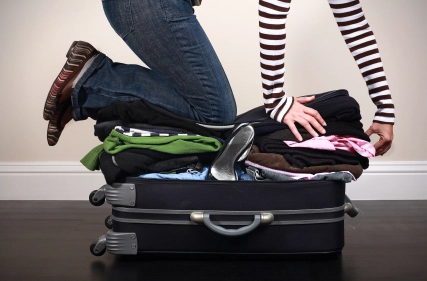
Surprisingly, the process was easy, for someone who loves ‘stuff’ I immediately knew what I wore, what I liked and what I wanted the most. Stuff I had worn for years and no longer liked as much, stuff I didn’t really wear, stuff I only wore on certain occasions, stuff I had just accumulated without making a conscious decision became clear. These items found themselves packaged into (embarrassingly) three bin bags and a box, to be left for my landlord to send to me at a later date – only fitting for a year such as 2020, my landlord accidently donated everything.
So, all this ‘stuff’ ended up donated and out of my life for good. Although the initial loss of one beautiful coat and the cumulative cost of everything haunted me for a while, I felt, overall, much lighter. I found myself looking at ‘stuff’ with a new attitude. Where I would once see my copy of ‘The Aristocats’ on DVD (a film I have not seen in years, nor do I even have a DVD player that works to watch it anymore) and think ‘what if it’s worth something one day?’ or ‘what if DVDs come back?’ I now saw something I was holding onto, that I knew, would not be something I’d pack in my last-minute suitcase.
In fact, the more I thought about my stuff, the more I saw a pattern occurring; over half of my stuff is a ‘what if’. A ‘what if I want to wear that one day?’ ‘what if that is worth something?’ ‘what if I want to read that?’ all outnumbering the ‘definite’. Even a lot of my recent purchases were based on ‘what if I have an interview one day?’ ‘what if I regret not buying it?’ or ‘what if I can sell it?’ and most of the things that fitted into the ‘what if’ category were things that sit around, just like the things I let go of on my journey back from Prague, that I felt so much lighter without.
So, since this time, I have decided to question my purchases. If I feel as though it is a ‘what if’ purchase, I know it is impulse and, in most cases, going to become another piece of my ‘stuff’ that sits untouched in my room. I feel more in control of my spending and equally all the better for it. As if that wasn’t benefit enough, the enormously intimidating task we discussed earlier; of making a difference individually towards the UN’s SDG goals, becomes something I have found myself invested in working on.
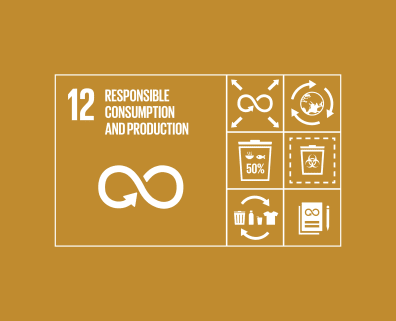
Saying no to such ‘what ifs’ has not only allowed me to be more selective about the stuff that I bring into my life, but allowed me to cut down my individual consumption massively, helping to work towards SDG no. 12 ‘Responsible Consumption and Production’. With charities beginning to refuse clothing donations due to COVID19 and stock room saturation after being on the receiving end of lockdown spring cleaning, even pre-pandemic, with 700,000 tonnes of clothing being sent to UK recycling centres each year. Shifting our focus from how we dispose to how we consume has never been more important. By analysing our purchases, we become more responsible consumers, and so, I encourage you to try it. The next time you are at the checkout, question if your purchase will lead to a ‘what if?’ or if it already is a ‘what if’ in the first place. Perhaps even more importantly, would you pack it in your last-minute suitcase?