Book Review: What Can I Do (about the climate crisis)? Jane Fonda tells you

Guest post: My name is Hannah Maple and I am a third year Psychology student. Studying this subject has expanded my interests so much. I think it’s really important to learn about the world you live in and understand how your actions influence it.


Jane Fonda is a controversial character but one of her many admirable qualities is how committed she is to elevating voices and influencing causes she is passionate about. Her most recent cause is the Climate Crisis.

Her demonstrations are called Fire Drill Fridays, whereby she and other activists rally in Washington D.C. and commit civil disobedience, risking arrest to stand up for the climate. Their website is full of content from experts on all issues climate: https://firedrillfridays.com.

In the fight to raise awareness she has written a book called “What Can I Do?”. The book outlines the issues raised at the various rallies that took place between October 2019 and January 2020. There can be a lot of confusion about what you, one individual, can do to help the climate crisis and the abundance of issues it refers to. Jane’s book ‘What Can I Do?’ outlines everything so perfectly, step by step of what causes can help and what role you can play.

On reading this book there were so many areas that I didn’t even consider being related to the climate crisis. Ignorance is bliss. But this book has certainly motivated me to get more involved in any way I can, and I just wanted to share the things I have learnt, and encourage you, if you haven’t already, to maybe have a read of Jane’s book.

Some of the issues she raised and what actionable steps we can take:

The Oceans

One of the most common areas discussed when on the topic of climate change is the ocean. The ocean absorbs so much heat as a consequence of global warming and almost half of the oxygen we breathe comes from the ocean so we need to protect it (https://oceanservice.noaa.gov/facts/ocean-oxygen.html). In addition to the heating of the waters, it is well understood that many fishing practises are unsustainable and damaging to the areas in which they fish, destroying the ocean beds and habitats.

Furthermore, an area I had never heard of or considered before was the unethical employment of these fishing boats and the human trafficking practises that occur on some.

Actionable steps:

– Eat less fish.

– Use less plastic, particularly single-use plastics

– Write to officials to let them know you care about this issue and you expect them to also care.

Water

Access to clean, safe water was recognised by the UN as a human right in 2010 (United Nations, 2010) but there are so many people that don’t have that and it’s predicted that the vital resource is going to become even more scarce. According to WWF, by 2025 it is predicted that two-thirds of the world’s population will face water shortages.

Water supplies are being polluted and others drying up. We need to protect this vital resource, needed to sustain life.

The blue communities project is working hard to support the UN Sustainable development goals (particularly, 1 No poverty, 2 Zero hunger, 3 Good health and wellbeing, and 14 Life below water). The idea is to adopt the mindset that water is a public good, “shared by everyone and is the responsibility of all”. These Blue communities are popping up all over the world. https://www.blue-communities.org/About_the_programme

Actionable steps:

– Buy less plastic water bottles, use refillable bottles.

– Avoid using hazardous house cleaners and pesticides that pollute water systems

The Money Pipeline

While movements are being made towards cleaner energy there are still expansions taking place in the fossil fuel industry and our banks are supporting them. One movement, led by students, encouraging colleges and universities to divest from fossil fuel organisations has had a huge influence on the development of the fossil fuel industry. Divestment and protesting has become a serious threat to the fossil fuel industry and their ability to bring in money. This is a huge success.

Jane lists some of the big banks still investing in fossil fuels but have a look online. Greenpeace’s article: https://www.greenpeace.org.uk/news/barclays-banks-climate-change-fossil-fuels/

So much was covered in the book, there is no way you could summarise all of it, these are some of the other topics discussed in the book:

– Health and the climate

– War, the military and the climate

– Women and the climate

– Migration and human rights

– Jobs and a just transition

– Plastics

– Fossil fuels

Jane’s book covers a lot of issues prevalent in the US but that doesn’t mean the same isn’t happening here. The particular organisations she raises may not be applicable to us in the UK but there are many organisations here that are doing wonderful things, we just need to go out and find them. For example, Greenpeace https://www.greenpeace.org.uk.

I found Jane’s book really interesting and so inspiring. I hope you have a look https://www.waterstones.com/book/what-can-i-do/jane-fonda/9780008404581
Do You Say ‘What If’ At the Checkout? – My Journey Towards More Sustainable Consumption

My name is Lucy Lavender, and I am a final year Politics and International Relations student with an interest in communications and conflict analysis. Outside of my studies, I am a Global Officer under the GOLD programme for the university’s Dean for Internationalisation, aiming to promote global engagement and increase cultural awareness. I’m also passionate about upcycling and love spending my time repurposing or altering unwanted clothes and materials into new designs. I’m looking forward to getting involved working with the Kent sustainability team and hope to help simplify the complicated world of sustainable living!


DVDs, books, clothes, shoes, folders, a memorable receipt from that one café I used to go to every Friday in Winter of 2019, or in other words; my ‘stuff’. The confirmation that I am someone who keeps up with fashion, who is interested in non-fiction and enjoys peppermint tea. The ‘evidence’ to my claim of who I am. But how can choosing my ‘stuff’, impact both myself the rest of the world?

In 2015, the United Nations set out a UN Resolution called Agenda 2030; a set of 17 targets, all interdependent upon one another, named the ‘Sustainability Development Goals’. They aim to address our biggest global problems, such as Climate Change, poverty and hunger, alongside building economic growth, stronger institutions and community. The goals create a framework of collective action, to be adopted by charities, institutions, states or individuals, willing to grow towards a more sustainable future. But tackling such immense tasks on an individual level can seem overwhelming to say the least.

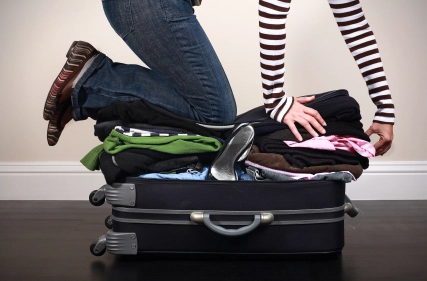
Or is it? At the beginning of March 2020, I was living in Prague, having packed one large suitcase in September to last me a year. When the COVID19 pandemic hit, I was faced with having to cram as much of the unjustifiable amount of extra clothes, souvenirs and random leaflets I had collected over my study abroad into the same suitcase – so much extra stuff I had originally decided that I would have to go home for a weekend in April and June and then, donate to charity in order to get everything home. But of course, with all plans out the window, and no shops open to buy extra luggage, I had one day to decide what I definitely wanted and what to leave behind.

Surprisingly, the process was easy, for someone who loves ‘stuff’ I immediately knew what I wore, what I liked and what I wanted the most. Stuff I had worn for years and no longer liked as much, stuff I didn’t really wear, stuff I only wore on certain occasions, stuff I had just accumulated without making a conscious decision became clear. These items found themselves packaged into (embarrassingly) three bin bags and a box, to be left for my landlord to send to me at a later date – only fitting for a year such as 2020, my landlord accidently donated everything.

So, all this ‘stuff’ ended up donated and out of my life for good. Although the initial loss of one beautiful coat and the cumulative cost of everything haunted me for a while, I felt, overall, much lighter. I found myself looking at ‘stuff’ with a new attitude. Where I would once see my copy of ‘The Aristocats’ on DVD (a film I have not seen in years, nor do I even have a DVD player that works to watch it anymore) and think ‘what if it’s worth something one day?’ or ‘what if DVDs come back?’ I now saw something I was holding onto, that I knew, would not be something I’d pack in my last-minute suitcase.

In fact, the more I thought about my stuff, the more I saw a pattern occurring; over half of my stuff is a ‘what if’. A ‘what if I want to wear that one day?’ ‘what if that is worth something?’ ‘what if I want to read that?’ all outnumbering the ‘definite’. Even a lot of my recent purchases were based on ‘what if I have an interview one day?’ ‘what if I regret not buying it?’ or ‘what if I can sell it?’ and most of the things that fitted into the ‘what if’ category were things that sit around, just like the things I let go of on my journey back from Prague, that I felt so much lighter without.

So, since this time, I have decided to question my purchases. If I feel as though it is a ‘what if’ purchase, I know it is impulse and, in most cases, going to become another piece of my ‘stuff’ that sits untouched in my room. I feel more in control of my spending and equally all the better for it. As if that wasn’t benefit enough, the enormously intimidating task we discussed earlier; of making a difference individually towards the UN’s SDG goals, becomes something I have found myself invested in working on.

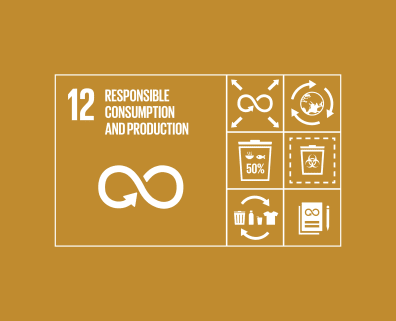
Saying no to such ‘what ifs’ has not only allowed me to be more selective about the stuff that I bring into my life, but allowed me to cut down my individual consumption massively, helping to work towards SDG no. 12 ‘Responsible Consumption and Production’. With charities beginning to refuse clothing donations due to COVID19 and stock room saturation after being on the receiving end of lockdown spring cleaning, even pre-pandemic, with 700,000 tonnes of clothing being sent to UK recycling centres each year. Shifting our focus from how we dispose to how we consume has never been more important. By analysing our purchases, we become more responsible consumers, and so, I encourage you to try it. The next time you are at the checkout, question if your purchase will lead to a ‘what if?’ or if it already is a ‘what if’ in the first place. Perhaps even more importantly, would you pack it in your last-minute suitcase?