How to be Fashionable and Sustainable in University

This a second blog post from Tinu, one of the University’s Sustainable Development Goals Ambassadors. Find her first post by clicking on this link – How to be more sustainable in everyday life

———————————————————————————————————

Shop at Thrift Stores

Thrifting has been here for generations and is getting widely popular! 

Tip: try thrift shopping in high-end neighbourhoods. sometimes you might find designer items that have been barley used. 

Borrow and Trade

On campus there are tons of people and someone always need something done for them! Use your skills if it means a tutor session for a pair of jeans or just borrowing your dorm mates top for a night out!

Fight impulse shopping 

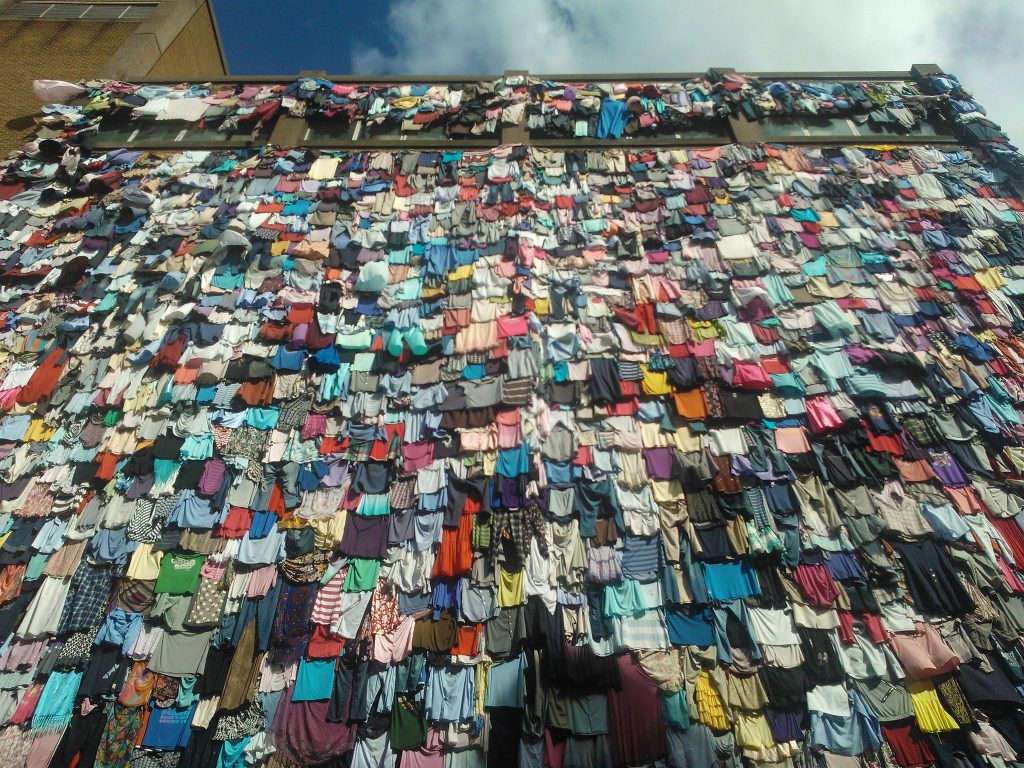
With the popularity of online shopping, it is so easy to just click add to cart these days. However, it is best to avoid this! Fast fashion clothes are made in mass production at high speeds to keep up with trends at an affordable price. Then you are left with the quality being poor after a few washes…say no and invest in good quality clothes!!

Use Buy and Sell Apps 

In the world of technology humans are connected more than ever! Use apps like the Goat app to find shoes, and Depop or Poshmark for shopping! 

How to be More Eco Friendly In your Everyday Life!

This is the first blog post from one of the University’s new Sustainable Development Goals Ambassadors. The SDGs Ambassadors are students that are helping to spread the word about the SDGs to their peers and demonstrate how we can all be a part of this extraordinary movement to solve some of the world’s biggest challenges.

————————————————————————————————————————————————————————————

Hi! 

My name is Tinu and I became a University of Kent, Sustainable Development Goals Ambassador because, from childhood, I have been passionate about human and environmental rights issues and these passions have played out in every choice I have made. In Elementary school, I started an Environmental club and worked with Greenpeace Canada to enforce proper recycling of products. Since 2016 I have been a graphic designer for the Hope for Us Charity whose goal is to improve the H.E.S.I of African countries. H.E.S.I. which stands for Healthcare, Education, Sustainability and Advocacy against Social Injustices. My interests in these topics are even reflected in my previous educational studies, where I studied: International Business, World Issues and Environment with Resource Management. In my World Issues course, we dedicated part of the semester to focus on the United Nations SDG goals, allowing me to be quite familiar with the different goals. As well as in my Environment and Resource Management course, where we studied sustainable living. I am a strong believer that it is our responsibility as humans to take care of the planet and everything on it

How to be More Eco Friendly In your Everyday Life!

Start Timing Your Showers

We all love to spend time in the shower as they can be relaxing and a great place to practice our vocal lessons. However extended showers can use up to 17.2 gallons of water! Make an effort to reduce your shower time by setting goals and timing yourself!

 Buy Products with less packaging and try to not buy things that come in Styrofoam or Plastic 

When you go the store try to see how many items you can buy that are package less or don’t use as much plastic! Try shopping at bulk stores. 

Pro tip: The healthier the food the less packaging it usually has. 

Environmentally Friendly Toothbrushes

What’s something we do every day? (at least I hope so) Brush your teeth! Toothbrushes are something that we all use however they are plastic 🙁 which ends up in our landfills. Invest in an electrical toothbrush or Bamboo. 

Metal and Paper Straws 

I’m sure you have heard “save the turtles” multiple times this year and that is because its true! Straws take 200 years to decompose and, in most places, cannot be recycled. Straws are also the 11th most found item in the ocean! (Ocean Conservancy 2018)

So, what to do? Use a metal Straw which you can get for cheap online in packs! or ask for paper straws when you order beverages. 

Reusable Water Bottles 

Instead of using plastic cups and water bottles keep a good quality BPA free water bottle with you! Quit buying bottled water. Instead, get a water bottle that you can refill.

 Pro Tip: Most restaurants and boutique drink shops will give you money off your drink if you bring your own cup 

Going Shopping? 

Say no thanks, to the cheap plastic bags they give you and bring your own bags or keep items in your cart without bagging them and put them directly into your car 

 Use E-tickets for movies, flights and other events instead of printing! 

Tip: Apple phones have an app called Wallet where you can store e- tickets and cards 

Wash your clothes in cold water

Cold water uses less energy, which saves the planet and your water bill! 


The University of Kent is working to become a Hedgehog Friendly Campus!

Hedgehogs are declining rapidly in the UK, with populations dropping by up to 50% since 2000. Loss of habitat and exposure to many threats, such as road traffic, litter, poisoning from slug pellets and lack of food, are having a significant effect on this iconic mammal.

The University of Kent is working to help make its Canterbury campus a safer place for hedgehogs. Hedgehog Friendly Campus is a national accreditation scheme through NUS and funded by the British Hedgehog Preservation Society. Through signing up to the Hedgehog Friendly Campus scheme, Kent aims to improve staff and student awareness about the decline of hedgehogs and hedgehog friendly behaviour, and look into how we can help our hedgehogs living on campus.

Our Hedgehog Friendly Campus working group is made up of staff and students from across the University. The group runs awareness campaigns, organises events, such as litter picks and hedgehog surveying, and promotes hedgehog friendly practices.

If you are interested in helping our campus hedgehogs, please get in touch with: sustainability@kent.ac.uk

If you see a hedgehog that looks injured, sick or out in the daytime, contact the British Hedgehog Preservation Society on 01584890801 and/or take it to your local vets – find more advice here.

https://www.britishhedgehogs.org.uk/found-a-hedgehog/

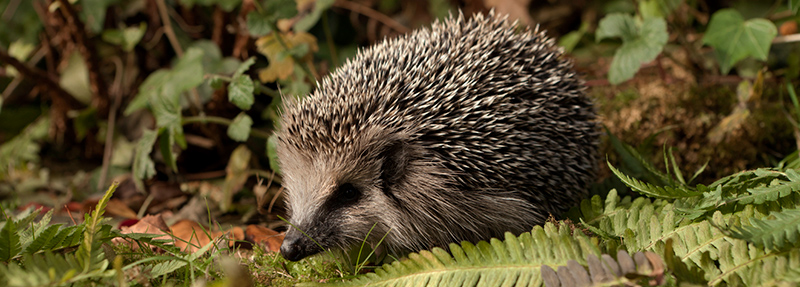
Did you know hedgehogs are nocturnal? This photo was taken at night using clever filters to enhance the lighting conditions. If you ever see a hedgehog out during daylight it could be a sign of distress. Check out our online guides that can help you take the right course of action, if any is required. Hedgehog Preservation Society.

How the tiny home movement promotes sustainable living

Guest post from Gaetan Gabor – Gaetan Gabor is an outdoor and tiny home enthusiast who is passionate about sustainable living. He currently resides in the United States where he partakes in spreading the knowledge of alternative living styles during his free time.


As people realise the detrimental effects of our consumerist culture on the environment, interest in the tiny home movement has been growing considerably. Tiny house living is the perfect antithesis to the pervasive idea of “bigger is better.” It’s proof that the way we build our homes can make a huge difference in how we live and relate to the environment.
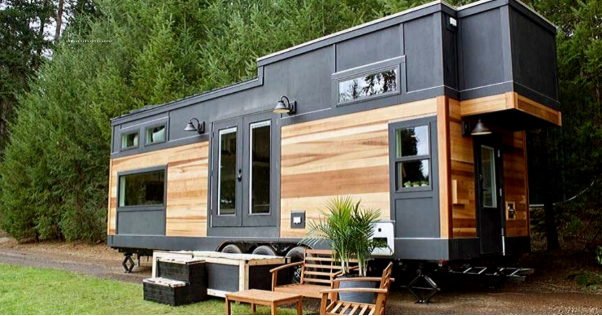
Tiny house living and the environment 

With an average measurement of just 400 square feet or less, the sheer size of a tiny house forces one to downsize. People who live in tiny houses typically own fewer possessions and spend less overall. This leads to a lower carbon footprint and it’s one of the many reasons that motivate people to explore tiny houses as a sustainable building option. 

Up until now, there wasn’t enough research to prove the correlation between downsizing to tiny houses and a reduced carbon footprint. That is, up until this research paper from a doctorate candidate from the Virginia Polytechnic Institute and State University was released.

As part of the study, the author interviewed 80 subjects who had downsized from regular homes to tiny houses to see how the switch had reduced their ecological footprint. The end goal of the study was to provide measurable evidence of the environmental benefits of downsizing to a tiny house. 

The tiny house owners, who lived all across the U.S. were able to reduce their ecological footprint by up to 45%. This was based on various lifestyle factors that changed due to living in a tiny house. Below we explore just some of the ways in which the tiny home movement promotes sustainable living.

Building trends

If you look at new developments across the U.S. you’ll find that the common theme is “go big or go home.” From sky-high skyscrapers to massive mansions and estates that can take up thousands of square footage, newly-built U.S. homes are by far the largest in the world.

Concurrently, there has been a resurgence in minimalist living since the early 2000s saw a resurgence in the minimalist living trend. This is around the time when one of the most prominent tiny house construction companies was created, forever changing the way we think about space and home.

Ecological footprint 

In the aforementioned study, the researcher examined the individual environmental impact of downsizing based on participant accounts. They used a metric that shows us the effects of human behaviour on nature by first looking at the amount of land required to sustain present consumption levels. This means that the researcher considered each homeowner’s spatial footprint based on global hectares. She also included contributing factors like services, goods, food, transportation, and housing. In case you’re wondering, a single global hectare is equal to 2.5 acres on average.

The data shows that the average American household has a global footprint of 8.4 hectares which translates to 20.8 acres. The respondents in the study had an average ecological footprint of about 7.01 global hectares before they downsized. This equals a total of 17.3 hectares per year. After switching to tiny house life, the participants had a significantly reduced footprint of 3.87 global hectares which is 9.5 acres.

Eco-conscious lifestyles 

It seems as though downsizing also inspired the respondents to live an eco-friendly lifestyle characterised by recycling, conscious consumption and they produced less waste than before.  A majority of the participants also started growing their own food, buying local produce, driving fuel-efficient cars and cycling. Even tiny house owners who downsized for reasons other than ecological motives saw a dramatic shift in their environmental footprint. 

Reduced energy costs 

Living in a tiny house makes it easier to go “off-grid”. In fact, most tiny houses built today come with electricity, running water and flushing toilets while being completely independent of public amenities. Instead, these homes operate on solar panels, composting toilets, and biogas digesters, which lead to significantly reduced energy and service costs.
Conclusion 

There’s no denying that tiny house living can motivate people to live in ways that benefit the environment.  Tiny house owners typically show a lower overall footprint than the average person, and thanks to its small square footage, a tiny house doesn’t require a lot of possessions.  It’s also worth noting that it doesn’t take much to keep tiny houses cool in the summer or warm in the winter, making it easier to go “off-grid.”

These and other factors featured in the above-mentioned study provide a basis for understanding the environmental impact of the tiny house movement. Hopefully, more people can leverage it to improve building standards and drive home design trends.