Introducing our new Student Sustainable Goals Ambassadors (Part One)

As part of the University’s commitment to the Sustainable Development Goals (SDGs) and our under our FutureProof behaviour change project the Sustainability Team have recruited a group of amazing students who are Kent’s first Sustainable Development Goals Ambassadors.

The SDGs or the Global Goals are 17 goals that outline the vision for a sustainable world by 2030. The 17 goals and underlying targets were created and signed by 193 countries at the UN Sustainable Development Summit in 2015. The goals seek to finish the job that was started by the Millennium Goals which ran from 2000 to 2015 and brought 850,000,000 people out of extreme poverty and yet saw carbon emissions increase by 9,850,000 kilotons.

The Student Sustainable Development Goals ambassadors’ role is to promote the goals to fellow students and staff; encourage, motivate and support the Staff Sustainability Champions network; increase the ease of reporting on sustainability achievements within the University; increase student staff collaboration; and lead on their own sustainability projects.

From the role we aim to support students in understanding more about sustainability; equip them with useful skills for future employability; and recognise their efforts with employability points.

In their own words, over the next few blogs posts we will introduce this year’s cohort of Sustainable Goals Ambassadors.


Huda

My name is Huda and I’m an architecture postgraduate student from Sudan, Africa. I’ve always been interested about animals and conservation, as a child I’d watch natgeo documentaries just as much as i watched cartoon network. I always wondered what i could do as an individual to preserve the planet for both animals and people, the answer was sustainability as a lifestyle, not just a trend. Living in a poor country made me interested in low cost solutions specifically that help improve people’s quality of life on a tight budget and without impacting our environment. Therefore, as an architect, my focus in the Sustainable development goals is on sustainable cities and communities.
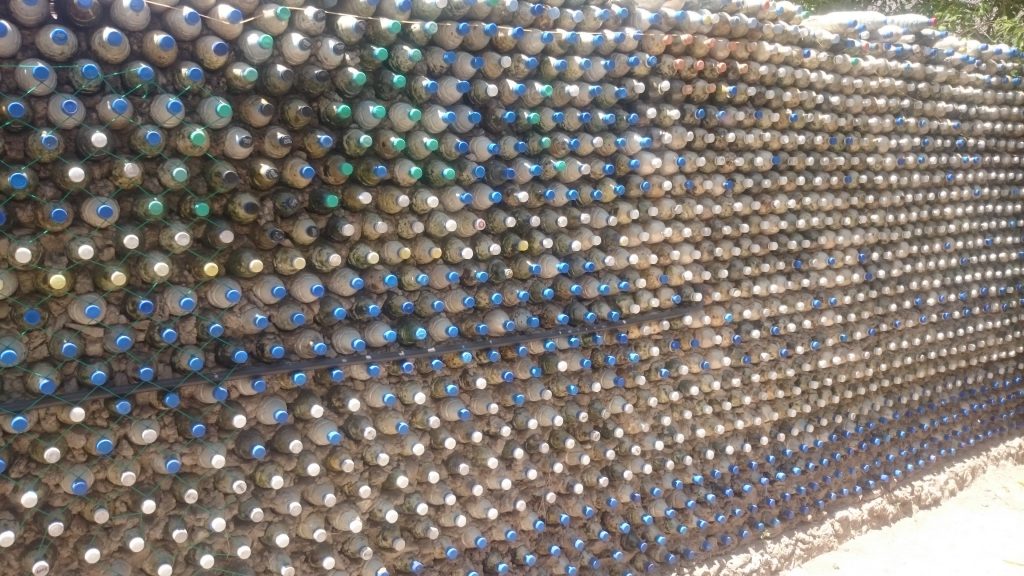
During a trip to zanzibar, the hotel owner showed me how he built wells for the village using plastic bottles. His idea provided clean water, cleaned the beach of plastics, provided a source of income for the village ladies in filling the plastic bottles and taught villagers how to build using this sustainable method all in one solution. My ambitions for my role as a sustainability ambassador is to advocate for solutions that have a multitude of benefits both environmentally and economically.
Adrian

Hello, my name is Adrian Joyeux. I’m a 2nd year student studying Politics and International Relations with French. At this moment I cannot think of anything else to describe myself that doesn’t sound rehearsed or boring. So, instead I have chosen to just state three random sustainable or earth related facts that are dear to my heart, because anyone that knows me will now that I absolutely LOVE random facts. The first random fact, is about me, I currently take up about 3 earths (meaning that if everyone lived like me, then it would take 3 earths to sustain my lifestyle). The odd thing about it is that I am happy about it. Before then I took up 6.5 planets, so I have definitely improved somewhere. The second random fact, is that the earth is constantly recycling. Nature uses everything to sustain and grow the environment. The third fact, is that it takes about 2,700 litres of water to produce 1 cotton t- shirt.

I am taking part in the Sustainability Goals program on campus for two main reasons. One reason being, today we are seeing drastic changes in the world both good and bad and nature is reacting.   More and more people are being forced to immigrate to other countries due to environmental reasons. Sadly, one day, places like the beautiful sandy beach and clear blue sea waters of the Maldives will disappear. Reports, are stating that many countries such as South Africa, Mexico, and even the United Kingdom has or will have a day zero were they cannot provide continuous running water. The other reason I am taking part of this program is because I would like to learn more about sustainability internationally and domestically and to see how we as individuals and organizations can make an impactful change in sustainable living and production.

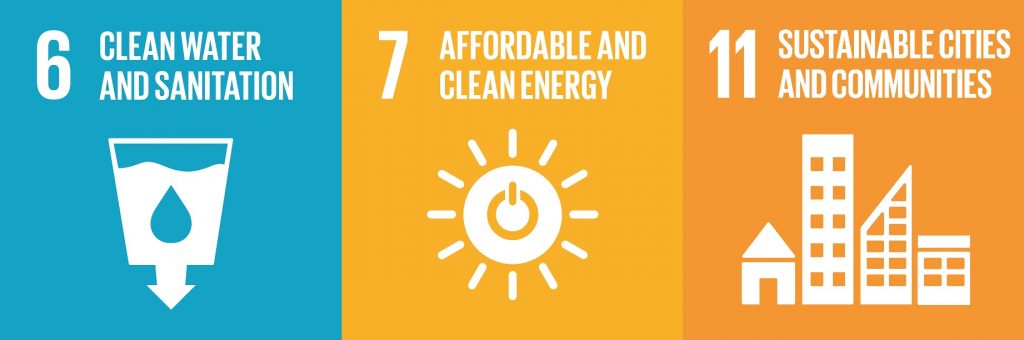
By taking part in this program I believe I can make a positive impact by promoting the various sustainable actions the University is participating in and hopefully creating action that will be adopted by the University.  I aim to mix various goals together such as goal 6: Clean water and sanitation, goal 7: Affordable and Clean Energy and goal 11: Sustainable cities and communities. I hope the chain reaction will affect other developmental goals.
Louise

My name is Louise Al-Hakkak. I’m a French exchange student here for a year. I study social sciences, politics, law and international relations at my home university. I was part of the Environment society there and took care of an organic vegetable garden on campus. I’m passionate about nature, Latin America, languages, politics and geopolitics, history, photography and environmental issues.
I’m interested in sustainability because I think it is crucial that we limit our impact on the earth as quick as possible so that we can have a habitable environment for ourselves but most importantly so that we stop destroying biodiversity.

The goals I’m most passionate about are No Poverty (1), Clean Water and Sanitation (6), Reduced Inequalities (10), Responsible Consumption and Production (12), Life Below Water (14) and Life on Land (15). Goals 1 and 10 tackle social problems which I would like to see eradicated. I like goal 6 because the sustainability workshop made me realise how important sanitation is and why it is so important that everyone has access to it. The water aspect is also very important when we see that water is being privatised in many parts of the world. Goal 12 is probably my favourite one as it is the one which tackles consumerism and waste. Finally, goals 14 and 15 concern biodiversity which is a big concern right now seeing the state of the ocean and how many species are going extinct almost every week.

My ambition for the role is to be able to have a real impact on campus, to feel that I’m useful and that I am actually helping to move towards the Sustainable Development Goals. I would like to work around recycling, food waste, reducing packaging …


Printing the world to rights: how print firms are approaching sustainability in Kent and the UK

This is a guest blog from James Hale, a graduate of the University of Kent. Having studied English and American Literature, James now works as a freelance writer, penning his thoughts on anything and everything of interest. He’s passionate about sustainability, and loves helping to spread the word about how we can all factor it into our day to day lives.

————————————————————————————————————————–

Print is everywhere; it is so ubiquitous that we rarely notice it. When we think about printing, we tend to imagine newspapers, books, magazines, leaflets and cards, but how often do we stop to consider the impact large format print has on the environment?

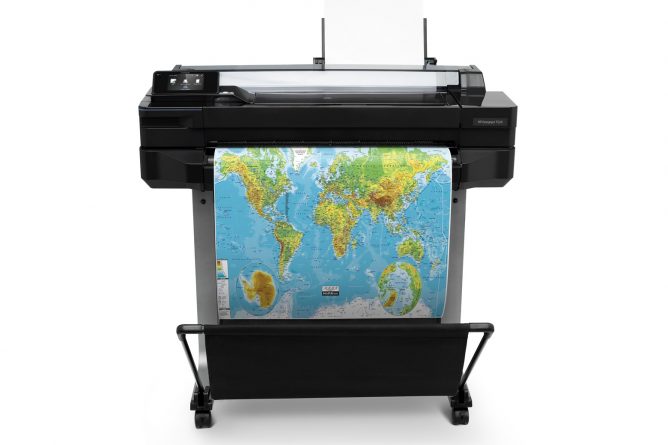
Large format printing – the process by which the enormous billboards and banners of our modern world are realised – is everywhere, a major industry that populates our bus stops, shopping centres, train stations and more with vast advertising images.

We live in an ever-more eco-conscious world, and while we may rarely think about this type of printing or the impact it might have, print companies are working to make sure they can deliver their products in a way that is kinder to the environment around us.

Getting interested

For printing companies, however, finding ingenious ways to offer ecologically sensitive products is only half of the story. The Image Reports Widthwise Report published in June this year reveals that seven out of ten British print service firms have never once been asked by their clients about their eco-friendly credentials, despite the fact that a recent global census conducted by Fespa reported that 76% of printing companies worldwide said that their customers were keenly interested in environmental issues.

What’s especially notable is that these businesses felt it prudent to plan their strategies with that environmental interest in mind. Whether the UK is really lagging behind the rest of the world in its awareness of the ecological impact of large format printing, or whether this might be just a statistical anomaly, the point remains that there is a fundamental problem still facing the industry: how should they sell a service to clients who aren’t asking for it?

Communication, communication, communication

It’s an issue that some businesses have put a great deal of thought into. The Verdigris Project is an industry campaign that aims to raise awareness of environmental concerns and initiatives in the printing trade, and is sponsored by a number of industry giants, including HP, Kodak, Agfa and Fespa (a global collection of national associations for professional printers). It’s also hoped that printing companies will seek their own ways to inform clients about the environmental impact of their projects, and to confidently offer them greener alternatives.

Substrate procurement

The UK reportedly uses 12.5 million tonnes of paper every single year, and any environmentally-minded printing firm should be concerned about using recycled and sustainable paper wherever possible, and this means they need robust procedures for obtaining recycled paper.

Modern recycling techniques mean that large format paper made from recovered fibre can be just as good a printing substrate as ‘virgin pulp’. As a result some companies have opted to commit to procurement policies that insist on recycling-based solutions.

Other substrates

Of course, when we get into the realm of specifically large format printing, the substrate in question may not be paper-based at all. Many large banners and signs are printed on vinyl and other plastics, not to mention the many other materials of varying environmental friendliness.

If a large format printing firm wants to lessen the potential negative impact of their work on the environment, finding alternative substrates that don’t involve plastic would be an excellent place to start; much has been said lately about the growing unpopularity of plastic following David Attenborough’s BBC show Blue Planet II and the discovery of a plastic bag 35,000 feet down inside the Mariana Trench, the deepest known part of the world’s oceans.

Some firms, such as Kent-based industry leader PressOn, have adopted new and innovative print solutions to alleviate the problem. PressOn were an early adopter of products known as Tension Fabric Systems, which involve a printed sheet of fabric suspended across an aluminium frame, creating a large printed piece that is ideal for interior environments such as offices, malls and shops.

The metal frames are endlessly reusable for other printed designs, and the fabric that serves as the substrate completely removes the need for plastic. Nigel Webster, PressOn’s managing director, explains:

“Although popular in the States for a few years, we first started using tension fabric frame systems in the UK two years ago for one of our largest US based retail clients. PressOn always strive to promote this more environmentally friendly system to our clients, and it’s reassuring to see that the demand for this type of system has grown dramatically.

Brands in the retail sector traditionally use a lot of self-adhesive vinyl on their graphics inside the store and the shop windows, with regularly changing campaigns and offers to promote. By switching to the fabric frame system and installing aluminium frames in stores, we can print graphics directly onto more sustainable polyester fabrics using latex inks. These systems mean we don’t need to print, install and then remove and dispose of vinyl graphics.

The demand for eco-friendly print solutions has now extended to other sectors, too. They’re popular in corporate branded office environments (we’ve recently completed a project for Sky to use these systems in their offices), hotels, restaurants, bars and even to event and exhibition graphics too. Along with tension systems, other options for non-pvc products include paper wallcoverings from sustainable sources and also self-adhesive polyester fabrics as well. It’s great news for the environment and the print industry.”

Choosing the right inks

It could be said that the use of plastic and the wastefulness of large quantities of paper are more obvious problems than the ink used to create the printed designs — particularly as some varieties, such as petroleum and solvent-based inks, can be a source of gases that are harmful to the environment. Fortunately, there are several more ecologically friendly alternatives.

Eco-inks – made from vegetable oils or soya beans from sustainable farming environments – are becoming more widely available, while some printers are turning to UV-curable (UVC) inks. The liquid in UVC inks is aqueous-based; after printing, the ink is dried (or ‘cured’) via exposure to strong ultraviolet light. Significantly, however, these types of ink aren’t typically used by the large format industry, and are usually preferred by businesses producing packaging.

When it comes to large format printing, the best option usually lies in latex-based inks, which also don’t emit any unpleasant chemicals or odours, and have the added advantage of drying almost instantaneously after printing.

The environmental issues with some inks don’t end there, however. In order for paper and cardboard to be properly recycled into a clean pulp that can be reused as new paper, it must first be subjected to a process of de-inking to remove anything that may have been printed on it previously. Water-based, hydrophilic inks can be resistant to the alkaline floatation de-inking technique widely used in Europe; this is designed to separate ink from fibre and cause it to float to the surface, where it can be completely removed from the pulp.

Paper recycling is also an enormous endeavour – around 90% of Europe’s newspapers are printed on recycled paper – so finding inks that can be removed easily and efficiently is of paramount importance for eco-conscious printers.

In the end, the large format printing industry’s ability to be environmentally conscious rests as much with its customers as its service providers. The technology is there to print and recycle in a way that minimises chemicals and waste products; it only remains for those who commission billboards and large signage to be open to new techniques and approaches.